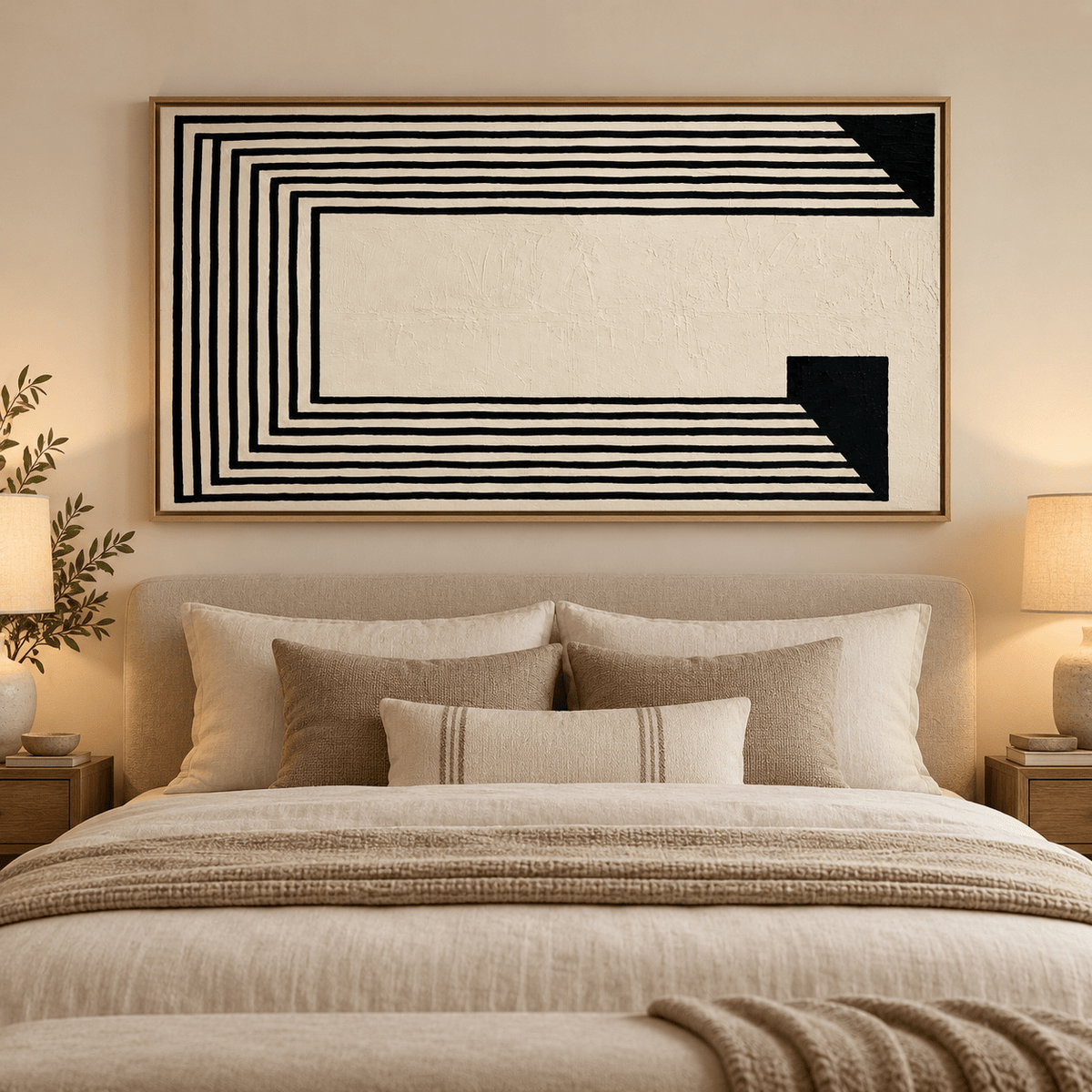
Room proportions, natural lighting, and architectural lines determine the ideal placement, medium, and scale for every display. Balancing artwork with existing furniture finishes allows each living space to feel both deliberate and welcoming.
Quick Answer
Wall art is important in home decor because it establishes an immediate focal point, pulls accent colors together, and turns empty vertical space into a finished interior. Thoughtfully chosen pieces give rooms a distinct atmosphere, reflect personal identity, and bring balance to furniture groupings across the home.

How does wall art create a focal point?
Wall art creates a focal point by drawing the eye directly toward an intentional visual anchor as soon as someone enters the room. This placement organizes sightlines, establishes visual hierarchy, and balances heavy furniture arrangements against blank wall space without cluttering footpaths.

Without an intentional centerpiece, eyes wander across a room without resting on any single element. Architectural features such as fireplaces or broad windows sometimes serve as natural centers, but many modern floor plans feature unbroken drywall expanses that feel vacant. Placing a commanding canvas on the primary wall organizes the entire layout around one distinct visual statement.
Visual weight plays a fundamental role in directing attention across an interior. Artwork with bold contrast, defined structural lines, or rich tonal gradations holds attention longer than uniform flat paint. When a major piece hangs above a primary seating area or credenza, it bridges the gap between horizontal furniture tops and the ceiling plane, grounding the entire seating cluster.
Ready to define your living space?
Explore hand-stretched canvas prints with free worldwide shipping to find the ideal anchor for your room layout.
Shop the Collection →Contrast is one of the most reliable ways to construct an effective visual anchor. In spaces dominated by pale walls and light wood tones, high-contrast monochrome imagery immediately commands attention. A dramatic piece like Veiled Silence uses stark black and white tonality to punctuate light backgrounds, providing an effortless center of gravity for minimalist or contemporary rooms.
Rossetti Art prints are hand-stretched over a 1.25-inch hardwood stretcher frame, giving each canvas substantial physical depth against the drywall. They are printed with UV- and fade-resistant HP latex inks that remain vivid over time (UL GREENGUARD Gold certified). Each piece can be ordered with a handcrafted poplar hardwood floater frame in Black, Oak, Brown or White, creating a clean shadow line that reinforces its presence on the wall.
Directional lines within the artwork also guide how people perceive room dimensions. Horizontal motifs broaden narrow dining rooms or hallways, while strong vertical compositions draw the gaze upward to highlight ceiling height. By selecting artwork that works in harmony with existing architecture, you turn ordinary structural walls into deliberate decorative assets.
A successful focal point also prevents decorative competition within the same visual field. When secondary decor pieces, such as table lamps and decorative bowls, complement rather than fight the primary artwork, the entire space feels cohesive. Anchoring a room around a singular piece simplifies every subsequent styling decision you make.

"Veiled Silence" — Black and White Wall Art — Veiled Silence, a square canvas print that works as a calm focal point. View the piece →
How does wall art set color and mood?
Wall art sets color and mood by introducing a curated palette that dictates the room's emotional temperature and atmospheric depth. Warm tones infuse spaces with intimacy and energy, while cool neutrals and muted pigments promote quiet relaxation and contemplative rest.

Color theory plays a vital role in how an interior feels throughout the day. Bare white walls can easily feel sterile, cold, or unfinished under standard overhead lighting. Incorporating artwork that features rich undertones gives the eye a focal spectrum, connecting disparate textile colors found in rugs, throw pillows, and drapery.
When decorating an open-concept living area, wall art acts as a unifying bridge across distinct zones. A piece containing subtle earthen hues can mirror the wood tones of a dining table while echoing the textured weave of an adjacent lounge chair. This repetition of tones creates visual flow, helping separate functional areas feel part of a single, well-conceived home.
Select artwork that contains at least one color from your existing upholstery and one subtle accent hue. This connection links your furniture directly to the wall decor while introducing fresh visual interest.
Subtle color transitions often achieve the most sophisticated atmospheric results. The abstract piece Silent Structure uses gentle ivory, warm beige, taupe and soft brown tones to establish calm, grounded surroundings. Its balanced composition suits bedrooms and quiet reading corners where peaceful contemplation takes precedence over high-energy stimulation.
Because Rossetti Art pieces arrive ready to hang, introducing a new mood to your space requires minimal effort or preparation. Rossetti Art canvas prints are hand-stretched over a 1.25-inch hardwood stretcher frame. Choosing a handcrafted poplar hardwood floater frame in Oak or Brown adds organic warmth that softens modern interiors.
For collectors who enjoy visual variety, arranging multiple harmonious prints allows for nuanced mood modulation across a single wall. Consulting a guide on how to mix and match art prints for a stunning gallery wall helps combine different artistic voices while preserving a unified palette. Balanced spacing and tonal consistency prevent varied groupings from overwhelming the senses.
Light exposure significantly alters how artwork colors interact with your surroundings across different times of day. Warm evening lamps bring out hidden ochres and umbers, whereas natural midday sun reveals crisp grays and subtle pigments. Choosing artwork printed with fade-resistant inks preserves those delicate shifts through changing seasons.
How does wall art make a room feel finished and personal?
Wall art makes a room feel finished and personal by replacing generic builder surfaces with intentional creative expression that tells your unique story. It signals that a home is actively inhabited, providing visual warmth, textural contrast, and personal character that flat paint alone cannot achieve.

A room furnished solely with functional items often feels like a temporary showroom rather than a personal sanctuary. Tables, chairs, and shelving serve practical needs, but artwork reflects individual aesthetic sensibility, personal history, and emotional taste. It reveals who lives in the space and what atmospheres resonate with their daily lifestyle.
In standard principles of interior design, wall treatments represent the vertical envelope that binds floor elements together. When walls remain empty, the eye perceives an unfinished void between the baseboards and ceiling fixtures. Hanging artwork bridges this gap, establishing a three-dimensional environment where floor furnishings and vertical surfaces engage in active dialogue.
Rooms With Wall Art
- Walls feel deliberate and visually anchored.
- Textural contrast softens hard drywall planes.
- The interior reflects individual character.
Rooms Without Wall Art
- Surfaces appear temporary or uncurated.
- Walls feel empty and unfinished.
- Furniture feels disconnected from the room envelope.
Textural richness plays an understated yet critical role in crafting a finished home interior. Woven canvas fabrics offer tactile relief against polished plaster or flat drywall, diffusing ambient light across their subtle grain. An abstract piece such as Open Plains pairs broad tonal fields with organic textures, bringing an expansive, grounded sensibility into living areas.
Every piece from Rossetti Art arrives ready to hang straight out of the box, simplifying the decorating process. Hand-stretched over a 1.25-inch hardwood stretcher frame and printed with UL GREENGUARD Gold certified inks, these canvases combine durability with clean indoor living. Pairing the print with a handcrafted poplar hardwood floater frame in White or Oak refines the boundary between canvas and room wall.
Personalizing your walls also sparks spontaneous conversation with guests and visitors. Artwork encourages personal interpretation, drawing attention to artistic themes, favorite destinations, or shared aesthetic affinities. A home decorated with intentional pieces creates an inviting atmosphere where friends and family immediately feel at ease.
Living with art you love also makes a home more enjoyable to come back to.
How big should wall art be, and where should it go?
Wall art should fill roughly two-thirds to three-quarters of the available wall space or the width of the furniture piece below it. It should hang with its visual center at natural eye level, anchoring the surrounding furnishings without overwhelming narrow architectural boundaries.

A frequent hurdle for many homeowners is selecting artwork that is noticeably too small for the intended wall. A petite canvas floating in the center of an expansive living room drywall looks lost and tentative. When in doubt, choosing a larger scale or grouping complementary prints creates a cohesive, confident display that holds the wall gracefully.
Placement height is just as crucial as overall dimensions. Hanging artwork too close to the ceiling detaches it from the furniture beneath it, leaving an awkward gap in your field of vision. When positioning a canvas above a sofa, headboard, or console table, leave comfortable breathing room between the furniture top and the lower frame edge so the two elements read as an integrated unit.
Position your artwork so the center point rests at standard seated or standing eye level. When hanging over furniture, maintain a comfortable gap between the bottom edge and the tabletop or sofa back to preserve visual connection.
For detailed sizing strategies across different room layouts, our practical guide on how to choose the right canvas print size for your space provides step-by-step layout advice. Taking exact measurements before selecting your canvas prevents proportional mismatches and reduces decorating hesitation.
Broad, unobstructed architectural partitions present unique sizing challenges. In rooms with vaulted ceilings, standard single-panel prints can sometimes struggle to fill vertical space proportionately. Exploring creative large blank wall ideas can help you decide between an oversized statement canvas, a multi-panel layout, or an integrated gallery wall.
Wall art also defines walkways and transition corridors. In long entry halls or stairwells, hanging a rhythmic series of uniform prints leads the eye through the passage, making the transition between distinct rooms feel fluid. Proper alignment along these linear pathways transforms utilitarian corridors into engaging exhibition spaces.
Pay close attention to surrounding light fixtures when settling on final placement. Sconces, picture lights, and recessed ceiling spots can accentuate the surface texture of high-quality canvas. Ensuring that light beams hit the canvas without creating harsh glare brings out the finest details of your chosen print.

"Open Plains" — Open Plains — a neutral abstract canvas print styled above a bed. View the piece →
Which rooms benefit most from wall art?
Living rooms, dining areas, bedrooms, and entryways benefit most from wall art because these spaces host daily social interactions, shared meals, and quiet restorative routines. Adding focused wall decor brings distinct identity, warmth, and balance to each room's specialized domestic function.

The living room represents the primary social hub of the home, where guests gather and households relax together. Large-scale artwork positioned above the sofa establishes the decorative theme for the entire home, setting expectations for color, texture, and taste. A striking centerpiece brings energy to conversations and establishes a welcoming atmosphere.
Dining rooms offer an ideal environment for sophisticated visual storytelling. Mealtimes involve prolonged seated focus, giving diners ample time to observe and appreciate the nuances of the surrounding wall art. Choosing evocative compositions creates a memorable backdrop for evening entertaining and family celebrations alike.
| Room | What the art does | Good size rule | Style that works |
|---|---|---|---|
| Living Room | Anchors central seating | Two-thirds sofa width | Bold abstract canvas |
| Dining Room | Creates focal elegance | Spans credenza width | Triptych or panorama |
| Bedroom | Inspires restful calm | Centered over headboard | Soft muted landscapes |
| Entryway | Welcomes incoming guests | Fits narrow sightlines | High-contrast prints |
Bedrooms require an intentionally restful decorative approach. Soft color transitions, minimalist linework, and calming landscape abstractions encourage relaxation at the close of a busy day. Centering a balanced piece directly above the headboard grounds the bed as the room's sanctuary.
Multi-panel artwork provides an outstanding solution for expansive dining walls or long living room partitions. The three-panel canvas Ochre Divide splits a face across three panels in black, ivory and burnt terracotta, introducing rhythmic movement across the wall. Its balanced triptych structure covers wide surface expanses while maintaining a light, open cadence.
Rossetti Art prints are hand-stretched over a 1.25-inch hardwood stretcher frame, printed with UV- and fade-resistant HP latex inks, and arrive ready to hang in your preferred space. They can be framed in handcrafted poplar hardwood floater frames available in Black, Oak, Brown or White, allowing you to match the wood tones of your existing dining or bedroom furniture.
See artwork on your wall before buying
Use our interactive Live Preview feature directly on your smartphone or computer to test different print sizes in your own space.
Shop the Collection →Entryways and foyers deliver the crucial first impression of your living space. Placing a vibrant piece of art above an entryway console table offers an immediate welcome, setting a thoughtful tone the moment anyone steps through the front door. It bridges the transition from the outside world into personal comfort.
What are the most common wall art mistakes?
The most common wall art mistakes include hanging pieces too high on the wall, choosing artwork that is too small for the furniture, ignoring natural room lighting, and picking clashing frame finishes. Avoiding these missteps helps your artwork integrate naturally with surrounding furniture.

Hanging artwork too high is easily the most widespread decorating pitfall. Many people align frames with upper doorframes or stand while marking nails, resulting in pieces that float unnaturally high above the furniture. Artwork should remain visually connected to seated conversation zones and stay grounded within natural eye-level fields.
Another frequent oversight is underestimating the scale needed for expansive drywall partitions. A single small picture on a two-story wall or above a deep sectional sofa looks isolated and visually frail. Grouping smaller prints into a tight gallery arrangement or investing in a large single statement piece preserves proportional harmony.
Never hang artwork in direct, unfiltered afternoon sunlight without verifying that the piece uses UV-resistant inks. Prolonged ultraviolet exposure can degrade unprotected pigments and alter subtle tonal balances over time.
Lighting mistakes can also mute the impact of fine wall art. Placing a piece in a dim corner without supplemental wall sconces or directional lamps hides subtle brush textures and deep tonal shades. Illuminating your artwork with balanced, warm ambient light lets delicate compositional details stand out clearly.
Framing inconsistencies can unintentionally clutter a room's visual rhythm. While eclectic gallery walls thrive on playful variety, standard rooms look best when frame materials complement the wood and metal tones already present in the space. Handcrafted poplar hardwood floater frames in Black, Oak, Brown or White offer clean, neutral borders that highlight the art without creating visual distraction.
Finally, avoid rushing into purchasing wall art merely to cover empty square footage. Choosing mass-produced filler that carries no personal resonance leaves rooms feeling impersonal and flat. Curating pieces that reflect genuine personal taste creates an authentic, comforting living environment that stands the test of time.

🎨 FREE ROOM-BY-ROOM ART GUIDE
Not sure what art belongs in each room? Download our free guide.
Download Free →
"Monochrome Reverie" — Monochrome Reverie — a large black and white minimalist canvas print. View the piece →

Frequently asked questions about wall art in home decor
How high should wall art be hung on an empty wall?
Wall art on an empty wall should hang with its visual center at natural eye level. When positioning art above furniture, keep a comfortable gap between the bottom edge of the frame and the top of the sofa or table.
Does wall art need to match the furniture exactly?
Wall art does not need to match furniture finishes exactly. Repeating one or two subtle accent colors or coordinating frame tones with nearby wood furniture is enough to create harmony without looking rigid.
How can renters display wall art without damaging walls?
Renters can use heavy-duty adhesive hanging strips or rest framed pieces securely on top of credenzas, mantels, and deep shelving. Canvas prints wrapped over light hardwood frames also hang safely on small, discrete finishing nails that leave minimal marks.
What is a floater frame and why is it used for canvas?
A floater frame holds a stretched canvas with a narrow recessed gap between the canvas edge and the frame profile. This creates an optical floating effect that showcases the artwork's edges without pressing glass against the textured canvas surface.
Can small rooms handle large wall art?
Small rooms often benefit significantly from a single large piece of wall art. One commanding canvas creates an expansive focal point that visually simplifies the space, whereas numerous tiny frames can make compact rooms feel cluttered.
Bringing your home together with wall art
Wall art transforms empty vertical planes into an expressive, unified living environment that supports daily comfort and personal style. Selecting artwork with proportional scale, balanced color, and sound craftsmanship helps your home feel complete, intentional, and genuinely welcoming.
Keep Reading
About the Author — Chiara Rossetti is the founder of Rossetti Art, a canvas print and original art brand. She writes about interior design, wall art styling, and the art of making a home feel alive.

About the Author
Chiara Rossetti
Chiara Rossetti is the founder of Rossetti Art, a canvas print and original art brand. She writes about interior design, wall art styling, and the art of making a home feel alive.


Leave a comment
This site is protected by hCaptcha and the hCaptcha Privacy Policy and Terms of Service apply.