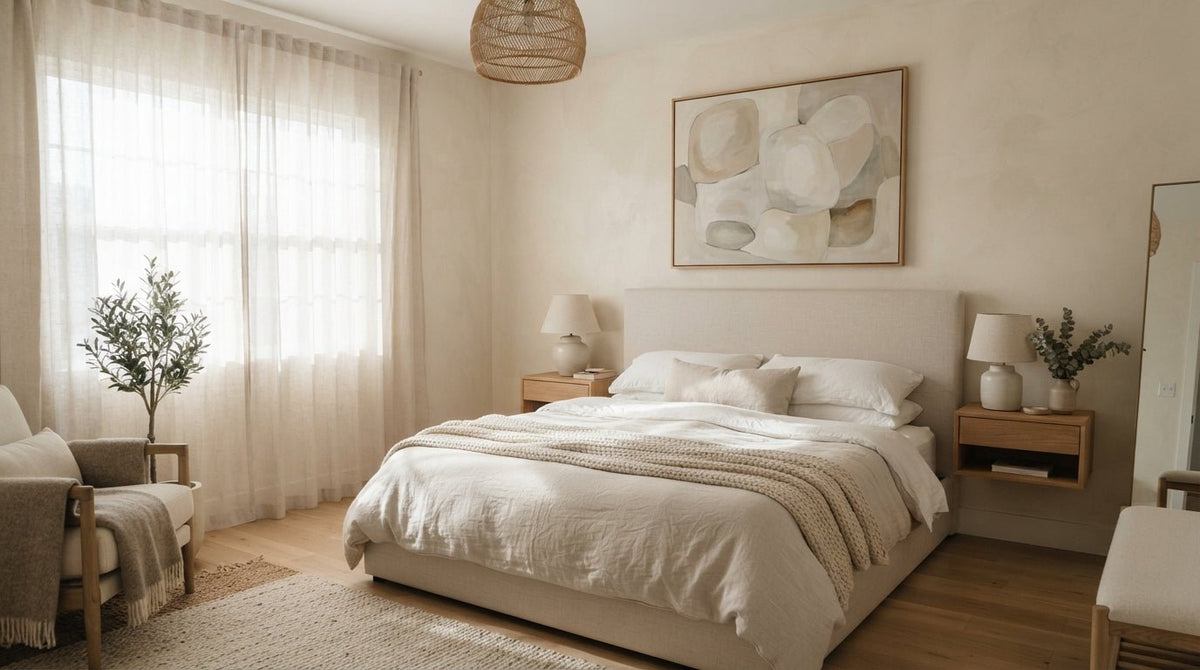
Deciding what to hang above bed feng shui guidelines recommend begins with choosing visually grounding, lightweight artwork that fosters deep rest. Traditional principles favor horizontal imagery, warm neutrals, and peaceful nature scenes that create a sense of protection without visual weight pressing down on your sleep space. Founder and artist Chiara Rossetti approaches bedroom wall design through balance, pairing gentle visual motifs with secure, glass-free materials.
Your headboard height, the room layout, and personal emotional connections dictate the most supportive placement for overhead art. Selecting peaceful subjects while avoiding suspended glass, mirrors, and active water imagery allows your sleep space to cultivate security and calm renewal night after night.
Transform Your Sleep Space
Discover soothing wall art curated specifically to encourage restful sleep and gentle balance in your sleeping quarters with free worldwide shipping.

Balanced wall artwork overhead creates an atmosphere of grounded tranquility above an upholstered headboard.
What is good to hang above your bed in feng shui?
Traditional feng shui recommends hanging gentle, uplifting imagery that inspires stability, rest, and safety above your bed. Ideal subjects include calm mountain landscapes, softly rolling hills, gentle abstract forms, and soothing earth tones that evoke warmth and ease. Lightweight canvas pieces without heavy protective glass provide the most peaceful presence overhead while supporting sound sleep.
In traditional environmental philosophy, the space directly over your head during sleep affects your subconscious sense of safety. Sleeping beneath bold, dynamic, or aggressive compositions can trigger subtle tension rather than restorative relaxation. Selecting art with steady horizontal lines reinforces physical and emotional groundedness throughout your resting hours.
Earth element imagery serves as a natural anchor behind the headboard. Soft mountain contours symbolize enduring support, functioning as a metaphorical shield that protects your personal energy field while you rest. Unlike sharp mountain peaks, rounded hills and soft horizons project gentle, enduring stability that encourages peaceful sleep.
Pairs within imagery also hold a cherished role in traditional Chinese spatial philosophy. Artwork showing pairs of trees, twin birds, or gentle dual forms supports feelings of harmony, balance, and partnership. Whether sharing a master suite or cultivating self-love in a solo bedroom, dual motifs reinforce compassionate connection and mutual support.
Choose artwork that evokes an immediate sense of peaceful relief when your eyes land upon it. If an image makes your heart race, stirs restless ambition, or evokes solitude, place it in an active living area instead of above your sleeping space.
Abstract art can work beautifully above the bed when the composition remains quiet, fluid, and uncluttered. Organic patterns in sandy beige, soft taupe, and pale clay deliver visual richness without overwhelming the nervous system. The goal is to invite calm stillness, transforming the wall behind the headboard into an extension of restful sanctuary.
A fitting example of this grounded approach is Silent Structure. This Rossetti Art piece features a satin-matte, low-glare finish that softens ambient light and avoids harsh reflections in the bedroom. Hand-stretched over a 1.25-inch hardwood stretcher frame, it comes ready to hang with no glass front. The artwork is printed with UV- and fade-resistant HP latex inks that are UL GREENGUARD Gold certified. Every product page has a Live Preview button that shows the artwork on your own wall before you buy.

Soft abstract compositions in warm earth tones offer visual serenity without dominating the bedroom environment.
Artistic simplicity directly influences how freely chi, or subtle life force, circulates through the primary resting zone. When an image contains ample breathing room, your personal energy feels unconfined during the night. Selecting calm prints with generous negative space lets your bedroom breathe naturally.
Is it bad feng shui to hang art above the bed?
Hanging art above the bed is not bad feng shui when you choose the right weight, subject matter, and mounting method. Traditional practitioners only caution against hanging heavy, imposing objects, glass frames, or aggressive scenes directly over your head. When selected mindfully, lightweight artwork above a supportive headboard creates harmony, beauty, and emotional security throughout the space.
The core reservation stems from subconscious vulnerability while lying down. If an overhead item looks heavy, fragile, or precariously balanced, your body remains subtly alert to potential danger. In feng shui terms, this lingering unease is exactly what the practice aims to avoid.
Centuries of classical wisdom emphasize the concept of a solid backing behind where you sleep. A solid wall behind your headboard signifies an unshakeable foundation for your health, career, and intimate relationships. Installing overly heavy framed art can inadvertently break this solid foundation, making the head of the bed feel unstable or threatened.
Exploring classical ideas in Positive Energy Placement: Feng Shui Bedroom helps illuminate how artwork interacts with sleep architecture. Balancing the five elements and honoring the commanding position of the bed lets you enhance chi flow across the entire room. When artwork overhead aligns with your personal need for safety, the bedroom transforms into a tranquil retreat.
Benefits of Thoughtful Above-Bed Art
- Creates a welcoming, centered focal point that anchors bedroom architecture naturally.
- Enhances emotional grounding when featuring tranquil landscapes or gentle abstract themes.
- Reinforces balanced partnership when incorporating paired elements or balanced horizontal lines.
Drawbacks of Imbalanced Overhead Art
- Heavy frames suspended with glass can produce low-level subconscious anxiety during sleep.
- Turbulent or chaotic imagery introduces unwanted visual stimulation into a quiet rest sanctuary.
- Overly tall vertical pieces can visually dominate the bed, throwing spatial balance out of alignment.
The physical construction of your art plays a significant role in creating spatial ease. Traditional wood frames and canvas wrapped over stretchers possess a natural lightness that metal and heavy float glass cannot match. Choosing canvas wall decor eliminates the hazards of falling glass fragments while maintaining refined aesthetic poise.
Secure anchoring provides the final layer of peace of mind. Using proper wall hardware matched to your wall type prevents shifting, wobbling, or crooked hanging. A piece that sits flush against the wall feels integrated into the home, fostering stability throughout your everyday sleep routine.

Mounting lightweight canvas flush against the wall produces a grounded, cohesive focal anchor for resting spaces.
If you prefer an entirely clear wall behind your head, that choice remains completely aligned with classical principles. You can easily position your favorite art piece on an adjacent wall opposite your bed, where you can view it upon waking. Listening to your intuition is always the highest rule in mindful home styling.
How far above a bed should a picture be hung?
A picture above the bed should be hung so its bottom edge sits comfortably above the headboard, keeping the visual center around eye level. The artwork should span roughly two-thirds to three-quarters the width of your headboard to maintain grounded proportions. This balanced spacing keeps the composition unified with the bed without crowding your pillows.
Maintaining clear separation between the top of the headboard and the base of your frame prevents an uncomfortable, cramped feeling. If the art hangs too close to your head, you might bump it while sitting up in bed to read or rest. Leaving open breathing room between furniture and art allows chi to move cleanly around the headboard.
Conversely, mounting art too high detaches the piece from the furniture below it, making it look as though it is floating aimlessly near the ceiling. In traditional spatial concepts, floating decor creates a feeling of ungrounded flightiness, whereas anchored decor promotes stability. Artwork should read as a cohesive, protective crown for the bed rather than an unrelated ceiling ornament.
Proportion proves just as vital as vertical hanging height. An undersized frame looks lost against a large headboard, while an oversized piece can overwhelm the bed and generate an oppressive atmosphere. You can study complete spatial layouts in Bedroom Wall Art Placement and refine your styling choices with What to Hang Over Bed.
- Select horizontal landscape or panoramic orientations that trace the natural resting position of the bed.
- Check that the artwork width measures narrower than the headboard so the frame remains gently nestled within the bed footprint.
- Center the artwork precisely over the headboard rather than the wall expanse to retain balanced symmetry.
- Avoid leaning unfixed frames on narrow display shelves directly above the pillows where movement could dislodge them.
A wonderful choice for balanced horizontal proportion is Coastal Silence Horizon. This wide-format Rossetti Art canvas suits the width of a headboard. It is hand-stretched over a 1.25-inch hardwood stretcher frame and features a satin-matte, low-glare finish with no glass front. The canvas arrives ready to hang, printed using fade-resistant HP latex inks that carry UL GREENGUARD Gold certification. Every product page has a Live Preview button that shows the artwork on your own wall before you buy.

Elongated horizontal layouts echo the horizon line, bringing serene spatial balance over wide beds.
When hanging split triptychs or multi-panel sets, maintain equal spacing between each canvas. Irregular gaps interrupt visual rhythm and create an unsettled feeling in the room. Keeping panels aligned produces a steady, harmonious skyline above your pillows.
What should you never hang above your bed in feng shui?
In traditional feng shui, you should never hang heavy mirrors, suspended glass frames, turbulent water scenes, or aggressive predators above your bed. These elements introduce excessive movement, visual weight, or subconscious tension into the primary zone of rest. Avoiding large mirrors and active water over the headboard supports quiet, undisturbed sleep night after night.
Mirrors positioned directly above or reflecting the bed are considered disruptive in classical schools of feng shui. Mirrors amplify and bounce light and energy across the room, preventing the atmosphere from quieting down for restorative sleep. A mirror overhead can also cause disorientation when waking in darkness, jarring the nervous system unnecessarily.
Water imagery represents another frequent misstep above headboards. While tranquil water features bring prosperity in social or entryway areas, placing water over the head symbolically conflicts with restful grounding. Traditional guidance, as summarized by Livingetc, cautions against active water imagery above the bed because it is associated with restlessness.
Sharp, angular shapes and weapons or martial imagery should also remain outside the sleep sanctuary. Ferocious animals, storm clouds, and stark geometric triangles produce what traditionalists call cutting energy or sha chi. Surrounding yourself with intense visual confrontation keeps your senses defensive when they should be surrendering to peaceful renewal.
| Choice | Traditional view | Why | Calm alternative |
|---|---|---|---|
| Large mirror | Skip | Bounces chi | Matte canvas art with soft earth tones |
| Waterfalls | Skip | Creates instability | Quiet mountain silhouettes or rolling plains |
| Glass frame | Skip | Heavy overhead | Lightweight wood-stretched canvas prints |
| Wild beasts | Skip | Aggressive mood | Gentle paired birds or botanical sketches |
| Solitary figure | Skip | Promotes isolation | Balanced abstract shapes or peaceful landscapes |
Artwork showing solitary, melancholic figures can reinforce personal feelings of loneliness or emotional isolation. If romantic harmony or self-contentment is your focus, surrounding yourself with uplifting scenes provides far better psychological support. Joyful abstractions or harmonious pairings gently invite emotional ease into daily routines.
Cluttered photo collages featuring dozens of family members or friends are best reserved for hallways or living rooms. While honoring loved ones is wonderful, having many watchful eyes overlooking the bed diminishes intimate privacy. Dedicate your sleeping wall exclusively to rest, personal connection, and restorative stillness.
See It on Your Wall Before You Buy
Test artwork proportions, tones, and placement directly in your room using our instant digital preview tool from your mobile phone or computer.
Heavy sculptural carvings or metal wall hangings also carry an oppressive energetic presence when suspended over the bed. The subconscious perceives hard, dense materials as a hazard waiting to drop. Choosing lightweight canvas wraps gives you rich artistic expression without any physical weight hanging over your pillows.
Which colors and subjects feel calm in a feng shui bedroom?
Gentle earth tones, soft skin shades, muted sage greens, and warm pastels create the calmest atmosphere in a feng shui bedroom. Complementary subjects include tranquil mountain ranges, serene meadows, soft botanicals, and meditative abstract patterns. These restorative elements lower sensory stimulation, helping your mind and body transition smoothly into restorative sleep.
In traditional Chinese thought, color represents tangible element energy that directly shifts the mood of an interior. Earth element colors like sand, warm taupe, cream, and terracotta provide stability, grounding relationships and calming anxious thoughts. When painted walls or overhead art incorporate warm neutrals, the entire bedroom feels anchored and protected.
Wood element tones, especially muted moss, sage, and pale celadon, support vitality, gradual healing, and personal renewal. Green symbolizes gentle renewal, making botanical prints and lush foliage studies deeply soothing behind the headboard. Choosing quiet herbal tones over electric greens preserves the peaceful nature of the resting zone.
Earth Tones
Warm beige, clay, and soft sand bring enduring stability, grounding the room and supporting restorative sleep cycles.
Gentle Wood
Pale sage and soft moss green encourage gentle healing, quiet personal growth, and refreshing daytime vitality.
Warm Pastels
Blush, cream, and dusty peach nurture compassionate tenderness, open emotional warmth, and relationship harmony.
Fire element shades such as bold scarlet, electric crimson, and neon orange are best avoided or used only in small accents. While fire ignites enthusiasm and romantic spark, high concentrations above the bed introduce restlessness and agitation. Muted blush, terracotta, and soft peach bring gentle warmth without igniting energetic friction.
Water colors require similar care; while soft sky blue promotes contemplation, intense navy and pitch black introduce heavy, cold stillness. Deep dark shades absorb light and can make the wall behind your head feel like a void. Balancing warm sandy pigments with faint cool undertones provides an ideal equilibrium.
A beautiful celebration of open space and grounding earth tones is Open Plains. This Rossetti Art print captures peaceful expansiveness through warm ochres, gentle sands, and soft cream tones. Produced with UV- and fade-resistant HP latex inks certified by UL GREENGUARD Gold, it is hand-stretched across a 1.25-inch hardwood stretcher frame. Its satin-matte, low-glare surface eliminates disruptive reflections, arriving ready to hang with no glass front. Every product page has a Live Preview button that shows the artwork on your own wall before you buy.

Warm neutral tones combined with wide open scenery create an immediate sense of quiet groundedness.
Ultimately, personal resonance remains your guiding compass when selecting colors and artistic themes. The most supportive artwork is one that brings an instant feeling of peace the moment you cross the bedroom threshold. Pairing traditional wisdom with your personal taste ensures your bedroom remains an authentic sanctuary.
Frequently Asked Questions
Can I hang family photos directly above my bed?
Traditional feng shui advises placing family portraits in living rooms or hallways rather than directly over the bed. Keeping the headboard area reserved for couple imagery or tranquil landscapes fosters emotional intimacy, restful privacy, and quiet restoration.
Is it acceptable to hang a single piece of art instead of pairs?
A single large artwork works wonderfully above the bed as long as its subject matter feels balanced and complete. Panoramic landscapes, wide horizontal abstracts, and balanced nature compositions anchor the room gracefully without feeling solitary.
Why should I avoid glass frames above the headboard?
Glass frames create harsh surface glare under bedroom lighting and carry significant physical weight over resting sleepers. Lightweight canvas prints eliminate the risk of heavy glass overhead while providing a soft, satin-matte finish that promotes tranquility.
What should I hang above my bed if I have no headboard?
If your bed lacks a headboard, hang a wide, horizontal canvas with solid mountain or landscape imagery to symbolically establish a protective backing. Choose warm, grounding earth tones to visually define the sleeping zone and reinforce a sense of stability.
Can I hang paintings featuring water anywhere in the bedroom?
Calm, serene water paintings are acceptable on walls away from the bed, but you should avoid placing turbulent water scenes directly above the headboard. Gentle streams or calm lake imagery placed opposite the bed bring refreshing balance without creating emotional restlessness.
Creating a Restful Bedroom Sanctuary
Curating the wall above your bed through traditional feng shui principles transforms your sleep space into an oasis of protection, balance, and renewal. By prioritizing lightweight canvas, serene nature subjects, and warm earth tones, you build a supportive environment that honors both safety and beauty. Take time to arrange your space mindfully so your bedroom remains a deeply comforting retreat for years to come.
About the Author: Chiara Rossetti is the founder of Rossetti Art, a canvas print and original art brand. She writes about interior design, wall art styling, and making a home feel alive.

About the Author
Chiara Rossetti
Chiara Rossetti is the founder of Rossetti Art, a canvas print and original art brand. She writes about interior design, wall art styling, and the art of making a home feel alive.


Leave a comment
This site is protected by hCaptcha and the hCaptcha Privacy Policy and Terms of Service apply.