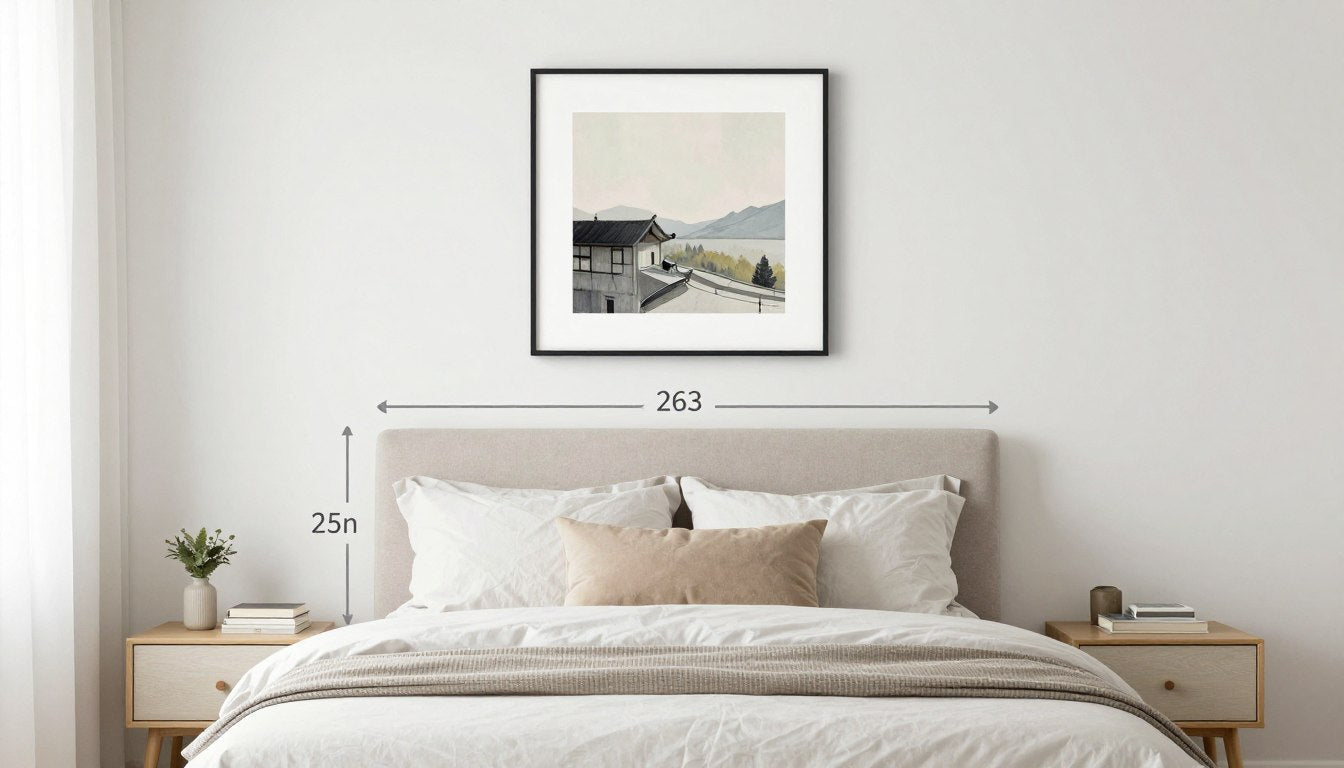
Transforming your bedroom with wall art isn't just about choosing pieces you love—it's about knowing exactly where and how to place them for maximum impact. Whether you're hanging a statement piece above your bed or creating a gallery wall, proper placement makes all the difference between a professionally designed space and a room that feels slightly off-balance. This comprehensive guide shares the exact measurements, proportions, and designer secrets for perfect bedroom wall art placement that creates harmony and enhances your sleep sanctuary.
Quick Placement Rules (TL;DR)

- Center art at eye level (57-60 inches from the floor) for walls without furniture
- Position art 6-10 inches above a headboard or furniture piece
- Size artwork to 2/3 to 3/4 the width of the furniture below it
- Maintain 2-3 inches between frames in gallery arrangements
- Balance visual weight—larger pieces lower, smaller pieces higher
- Avoid hanging art too high (a common mistake that disrupts room flow)
- Consider the room's focal point (usually the bed) when planning placement
- Choose calming subjects and colors for bedroom art to promote restfulness
Start With the Bedroom Focal Point (Usually the Bed)
The bed naturally serves as the focal point in most bedrooms, making the wall above it prime real estate for art placement. Starting your design plan here creates a natural foundation for the rest of your bedroom art decisions.
Above-bed placement: height + width ratios

When hanging art above your bed, follow these precise measurements for a perfectly balanced look:
- Height: Position the bottom edge of your artwork 6-10 inches above the headboard. This creates enough breathing room while maintaining visual connection.
- Width: Choose art that spans approximately 2/3 to 3/4 the width of your bed. For a queen bed (60 inches wide), aim for artwork around 40-45 inches wide.
- Centering: Align the center of your artwork with the center of the bed or headboard for perfect symmetry.
For beds without headboards, measure 24-29 inches from the top of the mattress to the bottom of your frame. This creates proper visual spacing while keeping the art at an appropriate viewing height when you're in bed. For more detailed guidance on what works best above beds, check out our What to Hang Over Bed guide.
One piece vs 2–3 piece sets vs gallery wall

Each arrangement style creates a different effect in your bedroom:
Single Large Piece
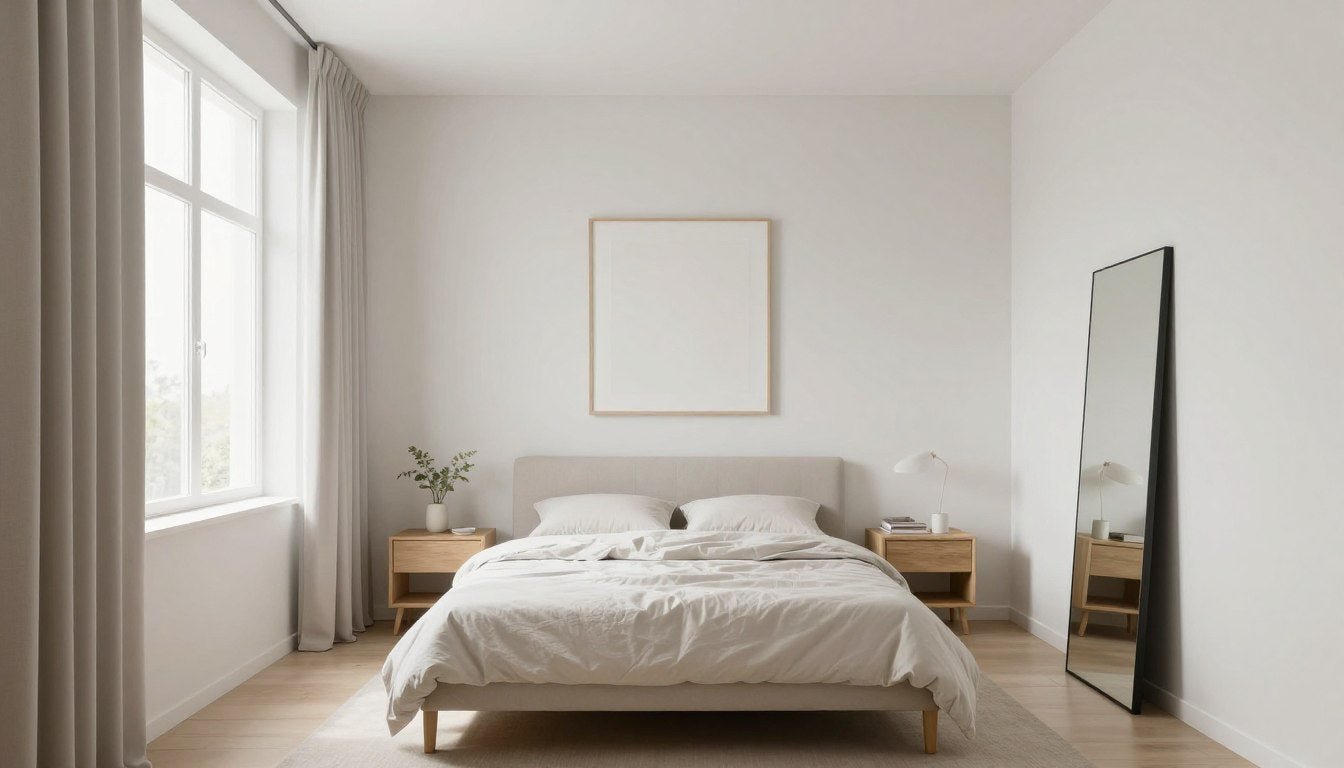
A statement piece creates a bold focal point and works well in minimalist bedrooms. Choose artwork that's 2/3 to 3/4 the width of your bed. This approach is ideal for showcasing a special piece like a large canvas print that can stand on its own.
Diptych or Triptych
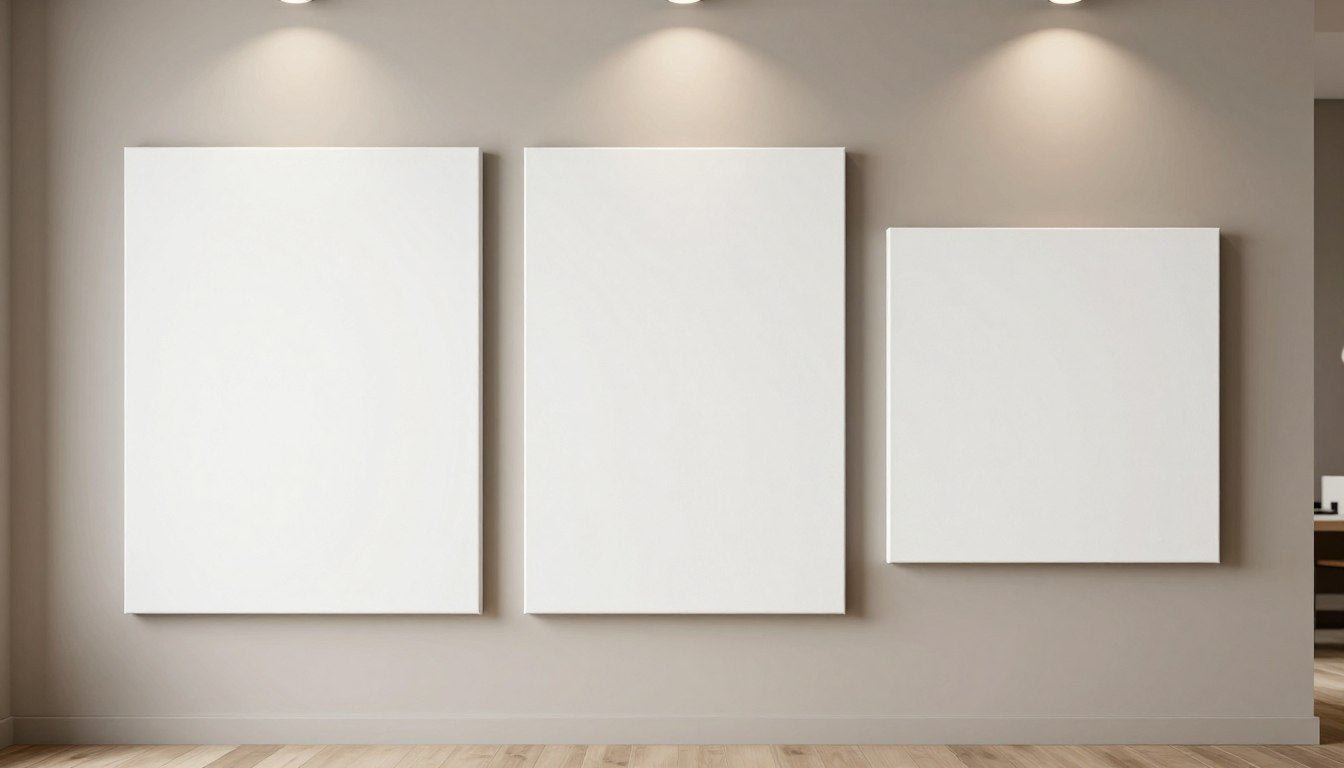
Sets of 2-3 coordinated pieces create elegant horizontal movement across the wall. Maintain 2-3 inches of space between frames and ensure the total width follows the 2/3 to 3/4 rule. This arrangement works beautifully with botanical or nature prints that tell a visual story.
Gallery Wall
For a more collected, personal look, create a gallery arrangement with 5-7 pieces. Keep the overall shape proportional to the bed width and maintain consistent spacing between frames. This approach works well for displaying a mix of personal photos and art pieces.
Designer Tip
For maximum impact with minimal effort, a single large piece or a simple diptych tends to create the most serene, designer-approved look in bedrooms. Save more complex gallery walls for living spaces where visual stimulation is more appropriate.
Bedroom Wall Art Placement by Wall Type
Beyond the bed wall, every surface in your bedroom offers unique opportunities for art placement. Each area has its own proportional rules and considerations.
Above the headboard

We've covered the basic measurements above, but here are some additional considerations for headboard art:
- For tall headboards (over 48 inches), consider skipping wall art entirely or use a very narrow horizontal piece
- With upholstered headboards, ensure art complements rather than competes with the fabric texture and pattern
- For platform beds without headboards, hang art slightly lower (18-24 inches above the mattress) to create a visual anchor
Over a dresser or console

Dressers and consoles provide perfect platforms for art display:
- Height: Position art 6-8 inches above the furniture surface
- Width: Artwork should be 2/3 to 3/4 the width of the dresser
- Proportion: Horizontal pieces typically work best above horizontal furniture
For added dimension, consider placing a small modern sculpture or decorative object in front of the art to create layered depth.
Over nightstands (pairing rules)

Nightstand art requires careful consideration of balance and scale:
- Use matching frames and similar sized art for a symmetrical, calming effect
- Position art 6-8 inches above nightstand surfaces
- Choose pieces slightly wider than your nightstands (by 2-4 inches on each side)
- Align the bottom edges of both art pieces at the same height, even if nightstands differ
Opposite the bed (what to avoid)

The wall you face while lying in bed deserves special consideration:
- Choose calming, non-stimulating imagery that promotes relaxation
- Avoid overly bright colors or high-contrast pieces that might disrupt sleep
- Position at standard eye level (57-60 inches to center) for optimal viewing while reclined
- If a TV occupies this wall, place subtle art to the sides rather than competing for attention
Feng shui principles suggest this wall should feature imagery that makes you feel peaceful and secure.
Reading nook / chair corner

Art in reading areas should enhance the cozy atmosphere:
- Position art at seated eye level (40-44 inches to center) for comfortable viewing
- Create a mini gallery wall with 3-5 small pieces for visual interest
- Consider theme-appropriate art like botanical prints or literary-inspired pieces
Tall narrow walls (vertical solutions)

Narrow wall spaces require specialized approaches:
- Stack 2-3 same-sized pieces vertically with 2-3 inches between frames
- Choose a single tall, narrow piece that fills approximately 2/3 of the wall height
- Maintain standard eye-level positioning for the center piece or the center of the grouping
Size & Proportion Guide (So the Art Never Looks "Too Small")

Artwork width vs furniture width rules
| Furniture Item | Ideal Art Width | Example |
| Queen Bed (60") | 40-45" (2/3 to 3/4) | Large landscape canvas or diptych |
| King Bed (76") | 50-57" (2/3 to 3/4) | Oversized canvas or triptych |
| Dresser (60") | 40-45" (2/3 to 3/4) | Horizontal print or mirror |
| Nightstand (24") | 16-20" (2/3 to 3/4 plus) | Small framed print |
| Empty Wall | 2/3 of available space | Gallery wall or statement piece |
Small room vs large room sizing
Small Bedrooms (Under 120 sq ft)
- Choose fewer, more impactful pieces rather than many small ones
- Consider one statement piece above the bed rather than a busy gallery
- Maintain proper proportions—small rooms don't necessarily need small art
- Use vertical arrangements to create the illusion of height
Large Bedrooms (Over 200 sq ft)
- Scale up artwork size to prevent pieces from looking lost
- Consider multiple art groupings for different zones (sleeping, reading, dressing)
- Use larger spacing between gallery pieces (3-4 inches)
- Oversized statement pieces can create dramatic focal points
For more detailed guidance on art sizing for different spaces, check out our Art Collection Overview with size recommendations.
Spacing, Alignment & Symmetry (Designer Clean-Lines)

Frame spacing standards
Consistent spacing creates a polished, professional look:
- Gallery walls: Maintain 2-3 inches between frames for a cohesive grouping
- Diptychs/triptychs: Keep 2-3 inches between pieces for connected flow
- Multiple walls: Create visual consistency by using the same spacing throughout the room
- Furniture spacing: Position art 6-10 inches above headboards and 6-8 inches above other furniture
Centering, grid alignment, and "visual weight"

Professional designers use these alignment principles:
- Centering: Align the middle of your artwork with the middle of the furniture below it
- Grid system: For gallery walls, imagine an invisible grid and align edges along these lines
- Visual weight: Place larger, heavier pieces lower and smaller, lighter pieces higher
- Balance: Distribute dark and light pieces evenly across an arrangement
For a quick alignment check, take a photo of your wall and draw straight lines through your arrangement—they should reveal a clear organizational structure.
Style Choices That Feel Right in a Bedroom
The bedroom calls for art that promotes relaxation and tranquility. Certain styles naturally lend themselves to creating a restful atmosphere.
Calm minimal / line art

Minimal art reduces visual stimulation for better sleep:
- Simple line drawings create elegant sophistication without overwhelming the space
- Limited color palettes promote tranquility and rest
- Abstract forms with gentle curves evoke relaxation
Our Line Art Canvas Prints collection offers perfect minimal options for bedroom spaces.
Botanical & nature softness

Nature imagery promotes proven relaxation benefits:
- Botanical illustrations add organic softness to bedroom walls
- Soft landscapes in muted tones create visual depth without stimulation
- Nature photography in gentle color palettes connects indoor spaces to the outdoors
Explore our Botanical & Nature Canvas Prints for bedroom-friendly options.
Black & white for serenity

Monochromatic art creates timeless sophistication:
- Black and white photography reduces visual stimulation
- High-contrast images create drama without color distraction
- Monochrome prints work with any color scheme and can transition through redesigns
Our Black & White Canvas Prints collection offers elegant options for serene bedroom spaces.
Warm metallic accents for cozy luxury

Metallic elements add warmth and sophistication:
- Gold-accented art adds subtle luxury without overwhelming
- Copper and bronze tones create warmth and coziness
- Metallic frames can elevate simple prints to statement pieces
For guest bedrooms that need extra sophistication, explore our Guest Bedroom Wall Art Ideas.
Sculptures: where they actually work

Three-dimensional art adds unexpected texture:
- Small wall-mounted sculptures work well flanking windows or doors
- Sculptural elements pair beautifully with minimalist bedrooms
- Consider shadow and lighting effects when placing 3D pieces
Explore our Modern Sculptures collection for bedroom-appropriate options.
Common Bedroom Art Placement Mistakes

Art Placement Done Right
- Art centered at eye level (57-60" from floor)
- Pieces sized proportionally to furniture (2/3 to 3/4 width)
- Consistent 2-3" spacing between frames
- 6-10" clearance above headboards/furniture
- Balanced visual weight across arrangements
- Properly centered above furniture
- Secure hanging with appropriate hardware
Common Mistakes to Avoid
- Hanging art too high ("gallery height" mistake)
- Choosing pieces too small for the wall
- Inconsistent spacing between frames
- Placing art too close to furniture
- Ignoring visual weight in arrangements
- Off-center placement above furniture
- Using inadequate hanging hardware
Before You Hang: Essential Checklist
Use this 10-step process to ensure perfect placement every time:
- Measure your wall space and furniture dimensions
- Calculate ideal art size (2/3 to 3/4 furniture width)
- Determine proper height (eye level or 6-10" above furniture)
- Create paper templates of your art
- Use painter's tape to mark positions
- Step back and evaluate from different angles
- Check lighting and glare throughout the day
- Ensure proper hardware for weight and wall type
- Use level and measuring tape during installation
- Take a photo to evaluate the final placement objectively
Recommended Next Reads

What to Hang Over Your Bed
Explore specific art styles and subjects that create the perfect focal point above your bed.
Read Guide
Guest Bedroom Styling
Create a welcoming retreat for visitors with these guest bedroom art placement strategies.
Read Guide
Feng Shui Bedroom Layout
Discover how to position bedroom art for optimal energy flow and restful sleep.
Read GuideFAQ
How high should bedroom wall art be hung above a headboard?
Art should be hung 6-10 inches above your headboard. This creates enough visual space while maintaining connection between the art and bed. For beds without headboards, position the bottom of your art 24-29 inches above the top of the mattress. Always center the artwork horizontally with the middle of your bed for balanced proportions.
What size art looks best above a queen/king bed?
For a queen bed (60" wide), choose art that's approximately 40-45 inches wide. For a king bed (76" wide), select pieces around 50-57 inches wide. This follows the designer rule of art being 2/3 to 3/4 the width of the furniture below it. If using multiple pieces, ensure the total arrangement width follows these same proportions.
Can you hang multiple frames above a bed without it looking busy?
Yes, with proper planning. For a calm effect, use matching frames and consistent spacing (2-3 inches between pieces). Limit your arrangement to 3-5 pieces in a horizontal line or grid. Choose art with a cohesive color palette and similar style. For bedrooms, simpler arrangements with fewer pieces generally create a more restful atmosphere than complex gallery walls.
How far should art be from the top of a dresser?
Position art 6-8 inches above a dresser or console. This creates proper visual spacing while maintaining connection between the furniture and artwork. If you display tall objects on the dresser surface, you may need to increase this distance slightly to 8-10 inches to prevent the arrangement from feeling crowded.
What's the ideal spacing between frames in a bedroom gallery wall?
Maintain 2-3 inches of consistent spacing between frames in a bedroom gallery wall. This creates a cohesive, organized look while giving each piece room to breathe. For larger bedrooms, you can increase spacing to 3-4 inches. Always use the same spacing throughout your arrangement for a professional, designed appearance.
Where should you not hang art in a bedroom?
Avoid hanging art directly above where you lay your head (for safety and peace of mind), too close to windows where natural light might cause fading, directly across from bright windows where glare could be an issue, or in positions that create uncomfortable reflections when lying in bed. Also avoid overcrowding walls—some negative space is essential for a restful environment.
How do I place wall art in a small bedroom without shrinking the space?
In small bedrooms, focus on one statement piece rather than multiple small pieces, which can feel cluttered. Position art at eye level or slightly higher to draw the eye up. Consider pieces with depth perspective or mirrors that create the illusion of space. Maintain proper proportions—small rooms don't necessarily need small art. In fact, one appropriately sized piece can make a small room feel more designed and spacious.
Is there a feng shui-friendly way to place bedroom art?
According to feng shui principles, bedroom art should evoke feelings of tranquility and romance rather than stimulation or anxiety. Place calming images on the wall opposite your bed (what you see when lying down). Avoid positioning art directly above your head. Choose imagery that represents what you want to attract—peaceful landscapes for tranquility, paired objects for relationship harmony. For more detailed guidance, see our Feng Shui Bedroom Layout guide.
Ready to Transform Your Bedroom Walls?
Now that you understand the designer rules for perfect bedroom wall art placement, it's time to find pieces that speak to your personal style while creating a restful sanctuary. Our curated collections offer options perfect for bedroom spaces—from calming botanicals to sophisticated abstracts.
Explore Canvas Prints for Bedrooms
About the Author
Chiara Rossetti
Chiara Rossetti is the founder of Rossetti Art, a canvas print and original art brand. She writes about interior design, wall art styling, and the art of making a home feel alive.

Leave a comment
This site is protected by hCaptcha and the hCaptcha Privacy Policy and Terms of Service apply.