
A small bedroom doesn't have to feel cramped or limiting. With thoughtful small bedroom design strategies, even the tiniest spaces can transform into serene, functional sanctuaries that feel surprisingly spacious. The key lies in understanding how to manipulate visual perception, maximize storage efficiency, and create a sense of calm through intentional design choices. Whether you're working with a studio apartment bedroom nook, a compact guest room, or a primary bedroom with limited square footage, this comprehensive guide will walk you through designer-approved techniques to make your small bedroom feel twice its actual size.
From strategic furniture placement that optimizes flow to clever storage solutions that eliminate visual clutter, we've compiled 21 space-smart ideas that interior designers consistently use to elevate small bedrooms. You'll discover how to create a room that not only functions beautifully but also feels like a thoughtfully designed retreat rather than a cramped afterthought. Let's transform your small bedroom into a space that defies its square footage.
Quick Wins (TL;DR Small Bedroom Design Rules)

- Create one focal wall to reduce visual noise and direct attention (typically the wall behind your bed)
- Emphasize vertical lines with tall curtains, vertical art arrangements, and bookcase styling to draw the eye upward
- Choose closed storage over open shelving to minimize visual clutter
- Stick to a light color palette with strategic dark accents for depth
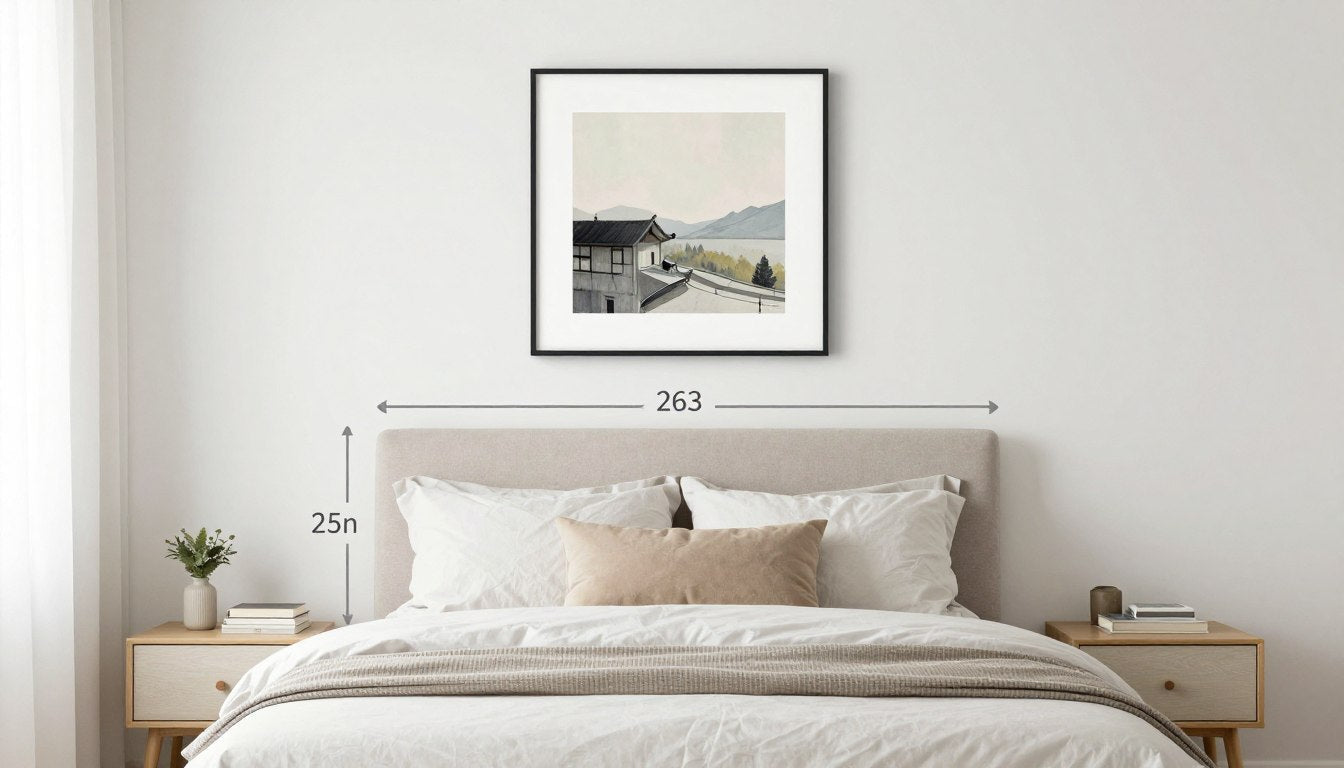
- Size artwork properly – aim for pieces that take up 2/3 of the wall space above furniture
- Place mirrors strategically to reflect light and create the illusion of more space
- Use wall-mounted or floating furniture to free up floor space
- Layer lighting with ambient, task, and accent sources
- Maintain negative space around key pieces to prevent a crowded feeling
- Choose multi-functional furniture that serves dual purposes
Start With Layout (The "Command Position" and Flow)

The foundation of any successful small bedroom design begins with thoughtful furniture placement. Before selecting decor or color schemes, you need to establish a layout that maximizes both physical and visual space while creating a sense of calm and order.
Best bed placement options in a small room
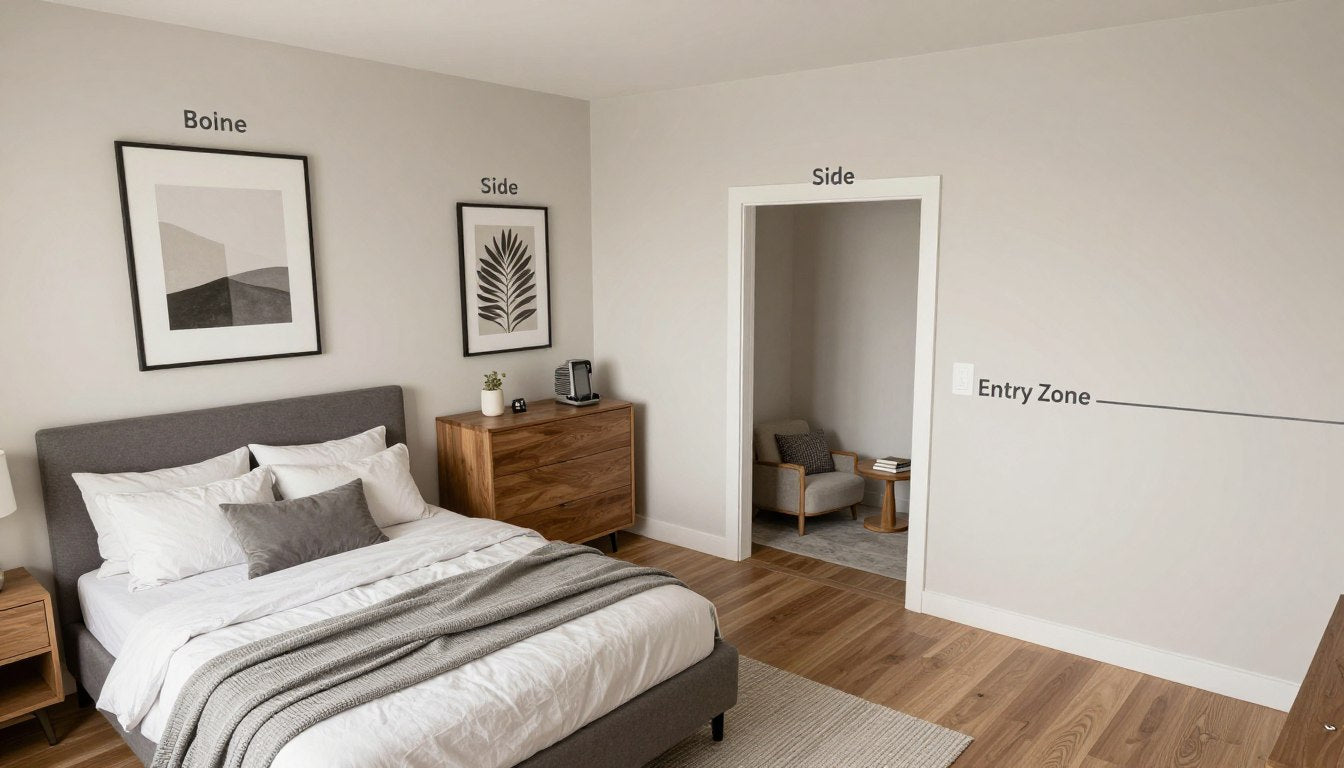
In feng shui principles, the ideal bed placement (known as the "command position") allows you to see the door while not being directly in line with it. This creates a sense of security and control over your space. For small bedrooms, consider these optimal placement strategies:
- Diagonal from the door: Position your bed so you can see the entrance but aren't directly in line with it
- Against the longest wall: This often creates the most efficient use of space
- Headboard against a solid wall: This provides stability and support (avoid placing under windows when possible)
- Center the bed: When space allows, centering the bed creates visual balance
- Allow for circulation: Maintain at least 24 inches of clearance around sides for easy movement
The way you position your bed impacts not just energy flow but also how spacious the room feels. A bed that blocks natural pathways creates both physical and visual congestion. For more detailed guidance on optimal bed placement that promotes positive energy, explore our comprehensive Feng Shui Bedroom Layout Rules + Wall Art Guide.
If the bed can't be in command position (practical fixes + calming art)

Sometimes architectural constraints make the ideal command position impossible. When you're forced to place your bed in a less-than-optimal position (such as under a window or directly facing the door), there are several design strategies to counterbalance this:
- Add a substantial headboard: This creates a sense of stability and protection
- Install calming artwork: Place depth-creating landscape art on the wall opposite or adjacent to the bed to create visual expansion
- Use a room divider: A decorative screen or curtain can redirect energy and create separation
- Add a mirror: Strategically place a mirror to "see" the door from the bed's position
- Create a focal point: Draw attention away from the bed's position with an artistic focal point elsewhere
When selecting art for a bedroom where the bed isn't ideally positioned, choose pieces that create a sense of expansiveness and tranquility. Landscape and scenery canvas prints work particularly well, as they add visual depth and create a window-like effect that makes the room feel larger.
Make It Feel Bigger Without Renovation
You don't need to knock down walls to create the illusion of more space in a small bedroom. Strategic design choices can dramatically alter perception and make your room feel significantly larger.
Color + contrast (when to go light, when to go moody)

The conventional wisdom that small spaces must be painted white isn't always true. What matters most is how you use color to manipulate perception:
- Light colors expand: Pale hues like soft whites, light blues, and gentle greens reflect light and make walls recede
- Dark colors with purpose: Deep colors can create depth when used intentionally on a single focal wall
- Monochromatic schemes: Using variations of one color creates a seamless flow that expands space
- Ceiling considerations: Painting the ceiling the same color as walls (or slightly lighter) removes visual boundaries
- Tonal balance: Maintain a 70/20/10 ratio for primary, secondary, and accent colors
For a small bedroom that feels both spacious and interesting, consider a minimalist approach with intentional negative space. Our guide to Minimalist Wall Decor That Doesn't Feel Empty offers practical strategies for creating breathing room while maintaining visual interest.
Mirrors + reflective moments (what not to reflect)

Mirrors are powerful tools for expanding small spaces, but their placement is crucial:
- Reflect natural light: Position mirrors to capture and amplify window light
- Reflect attractive views: Aim mirrors toward architectural features or art, not clutter
- Avoid reflecting the bed: This can create unsettling energy and disrupt sleep
- Consider leaning mirrors: A large floor mirror leaning against a wall creates depth
- Use mirrored furniture: Reflective surfaces on nightstands or dressers add light without overwhelming
Beyond mirrors, incorporate other reflective elements like glass lamps, metallic picture frames, or glossy ceramic accessories to bounce light throughout the space.
Vertical emphasis: curtains, tall art, narrow furniture

Drawing the eye upward creates the perception of higher ceilings and more space:
- Floor-to-ceiling curtains: Hang curtains from ceiling to floor, even if windows are smaller
- Vertical art arrangements: Stack art pieces or choose tall, narrow formats
- Tall, narrow furniture: Choose pieces that build up rather than out
- Vertical stripes or patterns: Subtle vertical elements in wallpaper or textiles elongate walls
- Bookcase styling: Arrange books and objects to create vertical lines and negative space
When selecting art for small bedrooms, consider pieces with strong vertical elements or compositions that draw the eye upward. Line art canvas prints often feature elegant vertical forms that enhance this effect while maintaining a clean, uncluttered aesthetic.
Storage That Looks Like Design (Not Stuff)
In small bedrooms, storage solutions need to pull double duty as both functional elements and aesthetic contributors. The goal is to maximize organization while minimizing visual clutter.
Wall-mounted nightstands + floating shelves

Floating furniture creates the illusion of more floor space, making the room feel less crowded:
- Wall-mounted nightstands: Install compact floating shelves or brackets with small drawers
- Floating shelves: Place at varying heights to create visual interest and functional storage
- Sconces instead of table lamps: Free up nightstand surface area with wall-mounted lighting
- Picture ledges: Use thin shelving to display art while providing minimal storage
- Height considerations: Install shelving high enough to create usable space beneath
Under-bed and "closed storage" rule

The "closed storage" rule is simple: whenever possible, hide items behind doors, drawers, or bins to reduce visual noise:
- Platform beds with drawers: Utilize the space beneath your mattress
- Decorative storage bins: Use attractive containers that slide under standard bed frames
- Wardrobes with doors: Choose closed closet systems over open hanging racks
- Ottoman storage: Select seating that opens to reveal hidden compartments
- Bed with headboard storage: Some designs include shelving or cabinets built into the headboard
One-surface styling formula (1 welcome object)

In small spaces, less is more when it comes to surface styling. Follow this simple formula:
- One focal object: Choose a single sculptural piece, vase, or art object as the anchor
- One functional item: Add one practical element like a lamp or clock
- Optional personal touch: If space allows, include one small personal item
- Maintain negative space: Leave at least 50% of the surface empty
- Consistent color palette: Ensure objects relate to your overall color scheme
For nightstands and dressers, consider a single decorative object that adds personality without cluttering the surface. Modern sculptures for home decor can serve as perfect focal points that add artistic interest while maintaining a clean aesthetic.
Wall Art in a Small Bedroom (The Non-Negotiable Rules)
Art plays a crucial role in small bedroom design, creating focal points and visual expansion when chosen and placed correctly.
Choose art that adds depth, not weight (over-bed guidance)

The right artwork can visually expand your space rather than crowding it:
- Landscapes and seascapes: Create "windows" that extend visual space
- Light palettes: Choose art with plenty of negative space and lighter tones
- Single statement piece: One larger piece often works better than multiple small ones
- Perspective and depth: Images with horizon lines or depth cues expand space
- Frame considerations: Opt for lighter frames or frameless canvas prints
When selecting art to hang above your bed, choose pieces that create a sense of expansiveness rather than heaviness. For expert guidance on selecting the perfect over-bed artwork, visit our detailed guide on What to Hang Over Bed: A Calm Focal Point.
Sizing: why "too small" breaks the room (2/3 rule summary)

Undersized art is one of the most common design mistakes in small bedrooms:
- The 2/3 rule: Art should span approximately 2/3 of the furniture width below it
- Scale to wall space: Aim for art that takes up 60-75% of available wall area
- Height placement: Center art at eye level (approximately 57-60" from the floor)
- Over-bed height: Hang art 6-8" above the headboard
- Grouping small pieces: If using smaller works, arrange them so the overall composition follows the 2/3 rule
Properly sized art creates visual harmony and prevents the disconnected, floating effect that comes from pieces that are too small for their wall space. For comprehensive guidance on selecting the right art dimensions for every room, explore our Wall Art Size Guide.
Minimalist wall decor that doesn't feel empty (breathing room)

Minimalist doesn't mean boring—it means intentional:
- Strategic negative space: Allow breathing room around key pieces
- Quality over quantity: Choose fewer, more impactful pieces
- Textural elements: Incorporate subtle texture through canvas, frames, or mixed media
- Line art and abstracts: Simple compositions with clean lines maintain visual calm
- Monochromatic pieces: Art in tonal variations of your room's palette creates cohesion
Creating a minimalist aesthetic that feels intentional rather than empty requires thoughtful curation. Black and white canvas prints offer sophisticated contrast while maintaining visual simplicity, perfect for minimalist small bedroom designs. For more strategies on achieving this balance, visit our guide to Minimalist Wall Decor That Doesn't Feel Empty.
Lighting That Makes the Room Feel Intentional
Warm bulbs, layered light, and simple art lighting

Thoughtful lighting transforms a small bedroom from cramped to cozy:
- Layer three types: Combine ambient (overall), task (functional), and accent (decorative) lighting
- Warm color temperature: Choose bulbs in the 2700-3000K range for a welcoming glow
- Wall sconces: Free up nightstand space with wall-mounted fixtures
- Picture lights: Highlight art with slim fixtures that add sophistication
- Dimmers: Install dimmer switches to adjust brightness for different moods
- Hidden lighting: Consider LED strips behind headboards or under floating shelves
- Scale appropriately: Choose fixture sizes that complement your room's dimensions
Proper lighting is especially important in guest bedrooms, where creating a welcoming atmosphere is key. For more ideas on creating an inviting guest space through thoughtful lighting and art placement, visit our Guest Bedroom Wall Art Ideas guide.
Small Bedroom Design "Space-Smart Blueprint"
| Problem | Design Move | Exact Rule | Best Wall Art Type | Best Product Category | Where to Place |
| Feels cramped | Focal wall | Create one feature wall (typically behind bed) and keep other walls simple | Single statement piece | Canvas print | Above bed |
| Low ceiling | Vertical emphasis | Hang curtains floor-to-ceiling; use vertical art arrangements | Tall, narrow format | Canvas print set (vertical arrangement) | Wall opposite bed |
| Clutter | Closed storage | Hide items behind doors/drawers; maintain 50% empty surface space | Minimalist with negative space | Line art canvas print | Above dresser |
| No storage | Multi-functional furniture | Choose bed with drawers; use wall-mounted nightstands | Floating shelves with small art | Small original paintings | Staggered on wall |
| Dark corner | Layered lighting | Include ambient, task, and accent lighting with warm bulbs (2700-3000K) | Light-reflecting or metallic | Canvas with metallic elements | Dark corner |
| Feels boxed in | Mirror angle | Position mirror to reflect window or attractive view, not clutter | Perspective landscape | Landscape canvas print | Wall adjacent to mirror |
| Feels bland | Textural contrast | Include 3 different textures within the same color family | Textured or 3D | Mixed media or small sculpture | Dresser vignette |
Small Bedroom Checklist (15 Steps)

- Measure your space and create a scaled floor plan before purchasing furniture
- Position your bed in the command position when possible
- Clear all surfaces of unnecessary items
- Choose a cohesive color palette with 70% primary color, 20% secondary, 10% accent
- Tape-mockup art placement on walls before hanging
- Ensure art follows the 2/3 rule in relation to furniture below
- Hang curtains floor-to-ceiling and extend rods beyond window frame
- Position mirrors to reflect light and attractive views
- Install layered lighting (ambient, task, accent)
- Replace bulky furniture with wall-mounted or floating alternatives
- Implement closed storage solutions to hide visual clutter
- Create one focal wall and keep other walls simpler
- Add vertical elements to draw the eye upward
- Include multi-functional pieces that serve dual purposes
- Edit ruthlessly – remove anything that doesn't serve a purpose or bring joy
12 Small Bedroom Design Mistakes (And Fast Fixes)

Common Mistakes
- Artwork too small for the wall space
- Too many small decorative items creating visual clutter
- Bulky nightstands that consume floor space
- No clear focal point to anchor the room
- Pushing furniture against walls without purpose
- Insufficient lighting (relying on one overhead fixture)
- Mismatched furniture without cohesive theme
- Oversized bed for the room dimensions
- Dark, heavy window treatments blocking light
- Area rug too small or improperly placed
- Open storage displaying visual clutter
- Ignoring vertical space for storage and design
Fast Fixes
- Size up to art that spans 2/3 of furniture width
- Edit down to one statement piece per surface
- Swap for wall-mounted or floating nightstands
- Create one feature wall (typically behind bed)
- Pull furniture slightly away from walls when possible
- Add bedside lamps and accent lighting
- Choose a consistent style and color palette
- Downsize to a bed that allows 24" clearance on sides
- Replace with light, floor-to-ceiling curtains
- Extend rug 18-24" beyond sides and foot of bed
- Add doors, drawers, or decorative bins to hide items
- Install floating shelves and tall, narrow storage
Recommended Reads (Internal Links)

Feng Shui Bedroom Layout
Discover how to position your bed for optimal energy flow and restful sleep.

Wall Art Sizing Guide
Learn the exact measurements for artwork that looks perfectly proportioned in any room.

Minimalist Wall Decor
Discover how to create visual interest with less for a calm, spacious feel.
Browse Our Art Collections
Find the perfect piece to transform your small bedroom with our curated collections of canvas prints, original art, and sculptures.
Explore All CollectionsFAQ
How can I make a small bedroom look bigger without painting?
You can create the illusion of more space without painting by:
- Using mirrors strategically to reflect light and views
- Installing floor-to-ceiling curtains to draw the eye upward
- Reducing visual clutter with closed storage solutions
- Choosing furniture with legs to create visible floor space
- Adding depth-creating artwork like landscapes or seascapes
- Implementing layered lighting to eliminate dark corners
- Using multi-functional furniture to reduce the number of pieces
The key is creating visual flow and minimizing visual interruptions that make the space feel confined.
What's the best bed placement for a small bedroom?
The ideal bed placement in a small bedroom follows these principles:
- Position the bed in the "command position" – where you can see the door without being directly in line with it
- Place the headboard against a solid wall for stability (avoid placing under windows when possible)
- Center the bed on the wall when space allows for visual balance
- Ensure at least 24 inches of clearance on the sides for easy movement
- Consider the diagonal placement if it creates better flow in an awkward layout
For more detailed guidance on optimal bed placement that promotes positive energy, explore our Feng Shui Bedroom Layout Rules.
Should I use one large artwork or several small frames in a small bedroom?
In most small bedrooms, one larger artwork is more effective than multiple small pieces because:
- A single statement piece creates a clear focal point that anchors the room
- Multiple small frames can create visual clutter and a busy feeling
- One larger piece is easier to properly scale to the wall space
- A single artwork with depth (like a landscape) can create the illusion of more space
If you prefer multiple pieces, consider a cohesive set of 2-3 related works that function visually as one unit. For expert guidance on selecting the perfect over-bed artwork, visit our What to Hang Over Bed guide.
What size wall art looks right above a bed in a small room?
For artwork above a bed in a small room, follow these sizing guidelines:
- The artwork should span approximately 2/3 of the bed width (not the entire wall)
- For a queen bed (60" wide), aim for art around 40" wide
- For a full bed (54" wide), aim for art around 36" wide
- For a twin bed (38" wide), aim for art around 25" wide
- Height should be proportional to width, typically 24-36" for most bedroom art
- Hang the bottom edge 6-8" above the headboard
For a comprehensive guide to art sizing for every room, visit our Wall Art Size Guide.
Are mirrors good in a small bedroom—and where should they go?
Mirrors are excellent for small bedrooms when placed strategically:
- Position mirrors to reflect natural light from windows
- Place opposite or adjacent to windows to maximize light reflection
- Avoid placing mirrors directly across from the bed (can disrupt sleep energy)
- Consider a full-length mirror on the back of a door or in a corner
- Use mirrored furniture for subtle reflective surfaces
- Ensure mirrors reflect attractive views, not clutter or mess
A well-placed mirror can visually double your space and increase natural light, making it one of the most effective tools for small bedroom design.
What colors make a small bedroom feel calm, not bland?
To create a calm yet interesting small bedroom, consider these color strategies:
- Soft blues and greens promote relaxation while adding subtle color
- Warm neutrals (ivory, taupe, greige) create warmth without heaviness
- Monochromatic schemes with textural variation add depth without busyness
- Pale lavender or blush tones add gentle color that still reflects light
- Add interest with 10-20% contrast in a darker or complementary hue
- Incorporate natural materials (wood, linen, clay) for organic color variation
The key is balance—too little color feels sterile, while too much can feel chaotic. For a sophisticated approach to color in small spaces, explore our Warm Minimalism guide.
How do I decorate a small guest bedroom so it feels intentional?
Create a welcoming small guest bedroom with these designer strategies:
- Choose a cohesive color palette that feels serene and intentional
- Include thoughtful lighting layers (ambient, reading light, soft accent)
- Add one statement art piece that creates a focal point
- Provide minimal but adequate storage for guests' belongings
- Include a small surface for personal items (floating shelf if space is tight)
- Add one luxurious touch (quality linens, a beautiful throw, or a small vase)
- Keep decor minimal but complete—avoid the "leftover room" feeling
For more detailed guidance on creating a welcoming guest space, visit our Guest Bedroom Wall Art Ideas guide.
What are the biggest small bedroom design mistakes?
The most common small bedroom design mistakes include:
- Choosing a bed that's too large for the room dimensions
- Using artwork that's too small for the wall space
- Cluttering surfaces with too many small decorative items
- Blocking natural light with heavy window treatments
- Relying on a single overhead light fixture
- Pushing all furniture against walls without purpose
- Using open storage that displays visual clutter
- Selecting bulky furniture that consumes floor space
- Creating a disjointed look with mismatched furniture
- Neglecting vertical space for storage and design
Avoiding these common pitfalls will help you create a small bedroom that feels spacious, functional, and intentionally designed.
Transform Your Small Bedroom Today
A small bedroom doesn't have to feel limiting—with the right design strategies, it can become a sanctuary that feels spacious, functional, and beautifully designed. By implementing the principles in this guide, from strategic furniture placement to thoughtful lighting and properly scaled artwork, you can create a space that defies its square footage.
Remember that in small bedroom design, less is often more. Focus on quality over quantity, maintain visual breathing room, and create one strong focal point rather than multiple competing elements. With intentional design choices, your small bedroom can become one of the most inviting and restful spaces in your home.
For more inspiration and to browse art collections specifically curated for small spaces, visit our Art Collection Overview.

About the Author
Chiara Rossetti
Chiara Rossetti is the founder of Rossetti Art, a canvas print and original art brand. She writes about interior design, wall art styling, and the art of making a home feel alive.

Leave a comment
This site is protected by hCaptcha and the hCaptcha Privacy Policy and Terms of Service apply.