
Warm minimalism offers the perfect balance between clean, uncluttered spaces and inviting, comfortable environments. If you've been drawn to minimalist interiors but worry about creating a cold, sterile space, this approach might be exactly what you're looking for. In this guide, we'll walk through five simple moves to transform any room into a warm minimalist haven, with special attention to how the right wall art can soften and complete your space. For a deeper dive into this aesthetic, be sure to check out our comprehensive warm minimalist interior design guide.
Quick Answer (Warm Minimalism in 30 Seconds)
Warm minimalism combines the clean simplicity of minimalist design with cozy elements that create comfort and visual interest. Here's the 5-move formula:
- Choose a warm neutral palette (cream, sand, taupe) instead of stark whites
- Layer natural textures (linen, wool, wood) rather than adding more objects
- Create soft lighting in layers (ambient, task, and accent)
- Edit thoughtfully by creating intentional "zones" with negative space
- Add one grounding focal point per room (this is where wall art shines)

What "Warm Minimalism" Really Means (and What It Doesn't)
Warm minimalism takes the core principles of minimalism—intentionality, simplicity, and clean lines—and infuses them with elements that create comfort and visual warmth. It's about creating spaces that feel both serene and welcoming, uncluttered yet lived-in.

Warm vs. Cold Minimalism (Why Some Minimalist Rooms Feel Sterile)
Traditional (Cold) Minimalism
- Stark white walls and surfaces
- Hard, polished materials (glass, chrome, glossy finishes)
- Sharp angles and geometric shapes
- Limited textures and monochromatic schemes
- Cool, bluish lighting
Warm Minimalism
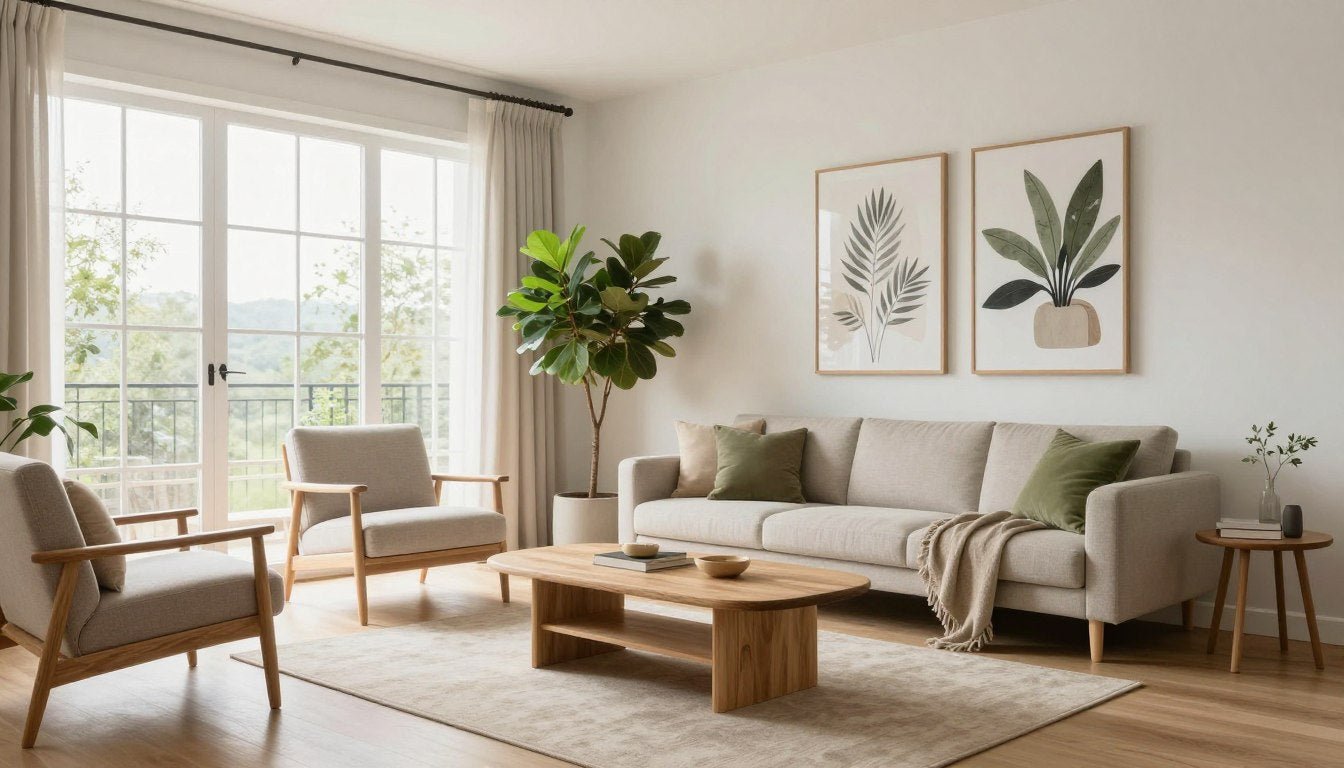
- Soft neutral tones (cream, beige, taupe)
- Natural, tactile materials (wood, linen, clay, wool)
- Organic shapes and gentle curves
- Layered textures within a limited palette
- Soft, amber-toned lighting
The 5 Simple Moves (The Framework)
Move 1: Choose a Warm-Neutral Palette
The foundation of warm minimalism begins with color. Instead of stark whites and cool grays, opt for warmer neutrals that create a soft, inviting atmosphere.

"The right neutral palette creates a canvas that feels warm even before you add a single piece of furniture."
Recommended warm neutrals:
- Warm whites (with yellow or red undertones)
- Cream and ivory
- Sand and beige
- Taupe and greige
- Soft terracotta and clay tones
Do this: Limit your palette to 2-3 warm neutrals with perhaps one accent tone.
Avoid this: Mixing too many cool tones (blue-grays, stark whites) with your warm palette.
Move 2: Layer Texture, Not Objects
The secret to warm minimalism is adding richness through texture rather than accumulating more items. This creates visual interest while maintaining the clean, uncluttered aesthetic.

Focus on incorporating:
- Natural linens for upholstery and curtains
- Wool and boucle for throws and cushions
- Raw or matte-finished wood for furniture
- Handmade ceramics and clay objects
- Woven elements like rattan or jute
Do this: Mix 2-3 contrasting textures within your neutral palette.
Avoid this: Using only smooth, polished surfaces throughout the space.
Move 3: Light in Layers
Lighting is crucial for creating warmth in minimalist spaces. The right lighting transforms a room from stark to inviting without adding clutter.

Create a warm lighting scheme with:
- Ambient lighting: Soft overhead fixtures or recessed lights with warm bulbs (2700-3000K)
- Task lighting: Simple desk lamps, reading lights, or pendant lights
- Accent lighting: Wall sconces, picture lights, or candles to highlight textures and art
Learn more about how to properly illuminate your wall art with our guide on how to hang a canvas print for optimal lighting and placement.
Do this: Use bulbs with warm color temperatures (2700-3000K).
Avoid this: Relying on a single overhead light source with cool-toned bulbs.
Move 4: Edit Clutter with "Zones"
Thoughtful editing is essential to warm minimalism, but it doesn't mean your space should feel empty. Create intentional zones that balance function with visual calm.

Try these zoning strategies:
- Designate one surface in each room to remain mostly clear
- Create conversation areas with thoughtfully placed seating
- Establish reading nooks with just the essentials
- Design functional workspaces with minimal distractions
- Use negative space intentionally to create visual breathing room
Do this: Edit items by asking "Does this serve a purpose or bring joy?"
Avoid this: Filling every surface or corner just because space is available.
Move 5: Add One Grounding Focal Point
Every warm minimalist room benefits from a single, intentional focal point that anchors the space and draws the eye. This is where wall art truly shines.

Effective focal points include:
- A statement piece of wall art
- A sculptural lighting fixture
- An architectural feature like a fireplace
- A single standout furniture piece
- A textural element like a handwoven wall hanging
Do this: Choose one main focal point per room that aligns with your warm neutral palette.
Avoid this: Competing focal points that create visual tension.
Wall Art Ideas That Make Warm Minimalism Feel Cozy (Not Empty)
Wall art is perhaps the most powerful tool for adding warmth to minimalist spaces. The right piece can transform a room from stark to inviting without adding clutter.
Best Art Styles: Neutral Abstracts, Line Art, Wabi-Sabi Textures

Neutral Abstracts
Abstract pieces in warm neutral tones add visual interest without overwhelming the space. Look for pieces with subtle texture and organic forms.
Explore our collection of neutral abstract canvas prints that perfectly complement warm minimalist spaces.
Minimalist Line Art
Simple line drawings create a sense of elegance and restraint. Choose pieces with organic, flowing lines rather than rigid geometric shapes.
Our neutral beige line art offers the perfect balance of simplicity and warmth.
Wabi-Sabi Textures
Art that embraces imperfection and natural textures adds depth and soul to minimalist spaces. Look for pieces with tactile qualities and earthy elements.
Browse our wabi-sabi wall art collection for pieces that celebrate natural beauty and imperfection.
Best Placements: Over Sofa, Bed, Entry, Reading Nook

Strategic art placement enhances the function and feel of each space:
- Living Room: Center a statement piece above the sofa, allowing for 6-8 inches of space above the furniture
- Bedroom: Position art above the bed to create a sense of calm and focus
- Entryway: Use vertical pieces to draw the eye up and create a welcoming first impression
- Reading Nook: Place smaller, intimate pieces near seating areas to create a sense of coziness
Best Scale: One Large Piece vs. Diptych/Triptych

Scale matters significantly in warm minimalist spaces:
- Single Large Piece: Creates a bold focal point and maximizes impact while maintaining simplicity (ideal for most warm minimalist spaces)
- Diptych/Triptych: Adds rhythm and movement while still feeling cohesive (works well in larger spaces or to fill a wide wall)
For guidance on selecting the perfect size for your space, check out our art print sizes guide.
Explore Original Textured Paintings
Add depth and warmth to your minimalist space with our collection of minimalist textured paintings that bring subtle dimension and organic beauty to any room.
View CollectionWarm Minimalism "Room + Art Pairing" Matrix
Use this handy reference to select the perfect art for each room in your warm minimalist home:
| Room | Goal | Color Temperature | Texture Cue | Best Wall Art Type | Size Range | Framing Note |
| Living Room | Inviting conversation | Warm neutral | Linen, wool | Neutral abstract | Large statement (36"x48" or larger) | Floater frame or unframed canvas |
| Bedroom | Serene retreat | Soft muted earth | Boucle, cotton | Minimalist line art | Medium to large (24"x36") | Minimal frame in natural wood |
| Entryway | Welcoming transition | Warm contrast | Wood, rattan | Vertical textural piece | Medium vertical (18"x24") | Simple wood frame |
| Dining Room | Elegant gathering | Rich neutral | Ceramic, linen | Horizontal abstract | Medium to large (30"x40") | Minimal frame or canvas |
| Home Office | Focused creativity | Soft contrast | Paper, wood | Wabi-sabi or line art | Small to medium (16"x20") | Simple matted frame |

For a truly unique focal point, consider an earth tones original painting that brings subtle depth and character to your space.
5-Move Checklist for Warm Minimalism
Use this simple checklist to ensure you've covered all the essential elements of warm minimalism in your space:
Warm Minimalism Checklist
- Palette chosen (3 neutrals max)
- 2–3 textures added
- Lighting layered (at least 2 sources)
- One surface cleared per room
- One statement art piece selected
Copy and save this checklist to use as you transform each room in your home.
Common Mistakes (and Quick Fixes)

Too-White Lighting
The problem: Cool, bluish lighting creates a sterile, unwelcoming atmosphere.
Quick fix: Replace bulbs with warm white options (2700-3000K) and add table lamps with fabric shades.
Too-Small Art
The problem: Undersized art looks lost on walls and fails to create impact.
Quick fix: Choose art that's at least 2/3 the width of the furniture it hangs above.
"Matchy" Decor
The problem: Everything in the same exact shade creates a flat, lifeless look.
Quick fix: Vary tones within your neutral palette and mix different textures.
No Texture Contrast
The problem: Smooth surfaces throughout create a cold, uninviting feel.
Quick fix: Add natural textiles like wool throws, linen pillows, or a jute rug.
Recommended Next Reads
Complete Guide to Warm Minimalism
Dive deeper into creating warm minimalist spaces throughout your home with our comprehensive guide.
Art Print Sizing Guide
Learn how to select the perfect size art print for any wall in your home.
How to Hang Canvas Prints
Master the art of hanging and lighting your wall art for maximum impact.
Frequently Asked Questions
What is warm minimalism in interior design?
Warm minimalism is an interior design approach that combines the clean, uncluttered aesthetic of minimalism with warm elements that create comfort and visual interest. It features warm neutral colors, natural materials, organic shapes, and textural variety while maintaining simplicity and intentionality in the space.
How do you make minimalism feel cozy?
To make minimalism feel cozy, incorporate warm neutral colors instead of stark whites, add natural textures like wool, linen, and wood, use soft ambient lighting with warm bulbs, include plants for living energy, and select art pieces with organic forms and tactile qualities. The key is adding warmth through quality and texture rather than quantity.
What colors are best for warm minimalism?
The best colors for warm minimalism include warm whites (with yellow or red undertones), cream, ivory, sand, beige, taupe, greige, soft terracotta, and clay tones. These colors create a neutral but inviting foundation. Limit your palette to 2-3 main colors for a cohesive look.
What kind of wall art fits warm minimalist decor?
Wall art that works well with warm minimalist decor includes neutral abstract pieces, minimalist line drawings, wabi-sabi textural art, organic forms, and pieces with subtle dimension. Look for art in warm neutral tones that adds interest without overwhelming the space. Natural materials and handmade qualities enhance the warm aesthetic.
How big should wall art be above a sofa in a minimalist living room?
Wall art above a sofa in a minimalist living room should be approximately 2/3 to 3/4 the width of the sofa. For a standard three-seat sofa, this typically means a piece that's 36-48 inches wide. The bottom edge should hang 6-8 inches above the sofa. In minimalist spaces, one larger piece often creates more impact than several smaller ones.
Can warm minimalism work in small apartments?
Yes, warm minimalism works exceptionally well in small apartments. The focus on fewer, more intentional pieces creates a sense of space, while the warm elements prevent it from feeling stark or cold. Use multi-functional furniture, create zones with area rugs, and incorporate wall art to add personality without taking up floor space.
What lighting temperature feels cozy (Kelvin) for warm minimalism?
For warm minimalism, choose bulbs with a color temperature between 2700K and 3000K. This range provides a warm, inviting glow similar to sunset light or traditional incandescent bulbs. Avoid bulbs above 3500K, which create a cooler, bluish light that can make spaces feel clinical rather than cozy.
Is wabi-sabi the same as warm minimalism?
While wabi-sabi and warm minimalism share some qualities, they're not the same. Wabi-sabi is a Japanese aesthetic that embraces imperfection, transience, and natural aging. Warm minimalism borrows some elements from wabi-sabi (appreciation of natural materials, organic forms) but maintains a more curated, intentional approach. Warm minimalism can incorporate wabi-sabi elements to add soul and character to spaces.
Creating Your Warm Minimalist Haven
Warm minimalism offers a beautiful balance between simplicity and comfort, creating spaces that feel both serene and inviting. By following our five-move framework and selecting the right wall art to complement your space, you can create a home that embodies the best of minimalist design without sacrificing warmth or personality.
For more inspiration and to explore our full collection of art pieces perfect for warm minimalist spaces, visit Rossetti Art wall art collections. Each piece is thoughtfully designed to bring warmth, texture, and visual interest to your minimalist home.


About the Author
Chiara Rossetti
Chiara Rossetti is the founder of Rossetti Art, a canvas print and original art brand. She writes about interior design, wall art styling, and the art of making a home feel alive.

Leave a comment
This site is protected by hCaptcha and the hCaptcha Privacy Policy and Terms of Service apply.