
As we look toward 2026, interior decorating trends are evolving in fascinating ways. This year's aesthetic landscape balances timeless elements with fresh perspectives, creating spaces that feel both current and enduring. Whether you're planning a complete home transformation or simply refreshing a single room, understanding these emerging trends—and how to thoughtfully incorporate them—will help you create spaces that resonate with both contemporary style and personal meaning.
In this comprehensive guide, we'll explore not just what's trending, but why these elements are gaining momentum and how to incorporate them through both major renovations and subtle touches. Most importantly, we'll provide a unique perspective on pairing these trends with art that enhances and elevates each aesthetic direction.
Quick Answers (TL;DR)

Headline Trends for 2026
- Color drenching (monochromatic rooms with depth)
- Biophilic design (bringing nature indoors)
- Warm minimalism (cozy yet uncluttered)
- Japandi (Japanese-Scandinavian fusion)
- Curved and organic shapes
- Statement lighting as sculpture
- Textural walls (limewash, plaster, paneling)
- Vintage revival with curated collections
- Moody earth tones
For the Trend-Cautious
- Warm minimalism (subtle texture updates)
- Biophilic touches (single statement plants)
- Vintage accent pieces (one statement find)
Trends That Photograph Well
- Color drenching (creates visual impact)
- Statement lighting (focal point in any space)
- Textural walls (adds dimension to photos)
Get Your 2026 Trend-to-Art Styling Matrix
Download our exclusive guide that pairs each interior trend with the perfect art style, subject matter, and framing approach.
Download Free Styling MatrixDecorating Trends vs Interior Design Trends (What People Mean)

Interior Decorating Trends
Decorating trends focus on the aesthetic layer of your home—the elements that can be changed without construction. These include color schemes, textiles, art, accessories, and movable furniture. Decorating trends tend to evolve more quickly and can be implemented with lower commitment and investment.
Examples: Gallery wall arrangements, throw pillow patterns, vase styles, lamp designs, and decorative objects.
Interior Design Trends
Design trends involve more structural and permanent elements of your space. These typically require professional assistance, permits, or significant renovation. Design trends evolve more slowly due to their higher investment level and permanence.
Examples: Kitchen layouts, built-in cabinetry, flooring materials, architectural details, and fixed lighting plans.
In this guide, we'll focus primarily on decorating trends while touching on some design elements that can be implemented through less invasive methods. This approach allows you to refresh your space without major renovations while still achieving a current, thoughtfully designed look.
The 2026 Trend Map (What's Rising, What's Evolving, What's Fading)

Interior trends don't simply appear and disappear—they evolve in response to how we live, work, and interact with our spaces. Understanding this cycle helps you make more informed decisions about which trends to embrace and how deeply to invest in them.
| Trend Status | Examples | Investment Approach |
| Rising | Color drenching, biophilic design, curved furniture, Japandi | Start with accessories and art that embrace these trends; consider larger pieces if they align with your long-term aesthetic |
| Evolving | Minimalism (becoming warmer), neutral palettes (adding texture), gallery walls (more curated) | Update existing elements with new styling approaches rather than complete replacements |
| Fading | All-white spaces, farmhouse style, fast furniture, matching furniture sets | Avoid major investments; if you love these styles, incorporate them in limited, updated ways |
Remember that trends are cyclical—what's fading now may return in a new iteration years later. The most sustainable approach is to borrow elements from current trends that genuinely resonate with you while maintaining a foundation of timeless design principles.
Top Interior Decorating Trends for 2026
Color Drenching

What it looks like: Color drenching involves using a single hue across multiple surfaces in a room—walls, trim, built-ins, and sometimes even ceiling and furniture. Rather than feeling flat, the approach creates depth through subtle variations in texture and finish. The effect is immersive, sophisticated, and surprisingly calming.
Key colors + materials:
- Deep, saturated tones: emerald, aubergine, navy, ochre
- Matte paint for walls, satin for trim
- Natural materials as accents: wood, stone, brass
- Textural elements to create depth within the monochrome
Best rooms for it:
- Dining rooms (creates intimate atmosphere)
- Libraries or studies (sophisticated, focused energy)
- Powder rooms (dramatic impact in small space)
- Bedrooms (cocooning, restful environment)
Try it in:
- 1 hour: Add accessories in varying shades of your chosen color
- 1 weekend: Paint one wall plus trim in your selected hue
- 1 month: Commit to a full room, including built-ins and possibly ceiling
Art pairing rules:
- Style: Abstract or photography works best
- Subject: Landscapes or organic forms that include your room color
- Framing: Thin frames in black or natural wood to avoid competing with the color story
Mistakes to avoid: Don't choose a color you're uncertain about—this trend requires commitment. Avoid using the exact same paint for all surfaces; slight variations in finish create necessary depth. Skip this trend in rooms that lack natural light, as it can feel oppressive rather than enveloping.
Looking for art that complements color-drenched spaces? Explore our collection of soft abstract pieces that work beautifully with monochromatic rooms.
View Abstract CollectionBiophilic Design

What it looks like: Biophilic design goes beyond simply adding houseplants—it's about creating meaningful connections to nature through materials, light, views, and organic forms. In 2026, we're seeing more sophisticated interpretations that integrate natural elements in thoughtful, architectural ways rather than as mere accessories.
Key colors + materials:
- Earthy palette: forest greens, clay, sand, stone
- Natural, minimally processed materials: wood, rattan, jute, linen
- Stone (especially travertine, marble with visible veining)
- Living elements: statement plants, living walls
Best rooms for it:
- Living rooms (create a calming gathering space)
- Home offices (improve focus and wellbeing)
- Bathrooms (spa-like retreat feeling)
- Transition spaces like entryways (connection to outdoors)
Try it in:
- 1 hour: Add a statement plant and botanical art print
- 1 weekend: Create a plant arrangement with varying heights and textures
- 1 month: Install natural material elements like wood paneling or stone surfaces
Art pairing rules:
- Style: Botanical illustrations, nature photography
- Subject: Plants, landscapes, organic forms
- Framing: Natural wood frames or floating in thin metal frames
Mistakes to avoid: Don't rely solely on artificial plants—the authenticity of real materials is central to biophilic design. Avoid creating a cluttered "jungle" look without thoughtful curation. Remember that biophilic design includes natural light—don't block windows with too many plants.
Enhance your biophilic space with our collection of botanical studies that bring nature's details into focus.
Explore Botanical ArtWarm Minimalism

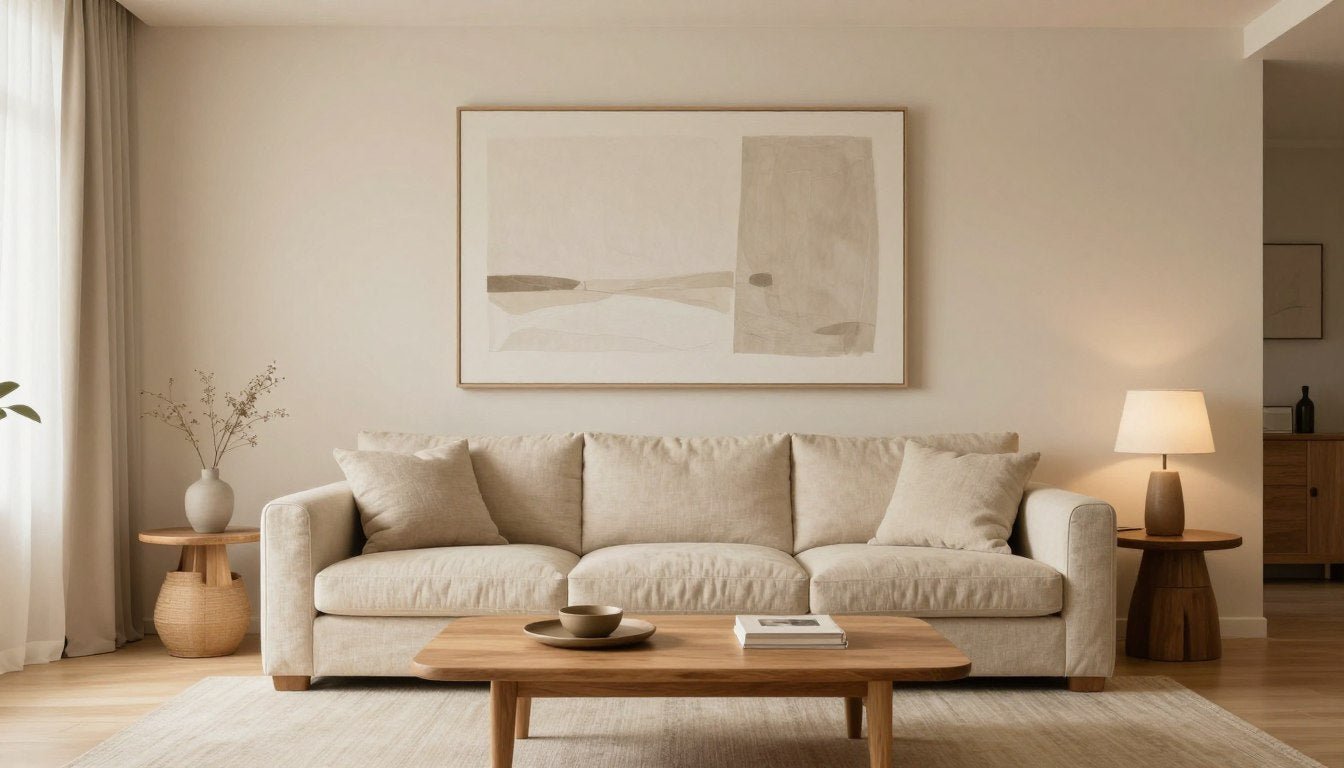
What it looks like: Warm minimalism retains the clean lines and thoughtful editing of traditional minimalism but softens the approach with natural materials, texture, and a warmer color palette. The result is spaces that feel both serene and welcoming—uncluttered but not austere.
Key colors + materials:
- Warm neutrals: oatmeal, camel, terracotta, soft white
- Natural wood in honey and medium tones
- Textural fabrics: bouclé, linen, cashmere
- Handmade ceramics with organic imperfections
Best rooms for it:
- Living rooms (creates calm gathering space)
- Bedrooms (promotes restful atmosphere)
- Home offices (reduces visual distraction)
- Kitchens (functional yet inviting)
Try it in:
- 1 hour: Edit out unnecessary accessories, keeping only meaningful pieces
- 1 weekend: Replace synthetic textiles with natural fibers in warm tones
- 1 month: Invest in a key furniture piece with clean lines in natural materials
Art pairing rules:
- Style: Minimal line art, subtle abstracts, quiet landscapes
- Subject: Simple forms, horizon lines, subtle textures
- Framing: Light wood frames or floating in thin metal frames
Mistakes to avoid: Don't confuse warm minimalism with stark, all-white spaces—texture and natural materials are essential. Avoid over-editing to the point of sterility; some personal touches are necessary. Skip cool-toned materials like chrome or gray-washed woods that counteract the warmth.
Our collection of minimal line drawings perfectly complements warm minimalist spaces with their elegant simplicity.
View Line Art CollectionJapandi Style

What it looks like: Japandi blends Japanese and Scandinavian design philosophies, creating spaces that are minimal yet warm, functional yet beautiful. The style emphasizes craftsmanship, natural materials, and a balance between visual calm and textural interest.
Key colors + materials:
- Neutral palette with contrast: charcoal, sand, natural wood
- Mix of light and dark woods
- Natural fibers: paper, bamboo, linen
- Handcrafted elements with visible craftsmanship
Best rooms for it:
- Living rooms (creates balanced, serene gathering space)
- Bedrooms (promotes restful simplicity)
- Dining rooms (focuses on ritual and gathering)
- Entryways (sets intentional tone for home)
Try it in:
- 1 hour: Edit accessories to keep only functional or meaningful items
- 1 weekend: Add a low-profile furniture piece in natural wood
- 1 month: Create contrast with a mix of light and dark wood elements
Art pairing rules:
- Style: Minimal abstracts, ink wash, simple nature photography
- Subject: Organic forms, landscapes with negative space
- Framing: Simple wood frames in either very light or very dark tones
Mistakes to avoid: Don't overload the space—editing is essential to Japandi style. Avoid purely decorative items without function or meaning. Skip trendy accessories that don't reflect authentic craftsmanship or natural materials.
Room-by-Room Trend Styling
Living Room

Key 2026 elements:
- Curved, organic furniture forms
- Statement lighting as sculptural art
- Textural walls (plaster, limewash, paneling)
- Curated mix of vintage and contemporary pieces
- Warm earth tones with high-contrast accents
Art approach:
- More curated, less cluttered gallery walls
- Oversized statement pieces in rooms with height
- Art that introduces organic shapes and texture
- Frames that complement rather than match furniture
Low-lift updates: Replace standard lampshades with sculptural options; introduce curved forms through accessories like vases and bowls; add textural elements through pillows and throws in natural fibers.
Bedroom

Key 2026 elements:
- Layered textures in neutral palettes
- Headboards in natural materials (wood, cane, bouclé)
- Vintage-inspired lighting with modern updates
- Thoughtfully edited nightstands
- Biophilic elements for improved sleep quality
Art approach:
- Serene, restful subjects (landscapes, abstracts)
- Cohesive color story that complements bedding
- Properly scaled pieces (neither too small nor overwhelming)
- Simple framing that doesn't compete with headboard
Low-lift updates: Layer natural fiber bedding in tonal variations; replace synthetic materials with natural alternatives; add a statement plant that thrives in bedroom conditions; update lampshades with warmer tones.
Kitchen + Dining

Key 2026 elements:
- Warm wood tones replacing all-white kitchens
- Statement lighting over islands and tables
- Mixed materials (stone with visible veining)
- Vintage-inspired dining chairs in contemporary settings
- Decorative yet functional open shelving
Art approach:
- Small-scale art in unexpected places (open shelving)
- Food-related subjects treated in contemporary ways
- Frames that can withstand kitchen conditions
- Collections of similar subjects for dining areas
Low-lift updates: Replace cabinet hardware with mixed metals; update lighting fixtures above islands or tables; style open shelving with a mix of functional items and small art pieces; introduce wood elements through cutting boards and serving pieces.
Bathroom / Powder Room

Key 2026 elements:
- Textural walls (especially in powder rooms)
- Statement mirrors as functional art
- Mixed metals with intentional contrast
- Color drenching for dramatic effect
- Vintage-inspired fixtures with modern function
Art approach:
- Moisture-resistant framing for full bathrooms
- Bold, unexpected choices for powder rooms
- Abstract forms that complement organic shapes
- Art that creates dialogue with statement mirrors
Low-lift updates: Replace builder-grade mirrors with statement options; update towels and accessories in on-trend colors; add a small stool or side table in natural materials; introduce plants that thrive in bathroom environments.
Entryway + Hallway

Key 2026 elements:
- Curated gallery walls in hallways
- Statement lighting that defines the space
- Mixed vintage and contemporary furniture
- Functional yet beautiful storage solutions
- Textural elements that create warmth
Art approach:
- Gallery walls with intentional curation
- Art that creates visual rhythm in hallways
- Statement pieces that set the tone for the home
- Cohesive framing that unifies diverse art styles
Low-lift updates: Create a more intentional gallery wall with cohesive framing; add a vintage console or bench; update lighting with a statement fixture; introduce a textural runner or small rug with natural fibers.
How to Choose Trends That Fit Your Home (A Simple Decision Framework)

Not every trend works in every space. This framework helps you evaluate which 2026 trends align with your home's inherent characteristics and your lifestyle needs.
| Home Characteristic | Best Trend Matches | Trends to Approach Cautiously |
| Low natural light | Warm minimalism, statement lighting, lighter wood tones | Color drenching (especially in dark hues), heavy textural walls |
| Low ceilings | Horizontal art arrangements, low-profile furniture, reflective surfaces | Oversized pendant lighting, vertical paneling |
| Warm undertones in fixed elements | Earth tones, warm minimalism, vintage revival | Cool-toned color schemes, stark contrasts |
| Cool undertones in fixed elements | Japandi, high-contrast accents, mixed metals | Warm wood tones without bridging elements |
| Limited maintenance tolerance | Warm minimalism, durable natural materials, simplified biophilic elements | Extensive plant collections, high-maintenance finishes |
When evaluating trends, consider both your home's physical characteristics and your personal lifestyle. The most successful spaces balance current aesthetics with practical livability and authentic personal expression.
Timeless Anchors (So Your Home Still Feels Good in 5 Years)

Even as you embrace 2026 trends, incorporating these timeless elements will ensure your space maintains its appeal beyond the current trend cycle.
Neutral Foundations
Invest in quality, comfortable seating in neutral tones that can adapt to changing accent colors and styles. Natural materials like wool, cotton, and linen age beautifully and can be reupholstered if needed.
Proper Proportion
Regardless of style trends, proper scale and proportion create visual harmony. Furniture should fit your space appropriately, with adequate circulation and relationship to architectural features.
Quality Textiles
Natural fiber rugs, quality window treatments, and well-made bedding create a foundation of comfort and quality that transcends trend cycles. These elements can be updated less frequently than decorative accessories.
Cohesive Art Presentation
While art subjects and styles may follow trends, a cohesive approach to framing creates visual continuity. Consider establishing a consistent framing strategy that can accommodate evolving art selections.
"The most enduring interiors balance trend awareness with personal meaning. When you incorporate elements that genuinely resonate with you—regardless of their trend status—your space will maintain its relevance and continue to bring you joy."
Common Mistakes (Trend Overload Checklist)

Too Many Statement Pieces
When everything is special, nothing is. Limit your space to 1-2 true statement elements per room, allowing them visual space to shine. Supporting elements should complement rather than compete.
Wrong Scale Relationships
Trend pieces in inappropriate sizes create visual discord. Ensure furniture fits your room dimensions, art is properly scaled to walls, and accessories relate proportionally to the surfaces they occupy.
Competing Patterns
Multiple trendy patterns can create visual chaos. When incorporating patterned elements, vary their scale (small, medium, large) and ensure they share at least one color to create cohesion.
Clashing Undertones
Trendy colors that conflict with your home's existing undertones create disharmony. Identify whether your fixed elements (flooring, countertops) have warm or cool undertones, and choose complementary trend colors.
Trend Balance Checklist
Before finalizing your design, ask yourself:
- Does each trend element have enough visual space?
- Are there clear focal points, or is everything competing for attention?
- Do the trends I've chosen complement my existing architecture?
- Have I incorporated personal elements alongside trend pieces?
- Would I still appreciate these choices if they were no longer trending?
Mini Glossary (Key Terms for 2026)
Color Drenching: Applying the same color across multiple surfaces in a room (walls, trim, built-ins) to create an immersive, sophisticated effect.
Biophilic Design: Creating meaningful connections to nature through materials, light, views, and organic forms to enhance wellbeing.
Warm Minimalism: A softer approach to minimalism that maintains clean lines and edited spaces while incorporating natural materials and warmer tones.
Japandi: A fusion of Japanese and Scandinavian design philosophies emphasizing craftsmanship, natural materials, and balanced simplicity.
Limewash: A textural wall finish made from crushed limestone that creates subtle movement and depth.
Statement Lighting: Fixtures that function as sculptural art pieces while providing illumination.
Mixed Metals: The intentional combination of different metal finishes (brass, black, bronze) within a cohesive design scheme.
Vintage Revival: Incorporating authentic vintage pieces or vintage-inspired elements for character and sustainability.
Curved Forms: Furniture and architectural elements with organic, rounded shapes that soften spaces and create visual interest.
Textural Walls: Wall treatments that add dimension through techniques like plaster, limewash, paneling, or textured wallcoverings.
Undertone: The subtle underlying hue in seemingly neutral colors that affects how they interact with other elements.
Negative Space: The intentional empty areas in a room or artwork that create visual breathing room and balance.
Color Story: A cohesive palette of colors that work together throughout a space or home.
Patina: The character and subtle changes that develop in natural materials as they age.
Curated: Thoughtfully selected and arranged elements that create intentional visual relationships.
2026 Interior Trend-to-Art Styling Matrix

This comprehensive matrix helps you pair 2026's top interior trends with art that enhances and elevates each aesthetic direction. Use it as a starting point for creating cohesive, designer-worthy spaces.
| Trend Name | Key Palette | Materials & Textures | Best Room(s) | Art Style Match | Subject Ideas | Frame & Finish | Safe vs. Bold Approach |
| Color Drenching | Emerald, aubergine, navy, ochre, burgundy | Matte and satin paint finishes, velvet, brass | Dining room, powder room, bedroom | Abstract, photography | Landscapes, organic forms, color studies | Thin black or natural wood; matte | Safe: Art with hints of room color Bold: Monochromatic art in same color family |
| Biophilic Design | Forest green, clay, sand, stone, moss | Wood, rattan, jute, linen, living plants | Living room, office, bathroom | Botanical, photography, naturalistic | Plants, landscapes, natural textures | Natural wood or thin metal; matte | Safe: Single botanical print Bold: Living wall with integrated art |
| Warm Minimalism | Oatmeal, camel, terracotta, soft white | Natural wood, bouclé, linen, handmade ceramics | Living room, bedroom, kitchen | Line art, subtle abstract, minimalist | Simple forms, horizon lines, subtle textures | Light wood or thin metal; matte | Safe: Minimal line drawing Bold: Oversized textural canvas |
| Japandi | Charcoal, sand, natural wood, soft black | Light and dark woods, paper, bamboo, linen | Living room, bedroom, entryway | Ink wash, minimal abstract, nature photography | Organic forms, landscapes with negative space | Simple wood in very light or very dark; matte | Safe: Black and white photography Bold: Large-scale ink wash painting |
| Curved & Organic Shapes | Cream, rust, olive, mauve, chocolate | Curved furniture, rounded ceramics, soft textiles | Living room, bedroom, dining room | Abstract, sculptural, fluid forms | Organic shapes, body forms, fluid lines | Rounded corners or floating; matte | Safe: Abstract with curved forms Bold: 3D sculptural wall art |
Download the Complete Trend-to-Art Styling Matrix
Get the full printable version with all 10 trends, detailed color palettes, and expanded styling notes.
Download Free Styling GuideFAQ
What are the biggest interior decorating trends in 2026?
The most significant interior decorating trends for 2026 include color drenching (using a single hue across multiple surfaces), biophilic design (meaningful connections to nature), warm minimalism (clean lines with natural materials), Japandi style (Japanese-Scandinavian fusion), curved furniture forms, statement lighting as sculpture, textural walls, and vintage revival. These trends reflect a broader movement toward spaces that balance visual interest with comfort and wellbeing.
What interior design trend is most timeless?
The most timeless approach to interior design focuses on quality materials, proper proportion, and personal meaning. Natural materials that develop character over time—such as wood, stone, and natural textiles—have enduring appeal regardless of trend cycles. Similarly, furniture with classic proportions and thoughtful craftsmanship tends to transcend specific eras. Spaces that reflect the inhabitants' authentic interests and experiences will always feel more relevant than those that strictly follow trends.
How do I update my home without changing furniture?
You can significantly refresh your space without replacing furniture by updating these elements: wall color (paint is the most transformative low-cost update), art and accessories (swap out for current styles), textiles (new pillows, throws, and rugs can completely change the feel), lighting (update fixtures and add ambient sources), and plants (introduce biophilic elements). Rearranging existing furniture can also create a fresh perspective and better flow.
Are neutral interiors still in style?
Yes, neutral interiors remain relevant in 2026, but they've evolved from the stark, cool-toned minimalism of previous years. Today's neutral spaces incorporate more texture, warmth, and natural materials—what designers call "warm minimalism." The key is creating depth through varying tones, textures, and materials rather than relying solely on color for visual interest. Neutral spaces also provide an excellent foundation for incorporating trend elements through accessories and art.
What colors are trending for interiors right now?
The 2026 color trends embrace both richness and subtlety. Deep, saturated hues like emerald, aubergine, ochre, and burgundy are popular for color drenching and statement pieces. Earth tones continue to dominate, with terracotta, olive, and clay appearing in both traditional and contemporary contexts. Warm neutrals (oatmeal, camel, soft white) provide balance and versatility. The overall palette is moving away from cool grays toward colors with more depth and natural inspiration.
How do I choose wall art that matches current trends?
When selecting art that complements current trends, consider both the style of the piece and its presentation. For 2026's biophilic trend, botanical prints and nature photography work beautifully. Warm minimalist spaces pair well with line drawings and subtle abstracts. For color-drenched rooms, choose art with complementary or tonal relationships to your wall color. Framing choices are equally important—thin black frames for contemporary spaces, natural wood for warm minimalist rooms, and more substantial frames for traditional settings. Most importantly, choose pieces that resonate with you personally, as art should transcend trend cycles.
Curator's Closing Note
As you consider which 2026 trends might find a home in your space, remember that the most compelling interiors are those that balance current aesthetics with personal meaning. Trends provide fresh inspiration and new perspectives, but your home should ultimately reflect your unique story and support your daily life.
The art you choose plays a crucial role in this balance—it can be both on-trend and deeply personal, creating a bridge between current design movements and timeless self-expression. We hope this guide helps you navigate the exciting possibilities of 2026's interior landscape with confidence and creativity.
Explore Art Collections That Complement 2026 Trends
Discover curated selections that pair beautifully with this year's most compelling interior directions.
Browse Collections
About the Author
Chiara Rossetti
Chiara Rossetti is the founder of Rossetti Art, a canvas print and original art brand. She writes about interior design, wall art styling, and the art of making a home feel alive.

Leave a comment
This site is protected by hCaptcha and the hCaptcha Privacy Policy and Terms of Service apply.