
Staring at blank bedroom walls can feel overwhelming. Should art hang at eye level? How high above the bed is too high? What about scale and proportion? These questions often lead to either bare walls or awkwardly placed pieces that never quite feel right. The truth is, proper art placement transforms a bedroom from a simple sleeping space into a thoughtfully designed sanctuary.
Whether you're styling a primary bedroom from scratch or refreshing your current space, understanding the fundamentals of art placement will help you create a room that feels both balanced and personal. This guide breaks down exactly where to hang wall art in the bedroom, with clear rules for height, scale, and positioning that will give you the confidence to decorate like a professional designer. If you're also mindful of energy flow in the room, our guide to feng shui-friendly art placement in the bedroom covers where to hang pieces for a calmer, more balanced space.
Quick Placement Rules: TL;DR
- Center artwork at 57-60 inches from the floor in open wall areas
- Position art 6-8 inches above a headboard or furniture piece
- Size artwork to 2/3 the width of the furniture it hangs above
- Keep 2-3 inches between pieces in gallery arrangements
- Hang bedside art at seated eye level if viewed primarily from bed
- Consider reflections and glare from windows and lighting
- Use secure mounting hardware appropriate for your wall type
- Maintain visual balance by varying art configurations on different walls
The Bedroom Placement Map (Start Here)
Before hanging a single piece, it helps to understand the key zones in your bedroom and how they function in the overall design. Each area has different considerations for scale, height, and style.

| Placement Zone | Best Art Format | Width vs. Furniture | Height Guideline | Pro Tip |
| Above Bed | Single horizontal, diptych, or triptych | 60-80% of headboard width | 6-8" above headboard | Choose calming subjects for better sleep atmosphere |
| Above Dresser | Single piece or vertical pair | 2/3 of dresser width | 4-8" above surface | Consider reflection if paired with a mirror |
| Side Walls | Vertical pieces or small groupings | N/A or aligned with nightstand | Center at seated eye level | Keep 12" clearance from sconces or lamps |
| Reading Nook | Single piece or small gallery | Proportional to seating | Center at 57-60" from floor | Add task lighting to highlight the artwork |
| Entry Wall | Statement piece or gallery wall | 2/3 of wall section | Center at 57-60" from floor | Creates first impression upon entering |
Above the Bed (The Focal Wall)
The wall above your bed is naturally the focal point of the bedroom, making it the prime location for your most significant piece of wall art. This area sets the tone for the entire room and is typically the first thing you notice when entering.

Width and Scale
For proper proportion, select artwork that spans approximately 60-80% of your headboard width. For a queen bed, this typically means artwork around 36-48 inches wide, while king beds can support pieces 48-60 inches wide. Anything smaller will look disconnected and floating, while oversized pieces may overwhelm the space.
Height Above Headboard
Position your artwork 6-8 inches above the headboard. This creates enough breathing room while maintaining a visual connection between the bed and art. If you don't have a headboard, measure about 10-12 inches from the top of your mattress or where a headboard would typically end.
For what to hang over the bed, consider the style that best complements your bedroom's design. Horizontal pieces typically work best in this space, as they mirror the shape of the bed below.
Single Piece vs. Multiple Pieces
While a single large piece creates a bold statement, a diptych (two-piece) or triptych (three-piece) arrangement can be equally effective. For multiple pieces, maintain 2-3 inches of space between frames and ensure the overall grouping follows the same width guidelines as a single piece.
A 2-3 piece canvas set creates a cohesive look while adding visual interest through multiple panels. These work particularly well above larger beds where a single piece might need to be prohibitively large.
Above the Dresser (Balance Without Clutter)
The dresser wall offers another prime opportunity for art display. The key here is creating balance with the dresser below while avoiding a cluttered look, especially if you also have items displayed on the dresser surface.

Scale and Proportion
Choose artwork that's approximately two-thirds the width of your dresser. This creates visual balance while leaving appropriate negative space on either side. For a standard 60-inch dresser, aim for artwork around 40 inches wide.
Height and Spacing
Position the bottom of your frame 4-8 inches above the dresser surface. This creates enough separation while maintaining a connection between the furniture and artwork. If you have tall items on your dresser, you may need to adjust slightly higher, but avoid exceeding 10 inches of space.
Pairing with Mirrors
If you have a mirror above your dresser, you can still incorporate art by:
- Hanging a piece beside the mirror (if space allows)
- Placing smaller framed pieces on the dresser surface
- Using the mirror as the art piece and complementing with wall sconces
For modern bedroom aesthetics, consider abstract focal pieces that add visual interest without competing with other elements in the room.
Side Walls & Bedside Areas (Yes—If You Do It Right)
The walls flanking your bed offer opportunities for more intimate art experiences, as these pieces will be viewed up close when you're in bed. These areas require careful consideration of scale and lighting to work effectively.

Symmetry Considerations
For a traditional, balanced look, use matching frames and similar artwork on both sides of the bed. For a more eclectic approach, maintain cohesion through consistent frame styles or color palette while varying the actual artwork.
Height for Bedside Viewing
Unlike other areas where standing eye level (57-60 inches) is the rule, bedside art should be positioned for seated viewing. The center of your artwork should be approximately 42-48 inches from the floor, allowing comfortable viewing from bed.
Clearance from Lighting
If you have wall sconces or tall bedside lamps, ensure your artwork has at least 12 inches of clearance to avoid creating awkward overlaps or shadows. This also prevents potential heat damage to your art from lighting fixtures.
Line art for a serene bedroom works particularly well in these intimate spaces, offering visual interest without overwhelming the area. The quiet, minimal line work creates a sense of calm perfect for bedside viewing.
Reading Nook / Seating Corner (The Easiest Win)
A bedroom seating area creates a natural opportunity for art display. This zone often feels separate from the sleeping area, allowing for more personalized or even energetic art choices that might not work directly above the bed.

Creating a Cohesive Vignette
The key to a successful reading nook is creating a complete vignette that includes:
- A comfortable chair or chaise
- Adequate lighting (floor or table lamp)
- Artwork positioned for seated viewing
- Optional small table for books or beverages
Art Placement for Seated Viewing
Position your artwork so the center is approximately 48-52 inches from the floor—slightly lower than standard eye level to accommodate seated viewing. This creates a more intimate experience when using the seating area.
Scale and Subject Matter
Choose artwork that's proportional to your seating arrangement. For a single chair, a medium-sized piece (24-36 inches) typically works well. Consider more detailed or narrative artwork here, as it will be viewed up close and for longer periods while reading or relaxing.
A minimalist abstract canvas with soft organic movement can create a perfect backdrop for a reading nook, adding visual interest without competing for attention when you're trying to relax with a book.
Gallery Wall in a Bedroom (When It Works, When It Doesn't)
Gallery walls can add personality and visual interest to a bedroom, but they require careful consideration to maintain the serene atmosphere most people desire in their sleeping space.

When Gallery Walls Work in Bedrooms
- When limited to one wall (typically entry wall or reading nook)
- When pieces share a cohesive color palette
- When spacing is consistent (2-3 inches between frames)
- When the overall effect remains calming rather than busy
When to Avoid Gallery Walls
- Directly above the bed (can feel visually heavy and disrupt sleep)
- When the room already has bold patterns or many design elements
- When pieces have vastly different styles or framing
- In very small bedrooms where they may overwhelm the space
Creating a Calm Composition
For bedroom gallery walls, aim for breathing room around artwork by using fewer pieces with more space between them than you might in a living area. This creates visual interest without sacrificing the tranquility essential to a bedroom.
Consider limiting your color palette and choosing frames that coordinate rather than match exactly. This creates a collected-over-time look that feels personal without becoming chaotic.
Lighting & Glare (The Bedroom-Specific Problem)
Bedrooms present unique lighting challenges for artwork display. From natural light that shifts throughout the day to bedside lamps that create potential glare, proper positioning requires thinking about how light interacts with your art.

Natural Light Considerations
Assess how sunlight moves through your bedroom throughout the day. Avoid placing artwork—especially pieces under glass—directly opposite windows where they'll catch glare. Instead, position art on walls adjacent to windows where natural light will illuminate them without direct reflection.
Bedside Lamp Positioning
If you have bedside lamps and want to hang art above or near them:
- Position art high enough to avoid direct light from the lamp
- Consider using canvas or non-reflective framing
- Adjust lamp height or use directional shades to control light
Art-Specific Lighting
For special pieces, consider adding dedicated art lighting such as:
- Small picture lights mounted to the frame or wall above
- Recessed adjustable ceiling fixtures directed at artwork
- Track lighting for gallery arrangements
Remember that bedroom lighting should remain soft and ambient overall, so art lighting should enhance rather than dominate the space.
3 Bedroom Layout Examples (Copy/Paste Setups)
To help visualize effective art placement in different bedroom styles, here are three ready-to-implement approaches that balance proportion, scale, and visual interest.

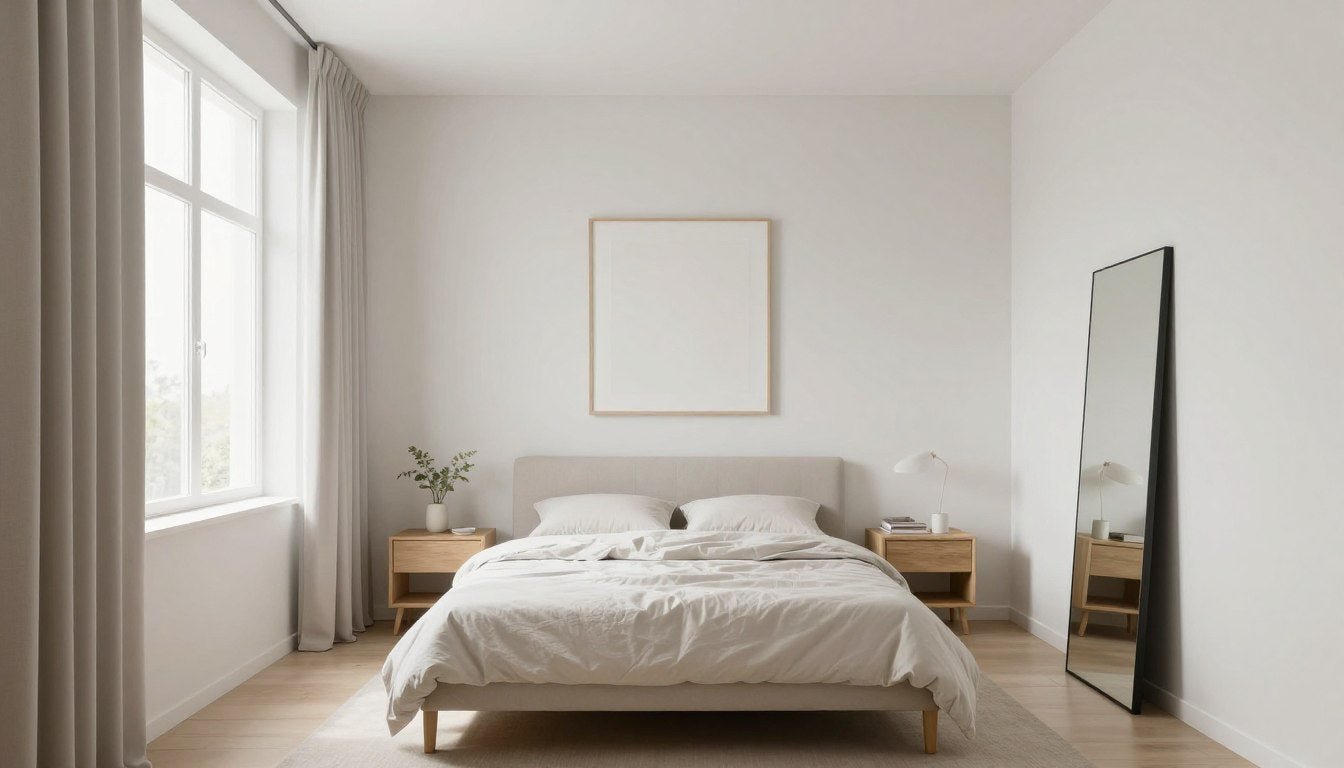
Minimalist Calm
Above Bed: Single large horizontal canvas (60% of headboard width) with subtle neutral tones
Dresser Wall: Simple mirror with clean lines
Side Walls: Intentionally left empty for maximum simplicity
Entry Wall: One medium vertical piece centered at eye level
Color Palette: Whites, beiges, and soft grays
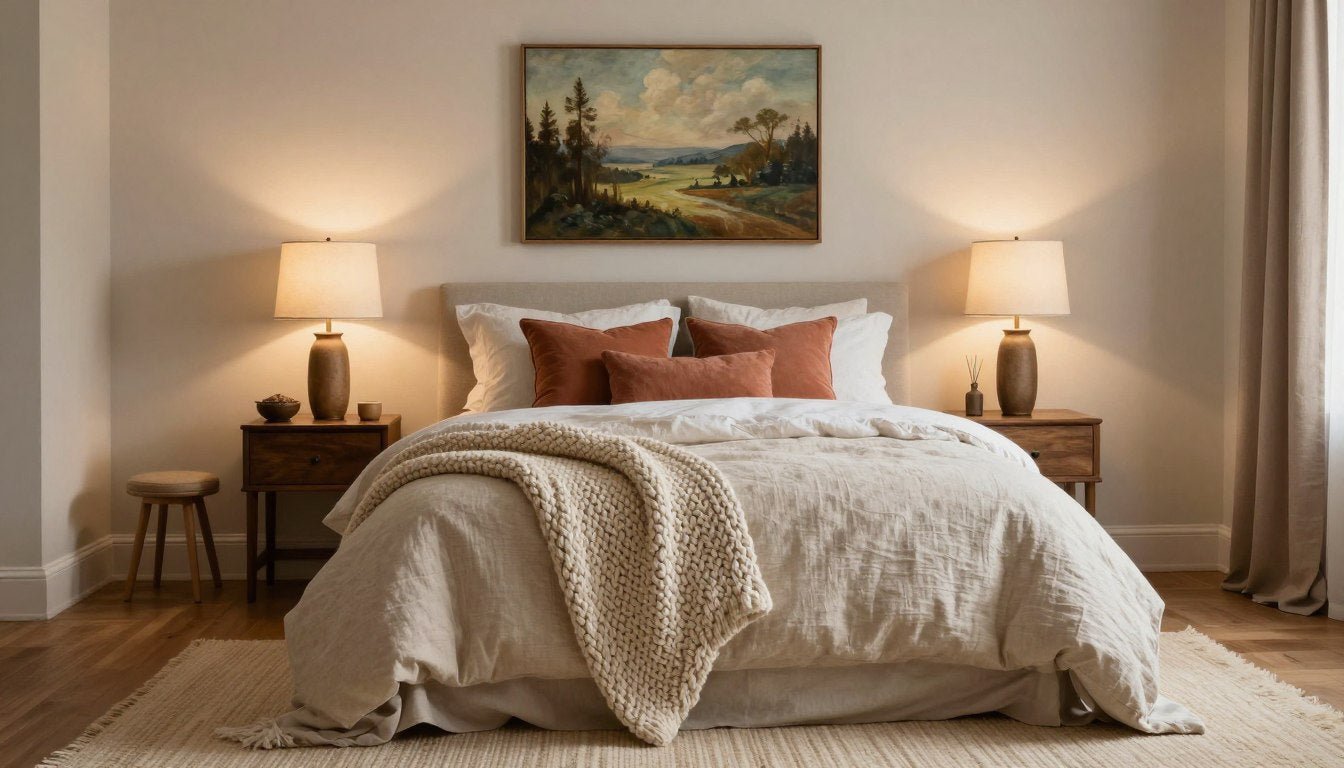
Warm Neutral
Above Bed: Triptych canvas set with 2" spacing between pieces
Dresser Wall: Round mirror flanked by two smaller vertical pieces
Side Walls: Matching framed prints above each nightstand
Reading Nook: Small gallery of 4-5 coordinated frames
Color Palette: Warm terracottas, taupes, and soft browns
Bold Modern
Above Bed: Large statement piece with vibrant colors (70% of headboard width)
Dresser Wall: Asymmetrical arrangement of three different-sized pieces
Side Walls: Sculptural sconces that double as art pieces
Entry Wall: Floor-to-ceiling gallery wall with black frames
Color Palette: Deep blues, emerald greens, and black accents
For a modern abstract bedroom look, consider how these calm abstract choices can serve as focal points while maintaining the restful atmosphere essential to a bedroom.
Bedroom Wall Art Placement Checklist (Do This / Avoid This)
Scale & Proportion
- DO: Size artwork to 2/3 the width of furniture below it
- DO: Consider ceiling height when selecting vertical pieces
- DO: Use larger pieces for focal walls (behind the bed)
- AVOID: Tiny artwork floating on large wall expanses
- AVOID: Pieces so large they extend beyond furniture below
Height & Spacing
- DO: Position art 6-8" above headboards and furniture
- DO: Center artwork at eye level (57-60") on open walls
- DO: Maintain 2-3" spacing between gallery pieces
- AVOID: Hanging art too high (common mistake)
- AVOID: Inconsistent spacing in grouped arrangements
Color & Mood
- DO: Choose calming subjects for above-bed placement
- DO: Coordinate with your color scheme (doesn't have to match)
- DO: Consider how colors appear in different lighting
- AVOID: Overly stimulating images directly above the bed
- AVOID: Too many competing colors in a small space
Lighting & Materials
- DO: Use non-reflective glass or canvas in high-glare areas
- DO: Consider how natural light changes throughout the day
- DO: Use proper hanging hardware rated for your art's weight
- AVOID: Placing framed art in direct sunlight (fading risk)
- AVOID: Heavy pieces above the bed without secure mounting
FAQ
Where should I hang art in a bedroom if I don't have a headboard?
Without a headboard, create a visual anchor by hanging art approximately 10-12 inches above the top of your mattress. The artwork should still follow the width guideline of spanning about 2/3 the width of your bed. Alternatively, you can use the artwork itself to create a headboard effect by hanging it slightly lower than you would with a physical headboard present.
How high should wall art be above the bed?
Wall art should be positioned 6-8 inches above your headboard. This creates enough visual separation while maintaining a connection between the bed and artwork. If your ceiling is particularly low (under 8 feet), you might reduce this to 4-6 inches to avoid crowding the space between the art and ceiling.
What size wall art works best over a queen vs king bed?
For a queen bed (60 inches wide), ideal artwork width is between 36-48 inches. For a king bed (76 inches wide), artwork should be approximately 48-60 inches wide. These dimensions follow the 2/3 width rule and create proper visual balance. If using multiple pieces, the overall arrangement should follow these same width guidelines.
Can I hang a gallery wall in a master/primary bedroom?
Yes, gallery walls can work beautifully in primary bedrooms, but they're generally best on entry walls or in reading nooks rather than directly above the bed. For a bedroom gallery wall, use fewer pieces with more breathing room between them than you might in a living space. Keep the color palette cohesive and choose frames that coordinate for a serene, collected look.
What's the best wall art placement above a dresser with a mirror?
When working with a dresser that has a mirror, you have several options: 1) Flank the mirror with smaller vertical pieces on either side, 2) Create a small gallery arrangement to one side of the mirror if space allows, or 3) Treat the mirror as your wall art and complement it with other decorative elements on the dresser surface. Ensure any artwork doesn't compete with the mirror for attention.
How do I avoid glare from bedside lamps?
To minimize glare from bedside lamps on your wall art: 1) Position artwork high enough to avoid direct light from the lamp, 2) Choose canvas prints or use non-reflective glass in frames, 3) Adjust your lamp height or use directional shades to control light spread, or 4) Select bedside sconces with controlled light direction instead of table lamps.
Should bedroom wall art match bedding or wall color?
Bedroom wall art doesn't need to match your bedding or wall color exactly, but it should harmonize with your overall color scheme. Look for artwork that picks up at least one or two colors from your bedding, curtains, or accessories. For the most timeless approach, choose art with a mix of your room's existing colors plus one accent color to add visual interest and depth to the space.
Creating Your Personal Sanctuary
Thoughtful art placement transforms a bedroom from a simple sleeping space into a personal sanctuary that reflects your aesthetic and brings you joy. By following these guidelines for where to hang wall art in the bedroom, you'll create a space that feels both professionally designed and uniquely yours.
Remember that while rules provide helpful structure, your bedroom should ultimately feel right to you. Trust your eye and your instincts—if a particular placement brings you happiness when you enter the room, that's what matters most.
If you're looking for pieces that fit your layout and mood, browse Rossetti Art's collections of canvas prints and wall art designed to create serene, beautiful bedroom environments. From minimalist abstracts to calming landscapes, you'll find pieces perfectly suited to your bedroom's unique character.

About the Author
Chiara Rossetti
Chiara Rossetti is the founder of Rossetti Art, a canvas print and original art brand. She writes about interior design, wall art styling, and the art of making a home feel alive.

Leave a comment
This site is protected by hCaptcha and the hCaptcha Privacy Policy and Terms of Service apply.