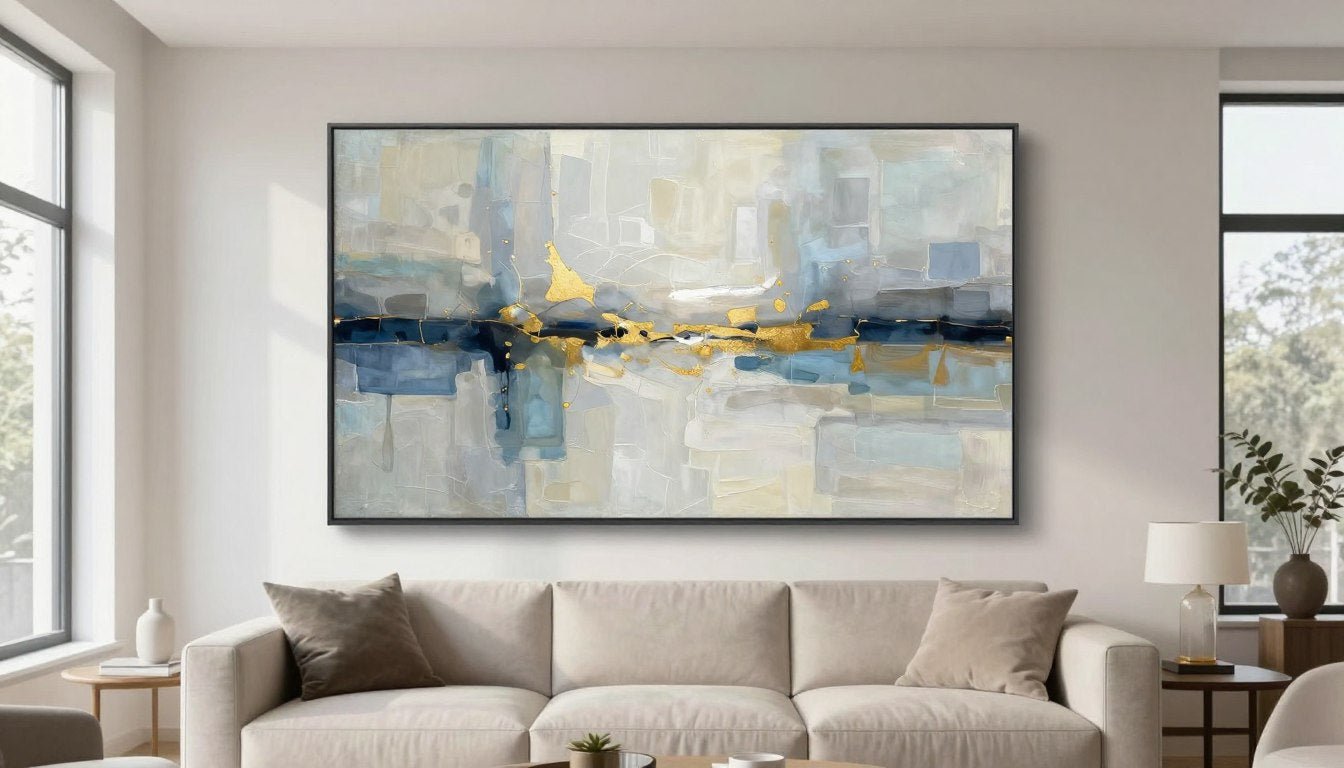
Modern abstract wall art has the remarkable ability to transform any space with its bold expressions and timeless appeal. Beyond mere decoration, these artistic pieces serve as visual anchors that define a room's character, evoke emotion, and reflect your personal style.
Whether you're styling a minimalist living room, creating a serene bedroom retreat, or designing a productive home office, the right abstract piece can elevate your space from ordinary to extraordinary. The beauty of abstract art lies in its versatility—it complements virtually any interior style while making a distinctive statement.
In this comprehensive guide, we'll explore how to select and style modern abstract wall art for every room in your home, with expert tips on sizing, placement, color coordination, and more.
Quick Guide: Modern Abstract Wall Art Essentials
- For living rooms, follow the 2/3 rule—your art should be approximately two-thirds the width of your furniture for proper proportion.
- Bedroom abstract art should typically align with your desired atmosphere—calming neutrals for relaxation or bold statements for energy.
- In home offices, position abstract wall art where it's visible during video calls to create a professional yet creative background.
- For dining rooms, consider abstract pieces that complement your table's shape—horizontal for rectangular tables, round or square for circular tables.
- Hang wall art at eye level (57-60 inches from the floor to the center) for optimal viewing in most spaces.
- When creating gallery walls, maintain 2-3 inches between frames for a cohesive, curated look.
How to Choose Modern Abstract Art for Your Space

Following the 2/3 rule ensures your abstract wall art creates perfect visual balance
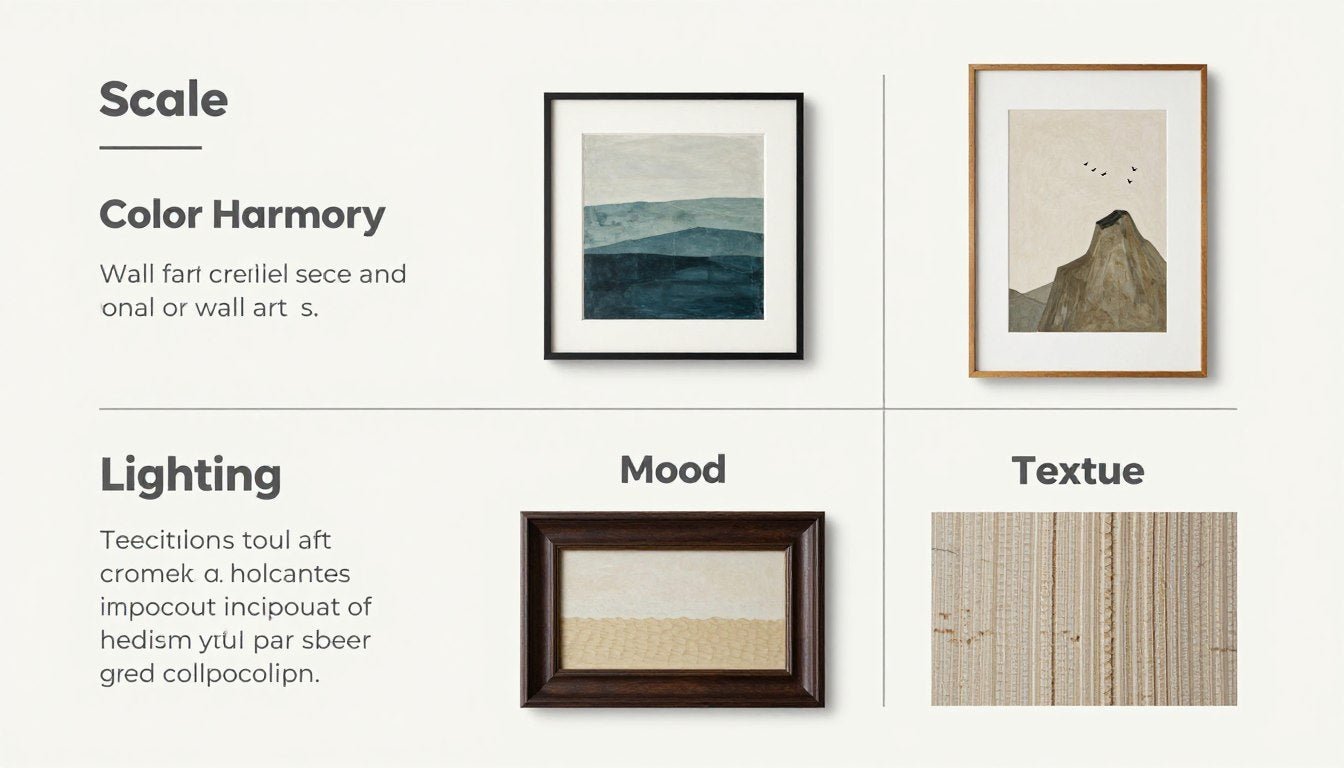
Scale & Proportion
The size of your abstract wall art relative to your wall and furniture is crucial for visual harmony. The 2/3 rule for wall art provides an excellent guideline: your artwork should be approximately two-thirds the width of the furniture it hangs above. For instance, a 60-inch sofa pairs beautifully with a 40-inch wide canvas or art grouping.
For empty walls without furniture, consider the wall's dimensions and the viewing distance. Larger rooms with high ceilings can accommodate oversized statement pieces, while smaller spaces benefit from moderately sized art that doesn't overwhelm the area.
Color Harmony vs. Contrast
When selecting abstract wall art, you have two primary approaches to color: harmony or contrast. Harmonious color schemes incorporate tones already present in your room for a cohesive, sophisticated look. This approach works particularly well in spaces designed for relaxation, like bedrooms and living rooms.
Alternatively, contrasting colors create visual interest and energy. A bold, vibrant abstract piece can serve as a focal point in an otherwise neutral room. This approach works wonderfully in entertaining spaces or areas where you want to make a strong design statement.
Mood & Energy
Abstract art profoundly influences a room's emotional atmosphere. Consider the mood you want to create:
- Calm & Serene: Look for minimalist abstract wall art with soft, flowing forms and a restrained color palette of neutrals, blues, or gentle pastels.
- Energetic & Dynamic: Choose pieces with bold colors, strong geometric shapes, or expressive brushstrokes that convey movement and vitality.
- Sophisticated & Elegant: Abstract art with metallic accents, high contrast black and white, or rich jewel tones creates a refined atmosphere.
- Warm & Inviting: Abstract pieces featuring earth tones, organic shapes, and textural elements foster a welcoming environment.
Lighting & Glare
Consider how natural and artificial light interact with your abstract wall art. Rooms with abundant natural light can showcase textured canvas prints beautifully, as changing daylight highlights different aspects of the piece throughout the day.
For art placed opposite windows or under direct lighting, be mindful of potential glare, especially with glossy finishes or glass-covered frames. In such cases, canvas prints or matte-finished art often perform better than high-gloss options.
Texture vs. Flat Print
The physical texture of your abstract wall art adds another dimension to your space. Textured canvas prints with visible brushstrokes or impasto techniques create depth and visual interest, particularly in minimalist or neutral rooms where texture becomes a focal element.
Flat prints, meanwhile, offer crisp detail and precision, making them ideal for geometric abstract designs or pieces with fine line work. Consider how the art's texture (or lack thereof) will complement your existing décor elements.
Modern Abstract Wall Art for the Living Room

The living room offers prime real estate for showcasing statement abstract wall art. As the heart of your home and often the first space guests experience, your living room abstract art sets the tone for your entire design aesthetic.
Best Looks for Living Rooms
For living spaces, consider these winning abstract styles:
- Large-scale statement pieces: A single oversized canvas creates a powerful focal point above a sofa or fireplace. The Chromatic Symphony canvas exemplifies how a bold, colorful abstract can anchor an entire room.
- Diptychs and triptychs: Multi-panel abstract art creates rhythm and movement across a wall while maintaining cohesion.
- Geometric abstracts: Clean lines and structured forms complement contemporary and mid-century modern living rooms, adding sophistication without overwhelming the space.
Color Palette Suggestions
Your living room abstract art can either complement or contrast with your existing color scheme:
- For neutral living rooms, consider abstract art with pops of 1-3 accent colors that can be echoed in smaller accessories like pillows and vases.
- In colorful living rooms, try abstract pieces that incorporate several tones already present in the space for a curated, intentional look.
- Black and white abstract art creates timeless sophistication and works with virtually any color scheme.
Sizing & Placement
For above-sofa placement, your abstract wall art should ideally measure two-thirds the width of your sofa. For a standard 84" sofa, aim for artwork (or a grouping) approximately 56" wide.
Hang your living room abstract art at eye level, with the center point approximately 57-60 inches from the floor. When hanging above furniture, maintain 8-10 inches of space between the bottom of the frame and the top of your sofa or console.
Styling Pairings
Complete your living room look by pairing your abstract wall art with:
- Textural elements like woven pillows or natural fiber rugs that contrast with the smooth canvas
- Metallic accents (brass, gold, silver) that pick up similar tones in your artwork
- Sculptural lighting that complements the artistic nature of abstract pieces
Living Room Statement Piece
Make a bold impression with large-scale abstract art featuring vibrant colors and dynamic movement. Perfect for creating a sophisticated focal point above sofas or mantels.
Explore modern canvas prints →Abstract Wall Art for the Bedroom

In the bedroom, abstract wall art contributes significantly to the room's atmosphere. Since this is a space for rest and rejuvenation, your art choices should align with the mood you wish to create—whether that's serene tranquility or romantic energy.
Best Looks for Bedrooms
Consider these abstract styles for bedroom spaces:
- Minimalist abstracts: Simple, flowing forms in neutral tones create a sense of calm, like the Soft Horizon minimalist canvas with its gentle blush tones.
- Organic abstracts: Pieces inspired by natural elements like water, stone, or clouds foster connection with nature and promote relaxation.
- Monochromatic abstracts: Single-color compositions in varying shades create subtle sophistication without visual distraction.
Color Palette Suggestions
For restful bedrooms, consider these color approaches:
- Blues and greens promote tranquility and are scientifically shown to lower heart rate and blood pressure.
- Warm neutrals (beige, taupe, soft browns) create a cozy, enveloping atmosphere.
- Soft pastels like blush, lavender, and pale blue add gentle color without overwhelming the senses.
- For a more romantic or energetic bedroom, deeper jewel tones or high-contrast black and white create drama.
Sizing & Placement
For above-bed placement, your abstract wall art should measure approximately two-thirds the width of your headboard or bed. For a queen bed (60" wide), aim for artwork around 40" wide.
Hang bedroom art 6-8 inches above your headboard. If you don't have a headboard, position the center of your artwork approximately 60-65 inches from the floor.
Styling Pairings
Enhance your bedroom abstract art with:
- Bedding in complementary tones that pick up colors from your artwork
- Soft, ambient lighting that highlights your art while creating a relaxing atmosphere
- Natural elements like wood, stone, or plants that balance the abstract forms
Abstract Wall Art for the Dining Room

Dining rooms offer excellent opportunities for conversation-starting abstract wall art. Since this space is often used for entertaining, your art can set the tone for memorable gatherings and stimulating discussions.
Best Looks for Dining Rooms
For dining spaces, these abstract styles work particularly well:
- Bold geometrics: Structured abstract forms with clean lines complement the typically structured elements of dining furniture.
- Abstract landscapes: Horizontal compositions that suggest natural vistas create depth and expansiveness.
- Color-field abstracts: Large blocks of color create dramatic impact and can influence the dining experience through color psychology.
Color Palette Suggestions
Consider these color approaches for dining room abstract art:
- Warm colors like red, orange, and gold stimulate conversation and appetite—ideal for entertaining spaces.
- Cool blues and greens create a calming atmosphere for more intimate or formal dining experiences.
- High-contrast black and white with metallic accents adds sophistication that works well with both traditional and contemporary dining rooms.
Sizing & Placement
For dining rooms, abstract art should relate to your table's proportions. For rectangular tables, horizontal pieces work best. For round tables, square or round compositions create harmony.
Size your dining room art in proportion to your wall, typically 2/3 to 3/4 the width of your table. Hang at eye level when seated (slightly lower than standard eye level) for optimal viewing during meals.
Styling Pairings
Complete your dining room look by pairing abstract art with:
- Statement lighting that complements the style of your artwork
- Table linens or centerpieces that incorporate colors from your abstract piece
- Dining chairs with interesting forms that echo shapes found in your artwork
Abstract Wall Art for the Home Office

In home offices, abstract wall art serves dual purposes: inspiring creativity during work hours and creating a professional backdrop for video calls. The right piece can stimulate productivity while expressing your professional personality.
Best Looks for Home Offices
These abstract styles work exceptionally well in work spaces:
- Minimalist abstracts: Clean, uncluttered compositions like the Whisper of Infinity canvas promote focus and clarity.
- Geometric abstracts: Structured forms with precise lines suggest organization and analytical thinking.
- Dynamic abstracts: Pieces with movement and energy can stimulate creative thinking and problem-solving.
Color Palette Suggestions
For productive work environments, consider these color approaches:
- Blues promote concentration and cognitive performance—ideal for tasks requiring focus.
- Greens reduce eye strain and create balance between calming and energizing effects.
- Neutral abstracts with pops of yellow or orange add energy without distraction.
- Black and white compositions create sophistication and minimize visual noise.
Sizing & Placement
For home offices, consider the visibility of your abstract wall art during video calls. Position key pieces within the camera frame to create a professional, designed background.
For behind-desk placement, choose art that's proportional to your desk width. Hang at standard eye level (57-60 inches to the center) for optimal viewing while seated.
Styling Pairings
Enhance your office abstract art with:
- Task lighting that properly illuminates both your work surface and your artwork
- Desk accessories in complementary colors or materials that reference your art
- Plants or natural elements that balance technology and add life to the space
Home Office Inspiration
Elevate your workspace with sophisticated abstract art that promotes focus and creativity. Perfect for creating professional video call backgrounds.
Explore abstract & geometric prints →Abstract Wall Art for Hallways & Entryways

Hallways and entryways present unique opportunities for abstract wall art. These transitional spaces make first impressions and connect different areas of your home, making them perfect for gallery walls or statement pieces that set the tone for your entire interior.
Best Looks for Hallways & Entryways
Consider these approaches for corridors and entrance areas:
- Gallery walls: Curated collections of smaller abstract pieces create visual interest along hallways. Learn more about creating stunning gallery walls.
- Vertical abstracts: Tall, narrow compositions maximize impact in limited wall space.
- Series of related abstracts: Collections that share a color palette or theme create continuity through longer corridors.
Color Palette Suggestions
For welcoming transitional spaces, consider these color approaches:
- Neutral abstract art with subtle texture creates sophistication without overwhelming narrow spaces.
- Abstract pieces featuring your home's accent colors create cohesion between rooms.
- High-contrast compositions draw the eye forward and guide movement through the space.
Sizing & Placement
For narrow hallways, a series of moderately sized pieces (16"x20" to 24"x36") works better than a single oversized piece. In entryways with more wall space, larger statement pieces create impact.
Maintain standard eye-level hanging (57-60 inches to center) for consistent viewing. For gallery walls, keep spacing between frames consistent (typically 2-3 inches) for a cohesive look.
Styling Pairings
Enhance your hallway and entryway abstract art with:
- Slim console tables that don't compete for space in narrow areas
- Mirror accents that reflect light and artwork, creating depth
- Minimal but impactful lighting that properly illuminates your art
Modern Abstract Wall Art Style Matrix
| Room | Best Abstract Styles | Mood Keywords | Suggested Palettes | Recommended Sizes | Placement Notes | Pairing Tips |
| Living Room | Large statement pieces, diptychs, geometric | Inviting, expressive, focal | Bold colors, neutrals with accents, high contrast | 36"x48" to 48"x60" | 8-10" above sofa, 2/3 width of furniture | Textural pillows, sculptural lighting |
| Bedroom | Minimalist, organic, monochromatic | Serene, restful, intimate | Blues, soft neutrals, gentle pastels | 30"x40" to 36"x48" | 6-8" above headboard, centered | Layered bedding, ambient lighting |
| Dining Room | Bold geometrics, horizontal compositions | Convivial, sophisticated, stimulating | Warm tones, jewel colors, metallics | 30"x40" to 40"x60" | Slightly lower eye level (seated viewing) | Statement lighting, complementary tableware |
| Home Office | Minimalist, geometric, dynamic | Focused, inspiring, professional | Blues, greens, neutrals with accents | 24"x36" to 30"x40" | Visible in video calls, eye level when seated | Task lighting, coordinated desk accessories |
| Hallway/Entryway | Gallery walls, vertical compositions | Welcoming, transitional, intriguing | Neutrals, home accent colors, high contrast | 16"x20" to 24"x36" (series) | Standard eye level, consistent spacing | Slim console, mirror accents, focused lighting |
Placement & Size Quick Guide
| Room | Best Size Ranges | Hanging Height Rule | Above Furniture Width Guideline |
| Living Room | Medium to Large (36"x48" to 48"x60") | 57-60" to center from floor | 2/3 width of sofa (56" for 84" sofa) |
| Bedroom | Medium (30"x40" to 36"x48") | 6-8" above headboard | 2/3 width of bed (40" for queen) |
| Dining Room | Medium to Large (30"x40" to 40"x60") | 55-57" to center (seated viewing) | 2/3 to 3/4 width of table |
| Home Office | Small to Medium (24"x36" to 30"x40") | Eye level when seated | 2/3 width of desk |
| Hallway/Entryway | Small to Medium (16"x20" to 24"x36") | 57-60" to center from floor | 2/3 width of console (or series) |
For more detailed guidance on art print sizes and framing options, explore our Ultimate Guide to Art Print Sizes.
Common Mistakes When Styling Modern Abstract Wall Art

Choosing Art That's Too Small
One of the most common mistakes is selecting abstract wall art that's undersized for the space. Small pieces get lost on large walls and appear disconnected from furniture below. Follow the 2/3 rule for proper scaling, and when in doubt, err on the side of slightly larger rather than smaller.
Hanging Art Too High
Abstract wall art hung too high creates visual disconnection and an unbalanced look. The center of your artwork should be at eye level (approximately 57-60 inches from the floor) in most cases. When hanging above furniture, position the bottom edge 8-10 inches above the furniture to maintain visual connection.
Creating Competing Focal Points
When multiple bold abstract pieces compete for attention in the same space, the result can be visually chaotic. Instead, establish a clear hierarchy with one dominant abstract piece and supporting elements that complement rather than compete.
Ignoring Color Undertones
Abstract art with undertones that clash with your existing color scheme can create subtle visual discord. Pay attention to whether your space has predominantly warm or cool undertones, and select abstract art with compatible color temperature.
Surrounding Art with Clutter
Abstract wall art needs visual breathing room to make its full impact. Avoid crowding your art with too many decorative objects or competing patterns. Create negative space around important pieces to allow them to command attention.
Neglecting Lighting Considerations
Even the most stunning abstract piece loses impact when poorly lit. Consider dedicated art lighting for significant pieces, and be mindful of glare on glossy surfaces. Position art where natural light enhances rather than detracts from its appearance.
Serene Neutral Abstracts
Create calm, sophisticated spaces with minimalist abstract art in neutral tones. Perfect for bedrooms, entryways, and spaces designed for relaxation.
Explore Wabi-Sabi wall art →Frequently Asked Questions About Modern Abstract Wall Art
What is modern abstract wall art?
Modern abstract wall art uses non-representational forms, colors, lines, and textures to create visual compositions that don't depict recognizable objects or scenes. Instead of literal representation, abstract art expresses emotions, concepts, or visual relationships through non-objective imagery. Modern abstract art typically features bold colors, geometric shapes, fluid forms, or expressive brushwork that creates visual impact without realistic depiction.
What size wall art works best above a sofa?
The ideal size for wall art above a sofa follows the 2/3 rule—your artwork (or grouping) should be approximately two-thirds the width of your sofa. For a standard 84-inch sofa, aim for artwork around 56 inches wide. Height should be proportional, typically 24-36 inches tall for horizontal pieces. The bottom edge should hang 8-10 inches above your sofa to create visual connection without risk of being bumped by seated guests.
What is the 2/3 rule for wall art sizing?
The 2/3 rule for wall art states that your artwork should be approximately two-thirds the width of the furniture it hangs above. This proportion creates visual balance and ensures your art is properly scaled to its surroundings. For example, a 60-inch dining table would pair well with artwork approximately 40 inches wide. This rule applies to both single pieces and grouped arrangements.
How high should I hang wall art in a living room?
In living rooms, the center of your wall art should be at eye level, approximately 57-60 inches from the floor for standard ceiling heights. When hanging above furniture like sofas or consoles, position the bottom edge of the frame 8-10 inches above the furniture top. This creates visual connection while maintaining proper height. For rooms with higher ceilings, you may adjust slightly higher, but avoid the common mistake of hanging art too high.
Should bedroom abstract art be calming or bold?
The ideal mood for bedroom abstract art depends on your personal preference and the atmosphere you want to create. For restful, sleep-promoting spaces, choose calming abstract art with soft colors, flowing forms, and minimal contrast. For more energetic or romantic bedrooms, bolder abstract pieces with deeper colors or more dynamic compositions can set the desired mood. Consider how you use the space—is it primarily for sleep, or also for reading, working, or socializing?
What's the best wall art for a home office background?
For home office video call backgrounds, choose abstract wall art that appears professional yet expresses creativity. Minimalist abstract pieces with clean lines and subtle colors create sophistication without distraction. Consider the scale—art should be visible but not overwhelming on camera. Position your abstract art directly behind your desk setup at eye level when seated. Avoid highly reflective surfaces that might create glare during video calls.
How do I choose abstract art colors that match my room?
To select abstract art colors that complement your room, first identify your existing color palette, including walls, furniture, and textiles. Then either: 1) Choose abstract art that incorporates 2-3 colors already present in your room for a harmonious, cohesive look, or 2) Select abstract art with complementary colors (opposite on the color wheel) to create energetic contrast. Pay attention to undertones—warm or cool—to ensure compatibility with your existing décor.
Can I hang canvas prints without nails?
Yes, you can hang canvas prints without nails using several damage-free methods. Adhesive hanging strips (like Command™ strips) work well for lightweight to medium-weight canvases. For detailed instructions on nail-free hanging methods, including weight limits and surface compatibility, see our guide on how to hang canvas prints without nails.
Transform Your Space with Modern Abstract Wall Art
Modern abstract wall art offers endless possibilities for expressing your personal style while transforming your living spaces. By following the guidelines in this room-by-room guide, you can select pieces that not only look stunning but also create the perfect atmosphere for each area of your home.
Remember that the best abstract art resonates with you personally—pieces that evoke emotion, spark conversation, or simply bring you joy every time you see them. Whether you prefer bold, energetic compositions or serene, minimalist forms, there's abstract wall art perfectly suited to your taste and space.
At Rossetti Art, we offer a curated collection of modern abstract canvas prints designed to elevate any interior. From statement pieces for living rooms to calming compositions for bedrooms, our gallery-quality prints bring artistic sophistication to your home.
Ready to transform your walls?
Discover our collection of premium modern abstract canvas prints, crafted with museum-quality materials and designed to make a lasting impression.
Explore our canvas print collection →

Leave a comment
This site is protected by hCaptcha and the hCaptcha Privacy Policy and Terms of Service apply.