Vintage Canvas Wall Art: How to Style Retro-Inspired Pieces in a Modern Home
How can a modern home feel collected and personal without looking like a themed room? Vintage canvas wall art can add warmth, color, and character when its palette, scale, and placement work with the furniture already in the space.
Quick Answer
Choose a new, vintage-inspired canvas print with colors already present in your room. Balance aged-looking art with clean furniture, simple frames, and generous negative space. One strong piece or a small gallery usually feels more polished than covering every wall with retro posters.
In this article:
- What vintage canvas art means
- How to choose a retro style
- Color, scale, and composition
- Pairing art with modern furniture
- Building a balanced gallery wall
- Room-by-room styling ideas
- Frames and placement
- Three vintage-inspired canvas prints to compare
- Key Takeaways
- Keep Reading
- A modern approach to vintage style
- Frequently Asked Questions
What Vintage Canvas Wall Art Really Means
Vintage canvas wall art describes a new print made in a vintage-inspired style. It may borrow from old travel posters, mid-century graphics, botanical studies, fashion photography, still life painting, or national park posters. It is not the same as buying an antique object.
That difference matters. A reproduction can offer the look of aged color, paper texture, or historic subject matter while giving you a consistent size and dependable finish. You can also choose a premium giclee print when detailed color and fine texture matter.
For historical context, browse the Smithsonian collections or explore design references through the Museum of Modern Art. Use those sources for inspiration, not as proof that a new canvas is an antique.
Choose a Retro Style That Fits Your Home
Start with the room, not the trend
Look at the room’s existing lines. A space with rounded chairs may suit atomic-era graphics. A room with clean wood furniture may work well with mid-century motifs. Botanical art can soften a sharp kitchen or hallway.
| Style | Best palette | Good setting |
| Retro pop | Red, cream, blue, yellow | Media room or office |
| Mid-century | Olive, rust, mustard | Living room or dining room |
| Vintage botanical | Sage, tan, charcoal | Bedroom or entry |
| Vintage travel | Faded blue, sand, orange | Hallway or study |
Match Color, Scale, and Visual Weight
Pick one dominant color from the room and let the art echo it. The match does not need to be exact. A muted red in a vintage poster can connect with a rust cushion, while a cream background can repeat the wall color.
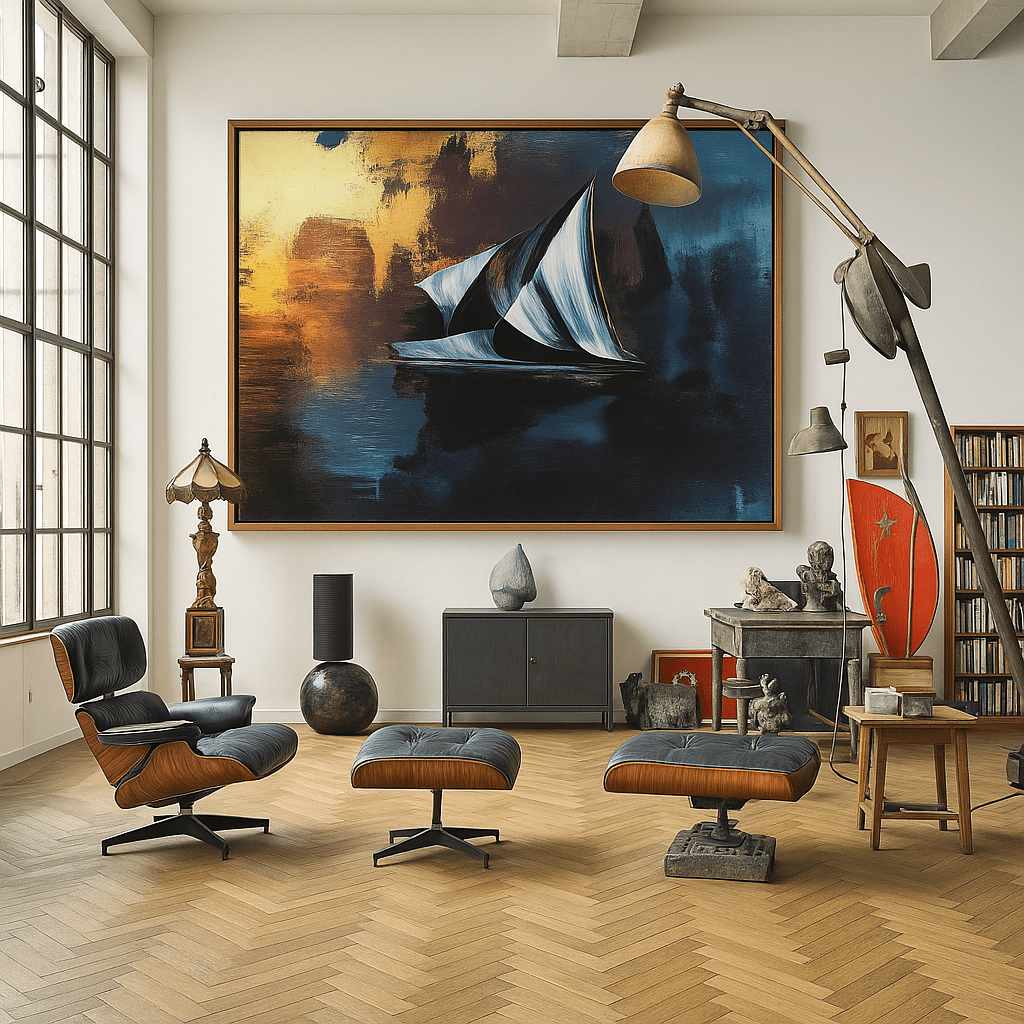
Scale is just as important. Above a sofa, aim for art that spans about two-thirds of the furniture width. In a narrow hall, use a vertical canvas or a small pair. A large blank wall may need a single bold piece rather than several tiny posters.
- Use one large canvas as the room’s focal point.
- Choose two or three smaller prints for a relaxed arrangement.
- Keep busy art away from heavily patterned upholstery.
- Repeat one color at least twice elsewhere in the room.
Want retro character without redesigning the whole room?
Browse colorful new prints that bring pop culture, travel, and nostalgic graphics into a modern space.
Pair Vintage-Inspired Art With Modern Furniture
The easiest way to avoid a costume-like result is contrast. Place a faded-looking canvas above a clean sofa, a slim console, or a simple metal desk. Modern materials give the art room to breathe.
Try a quiet frame with a bold poster. Or choose a colorful canvas beside pale upholstery. Avoid matching every object to the print. One repeated color is enough to create visual connection.
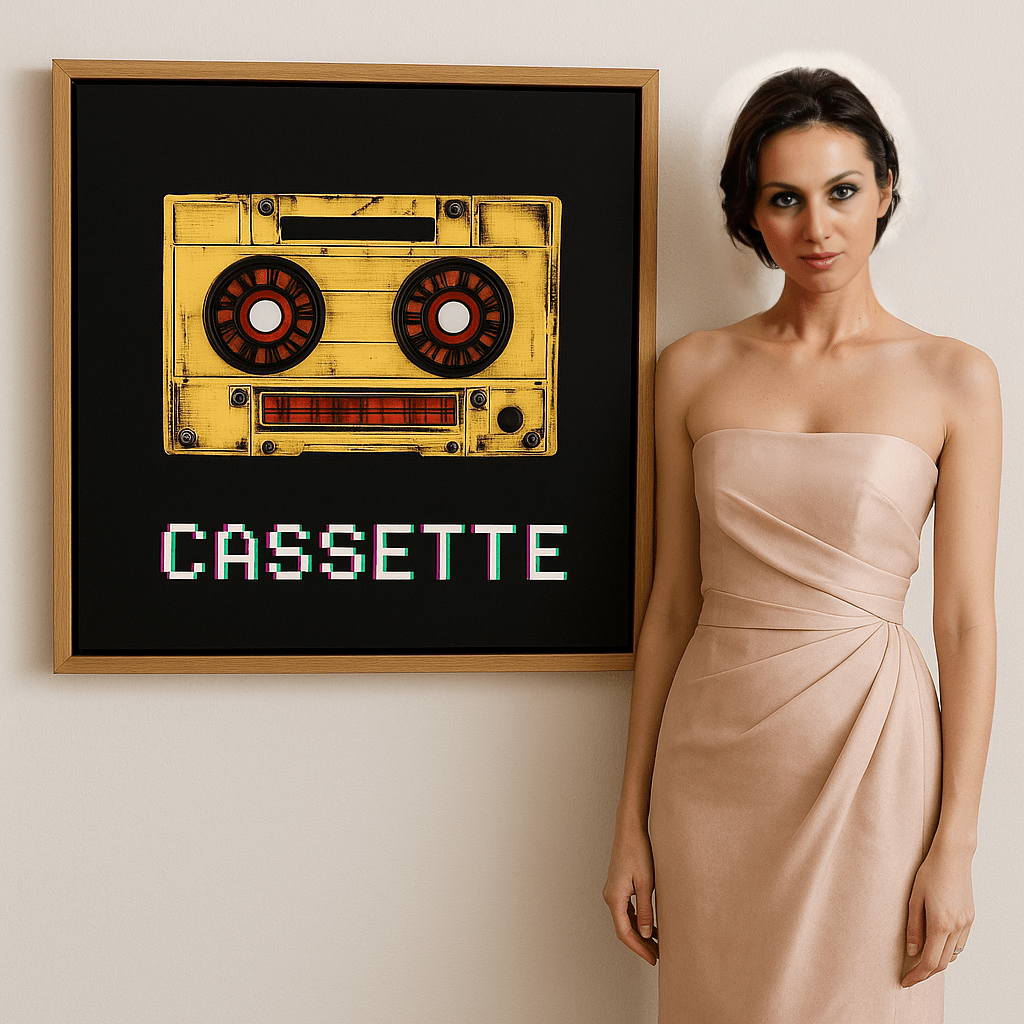
For a bold accent, consider an abstract Retro Cassette Glitch canvas print. Its subject can act as a focal point while the surrounding furniture remains restrained.
Build a Balanced Vintage Gallery Wall
A gallery wall works best when it has one clear link. That link may be color, subject, frame finish, or period influence. Mix travel posters, still life art, and graphic prints only when the palette keeps them together.
- Lay the art on the floor before hanging it.
- Place the largest piece near the center.
- Keep gaps consistent, usually two to four inches.
- Use one frame color to make different art feel intentional.
Style Vintage Canvas Art Room by Room
Living room
Use one large poster above the sofa or a calm gallery beside the television. Keep the strongest contrast near eye level.
Bedroom
Choose botanical, still life, or softly faded travel art. Low-contrast colors encourage a restful mood.
Kitchen and dining area
Food illustrations, café posters, and small framed prints add charm without using valuable counter space.
Office
Graphic art can give a desk area energy. A geometric print may feel focused, while a fashion or travel poster adds personality.
Is mid-century art closer to your room’s mood?
Explore proportion, color, and furniture ideas before choosing a geometric or atomic-era canvas.
See How Retro Art Can Work in a Modern Interior
Choose Frames and Place the Art With Care
Canvas can look finished without a frame, especially in a relaxed room. A slim wood frame adds warmth. Black frames make graphic posters feel sharper. Float frames create a gallery-like edge while keeping the canvas visible.
Hang the center of the composition close to eye level. Above furniture, leave enough breathing room so the art does not appear attached to the object below it. Before drilling, use paper templates and painter’s tape.
For more on proportion and hanging height, see the Architectural Digest guide to hanging art. For general gallery-wall spacing advice, the Houzz guide to choosing art for the home is a useful reference.
For a geometric focal point, see the Retro Geometric Gridlock canvas. For a softer horizontal statement, consider the Retro Spiral Vortex abstract canvas.
Three Vintage-Inspired Canvas Prints to Compare

Retro Cassette Glitch
A playful 80s pop art canvas print that works as a bold focal point in an office or media room.

Retro Geometric Gridlock
A mid-century modern geometric print that pairs cleanly with wood furniture and simple lines.

Retro Spiral Vortex
A horizontal abstract retro canvas suited to a wide wall above a sofa or console.
Key Takeaways
- Vintage canvas wall art is a new print in a vintage-inspired style, not an antique object.
- Pick one dominant color already in the room and let the art echo it.
- Use scale intentionally: about two-thirds of the furniture width above a sofa, vertical pieces in narrow spaces.
- Pair aged-looking art with clean, modern furniture and simple frames to avoid a costume-like result.
- Keep a gallery wall connected with one shared color, frame finish, or subject.
- Choose the retro sub-style (pop, mid-century, botanical, travel) that matches the room's existing lines.
Keep Reading
A Modern Approach to Vintage Style
The most successful vintage-inspired rooms do not copy one decade from floor to ceiling. They combine one expressive piece with modern furniture, calm surfaces, and thoughtful spacing. Start with the room’s palette, choose the right scale, and let the art provide the character.
A new canvas print can deliver the mood of vintage posters, travel art, still life, or mid-century graphics without pretending to be an antique. That balance makes retro style feel current, personal, and easy to live with.
Frequently Asked Questions
What is vintage canvas wall art?
It is new canvas art designed with vintage-inspired subjects, colors, textures, or graphic styles. It is not necessarily an antique or an authentic historic object.
How do I keep retro art from looking costume-like?
Use one or two vintage-inspired pieces with contemporary furniture, simple frames, and plenty of negative space. Avoid matching every item to the same decade.
Should vintage posters be framed?
Not always. Unframed canvas feels relaxed, while wood or black frames can add structure. Choose the finish that supports the room’s existing materials.
How large should wall art be above a sofa?
A single piece or group often looks best at about two-thirds of the sofa’s width. Use a smaller vertical canvas in narrow areas.
Can I mix botanical art with travel posters?
Yes. Repeat a color, frame finish, or spacing pattern so the different subjects feel connected.

Leave a comment
This site is protected by hCaptcha and the hCaptcha Privacy Policy and Terms of Service apply.