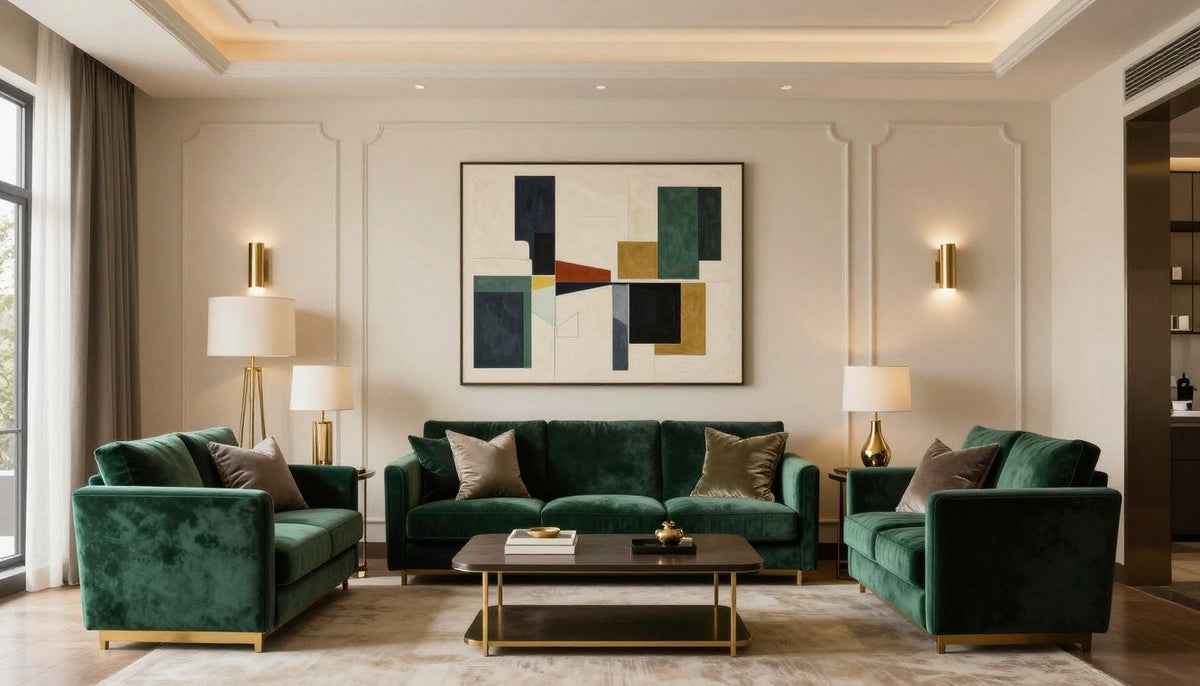
Art Deco Home: A Modern Guide to Geometry, Color, and Art
How can you create an art deco home that feels glamorous, balanced, and easy to live in today?
The answer is not a room filled with gold trim or vintage replicas. A successful home borrows the best parts of art deco style: geometric shapes, symmetry, jewel tones, polished materials, and confident details. The result can feel rich without feeling heavy, and historic without looking staged.
This guide shows how to bring deco style into a contemporary interior through furniture, lighting, textiles, and expressive wall art. It also explains how Rossetti Art canvas prints and original paintings can add movement to clean lines and carefully planned rooms.

Quick Answer: What Defines an Art Deco Home?
An art deco home is defined by bold geometric forms, symmetry, rich color, polished or metallic accents, luxurious textures, and statement-making details. In a modern home, these characteristics are edited into a livable mix of clean lines, expressive art, warm neutrals, and a few memorable materials.
What Defines an Art Deco Home Today?
Use the original design principles, not a period costume
Art deco became known for order, glamour, and forward-looking design. Its strongest forms appeared during the 1920s and 1930s, between the optimism of the Jazz Age and the changing years before World War II. Architecture, furniture, fashion, glass, posters, and interiors all shared a taste for clear structure and visual confidence.
Many references came from modern transport, machines, ancient cultures, and the growing energy of cities. New York is often linked with the style because towers such as the Chrysler Building made vertical lines, stepped forms, and metallic detail part of the public imagination.
Today, an art deco style home does not need a historic shell. It can be a city apartment, a suburban house, or a small rental. The key is to repeat a few related elements so the room feels intentional.
The six visual characteristics to borrow
- Geometry: fan shapes, arches, stepped forms, circles, chevrons, and strong verticals.
- Symmetry: paired lamps, balanced chairs, and art centered over a console or sofa.
- Contrast: black with cream, deep green with brass, or blue with warm wood.
- Sheen: satin, glass, lacquer, polished stone, chrome, gold, or brass.
- Luxury: velvet, wool, silk-like fabric, rich woods, and tactile wall finishes.
- Drama: one large piece of art or furniture that gives the room a strong point of view.
Let contemporary art keep the room fresh
Historic deco interiors often used decorative patterns and figurative pieces. A modern interpretation can use abstract art instead. Look for art with blocks, arcs, intersecting lines, or energetic color. This keeps the design connected to the past while giving the space a current voice.

For historical context, the Metropolitan Museum of Art overview of Art Deco offers a useful look at the movement's global influences and materials.
How to Use Geometric Shapes and Symmetry
Start with one repeated shape
Geometric patterns work best when they have a reason to appear. Choose one main shape, then echo it in smaller details. For example, an arched mirror can relate to a curved chair, a rounded vase, and an abstract painting with soft arcs.
Another route is the fan or sunburst. It may appear in a rug, a mirror, or the structure of a canvas composition. You do not need the same pattern everywhere. A quiet reference is more elegant than a room where every surface competes.
Build symmetry around an anchor
Symmetry in interior design makes a room feel calm. Begin with a fixed anchor such as a fireplace, bed, sofa, or media console. Place the main art in relation to that anchor. Then balance the visual weight with paired lighting, chairs, side tables, or accessories.
- Find the room's central axis.
- Place the largest furniture or art along that axis.
- Add matching or balanced elements on both sides.
- Break the symmetry with one organic detail, such as a plant or handmade object.
Perfect matching is not required. A tall lamp can balance a stack of books, and a dark chair can balance a small table with a strong finish. Think in terms of visual weight, not identical objects.
Keep clean lines visible
Too many small pieces can hide the architecture. Leave breathing room around a console, sofa, or artwork. Clean lines are especially important in a smaller home, where a clear path makes the room feel larger.

Need geometric wall art to anchor a balanced room?
Explore bold compositions that bring shape, rhythm, and color to an art deco style home without making it feel like a museum set.
How to Build an Art Deco Color Palette
Choose a deep base and a light counterpoint
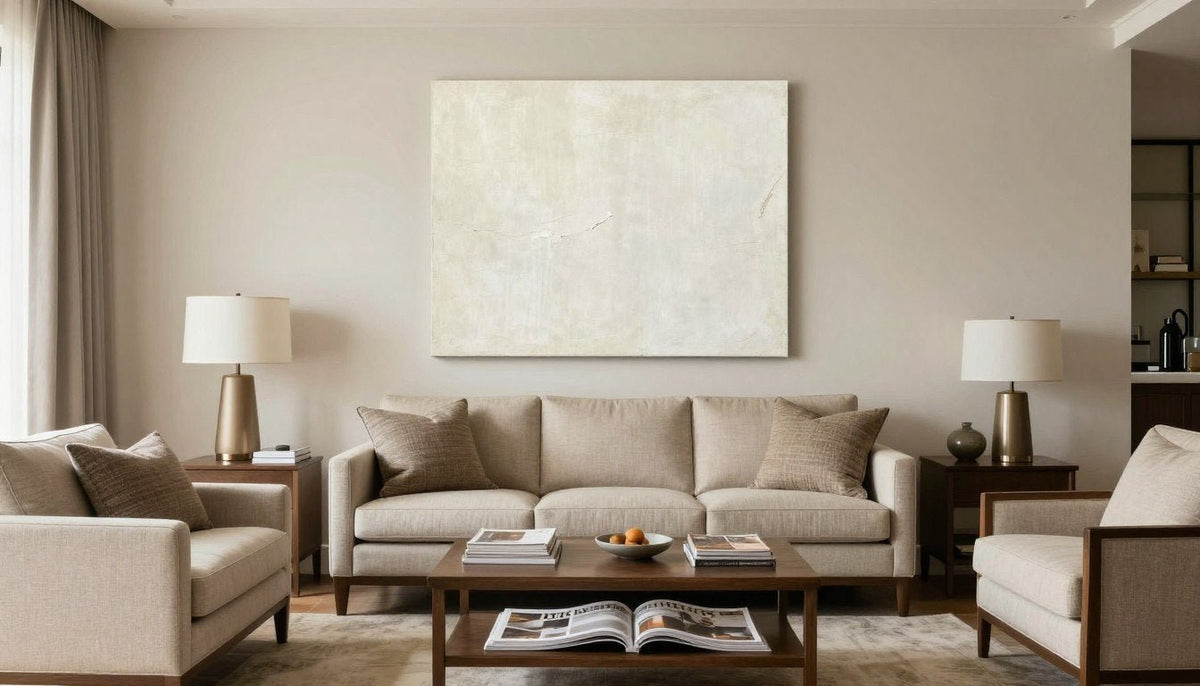
Jewel-tone interiors often use emerald, sapphire, ruby, teal, or amethyst. These colors add depth, but they need space around them. Pair a rich wall or sofa with cream, pale stone, warm beige, or soft gray.
Black can provide the graphic contrast associated with deco style. Use it on window frames, a console, a picture frame, or a small table. If a full black wall feels too strong, repeat black in three smaller places instead.
Add gold and brass with restraint
Gold and brass accents catch light and make a room feel polished. A brass floor lamp, cabinet pull, mirror edge, or side table can be enough. Mix warm metals carefully. Repeating one finish two or three times usually looks more composed than collecting every metallic tone.
| Palette direction | Best supporting tones | Where to use it |
|---|---|---|
| Emerald and brass | Cream, walnut, charcoal | Living room or study |
| Sapphire and gold | Ivory, black, warm gray | Bedroom or dining room |
| Ruby and cream | Dark wood, bronze, sand | Accent chair or art wall |
| Teal and warm neutral | Brass, oat, smoked glass | Entry or compact home |
Make the art part of the color plan
Wall art should not be an afterthought. If the room has an emerald sofa, select a canvas with a related green note, then let cream, black, or gold appear as smaller accents. This creates a connection without demanding an exact match.
The National Park Service guide to Art Deco is helpful when you want to understand how architecture and ornament shaped the movement's visual language.

How to Style an Art Deco Living Room
Give the seating group a clear shape
An art deco living room should feel social and composed. Arrange seating to encourage conversation rather than pushing every piece against a wall. A curved sofa, two compact lounge chairs, or a pair of benches can soften the stronger lines of a console or coffee table.
Choose furniture with tapered legs, rounded corners, fluted fronts, or a glossy detail. Velvet is a natural fit, but a textured wool or linen blend can make the room more relaxed. Use one luxurious material as the lead, then support it with simpler fabrics.
Use a focal point above the sofa
A large canvas can give the room the same importance as a fireplace or architectural feature. Abstract art with overlapping planes can repeat the room's geometric shapes while adding movement. The painting does not need to depict a historic building or a 1930s scene.
Rossetti Art living room canvas art can help you compare compositions for a sofa wall, console, or open-plan seating area.
Balance glamour with useful storage
Deco style values appearance, but a real home needs practical surfaces. Select a closed cabinet for electronics, a tray for daily objects, and a rug that defines the seating zone. Brass legs and glass doors can add lightness without sacrificing function.

Want one expressive piece to finish your living room?
Choose art that adds color and movement while respecting the room's symmetry, furniture scale, and clean lines.
How to Use Bold Abstract and Geometric Wall Art
Modern art can suit an Art Deco interior
Modern abstract art works well in an art deco home because the style is built on visual impact. Look for repeated lines, strong blocks, controlled contrast, and a palette that feels deliberate. The work can be minimal or energetic, as long as it has enough presence for the wall.
Abstract Chaos Dance offers a lively direction for a room that needs movement. Its energetic character can work beside restrained furniture, especially when the rest of the room uses a quiet color field.
Choose between calm and dramatic energy
A calm composition supports a bedroom, reading corner, or refined entry. A dramatic composition suits a dining area, living room, or stair wall. Consider the room's existing movement. If the rug and upholstery already have geometric patterns, select art with more open space.
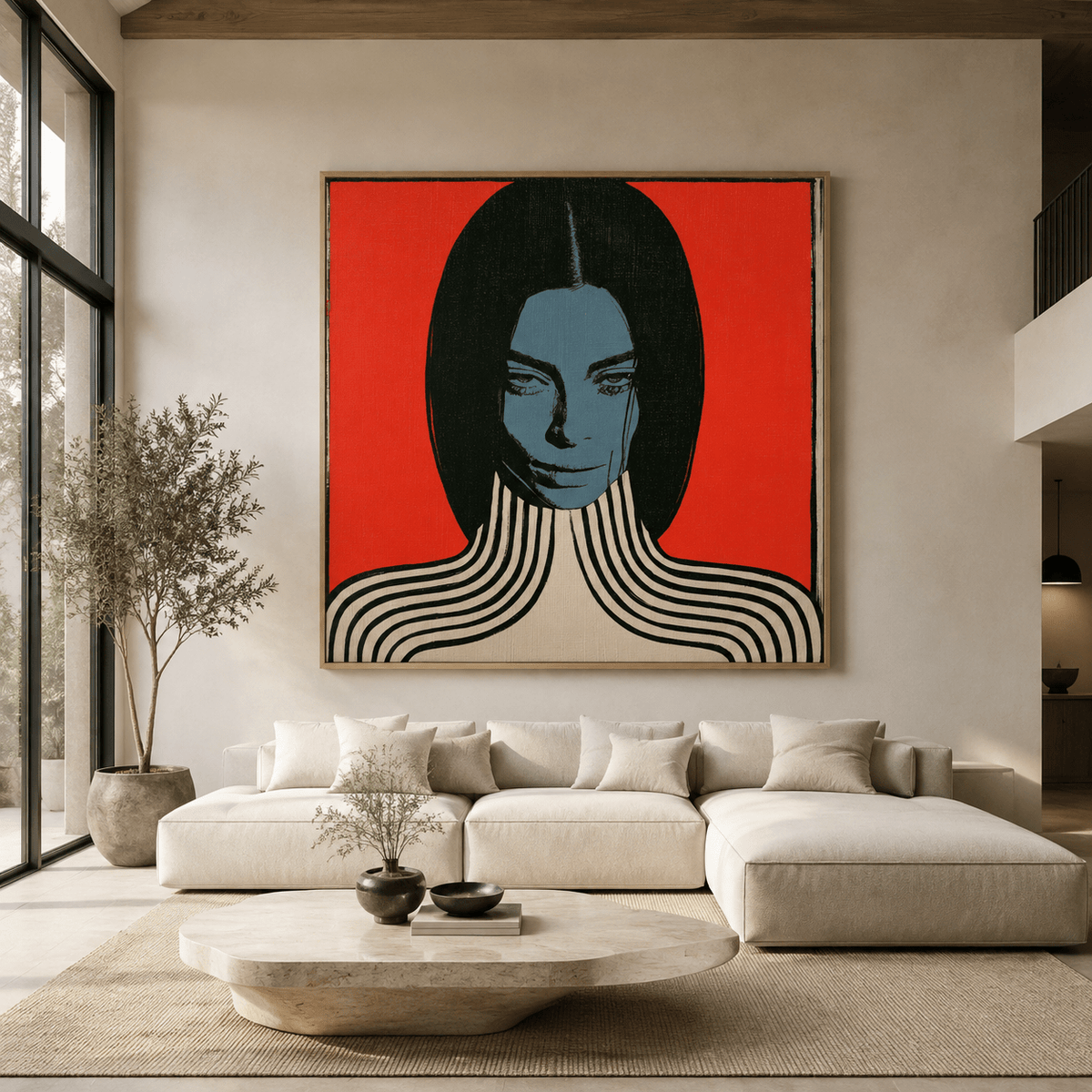
For a softer portrait-led approach, Silent Balance can introduce a human note without losing the modern design language.
Mix an original painting with canvas prints
Original paintings bring texture, irregularity, and a sense of discovery. Canvas prints make it easier to create a larger statement or repeat a visual idea across rooms. Together, they can make a home feel collected rather than purchased all at once.
Fragments of Color is a natural choice when you want an original work to provide a concentrated accent. Place it where changing light can reveal its surface, such as above a sideboard or near a reading chair.


How to Select Art Size and Placement
Use furniture as your measuring guide
The most common mistake is choosing art that is too small for the furniture below it. A single artwork above a sofa often looks strongest when its width is about two-thirds to three-quarters of the sofa width. A console arrangement can be similar, though a narrow piece may work when the wall is intentionally quiet.
| Wall location | Useful art proportion | Placement advice |
|---|---|---|
| Above a sofa | About 66–75% of sofa width | Center the work and leave visual breathing room |
| Above a console | About 50–75% of console width | Keep the lower edge visually connected to the surface |
| Bedroom wall | Single wide work or balanced pair | Use calmer lines and avoid a crowded headboard wall |
| Narrow hallway | Vertical or compact format | Repeat a color or frame finish along the path |
Hang art at a comfortable viewing height
Center the artwork around eye level, then adjust for the furniture beneath it. The gap above a sofa should feel intentional, not like the art is floating. In a dining room, lower placement can make the work part of the conversation.
Make a gallery wall feel ordered
Use matching frames, a measured grid, or a shared color palette. Deco style benefits from structure, so keep the outer edges aligned. One original painting can act as the focal point, while smaller canvas prints support it.


Room-by-Room Advice, Common Mistakes, and CTA Strategy
Entryway
Use the entry to establish the mood. A slim console, rounded mirror, brass lamp, and one graphic artwork can make a strong first impression. Keep the floor path open. A small home does not need a large number of decorative pieces.
Bedroom
Choose a softer version of deco style with cream bedding, a deep blue headboard, warm wood, and a quiet abstract print. Symmetry is easy here: use matching bedside tables and lamps, then let the art bring a little asymmetry through color or texture.
Dining room
Make the dining table the central axis. A pendant with a rounded or stepped form can echo the period's architecture. Hang one bold work on the largest wall, and repeat its color in napkins, upholstery, or a vase.
Home office
Use dark wood, a brass task lamp, and a focused artwork behind or beside the desk. Strong verticals can make a compact office feel taller. Avoid placing highly active art directly in front of the desk if it distracts from work.
Mistakes that weaken the result
- Too much theme: Do not combine every fan, chevron, mirror, and metallic object in one room.
- Weak scale: Small art can disappear above substantial furniture.
- Flat lighting: One ceiling fixture will not reveal glass, brass, textiles, and art texture.
- Random color: Choose a clear palette before buying accessories.
- No quiet space: Every surface needs room for the eye to rest.
- Forced history: A contemporary piece can be more convincing than a reproduction.
For a broader architectural reference, explore the Smithsonian discussion of Art Deco design. For guidance on color relationships, the National Park Service preservation guide provides useful context for historic buildings and interior character.

Conclusion: Make the style personal
An art deco home feels most convincing when it balances order with expression. Use symmetry to create calm, geometric shapes to create rhythm, and jewel tones to create depth. Add brass, glass, dark woods, and soft textiles in measured layers.
Then let art bring the room to life. A bold canvas print can sharpen a neutral scheme, while an original painting can add irregular texture and a personal point of view. The goal is not to recreate one moment in design history. It is to create a home with confidence, balance, and a sense of movement.
Ready to give your home a more confident point of view?
Browse Rossetti Art for canvas prints and original paintings that can support geometric forms, jewel tones, and polished deco style details.
Key Takeaways and Keep Reading
Key Takeaways
- Build an art deco home around geometry, symmetry, contrast, sheen, and texture.
- Choose one dominant jewel tone and balance it with cream, warm neutral, black, or dark wood.
- Repeat shapes with restraint. One arched mirror or fan detail can guide the whole room.
- Use bold abstract wall art to add movement without relying on historic replicas.
- Scale art to the furniture below it, especially above sofas and consoles.
- Mix original paintings with canvas prints for a more personal, collected interior.
- Place CTAs after practical advice, where the reader has a clear reason to browse.
Keep Reading
- Warm Minimalism Interior Design
- Color Field Painting: How to Style It at Home
- How to Choose Abstract Texture Art for Your Living Room

Frequently Asked Questions
What defines an Art Deco home?
An Art Deco home uses bold geometric shapes, symmetry, rich colors, polished materials, metallic accents, luxurious textures, and strong decorative details. A modern version edits these elements so the interior remains comfortable and personal.
How can I make my home look Art Deco without renovating?
Start with lighting, mirrors, artwork, textiles, and hardware. Add a brass lamp, a geometric rug, deep color, and one large abstract canvas before considering major changes to walls, floors, or architecture.
What colors work best in an Art Deco interior?
Emerald, sapphire, teal, ruby, and amethyst work well with cream, black, warm neutrals, dark woods, gold, and brass. Use a deep color as an accent or anchor, then give it lighter tones for balance.
What type of wall art suits an Art Deco home?
Choose abstract or geometric art with confident lines, repeated shapes, rich color, or controlled contrast. Fan forms, arches, blocks, and vertical compositions can all support the style without copying historic imagery.
Can modern abstract art work in an Art Deco interior?
Yes. Modern abstract art often works because it shares the movement's interest in shape, rhythm, contrast, and visual impact. Match the artwork to the room's palette and scale rather than searching for a literal period image.
How do I choose the right canvas size for an Art Deco room?
For art above a sofa, aim for roughly two-thirds to three-quarters of the sofa width. Above a console, use about half to three-quarters of its width. For narrow walls, choose a vertical format and leave enough space around it to preserve clean lines.
Does every Art Deco style home need brass?
No. Brass is useful because it reflects light and adds warmth, but glass, chrome, bronze, polished stone, and dark wood can create a similar sense of finish. Repeat one or two materials instead of using every metallic surface.
How do I avoid making my interior feel overly themed?
Use a limited palette, repeat only a few geometric references, and mix in contemporary furniture or handmade objects. Leave some surfaces quiet. The contrast between historic influence and modern pieces is what makes the room feel current.

About the Author — Chiara Rossetti is the founder of Rossetti Art, a canvas print and original art brand. She writes about interior design, wall art styling, and the art of making a home feel alive.

About the Author
Chiara Rossetti
Chiara Rossetti is the founder of Rossetti Art, a canvas print and original art brand. She writes about interior design, wall art styling, and the art of making a home feel alive.

Leave a comment
This site is protected by hCaptcha and the hCaptcha Privacy Policy and Terms of Service apply.