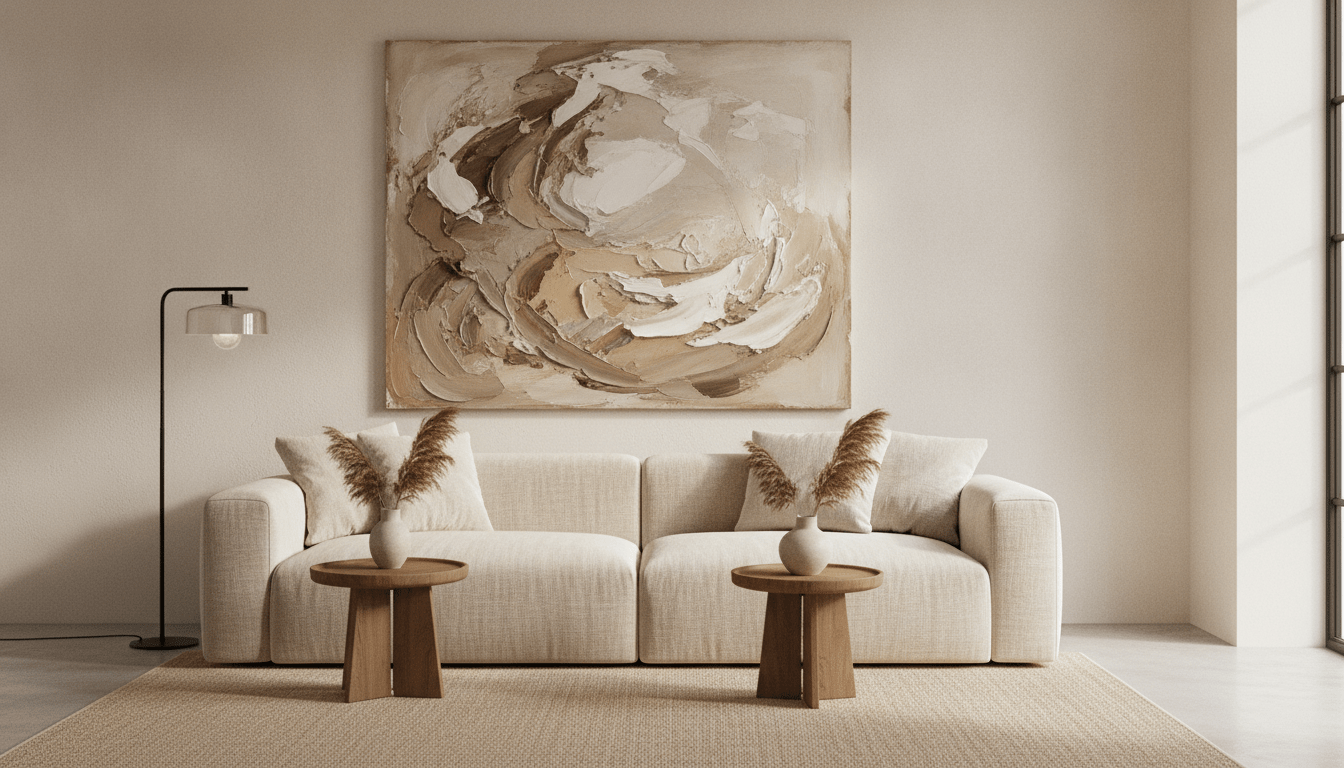
Abstract texture art does something a flat print can't: it catches light differently throughout the day, adds visible depth to a wall, and gives a living room a sense of craftsmanship the moment you walk in. But because texture reads so strongly in a room, choosing the right piece takes a bit more thought than picking a color you like. Here's how we'd walk you through it.

Why Texture Changes How Abstract Art Feels in a Room
A flat abstract print sits on the wall. Textured abstract art sits in the room — the raised brushwork or layered material catches ambient light, casts small shadows, and shifts subtly as the sun moves or a lamp switches on. That's part of why textured abstract art has become such a popular upgrade from standard prints: it reads as more considered, more tactile, and more alive without needing bold color to do the work.
Match the Texture to Your Living Room's Light
Before anything else, look at how your room is lit. A living room with strong, direct afternoon light will make heavy texture and impasto brushwork dramatic — every ridge casts a shadow. A room that's mostly lit by lamps or diffused daylight will flatten texture out, so a piece with subtler, closer-set texture reads better than something built for gallery lighting. If you're unsure, a large textured abstract wall art piece placed opposite a window is usually the safest bet — it gets natural light without being washed out.
Choosing a Palette That Works With Textured Abstract Art
Texture already adds visual complexity, so palette is where you either calm a room down or compete with it. Neutral, earthy, and warm-toned textured abstract pieces — like "Desert Lines" — work in almost any living room because the texture itself provides the interest; the color doesn't have to. If your walls, sofa, or rug already carry pattern or strong color, lean toward a more muted or monochrome textured piece so the art doesn't fight the rest of the room. If your space is mostly neutral, a textured abstract piece with a bolder color moment, such as an amber or rust tone, can become the room's focal point.

Getting the Scale Right
Texture reads best at a distance, which means undersizing is the most common mistake. As a general rule, a piece above a sofa should span roughly two-thirds of the sofa's width — for a standard 7–8 ft. sofa, that puts you in large or oversized territory. If you love the look of a smaller textured piece, group two or three together rather than hanging one small canvas alone; texture holds up better in a considered cluster than in isolation on a large wall.
"Wabi Sabi Textured Painting — Quiet Ridges" is a hand-finished original with exactly the kind of close-set ridge texture that reads beautifully under lamp light, not just direct sun.
Explore Quiet Ridges →
Original Textured Paintings vs. Textured Canvas Prints
Both work beautifully in a living room, but they solve slightly different problems. An original textured painting gives you a one-of-a-kind surface — every ridge and brushstroke is unrepeatable, which matters if you want a genuine centerpiece. A textured abstract canvas print is the more accessible route if you want the tactile, layered look at a lower price point, or if you're furnishing a room where budget or timeline matters more than owning a singular piece. Neither is the "better" choice — it depends on whether you're decorating or investing.
Ready to see how texture works in your own space? Explore our original textured paintings or browse abstract canvas prints for a more accessible way to bring the look home.
Frequently Asked Questions About Textured Abstract Art
Does textured abstract art work in small living rooms?
Yes — texture actually helps a small room feel more layered rather than flat. Just size the piece to the wall (not the room) and keep the palette closer to your wall color so it doesn't visually shrink the space.
Is textured art harder to keep clean than a flat print?
Not meaningfully. A soft, dry microfiber cloth or a gentle vacuum brush attachment on a low setting handles dust in the ridges. Avoid wet cleaning, which can affect raised paint or texture medium.
Can I mix textured abstract art with photography or line art?
Yes, as long as one style leads. Let the textured piece be the anchor and keep any surrounding art flatter and simpler so the two don't compete for attention.
What lighting is best for textured abstract paintings?
Angled light — a floor lamp, picture light, or track lighting set slightly off-center — brings out texture far better than light shining flat against the canvas.
Keep Reading
- Textured Wall Art for Living Room: A Complete Guide to Adding Depth and Dimension
- Wabi-Sabi Wall Art: Texture, Imperfection & Calm — A Curator's Buying Guide
- Shop Original Textured Paintings
- Shop Abstract Canvas Prints

About the Author
Chiara Rossetti
Chiara Rossetti is the founder of Rossetti Art, a canvas print and original art brand. She writes about interior design, wall art styling, and the art of making a home feel alive.

Leave a comment
This site is protected by hCaptcha and the hCaptcha Privacy Policy and Terms of Service apply.