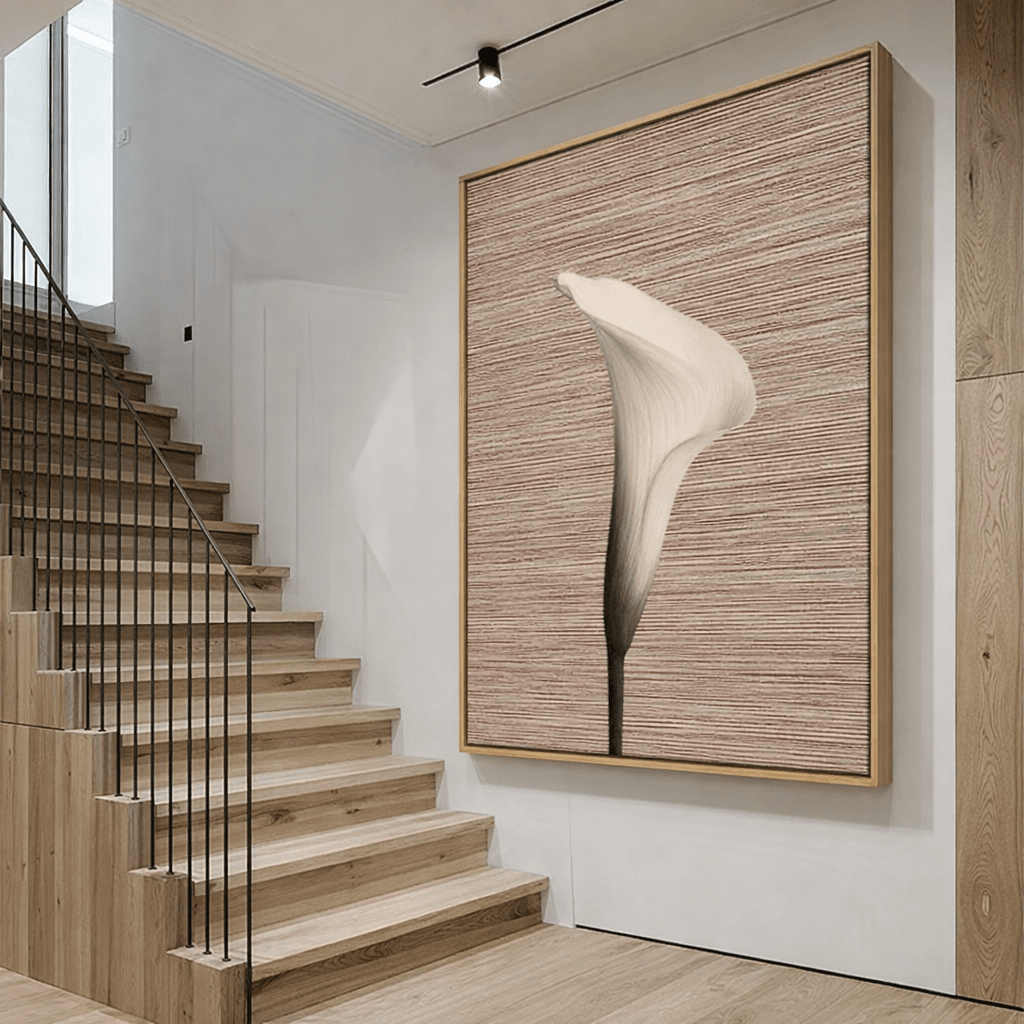
Vintage botanical prints have moved well beyond their origins in scientific illustration into one of the most enduring categories of interior wall art. The combination of natural subject matter, aged colour palettes and the sense of careful, handmade observation makes them feel at once historical and entirely at home in contemporary spaces.
In 2026, vintage botanical wall art continues to perform strongly because it bridges multiple aesthetics: it suits cottagecore and traditional interiors, but it also works in maximalist, earthy and even modern spaces when chosen carefully. The key is knowing which type of botanical print you are choosing — and what makes one feel considered rather than generic.
Quick Answer
Vintage botanical prints are wall art pieces depicting plants, flowers or natural specimens in a style inspired by historical scientific illustration — characterised by earthy palettes, visible aging effects, detailed linework and an impression of careful observation. They work in living rooms, bedrooms, kitchens and bathrooms, and are particularly effective in gallery wall arrangements.

What Are Vintage Botanical Prints?
The tradition of botanical illustration began in earnest during the 16th and 17th centuries, when European explorers returned from the Americas, Asia and Africa with plants that had never been documented before. Artists were commissioned to record these species with scientific precision — the resulting images were detailed, accurate, and extraordinarily beautiful.
The most celebrated botanical illustrators — Maria Sibylla Merian, Georg Ehret, Pierre-Joseph Redouté — created works that are now reproduced constantly in interior design contexts. Their prints depict flowers, leaves, seeds and specimens with a loving attention to detail and an honesty about the natural irregularity of living things. This quality — precision married to imperfection — is exactly what makes vintage botanical art so appealing on contemporary walls.
Modern botanical art inspired by these traditions shares their reverence for the natural world but applies a contemporary sensibility to the subject matter — softer or bolder palettes, more abstracted forms, and a less technical and more expressive approach to the subject.

"Bloom Triptych" — Original daisy paintings in a botanical triptych format. View the piece →
Modern vs. Vintage Botanical: What Is the Difference?
When shopping for botanical wall art, you will encounter both faithful reproductions of historical illustrations and contemporary pieces inspired by the botanical tradition. Understanding the difference helps you choose what will work best in your space.
Historical reproductions aim to replicate the look of original botanical plate engravings — typically printed on aged or cream paper, with muted, earthy pigments that suggest age even when new. The style is precise and detailed, with visible hatching, cross-hatching, and accurate depictions of plant anatomy.
Contemporary botanical art uses the natural world as its subject but applies a modern visual language: bolder or more saturated colour, looser and more expressive linework, simplified forms, or an emphasis on abstract pattern inspired by natural growth. These pieces feel rooted in the tradition but are unmistakably contemporary.
For most contemporary interiors, contemporary botanical art in a vintage-influenced palette — cream, sage, terracotta, dusty rose, deep forest green — tends to be the more versatile choice. It can hold its own on a wall without making the rest of the room feel like a period recreation.

Where to Hang Botanical Prints for Maximum Impact
Botanical prints have one of the broadest sets of appropriate rooms of any art category. Their natural subject matter makes them feel contextually appropriate almost everywhere — but some spaces bring out their qualities particularly well.
Living rooms benefit from a large single botanical canvas or a curated gallery wall of smaller pieces. A large-scale botanical print — a sprawling stem, a repeating leaf pattern, an oversized flower — can serve as the room's focal point as effectively as any abstract piece, with the added warmth of natural subject matter.
Bedrooms suit softer botanical works in quieter palettes. Sage green, dusty rose and warm cream botanical pieces create a room that feels grounded in nature — especially effective in rooms that already incorporate plants, natural linens or timber furniture.
Kitchens and dining rooms have a long tradition of botanical art on their walls — herbs, fruits and vegetables have been depicted in decorative art for centuries. A set of three botanical canvas prints above a dining table, or a single large-format piece on the wall opposite the kitchen, creates an immediate sense of warmth and intentionality.
Bathrooms are well-suited to botanical art because the association with natural growth and water makes the subject matter feel appropriate to the space. Humidity should be considered — canvas prints at Rossetti Art are printed with UV-resistant coatings and HP latex inks, but they should be positioned away from direct steam exposure.
Not sure how a botanical piece will look in your specific room? Use our Live Preview tool to see the artwork at scale on your actual wall before you buy — or upload a photo of your room for an augmented reality view.

"Forest Veil" — Dark forest green abstract canvas with organic, botanical energy. View the piece →
How to Style Botanical Wall Art in a Contemporary Interior
The most common mistake with vintage botanical prints in a contemporary interior is using too many, or using pieces that are too small. A single large-format botanical canvas commands a wall with authority. A collection of small prints, hung without intention, can feel cluttered and unclear.
The golden rule is: let the botanical pieces be the character of the wall, and let everything else in the room support them. Natural materials — unsealed timber, rattan, unglazed ceramics, woven textiles — echo the natural subject matter of botanical art without competing with it. Highly finished, synthetic or metallic elements can create dissonance.
For colour, consider that vintage botanical prints often contain more colours than they appear to at first glance. A piece that reads as predominantly green might also contain ochre, rust, cream and blue-grey — drawing one of those secondary colours out in a cushion, vase or rug ties the room together without making it feel themed or obvious.
🎨 FREE GALLERY WALL PLANNER
Planning a botanical gallery wall? Download our free Gallery Wall Planner — it includes layout templates, spacing guides and tips for mixing prints of different sizes and styles into a cohesive arrangement.
Download Free →Building a Botanical Gallery Wall
Vintage botanical prints lend themselves exceptionally well to gallery wall arrangements because they share a natural coherence — even pieces with different compositions and colour temperatures feel related when they share a botanical subject matter.
For a gallery wall that feels curated rather than collected, work within a defined colour palette. Choose pieces that share one or two dominant tones — for example, all cream and green, or all earthy terracotta and sage — even if the specific flowers or plants depicted are different. Vary the scale and orientation for visual interest.
Canvas prints at Rossetti Art are hand-stretched over kiln-dried hardwood frames and arrive ready to hang. The canvas wraps 1.25 inches around the sides with no additional framing needed — which makes gallery wall arrangements simpler because there are no conflicting frame styles to manage.
Our free Gallery Wall Planner (download above) includes spacing guides for different wall sizes and layout templates to help you plan your arrangement before you start putting nails in the wall.
Frequently Asked Questions
What rooms suit vintage botanical prints best?
Vintage botanical prints are among the most versatile art categories — they suit living rooms, bedrooms, kitchens, dining rooms, bathrooms and entryways. The natural subject matter gives them a contextual flexibility that purely abstract or figurative art does not always have. They perform best in rooms with natural materials: timber, linen, ceramics, rattan.
How do I hang botanical prints without making the room look old-fashioned?
Choose contemporary botanical art inspired by the vintage tradition rather than faithful historical reproductions. Look for pieces with a cleaner, more pared-back composition, a muted rather than aged palette, and a scale appropriate to your room. Hang them in a gallery arrangement with breathing room between frames, and avoid pairing them with period furniture — they work best against clean, contemporary backgrounds.
What size botanical canvas print works best for a living room feature wall?
A single large canvas of 30×40 inches or larger makes the strongest feature wall statement. For a gallery wall, a mix of scales — one or two larger anchors with smaller supporting pieces — creates depth and interest. Use our Live Preview tool to visualise different sizes in your specific space before you choose.
Can botanical prints work in a bedroom?
Yes — botanical art in soft palettes (sage green, dusty rose, cream, warm grey) is particularly effective in bedrooms. It brings the calming quality of nature into the room, which supports restful sleep. A single large botanical canvas above a bed, or a curated set of three pieces in a horizontal arrangement, works very well.
Do canvas botanical prints fade over time?
Rossetti Art canvas prints are produced with UV- and fade-resistant HP latex inks designed to resist fading, with a satin-matte, low-glare finish. For any wall art, it is advisable to avoid hanging pieces in direct sunlight — particularly with the subtle, complex palettes characteristic of botanical art, where tonal accuracy matters.
Explore botanical and nature-inspired canvas art at Botanical and Nature Canvas Prints and the full Rossetti Art collection.
Keep Reading
About the Author — Chiara Rossetti is the founder of Rossetti Art, a canvas print and original art brand. She writes about interior design, wall art styling, and the art of making a home feel alive.

About the Author
Chiara Rossetti
Chiara Rossetti is the founder of Rossetti Art, a canvas print and original art brand. She writes about interior design, wall art styling, and the art of making a home feel alive.

Leave a comment
This site is protected by hCaptcha and the hCaptcha Privacy Policy and Terms of Service apply.