A traditional portrait shows you a face. An abstract portrait painting shows you a feeling — the residue of a person after everything incidental has been stripped away. It is one of the most compelling categories of contemporary wall art, precisely because it walks the line between recognition and imagination.
Abstract portrait paintings have become some of the most sought-after pieces for living rooms and bedrooms because they bring a human quality to a wall without the rigidity of photorealistic art. They are recognisable enough to anchor a space emotionally, but abstract enough to feel entirely contemporary.
Quick Answer
An abstract portrait painting represents a human figure or face through simplified, gestural or fragmented forms rather than realistic depiction. The best pieces balance enough figuration to feel human with enough abstraction to leave room for interpretation — making them powerful, personal statement pieces for any room.

What Makes a Painting an Abstract Portrait?
The term abstract portrait sits at the intersection of two traditions: portraiture, which focuses on representing an individual, and abstraction, which moves away from literal representation toward form, colour, texture and emotion.
An abstract portrait painting does not need to show a complete face or recognisable likeness. It might show the suggestion of a profile in a few gestural lines. It might fragment a figure into geometric planes of colour. It might reduce a person to the most essential visual gesture — the curve of a neck, the angle of a glance, the weight of a hand at rest.
What these pieces share is intentionality. Unlike a purely abstract composition that could suggest anything or nothing, an abstract portrait retains a human referent. The viewer brings their own associations to the piece — and that personal engagement is what makes it so effective on a wall you return to every day.

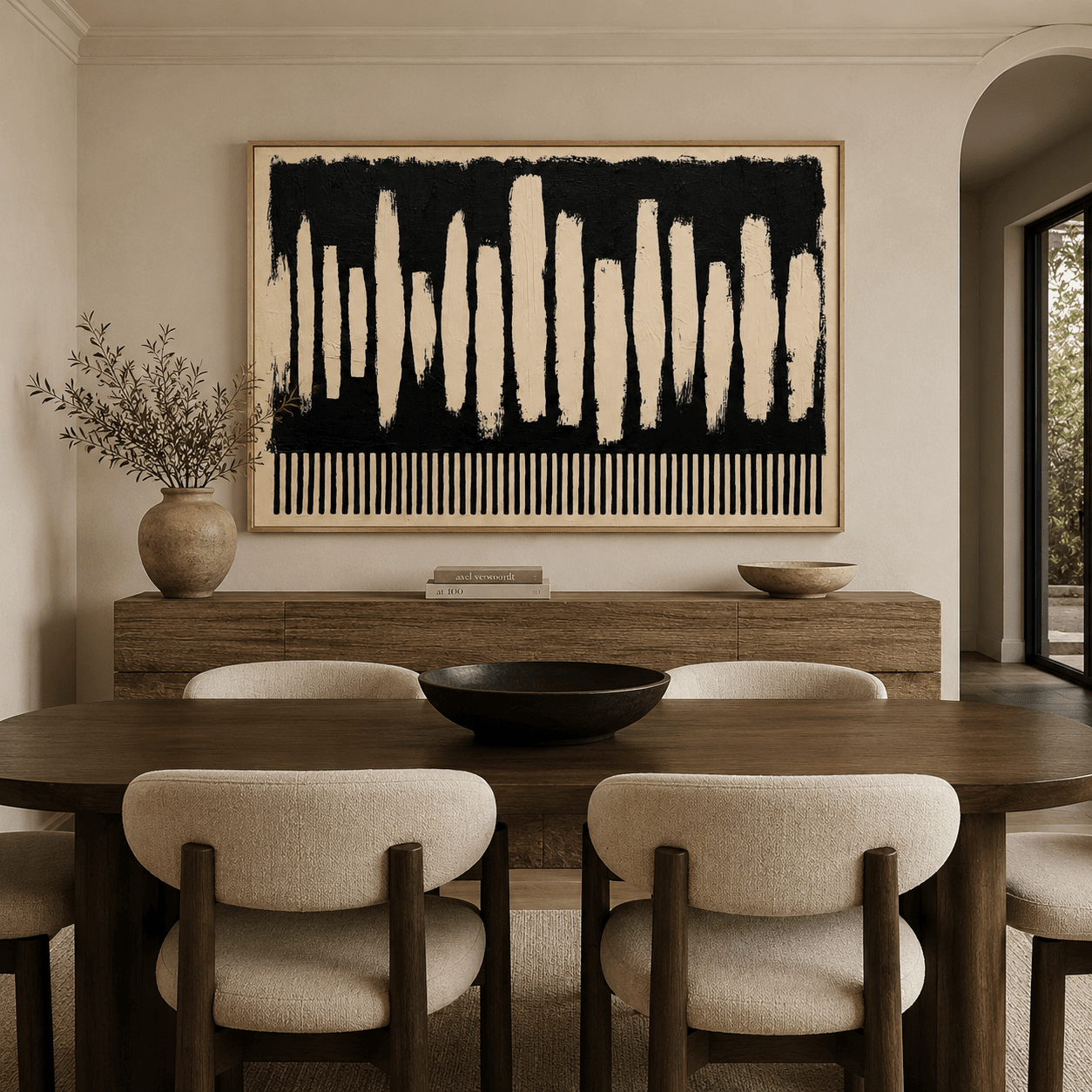
"Confluence" — Large original painting in monochrome with gestural figurative form. View the piece →
The Main Styles of Abstract Portrait Art
Abstract portrait painting covers a wide range of approaches. Understanding the main styles helps you find the one that will work best in your space.
Gestural portraits. These use expressive, loose brushwork to suggest rather than define. The face or figure might be implied by a few confident marks — a dark line for the bridge of a nose, a smudge of warm colour for skin. These pieces feel spontaneous and alive, and they work well in spaces where you want energy and movement.
Fragmented or cubist-influenced portraits. Inspired by the cubist tradition, these pieces show a figure from multiple viewpoints simultaneously — angles layered within the same composition. They tend to have strong geometric structure, bold outlines, and contrasting colour fields. They are particularly striking above a sofa or in a hallway where the viewer has a moment to look.
Line art portraits. Reduced to their essential contour, these pieces use minimal marks to capture something true about a figure. A single continuous line that traces a face. Two profiles in a single gesture. These are calm and precise, and suit interiors that favour restraint.
Textured figurative paintings. Original paintings with visible palette knife work or impasto texture add a sculptural quality to the figure they represent. These pieces change with the light and reward closer looking — they are a good choice for rooms where people linger.

Where to Hang Abstract Portrait Art
Abstract portrait paintings are among the most versatile pieces for residential spaces because they bring human warmth to a wall without being portraits in the traditional sense — there is no specific person the viewer feels obligated to recognise or react to.
In a living room, a large abstract portrait above a sofa creates an immediate focal point. The human quality of the piece gives the wall an emotional presence that purely geometric or landscape art does not achieve in the same way. Aim for a canvas that is roughly two-thirds the width of the sofa beneath it.
In a bedroom, a more intimate scale works well — a 20×24 or 24×30 inch piece beside the bed, or a single striking portrait above the headboard. Figurative art in a bedroom tends to feel like a presence rather than a decoration, which can make the room feel richer and more personal.
In a hallway or entryway, a portrait in a vertical format suits the proportion of the space and creates a compelling first impression. The vertical nature of a face or figure naturally aligns with the height of a corridor wall.
Use the Live Preview tool on every Rossetti Art product page to visualise exactly how an abstract portrait painting will look on your wall before you commit — particularly useful for judging scale in a specific room.

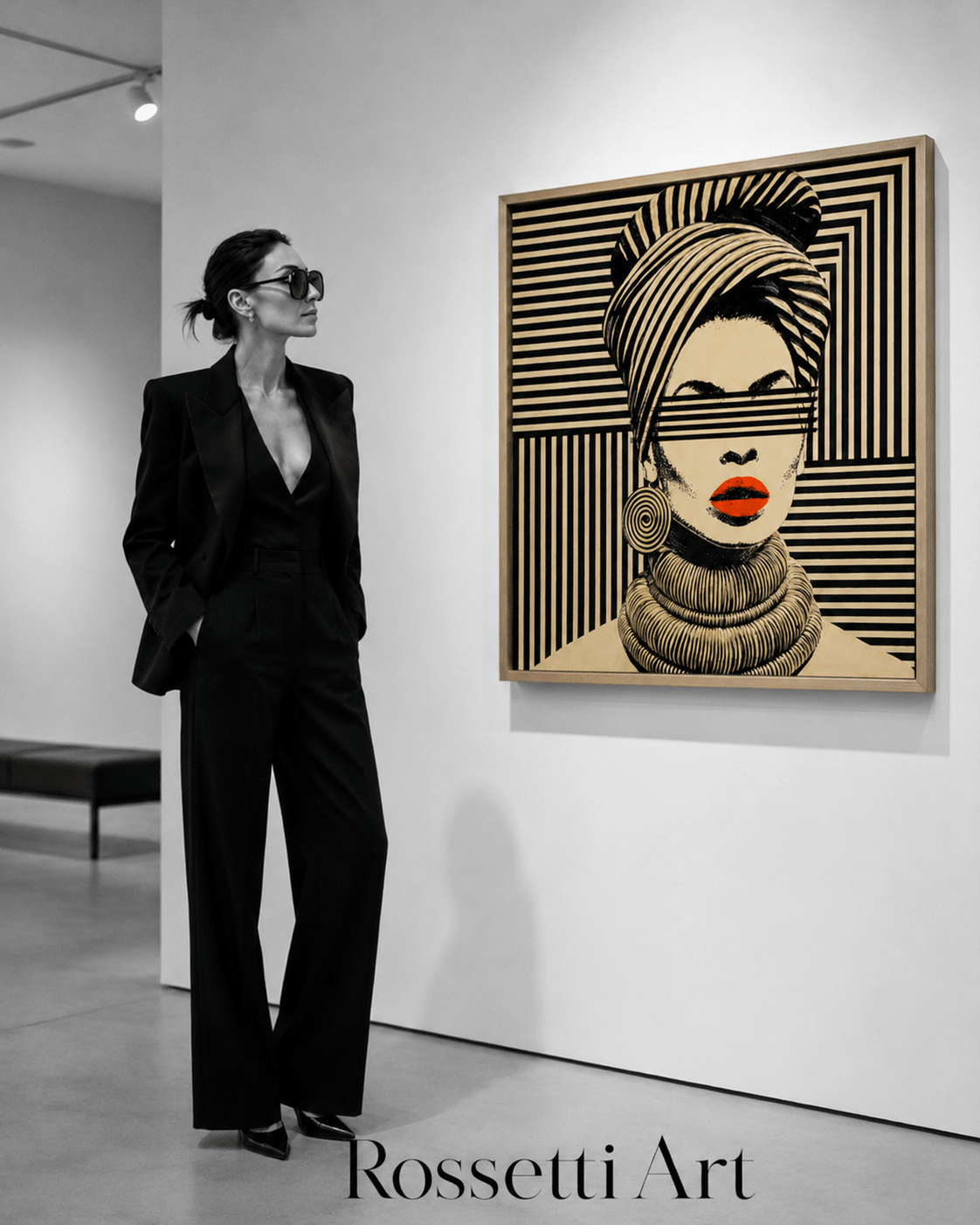
"Frequency" — Black and white abstract canvas with gestural figurative suggestion. View the piece →
How to Choose the Right Abstract Portrait for Your Wall
Choosing an abstract portrait painting is different from choosing a purely decorative piece. Because these works carry a human reference, the emotional quality of the piece matters more than colour matching.
Start by considering the mood you want the room to have. A gestural portrait in warm ochre and deep red will create a different atmosphere from a cool monochrome line drawing — even if they occupy the same wall in the same room. Think about how the piece will make you feel when you see it first thing in the morning, or after a long day.
Consider the scale carefully. Abstract portraits tend to work best at a scale that feels significant rather than decorative. A large piece — 30×40 inches or more — commands the wall and rewards the attention the room's occupants give it. A small piece can feel like an afterthought on a large wall. Our Live Preview tool lets you try different sizes in your actual space.
Canvas prints at Rossetti Art are hand-stretched over kiln-dried hardwood frames with UV- and fade-resistant HP latex inks that are fade-resistant. The hardwood floater frame option adds a refined, solid-wood surround that suits figurative work particularly well — the natural grain finish echoes the organic quality of the brushwork.
🎨 FREE ART STYLE FINDER QUIZ
Not sure which art style is right for your space? Take our free Art Style Finder Quiz — 7 questions about your room, your preferences and your lifestyle. Get your personalised art style recommendation instantly.
Download Free →Frequently Asked Questions
What is the difference between abstract art and an abstract portrait?
Abstract art has no necessary connection to any real-world subject — it explores form, colour, texture and composition for their own sake. An abstract portrait retains a human referent: a face, a figure, a gesture associated with a person. It uses abstraction as a tool to distill or intensify rather than to eliminate. The distinction is intentional — the artist chose the human form as their starting point.
Can an abstract portrait work in a minimalist interior?
Yes — and often very effectively. A single figurative piece in a restrained, minimal room gives the space its emotional anchor. The contrast between the calm, edited environment and the human quality of the portrait creates a productive tension. A monochrome line art portrait or a textured figurative canvas in neutral tones can feel perfectly at home in a minimalist space.
What size abstract portrait painting works best for a living room?
For a statement piece above a sofa, 30×40 inches or larger tends to have the most impact. For secondary walls or smaller spaces, 20×24 or 24×30 inches works well. The key is that the piece should be large enough to feel intentional — not as though it happened to end up on the wall. Our Canvas Size Cheat Sheet (free download) gives exact size recommendations for every room type.
Are abstract portrait paintings appropriate for bedrooms?
Yes — figurative art in a bedroom creates a sense of presence and personality that purely decorative pieces rarely achieve. Choose pieces with a calm rather than dynamic energy for a bedroom: soft palettes, quiet gestures, and compositions that feel settled rather than agitated. Wabi sabi-influenced figurative pieces work particularly well above a bed.
What frame style suits an abstract portrait painting?
A hardwood floater frame — where the canvas appears to float within the frame with a visible gap — is an excellent choice for abstract portraits. It adds structure without imposing. The natural wood grain complements organic brushwork without competing with it. For a more graphic, contemporary portrait, a simple stretched canvas with no additional frame can also work, particularly against a dark wall.
Explore the full range of figurative and portrait art at Figurative and Portrait Canvas Prints and hand-painted Original Abstract Paintings.
Keep Reading
About the Author — Chiara Rossetti is the founder of Rossetti Art, a canvas print and original art brand. She writes about interior design, wall art styling, and the art of making a home feel alive.

About the Author
Chiara Rossetti
Chiara Rossetti is the founder of Rossetti Art, a canvas print and original art brand. She writes about interior design, wall art styling, and the art of making a home feel alive.

Leave a comment
This site is protected by hCaptcha and the hCaptcha Privacy Policy and Terms of Service apply.