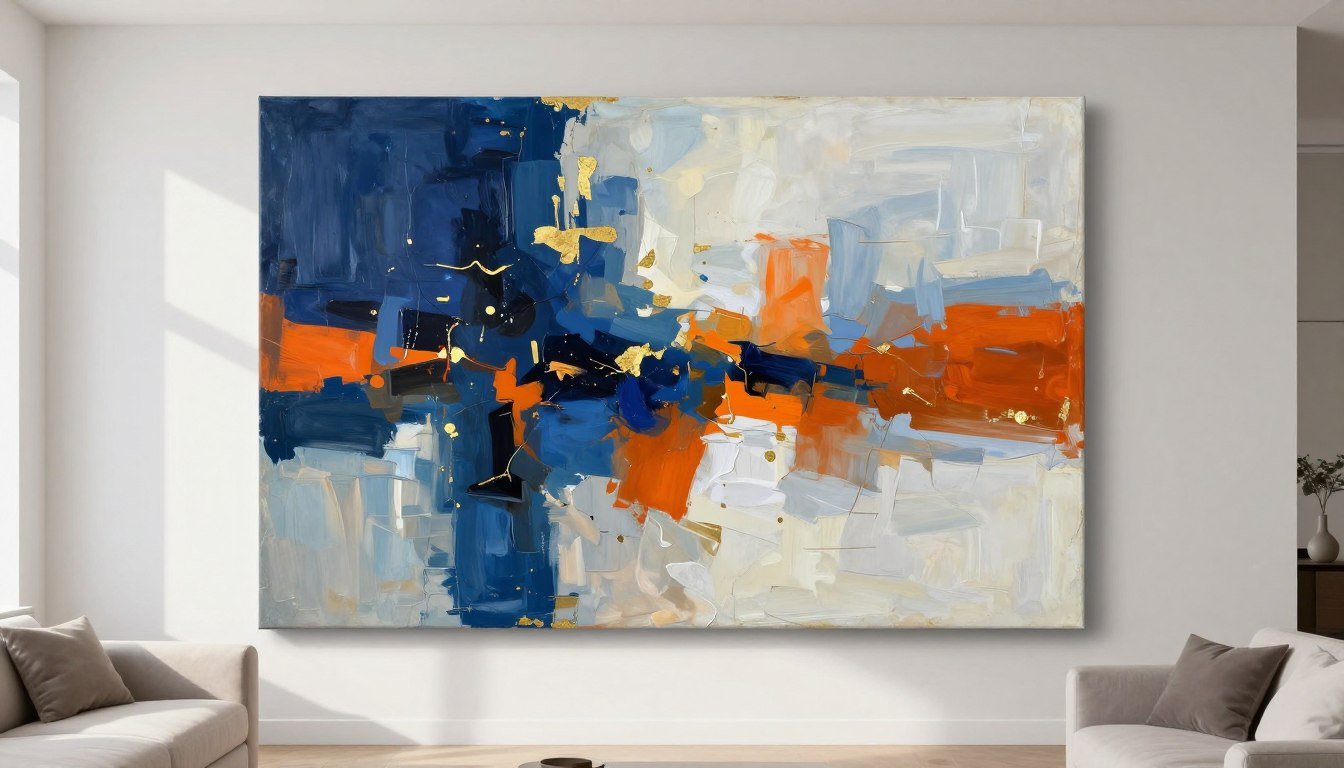
A bare wall stops being just empty space the moment you hang large abstract canvas art. It becomes a focal point. It shifts how a room feels when you walk in.
Abstract art works differently than traditional paintings. There is no obvious subject to decode. Instead, colors interact with shapes. Lines create movement. Textures catch light in unexpected ways.

Ready to Find Your Perfect Piece?
Browse our curated collection of gallery-quality abstract canvas prints.
Why Large Abstract Canvas Art Changes Everything
Large abstract canvas art commands attention in ways smaller pieces cannot. When you scale up to 40 inches or wider, the artwork stops being decoration. It becomes architecture. The piece defines the room rather than simply filling it.
Scale matters because our eyes naturally gravitate to the largest visual element in a space. A properly sized abstract canvas creates an anchor point. Everything else in the room relates to it.

The abstract nature removes literal interpretation. Your guests do not see a landscape or portrait. They experience pure visual language. Colors speak first. Then shapes suggest emotion. Finally, textures add physical presence.
This directness explains why abstract wall art works across different design styles. A bold geometric canvas fits minimalist spaces. Soft watercolor abstracts complement traditional rooms. Textured pieces bridge industrial and organic aesthetics.


What Makes Canvas the Right Choice
Canvas brings dimensionality that paper prints miss. The woven texture catches light differently throughout the day. Shadows form along brushstroke ridges.
Gallery-quality canvas from makers like Rossetti Art uses HP latex inks that resist fading. The colors you see today stay true for decades. UV-resistant coatings protect against sun damage.
Hand-stretched canvas wraps around wooden frames. This creates depth off the wall. The artwork floats rather than sitting flat. Side edges can display the image or stay neutral.
Artists choose abstract expression when they want color and form to communicate directly. Jackson Pollock dripped paint to capture energy. Mark Rothko layered fields of color to evoke emotion. Wassily Kandinsky believed abstract shapes had spiritual equivalents.
You do not need to know art history to respond to a powerful abstract canvas. The artwork bypasses intellectual analysis. It hits you first as pure visual experience. The emotional response comes before conscious thought.


Getting the Size Right for Your Space
The wrong size canvas shrinks or overwhelms a room. The right size makes everything feel intentional. Professional designers use specific ratios to determine ideal artwork dimensions.
For walls above furniture: Your canvas should cover roughly two-thirds to three-quarters of the furniture width. A 90-inch sofa pairs well with a 60 to 70-inch wide canvas. This creates visual balance without crowding.

Small Spaces (Under 150 sq ft)
- Canvas size: 30x40 to 36x48 inches
- Creates focal point without overwhelming
- Single large piece works better than multiple small ones
- Vertical orientation adds height to low ceilings
Large Spaces (Over 300 sq ft)
- Canvas size: 48x60 inches or larger
- Can handle multiple large canvases or diptychs
- Horizontal pieces emphasize room width
- Leave breathing room - at least 6 inches from furniture
Ceiling height changes the equation. Standard 8-foot ceilings suit canvases up to 48 inches tall. Rooms with 10-foot or higher ceilings can accommodate 60-inch vertical pieces. The extra height prevents the artwork from feeling cramped.

Viewing distance affects how large your canvas should appear. In a living room, people typically sit 8 to 12 feet from the wall. The canvas needs enough visual weight to register from that distance. Bedrooms allow closer viewing, often 6 to 8 feet. This permits finer detail appreciation.

Find Your Ideal Size
Explore large-scale canvas prints designed for statement-making impact.
Multiple smaller canvases create a different effect than one large piece. A gallery wall with three to five coordinating abstracts can fill the same space. This approach works when you want variety. The eye travels between pieces rather than resting on one focal point.
But a single large abstract canvas makes a bolder statement. It unifies the space under one visual idea. This matters in rooms where you want calm rather than visual complexity.

📐 Not sure what size to choose? Use our free Wall Art Size Calculator to find the perfect dimensions for your wall.

Color Psychology in Abstract Wall Art
Colors communicate before your conscious mind processes them. A room with a blue abstract canvas feels different than one with a red piece. This happens because color psychology affects emotion and behavior.
Warm colors—red, orange, yellow—activate and energize. They make spaces feel more intimate. Rooms appear smaller but more stimulating. These hues work well in social areas like dining rooms or home offices where you need alertness.


Cool colors—blue, green, purple—calm and expand. They make rooms feel larger and more restful. These work in bedrooms and bathrooms where relaxation matters. Cool-toned abstract art helps spaces feel like retreats.


Red & Orange
Energizing and passionate. Increases appetite. Best for dining areas, kitchens, and creative studios. Creates visual warmth.

Blue & Teal
Calming and trustworthy. Lowers blood pressure. Perfect for bedrooms, bathrooms, and meditation spaces. Promotes rest.

Neutrals & Earth Tones
Grounding and versatile. Works everywhere. Beige, grey, and brown abstracts layer with any decor. Timeless choice.
Neutral abstracts—beige, grey, taupe—provide flexibility. They anchor a space without competing with other elements. This matters when your furniture or textiles already carry strong colors. A neutral abstract canvas lets you change accent colors seasonally.

Contrast level changes impact too. High-contrast abstracts with black and white create drama. They draw the eye immediately. Low-contrast pieces with closely related colors feel more subtle. They create mood without demanding attention.


Our colorful canvas prints collection explores the full spectrum. Each piece uses HP latex inks that keep colors vibrant. No fading or shifting over time.
The placement of colors within the composition guides the eye. Warm spots attract attention first. Cool areas provide rest. Abstract artists use this to create visual movement across the canvas. Your eye follows a path the artist designed.

Color temperature affects perceived room temperature. A blue abstract can make a south-facing room feel cooler in summer. A warm-toned piece adds psychological warmth to a north-facing space with limited natural light.

Texture and Depth: What Makes Canvas Special
Abstract art lives in texture as much as color. A flat print on paper shows you an image. Canvas print on hand-stretched material gives you a tactile object. This physical presence changes how the artwork occupies space.
Gallery-quality canvas has visible texture. The woven fibers create a subtle grid pattern. Brushstroke ridges cast tiny shadows. Layered colors show through one another. This depth makes the artwork feel alive.

The canvas wrap method adds literal depth. Hand-stretched canvas pulls the printed image around a wooden frame. This creates 1.5 to 2 inches of projection from the wall. The artwork becomes a three-dimensional object rather than a flat picture.

How Quality Canvas Construction Works
Professional canvas prints start with archival-grade material. The canvas weight matters. Heavier weights around 400gsm stay taut over time. Lighter materials can sag.
The frame construction affects longevity. Rossetti Art uses hardwood frames with proper corner bracing. This prevents warping. Some makers offer hardwood floater frames for a modern gallery look. The canvas appears to float within the frame.
Stretching tension must be consistent. Too loose and the canvas ripples. Too tight and it might tear over time. Hand-stretched canvas allows for adjustment. Machine-stretched often cannot be corrected.
The printing technology determines texture authenticity. Giclée printing preserves the look of original brushstrokes. You see the texture of paint application even though the piece is printed. This distinguishes quality reproductions from flat commercial prints.


UV-resistant coatings protect the surface without eliminating texture. The coating is invisible but shields colors from sunlight degradation. This matters for pieces near windows or in bright rooms.

Texture interacts with lighting conditions. Raking light from the side emphasizes brushstrokes. Direct front lighting minimizes texture and emphasizes color. Thinking about light direction helps you choose the right canvas style.

Abstract art with heavy texture suggests the energy of creation. You imagine the artist's movements. Smooth, blended abstracts feel more meditative. The texture choice reflects the emotional content.


Experience Gallery Quality
Shop textured canvas prints with archival inks and hand-stretched perfection.
The edge treatment affects the finished look. Gallery wrap continues the image around the sides. This allows frameless hanging. Museum wrap uses neutral sides, typically white or black. This creates a more traditional framed appearance even without a frame.

How to Style Large Abstract Pieces in Different Rooms
Each room type has different visual requirements. A piece that anchors a living room might overwhelm a bedroom. Understanding room-specific needs helps you choose the right abstract canvas.
Living Room: The Social Focal Point
Living rooms need art that stimulates conversation. Bold abstract canvases with strong color or dynamic composition work here. The piece should be visible from the main seating area.
Hang the canvas so the center sits at average eye level when standing—typically 57 to 60 inches from the floor. If the piece goes above a sofa, position it 6 to 8 inches above the furniture back. This creates connection without crowding.


Layer the space. Add table lamps that cast light upward toward the canvas at night. This creates drama and highlights texture. Sculptural objects on the console below echo shapes or colors from the artwork.

Bedroom: Creating Calm Retreat
Bedrooms benefit from softer, cooler-toned abstracts. The art should promote rest rather than stimulation. Think watercolor effects, gentle color transitions, and horizontal compositions that suggest calm.
Position the canvas above the bed or on the wall opposite the foot of the bed. This creates a view from the pillow without hanging anything directly overhead. Bedroom art should feel secure, not precarious.


Scale matters more in bedrooms because viewing distance is closer. A 40x30 inch canvas often suffices where a living room needs 60x48 inches. The intimate scale matches the room's private nature.
Our bedroom canvas prints collection features calming compositions designed for rest spaces.
Dining Room: Elevating the Experience
Dining rooms connect to appetite and social experience. Warm-toned abstracts enhance these qualities. Reds, oranges, and yellows stimulate conversation and make food more appealing.
Center the canvas on the wall above a buffet or sideboard. If your dining table sits against a wall, hang art at the same height you would for any seating area. The piece should enhance the dining experience without competing with table arrangements.


Home Office: Inspiring Productivity
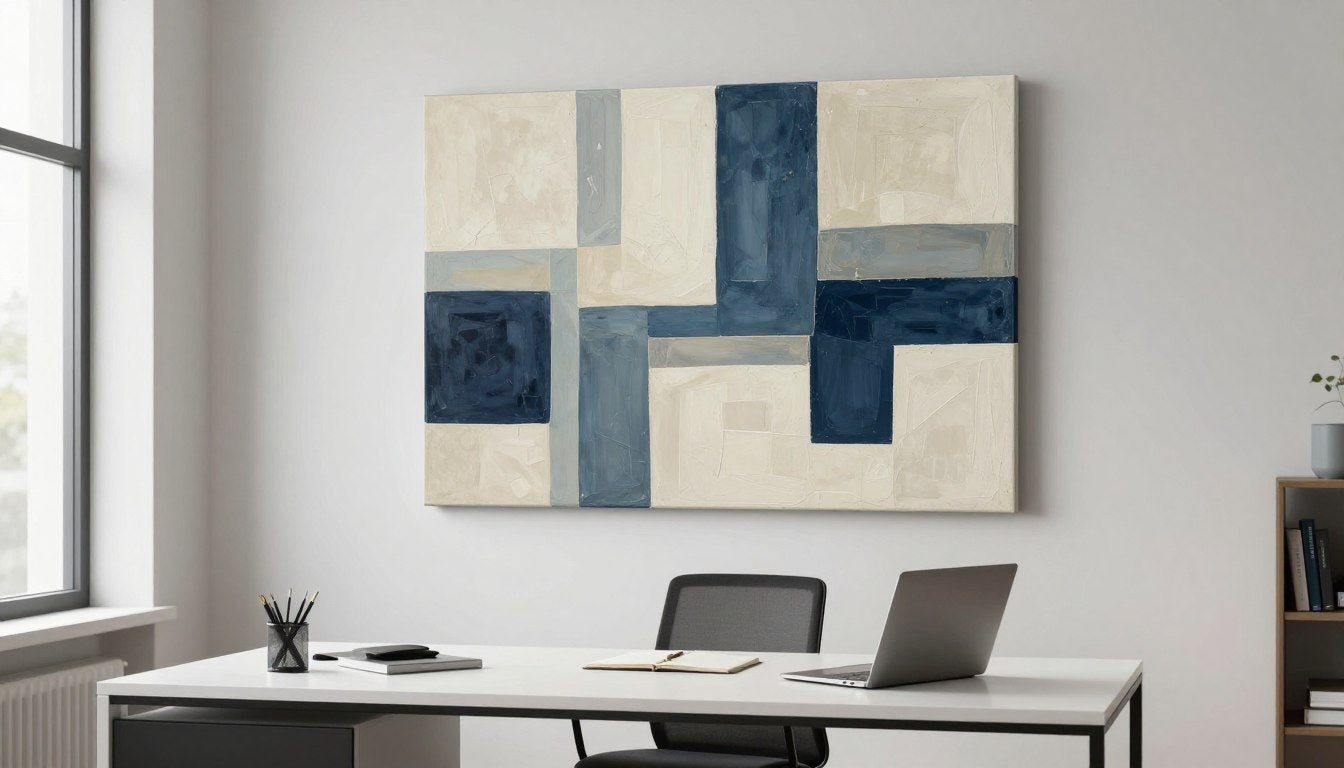
Office spaces need art that energizes without distracting. Abstract geometric pieces with clean lines work well. They suggest order and creativity simultaneously.
Place the canvas where you can see it when looking up from work. Avoid positioning it directly behind a computer monitor where glare becomes an issue. The art should provide visual breaks that refresh focus.


Entryway: Making First Impressions
Entry spaces set the tone for your entire home. A striking abstract canvas makes an immediate statement. This is where you can be bold. Visitors only pass through, so high-impact pieces work.
Consider scale relative to the entry size. A small foyer needs a vertical piece that draws the eye up. A large entry hall can handle an oversized horizontal canvas.


Lighting matters critically in entries. Install picture lights or track lighting to illuminate the canvas even in the evening. The art should welcome guests day and night.

Multi-Panel Installations
Large abstract art sometimes works best as a diptych or triptych. Multiple connected panels create a panoramic effect. This approach fits extra-wide walls or spaces above long sofas.
Each panel should work individually but contribute to a unified composition. Spacing between panels typically ranges from 2 to 4 inches. Maintain perfect alignment for professional appearance.


Frequently Asked Questions
Q: What size abstract canvas do I need for above my couch?
A: Measure your couch width and multiply by 0.66 to 0.75. For a standard 84-inch sofa, you need a canvas between 56 and 63 inches wide. This creates proper visual proportion. The canvas should sit 6 to 8 inches above the sofa back. If you prefer multiple smaller pieces, their combined width should follow the same ratio. The goal is balance—the art should anchor the sofa without overwhelming it.
Q: How do I choose abstract art colors that match my room?
A: Start with your existing color palette. Look at your largest pieces—sofa, rug, curtains. Choose abstract art that includes one or two of these colors plus a new accent. This creates connection while adding interest. Alternatively, use abstract art to introduce a completely new color you want to build around. The canvas becomes your color inspiration for future accessories. Consider the mood—warm colors energize, cool colors calm. Test by viewing images in your actual space lighting before purchasing.
Q: Should I hang abstract art high or at eye level?
A: Standard gallery height places the canvas center at 57 to 60 inches from the floor—average eye level when standing. Above furniture, the rule changes. Position the bottom edge 6 to 8 inches above the furniture piece. In dining rooms where people sit, center the art at seated eye level, roughly 48 inches from floor. For very large canvases over 60 inches tall, you may lower them slightly for better balance. The goal is comfortable viewing from the room's primary vantage point.
Q: What is the difference between canvas prints and original paintings?
A: Original paintings are made-to-order artworks created directly by an artist. They have physical paint texture and carry higher investment value. Canvas prints reproduce artwork using archival printing technology on gallery-quality canvas. They capture the look of originals at accessible prices. High-quality prints like those from Rossetti Art use giclée printing that preserves texture appearance. Canvas prints offer consistency in color and size. For most homes, quality canvas prints provide the visual impact of originals with practical benefits—no insurance concerns, easier replacement if damaged, and professional framing options included.
Q: Can large abstract canvas art work in small rooms?
A: Yes, and it often works better than multiple small pieces. One large canvas creates a focal point that makes a small room feel intentional rather than cluttered. The key is choosing the right proportion. In rooms under 150 square feet, stay with canvases between 30x40 and 40x50 inches. Vertical orientations add perceived height. Cool colors help small spaces feel more open. Avoid busy, high-contrast abstracts in tight spaces—they can feel overwhelming. Softer, more atmospheric pieces expand rather than close in the room.
Q: How do I care for abstract canvas art?
A: Canvas prints with UV-resistant coatings need minimal maintenance. Dust gently with a soft, dry microfiber cloth every few months. Avoid water or cleaning solutions—they can damage the coating. Keep canvas away from direct sunlight when possible, though quality UV protection prevents most fading. Maintain consistent humidity levels—extreme dryness or moisture affects canvas tension. Never hang canvas in bathrooms where steam exposure is constant. If the canvas loosens over time, a professional framer can re-stretch it. Handle by the frame edges, never touch the canvas surface. With proper care, quality canvas prints last for decades.
Transform Your Space Today
Browse our complete collection of gallery-quality large abstract canvas art.
Large abstract canvas art changes how a room communicates. The right piece creates atmosphere that furniture alone cannot achieve. It provides the visual anchor that makes a space feel complete.
Size, color, texture, and placement all matter. But the most important factor is choosing artwork that speaks to you. Abstract art bypasses rules and connects directly to emotion. When a piece feels right, it transforms your space from generic to genuinely yours.
Explore our abstract canvas prints collection to find statement pieces made with HP latex inks and hand-stretched canvas. Each print arrives gallery-ready with your choice of hardwood stretcher frame or hardwood floater frame. Made to order means your art is crafted specifically for your space.

About the Author
Chiara Rossetti
Chiara Rossetti is the founder of Rossetti Art, a canvas print and original art brand. She writes about interior design, wall art styling, and the art of making a home feel alive.

Leave a comment
This site is protected by hCaptcha and the hCaptcha Privacy Policy and Terms of Service apply.