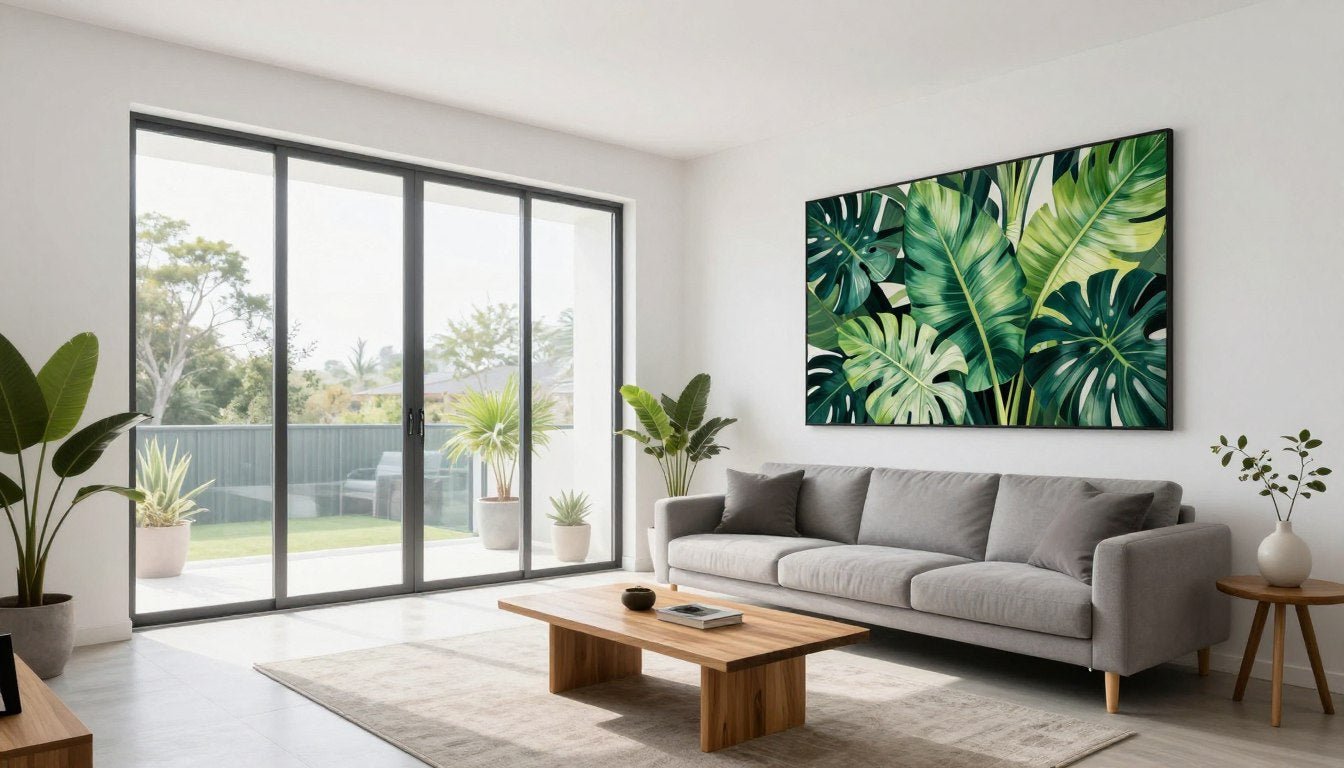
The right piece of wall art can change everything about a room. Large botanical wall art brings the calm, organic beauty of nature indoors while creating a sophisticated focal point that anchors your entire design.
Whether you're drawn to vintage botanical study illustrations or contemporary botanical prints, oversized pieces offer an immediate sense of drama and elegance.

Why Large Botanical Wall Art Creates Stunning Focal Points
Large botanical wall art transforms empty walls into captivating focal points by combining the timeless beauty of nature with sophisticated artistry. These oversized pieces command attention while maintaining a sense of calm and organic elegance that smaller artwork simply cannot achieve.
The scale of large botanical prints matters more than most people realize. A substantial piece creates visual weight that balances furniture and architectural features.
When you walk into a room, your eye naturally seeks a resting place. Large botanical artwork provides that anchor point.

The Psychology Behind Botanical Wall Decor
Botanical illustrations tap into our innate connection with nature. Studies show that nature imagery reduces stress and improves mood.
Large-scale botanical art amplifies these benefits. The generous size allows you to appreciate intricate details—the delicate veins in leaves, the subtle gradations in petals, the organic patterns that make each botanical study unique.
Vintage botanical prints bring an additional layer of depth. Their historical aesthetic adds character and tells a story that purely decorative pieces cannot match.

Space Transformation Through Art Scale
A common design mistake involves choosing artwork that's too small for the available wall space. Large botanical wall art solves this problem decisively.
The standard guideline suggests artwork should fill two-thirds to three-quarters of the furniture width beneath it. For a standard sofa, this typically means prints measuring 48 to 60 inches wide.

Size Impact on Room Perception
Large botanical prints affect how we perceive space. Horizontal pieces make walls feel wider. Vertical artwork draws the eye upward, creating the illusion of higher ceilings.
Oversized botanical art in a small room might seem counterintuitive, but it actually works beautifully. The scale creates a sophisticated, curated look rather than appearing cluttered with multiple smaller pieces.

Quality Canvas Creates Lasting Beauty
The medium matters as much as the image itself. High quality canvas prints offer texture and depth that paper prints cannot replicate.
Gallery-quality canvas has a tactile presence. The fabric weave adds dimension that enhances botanical subjects, making leaves appear more organic and flowers feel more touchable.
Premium canvas also ensures longevity. HP latex inks resist fading, maintaining color vibrancy for decades. UV-resistant coatings protect artwork from sun damage, which is particularly important for large pieces in bright rooms.

Choosing Perfect Botanical Prints for Your Living Room
Your living room deserves artwork that reflects your style while creating the atmosphere you want. Botanical prints for living room spaces should balance visual impact with the existing color palette and furniture arrangement.

Matching Botanical Art to Your Color Scheme
Start by identifying your room's dominant colors. Botanical wall art works with virtually any palette because nature offers endless variety.
For neutral spaces with whites, grays, and beiges, consider botanical prints with deep green leaves. They add life without overwhelming the calm foundation.
Rooms with warmer tones benefit from botanical illustrations featuring autumn leaves, dried flowers, or vintage sepia-toned botanical study prints.

Cool Color Palettes
- Eucalyptus and silver-leaf botanicals
- Blue-toned floral botanical illustrations
- Ferns and forest green leaf studies
- White flowers on soft gray backgrounds

Warm Color Palettes
- Sunflowers and golden botanical prints
- Rust-colored autumn leaf collections
- Terracotta-toned botanical studies
- Warm green tropical leaf artwork

Framing Options for Large Botanical Pieces
The frame you select significantly impacts the overall aesthetic. Large botanical artwork offers several framing approaches, each creating a distinct look.
Gallery-wrapped canvas prints eliminate the need for traditional frames. The image wraps around the edges, creating a contemporary, streamlined appearance that works beautifully in modern spaces.

Traditional frames in natural wood tones complement botanical subjects perfectly. A hardwood stretcher frame offers warmth and affordability, while a hardwood floater frame creates a sophisticated, gallery-quality presentation.
Floater frames deserve special mention for large botanical prints. The artwork appears to float within the frame, creating a shadow gap that adds depth and emphasizes the piece as fine art rather than mere decor.

Single Statement Piece vs. Gallery Wall
Large botanical wall art typically works best as a single statement piece. This approach creates a strong focal point without visual competition.
A single oversized botanical print above your sofa commands attention. It simplifies the space while making a bold design statement.

However, creating a gallery wall with botanical pieces can work if executed thoughtfully. Maintain consistent framing and choose botanical illustrations with similar tones or subjects.
The key to successful botanical gallery walls is restraint. Use three to five pieces maximum, keeping substantial visual space between frames. Overcrowding dilutes impact.
 [YOUTUBE VIDEO — https://youtu.be/EtnpEMViJdo?t=1]
 Styling Oversized Botanical Art in Different Spaces
Each room in your home offers unique opportunities for large botanical artwork. Understanding how to adapt your choices to different spaces ensures cohesive design throughout your home.

Living Room Botanical Art Placement
The living room typically offers the most wall space for large botanical wall art. This room benefits from substantial pieces that set the tone for your entire home.
Position your largest botanical print on the main wall—usually the one facing the room's entrance or behind the primary seating area. This placement ensures the artwork becomes the room's visual anchor.
Maintain proper height when hanging. The center of your artwork should sit at eye level, approximately 57 to 60 inches from the floor.

Pro Tip: When hanging art above furniture, leave 6 to 12 inches between the furniture top and the bottom of your frame. This creates visual connection without making the artwork feel disconnected from the space.
Bedroom Botanical Wall Decor
Bedrooms benefit from calming botanical subjects. Choose prints that promote relaxation—soft ferns, delicate flowers, or muted green leaves create a peaceful retreat.
The wall above your bed is prime real estate for oversized botanical art. A horizontal piece works best here, echoing the bed's proportions.

Avoid overly vibrant or busy botanical prints in sleeping spaces. The detail and color should invite rest rather than stimulate attention.
Vintage botanical study prints work exceptionally well in bedrooms. Their understated elegance and historical quality add sophistication without visual noise.

Office and Study Spaces
Home office spaces benefit from botanical artwork that inspires focus while reducing stress. Large botanical prints bring nature's calming influence to workspaces that might otherwise feel sterile.
Consider botanical illustrations with strong vertical elements for office walls. Tall grasses, bamboo, or vertical leaf arrangements draw the eye upward, which can make smaller offices feel more spacious.

Detailed botanical study prints also work beautifully in offices and studies. Their scientific aesthetic adds intellectual depth and provides interesting details to contemplate during breaks from work.

Dining Room and Kitchen Botanical Decor
Dining spaces welcome botanical subjects related to food and cultivation. Herb botanical studies, fruit tree illustrations, or vegetable botanical prints create appropriate thematic connections.
Large botanical wall art in dining rooms should complement without overwhelming. Since dining areas often have furniture against walls, consider the space above buffets or sideboards.

Kitchen walls benefit from botanical artwork that can withstand moisture and temperature changes. Gallery-quality canvas with protective coatings ensures longevity in these higher-humidity spaces.

Quality Matters: What Makes Botanical Canvas Prints Last
Investing in large botanical wall art means choosing pieces built to last. The difference between high quality and mediocre prints becomes obvious over time—fading colors, warping canvas, and deteriorating materials reveal poor construction.

Canvas Material and Construction
Authentic canvas prints use artist-grade fabric, not synthetic poster material. Hand-stretched canvas ensures proper tension and eliminates waves or sagging that develop in machine-stretched alternatives.
The canvas weight matters significantly. Professional-grade canvas typically weighs 300-400 GSM (grams per square meter). Lighter materials lack durability and don't hold ink as effectively.
Corner construction reveals quality. Look for hand-mitered corners with proper folding and stapling. Cheap prints show bunching, wrinkles, or exposed staples on visible edges.

Quality Indicators in Canvas Prints
- Tight, even canvas tension without waves
- Clean, mitered corners with no bunching
- Thick wooden stretcher bars (at least 0.75 inches)
- Back stapling or side stapling (never front)
- UV-protective coating for color longevity
- Certificate of authenticity or quality guarantee

HP Latex Inks and Color Permanence
Color fading ruins botanical artwork faster than any other issue. HP latex inks resist fading for decades, while standard inks deteriorate within months when exposed to natural light.
Professional botanical canvas prints use pigment-based inks rather than dye-based alternatives. Pigment inks consist of microscopic solid particles suspended in liquid, providing superior longevity and color stability.
The difference becomes apparent in greens—the dominant color in botanical art. Cheap dye-based inks fade to yellow or blue-green within a year. HP latex inks maintain true botanical colors for generations.

UV Protection and Environmental Resistance
UV-resistant coatings provide essential protection for large botanical wall art, especially in rooms with substantial natural light. These invisible coatings filter harmful ultraviolet rays that break down ink molecules and canvas fibers.
Professional canvas prints receive museum-grade UV protection during manufacturing. This coating doesn't alter the appearance but extends the life of your artwork by decades.
Environmental resistance extends beyond UV protection. Quality botanical prints resist humidity, temperature fluctuations, and minor impacts without damage.

Made to Order Advantage: High-quality botanical prints are often made to order rather than mass-produced. This ensures fresh materials, precise color matching, and attention to detail impossible with warehouse-stored inventory. Each piece receives individual quality control before shipping.
Frame Quality and Presentation
The frame protects and presents your botanical artwork. Cheap frames detract from even the best prints, while quality framing elevates the entire piece.
Solid wood frames outlast composite or plastic alternatives by decades. A simple hardwood stretcher frame offers durability and natural beauty at accessible prices.
For premium presentation, a hardwood floater frame creates museum-quality display. The floating effect adds three-dimensional depth that enhances large botanical prints dramatically.

Frame depth matters for large pieces. Shallow frames look insubstantial under oversized botanical art. Choose frames at least 1.5 inches deep for pieces over 30 inches in any dimension.

Backing and Hanging Hardware
Professional canvas prints include proper backing and hanging hardware designed for the piece's weight and dimensions.
Large botanical wall art requires heavy-duty wire or D-rings, not flimsy sawtooth hangers. The hardware should support at least three times the artwork's weight for safety.
Backing boards or dust covers protect the canvas back from dust, moisture, and accidental damage. This detail separates gallery-quality prints from mass-market alternatives.

At Rossetti Art, we understand that quality determines whether botanical wall art becomes a treasured focal point or a disappointment. Every canvas receives archival treatment, from hand-stretching to protective coatings.
Pairing Botanical Wall Art with Your Interior Design Style
Large botanical wall art adapts beautifully to diverse design aesthetics. Understanding how to match botanical artwork with your interior style ensures cohesive, intentional spaces rather than disconnected decoration.

Modern and Contemporary Spaces
Modern design embraces clean lines and uncluttered spaces. Large botanical prints work exceptionally well here, providing organic contrast to geometric furniture and architecture.
Choose botanical canvas prints with simple compositions for contemporary rooms. A single palm frond, a cluster of monstera leaves, or minimal fern illustrations maintain modern aesthetics while adding warmth.

Gallery-wrapped canvas without frames suits modern interiors perfectly. The streamlined presentation eliminates visual weight, allowing the botanical subject to shine.
Color choices in modern spaces typically lean toward monochromatic or limited palettes. Black and white botanical illustrations or single-color botanical studies maintain the sophisticated restraint modern design requires.

Traditional and Classic Interiors
Traditional design welcomes detailed botanical study prints that reference historical illustration techniques. Vintage botanical artwork feels at home in classic interiors where heritage and craftsmanship matter.
Formal frames enhance botanical prints in traditional spaces. Dark wood frames in walnut or mahogany, ornate gilded frames, or classic black frames with decorative details suit this aesthetic.

Botanical illustrations with aged paper backgrounds and scientific notation add authenticity to traditional rooms. These vintage-style prints reference the golden age of botanical exploration when artists documented plants with meticulous detail.
Consider series or collections in traditional spaces. Matching sets of botanical prints—perhaps showing different flower varieties or seasonal plants—create formal symmetry appreciated in classic design.

Bohemian and Eclectic Styles
Bohemian spaces embrace layered, collected aesthetics. Large botanical wall art works beautifully here, especially when mixed with other natural elements and global textiles.
Colorful botanical prints suit boho interiors. Tropical flowers, exotic plants, and vibrant leaf patterns echo the free-spirited nature of bohemian design.

Mix botanical canvas prints with other art forms in eclectic spaces. Pair large botanical pieces with woven wall hangings, smaller vintage prints, and three-dimensional plant displays for collected charm.
Unconventional framing suits boho aesthetics. Rattan frames, painted vintage frames, or no frames at all maintain the casual, curated-over-time feeling bohemian design celebrates.

Farmhouse and Rustic Design
Farmhouse style welcomes botanical subjects that reference gardens, herbs, and agricultural heritage. Large botanical prints feel particularly appropriate in spaces celebrating rural simplicity and natural materials.
Herb botanical studies and vegetable illustrations suit farmhouse kitchens and dining rooms perfectly. These botanical pieces connect to the farm-to-table ethos central to this aesthetic.

Natural wood frames enhance botanical art in rustic spaces. Simple hardwood stretcher frames, weathered barnwood frames, or unstained oak frames complement the organic quality of botanical subjects.
Neutral botanical prints with cream, beige, and soft green tones maintain the calm, understated palette farmhouse design favors. Avoid overly bright colors that feel too contemporary for rustic aesthetics.

Transitional Style Flexibility
Transitional design bridges traditional and contemporary aesthetics. This popular style offers the most flexibility for botanical wall art choices.
Both modern botanical prints and vintage botanical illustrations work in transitional spaces. The key is balancing traditional elements (like frames and classic subjects) with contemporary simplicity (clean compositions and restrained colors).

Medium-toned wood frames suit transitional interiors beautifully. A hardwood floater frame provides contemporary presentation with traditional material warmth—the perfect transitional compromise.
Choose botanical subjects with timeless appeal. Classic botanical study illustrations of common plants (ferns, roses, olive branches) avoid feeling too trendy while maintaining sophisticated presence.

Cool Design Styles
Scandinavian, Modern, Minimalist, Contemporary
- Simple botanical compositions
- Monochromatic or limited color palettes
- Gallery-wrapped canvas without frames
- Large scale with lots of negative space
- Clean, uncluttered subjects

Warm Design Styles
Traditional, Farmhouse, Rustic, Bohemian
- Detailed botanical study illustrations
- Warm, earthy color palettes
- Natural wood or ornate frames
- Vintage or aged aesthetics
- Layered with other natural elements

Frequently Asked Questions About Large Botanical Wall Art
Q: What size is considered "large" for botanical wall art?
A: Large botanical wall art typically measures 30 inches or more in at least one dimension. For substantial impact, pieces measuring 40x60 inches or larger work best above standard sofas and beds.
The right size depends on your wall dimensions and furniture scale. As a general rule, artwork should fill two-thirds to three-quarters of the furniture width beneath it.
Very large walls—such as those in great rooms or above king beds—can accommodate botanical prints up to 60x80 inches or even larger without overwhelming the space.
Q: Are canvas prints or framed paper prints better for large botanical art?
A: Canvas prints offer significant advantages for large botanical wall art. The fabric texture adds organic quality that enhances botanical subjects. Canvas also eliminates glare issues common with glass-covered prints.
Gallery-quality canvas prints with HP latex inks and UV protection last decades without fading. The durability matters more as size increases—large framed prints require heavy glass that adds weight and cost.
Canvas construction allows larger sizes with less weight, making installation easier and safer. Hand-stretched canvas maintains proper tension without the warping issues that affect large paper prints.
Q: How do I choose between vintage botanical studies and modern botanical prints?
A: Your interior design style should guide this decision. Vintage botanical study prints suit traditional, farmhouse, and transitional interiors where historical references add character and depth.
Modern botanical prints work better in contemporary, minimalist, and Scandinavian spaces where clean lines and simplified forms match the aesthetic.
Consider your existing decor. If you have antique furniture or classic architectural details, vintage botanical illustrations create cohesion. Modern furniture and architecture pair better with contemporary botanical photography or simplified botanical art.
Q: What's the best placement height for large botanical wall art?
A: The center of your botanical artwork should hang at eye level, approximately 57 to 60 inches from the floor. This standard museum height works for most spaces and viewer heights.
When hanging art above furniture, position the bottom edge 6 to 12 inches above the furniture top. This creates visual connection while maintaining appropriate spacing.
In rooms with high ceilings, you can hang botanical prints slightly higher to balance vertical space. However, avoid hanging so high that the artwork feels disconnected from the living space.
Q: Can large botanical wall art work in small rooms?
A: Yes, large botanical art often works better in small rooms than multiple small pieces. One substantial piece creates a sophisticated focal point without the visual clutter of scattered small artwork.
The key is choosing botanical subjects with lighter colors and open compositions. Avoid dark, dense botanical prints that can make small spaces feel closed in.
Horizontal botanical prints make small rooms feel wider, while vertical pieces draw the eye upward, creating the illusion of higher ceilings.
Q: How do I care for and clean large canvas botanical prints?
A: Canvas prints require minimal maintenance. Dust regularly with a soft, dry microfiber cloth or use a soft brush attachment on your vacuum with minimal suction.
Avoid water and cleaning products directly on canvas. If your canvas becomes soiled, consult professional art cleaners rather than attempting chemical cleaning yourself.
Position botanical canvas prints away from direct sunlight when possible, even with UV protection. While HP latex inks resist fading, unnecessary sun exposure still shortens artwork lifespan.
Maintain stable humidity levels. Extreme humidity or dryness can affect canvas tension over time, though quality hand-stretched canvas remains stable in normal home environments.
Q: What botanical subjects are most popular for large wall art?
A: Ferns, palm leaves, monstera, and eucalyptus rank among the most popular botanical subjects for large wall art. These plants offer strong visual appeal with elegant, recognizable forms.
Vintage botanical study prints featuring roses, peonies, and wildflowers remain classics for traditional and transitional spaces.
Tropical leaves create dramatic statements in contemporary interiors, while herb and vegetable botanical illustrations suit farmhouse and kitchen spaces.
The "best" botanical subject depends on your personal preference and design style. Choose plants that resonate with you rather than following trends—you'll live with this artwork for years.

Large botanical wall art transforms empty walls into captivating focal points that bring nature's beauty indoors. Whether you choose vintage botanical study prints with historical charm or contemporary botanical canvas that celebrates simplified forms, the right piece anchors your design with organic elegance.
Quality matters as much as aesthetics. HP latex inks, UV-resistant coatings, and hand-stretched canvas ensure your botanical artwork maintains its beauty for decades.

The botanical art you choose becomes part of your daily environment, affecting mood and creating atmosphere every time you enter the room. Take time to select pieces that truly resonate with your aesthetic and enhance how you want your space to feel.
Explore our Canvas Prints collection to discover gallery-quality botanical wall art printed with HP latex inks on hand-stretched canvas. Each piece is made to order, ensuring exceptional quality and attention to detail that mass-produced alternatives cannot match.

About the Author
Chiara Rossetti
Chiara Rossetti is the founder of Rossetti Art, a canvas print and original art brand. She writes about interior design, wall art styling, and the art of making a home feel alive.

Leave a comment
This site is protected by hCaptcha and the hCaptcha Privacy Policy and Terms of Service apply.