
In our fast-paced world, creating relaxing spaces at home has become essential for mental wellbeing. The right combination of design elements, colors, and thoughtfully selected wall art can transform any room into a sanctuary of calm. This comprehensive guide provides practical frameworks for designing serene environments throughout your home—from bedrooms that promote restful sleep to living areas that help you decompress after a busy day.
Whether you're looking to create a peaceful reading nook, a meditation corner, or simply want your entire home to feel more tranquil, we've distilled the principles of calm interior design into actionable matrices, checklists, and room recipes you can implement immediately.
Quick Answers (TL;DR)
Best wall art colors for calm rooms: Warm neutrals (sand, taupe, ivory), sage greens, soft blues, and monochromatic schemes with textural interest.
Fast size rule: Wall art should be approximately 2/3 the width of the furniture it hangs above (e.g., 40-inch/100cm art above a 60-inch/150cm sofa).
Best art styles for bedrooms: Soft abstract horizons, minimal line art, gentle botanical illustrations, and low-contrast textured pieces.
Best frames for calm interiors: Natural wood tones, slim profiles in matte finishes, or frameless canvas for a clean, uncluttered look.

A bedroom designed with relaxing spaces principles: neutral palette, properly sized wall art, and minimal visual noise
What Makes a Space Feel Relaxing? (Design, not "stuff")
Creating a relaxing space isn't about accumulating calming objects—it's about thoughtful design that reduces visual and mental stimulation. The most serene rooms achieve a delicate balance between interest and simplicity.
Visual Noise vs. Breathing Room
Our brains process everything in our visual field, even subconsciously. Cluttered spaces with competing colors, patterns, and objects create "visual noise" that can increase cognitive load and stress. Truly relaxing spaces incorporate minimalist principles to reduce visual noise without feeling sterile.
The key is creating "breathing room"—negative space that gives the eye places to rest. This might mean:
- Leaving some walls completely bare
- Choosing one larger art piece instead of several small ones
- Maintaining empty space on shelves and surfaces
- Using consistent spacing in gallery arrangements

Color Temperature + Contrast Control
Color significantly impacts how art influences room mood. For relaxing spaces, consider:
- Temperature: Warm colors (soft terracottas, sandy beiges) feel cozy and grounding, while cool colors (sage greens, pale blues) can feel airy and expansive
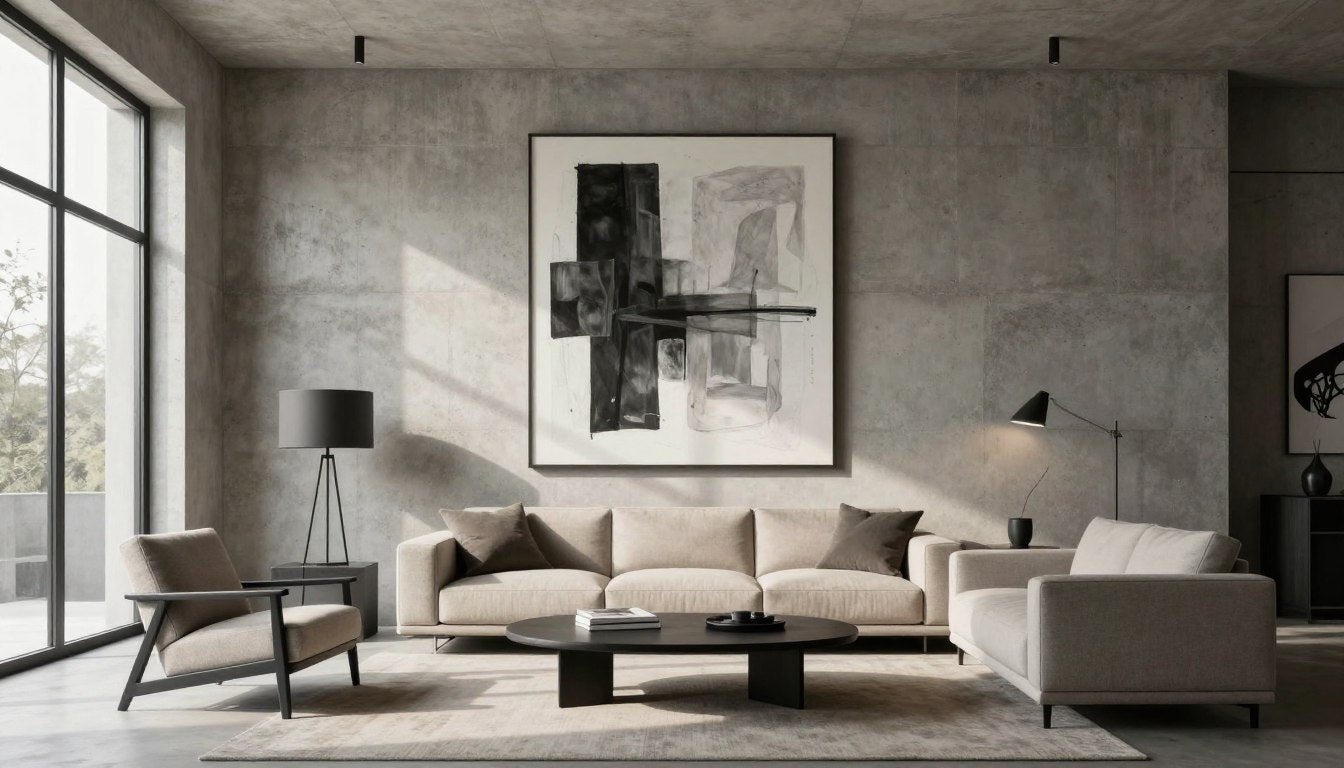
- Contrast: Lower contrast between colors creates visual calm—think tone-on-tone rather than stark black and white
- Saturation: Muted, desaturated colors are typically more relaxing than vibrant ones
Understanding these principles allows you to create spaces that feel calm without being boring—the ultimate goal for relaxing yet engaging interiors.
The Relaxing Spaces Design Matrix
Different rooms serve different functions, and the type of "calm" you want to create should align with the room's purpose. Use this matrix to match your desired mood with appropriate colors, art styles, and room applications.
| Mood Goal | Palette | Best Art Styles | Best Rooms | Collection |
| Quiet | Warm neutrals (sand, taupe, ivory) | Minimal line art, soft horizons | Bedroom, reading nook | Line Art Prints |
| Grounded | Earth tones (clay, terracotta, sand) | Textured abstracts, wabi-sabi | Living room, entryway | Wabi-Sabi Art |
| Airy | Soft blues, whites, light grays | Watercolor washes, monochrome curves | Office, bathroom | Black & White Prints |
| Nature-connected | Sage greens, olive, moss | Botanical, abstract landscapes | Dining room, kitchen | Botanical Prints |
| Cozy | Warm beige, amber, soft terracotta | Low-contrast texture, warm abstracts | Living room, bedroom | Textured Paintings |
Shop This Calm Mood: Wabi-Sabi Collection
Embrace the beauty of imperfection with our Wabi-Sabi wall art collection. These pieces bring grounded, earthy calm to any space with their organic textures and natural palette.
Explore Wabi-Sabi ArtColor Palettes That Calm (Without Feeling Boring)
The right color palette forms the foundation of any relaxing space. Here's how to use color strategically for maximum calm without creating rooms that feel flat or lifeless.

Four calming color palettes: warm neutrals, sage greens, soft blues, and monochrome with texture
Warm Neutrals (Sand/Taupe/Ivory)
Warm neutrals create spaces that feel both grounding and inviting. They work particularly well in bedrooms and living areas where you want to promote relaxation.
Do this:
- Layer different tones within the same color family
- Add textural elements like natural wood, linen, or canvas
- Include one slightly darker accent for subtle depth
Avoid this:
- Stark white walls that can feel clinical
- High-gloss finishes that create visual stimulation
- Too many competing wood tones
For wall art in warm neutral spaces, consider pieces like Silent Earth Strata, which uses subtle layering of warm tones to create visual interest without disrupting the calm atmosphere.
Sage Greens
Sage green has emerged as a go-to color for creating relaxing spaces that maintain a connection to nature. This versatile hue works beautifully in almost any room.
Do this:
- Pair sage with warm whites and natural materials
- Use it as a wall color or through larger textiles
- Incorporate actual plants to enhance the nature connection
Avoid this:
- Combining with cool, bright whites (too stark)
- Mixing with highly saturated colors
- Using only as small accents (too timid)
The Sage Current Silence canvas exemplifies how sage green wall art can anchor a space with its soothing presence while adding subtle movement and texture.
Soft Blues (Sparingly)
Blue is often cited as calming, but it can sometimes feel cold. The key is choosing the right blues and using them thoughtfully.
Do this:
- Choose blues with gray or warm undertones
- Balance with warm elements (wood, terracotta)
- Use as a secondary color in primarily neutral spaces
Avoid this:
- Cool, bright blues that feel energizing
- All-blue rooms without warming elements
- Pairing with stark white (creates high contrast)
Monochrome (If You Add Texture)
Monochromatic schemes can be incredibly calming, creating spaces with minimal visual stimulation. The secret is incorporating texture to prevent flatness.
Do this:
- Vary textures significantly within the same color
- Include natural materials with visible grain
- Add dimensional elements like textured wall art
Avoid this:
- Flat, uniform surfaces throughout
- High-gloss finishes that reflect light
- Perfectly matching every element
Monochromatic spaces benefit from art like Coastal Silence Horizon, which uses subtle tonal variations and texture to create interest while maintaining the calm of a limited palette.
Room-by-Room Calm Setup (Placement + Sizing)
Each room in your home serves a different purpose and requires a tailored approach to creating calm. This guide provides specific recommendations for wall art placement, sizing, and style based on each room's function.
| Room | Calm Priority | Best Placement | 2/3 Rule Example | Recommended Size | Collection |
| Bedroom | Sleep-forward | Above bed | Queen bed (60"/152cm) → 40"/100cm art | 30-48" / 75-120cm wide | Line Art |
| Living Room | Decompress | Above sofa | Sofa (84"/213cm) → 56"/142cm art | 40-60" / 100-150cm wide | Textured Art |
| Reading Nook | Quiet focus | Adjacent to chair | Nook width (48"/122cm) → 32"/81cm art | 24-36" / 60-90cm wide | Botanical |
| Home Office | Low-noise background | Behind desk or side wall | Desk (60"/152cm) → 40"/100cm art | 30-48" / 75-120cm wide | Black & White |
| Entryway | Instant reset | Above console | Console (36"/91cm) → 24"/61cm art | 24-30" / 60-75cm wide | Sage Green |
Bedroom (Sleep-forward)

Bedroom with properly sized wall art above the bed, following the 2/3 rule for visual balance
The bedroom should be your ultimate relaxation sanctuary, designed primarily to promote restful sleep. Wall art in this space should never be stimulating or energizing.
- Choose art with horizontal orientation to echo the restful position of sleep
- Avoid high contrast or busy patterns that stimulate the mind
- Consider feng shui bedroom calm placement principles—no turbulent water scenes or sharp-edged imagery
- Soft abstracts, gentle horizons, and minimal line art work particularly well
Shop This Calm Mood: Line Art Collection
Our Line Art collection features minimalist designs perfect for creating a serene bedroom sanctuary. These pieces offer subtle visual interest without overwhelming the senses.
Explore Line Art PrintsLiving Room (Decompress-forward)
Living rooms serve as decompression zones where you transition from the outside world to your home sanctuary. Wall art here should support unwinding without being boring.
- Scale is crucial—undersized art creates visual tension rather than calm
- Consider a single large piece above the sofa rather than a busy gallery wall
- If using a gallery arrangement, maintain consistent spacing and a cohesive color story
- Textured abstracts work well to add interest while maintaining a calm atmosphere
Reading Nook (Quiet Focus)

A reading nook designed for quiet focus with properly scaled botanical wall art
Reading nooks should balance focus and relaxation, creating a space that helps you concentrate on your book while feeling comfortable enough to linger.
- Position art at eye level when seated for maximum impact
- Choose subjects that inspire thoughtfulness without demanding attention
- Botanical prints like Whispers of Sand offer natural elements in a calming, simplified form
- Consider art that complements rather than competes with your books
Shop This Calm Mood: Botanical Collection
Our Botanical & Nature Canvas Prints bring the calming essence of the natural world into your reading nook or quiet space, promoting focus and tranquility.
Explore Botanical PrintsHome Office (Low-noise Background)
Home offices require a delicate balance—you want enough visual interest to feel inspired but not so much that it distracts from work.
- Position primary art pieces to the side rather than directly behind your computer
- Choose art with a sense of order and structure to promote focused thinking
- Monochromatic pieces can add interest without visual distraction
- Consider the mood you need for your specific work—calming for high-stress jobs, slightly energizing for creative work
Entryway (Instant Reset)
Your entryway sets the tone for your entire home experience, creating an immediate transition from the outside world to your sanctuary.
- Choose art that visually "exhales"—pieces with a sense of space and breathing room
- Scale appropriately to the size of your entryway—avoid overwhelming small spaces
- Consider pieces that incorporate wabi-sabi principles for calm interiors
- Sage green pieces work particularly well for creating an instant sense of calm upon entering
Sizing & Placement Rules (So Calm Looks Intentional)
Properly sized and placed wall art is crucial for creating a sense of visual harmony. When art is too small or hung incorrectly, it creates subtle tension that undermines the calm atmosphere you're trying to create.
The 2/3 Rule (Worked Example)

The 2/3 rule illustrated: Wall art should be approximately 2/3 the width of the furniture below it
The 2/3 sizing rule states that your wall art should be approximately two-thirds the width of the furniture it hangs above. This creates visual balance and prevents the common mistake of choosing art that's too small.
Example calculations:
- Sofa width: 84 inches (213 cm)
Ideal art width: 56 inches (142 cm) - Queen bed width: 60 inches (152 cm)
Ideal art width: 40 inches (100 cm) - Desk width: 48 inches (122 cm)
Ideal art width: 32 inches (81 cm)
When to adjust the rule:
- For very large furniture, you might go slightly smaller than 2/3
- For gallery walls, the entire arrangement should follow the 2/3 rule
- For very small furniture, you might go slightly larger than 2/3
Understanding standard canvas sizes in cm can help you plan your art purchases more effectively, ensuring you select pieces that will work well in your space.
Hanging Height + Spacing for Gallery Walls

Gallery wall spacing guide: Consistent gaps (2-3 inches/5-7.5cm) and proper hanging height (57-60 inches/145-152cm from floor)
For relaxing spaces, proper hanging height and consistent spacing are essential to create visual harmony. Follow these guidelines:
- Hanging height: The center of artwork should be 57-60 inches (145-152 cm) from the floor when not hanging above furniture
- Above furniture: Hang art 6-8 inches (15-20 cm) above the top of furniture
- Gallery spacing: Maintain consistent gaps of 2-3 inches (5-7.5 cm) between frames for calm gallery wall spacing
- Frame consistency: Use the same frame style throughout a gallery for a more cohesive, calming effect
For more detailed guidance on art placement throughout your home, consult our layout cheat sheet for calm walls and print sizes + frames guide.
Texture = Calm (When Color Is Minimal)

Textured wall art adds visual interest and depth without disrupting a calm, neutral palette
When working with minimal color palettes, texture becomes essential for creating visual interest without sacrificing calm. Textured wall art offers a tactile quality that engages the senses subtly, preventing neutral spaces from feeling flat or boring.
Textured Abstracts / Plaster-like Looks
Textured abstract art with plaster-like finishes or visible brushstrokes adds dimension to walls while maintaining a serene atmosphere. These pieces work particularly well in:
- Monochromatic color schemes where visual interest comes from texture rather than color contrast
- Minimalist spaces that need a focal point without introducing busy patterns
- Rooms with hard surfaces (like kitchens) that benefit from the softening effect of texture
When selecting textured art, consider the texture + balance rules to ensure proper scale and placement for maximum impact.
Why Matte Finishes Help
The finish of your wall art significantly impacts how calming it feels in a space. Matte finishes offer several advantages for creating relaxing environments:
- Reduce glare and reflections that can create visual stimulation
- Absorb rather than reflect light, creating a softer visual experience
- Enhance the perception of texture and depth in artwork
- Create a more sophisticated, understated presence on walls
When selecting frames, choose matte or satin finishes over high-gloss options for a more calming effect.
Shop This Calm Mood: Textured Paintings
Our Original Minimalist & Textured Paintings collection offers premium pieces with dimensional surfaces that create visual interest while maintaining a calm, sophisticated presence.
Explore Textured PaintingsRelaxing Spaces Checklist (10 Points)
Use this checklist to ensure your spaces incorporate all the essential elements for a truly calming environment.
- Limit palette to 3–5 tones - Restricting your color palette creates visual cohesion and reduces stimulation
- Choose one hero wall - Designate a single focal wall for art rather than decorating every surface
- Use negative space - Leave "breathing room" around art and objects to prevent visual crowding
- Prefer matte / low-glare finishes - Choose matte frames and art surfaces to reduce reflections and glare
- Repeat one natural material - Incorporate wood, linen, stone, or other natural elements consistently
- Choose art with soft edges or gentle rhythm - Select pieces with curves, horizons, or organic shapes rather than sharp angles
- Scale up art - Choose fewer, larger pieces rather than many small ones for a calmer effect
- Use warm lighting in the evening - Install dimmable, warm-toned lighting (2700-3000K) for evening relaxation
- Keep gallery spacing consistent - Maintain uniform gaps between pieces in gallery arrangements
- Use the 2/3 rule above furniture - Size art to approximately 2/3 the width of the furniture below it
Common Mistakes + Fixes
Even with the best intentions, certain design choices can undermine the calm atmosphere you're trying to create. Here are the most common mistakes and how to fix them.
| Mistake | Why It Feels Busy | Fix |
| Art too small for the wall | Creates visual tension and makes the space feel unbalanced | Scale up to follow the 2/3 rule; one large piece is more calming than several small ones |
| High contrast colors | Stark contrasts (like black and white) demand visual attention | Reduce contrast by choosing colors closer in value; add texture for interest instead |
| Too many accent colors | Multiple colors create visual competition and stimulation | Simplify palette to 3-5 colors maximum; use tonal variations within those colors |
| Cluttered gallery walls | Inconsistent spacing and too many pieces create visual noise | Reduce number of pieces; maintain consistent spacing; unify with similar frames |
| Decorating every wall | No visual rest points for the eye to pause | Choose one hero wall for art; leave other walls simpler or completely bare |

Before and after: Transforming a busy space into a calm sanctuary by fixing common mistakes
FAQ
What makes a space feel relaxing?
A truly relaxing space balances visual interest with simplicity. Key elements include a limited color palette (3-5 colors), proper scale and placement of furniture and art, ample negative space, soft or natural lighting, and the incorporation of natural materials. Reducing visual noise by eliminating clutter and choosing fewer, larger decorative elements also contributes significantly to a calm atmosphere.
What wall art is best for a relaxing bedroom?
The most calming wall art for bedrooms includes soft abstract horizons, minimal line art, gentle botanical illustrations, and low-contrast textured pieces. Choose art with horizontal orientation to echo the restful position of sleep, and avoid high-contrast or visually stimulating imagery. Properly sized art (about 2/3 the width of your headboard or bed) creates visual harmony that promotes relaxation.
What colors are best for a calming living room?
The most relaxing colors for living rooms include warm neutrals (sand, taupe, ivory), sage greens, soft blues (used sparingly), and monochromatic schemes with textural interest. The key is choosing colors with low contrast and medium to low saturation. Warm undertones generally feel more inviting and cozy than cool tones, making them ideal for spaces where you want to unwind.
How big should wall art be above a sofa or bed?
Wall art should be approximately 2/3 the width of the furniture it hangs above. For example, a 7-foot (84-inch/213cm) sofa would ideally have art that's about 56 inches (142cm) wide above it. For a queen bed (60 inches/152cm wide), aim for art around 40 inches (100cm) wide. This proportion creates visual balance and prevents the common mistake of choosing art that's too small for the space.
Can minimalist art make a room feel calmer?
Yes, minimalist art is particularly effective at creating calm environments because it reduces visual stimulation while still providing aesthetic interest. Minimal line art, simple abstracts, and pieces with ample negative space give the eye places to rest. The key is choosing minimalist pieces with the right scale—they should be large enough to make an impact without feeling lost on the wall.
How do I create a relaxing reading nook?
A calming reading nook requires comfortable seating, good task lighting, minimal visual distractions, and thoughtfully chosen wall art. Position art at eye level when seated, and choose subjects that inspire thoughtfulness without demanding attention. Botanical prints, soft abstracts, or minimal line art work well. Keep the color palette limited and incorporate soft textiles like a throw blanket or cushions to enhance comfort.
What's the best spacing for a calm gallery wall?
For a serene gallery wall, maintain consistent spacing of 2-3 inches (5-7.5cm) between frames. Consistency is key—irregular spacing creates visual tension that undermines calm. Use the same frame style throughout for cohesion, and limit the color palette of the artwork. The entire arrangement should follow the 2/3 rule in relation to the furniture below it, and should be hung with the center at eye level (approximately 57-60 inches/145-152cm from the floor).
Does feng shui recommend wall art in bedrooms?
Feng shui principles do support the use of appropriate wall art in bedrooms, with some specific guidelines. Choose art with peaceful, uplifting imagery rather than turbulent scenes or solitary figures. Avoid sharp-edged imagery or water scenes that might disrupt restful energy. Properly sized art above the bed can create a sense of protection and stability. Pairs of similar images can reinforce partnership energy in a shared bedroom.
Shop This Calm Mood: Best Sellers Collection
Our Best Sellers collection features our most popular calming wall art pieces, curated to help you create serene, relaxing spaces throughout your home.
Explore Best SellersTransform Your Space with Rossetti Art
Creating truly relaxing spaces is both an art and a science—one that begins with understanding how design elements work together to promote calm. At Rossetti Art, we've curated collections specifically designed to complement serene interiors, with pieces that balance visual interest with the breathing room your mind needs to truly unwind. From minimal line art that brings quiet structure to botanical prints that connect you with nature, our carefully crafted wall art becomes an essential element in your calm home sanctuary. We invite you to explore our collections and discover the perfect pieces to transform your spaces into the relaxing retreats you deserve.

About the Author
Chiara Rossetti
Chiara Rossetti is the founder of Rossetti Art, a canvas print and original art brand. She writes about interior design, wall art styling, and the art of making a home feel alive.

Leave a comment
This site is protected by hCaptcha and the hCaptcha Privacy Policy and Terms of Service apply.