
Transforming your walls from blank canvases into thoughtfully designed focal points can dramatically elevate your home's aesthetic. Yet, many homeowners find themselves paralyzed by uncertainty when it comes to selecting, sizing, and arranging wall art. Should that canvas hang higher? Is this print too small for your sofa? How do you create a gallery wall that looks curated rather than chaotic?
This comprehensive guide eliminates the guesswork from wall art placement. Drawing from interior design principles, we've distilled professional techniques into practical rules, charts, and room-by-room frameworks that you can reference whenever you're ready to transform your walls. Whether you're starting fresh or rethinking existing spaces, these designer-level insights will help you create walls that feel intentional, balanced, and uniquely yours.
TL;DR: Wall Art Rules That Fix 90% of Decorating Problems
- Center artwork at eye level (57-60" from floor) for standard walls; adjust for furniture
- Size artwork to 2/3 - 3/4 the width of furniture it hangs above
- Maintain 6-8" space between top of furniture and bottom of artwork
- For gallery walls, keep consistent spacing (2-3") between frames
- Choose vertical art for narrow walls, horizontal for wide walls
- Consider lighting to avoid glare on glass-framed pieces
- Use paper templates to test layouts before hanging
- Match art scale to room size (larger rooms = larger art)
- Select themes that complement your room's mood and color palette
- When in doubt, one oversized piece often works better than multiple small pieces
The Ultimate Wall Art Layout Cheat Sheet

| Room | Wall Type | Best Layout | Ideal Width | Recommended Sizes | Hanging Height | Spacing Rule | Lighting Note |
| Living Room | Above Sofa | Single large or triptych | 2/3 - 3/4 of sofa width | 36-60" wide (91-152cm) | 6-8" above sofa | Center horizontally | Avoid direct spotlights |
| Living Room | Feature Wall | Oversized single or gallery | 50-75% of wall width | 48"+ wide (122cm+) | Eye level center (57-60") | Balance negative space | Consider accent lighting |
| Bedroom | Above Bed | Single, diptych or triptych | 2/3 of headboard | 30-45" wide (76-114cm) | 6-8" above headboard | Center to bed | Soft, non-glare lighting |
| Dining Room | Above Sideboard | Horizontal single or series | 2/3 - 3/4 of furniture | 36-48" wide (91-122cm) | 6-8" above furniture | Align with furniture | Consider picture lights |
| Entryway | Narrow Wall | Vertical single or stack | 1/2 - 2/3 of wall width | 24-30" wide (61-76cm) | Eye level center (57-60") | Vertical alignment | Highlight with sconces |
| Home Office | Behind Desk | Grid or single focal | 75% of desk width | 30-40" wide (76-102cm) | Eye level when seated | Balanced with desk | Avoid screen glare |
This comprehensive cheat sheet serves as your quick reference for proper wall art placement throughout your home. For more detailed guidance on specific rooms, continue reading our room-by-room breakdown below.
Step-by-Step: How to Plan Wall Art Like a Designer
Step 1 — Decide the Room's Mood
Before selecting artwork, consider the emotional atmosphere you want to create. Each room serves a different purpose and should evoke specific feelings:
- Calm: Soft colors, minimal contrast, abstract forms, and negative space create restful environments ideal for bedrooms and reading nooks.
- Bold: High contrast, vibrant colors, and dynamic compositions energize spaces like home offices or creative areas.
- Graphic: Structured compositions with clean lines and geometric elements bring modern sophistication to dining rooms and entryways.
- Warm: Earth tones, organic shapes, and textural elements foster connection in gathering spaces like living and dining rooms.
The psychology of art significantly impacts how we experience spaces. Choose pieces that align with your room's intended function and emotional goals.

Step 2 — Pick the Layout Type
Different wall scenarios call for different art arrangements. Consider these common layout types:
Single Statement
One large piece creates a focal point and works well above sofas, beds, or on feature walls.
Diptych/Triptych
Sets of 2-3 related pieces create horizontal flow perfect for wide walls.
Grid Gallery
Uniform frames in a structured arrangement bring order and sophistication.
Salon Gallery
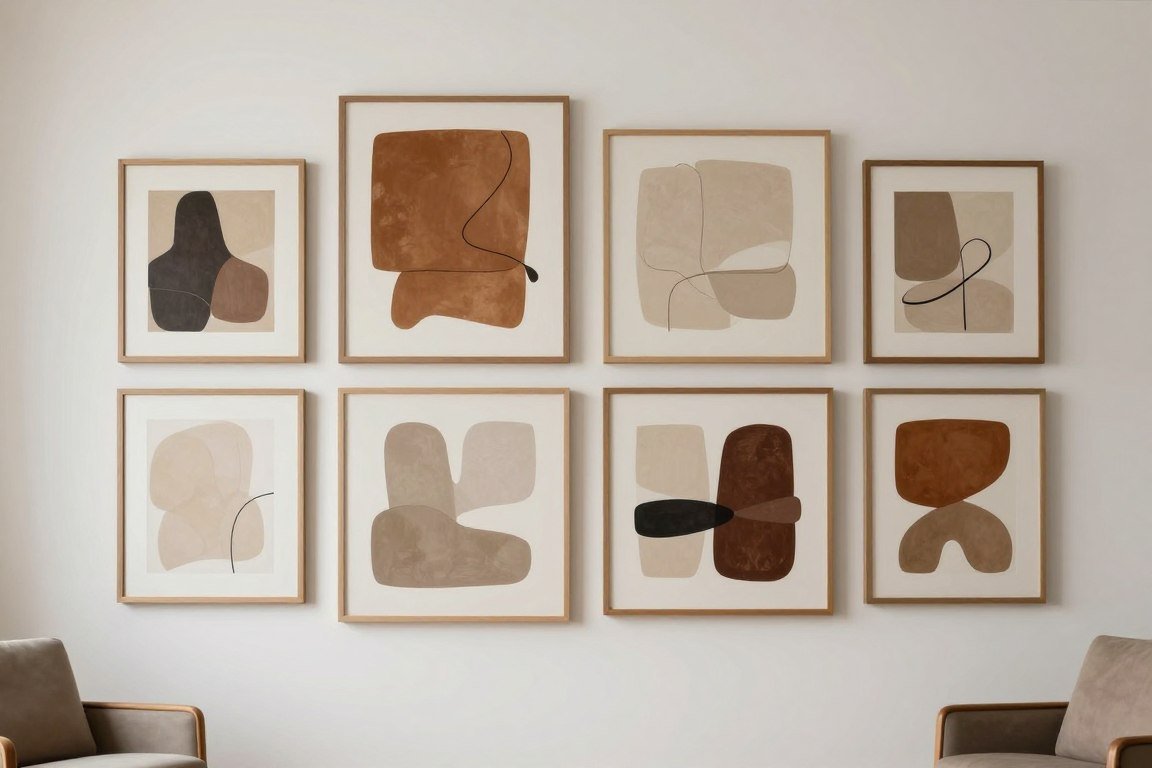
Mixed frames and sizes in an organic arrangement add personality and visual interest.
For larger spaces, consider oversized canvas prints that make a dramatic statement. Smaller rooms often benefit from a single well-chosen piece rather than multiple small works that can create visual clutter.
Step 3 — Choose Size Using the Size Chart
| Wall Width | Recommended Canvas Width | Best Orientation | Suggested Set Type |
| 24-36" (61-91cm) | 16-24" (41-61cm) | Vertical | Single |
| 36-60" (91-152cm) | 24-40" (61-102cm) | Horizontal or Square | Single or Diptych |
| 60-84" (152-213cm) | 36-60" (91-152cm) | Horizontal | Single Large or Triptych |
| 84"+ (213cm+) | 48"+ (122cm+) or multiple pieces | Horizontal or Mixed | Oversized Single or Gallery Wall |
Remember that these are guidelines, not rigid rules. The most important factor is visual balance—artwork should feel proportional to both the wall and surrounding furniture.
Find Your Perfect Size
Explore our collection of Abstract & Geometric Canvas Prints available in multiple sizes to suit any wall.
Browse CollectionStep 4 — Place and Test with Paper Templates
Before committing to nail holes, create paper templates of your artwork:
- Trace the outline of each frame onto kraft paper or newspaper
- Cut out the templates and label them
- Use painter's tape to position templates on your wall
- Step back frequently to assess the layout from different angles and distances
- Adjust spacing and alignment until the composition feels balanced
This simple step saves you from misplaced holes and helps you visualize the final result before committing. Take photos of different arrangements to compare options.

Step 5 — Hang with Confidence
5-Minute Hanging Checklist (Designer Standard)
- Measure furniture width and calculate ideal art width (2/3 - 3/4 rule)
- Mark centerline height (57-60" from floor for standard walls)
- For furniture placement, measure 6-8" above furniture top
- Secure paper templates with tape to verify final positioning
- Check for potential lighting glare at different times of day
- Verify level alignment and consistent spacing between pieces
- Perform the step-back test from doorway, seating areas, and across room
- Ensure frame consistency or intentional variation in gallery walls
- Confirm adequate breathing space around the composition
The right hardware makes a significant difference in stability. For heavier pieces, use wall anchors or find studs. For gallery walls, start with the center or largest piece and work outward.
Room-by-Room Layout Guides
Living Room (Above Sofa + Blank Feature Wall)
The living room typically contains your most prominent wall art, as it's where you and guests spend significant time. Focus on these two key areas:
Above the Sofa
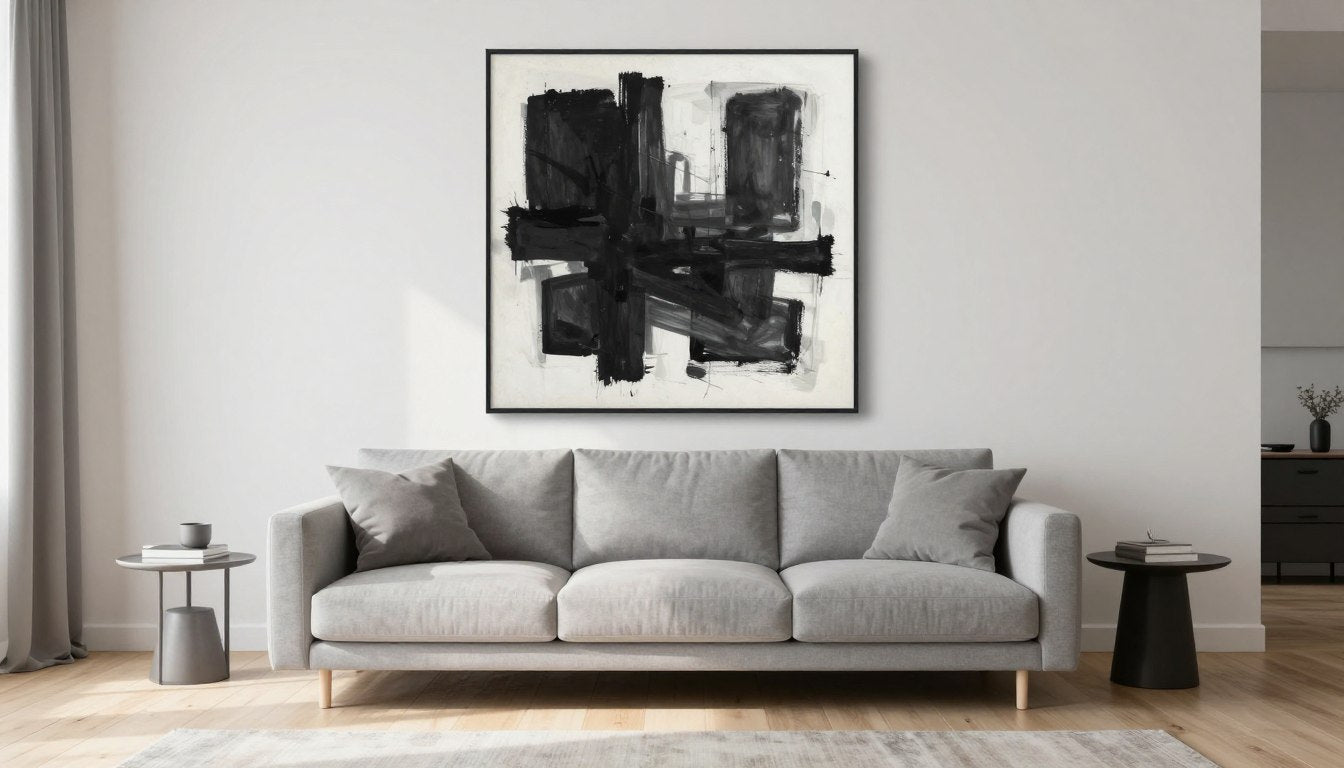
The classic 2/3 rule applies here—your artwork or grouping should span approximately two-thirds to three-quarters of your sofa's width. Hang art 6-8 inches above the sofa back, creating enough breathing room without floating too high.

For sofas 6-8 feet wide, consider these options:
- Single Statement: One large piece (36-60" wide) creates a focal point. The Tranquil Form canvas offers a serene presence with its balanced composition.
- Triptych: Three related pieces create horizontal movement. Space them 2-3" apart for visual connection.
- Small Gallery: 5-7 coordinated pieces in a balanced arrangement. Maintain consistent spacing (2-3") between frames.
Blank Feature Wall
Feature walls offer freedom to create more dramatic statements:
- Oversized Canvas: A single large piece (48"+ wide) creates maximum impact. Position the center at eye level (approximately 57-60" from the floor).
- Salon Gallery: A curated collection of varied pieces creates a sophisticated, collected look. Mix and match art prints while maintaining a cohesive color story.
For modern living spaces, consider the Cubist Muse canvas, which brings sophisticated earth tones and abstract figurative elements that complement contemporary furniture.
Bedroom (Above Headboard + Side Walls)
Bedroom art should promote relaxation and tranquility while expressing personal style. The primary placement is above the bed, with secondary opportunities on side walls.

For above the bed, choose calming compositions with softer palettes. The artwork should be:
- Centered horizontally with the headboard
- Approximately 2/3 the width of the headboard or bed
- Hung 6-8" above the headboard
Minimalist pieces like Muted Form Funk or Ink Reverie create a serene atmosphere with their restrained palettes and flowing forms.
For side walls, consider vertical pieces that complement the main artwork while maintaining the room's tranquil mood. These can be smaller (16-24" wide) and should be hung at standard eye level.
Dining Room (Sideboard / Long Wall)
Dining room art should enhance the convivial atmosphere of shared meals. Horizontal pieces work particularly well in this space, reflecting the horizontal plane of the dining table.

For sideboards or buffets:
- Choose artwork 2/3 to 3/4 the width of the furniture
- Hang 6-8" above the furniture surface
- Consider how the art looks from seated dining positions
Warm, vibrant pieces like Fire Form Flow can stimulate conversation and appetite, while geometric compositions like Celestial Mosaic bring structured elegance.
Important lighting consideration: Avoid placing glass-framed art opposite windows to prevent glare during daytime meals. Canvas prints offer the advantage of a glare-free surface regardless of lighting conditions.
Entryway & Hallway (Vertical Rhythm)
Entryways create first impressions, while hallways guide movement through your home. Both benefit from thoughtful art placement that enhances their linear nature.

For these transitional spaces:
- Vertical Orientation: Choose taller pieces that enhance ceiling height and draw the eye forward
- Linear Galleries: Create movement with a series of related pieces hung at the same height
- Standard Height: Center artwork at eye level (57-60" from floor)
The flowing lines of Flowing Contrast Harmony create visual movement perfect for hallways, while Abstract Charcoal Flow offers sophisticated minimalism for entryways.
Home Office (Camera-Friendly + Focus)
With video calls now a standard part of work life, your home office wall art serves dual purposes: enhancing your focus and creating a professional backdrop.

For behind-desk placement:
- Choose art with structure and clarity that appears well-defined on camera
- Position at a height visible in your video frame (typically lower than standard eye level)
- Avoid highly reflective glass frames that can create glare
- Select pieces that enhance concentration without being distracting
Geometric pieces like Bold Shapes Harmony provide a sophisticated backdrop that conveys professionalism without overwhelming video frames.
Layout Library: 10 Modern Wall Art Layouts (With Use-Cases)

Single Oversized
Best for: Feature walls, above sofas, minimal aesthetics
Spacing rule: Center horizontally and vertically in available space
Common mistake: Choosing a piece too small for the wall
Single Medium + Sconces
Best for: Bedrooms, dining areas, creating symmetry
Spacing rule: Equal distance between sconces and artwork edges
Common mistake: Hanging sconces too high or low relative to art
Diptych
Best for: Above furniture, creating horizontal movement
Spacing rule: 2-3" between pieces, aligned at top or bottom
Common mistake: Inconsistent spacing between pieces
Triptych
Best for: Wide walls, above sofas, creating narrative
Spacing rule: Equal spacing between all three pieces
Common mistake: Uneven heights or misaligned centers
Grid (2x2, 3x2)
Best for: Structured spaces, home offices, dining rooms
Spacing rule: Precise equal spacing (typically 1-2")
Common mistake: Inconsistent frame sizes or uneven rows
Salon-Style Gallery
Best for: Personal spaces, creative areas, maximalist styles
Spacing rule: Consistent spacing (2-3") despite varied sizes
Common mistake: Too much visual chaos without a unifying element
Linear Gallery Strip
Best for: Hallways, above consoles, horizontal emphasis
Spacing rule: Align all pieces along a shared horizontal axis
Common mistake: Inconsistent heights breaking the linear flow
Shelf/Ledge Layering
Best for: Casual spaces, frequent rotation of art
Spacing rule: Overlap edges slightly for depth
Common mistake: Overcrowding the ledge with too many pieces
Corner Wrap
Best for: Awkward corners, creating continuity
Spacing rule: Maintain consistent distance from corner
Common mistake: Uneven spacing on each side of corner
Staircase Gallery
Best for: Stairwells, creating visual rhythm
Spacing rule: Follow stair angle with 57-60" from steps
Common mistake: Hanging too high or ignoring stair angle
For more inspiration on creating compelling gallery walls, explore our guide on how to mix and match art prints.
Common Mistakes (And Quick Fixes)

Common Mistakes
- Too Small: Artwork that's undersized for the wall creates a floating, disconnected look
- Too High: Hanging art above eye level creates an unbalanced, top-heavy room
- No Alignment Rule: Gallery walls without a consistent alignment principle look haphazard
- Competing Colors: Too many bold colors fighting for attention create visual chaos
- Inconsistent Frames: Mismatched frames without intention look unplanned
- Ignoring Lighting: Glare on glass frames can make art invisible at certain times
Quick Fixes
- Size Up: Choose art that's 2/3-3/4 the width of furniture or 50-75% of empty wall width
- Lower It: Center artwork at 57-60" from floor (standard eye level) or 6-8" above furniture
- Find Your Line: Align gallery pieces along a shared top, bottom, or center line
- Color Cohesion: Limit palette to 2-3 dominant colors that complement your room
- Frame Intentionally: Choose either all matching frames or a thoughtful mix of 2-3 styles
- Consider Canvas: Use canvas prints to eliminate glare in bright rooms
Remember that most wall art mistakes stem from hesitation rather than boldness. When in doubt, go larger rather than smaller, and use paper templates to test before committing.
Curated Rossetti Art Examples (By Theme + Room)
Calm Minimal

Muted Form Funk
Perfect for bedrooms or meditation spaces, this piece uses subtle neutral tones and flowing forms to create a sense of calm and balance.
Ink Reverie
This black and white abstract brings zen-like tranquility to living spaces while providing sophisticated contrast against light walls.
Monochrome Reverie
Ideal for minimalist entryways, this piece creates depth through subtle tonal variations while maintaining a clean, uncluttered aesthetic.
Geometric Structure

Bold Shapes Harmony
Brings architectural presence to dining rooms with its balanced composition of geometric forms and subtle color transitions.
Celestial Mosaic
Creates a sophisticated focal point in home offices with its structured grid and harmonious color relationships.
Abstract Geometric Collection
Explore our full range of geometric abstracts that bring order and visual interest to contemporary spaces.
Color Accent Statement

Radiant Echo
Energizes living rooms with its vibrant color palette while maintaining sophisticated composition that draws the eye.
Fire Form Flow
Brings warmth and movement to dining spaces with its organic forms and rich earth tones that stimulate conversation.
Original Abstract Paintings
Discover one-of-a-kind statement pieces that bring unique color stories and artistic presence to your most important spaces.
Our Wabi-Sabi Art Collection offers additional options that celebrate imperfection and organic beauty—perfect for creating spaces that feel both curated and lived-in.
Frequently Asked Questions
What's the best height to hang wall art?
For standard walls, center your artwork at eye level, approximately 57-60 inches from the floor to the center of the piece. When hanging art above furniture, position it 6-8 inches above the furniture top. For gallery walls, establish a consistent alignment point (top edge, bottom edge, or center line) to create visual harmony.
How big should art be above a sofa?
Artwork above a sofa should span approximately 2/3 to 3/4 of the sofa's width. For a standard 84" sofa, aim for artwork or a grouping that's roughly 56-63" wide. This proportion creates visual balance while allowing the art to make a proper statement. Height should be proportional to width, typically 24-36" for most sofas.
How much space should be between frames in a gallery wall?
For a cohesive gallery wall, maintain consistent spacing between frames, typically 2-3 inches. This creates enough separation for each piece to breathe while maintaining visual connection between elements. Tighter spacing (1-2") creates a more unified look, while wider spacing (3-4") creates a more expansive, relaxed feeling.
Should I frame canvas prints?
Canvas prints typically don't require framing, as gallery-wrapped canvases with finished edges create a clean, contemporary look. However, adding a floating frame can enhance certain styles, particularly in traditional interiors. Framing also adds protection for high-traffic areas. If you choose to frame, consider simple floating frames that don't obscure the canvas edges.
Is one large canvas better than a gallery wall?
Neither is inherently better—each serves different aesthetic purposes. A single large canvas creates a bold focal point with maximum impact and simplicity, ideal for minimalist spaces or when you want one powerful statement. Gallery walls offer more personality, storytelling opportunities, and flexibility to fill larger spaces. Consider your room's style, the wall's dimensions, and your personal preference.
How do I match abstract art to my color palette?
Look for abstract art that contains at least one or two colors from your existing palette, particularly your accent colors. The art doesn't need to match perfectly—it should complement rather than duplicate your palette. For neutral rooms, abstract art can introduce color accents. For colorful rooms, consider art with similar color temperature (warm or cool) to maintain harmony.
What wall art layout works best in small rooms?
In small rooms, less is often more. A single medium-to-large piece creates impact without visual clutter. Alternatively, a tight grid of smaller pieces can work well. Choose art with depth, perspective, or horizon lines to create the illusion of space. Vertical pieces can emphasize ceiling height, while horizontal pieces can visually widen a room. Avoid overwhelming small spaces with too many separate pieces.
Transform Your Walls, Transform Your Space
The right wall art, properly placed, does more than decorate—it transforms how you experience your home. By following these designer principles for sizing, placement, and arrangement, you've gained the confidence to make intentional choices that elevate your space.
Whether you're drawn to the simplicity of a single statement piece or the personality of a curated gallery wall, remember that your walls are an opportunity to express what matters to you. The most successful spaces balance design principles with personal meaning.
Ready to Transform Your Walls?
Explore our collection of modern abstract and geometric canvas prints designed to complement contemporary interiors. Each piece is created with attention to composition, color harmony, and emotional resonance.
Explore the CollectionFor more inspiration, discover our guides on abstract geometric wall art trends and sustainable canvas art that's redefining modern interiors.

About the Author
Chiara Rossetti
Chiara Rossetti is the founder of Rossetti Art, a canvas print and original art brand. She writes about interior design, wall art styling, and the art of making a home feel alive.

Leave a comment
This site is protected by hCaptcha and the hCaptcha Privacy Policy and Terms of Service apply.