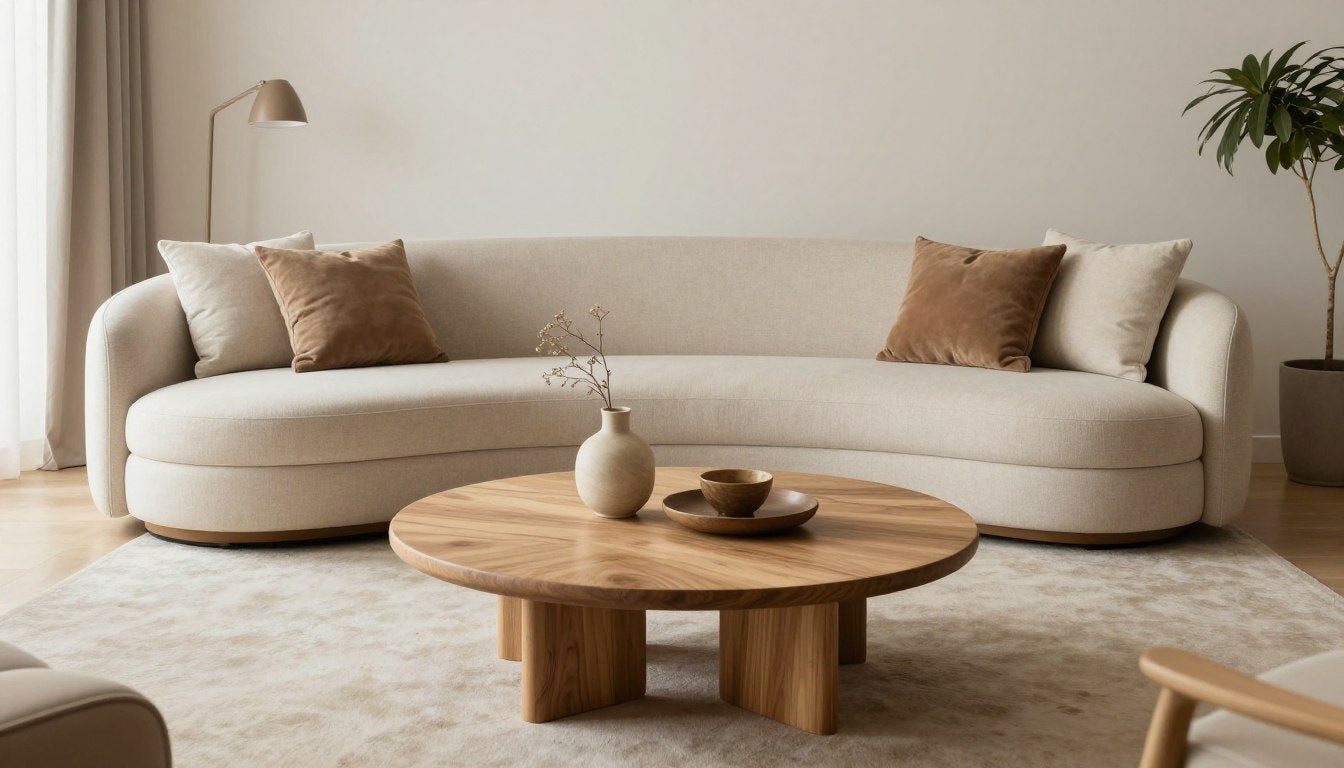
The rigid angles and sharp corners that once dominated interior design are giving way to something more inviting. Curves & organic shapes have emerged as a defining aesthetic, bringing warmth and visual interest to our spaces. This shift isn't merely decorative—it's a response to our collective desire for interiors that feel more natural, approachable, and emotionally resonant. As we embrace these softer forms in our furniture and architecture, the art we choose plays a crucial role in either enhancing or disrupting this fluid harmony.
TL;DR: Curves & Organic Shapes Essentials
3 Reasons Curves Are Trending: Biophilic connection to nature, psychological comfort, reaction against stark minimalism
5 Art Styles That Work: Organic abstract, curved line art, wabi-sabi textures, mid-century soft geometry, monochrome soft forms
7-Point Soft Forms Styling Checklist: Scale, spacing, anchor shape, texture balance, lighting, frame selection, intentional repetition
What Are "Curves & Organic Shapes" in Interior Design?

Curves vs Organic Shapes (Rounded Geometry vs Nature-Like Forms)
While often used interchangeably, curves and organic shapes represent distinct design approaches. Curves typically refer to deliberate, mathematically precise rounded forms—think perfect circles, ellipses, and arcs that follow consistent geometric principles. These shapes bring a sense of order and intention while softening the visual experience. A round dining table or curved sofa exemplifies this controlled approach to softness.
Organic shapes, by contrast, embrace irregularity and asymmetry. These forms mimic patterns found in nature—river stones, leaf silhouettes, cloud formations—with their free-flowing, sometimes unpredictable contours. An organically shaped coffee table might feature an uneven edge that appears almost handcrafted or naturally formed. This distinction matters because each approach creates a different emotional response and pairs with different artistic styles.
Where You'll See Them: Sofas, Mirrors, Vases—and Wall Art
The soft-form revolution has touched virtually every element of interior design. Most prominently, curved sofas and rounded sectionals have become statement pieces, replacing the boxy silhouettes of previous decades. Architectural elements like arched doorways and curved walls are making a comeback in new constructions and renovations. Even smaller accents—round mirrors, blob-shaped vases, curved-back dining chairs—contribute to this aesthetic shift.
Wall art plays a particularly important role in this design conversation. As perhaps the most flexible and easily changed element in a room, art can either reinforce the language of curves or provide thoughtful contrast. The right piece can tie together various curved elements, creating a cohesive visual story rather than a collection of trendy pieces.
Why Soft Forms Feel So Good Right Now

Comfort + Approachability (Soft Modern Instead of Stark Minimalism)
The rise of curves & organic shapes represents a natural evolution of minimalism. Rather than abandoning clean lines entirely, we're witnessing the emergence of "soft modern"—an approach that maintains minimalism's restraint while introducing more human-centered, approachable forms. This shift acknowledges our psychological response to shapes; research consistently shows that curved forms evoke feelings of comfort, safety, and welcome.
In a world increasingly dominated by digital interfaces and virtual experiences, these tactile, sensuous forms offer a counterbalance. They invite touch and interaction in ways that sharp-edged furniture simply doesn't. The popularity of curved furniture coincides with our collective desire for spaces that feel like sanctuaries—environments that soothe rather than stimulate.
Balance: Pairing Softness with Clean Lines
The most successful interiors featuring curves & organic shapes aren't surrendering entirely to softness. Instead, they create dynamic tension through thoughtful balance. A curved sofa might sit against a linear wall. A round coffee table might anchor a room with rectangular architecture. This interplay between soft and structured creates visual interest and prevents spaces from feeling either too rigid or too amorphous.
This same principle applies to art selection. While it might seem intuitive to pair curved furniture with similarly curved art forms, the most sophisticated spaces often incorporate elements of contrast. A curved line art canvas with some structured elements can create a perfect dialogue with organic furniture shapes.

The Art That Complements Curves (5 Styles That Always Work)
Organic Abstract (Blob Forms, Fluid Silhouettes)
Organic abstract art celebrates free-flowing, non-representational forms that echo the natural world without directly depicting it. These pieces often feature soft-edged "blob" shapes, undulating lines, and fluid compositions that feel as if they're in gentle motion. The visual language of organic abstract art naturally complements curved furniture, creating a cohesive aesthetic conversation.
For maximum impact, look for pieces with a limited color palette that allows the shapes themselves to take center stage. An organic abstract canvas print in neutral tones can provide subtle reinforcement of the curved elements in your space without competing for attention.

Curved Line Art (Rhythm + Movement)
Line art that incorporates sweeping curves and continuous motion brings a sense of rhythm to interior spaces. Unlike more complex abstract works, curved line art relies on the expressive potential of a single line (or a limited number of lines) to create visual interest. These pieces often feel both minimal and dynamic simultaneously.
The simplicity of curved line art makes it particularly versatile. It can work in virtually any room and alongside various furniture styles, from mid-century to contemporary. Consider a piece like Symphonic Curves, which combines flowing lines with warm terracotta accents for a piece that feels both structured and organic.
Wabi-Sabi Textures (Quiet Depth)
Wabi-sabi embraces imperfection, transience, and the beauty of natural aging. In art, this translates to pieces with rich textural elements, subtle irregularities, and a sense of depth that rewards close observation. These works often incorporate natural materials or mimic their appearance through technique.
The textural quality of wabi-sabi art provides a perfect counterpoint to the smooth surfaces of curved furniture. A wabi-sabi textured abstract with subtle curved elements can add layers of visual interest without disrupting the calm atmosphere that curved furniture naturally creates.

Mid-Century Soft Geometry (Retro Warmth)
Mid-century modern art often incorporates soft geometric forms—shapes that maintain mathematical precision while avoiding harsh angles. These works typically feature overlapping circles, gentle arcs, and rounded rectangles in warm, earthy color palettes that evoke the optimism of the post-war era.
This style works particularly well in spaces that blend contemporary and vintage elements. The structured yet soft approach of mid-century organic shapes art provides a perfect bridge between different design eras and can help tie together eclectic furniture collections.
Monochrome Soft Forms (Minimal, Sculptural)
For those who prefer a more restrained aesthetic, monochromatic art featuring soft forms offers the perfect solution. These pieces reduce visual complexity by eliminating color variation, allowing the eye to focus entirely on shape, texture, and composition. The result feels both contemporary and timeless.
Black and white or tonal pieces like Quiet Curve work especially well in minimalist interiors where every element needs to earn its place. The limited palette ensures the piece won't overwhelm the space while still reinforcing the language of curves established by your furniture.

Pairing Rules: How to Make Soft Forms Look "Designed"
Choose One Anchor Shape (The "Hero Curve")
The most sophisticated interiors featuring curves & organic shapes avoid visual chaos by establishing a clear hierarchy. Select one dominant curved element—what designers often call a "hero piece"—to serve as the room's focal point. This might be an oversized curved sofa, a dramatic arched doorway, or a statement piece of art with a bold organic shape.
Once you've identified your hero curve, other curved elements should play supporting roles, either by echoing aspects of the main piece or providing subtle counterpoints. This approach prevents the room from feeling like a collection of random curved objects and instead creates a thoughtful composition.
Add One Structured Element (Grid / Straight Edge / Frame Choice)
To prevent a space from feeling too soft or lacking definition, incorporate at least one structured element that provides visual anchoring. This could be as simple as choosing a painting with a crisp, rectangular frame to house an organic abstract image. Or it might involve placing your curved furniture against a wall with linear architectural details.
The frame you select for your art plays a crucial role in this balancing act. A black frame with clean lines can provide the perfect structured counterpoint to both curved furniture and flowing artistic forms. Learn more about framing choices in our minimalist wall decor guide.

Keep Breathing Room (Negative Space)
Curved and organic shapes need space to be fully appreciated. Without adequate breathing room, these forms can lose their visual impact and a room can quickly feel cluttered. This principle applies equally to furniture arrangement and art selection.
When choosing art to complement curved furniture, look for pieces that incorporate generous negative space. This allows both the art and furniture to stand out rather than competing for attention. Pieces with a balanced ratio of form to negative space create a sense of calm that enhances the natural serenity of curved elements.
Texture > Pattern (Japandi/Soft Modern Crossover)
In spaces featuring curves & organic shapes, texture often proves more effective than busy patterns. This approach, common in Japandi design (a fusion of Japanese and Scandinavian aesthetics), creates visual interest without overwhelming the senses. Textural elements—whether in art, textiles, or materials—add depth while maintaining the calm atmosphere that curved forms naturally create.
When selecting art for these spaces, prioritize pieces with textural qualities over those with complex patterns. A study on the psychology of art suggests that textural elements can enhance the sense of comfort and approachability that curved forms already provide.
Room-by-Room Guide

Living Room (Above Sofa, Wide Walls, Triptych vs Single)
The living room typically offers the most opportunities for incorporating both curved furniture and complementary art. If you've invested in a curved sofa, the wall above it presents a prime canvas. For proper scale, choose artwork that spans approximately two-thirds the width of the sofa. This proportion creates visual balance without overwhelming the furniture.
For wider walls, consider whether a single large piece or a triptych better suits your space. A triptych of curved or organic forms can create a sense of movement across the wall, while a single oversized piece makes a bold statement. Either approach can work beautifully, but avoid cluttering the wall with too many small pieces, which can diminish the impact of your curved furniture.
Bedroom (Calm Curves, Low-Contrast Palettes)
In the bedroom, where relaxation is paramount, curved and organic shapes contribute to a sense of sanctuary. A curved headboard or rounded nightstands establish the theme, while art should reinforce the tranquil atmosphere. Opt for pieces with gentle curves rather than dynamic, energetic forms that might disrupt the room's restful quality.
Color plays an especially important role in bedroom art selection. Low-contrast palettes—soft neutrals, tonal variations, muted colors—enhance the soothing quality of curved forms. Consider pieces from our Abstract & Geometric Canvas Prints collection that feature organic shapes in calming color schemes.

Dining Room (Organic Abstract That Doesn't Overpower)
Dining rooms benefit from art that creates atmosphere without demanding too much attention. If you've incorporated a round dining table or curved chairs, look for art that acknowledges these forms without competing with mealtime conversation. Organic abstract pieces with subtle movement often work well in this context.
Scale matters particularly in dining rooms, where proportions affect the experience of gathering. For rectangular dining rooms with a round table, consider a piece that's approximately 3/4 the width of the table. This creates presence without overwhelming the space. Position the art at eye level when seated for maximum impact during meals.
Entryway/Hallway (Vertical Curves + Mirrors)
Entryways and hallways offer unique opportunities to introduce curves & organic shapes through both art and functional elements. A round or oval mirror serves both practical and aesthetic purposes, while vertical art with flowing forms can draw the eye upward, creating a sense of height in typically narrow spaces.
These transitional areas benefit from art that makes an immediate impression. Bold, high-contrast pieces featuring organic shapes can create a memorable entry moment that sets the tone for the rest of your home. Consider pairing art with modern sculptures with soft silhouettes on a console table for a cohesive look.

Common Mistakes to Avoid
Too Many Small Curvy Pieces (Visual Noise)
One of the most common pitfalls when working with curves & organic shapes is overcrowding a space with too many small curved items. While each piece might be beautiful individually, an abundance of curved accessories, small art pieces, and minor decor elements can create visual noise that undermines the impact of your primary curved furniture.
Instead, follow the principle of "fewer, larger" when selecting both furniture and art. One substantial curved sofa paired with one bold piece of organic abstract art will create more impact than numerous small curved items scattered throughout the space.
No Contrast/Anchor (Everything "Soft" = Flat)
When every element in a room features curves and organic shapes, the space can paradoxically feel flat and uninteresting. Without contrast, the eye has nothing to grab onto, and the curves themselves lose their distinctive quality. Every well-designed space needs visual tension to create interest.
Ensure your room includes at least one structured element—whether in furniture, architecture, or art framing—to provide contrast with your curved pieces. This anchoring element will actually enhance the impact of your organic shapes rather than competing with them.
Overly Glossy Finishes
The natural, organic quality of curved forms often pairs best with matte or semi-matte finishes rather than high-gloss surfaces. Excessively shiny finishes can create a synthetic feel that contradicts the biophilic, nature-inspired quality that makes curves so appealing in the first place.
When selecting art to complement curved furniture, consider pieces with a matte finish or canvas texture that enhances the organic quality. Similarly, when choosing frames, satin or matte finishes typically work better than high-gloss options in these settings.
Frames That Fight the Mood
The frame you choose for your art can either enhance or undermine the soft, flowing quality of curves & organic shapes. Ornate, traditional frames with complex moldings often clash with the clean simplicity of contemporary curved furniture. Similarly, frames that are too thin or insubstantial may fail to provide adequate structure.
Opt for frames with clean lines but sufficient presence to create the structured counterpoint that curved elements need. Black frames with simple profiles often work well, as do natural wood frames with minimal detailing. Learn more about the elements of fine art to inform your framing choices.

Curves & Organic Shapes: Art Pairing Matrix (Soft Forms That Work)
| Room | Dominant Soft Form | Best Art Type | Palette Suggestion | Frame & Finish | Avoid | Example |
| Living Room | Curved Sofa | Organic Abstract | Sand + Ink | Black Matte | Small-scale art that gets lost | Quiet Curve |
| Bedroom | Arched Headboard | Wabi-sabi Texture | Navy + Beige | Natural Wood | High-contrast colors that disrupt sleep | Silent Curves |
| Dining Room | Round Table | Curved Line Art | Terracotta + Cream | Float Frame | Busy patterns that compete with conversation | Symphonic Curves |
| Home Office | Curved Desk | Mid-century Soft Geometry | Deep Green + Tan | Black Thin Frame | Distracting, high-energy compositions | Organic Shapes |
| Entryway | Round Mirror | Monochrome Soft Forms | Black + White | Matte Black | Competing with mirror for attention | Curved Symmetry |
| Open Concept | Curved Sectional | Organic Abstract | Monochrome | Float Frame | Competing with architectural features | Organic Flow |
7-Point Soft Forms Styling Checklist
- Scale: Ensure art is proportional to furniture (typically 2/3 to 3/4 the width of the furniture piece it hangs above)
- Spacing: Allow adequate breathing room around curved forms to appreciate their silhouettes
- Anchor: Include at least one structured element to provide visual grounding
- Texture: Prioritize textural interest over busy patterns
- Lighting: Position lighting to enhance the dimensional quality of curved forms
- Frame: Choose frames that complement rather than compete with organic shapes
- Repetition: Echo key curves throughout the space for cohesion, but avoid excessive repetition
Next Reads + Suggested Pieces
Deepen Your Design Knowledge
Explore our comprehensive Guide to Abstract Art to better understand how different abstract styles can complement your curved furniture.
Scale Matters
Discover how to properly size art for different spaces in our Big Wall Art Ideas guide—essential knowledge when pairing art with statement curved furniture.
Shop the Collection
Browse our curated selection of Abstract & Geometric Canvas Prints to find the perfect piece to complement your curved and organic-shaped furniture.
Ready to Enhance Your Curved & Organic Space?
Discover our full collection of art pieces specifically selected to complement soft forms and curved furniture.
Shop Curved & Organic Art CollectionFrequently Asked Questions
What's the difference between organic shapes and geometric shapes?
Organic shapes feature irregular, asymmetrical forms inspired by nature—think river stones, leaf silhouettes, or cloud formations. They typically have flowing, unpredictable contours. Geometric shapes, by contrast, follow mathematical principles with consistent, predictable forms like squares, circles, and triangles. While curved furniture often incorporates geometric curves (perfect arcs and circles), organic shapes embrace natural irregularity. In interior design, organic shapes create a more relaxed, natural feel, while geometric shapes tend to feel more structured and intentional.
Do curves work with minimalist decor, or do they feel too trendy?
Curves absolutely work with minimalist decor—in fact, they can enhance it by adding visual interest without requiring additional objects or patterns. The key is intentionality and restraint. Rather than incorporating multiple curved pieces, a minimalist approach might feature one statement curved sofa or chair against clean-lined architecture. Similarly, a single piece of art featuring organic shapes can provide a focal point in an otherwise spare space. This approach creates what designers call "soft minimalism" or "warm minimalism"—spaces that maintain minimalism's clarity while feeling more inviting and less austere.
What wall art styles best match rounded furniture?
Several art styles naturally complement rounded furniture. Organic abstract art with fluid, blob-like forms creates cohesion with curved furniture. Curved line art offers elegant simplicity that echoes rounded forms without overwhelming them. Wabi-sabi textural pieces add depth while maintaining the organic quality. Mid-century soft geometry provides structure while still incorporating curves. Monochrome soft forms create sophisticated minimalism that pairs well with statement curved pieces. The best approach often involves some element of contrast—art that acknowledges the curved furniture while providing its own distinct character rather than merely mimicking the furniture's forms.
How do I keep a "soft forms" room from feeling childish?
To maintain sophistication in a space featuring curves & organic shapes, focus on refined materials, thoughtful color palettes, and balanced compositions. Choose furniture with architectural curves rather than cartoonish roundness. Opt for sophisticated textiles like bouclé, velvet, or linen rather than plush or overly soft materials. Keep color palettes restrained—neutrals with perhaps one or two accent colors rather than rainbow hues. Incorporate at least one structured element to provide contrast and anchoring. Finally, select art with mature compositions and sophisticated color handling rather than simplistic or overly playful designs.
How big should wall art be above a curved sofa?
For proper scale, art above a curved sofa should typically span about two-thirds to three-quarters of the sofa's width. This proportion creates visual balance without overwhelming the furniture. The bottom edge of the art should hang approximately 8-10 inches above the sofa back. Because curved sofas often have varying heights across their form, measure from the highest point for consistent placement. If using a gallery arrangement rather than a single piece, treat the entire arrangement as one unit that follows these same proportional guidelines. For particularly large curved sectionals, consider a diptych or triptych that can follow the sofa's curve while maintaining proper scale.

About the Author
Chiara Rossetti
Chiara Rossetti is the founder of Rossetti Art, a canvas print and original art brand. She writes about interior design, wall art styling, and the art of making a home feel alive.

Leave a comment
This site is protected by hCaptcha and the hCaptcha Privacy Policy and Terms of Service apply.