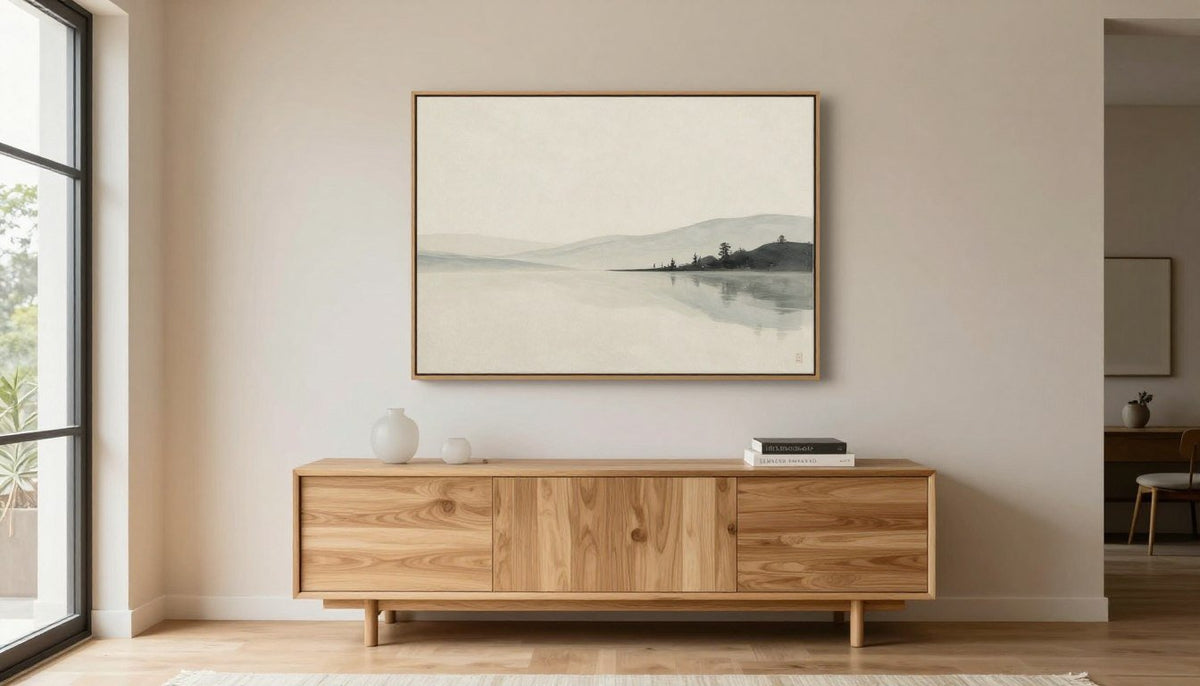
Choosing between portrait vs landscape wall art depends on matching the shape of the canvas to the physical proportions of the wall or the furniture beneath it. Horizontal canvases suit wide walls and anchor long furniture like sofas and beds, while vertical canvases complement narrow wall sections and direct attention toward high ceilings. Balanced rooms rely on art that follows the prevailing lines of the immediate architectural space.
Wall width, ceiling height, and surrounding architectural features dictate the ideal canvas direction. Examining furniture dimensions and walking paths clarifies whether a horizontal, vertical, or square piece creates the most natural visual rhythm in the home.

Portrait vs Landscape Wall Art at a Glance
The simplest rule for wall art orientation is to mirror the boundary lines of the open wall area. When the usable wall space is wider than it is tall, horizontal art creates harmony and visual stability. When the wall space is taller than it is wide, vertical art fills the height and establishes an uplifting sense of scale.
Furniture groupings act as secondary frames within an interior. Hanging a piece that opposes the dominant axis of a furniture arrangement often produces awkward empty borders on either side. Matching orientation to wall geometry provides an effortless, deliberate display across any room.
Discover Handcrafted Canvas Art for Every Room
Find the right horizontal, vertical, or square statement piece for your home with free worldwide shipping on every order.
Understanding Vertical, Horizontal, and Square Art
Artwork orientation refers to the relationship between the height and width of the picture plane. Clear definitions help simplify framing decisions and wall planning before drilling hanging holes.
Every canvas format directs eye movement along its longest axis. Recognizing how these formats operate allows for smarter layout planning across different rooms.
- Vertical means taller than wide, drawing the eye upward along vertical lines.
- Horizontal means wider than tall, guiding the eye across broad horizontal spans.
- Portrait formats complement columns, alcoves, and structural wall breaks.
- Landscape formats suit wide expanses above credenzas and low seating.
Vertical and Horizontal Profiles
- Square means equal sides, offering uniform height and width dimensions.
- Equal proportions create an anchored, centered focal point.
- Square canvases fit symmetrical alcoves, small niches, and uniform wall grids.
- The balanced geometry pairs naturally with square end tables and pedestal furniture.
Square Profiles
Arranging Artwork Above a Living Room Sofa
Sofas represent long, grounded horizontal blocks of furniture that require complementary artwork spanning their length. A landscape orientation works naturally above a standard three-seater sofa because it echoes the backrest and balances the seating area.
A single horizontal canvas keeps the living room grounded and prevents excessive empty wall space on the left and right edges. For broad living room walls, selecting a contemporary abstract landscape like Coastal Silence Horizon provides expansive presence. Available in dimensions from 24x16 to 81x54 inches, its palette of ivory, sand, warm beige, slate blue, and charcoal establishes a calm, cohesive backdrop.
Selecting artwork that spans roughly two-thirds to three-quarters of the sofa width establishes balanced visual weight without overpowering the furniture frame.

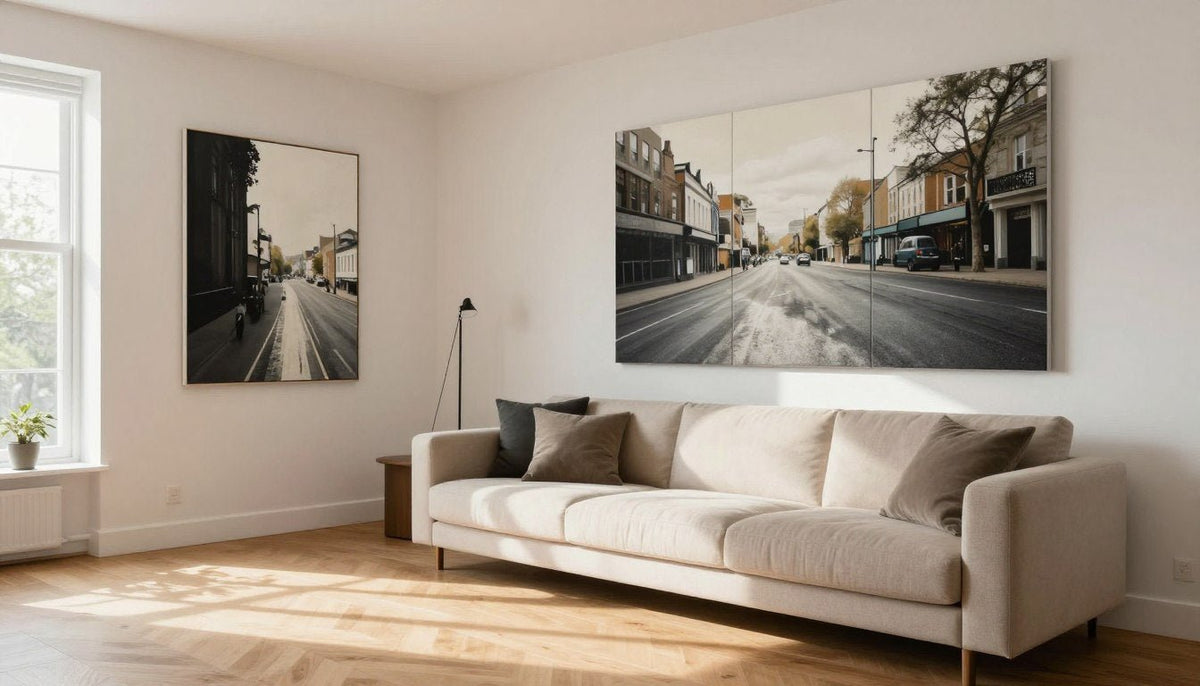
Horizontal canvas art reinforces the long lines of a living room sofa while filling the horizontal wall expanse.
Selecting the Right Orientation Over a Bed
Bed headboards create a broad architectural focal point in bedrooms that demands deliberate wall art alignment. Landscape formats mirror the width of queen and king mattresses, producing a restful, organized atmosphere across the sleeping zone.
A wide horizontal canvas above the headboard creates an anchor that links bedside tables into one cohesive arrangement. Homeowners who prefer portrait orientation can hang a balanced pair of vertical prints side by side over the headboard to achieve a similar total horizontal width. For tips on pairing vertical frames together, read our guide on how to mix and match art prints for a stunning gallery wall.
Hanging art six to ten inches above the highest point of the headboard prevents accidental contact while keeping the artwork visually connected to the bed frame.

Positioning horizontal artwork over a headboard reinforces bedroom symmetry and anchors the primary furniture piece.
Art Placement Over an Entryway Console
Entryway and hallway console tables possess compact, elevated proportions that alter artwork requirements. Because console tables are often narrower and taller than sofas, both vertical and horizontal orientations can function effectively depending on ceiling height.
A vertical canvas hung above a narrow console draws the gaze upward, emphasizing ceiling clearance in compact foyers. A medium horizontal canvas works well when the console table is styled with tall table lamps or decorative vases that frame the sides of the artwork.
- Use vertical art over petite consoles to elongate compact entrance walls.
- Select horizontal prints when the console table spans a wide entryway corridor.
- Leave enough clearance between tabletop objects and the lower canvas edge to avoid visual clutter.
- Coordinate frame finishes with mirror frames or metal accents present in the entryway.
Wall Art Guidelines for Narrow Hallways and Corridors
Narrow hallways present tight viewing distances where wide horizontal art can feel overwhelming or difficult to absorb. Vertical wall art provides the ideal orientation for hallway walls, guiding foot traffic forward while drawing attention toward ceiling details.
Vertical pieces fill the tall wall sections between doorways and architectural openings without crowding the visual pathway. A vertical piece like Chromatic Circles brings energetic focus to hallway transitions. Offered in sizes ranging from 16x24 to 53x75 inches, its Bauhaus-inspired geometric Op Art style showcases vibrant tones of red, blue, yellow, pink, green, purple, and orange.
Avoid oversized horizontal artwork in tight corridors where viewers cannot step back far enough to view the entire composition comfortably.

Vertical orientations fit neatly within narrow wall sections along hallways and transitional corridors.
Hanging Wall Art in a Stairwell
Staircases feature dramatic diagonal inclines and tall, cavernous walls that present unique decorating challenges. Vertical canvases thrive in stairwells because their extended height bridges the vertical volume between the lower and upper floors.
When hanging artwork along a staircase, aligning pieces with the rake of the stairs maintains balance. Following practical mounting methods outlined in our guide on how to hang canvas paintings helps position art securely on angled walls.
- Measure the vertical clearance from the center of several stair treads up to eye level.
- Select tall portrait canvases for two-story landings where the wall height is the dominant feature.
- Step smaller vertical canvases upward along the staircase wall to mirror the angle of the handrail.
- Maintain consistent spacing between consecutive frames to preserve an orderly visual path.
How Orientation Influences the Mood of a Room
The orientation of wall art subtly alters human visual perception and the psychological tone of an interior. Horizontal lines suggest natural horizons, broad landscapes, and stable ground planes, evoking tranquility, stability, and relaxed repose.
Vertical lines encourage upward visual movement, introducing energy, grandeur, and formality into a room. Major cultural institutions like The Metropolitan Museum of Art emphasize proper viewing heights and spatial sightlines to maximize the emotional impact of displayed works. Understanding these orientation dynamics allows decorators to tune room atmosphere intentionally.
Horizontal Serenity
Horizontal orientations expand rooms visually, promoting restfulness in bedrooms and lounges.
Vertical Dynamism
Vertical layouts inject height and vitality, lifting ceilings in entryways and dining areas.
Square Balance
Square proportions provide stillness and geometric focus, centering smaller accent areas.
How to Measure Your Wall for Art
Accurate wall measurements eliminate guesswork and confirm that an artwork orientation suits the available architecture. Measuring both the total wall dimension and the boundaries of adjacent furniture establishes clear boundaries for canvas selection.
When dealing with vast, unadorned surfaces, exploring large blank wall ideas provides structural approaches for scale and framing. Taking precise measurements ensures the selected format complements the room without crowding baseboards or light switches.
- Measure the full width and height of the open wall surface between trim, doors, and corners.
- Subtract the height of baseboards, chair rails, or wainscoting from the vertical calculation.
- Aim for art that occupies roughly two-thirds to three-quarters of the open wall section.
- Mark potential artwork dimensions using painter's tape to evaluate the orientation from various room angles.
When to Select Square Wall Art
Square wall art provides a balanced alternative to standard vertical and horizontal options. Featuring equal sides, a square canvas avoids drawing the eye primarily upward or outward, concentrating attention directly into the center of the composition.
Square pieces shine on balanced wall sections, between pairs of identical windows, or above square accent tables. The textured wabi-sabi abstraction of Pale Moon demonstrates the quiet strength of equal proportions. Available in sizes from 20x20 to 58x58 inches, its palette of warm cream, sand, soft beige, and ink black offers an organic focal point for symmetrical wall zones.
Square art operates exceptionally well in modular sets of four or nine, creating an organized geometric grid across larger wall expanses.

Square wall art brings geometric equilibrium to symmetrical walls and compact architectural niches.
Canvas Craftsmanship and Framing Options
The structural quality of a canvas print determines its longevity, finish, and wall presentation. Rossetti Art prints are crafted with materials selected for visual clarity, color accuracy, and resilience over time.
Every piece is printed on artist-grade poly-cotton canvas utilizing UV- and fade-resistant HP latex inks certified under UL GREENGUARD Gold standards. The canvas is hand-stretched over a 1.25-inch hardwood stretcher frame, featuring a satin-matte low-glare finish that arrives ready to hang. Buyers can also select an optional floater frame handcrafted from poplar hardwood with a 5/16 in shadow gap, sized to fit the canvas.
Premium Canvas
poly-cotton canvas and HP latex inks provide a satin-matte low-glare finish.
Solid Construction
Hand-stretched over a 1.25-inch hardwood frame with an optional poplar floater frame.
Production & Shipping
Made to order in 3 to 5 business days, then 8 to 10 business days tracked shipping.
Orientation Chooser for Common Wall Spaces
Selecting the right artwork format becomes straightforward when comparing the unique spatial traits of common home areas. The table below matches everyday home locations with their ideal canvas orientation and specific examples from the Rossetti Art collection.
All pieces are made to order with free worldwide shipping. Rossetti Art offers a 30-day full refund on standard sizes, while sizes with a side of 40 in / 100 cm or more and custom sizes are final sale except in cases of shipping damage or defect.
| Wall or space | Best orientation | Why | Example from our collection |
|---|---|---|---|
| Above sofa | Horizontal | Balances seating length | Coastal Silence Horizon in horizontal format |
| Narrow hallway | Vertical | Fits tight sightlines | Chromatic Circles in vertical format |
| Square niche | Square | Maintains equal boundaries | Pale Moon in square format |
Visualizing Artwork Before Purchase
Testing how a specific canvas orientation looks in your room eliminates uncertainty before placing an order. Every product page on our site features a dedicated Live Preview tool designed to display art directly against your wall surface.
Using your smartphone camera or an uploaded room photo, you can check whether a horizontal, vertical, or square piece fits your furniture and wall boundaries accurately.
See It on Your Wall Before You Buy
Test various canvas orientations and sizes directly on your own walls with our interactive preview feature.
Frequently Asked Questions
Is portrait or landscape better for wall art?
Neither orientation is universally better, as the ideal choice depends on wall proportions and adjacent furniture. Landscape suits broad walls, long couches, and wide headboards. Portrait works best in narrow hallways, between windows, or on walls with high ceilings that benefit from vertical lift.
What orientation looks best above a sofa?
Horizontal landscape orientation looks best above a sofa because it mirrors the long, grounded shape of the seating. A wide horizontal piece spanning two-thirds of the sofa width establishes balance, anchors the seating area, and prevents awkward expanses of unused wall space along the edges.
Can I hang a vertical canvas in a horizontal space?
Hanging a single vertical canvas in a wide horizontal space often looks disconnected, leaving empty wall zones on either side. To make vertical pieces work on a wide wall, arrange two or three vertical prints side by side to establish a balanced horizontal grouping across the wall.
What orientation for a narrow hallway?
Vertical orientation functions best in a narrow hallway because close viewing distances make wide horizontal art difficult to view fully. A vertical canvas draws the eye upward, emphasizes ceiling height, and fits comfortably within the narrow wall segments found between doorways and architectural trim.
Is square wall art out of style?
Square wall art remains a timeless choice in modern interior decorating. Its equal proportions create a steady, anchored focal point that suits symmetrical alcoves, accent walls, and modular grid arrangements. Square art provides clean visual geometry that complements both minimalist and contemporary home styles.
Summary of Wall Art Orientation Decisions
Selecting between portrait, landscape, and square wall art comes down to respecting the proportions of your wall and nearby furniture. Horizontal pieces ground wide expanses and seating areas, vertical canvases accentuate ceiling height in narrow corridors, and square formats provide centered symmetry in balanced spaces. Evaluating wall dimensions before mounting creates a deliberate, visually harmonious home.

About the Author
Chiara Rossetti
Chiara Rossetti is the founder of Rossetti Art, a canvas print and original art brand. She writes about interior design, wall art styling, and the art of making a home feel alive.


Leave a comment
This site is protected by hCaptcha and the hCaptcha Privacy Policy and Terms of Service apply.