To clean a canvas print safely, wipe the surface lightly with a clean, dry microfiber cloth or sweep it with a soft bristled brush. Never soak the fabric or use chemical cleaners. For light smudges, dampen a cotton swab with a drop of distilled water and dab gently.
The correct method depends on whether the buildup is loose surface dust, an oily fingerprint, or a settled stain. Acting with minimal moisture keeps the ink layers stable while preserving the natural tension of the stretched canvas.

Essential Tools for Cleaning a Canvas Print
Delicate ink layers require soft, non-abrasive tools that lift grime without scratching the protective finish. Gathering the correct items before starting prevents accidental surface scuffs and color lifting.
- A soft microfiber cloth with lint-free fibers to trap fine airborne dust particles.
- A soft dry brush, such as a clean artist fan brush or camel hair makeup brush, to sweep tight corners.
- Pure distilled water to eliminate minerals that could leave chalky rings on dark ink areas.
- Cotton swabs to spot-treat isolated marks without dampening the surrounding dry fabric.
Standard household paper towels, textured rags, and dish sponges are abrasive and can leave lint or scrape away the ink coating. Sticking to soft textiles protects the printed texture over time.
Ready for Fresh Wall Art?
Discover handcrafted wall art pieces delivered directly to your home with free worldwide shipping.
Step 1: Dust the Canvas Regularly
Regular dry dusting represents the primary defense against grime buildup on stretched artwork. Airborne dust settles into the fine weave of poly-cotton canvas and dulls the colors if left unattended.
Support the back of the stretcher bar with one hand while gently sweeping the surface from top to bottom. Moving downward prevents falling particles from resettling on sections you have already cleaned. Never press the center of the fabric inward, as stretching the material loosens the frame tension.

Gentle brush strokes remove loose debris without abrading the printed surface.
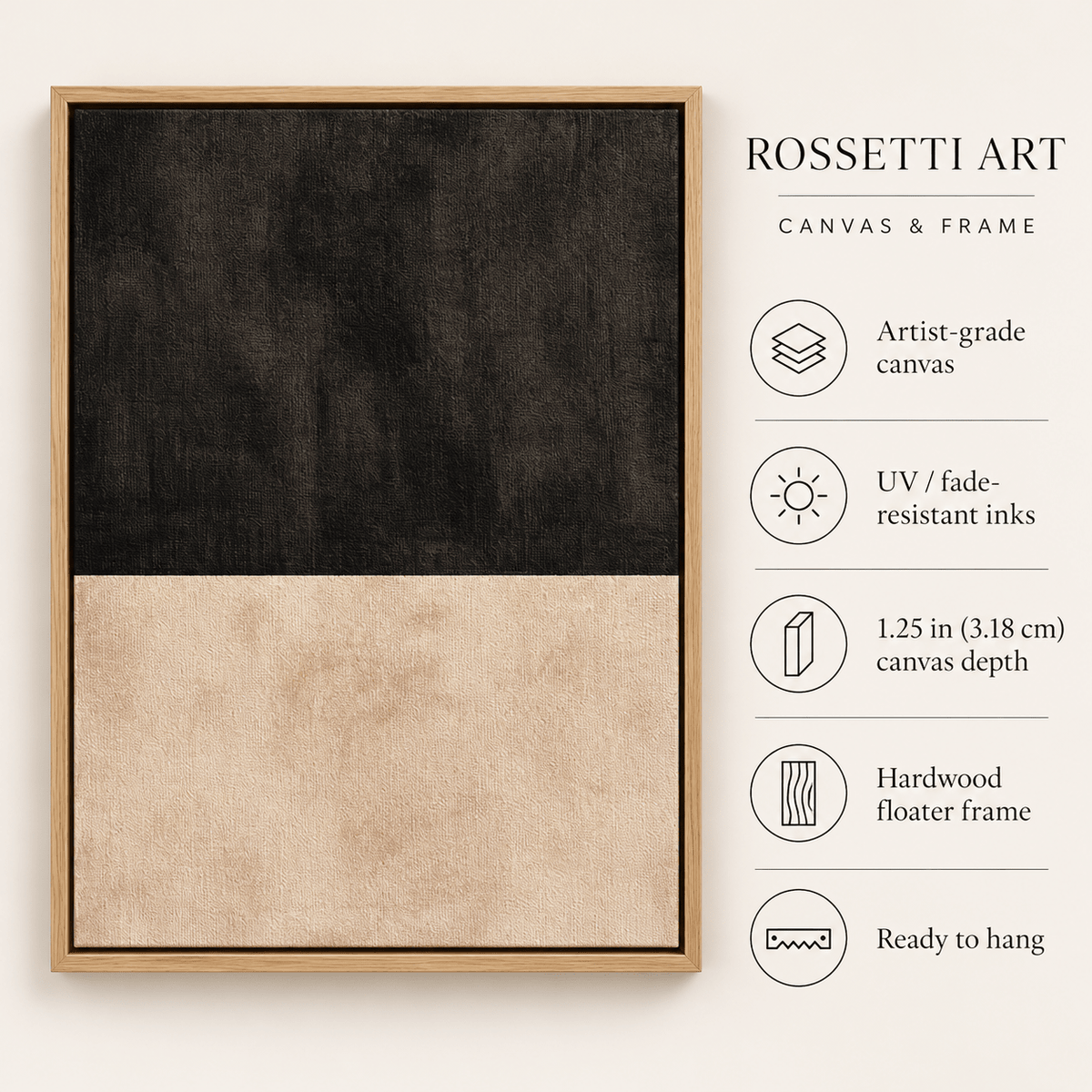
Light-toned abstract artwork, such as Silent Structure, benefits greatly from routine sweeping across its ivory, warm beige, taupe, and soft brown tones. This piece comes in sizes from 16x24 to 53x75 in, printed on artist-grade poly-cotton canvas with UV- and fade-resistant HP latex inks that carry UL GREENGUARD Gold certification. It arrives hand-stretched over a 1.25-inch hardwood stretcher frame with a satin-matte, low-glare finish, ready to hang, with an optional floater frame in Black, Oak, Brown, or White. You can consult guides on whether Do Canvas Prints Look Cheap to understand how proper care keeps modern art looking refined.

Silent Structure — ivory, warm beige and taupe.
Sweep the corners and top edge of the frame first where airborne dust naturally collects in heavier layers.
Step 2: Remove Surface Smudges and Fingerprints
Natural hand oils from hanging or adjusting art create visible spots that regular dry dusting cannot lift. Tackling these marks requires careful spot lifting rather than vigorous wiping across the whole face.
Take a clean microfiber cloth and touch only the affected area using minimal contact. If the fingerprint remains visible, moisten the smallest corner of the cloth with distilled water, press it against a clean towel until barely moist, and blot the spot without rubbing back and forth.
Blotting Technique
Press the cloth flat against the smudge and lift directly upward. This extracts greasy film without smearing oil into the surrounding dry weave.
Air Drying
Allow moisture to evaporate naturally in a well-ventilated room. Never use heated blow dryers, which can warp stretcher wood.

Blotting rather than dragging protects the ink film from friction damage.
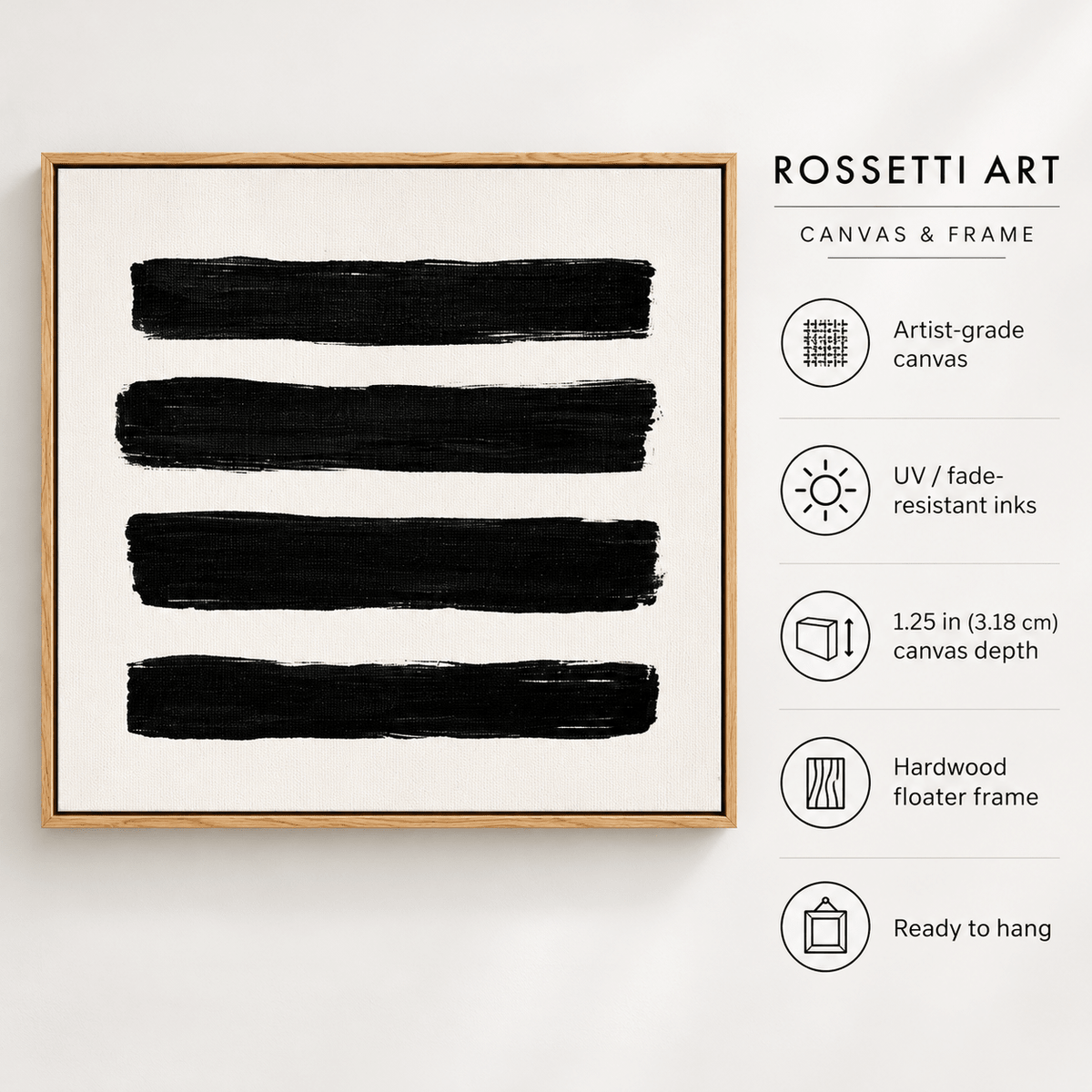
Minimalist art with bold contrasts, like Crossed Beams featuring black strokes on a warm beige ground, shows hand oils quickly on its dark elements. It is made to order in dimensions from 16x24 to 53x75 in with a satin-matte, low-glare finish, 30-day returns on standard sizes, and US delivery in 5 to 7 business days with tracking. Framing your print with a Floater Frame Canvas Print creates a raised outer border that keeps fingers away from the printed edges during handling.

Crossed Beams — bold black strokes on a warm beige ground.
Step 3: Deal with a Stubborn Mark
Accidental splatters and dried grime demand extra caution to avoid dissolving pigment layers or causing water tide lines. Before applying any liquid to a visible area, test a hidden corner or the folded canvas edge along the back of the wooden frame.
Dip a cotton swab in distilled water and squeeze out all excess moisture until the cotton feels almost dry to the touch. Lightly dab the test area for a few seconds, then inspect the cotton swab under bright light. If ink transfers onto the cotton, stop immediately and keep the artwork completely dry.
Always test a hidden corner first. If color transfers to your swab, do not proceed with moisture on the front face of the art.

Testing the back edge confirms ink stability before touching the front artwork.
If the cotton remains spotless, gently roll the damp swab across the mark on the front face using zero downward pressure. For richly pigmented pieces like Butterfly Dreams, which balances golden yellow, crimson red, ivory white, and warm black in sizes from 20x20 to 58x58 in, gentle blotting protects the ink and keeps the hand-stretched canvas taut. When tackling persistent deposits on historic or complex artwork, follow established restoration methods outlined in How to Clean a Canvas Painting to prevent surface damage.

Butterfly Dreams — golden yellow, crimson red, ivory and warm black.
Chemicals and Methods to Avoid Completely
Household cleaning products contain strong solvents and surfactants formulated to strip glass or tile surfaces. Applying these liquids to an ink-printed poly-cotton canvas can damage the surface finish and the image.
- Damaging Cleaners
- Window cleaner and glass sprays that contain ammonia.
- Rubbing alcohol that can strip print binders and leave bleached patches.
- Bleach solutions that discolor fibers.
- All-purpose sprays with synthetic fragrances that leave greasy films.
- Harsh Techniques
- Soaking the canvas with wet towels or spray bottles.
- Scrubbing back and forth with stiff kitchen sponges.
- Applying feather dusters that snag the corner weaves.
- Using abrasive cream cleaners or scouring pads.
Excessive moisture also poses structural dangers to the wood stretcher behind the fabric. Soaking water causes hardwood stretcher bars to expand unevenly, leading to warped edges and sagging fabric tension.
Where to Hang a Canvas So It Stays Clean
Strategic placement in the home prevents grime buildup before it begins. Environmental factors like airborne grease, direct sunlight, and moisture dictate how frequently a canvas requires dusting.

Hanging art along interior walls minimizes exposure to heat currents and airborne kitchen oils.
Position prints away from direct sun exposure, heating vents, and active cooking steam. High heat from radiators dries out the canvas backing, while cooking steam deposits microscopic grease layers that attract dust. Reviewing standard hanging practices in How to Hang Canvas Paintings helps place artwork safely away from high-traffic doorways and HVAC returns.
Interior hallway walls and dining spaces away from direct heat sources provide the cleanest display environments.
What to Do for Common Canvas Issues
Different types of grime demand targeted solutions to avoid spreading residue across the canvas weave. Refer to the quick reference guide below before treating any visible mark.
| Problem | Safe first step | What to avoid | How often |
| Dust | Dry microfiber | Wet scrubbing | Sweep gently as part of routine house cleaning |
| Fingerprints | Damp cotton swab | Chemical cleaners | Spot treat whenever smudges appear on edges |
| Grease | Barely moist cloth | Rubbing alcohol | Blot carefully when cooking deposits settle |
| General grime | Soft dry brush | Soaking canvas | Dust lightly every few months |
Matching the cleaning method to the specific problem prevents unnecessary moisture contact. Consistent light maintenance prevents deep staining that requires professional conservator assistance.
See It on Your Wall Before You Buy
Preview our art collections on your exact walls at home using our interactive camera tool.
Frequently Asked Questions
How often should I dust a canvas print?
A canvas print benefits from gentle dusting every few weeks to keep loose particles from settling deep into the weave. Using a clean microfiber cloth or a soft dry brush on a routine schedule prevents dust accumulation, keeping the colors bright without needing liquid cleaners.
Can I use a damp cloth on a canvas print?
A damp cloth should only touch a canvas print if it is barely moist with distilled water and used for spot blotting. Soaking the surface or using a wet washcloth can damage the printed ink, warp the hardwood stretcher bars, and cause permanent tide marks across the fabric.
How do I remove a fingerprint from a canvas?
To lift a fingerprint from a canvas, dab the area lightly with a dry microfiber cloth first. If the oily mark remains, barely moisten a cotton swab with distilled water, test an edge, and roll it across the smudge with minimal pressure before letting it air-dry naturally.
Can I use window cleaner on a canvas print?
Window cleaner should never touch a canvas print because it contains harsh solvents like ammonia and alcohol. These chemicals can strip the satin finish and leave chalky streaks or faded patches on the fabric that are hard to repair.
Can canvas prints hang in a kitchen or bathroom?
Keep canvas prints away from direct steam, splashes, and airborne cooking grease. A wall beside the stove or right next to a shower is a poor choice, because steam and grease coat the textured weave and are difficult to lift safely. A well-ventilated spot away from those sources is far safer.
Maintaining Vibrant Wall Art
Gentle dry maintenance and cautious spot treatment protect printed canvas art from everyday dust and handling marks. Keeping artwork away from heat sources and harsh chemicals preserves natural fabric tension and vibrant tones for years of enjoyment.
Keep Reading
About the Author — Chiara Rossetti is the founder of Rossetti Art, a canvas print and original art brand. She writes about interior design, wall art styling, and the art of making a home feel alive.

About the Author
Chiara Rossetti
Chiara Rossetti is the founder of Rossetti Art, a canvas print and original art brand. She writes about interior design, wall art styling, and the art of making a home feel alive.


Leave a comment
This site is protected by hCaptcha and the hCaptcha Privacy Policy and Terms of Service apply.