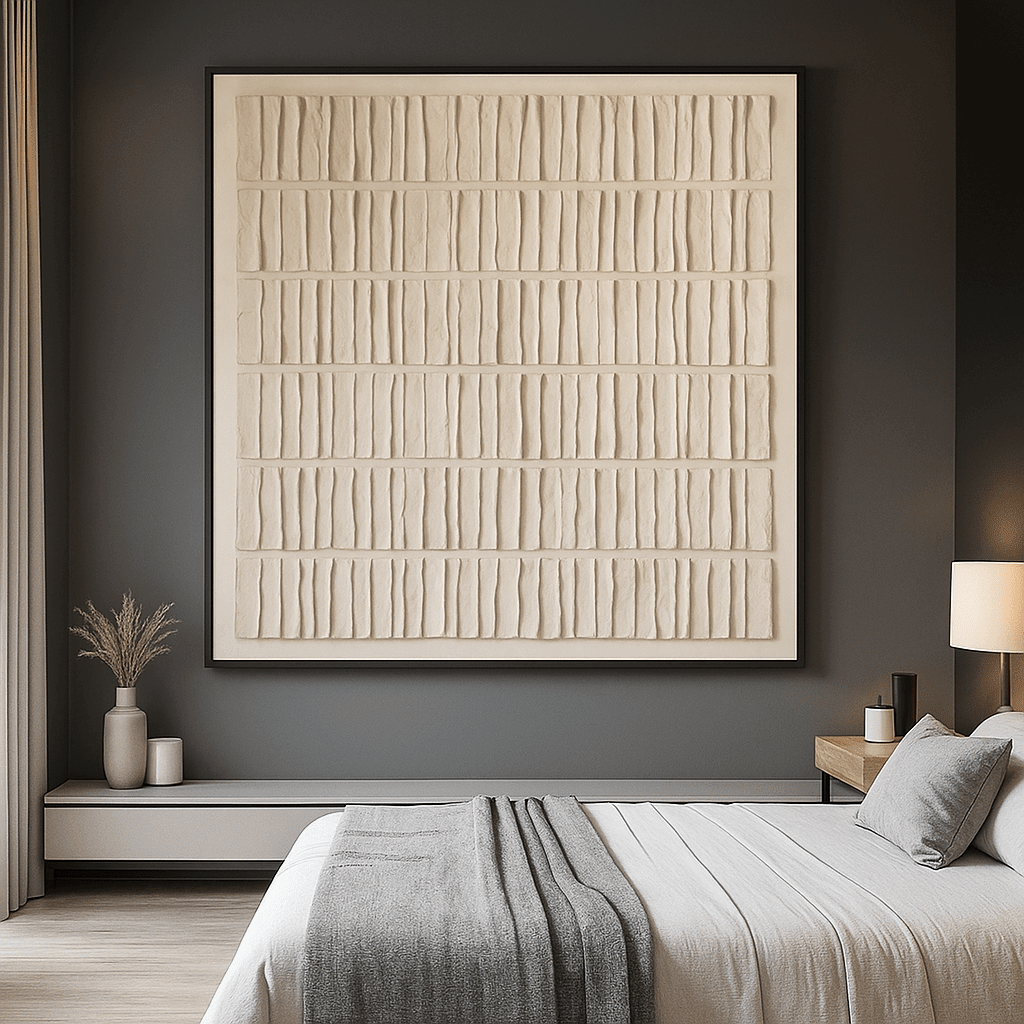
Farmhouse Wall Art for a Modern, Warm Home

Farmhouse wall art can make a room feel settled without making it look staged. The best pieces bring in soft texture, quiet color, and a sense of ease. They work with linen, wood, plaster, woven baskets, and clean modern furniture.
Modern farmhouse rooms need more than a sign or a barn scene. They need art that balances the comfort of farmhouse living with the simple lines of today. This guide explains how to choose a piece, where to place it, and which Rossetti Art options can help your home feel complete.
Table of Contents
- What Counts as Farmhouse Wall Art in 2026
- Neutral Abstract Canvas: The Modern Farmhouse Staple
- Textured Original Paintings for Warmth Without Clutter
- Black and White Pieces That Anchor a Living Room
- Room-by-Room Placement and Size Ideas
- Canvas, Finish, Frame, and Price Considerations
- How to Avoid the Rustic-Overload Trap
- Frequently Asked Questions
Quick Answer: What Is Farmhouse Wall Art Today?
Farmhouse wall art today blends relaxed country comfort with modern restraint. It may include a soft landscape, an abstract canvas, a black-and-white print, or a textured original. Modern farmhouse favors quiet tones, simple framing, and open space. Rustic farmhouse leans more heavily on distressed wood, signs, animals, and vintage country symbols.

What Counts as Farmhouse Wall Art in 2026 (It's Not Just Roosters and Signs)
The phrase farmhouse wall art now covers a wide range of looks. A quiet landscape can recall open land without turning your home into a country store. A textured abstract can echo plaster, stone, linen, or weathered wood. A simple art print can add shape above a console without taking over the room.
The key is the feeling. Farmhouse style should feel useful, warm, and lived in. It does not need to show a barn, a cow, or a field in every room. In fact, repeating the same subject can make a space feel more themed than personal. One strong piece often works better than several small items competing for attention.
Modern farmhouse versus rustic farmhouse
Modern farmhouse uses contrast with care. You may see warm wood beside a black metal light, or a soft cream wall beside charcoal art. Lines are cleaner, and the palette has more breathing room. Rustic farmhouse often places more emphasis on worn finishes, reclaimed wood, vintage signs, and country imagery.
Neither direction is wrong. The better choice depends on your home and the mood you want. If your room already has a wood table, woven chairs, and open shelving, a restrained canvas wall art piece can prevent the space from feeling busy. If the room feels too polished, a tactile original can bring back warmth.
What to look for when shopping
- Colors that repeat a tone already found in the room.
- A subject or texture that supports the room instead of shouting over it.
- A size that fills the intended wall without crowding doors, windows, or lighting.
- A frame that connects with nearby wood, metal, or painted trim.
- A finish that suits the amount of daylight in the space.
For more direction, read Farmhouse Style 101: How to Keep It Modern. It is a useful next step for shoppers who want a farmhouse wall that feels current rather than overly rustic.
Neutral Abstract Canvas: The Modern Farmhouse Staple
Neutral abstract art is one of the easiest options for a modern farmhouse room. It gives the eye a place to rest while still adding movement. Cream, sand, soft taupe, charcoal, and muted gray can sit beside many wood tones. These colors also make it easier to change pillows, rugs, or accent chairs later.
A neutral canvas does not have to look flat. Look for marks, layers, and surface changes that become visible as light moves across the wall. Gentle ridges can bring more depth than a busy pattern. A broad shape can also balance a long sofa or a wide bed.
How to choose a neutral piece
Start with the wall, not the product photo. A bright room can handle deeper charcoal or warm brown notes. A darker room may benefit from a lighter art print or cream canvas. If the wall is already beige, choose a piece with visible contrast. If the wall is white, a warm neutral canvas can keep it from feeling empty.
Consider the colors already in the room. A canvas with soft taupe can connect to a wool rug. Charcoal can repeat a window frame or pendant light. Pale gray can bridge cool stone and warm wood. This approach makes the artwork feel chosen, not added at the last moment.
Rossetti Art canvas prints are made to support this kind of quiet layering. Each canvas is hand-stretched over a 1.25-inch hardwood stretcher frame. It is printed with UV- and fade-resistant HP latex inks, UL GREENGUARD Gold certified. The satin-matte, low-glare finish helps the image remain easy to view near windows or overhead lights.
Before you order, use Live Preview when available to check the artwork against your space. It can help you picture the scale and overall look before you commit. That small step is useful when comparing a narrow wall with a large open farmhouse wall.
Quiet Ridges
Textured Original Paintings for Warmth Without Clutter
Texture adds warmth without requiring more color. That makes it useful in rooms built around pale walls, natural fibers, and simple furniture. A textured original painting can give a blank farmhouse wall a focal point while keeping the room calm.
Look closely at how the surface catches light. Raised marks may appear soft in the morning and more defined in the afternoon. This natural change helps the art feel alive. It also gives a quiet room more depth without adding a loud pattern.
Where a textured original works best
Place one above a mantel, a low console, or a dining sideboard. Leave enough space around it so the texture remains easy to read. In a bedroom, a small original above a dresser can add a personal touch. In a living room, a larger piece can anchor the sofa and make the seating area feel intentional.
A textured work can also soften hard materials. Pair it with a solid wood table, a metal lamp, or a stone fireplace. The contrast keeps the room from becoming too smooth. If the furniture is already highly detailed, choose a simpler surface and let the shape do the work.
For a related design path, explore this guide to Japandi, Scandinavian, farmhouse, and wabi-sabi style. These styles share an appreciation for natural materials, simple forms, and rooms that do not feel overfilled.
Frame choices for an original
A handcrafted floater frame made from poplar hardwood can give a painting a finished edge while leaving a small visual gap around the art. That detail lets the artwork remain the focus. The wood frame also connects naturally with farmhouse furniture without forcing a distressed look.
Choose a frame color based on the room. Natural wood can make cream art feel warmer. Dark wood can create a stronger boundary against a light wall. A pale frame may work best when the room has white trim and soft neutral furnishings. The right choice should support the artwork, not compete with it.

Open Plains
Black and White Pieces That Anchor a Farmhouse Living Room
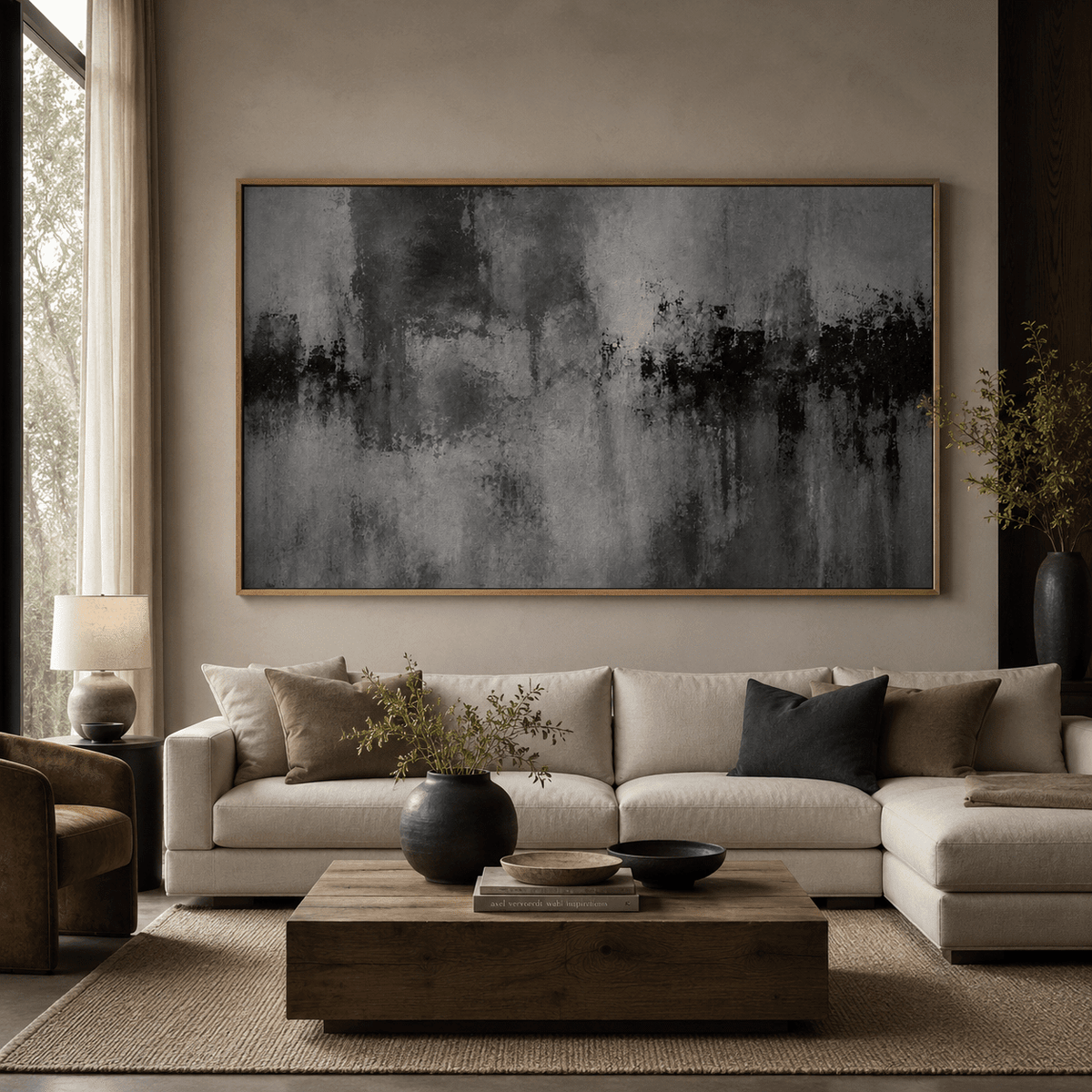
Black and white wall art gives a farmhouse living room structure. It can define a seating area, balance a pale sofa, or connect with black window frames and lighting. The look is strong, but it does not have to feel harsh. Soft gray, cream, and gentle brush marks can make the contrast more welcoming.
Use black and white when the room needs a clear visual anchor. A large piece above the sofa may be enough. If the wall is narrow, choose a vertical format beside a bookcase or near a doorway. For a gallery wall, combine one darker work with lighter pieces so the arrangement does not feel heavy.
How to keep the contrast warm
Repeat warm materials around the artwork. A wood bench, woven basket, linen cushion, or soft rug can balance a charcoal mark. Avoid adding too many sharp black accents in one area. Two or three repeated details usually create a better rhythm than a full wall of dark objects.
Black and white also works well with farmhouse color. Add muted olive, clay, faded blue, or warm tan through textiles. The artwork stays simple while the room gains personality. If your furniture has a strong grain, a restrained black-and-white piece can keep the overall look clean.
For shoppers comparing options, Rossetti Art's black-and-white canvas prints offer a direct way to browse this palette. The collection CTA is most useful after you have decided that your room needs contrast rather than more cream or taupe.
Room-by-Room Placement and Size Ideas
Scale changes how wall decor feels. A small piece can disappear above a deep sofa. A large piece can overwhelm a narrow hall. Measure the furniture first, then think about the empty space around it. The goal is a balanced relationship between the art, the wall, and the objects below.
Living room
For a sofa wall, artwork often looks best when it spans about two-thirds to three-quarters of the sofa width. A single large canvas can create a calm focal point. Two related pieces can work when the wall is long and the furniture is wide. Keep the lower edge close enough to the sofa to connect the art to the seating area, but not so low that it feels crowded.
Kitchen and dining room
In a kitchen, choose a finish that is easy to view in changing light and place the art away from direct splashes or heat. A smaller canvas can work beside open shelving. In a dining room, a horizontal piece above a sideboard can echo the length of the furniture. Abstract forms, landscape tones, and simple art print designs all work well here.
Bedroom
Above a bed, one wide piece usually feels more settled than many small pieces. If the bed is low, leave enough wall space for the art to remain visible behind pillows. Cream, sand, and gray can support rest. A muted landscape can add a sense of distance, while a textured original gives the room a more personal feeling.
Hallway and entry
Hallways benefit from vertical pieces or a short sequence of coordinated works. Keep the depth modest if the wall is near a walkway. In an entry, art can sit above a narrow console or bench. Use one repeated color to link it with the living room without making both spaces look identical.
Canvas, Finish, Frame, and Price Considerations
Price should be considered with size, construction, and finish. A larger canvas uses more material and has a stronger presence on the wall. An original painting carries the value of a one-of-a-kind work. A canvas print can provide a consistent look across several rooms or help you build a larger arrangement.
Ask how the artwork is made before comparing price alone. A canvas print that is hand-stretched over a 1.25-inch hardwood stretcher frame has a different structure from a thin paper print placed in a ready-made frame. The satin-matte, low-glare finish can also be useful in a bright living room where a glossy surface might reflect windows.
Look at the frame as part of the design. Solid wood details can add warmth. A handcrafted floater frame made from poplar hardwood gives an original painting a clean edge and a natural connection to farmhouse furniture. If you prefer a frameless look, the canvas edge itself may provide enough visual finish.
Questions to ask before buying
- Will the size fit the wall and the furniture below it?
- Does the color repeat an existing tone in the room?
- Is the finish suitable for the available light?
- Would a frame add warmth or make the wall feel too busy?
- Can Live Preview help confirm the final look?
- Does the price fit the role of the artwork in your room?
For a broad starting point, browse the canvas print collection. If you want a singular piece with more surface character, compare the original abstract paintings collection.

How to Avoid the Rustic-Overload Trap
Rustic details can be inviting, but too many can flatten the room into a theme. If you already have a barn door, reclaimed wood, plaid fabric, and vintage tools, pause before adding another sign or animal image. A quiet abstract can create a needed break.
Think in layers. Keep one or two familiar farmhouse references, then add modern shapes, clean frames, and open space. This approach lets the room feel connected to farmhouse style without looking like a showroom. It also gives your favorite objects more room to stand out.
Use repetition instead of matching
Repeat a color, not every subject. A soft taupe in the artwork can echo the rug. A charcoal line can relate to the fireplace screen. A warm cream field can connect to the walls. The room feels designed because the tones speak to each other.
Different textures can also create balance. Place smooth ceramics near rough wood. Add a woven textile beside a clean canvas. Let a textured painting sit above a simple cabinet. These small contrasts make the farmhouse wall feel collected over time.
Build a gallery wall with breathing room
Start with the largest piece, then add smaller works around it. Lay the arrangement on the floor before hanging it. Keep the gaps consistent, but do not worry about perfect symmetry. A relaxed layout often suits farmhouse style better than a rigid grid.
Use the free planner below if you are unsure where to begin. It can help you test the layout before making holes in the wall.

Frequently Asked Questions
Is farmhouse wall art still in style in 2026?
Yes. The current look is less about distressed signs and more about comfort, texture, and simple shape. Modern farmhouse wall art often includes neutral abstract canvas, soft landscapes, black-and-white pieces, and original paintings. Choose one or two relaxed references, then balance them with clean furniture, open space, and a restrained frame.
What colors work best for modern farmhouse wall art?
Cream, warm neutral, soft taupe, muted gray, charcoal, faded blue, and gentle olive work well. Match the artwork to an existing item such as a rug, wood tone, cabinet, or cushion. If the room is pale, choose visible contrast. If it is already dark, lighter canvas or art print colors can keep the wall open.
Can abstract art work in a farmhouse-style room?
Yes. Abstract art works when its colors and texture support the room. Choose soft shapes, natural tones, and a finish that does not create distracting glare. A textured original can echo plaster, linen, or wood. A neutral canvas print can anchor the room while leaving familiar farmhouse details, such as a bench or woven basket, in view.
What size wall art works for a farmhouse living room?
For art above a sofa, aim for roughly two-thirds to three-quarters of the sofa width. One large canvas often looks calmer than several undersized pieces. Leave breathing room at the sides and avoid placing the artwork so low that it touches the furniture visually. Measure the wall, sofa, and nearby lighting before choosing the final size.
Is canvas or an original painting better for a farmhouse wall?
Choose canvas when you want a dependable size, a coordinated look, or several pieces for different rooms. Choose an original painting when surface texture and one-of-a-kind character matter most. Both can work in a farmhouse home. The best choice depends on the room's scale, your budget, and whether the artwork should blend in or become the main focal point.
Find the Right Farmhouse Wall Art for Your Home
The strongest farmhouse wall begins with the feeling you want to create. Choose a canvas print for flexible styling, or select an original abstract painting when you want more texture and personal character. Browse the Canvas Prints collection for calm, repeatable options, then explore Original Abstract Paintings for a singular focal point. Take your measurements, check the light, and choose the piece that makes the room feel more like yours.
Keep Reading
Color Palette: Cream, warm neutral, soft taupe, charcoal
Painting Style: Textured abstract, minimalist, wabi-sabi influenced
Suggested Interior Placement: Living room feature wall, kitchen, dining room

Leave a comment
This site is protected by hCaptcha and the hCaptcha Privacy Policy and Terms of Service apply.