Pet Portrait Canvas: How to Choose One That Actually Looks Like Art

A Pet Portrait Canvas should feel personal, clear, and finished enough to live with for years. Yet many cheap pet portrait sites turn a beloved dog or cat into a flat cartoon. Blurry eyes, harsh outlines, weak color, and thin canvas can make the final piece feel more like a novelty print than meaningful art.
This guide explains how to judge a pet portrait, choose a useful size, compare framing, prepare a pet photo, and plan the wall. Rossetti Art focuses on original artwork and curated animal and whimsical prints, not custom photo-to-canvas pet portraits. The examples below show the visual quality, materials, and styling details worth seeking in any pet canvas.
Quick Answer: What Makes a Good Pet Portrait Canvas?
A good pet portrait canvas starts with a clear photo, accurate eyes and fur detail, balanced composition, and a size that suits the wall. Quality canvas, dependable inks, a satin-matte finish, and a strong frame also matter. The best result feels like art first and a personal memory second, with colors that work in the room.

What Makes a Pet Portrait Canvas Look Like Real Art (Not a Cheap Print)
The face is the first test. A strong pet portrait keeps the eyes sharp and gives the nose, muzzle, ears, and fur enough detail to show personality. A dog should still look like that dog. A cat should not lose its expression under an overly smooth filter. Ask whether the artist or service preserves small traits, such as one bent ear, a white chest, or a bright patch above the eye.
Composition matters just as much as resemblance. The pet should have enough space around the head and body. A tight crop can feel dramatic, but it can also cut off ears or make the face look crowded. A good portrait uses light, direction, and negative space to guide the eye. It should look intentional rather than like a photo dropped onto canvas.
Be careful with one-click effects. Watercolor, oil, pop art, and painterly styles can work well when applied with restraint. They should support the animal's personality, not hide poor source quality. Read reviews for comments about detail, color accuracy, packaging, and whether portraits come ready to hang. Reviews that mention eyes and likeness are more useful than short five-star ratings.
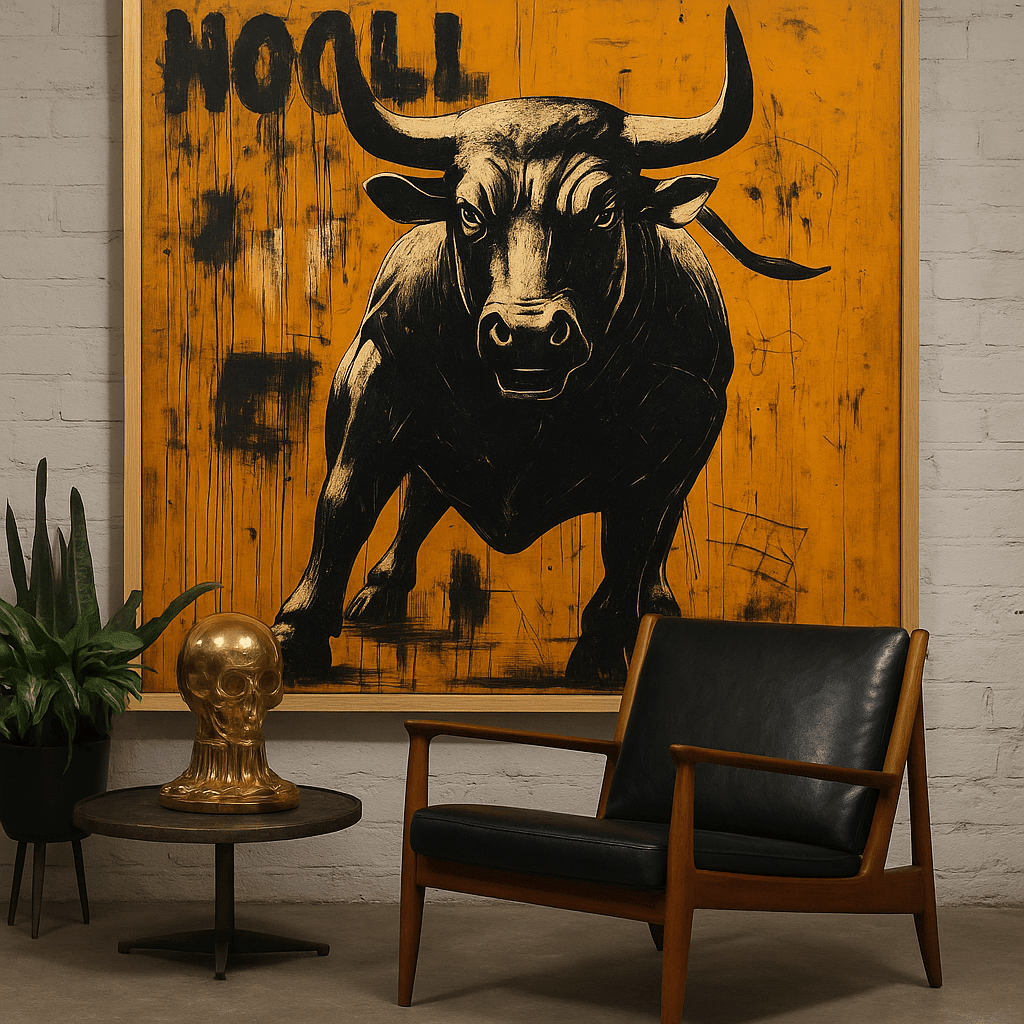
For a different kind of animal statement, Golden Bull Charge shows how strong posture, color, and movement can make an animal portrait feel like a focal point. It is an original painting example, not a custom pet photo service.
Which Canvas Materials and Print Details Matter?
Canvas quality affects how a portrait feels in daylight and under lamps. A good surface should hold detail without looking overly glossy. A satin-matte, low-glare finish is often a practical choice for living rooms, hallways, and bedrooms because it keeps reflections under control while preserving color.
Look for clear construction details instead of vague claims. Rossetti Art canvas pieces may be hand-stretched over a 1.25-inch hardwood stretcher frame. That depth gives the artwork a substantial profile and helps it sit neatly on the wall. Ask whether the edges are finished, whether the piece arrives ready to hang, and how the package is protected during shipping.
Ink information also deserves attention. Rossetti Art describes its canvas as printed with UV- and fade-resistant HP latex inks, UL GREENGUARD Gold certified. Do not assume every seller uses the same process. Compare the exact product page, finish, frame option, shipping details, and guarantee before you order.
These details are especially important for personalized pet artwork because the emotional value is high. A low-cost order is not a bargain if the image is soft, the canvas sags, or the frame arrives damaged. A premium canvas should make the image feel deliberate from edge to edge.
What Size Pet Portrait Canvas Should You Choose?
Choose the wall before choosing the canvas. Measure the open width, then note the furniture below it. Above a sofa, the artwork often looks balanced when it spans about two-thirds to three-quarters of the furniture width. Above a narrow console, a vertical portrait or a smaller square may work better.
Common sizes such as 12x16, 16x20, and 24x36 inches suit different spaces. A 12x16 canvas can work on a shelf wall, beside a doorway, or in a small office. A 16x20 canvas has enough presence for one pet without taking over the room. A larger 24x36 format can make a single dog or cat the main feature above a sofa or console.
Use painter's tape to mark the outer edges on the wall. Step back from several angles. This simple test helps you avoid a common mistake: choosing a portrait that looks attractive online but feels too small at home. It also lets you test a portrait next to lamps, shelves, rugs, and nearby artwork.
Live Preview is useful when it is available. For pet portraits, it helps buyers judge scale, placement, and visual balance before committing. Check whether the preview shows the actual frame depth and crop. A preview is a guide, not a guarantee, but it can prevent many sizing errors.
🎨 FREE CANVAS SIZE CHEAT SHEET
Not sure what size fits your wall? Get the free canvas size cheat sheet.
For more help with proportions, frames, and wall colors, read this guide to choosing artwork sizes and frames. The same planning principles apply to a dog portrait, cat portrait, or animal painting.
Framed or Unframed: Which Works Better for a Pet Portrait?
Unframed canvas has a clean, relaxed look. It can suit modern rooms, casual family spaces, and narrow walls where a thick frame may feel heavy. A deep canvas edge can also give the portrait a finished appearance without adding another material around it.
A frame adds structure and makes the artwork feel more complete. This can help a pet portrait sit comfortably beside wood furniture, traditional trim, or other framed artwork. Choose a frame color that connects with the room rather than competing with the animal's face.
A floater frame leaves a narrow gap around the canvas. That gap creates separation and lets the artwork remain visually strong. When specified, look for a handcrafted floater frame made from poplar hardwood. Do not assume every floater frame uses the same wood, finish, or construction.
Consider cleaning, shipping, and hanging before deciding. Framed pieces can weigh more and need careful packaging. Unframed pieces may be easier to move. For either format, check the finished dimensions, hanging hardware, edge treatment, and shipping policy before placing an order.

How to Prepare a Photo for the Best Pet Portrait Result
Start with the highest-resolution photo you have. A sharp image taken in natural light is usually better than a dark phone photo with heavy zoom. The pet's eyes should be visible. Avoid strong filters, motion blur, and photos where the head is partly hidden by a toy, blanket, or another pet.
Look for a natural expression. A relaxed face often creates a more lasting portrait than a technically perfect image with a tense pose. If you want a full-body painting, choose a photo that shows the legs and stance. If you want a close portrait, choose an image with clear facial detail and enough space around the ears.
Do not crop too tightly before submitting a photo. The artist or service may need room to adjust the composition. If you have several options, send the clearest images and explain what matters most. Mention a distinctive marking, preferred background, or desired style, but avoid asking for so many changes that the result loses focus.
Photo pet services vary widely. Some create a custom pet portrait from one image, while others require a review step or charge extra for more than one animal. Confirm the format, revision policy, production time, shipping, and guarantee. Rossetti Art's featured examples are original artwork and curated prints, so this guidance explains what to ask any custom pet provider.
- Sharp eyes and visible facial detail
- Natural light with balanced contrast
- Enough space around the animal
A Strong Source Photo
- Heavy blur or digital zoom
- Dark eyes hidden in shadow
- Ears or face cut off at the edge
A Risky Source Photo
Should You Choose Color, Black and White, or Pop Art?
Color is the safest choice when fur markings, eye color, and personality are central to the portrait. It works well when the room already includes related tones. Warm browns, cream, rust, and gold can connect with wood floors or leather seating. Cool gray, blue, and white can support a quieter modern room.
Black and white can feel timeless and focused. It removes distracting background color and places attention on expression, shape, and contrast. This approach can work well for a memorial portrait or a series of pets with different coloring. Make sure the source photo has enough light and shadow to keep the face from becoming flat.
Pop art and bold painterly styles are more expressive. They can suit playful rooms, creative offices, and buyers who want the artwork to feel energetic rather than realistic. The key is control. Strong color should frame the personality of the pet instead of covering the details that make the animal recognizable.
Rossetti Art's Black & White Abstract Canvas Prints collection is relevant if you are considering a monochrome pet portrait treatment. It can also help you compare contrast, negative space, and the effect of removing color from animal artwork.
One Portrait or a Gallery Wall?
One large portrait creates a clear focal point. This is often the best choice when the pet has a strong expression or the room needs one main piece. A single image is also easier to size and style. Give it enough wall space so the portrait does not look squeezed between shelves or windows.
A gallery wall tells a wider story. You might combine two pets, a favorite landscape, a name plaque, and one abstract animal print. Keep one element consistent, such as frame color, canvas depth, or a repeated palette. Matching every piece too closely can make the display feel flat, so allow small changes in format and subject.
When mixing custom pet portraits with ready-made animal artwork, choose a visual bridge. Similar backgrounds, warm neutrals, or a shared black frame can connect different styles. Carnival Mouse Sprint demonstrates how a whimsical animal image can add movement beside a quieter portrait.

For nursery or family spaces, explore ideas in this article about animal-themed whimsical canvas prints. The advice also applies to a playful dog portrait, cat artwork, or personalized pet display.
Where to Hang a Pet Portrait Canvas in Your Home
The living room is a natural choice because it gives the portrait room to act as a focal point. Center it with the sofa or console, not necessarily with the entire wall. Hang the middle of the artwork near eye level, while adjusting slightly for seated viewing and the height of the furniture.
An entryway can turn a personal memory into a welcoming first impression. Choose a format that leaves room for coats, mirrors, and doors. A smaller portrait can work above a narrow table. In a home office, a pet canvas can add warmth without taking up desk space.
A reading nook or bedroom may suit a quieter portrait. Soft colors, black and white, or a simple unframed edge can feel calm. Avoid direct sunlight when possible, and keep canvas away from areas where steam or splashing is common. Canvas is not automatically waterproof, so placement still matters.
Before hanging, check the viewing distance, wall color, nearby lighting, and furniture scale. Ask whether the portrait feels balanced when the room is busy and when it is quiet. A good placement lets the pet remain the emotional center without making the rest of the room feel unfinished.
Rossetti Art's animal range can support several settings, from an entryway statement to a pet-lover's reading nook. Browse Animal & Whimsical Canvas Prints for playful choices or Original Animal Paintings for a more expressive focal point.
Frequently Asked Questions
Can you turn any pet photo into a canvas print?
Many custom pet portrait providers can work from a dog, cat, horse, or other pet photo, but not every image will produce the same result. Sharp eyes, visible markings, natural light, and enough space around the animal give the artist more useful detail. Rossetti Art's catalog features original artwork and curated animal prints rather than confirmed custom photo-to-canvas services.
What resolution photo do I need for a pet portrait canvas?
Use the largest original photo available, rather than a screenshot or compressed social-media copy. For a small canvas, a clear phone photo may work if the face is sharp. Larger formats need more detail, especially around the eyes and fur. Ask the provider to confirm the recommended pixel dimensions for the exact canvas size before you order.
Does a pet portrait canvas fade over time?
Exposure to direct sun, heat, moisture, and poor-quality ink can affect color over time. Look for a satin-matte, low-glare finish and stated UV and fade resistance. Rossetti Art describes its canvas as printed with UV- and fade-resistant HP latex inks, UL GREENGUARD Gold certified. Keep any canvas away from prolonged direct sunlight.
How long does a custom pet portrait canvas take to arrive?
Timing depends on whether the artwork is printed from a ready file or created from a custom pet photo. Custom work may include image review, proofing, production, framing, and shipping. Check the stated production window, shipping method, and holiday cutoff before ordering. Do not compare a ready-to-ship canvas with a made-to-order portrait as if they have the same schedule.
Can I get a pet portrait canvas with a floater frame?
Some sellers offer a floater frame, but confirm the material, finished dimensions, color, and hanging hardware. A suitable specification is a handcrafted floater frame made from poplar hardwood. The frame should leave a consistent visual gap around the canvas. Rossetti Art product pages should be checked for the exact frame option available on each original artwork or print.
Choose Artwork That Fits the Memory and the Room
If you want playful color, movement, and approachable animal subjects, visit Animal & Whimsical Canvas Prints. If you prefer a one-of-a-kind statement with stronger symbolism, explore Original Animal Paintings. Compare the size, frame, palette, and placement before choosing the piece that feels right for your home.
Keep Reading
Color Palette: Warm gold, ochre, cream, charcoal, black, white, and lively animal-inspired accent tones
Painting Style: Figurative, animal portrait, whimsical
Suggested Interior Placement: Living room feature wall, entryway, home office, pet-lover's reading nook

Leave a comment
This site is protected by hCaptcha and the hCaptcha Privacy Policy and Terms of Service apply.