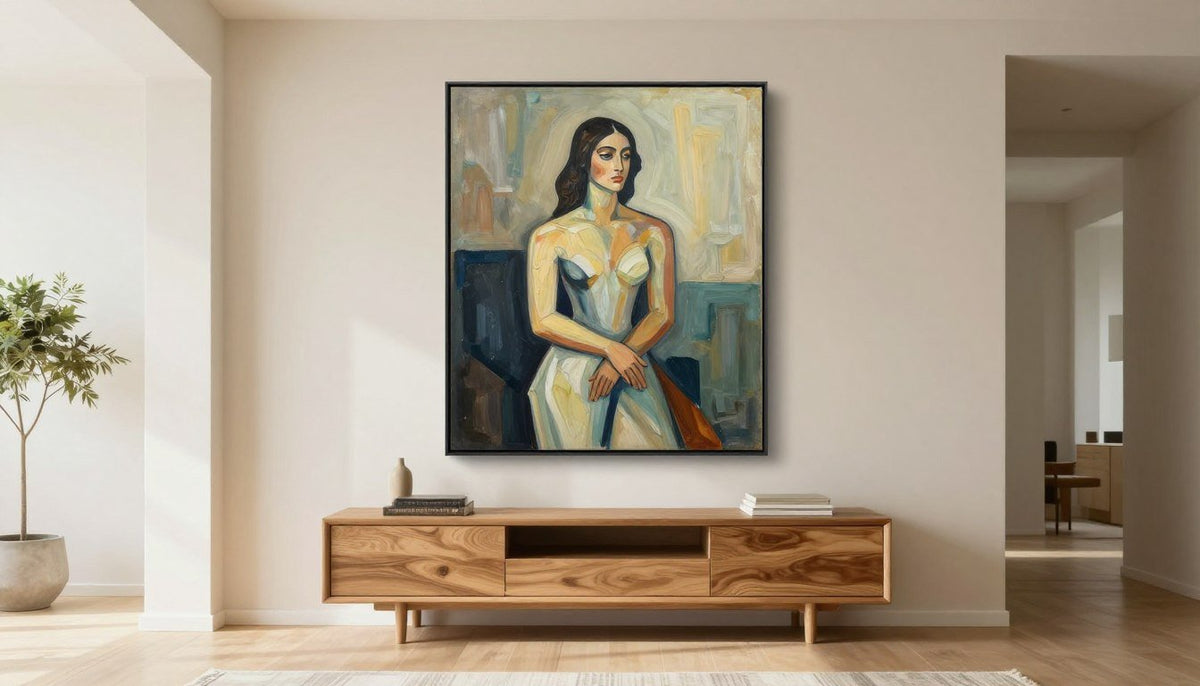
Faceless portraits are artworks depicting human figures where facial features such as eyes, nose, and mouth are omitted, abstracted, or concealed. By stepping away from literal likeness, these pieces turn attention toward posture, color interaction, and emotional atmosphere. The result is a versatile focal point that feels personal yet universally relatable across contemporary interior spaces.
Selecting the right canvas comes down to matching the silhouette, palette, and scale of the artwork with the architectural mood of your room. Whether hung as a solitary statement piece or integrated into a salon wall, figurative art without explicit features invites quiet reflection while complementing modern furnishings.

Understanding Faceless Portrait Art
A faceless portrait shifts the focus of figurative art from individual identity to posture, form, and composition. Instead of rendering specific eyes, brows, or expressions, the composition uses smooth washes, gestural lines, or high-contrast shadows to suggest the human presence. This allows the artwork to communicate feeling through gesture and balance rather than direct eye contact.
Because the image does not represent an identifiable acquaintance or celebrity, it avoids feeling voyeuristic or overly specific in a private living space. Viewers naturally project their own memories, moods, and narratives into the blank or abstracted spaces, making the artwork feel intimately connected to the home.
Curated Canvas Prints for Modern Interiors
Discover original figurative canvas artwork with complimentary worldwide delivery on every order.

Abstracted facial forms allow the eye to focus on gesture, line weight, and ambient color harmonies.
Artistic Reasons for Leaving Faces Blank
Artists choose to omit facial features to strip away superficial identifiers like age, social status, and immediate emotion. Historical and modern traditions explore this dynamic to transcend traditional documentation, as outlined in historical discussions of the portrait format. By removing concrete eyes and smiles, the subject becomes timeless rather than frozen in a specific fleeting moment.
Body language, head tilt, and shoulder posture carry immense communicative weight when unburdened by facial detail. A bowed neck can convey contemplation, while an upright chin signals poise, allowing the viewer to absorb emotional nuance through physical silhouette. This subtlety creates a calm, uncluttered psychological presence on the wall that resists visual fatigue over time.
Omitting concrete features transforms the figure from a stranger into an open emotional canvas, allowing anyone who enters the room to see their own thoughts mirrored in the composition.
Leaving the face smooth or abstracted also elevates formal qualities like texture, line rhythm, and color blocking. When the human brain is not occupied with decoding facial expressions, it appreciates how light interacts with painted planes and background pigments. This aesthetic freedom makes faceless compositions especially compelling in curated modern homes.
Four Distinct Styles of Faceless Wall Art
Faceless figurative works span a broad spectrum of visual movements, each bringing distinct character and energy into an interior. Understanding how these variations operate helps in matching artwork to existing room decor, architectural details, and personal aesthetic goals.
Abstract figurative pieces merge human silhouettes with expressive brushwork, fragmented geometries, and unexpected color fields. Readers exploring this genre can learn more in What Is an Abstract Portrait. For this aesthetic, Cipher offers an abstract figurative, graphic line art style in a square format ranging from 20x20 to 58x58 in, utilizing off-white ivory, deep black, and a flame orange-red accent.
Line art relies on single continuous contours or refined outlines to sketch human anatomy with effortless restraint. Silhouette styles draw on solid contrasting fills to carve dramatic physical profiles against light or textured backdrops. Meanwhile, pop art portraits introduce vibrant cultural flair, graphic saturation, and fashion-forward motifs.
Two distinct pop art directions bring energetic impact to living areas. The square canvas Modern Muse delivers a vintage pop art portrait aesthetic in sizes from 20x20 to 58x58 in, balancing grayscale portraiture against hot pink, turquoise, yellow, green, purple, and orange. Alternatively, Chromatic offers a vertical format from 16x24 to 53x75 in that combines pop art and fashion surrealism through black, grey, orange, red, green, yellow, cobalt blue, and red lips.
| Style | What it looks like | Mood | Best rooms |
| Abstract Figurative | Painterly gestural forms | Reflective and moody | Living room feature walls, private studies, and executive office spaces |
| Line Art | Fluid clean contours | Airy and peaceful | Bedrooms, dressing areas, reading corners, and relaxed guest suites |
| Silhouette | Solid shaded profiles | Dramatic and bold | Entryway corridors, dining rooms, and high-contrast minimalist spaces |
| Pop Art | Graphic color blocks | Playful and dynamic | Modern living rooms, media lounges, creative studios, and eclectic lofts |
Each of these Rossetti Art prints is produced on artist-grade poly-cotton canvas using UV- and fade-resistant HP latex inks that carry UL GREENGUARD Gold certification. Stretched by hand over a 1.25-inch hardwood stretcher frame, each piece features a satin-matte low-glare finish and arrives ready to hang. Buyers can also select an optional floater frame handcrafted from poplar hardwood with a 5/16 in shadow gap precisely sized to the canvas.
Selecting the Right Piece for Interior Spaces
Selecting a faceless composition begins with evaluating the room's prevailing palette, scale, and decorative intention. High-contrast monochromatic compositions lend crisp structure to neutral rooms, while multi-hued pop prints introduce energy to muted, contemporary furnishings. Reviewing wall arrangements in How to Mix and Match Art Prints for a Stunning Gallery Wall offers helpful ideas for combining diverse styles.
Color Harmony
Draw accent tones from existing textiles, rugs, or furniture into the canvas palette. A piece featuring a single vivid accent can tie an entire seating group together.
Proportion and Shape
Square formats establish stability over symmetrical furniture arrangements. Vertical pieces accentuate wall height in entryways or narrow niches.
Framing Integration
A floater frame separates the canvas edge from surrounding paint with a defined shadow reveal. This shadow outline elevates the artwork into an architectural feature.
Every piece is made to order, supported by free worldwide shipping with production taking 3 to 5 business days followed by 8 to 10 business days for tracked shipping. Standard sizes feature a 30-day full refund policy, while custom orders and large sizes with a side of 40 in / 100 cm or more remain final sale except in the event of shipping damage or defect.

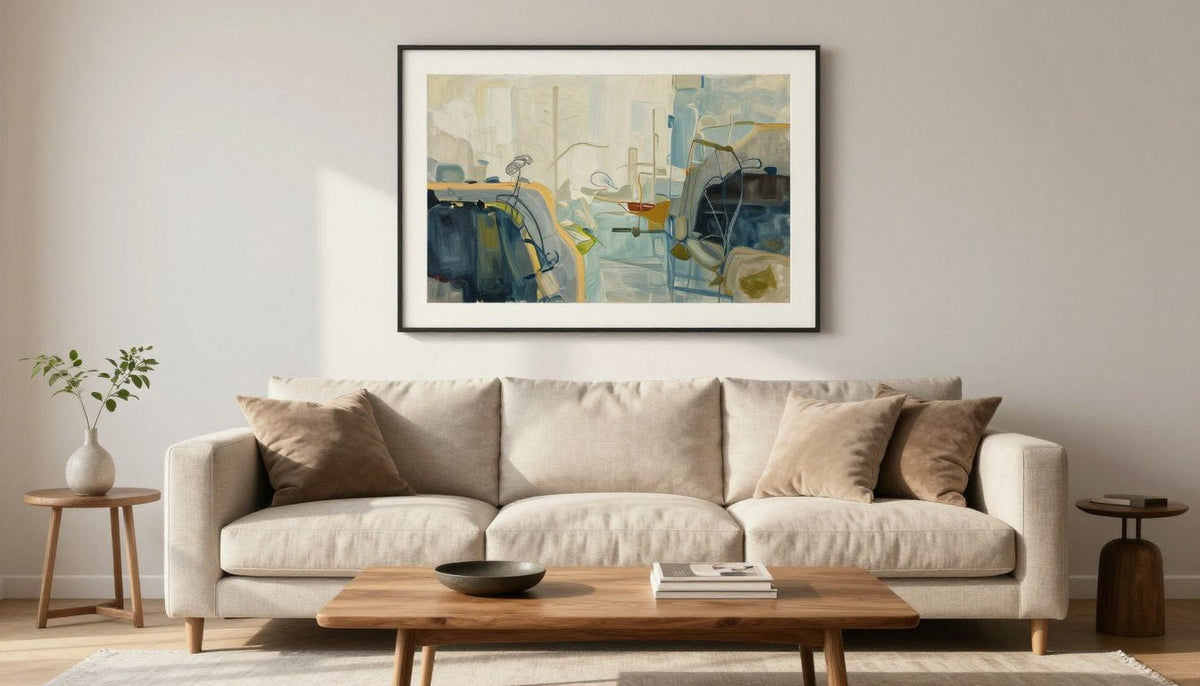
Carefully balanced canvas dimensions establish an immediate, cohesive anchor above accent furniture.
Ideal Wall Placements Throughout the Home
Faceless figurative canvas art adapts effortlessly across various living areas, provided sightlines and surrounding furnishings receive thoughtful attention. Practical mounting steps detailed in How to Hang Canvas Paintings ensure your print sits securely at comfortable viewing angles.
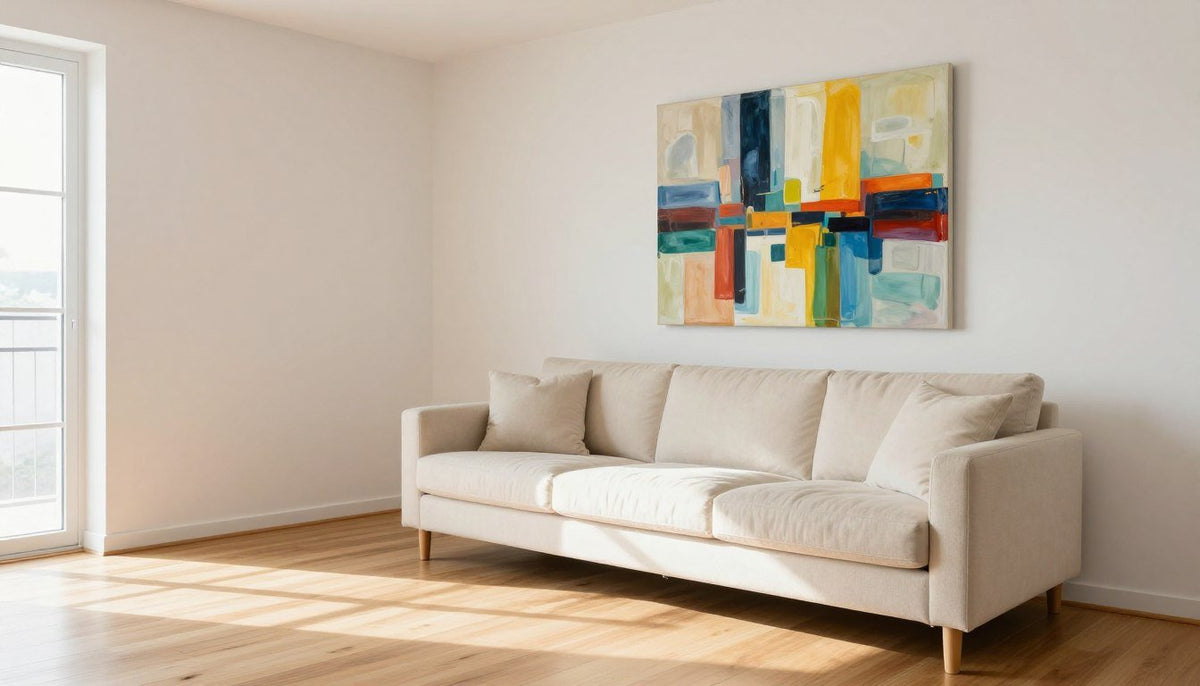
- Above the living room sofa: Mount a square or wide horizontal canvas centered over the back cushions to anchor primary conversation seating.
- Dining room accent wall: Position a bold vertical portrait where ambient chandelier light showcases the satin-matte low-glare canvas surface.
- Primary bedroom headboard wall: Introduce peaceful line art or soft figurative silhouettes to maintain a restful, contemplative atmosphere.
- Entryway console vignette: Place an eye-level vertical portrait over a shallow credenza to create an inviting focal point upon entering the home.
- Home office backdrop: Display a graphic or pop art canvas within camera view to lend modern sophistication to professional work environments.

Suspending the artwork at natural eye level preserves visual continuity with surrounding furniture.
Because the satin-matte poly-cotton canvas reduces surface reflection, the artwork remains clearly visible under both recessed ceiling downlights and natural window light. Hand-stretched tension over the 1.25-inch hardwood bars keeps the fabric taut across seasonal indoor humidity shifts.
Common Decorating and Placement Errors
A frequent misstep when styling figurative wall art is selecting a canvas that is too small for the surrounding furniture. An undersized print floating over an expansive sofa looks disconnected, whereas an appropriately scaled piece unifies seating and wall planes into a coherent statement. Aim for a canvas that covers approximately two-thirds to three-quarters of the furniture width below it.
Hanging artwork too high is another common issue that disrupts room balance. Centering the artwork around standard standing eye level keeps the composition tied directly to eye height rather than drifting toward the ceiling moulding. When hanging above furniture, leave a comfortable breathing margin between the tabletop or sofa back and the bottom frame edge.
Avoid crowding detailed figurative prints with small decorative knickknacks on the wall; human forms need visual negative space to retain their artistic presence.
See It on Your Wall Before You Buy
Use the Live Preview button on any artwork page to visualize scale and framing directly in your room before placing an order.
Frequently Asked Questions
What is a faceless portrait?
A faceless portrait is a figurative artwork that leaves out recognizable eyes, nose, and mouth details. The artist relies instead on body posture, silhouette contours, and color balance to express human emotion, allowing viewers to project their own feelings and personal interpretations directly into the piece.
Why do artists paint portraits without faces?
Artists omit facial features to move beyond individual identity, social status, and literal representations. By focusing on gesture, lighting, and color harmony rather than a specific person, the artwork gains a universal, timeless quality that invites viewers to connect with the subject on an intuitive level.
Are faceless portraits good for a living room?
Faceless portraits work exceptionally well in living rooms because they provide an engaging focal point without the intensity of direct eye contact. Their abstracted forms complement modern furnishings, create conversation, and blend harmoniously with surrounding textiles, lighting fixtures, and architectural elements throughout the main seating area.
What colors work with abstract figure art?
Neutral tones such as ivory, warm beige, and deep charcoal provide a balanced foundation for abstract figure art. Pairing these muted backdrops with deliberate accents like burnt orange, crimson, or cobalt blue adds sophisticated contrast while maintaining cohesion with existing rugs, wooden furniture, and home textiles.
What size faceless portrait for above a sofa?
Select a canvas that spans approximately two-thirds to three-quarters of your sofa width. An appropriately scaled piece anchors the seating arrangement cleanly, whereas an undersized canvas can look lost on a large wall, and an oversized print can visually overpower the furniture below it.
Bringing Faceless Art Into Your Space
Faceless portraits bring a balance of human warmth and modern restraint to interior walls. By focusing on silhouette, palette, and scale, you can choose a canvas that anchors your room with quiet confidence. Explore different styles to find the composition that best reflects the character of your home.

About the Author
Chiara Rossetti
Chiara Rossetti is the founder of Rossetti Art, a canvas print and original art brand. She writes about interior design, wall art styling, and the art of making a home feel alive.

Leave a comment
This site is protected by hCaptcha and the hCaptcha Privacy Policy and Terms of Service apply.