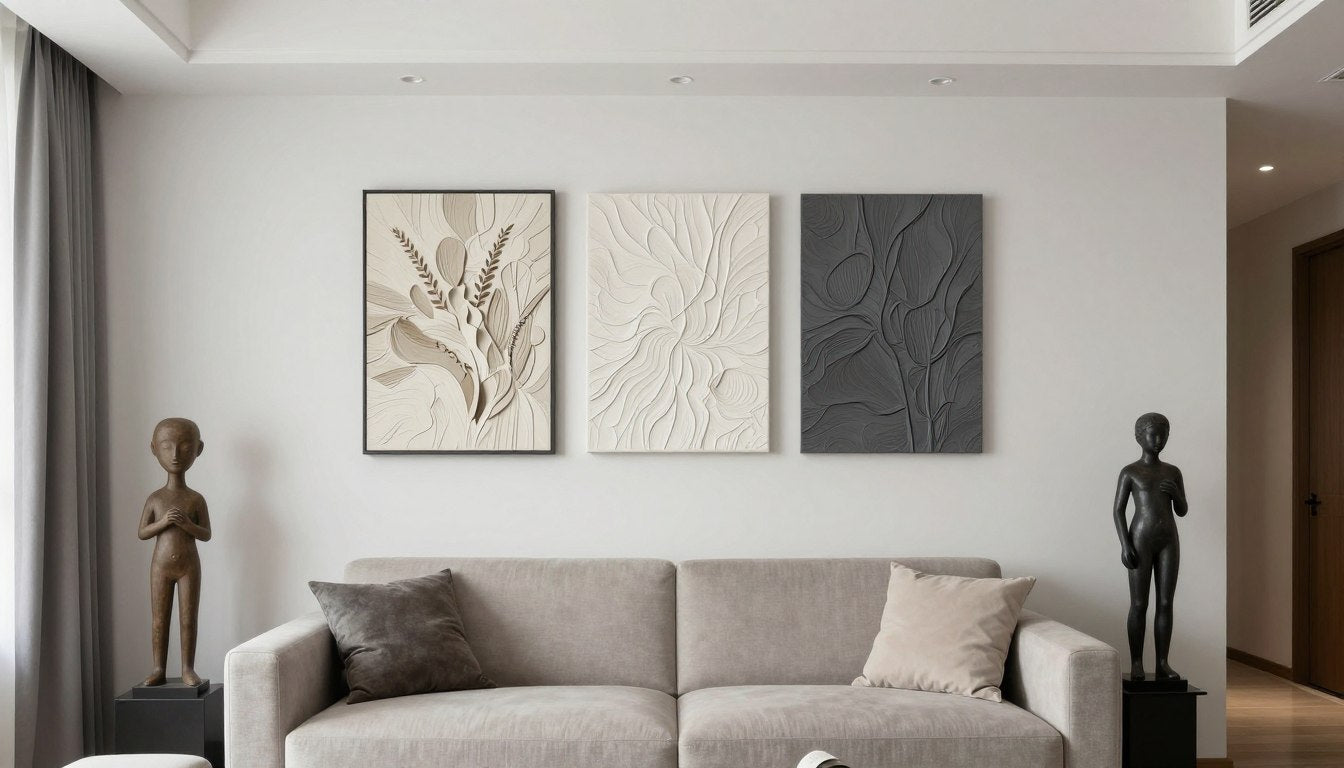

Choosing between 3D wall art vs. sculptures can transform your small space from ordinary to extraordinary. The right choice brings depth and character to your walls without overwhelming limited square footage.
Small apartments and compact rooms present unique design challenges. Traditional art often falls flat, while oversized pieces crowd your space. Dimensional decor offers a solution that adds visual interest while maintaining functionality.
This guide explores the practical differences between wall-mounted dimensional art and freestanding sculptures. You'll discover which option suits your space, style preferences, and installation capabilities. We'll examine material choices, price points, and room-specific recommendations to help you make the perfect selection.
Perfect Dimensional Art for Compact Spaces
If you love dimensional design, here are three statement pieces that bring depth and character to small rooms without sacrificing precious floor space.

Geometric Abstract Wall Art
Bold dimensional design perfect for modern living spaces. Creates striking shadows and visual depth.

Textured Line Art Print
Subtle dimensional texture adds sophistication without overwhelming compact bedrooms or offices.

Botanical Textured Piece
Nature-inspired dimensional art that brings organic warmth to entryways and dining areas.
Understanding 3D Wall Art: Depth Without Floor Space

Wall art with dimensional elements creates visual interest through raised surfaces and layered materials. Unlike flat paintings, these pieces cast shadows and change appearance as light shifts throughout the day.
The primary advantage lies in space efficiency. Wall-mounted pieces utilize vertical areas that would otherwise remain empty. This makes them ideal for apartments, condos, and rooms where floor space comes at a premium.
Common Materials and Textures

Material selection significantly impacts both aesthetics and price. Metal wall art offers durability and modern appeal. Wood brings warmth and organic texture. Canvas prints with raised elements provide affordability and versatility.
Each material interacts differently with light. Metal reflects and creates sharp shadow lines. Wood absorbs light for softer depth. Textured canvas combines both qualities for balanced visual effect.
Metal Wall Art Benefits
Metal pieces deliver contemporary style with exceptional longevity. They work particularly well in modern interiors and industrial design schemes.
- Lightweight yet sturdy construction
- Easy to clean and maintain
- Weather-resistant for versatile placement
- Creates dramatic shadow effects
Textured Canvas Advantages
Canvas offers the most accessible entry point for dimensional wall decor. Modern printing techniques create impressive depth at affordable price points.
- Softens acoustics in small rooms
- Lightweight and safe for any wall type
- Wide variety of styles and designs
- Ready-to-hang convenience
Wood Sculpture Characteristics
Carved wood brings natural warmth and artisanal quality. Each piece displays unique grain patterns and organic variation.
- Adds warmth to minimalist spaces
- Sustainable material options available
- Complements natural design elements
- Improves with age and patina
Mixed Media Options
Combining materials creates unique focal points. Wood frames with metal accents or canvas with dimensional overlays offer distinctive style.
- Customizable to match existing decor
- Creates conversation-starting statements
- Balances different design elements
- Often available as limited editions
Installation Considerations for Small Spaces
Proper installation maximizes impact while maintaining safety. Wall art requires appropriate hanging hardware based on piece weight and wall construction.
Most dimensional wall pieces need just one or two mounting points. This simplicity contrasts with the permanent placement decisions required for freestanding sculptures. You can easily reposition wall art as your design evolves.

Consider sight lines when planning placement. Dimensional pieces look best when viewed straight-on or at slight angles. Avoid locations where depth becomes invisible due to extreme viewing angles.
Exploring Sculptures: Freestanding Dimensional Design

Sculptures occupy three-dimensional space as standalone art objects. They command attention from multiple viewing angles and create dynamic focal points within rooms.
The freestanding nature allows complete artistic freedom. Sculptures can be repositioned, rotated, and relocated without wall damage or permanent mounting solutions.
Sculpture Types for Compact Areas
Size becomes crucial when selecting sculptures for limited space. Tabletop pieces offer dimensional art without dominating room layouts. These smaller works sit on existing furniture, eliminating floor space concerns.

Vertical sculptures maximize visual impact while minimizing footprint. Tall, slender pieces draw the eye upward and create the illusion of higher ceilings in compact rooms.
Tabletop Sculpture Placement
Small sculptures enhance existing surfaces without requiring dedicated floor area. They work beautifully on console tables, bookcases, and mantels.

Group smaller pieces to create curated vignettes. Varying heights and materials adds visual interest while maintaining cohesive design. This approach works especially well in living room settings where multiple surfaces exist.
Floor Sculpture Considerations
Floor-standing pieces require careful planning in small spaces. Choose locations that don't impede traffic flow or block natural pathways.

Corner placements work exceptionally well. Corners often go unused in furniture arrangements, making them ideal for vertical sculptures that add dimension without consuming functional space.
Material and Finish Selection

Sculpture materials range from traditional stone and bronze to contemporary resins and mixed media. Each material creates distinct visual effects and requires different care levels.
Finish choices affect how pieces interact with surrounding decor. Matte surfaces absorb light for subtle presence. Polished or metallic finishes reflect light and create dynamic visual moments throughout the day.
Sculpture Advantages
- Viewable from multiple angles
- No wall mounting required
- Easily repositioned and relocated
- Creates dimensional focal points
- Works on existing furniture surfaces
- Adds textural variety to interiors
Sculpture Limitations
- Requires floor or surface space
- Can obstruct traffic in tight areas
- Higher price points for quality pieces
- Fragile materials need careful handling
- Dust collection on complex surfaces
- Limited size options for small rooms
Size and Scale: Choosing Proportions That Work

Proportion determines whether dimensional art enhances or overwhelms your space. The relationship between art size and wall or floor area creates either harmony or visual chaos.
Wall art should occupy approximately sixty to seventy-five percent of the furniture width below it. This rule ensures pieces feel substantial without dwarfing furnishings or appearing lost on large walls.
Wall Art Sizing Guidelines
Measure your wall space before selecting pieces. Account for furniture placement and leave breathing room around each piece. Cramped spacing diminishes impact and creates cluttered aesthetics.

Vertical spaces benefit from taller pieces or multi-panel sets arranged vertically. This draws the eye upward and creates the illusion of higher ceilings. Consider canvas print sets for versatile arrangement options.
| Wall Width | Recommended Art Size | Best Piece Type | Room Application |
| 3-4 feet | 20-30 inches wide | Single statement piece | Entryway, bathroom, office |
| 5-6 feet | 36-48 inches wide | Large single or 2-piece set | Bedroom, dining area |
| 7-8 feet | 50-60 inches wide | Multi-panel set or oversized piece | Living room, large bedroom |
| 9+ feet | 60-72 inches wide | Gallery wall or large set | Open concept living areas |
Sculpture Proportions for Small Rooms
Freestanding sculptures should not exceed one-third of the available floor area in their immediate vicinity. Larger pieces create obstacles and make spaces feel cramped.

Height matters significantly for floor sculptures. Pieces between twenty-four and thirty-six inches tall provide presence without blocking sight lines across rooms. This maintains open feeling essential in compact interiors.
Tabletop sculptures offer more flexibility. Heights between eight and sixteen inches work well on most surfaces. These sizes create impact without dominating furniture or requiring excessive clearance.
Match This Vibe to Your Space
Discover curated collections designed specifically for different aesthetic preferences and room styles. Find dimensional art that perfectly complements your existing decor.

Bold & Vibrant Designs
Make dramatic statements with colorful abstract pieces and energetic compositions.

Moody Minimal Style
Sophisticated black and white pieces that add depth without overwhelming neutral spaces.

Modern Portraits
Contemporary portrait art that brings personality and human connection to your walls.
Design Style Compatibility: Matching Art to Interiors

Interior design style dictates which dimensional art types work best. Modern and contemporary spaces embrace both wall art and sculptures with equal enthusiasm. Traditional interiors lean toward wall-mounted pieces that don't disrupt classical furniture arrangements.
Industrial and urban loft spaces benefit from metal wall sculpture. The raw materials and bold designs complement exposed brick and concrete surfaces. These environments can handle larger, more dramatic pieces.
Modern and Contemporary Interiors

Clean lines and minimal ornamentation characterize modern design. Abstract wall art with geometric patterns fits seamlessly. Metallic finishes in gold, silver, or copper add luxury without complexity.
Contemporary style allows more experimentation. Mix materials like wood and metal for unique statements. Pop art canvas prints inject personality while maintaining modern sensibilities.
Traditional and Transitional Spaces
Traditional rooms benefit from wall art that respects classical proportions. Wood pieces with carved details or subtle dimensional elements maintain period-appropriate aesthetics while adding contemporary interest.

Transitional design bridges traditional and modern elements. This style accommodates both wall art and carefully selected sculptures. Choose pieces that share common design elements with existing furnishings.
Bohemian and Eclectic Aesthetics
Eclectic interiors thrive on mixing dimensional art types. Combine wall-mounted pieces with freestanding sculptures for layered, collected-over-time appeal. This approach works particularly well in bedroom settings where personal expression dominates.

Bohemian style embraces texture and global influences. Woven wall art, carved wood pieces, and mixed media sculptures create rich visual layers. Don't fear combining materials and finishes for authentic bohemian character.
Design Tip: When uncertain about style compatibility, choose pieces from the same collection or artist. This ensures cohesive color palettes and complementary design elements even when mixing wall art and sculptures.
Room-Specific Recommendations: Optimizing Each Space

Each room presents unique opportunities and constraints for dimensional art. Function, lighting, and existing furniture all influence optimal choices between wall art and sculptures.
Living Room Solutions
Living rooms serve as primary gathering spaces. Large wall art above sofas creates natural focal points without consuming floor area needed for seating and traffic flow.

Console tables and bookshelves provide perfect homes for tabletop sculptures. These surfaces already exist in most living rooms, making sculpture placement practical and space-efficient.
Consider statement pieces that anchor your design. Living room wall art works especially well when coordinated with existing color schemes and furniture styles.

Living Room Wall Art Benefits
Wall-mounted pieces maximize limited space while creating strong visual impact. They establish design direction for entire rooms.
- Anchors seating arrangements effectively
- Defines color palette for accessories
- Creates conversation focal points
- Easily changed to refresh room aesthetics
Bedroom Art Selection
Bedrooms benefit from calming dimensional art. Wall pieces above headboards establish restful focal points. Avoid overly dramatic or aggressive designs that might disrupt sleep quality.

Dresser tops accommodate small sculptures that add personality without overwhelming intimate spaces. Keep pieces under twelve inches tall to maintain proper scale with bedroom furniture.
Explore bedroom canvas prints designed specifically for restful environments. Botanical themes and abstract compositions in muted tones promote relaxation.
Dining Room and Kitchen Areas
Dining areas shine with wall art that withstands kitchen moisture and cooking odors. Metal and sealed wood pieces resist environmental challenges better than fabric-based works.

Buffets and sideboards provide ideal sculpture display surfaces. These pieces enhance dining experiences without interfering with table settings or guest movement. View curated dining room wall art options that complement formal and casual dining spaces.
Home Office and Study Spaces
Offices require art that inspires without distracting. Abstract wall pieces in calming colors maintain focus while adding visual interest during video calls and daily work.

Desk sculptures should remain compact. Pieces between four and eight inches tall add personality without cluttering workspace. Choose designs that spark creativity without demanding constant attention.
Browse office canvas art collections featuring motivational designs and professional aesthetics appropriate for both home offices and corporate environments.
Entryway and Hallway Installations
Entryways set the tone for entire homes. Narrow hallways particularly benefit from wall art that adds dimension without protruding into limited floor space.

Console tables near entries naturally accommodate sculptures. These pieces greet guests while providing functional surface space for keys and mail. Discover entryway wall art designed to create memorable first impressions.
Installation and Maintenance: Practical Considerations

Proper installation ensures both safety and optimal visual presentation. Wall construction type determines appropriate hanging methods and weight capacities.
Wall Art Installation Methods
Drywall requires anchors for pieces over five pounds. Locate studs for heaviest installations or use heavy-duty anchors rated for appropriate weight loads. Never rely on nails alone for dimensional wall decor.

Brick and concrete walls need masonry anchors. These installations require more effort but provide exceptional security for heavy metal wall pieces. Consider professional installation for valuable or particularly heavy works.
Installation Safety: Always check manufacturer weight ratings and recommended hardware. Use multiple mounting points for pieces over twenty pounds. Consider seismic-safe hanging methods in earthquake-prone regions.
Sculpture Placement and Stability
Freestanding sculptures need stable surfaces. Avoid placing heavy pieces on furniture that rocks or wobbles. Museum putty prevents smaller sculptures from shifting or falling.

High-traffic areas require extra attention to stability. Position sculptures away from pathways where people or pets might bump them. Corner placements offer inherent protection while maximizing visual impact.
Cleaning and Care Requirements
Material type dictates maintenance needs. Metal wall art requires occasional dusting with microfiber cloths. Avoid harsh chemicals that might damage protective finishes or patinas.
Canvas pieces need gentle dusting or light vacuuming with brush attachments. Never use water or cleaning solutions on canvas art. Protect from direct sunlight to prevent fading over time.
Metal Care
Metal surfaces maintain appearance with minimal effort. Polished finishes may require occasional buffing to restore original luster.
- Dust weekly with soft dry cloths
- Buff polished surfaces monthly
- Avoid abrasive cleaners
- Keep away from moisture sources
Wood Maintenance
Wood pieces develop character over time. Natural wood requires periodic conditioning to prevent drying and cracking.
- Dust gently with microfiber cloths
- Apply wood conditioner annually
- Maintain stable humidity levels
- Protect from direct heat sources
Canvas Protection
Canvas art withstands normal household conditions. Proper placement away from direct sun and moisture ensures longevity.
- Dust with feather duster monthly
- Rotate position to prevent fading
- Avoid humid environments
- Never spray directly with cleaners
Mixed Media Care
Combined materials need individualized attention. Clean each component according to its specific material requirements.
- Identify all materials used
- Clean each section appropriately
- Test cleaners on hidden areas first
- Follow artist care instructions
Budget Considerations: Investment and Value

Price ranges for dimensional art span from affordable mass-produced pieces to investment-grade original works. Understanding value factors helps maximize budget allocation.
Price Factors for Wall Art
Material costs significantly influence wall art pricing. Metal pieces typically command higher prices than canvas due to fabrication complexity and material expenses. Limited edition prints fall between mass-produced and original works.

Size directly correlates with price. Larger pieces require more materials and shipping costs. However, price per square inch often decreases with larger dimensions, making bigger pieces potentially better values.
| Art Type | Price Range | Best Value Options | Premium Features |
| Canvas Prints | $50 - $500 | Ready-to-hang gallery wraps | Hand-embellished details, custom sizes |
| Metal Wall Art | $100 - $1,200 | Powder-coated steel pieces | Hand-finished patinas, custom colors |
| Wood Sculptures | $150 - $2,000 | Machine-carved production pieces | Hand-carved originals, exotic woods |
| Mixed Media | $200 - $3,000 | Artist collaborations | Custom commissioned works |
Sculpture Investment Considerations
Original sculptures represent significant investments. Edition numbers affect value - lower edition numbers typically command premium prices. Artist reputation and provenance documentation influence long-term value retention.

Reproduction sculptures offer accessible entry points. Quality reproductions capture original designs at fraction of costs. These pieces provide aesthetic value without investment pressure.
Maximizing Budget Impact
Strategic purchases create impressive results on modest budgets. Invest in one statement wall piece rather than multiple smaller items. This approach creates stronger focal points and perceived higher value.
Collections develop over time. Start with canvas prints that establish your aesthetic direction. Add complementary pieces as budget allows, building cohesive environments gradually.
Budget Tip: Free worldwide shipping significantly impacts total investment. Factor shipping costs when comparing prices across retailers. Ready-to-hang pieces eliminate framing expenses that can double overall costs.
Lighting and Shadow Effects: Enhancing Dimensional Impact

Light transforms dimensional art throughout the day. Natural and artificial light sources create constantly changing shadow patterns that animate static pieces.
Natural Light Considerations
Window placement affects how dimensional art appears. Side lighting creates dramatic shadows that emphasize depth and texture. Direct overhead light flattens dimensional effects.

Morning and evening light produce different effects than midday sun. Consider how pieces will look during times you most frequently use each room. Bedrooms might prioritize evening appearance while offices focus on daytime presentation.
Artificial Lighting Strategies
Picture lights and track lighting offer precise illumination control. Angled lighting accentuates dimensional elements and creates intentional shadow patterns. These fixtures allow customization regardless of natural light availability.

Ambient room lighting affects overall perception. Recessed ceiling lights provide even illumination that reveals all dimensional details. Wall sconces create atmospheric side lighting for dramatic effect.
Optimal Lighting Angles
Experiment with light positioning before permanent fixture installation. The ideal angle highlights texture without creating harsh shadows that obscure design intent.
- Side lighting at thirty degrees enhances depth
- Top lighting at forty-five degrees prevents harsh shadows
- Adjustable fixtures accommodate seasonal changes
- Dimmable options control intensity for mood

Color Temperature Impact
Warm light (2700-3000K) creates cozy atmosphere and enhances wood tones. Cool light (4000-5000K) suits modern metal pieces and creates crisp shadows. Match color temperature to both art materials and room function.

Avoid mixing color temperatures within single rooms. Consistent lighting creates cohesive environments where dimensional art integrates seamlessly with overall design schemes.
Gallery-Quality Art for Your Space
Ready-to-hang dimensional canvas prints deliver gallery-worthy impact without installation complexity. Each piece arrives prepared for immediate display with all necessary hardware included.

- Museum-quality archival materials
- Hand-stretched gallery-wrapped edges
- UV-resistant fade protection
- Pre-installed sawtooth hangers
- Protective corner guards included
- Free worldwide shipping

Every canvas print features premium construction that rivals gallery installations. Gallery-wrapped edges eliminate framing costs while creating polished, contemporary presentation.
Discover collections designed specifically for dimensional impact and small-space optimization. From bold abstracts to subtle textures, find pieces that transform your walls into curated galleries.
Making Your Final Decision: 3D Wall Art vs. Sculptures

The choice between wall art and sculptures depends on your specific space constraints, design preferences, and practical considerations. Neither option inherently surpasses the other - context determines optimal selection.
Choose Wall Art When:
- Floor space is extremely limited
- You need focal points above furniture
- Budget constraints require affordable impact
- Rental restrictions limit structural changes
- You prefer easily changeable decor
- Room has prominent empty wall areas
- Pets or children might knock over freestanding items
Wall Art Advantages
- You have stable furniture surfaces available
- Wall space is limited or already utilized
- You want art viewable from multiple angles
- Flexibility to move pieces appeals to you
- No drilling or wall mounting is preferred
- Tabletop vignettes enhance your design style
- Investment in unique pieces matters
Sculpture Advantages
Combining Both Approaches
Many successful interiors incorporate both wall art and sculptures. This layered approach creates rich visual environments with varied focal points throughout rooms.

Start with primary focal point - typically wall art above major furniture. Add complementary sculptures on secondary surfaces like console tables or shelving. This builds depth without overwhelming limited space.
Maintain cohesive aesthetics when combining types. Related color palettes, similar materials, or complementary styles create unified looks rather than disjointed collections.
Testing Before Committing
Use painter's tape to outline proposed wall art dimensions. This reveals actual visual impact before purchase. Place boxes or books in sculpture locations to test spatial relationships and traffic flow.

Consider returnable options for initial purchases. Many retailers offer return policies that allow in-home evaluation. This reduces commitment pressure and enables confident decision-making.
Explore diverse options across styles and mediums. Browse design inspiration and tips to refine your aesthetic vision before finalizing selections.
Frequently Asked Questions
What's the best wall art for small apartments?
Wall-mounted dimensional art offers the best solution for small apartments. These pieces create visual impact without consuming precious floor space. Choose designs between twenty-four and forty-eight inches wide that fit above furniture without overwhelming rooms.
Canvas prints with textured elements provide affordable dimension while remaining lightweight for easy installation. Metal wall sculpture works beautifully in modern apartments, creating dramatic shadows throughout the day. Explore abstract geometric canvas prints designed specifically for compact urban spaces.
How do I choose between 3D wall art vs. sculptures for my living room?
Evaluate your available space types. If you have prominent empty walls above sofas or entertainment centers, wall art creates natural focal points. If you have stable console tables, bookshelves, or mantels, tabletop sculptures add personality without requiring wall mounting.
Consider your lifestyle factors. Households with active children or pets benefit from wall-mounted pieces that stay safely out of reach. Wall art also suits renters who prefer avoiding potential wall damage. Visit living room art collections to see both options styled in various settings.
Can I hang heavy metal wall art on drywall safely?
Yes, with proper anchors and hardware. Use heavy-duty wall anchors rated for appropriate weight loads. Toggle bolts and molly bolts support pieces up to fifty pounds on standard drywall. For maximum security with pieces over thirty pounds, locate studs and mount directly into framing.
Always follow manufacturer installation instructions. Most quality metal wall art includes recommended hardware specifications. When in doubt, consult professional installers for valuable or particularly heavy pieces. Proper installation ensures both safety and longevity.
What size sculpture is appropriate for a coffee table?
Coffee table sculptures should not exceed one-third of the table's total surface area. Heights between six and twelve inches work best for standard coffee tables. This allows adequate space for functional items like books and beverages while creating visual interest.
Choose stable bases that won't tip easily. Avoid top-heavy designs in high-traffic areas. Round or organic sculptures often work better than angular pieces that might present sharp corners near seating areas. Museum putty prevents shifting without damaging furniture surfaces.
How much should I spend on dimensional wall decor?
Budget allocations depend on room importance and personal priorities. Invest more in primary living spaces where you spend significant time and entertain guests. Quality wall art typically ranges from one hundred to five hundred dollars for pieces that deliver lasting impact.
Consider cost-per-year rather than absolute price. A three-hundred-dollar piece enjoyed for ten years costs just thirty dollars annually. Free shipping and ready-to-hang features eliminate additional expenses. Start with canvas print collections offering excellent value without compromising quality.
Do textured canvas prints look cheap compared to metal wall art?
Quality textured canvas rivals any material when properly produced. Gallery-quality canvas with HP latex inks and professional stretching creates sophisticated presentations indistinguishable from higher-priced alternatives at normal viewing distances.
The key lies in construction quality rather than material choice. Gallery-wrapped edges, protective coatings, and dimensional printing techniques elevate canvas from basic to premium. Both materials have appropriate applications - canvas excels in traditional and transitional spaces while metal suits contemporary and industrial aesthetics.
Can I mix different styles of wall art and sculptures in one room?
Absolutely, when unified by common design elements. Match color palettes, material finishes, or thematic content across different pieces. Eclectic and bohemian styles particularly embrace mixed approaches, creating layered, collected-over-time aesthetics.
Establish one dominant style and incorporate complementary accents. For example, primarily modern wall art can accommodate one traditional sculpture if materials or colors coordinate. Avoid equal representation of completely opposing styles, which creates visual confusion rather than intentional eclecticism. Browse canvas print sets for pre-coordinated multi-piece collections.
What's the easiest dimensional art to install in a rental?
Canvas prints mounted with removable adhesive strips offer rental-friendly solutions. These strips hold substantial weight without requiring nails or screws. Pieces under twenty pounds install securely and remove cleanly without wall damage.
Alternatively, freestanding sculptures require zero installation. Place them on existing furniture surfaces and relocate easily when moving. This flexibility suits renters who change residences frequently. Leaning large canvas pieces against walls creates casual gallery aesthetics without any wall penetration.
How do I clean textured wall art without damaging it?
Dust textured surfaces gently with feather dusters or soft microfiber cloths. Never use water or liquid cleaners on canvas art. For metal pieces, dry microfiber cloths remove dust without scratching finishes.
Annual deep cleaning requires soft brush attachments on vacuum cleaners set to low suction. Work gently across surfaces to remove accumulated dust from dimensional crevices. Wood pieces benefit from occasional conditioning with appropriate wood care products. Always test any cleaning method on inconspicuous areas first.
Should wall art match my sofa or contrast with it?
Both approaches work depending on your design goals. Matching creates harmonious, calming environments where art integrates seamlessly with furnishings. Contrasting produces dynamic focal points that command attention and energize spaces.
Consider pulling accent colors from your sofa rather than exact matching. If your sofa features neutral tones, wall art can introduce bolder colors that appear in throw pillows or accessories. This creates cohesive schemes without monotonous repetition. View black and white options that complement any color palette.
Creating Your Perfect Small Space Gallery

Dimensional art transforms compact spaces from bland to beautiful. Whether you choose wall-mounted pieces or freestanding sculptures, thoughtful selection creates environments that reflect your personality while respecting spatial limitations.
The 3D wall art vs. sculptures decision ultimately depends on your unique circumstances. Wall art maximizes vertical space and creates focal points above furniture. Sculptures add personality to existing surfaces and offer flexibility in placement and repositioning.
Many successful small-space designs incorporate both approaches. Layer wall art as primary focal points with complementary sculptures on secondary surfaces. This creates visual richness without overwhelming limited square footage.
Start with pieces that genuinely resonate with your aesthetic preferences. Authentic personal connection matters more than following trends or design rules. Your home should reflect your individuality while functioning beautifully for daily life.
Quality matters more than quantity in small spaces. One exceptional statement piece outperforms multiple mediocre items. Invest in designs you'll love for years rather than trendy pieces requiring frequent replacement.

Remember that dimensional decor evolves with your life. Initial selections establish foundations that grow through careful additions over time. Building collections gradually allows thoughtful curation rather than rushed decisions.
Explore diverse options before finalizing choices. Visit galleries, browse online collections, and visualize pieces in your actual space using planning techniques discussed throughout this guide.
Your small space deserves art that celebrates rather than compromises its unique character. With informed decisions about materials, sizes, styles, and placement, you'll create environments that feel expansive, personal, and beautifully curated.

About the Author
Chiara Rossetti
Chiara Rossetti is the founder of Rossetti Art, a canvas print and original art brand. She writes about interior design, wall art styling, and the art of making a home feel alive.

Leave a comment
This site is protected by hCaptcha and the hCaptcha Privacy Policy and Terms of Service apply.