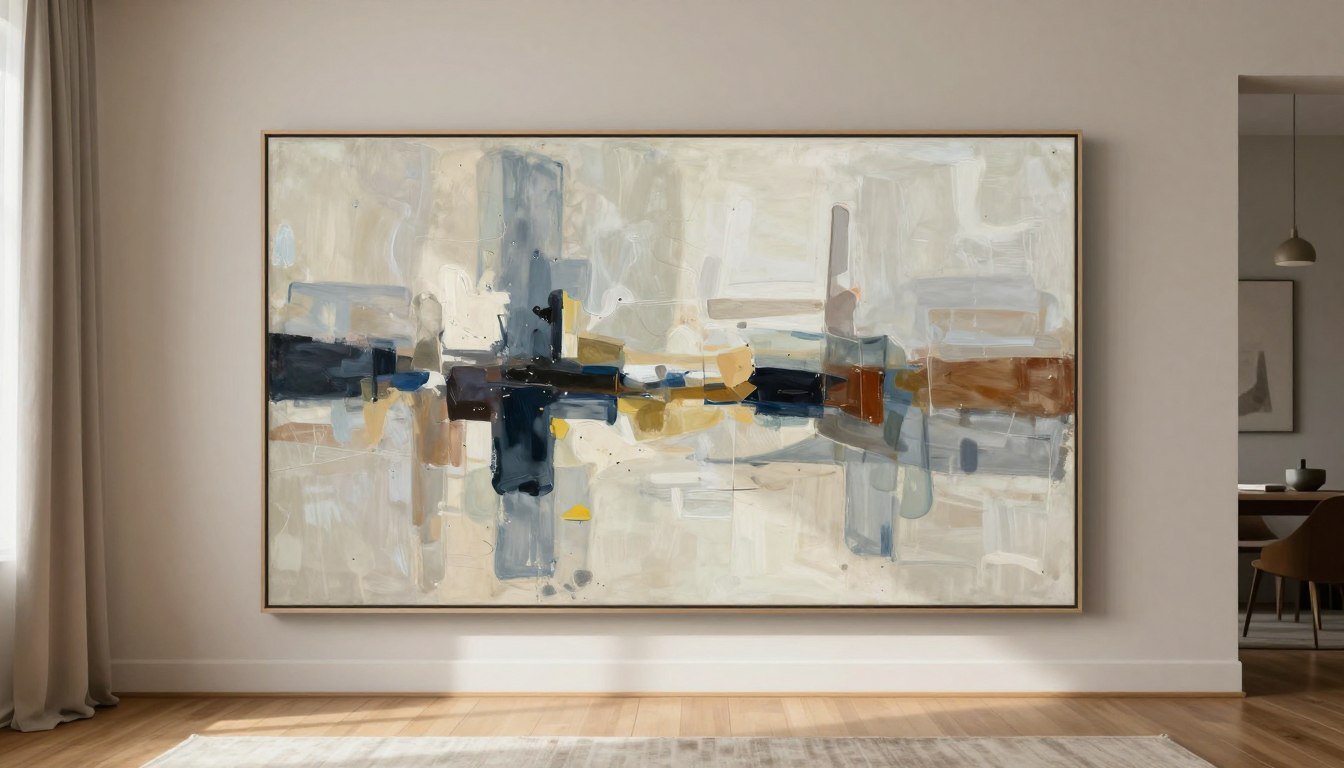
How to Choose Between an Original Painting, a Canvas Print, and a Sculpture for Your Space
Are you drawn to the texture of a hand-painted surface, the accessible price of a canvas print, or the presence of a sculpture that changes with every viewing angle? The right choice depends on more than the image. It also depends on your room, budget, lifestyle, and plans for the space.
Quick answer: Choose an original painting when uniqueness, visible brushstrokes, and a direct connection with the artist matter most. Choose a canvas print when you want a specific image, flexible sizing, and a more accessible price. Choose a sculpture when you have floor, shelf, or plinth space and want art with depth, shadow, and multiple viewing angles.
In this article:
- Original painting vs canvas print: the essential difference
- What makes an original painting different?
- When is a canvas print the right choice?
- Why choose a sculpture for your home?
- Price, budget, and accessibility
- Texture, craftsmanship, and visual impact
- Durability, care, and installation
- Room, scale, light, and layout
- Value, collecting, and resale considerations
- A practical decision framework
- Key takeaways and conclusion
- Frequently Asked Questions
Original painting vs canvas print: the essential difference

The central difference is how the image becomes an object. An original painting is a one-of-a-kind work made by an artist. A canvas print reproduces an image on canvas using professional inkjet printing. A sculpture is built in three dimensions, so it occupies physical space rather than only wall space.
None of these options is automatically better. An original may offer stronger emotional and collecting value, while a print may offer easier access and a wider price range. A sculpture may create the most dramatic physical presence, but it also requires more attention to placement, weight, and viewing angles.
How successful comparison pages guide readers toward action
The ranking pages in this niche appear to focus on education first. That approach matches the search intent. Readers are not yet asking only for a product; they are asking which format will suit their home and budget.
For this reason, the strongest CTA should appear after a useful comparison. A phrase such as “browse available original paintings” feels more relevant than a generic “shop now.” It connects the next action to the question the reader has just answered.

What makes an original painting different?
Uniqueness and visible human work
An original painting contains the artist’s actual paint, marks, revisions, and surface decisions. Depending on the medium, you may see raised brushstrokes, thin washes, knife marks, or areas where color shifts across the surface. These details can make the work feel alive when viewed from close range.
Buying an original also means owning a singular piece. The image may be documented or photographed, but the physical object is not one of many identical prints. This quality often matters to collectors and to buyers who want a strong personal connection with an artist.
Best reasons to choose an original
- You want a one-of-a-kind piece.
- You enjoy visible texture and hand-applied paint.
- You want to support an artist directly.
- You may build a collection over time.
- You value the story behind the work as much as the image.
Original paintings vary greatly in price. Size, materials, artist experience, subject, and demand all affect the range. A smaller work from an emerging artist may be more accessible than a large painting from an established name. For a direct example, view Amber Horizon, an orange and black abstract original painting.

When is a canvas print the right choice?
Accessible art with flexible presentation
A canvas print begins with an image that is transferred to canvas with archival or professional-grade inks. The canvas is then stretched over bars or mounted, depending on the product. It can offer the visual warmth of canvas without the price or singularity of an original painting.
Print technology has improved considerably. A quality print can show fine color transitions and sharp detail. Still, it will not reproduce every physical feature of the original paint surface. A printed image may look textured, but the texture is usually the weave of the canvas rather than actual ridges of paint.
Good reasons to choose a print
- You want a lower entry price.
- You need a certain size or orientation.
- You like a particular image that is not available as an original.
- You are furnishing a rental, first home, office, or guest room.
- You want to coordinate several prints across a larger wall.
A canvas print can also be easier to replace or reorder than an original. The key is to review the image quality, canvas weight, stretcher construction, ink type, and finishing method. Monochrome Reverie offers an example of a black-and-white canvas print designed for a restrained interior.

Would a distinctive original give your room the character you want?
Explore one-of-a-kind work by considering color, scale, and the feeling you want the piece to create.
Browse Original Paintings for SaleWhy choose a sculpture for your home?
Art that changes with light and movement
A sculpture adds height, depth, and shadow in a way a wall-based piece cannot. Its appearance may change as you walk around it. Light can reveal a new edge, surface, or proportion during the day.
Sculptures work well in entryways, bookcases, consoles, pedestals, living rooms, and quiet corners. They can also fill an area where a wall is too narrow or where a painting would compete with architectural details.
Before buying, check the sculpture’s weight, base, materials, and stability. A fragile work may need a protected location. A large sculpture may need clear floor space and a safe route through the home. A smaller work can create a refined focal point on a shelf or console.
View Seated Figure Sculpture — Quiet Retreat as an example of a three-dimensional piece intended to bring a calm, human presence into a home.

Choose sculpture when you want:
- A focal point that can be viewed from several sides.
- Art for floor, shelf, console, or pedestal space.
- More visible shadow and physical depth.
- A contrast to flat wall art.
- A strong object for an entryway or conversation area.
Price, budget, and accessibility
Price is one of the clearest differences between an original painting, a canvas print, and a sculpture. However, no fixed price hierarchy applies to every artist or material. A large limited print may cost more than a small original. A finely made sculpture may cost more than both.
| Medium | Typical budget factors | Best value for | Questions to ask |
|---|---|---|---|
| Original painting | Artist, size, materials, provenance, and demand | Uniqueness and direct artist connection | Is the work signed, documented, and ready to hang? |
| Canvas print | Size, print quality, canvas, stretcher, and framing | Accessible style and flexible scale | What inks, canvas, finish, and mounting method are used? |
| Sculpture | Materials, size, labor, edition, weight, and shipping | Depth, shadow, and three-dimensional presence | How stable is the base and how should it be cared for? |
Set a complete budget rather than looking only at the art price. Include framing, shipping, installation, lighting, and possible protective hardware. A print may be the simplest option for a new home, while an original may make sense when you are ready to buy fewer, more personal pieces.

Texture, craftsmanship, and visual impact
What you see up close
Texture affects how art feels in a room. Original paint can create ridges, gloss, matte areas, and irregular edges. Canvas prints provide the tactile weave of the fabric, but the image itself is reproduced. Sculptures provide the most obvious physical texture because their entire form has volume.
Quality depends on execution in every category. For a painting, look at the surface, edges, support, and finish. For a print, inspect color accuracy, resolution, ink quality, and how the canvas is stretched. For a sculpture, examine joins, balance, surface finishing, and the quality of the base.
Original painting strengths
- One-of-a-kind surface.
- Visible handwork and brushstrokes.
- Strong emotional and collecting appeal.
Possible limitations
- Higher price at some sizes.
- Only one image and size may be available.
- Surface may need careful handling.
Think about viewing distance. A print can look especially effective from across a room. An original may reward close inspection. A sculpture may need enough space for the eye to move around it.

Durability, care, and installation
Original paintings
Keep paintings away from strong direct sun, damp areas, radiators, and rapid temperature changes. Dust the frame lightly and avoid touching the paint surface. Older or especially valuable work may benefit from professional conservation advice.
Canvas prints
Use a soft, dry cloth on the frame or accessible surface. Avoid household sprays and excess moisture. Ask whether the print has a protective coating. Secure larger canvases properly, especially in homes with children, pets, or active traffic areas.
Sculptures
Care depends on the material. Dust-sensitive surfaces may need a soft brush. Metal, ceramic, wood, and plaster each respond differently to moisture and cleaning products. Check the artist’s instructions before applying anything to the surface.
Installation is part of the design. Wall work should be sized to the furniture below it and hung at a comfortable eye level. Sculptures need a stable, level surface and enough clearance to avoid accidental contact.

Room, scale, light, and layout
Start with the room rather than the product. Measure the wall or floor area, note the furniture width, and observe the light at different times of day. A large painting can anchor a sofa, while a group of prints can suit a hallway or stair wall. A sculpture may need open space so its outline remains clear.
Match visual weight to the room. A dark, textured painting may balance substantial furniture. A light canvas print may suit a smaller room. A sculpture can soften a hard architectural corner or add contrast to a room filled with rectangular forms.

Value, collecting, and resale considerations
Original paintings can carry collecting value because they are unique and connected to a particular artist. Some works may gain demand over time, but appreciation is never guaranteed. Buying art as a guaranteed investment is risky. Choose work you would enjoy owning even if its resale price never changes.
Canvas prints generally serve a decorating purpose. Their value is often tied to image quality, presentation, scarcity if they are editions, and the reputation of the artist or publisher. A standard reproduction usually does not have the same scarcity as an original.
Sculpture value depends on the artist, edition size, materials, condition, documentation, and market interest. Shipping and storage can also affect resale practicality. Keep receipts, certificates, edition details, and care information for any work you may later sell or insure.
The most reliable form of value is personal value. Art can make a room feel finished, mark a life stage, or remind you of a place or person. Those benefits matter even when they cannot be measured in dollars.

Could a sculpture solve the space your walls cannot?
Browse sculptural work by size, placement, and mood before choosing the piece that fits your room.
Explore Modern Sculptures for HomeA practical decision framework
Use these five questions before you buy
- What space do you have? Choose wall art for clear wall space and sculpture for an open shelf, console, floor area, or plinth.
- What should the art do? Select a focal point, a quiet supporting layer, a conversation piece, or a finishing detail.
- How important is uniqueness? Choose an original when singularity matters. Choose a print when the image and flexibility matter more.
- How much care can you provide? Consider sunlight, moisture, traffic, pets, children, and the amount of maintenance you prefer.
- What is your complete budget? Include framing, installation, delivery, lighting, and protective measures.
Final selection checklist
- Measure the available wall, shelf, or floor area.
- Compare the artwork’s dimensions with nearby furniture.
- Review materials, finish, weight, and care instructions.
- Check whether the piece arrives framed, stretched, mounted, or ready to display.
- Look at the work in relation to your existing color palette.
- Buy the piece you will enjoy living with, not only the piece that appears easiest to resell.
If you remain undecided, create a short list of three options: one original painting, one canvas print, and one sculpture. Place their dimensions on the wall or floor with painter’s tape. Notice which scale feels natural. Then consider which surface and story you would still enjoy after the first impression fades.

Keep Reading
- Art for Gifts: A Thoughtful Buying Guide
- Where to Buy Modern Sculptures for Contemporary Home Interiors?
- DIY Art for Home Decor: A Designer-Look Styling Guide
Key takeaways and conclusion
- An original painting offers singularity, visible handwork, and a direct connection to the artist.
- A canvas print offers accessibility, flexible sizing, and a polished way to bring an image into the home.
- A sculpture adds depth, shadow, and a changing experience across different viewing angles.
- Price, care, installation, scale, and lighting should all be part of the decision.
- Resale value is possible but never certain, so personal enjoyment should lead the purchase.
The best answer to the original painting vs canvas print question depends on what you want the artwork to accomplish. An original may be right when you want a singular object with visible texture. A canvas print may be right when you want a specific look at an accessible price. A sculpture may be the strongest choice when your room needs depth, height, or a new point of view.
Take measurements, review the materials, and imagine the piece in your daily routine. When the art suits both the room and your way of living, the decision becomes clearer.

Frequently Asked Questions
Is an original painting always better than a canvas print?
No. An original painting is unique and often offers more physical texture, but a canvas print may better suit a limited budget, a rental, or a room that needs a precise size. The right option depends on your priorities.
Do canvas prints look cheap?
Not necessarily. Print resolution, ink quality, canvas weight, stretching, finishing, and framing all affect the result. A well-made canvas print can look polished and intentional in a carefully designed room.
Can an original painting be a good investment?
It can have collecting and resale value, but appreciation is not guaranteed. Artist reputation, condition, documentation, demand, and market timing all matter. Buy art you would enjoy owning without relying on a future profit.
Where should I place a sculpture?
Choose a stable location with enough clearance to view the work safely. Consoles, shelves, pedestals, entryways, and open floor areas can work well. Avoid unstable surfaces, damp areas, and locations with frequent accidental contact.
How do I choose the right art size?
Measure the wall or floor area and compare the artwork with nearby furniture. Use removable tape to test the dimensions. Leave enough breathing room so the piece feels intentional rather than crowded.
What should I check before buying art online?
Review exact dimensions, materials, finish, frame or mounting details, care instructions, shipping terms, return policies, and whether the work is original, limited, or an open reproduction.
About the Author — Chiara Rossetti is the founder of Rossetti Art, a canvas print and original art brand. She writes about interior design, wall art styling, and the art of making a home feel alive.


Leave a comment
This site is protected by hCaptcha and the hCaptcha Privacy Policy and Terms of Service apply.