Modern Sculpture UK: How to Choose, Place, and Style a Statement Piece
A modern sculpture works differently to a canvas print or painting. It has weight, it casts a shadow, and it reads differently depending on where you're standing and what time of day it is. For UK homes — many with period proportions, compact hallways, or a single strong console table — one well-placed sculpture can do more for a room than an entire wall of framed art.
This guide covers what actually matters when choosing modern sculpture for a British interior: placement, material, scale, and how to style it once it's in the room.
Quick Answer
Modern sculpture works best in the UK as a single, uncluttered focal point — an entryway console, a living room side table, or a low plinth — rather than grouped with other objects. Choose 20–50cm for tabletop pieces and 50cm+ for floor pieces, in stainless steel or resin depending on whether the room needs weight or lightness.

Why a Modern Sculpture Changes a Room
A sculpture is the only art form in the home that changes as you move around it. Morning light hits a stainless steel piece differently to evening lamplight; walking past a console table gives you a different silhouette each time. That's a dimension flat wall art simply can't offer — and it's why a single confident sculpture often reads as more considered than a whole gallery wall. New to the medium? Our complete guide to three-dimensional art covers the fundamentals before you start shopping.
Where to Place a Sculpture in a British Home
Entryways are the strongest placement in most UK homes — even a narrow Victorian or Edwardian hallway. It's the first thing a guest sees, and a three-dimensional piece sets the tone in a way a print can't. A console table or a slim shelf near the door works, as long as the scale stays in proportion — a large piece in a narrow hallway creates visual stress rather than impact.
Living rooms suit sculpture on coffee tables, side consoles, or floating shelves. Give it room to breathe: a piece surrounded by too many other objects loses its power. One considered sculpture on a clear surface does more than a shelf crowded with ornaments — a lesson that applies especially well to the smaller proportions of many British living rooms and flats.
Dining tables can take smaller sculptural centrepieces. Material matters more than subject here — bronze-effect steel or matte resin suits a table better than a highly polished piece competing with glassware.

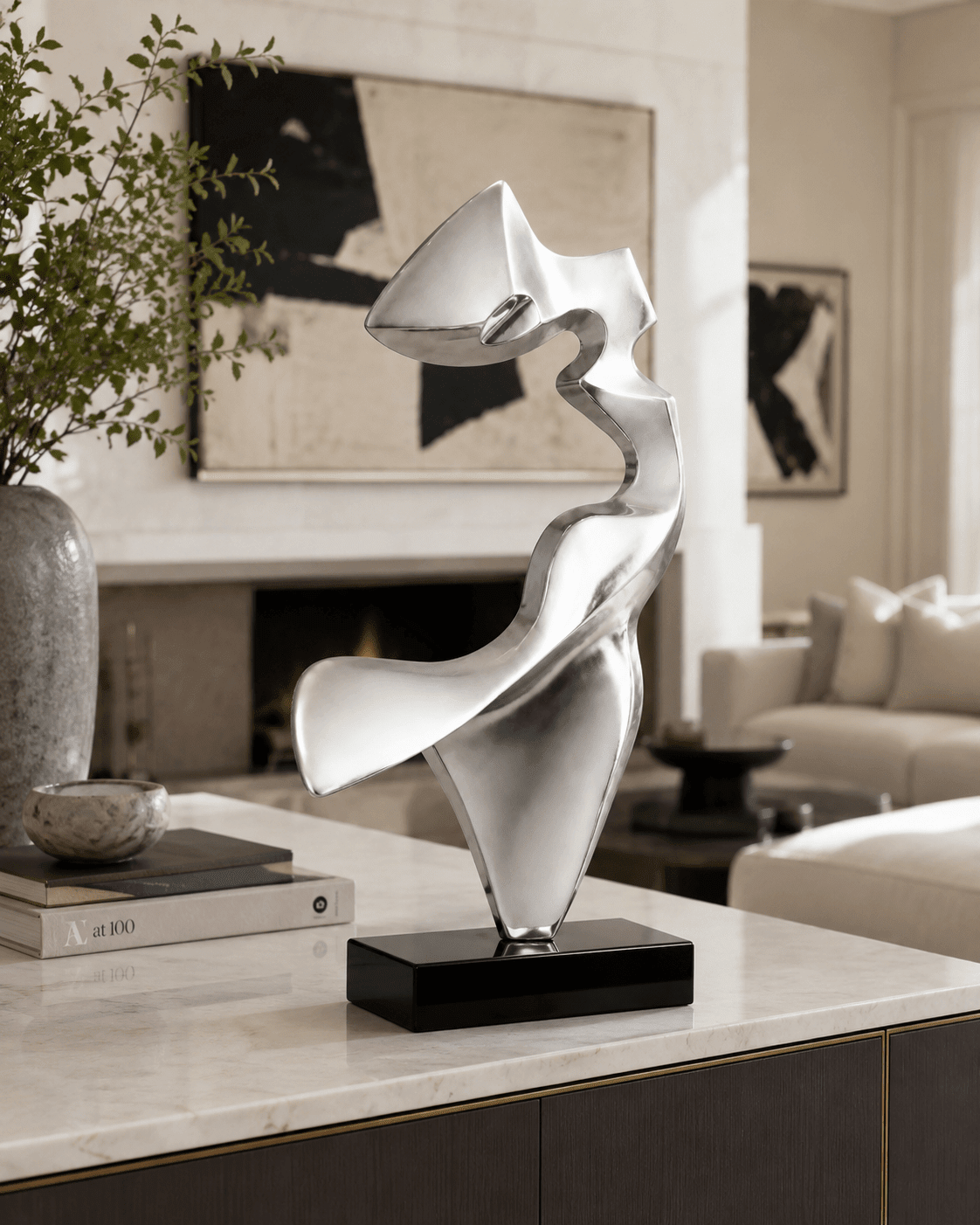
"Silver Flux" — a hand-formed stainless steel sculpture, one of Rossetti Art's best sellers. View the piece →
Materials and Styles to Choose From
Abstract sculpture suits modern, minimalist, and contemporary UK interiors best. Figurative pieces work across a wider range of styles, but need care in a very contemporary space, where an overly literal subject can feel decorative rather than artistic.
Rossetti Art sculptures are hand-formed in stainless steel, cast resin, or fiberglass, each produced as a limited or one-of-a-kind edition rather than a mass-produced casting. Stainless steel adds weight and permanence — it suits period UK homes with strong architectural detail. Lighter resin and fiberglass pieces feel more casual, better suited to new-build flats and contemporary interiors.
If your interior already leans neutral and textured — beige, taupe, warm sand, tones that dominate British interiors right now — a polished stainless steel piece adds contrast without adding colour, often exactly what a calm room needs.

"Fluid Grace" — a hand-formed fiberglass sculpture with a softer, more casual presence. View the piece →
🏠 FREE GUIDE
Download our free Room-by-Room Art Guide — the exact sizes, styles, and placement rules for every room in your home.
Download Free →What Size Sculpture Do You Need?
For a shelf or console table, 20–50cm (about 8–20 inches) works best in most UK rooms. For floor placement or a dedicated plinth, pieces starting around 50cm create the presence needed to read as art rather than an ornament.
In compact British flats, resist the smallest option out of caution — a confident 30cm piece on a console usually reads better than a 15cm piece that gets lost against the wall behind it.

"Golden Orbit" — a tabletop stainless steel sculpture, ideal scale for a console or shelf. View the piece →
Sculpture, Wall Art, or Both?
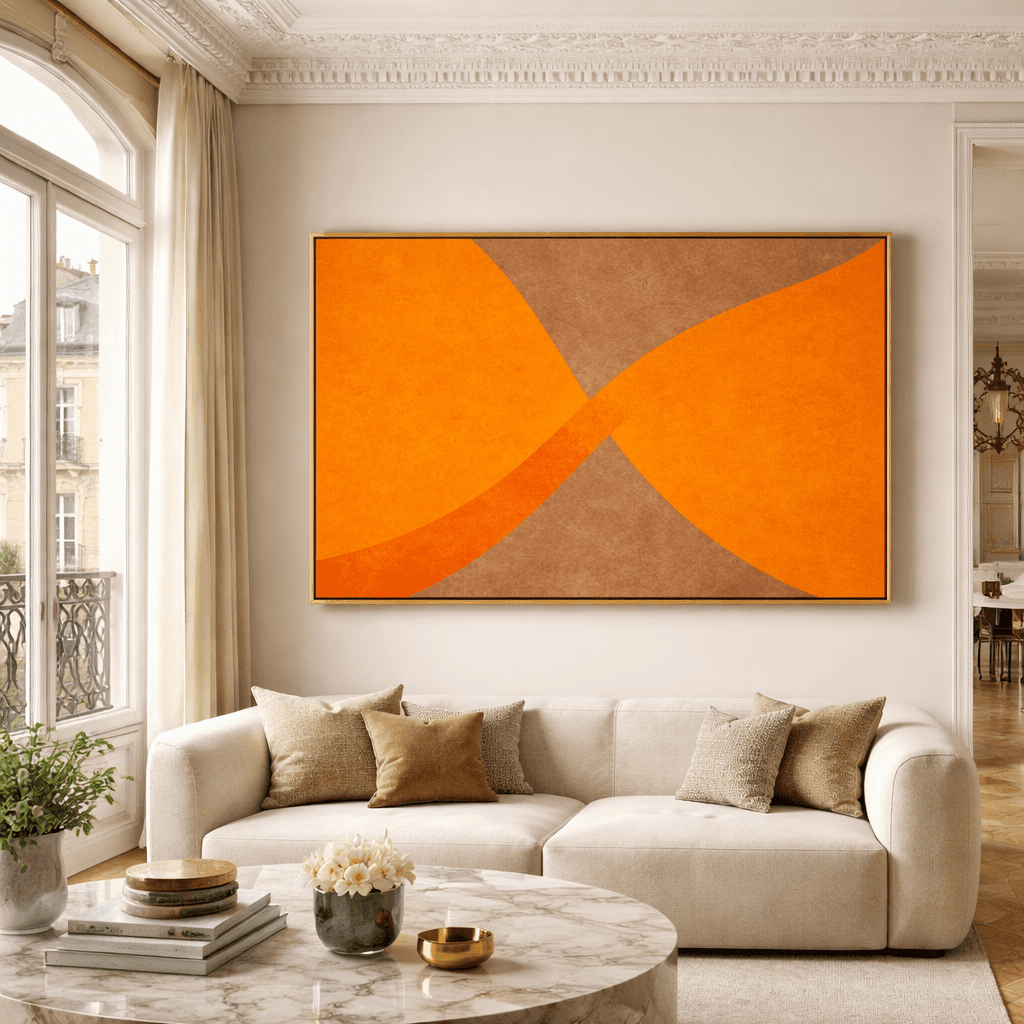
They're not competing purchases. Wall art fills a vertical plane and sets the tone of a room from a distance; sculpture works at eye level and up close, on a surface you actually use. A living room with one strong canvas print above the sofa and one sculpture on a side table reads as considered, not overdone — the two forms work at different heights and different distances, so they don't compete.
Browse our full modern sculptures collection, or pair a piece with our canvas prints for a complete room.
Frequently Asked Questions
What size sculpture should I buy for a UK home?
For a console or shelf, choose 20–50cm. For floor placement, start around 50cm. In smaller British flats, a confident mid-size piece (around 30cm) usually works better than the smallest option available.
What materials are Rossetti Art sculptures made from?
Stainless steel, cast resin, or fiberglass — each hand-formed and produced as a limited or one-of-a-kind edition rather than a mass-produced casting.
Where's the best place for a sculpture in a small British home?
An entryway console or a single clear shelf works best in compact flats and period terraces — give the piece its own space rather than grouping it with other objects.
Does Rossetti Art ship sculptures across the UK?
Yes — free delivery on every sculpture to UK addresses, with typical delivery in 5–7 business days, packed in reinforced protective packaging.
Should I buy a sculpture or a canvas print?
They serve different purposes rather than replacing each other. Canvas prints anchor a wall from a distance; sculpture works at eye level on a surface. Many rooms benefit from one of each rather than choosing between them.
Explore the full Modern Sculptures collection from Rossetti Art — hand-formed, limited edition, free UK delivery.
Keep Reading
About the Author — Chiara Rossetti is the founder of Rossetti Art, a canvas print and original art brand. She writes about interior design, wall art styling, and the art of making a home feel alive.

About the Author
Chiara Rossetti
Chiara Rossetti is the founder of Rossetti Art, a canvas print and original art brand. She writes about interior design, wall art styling, and the art of making a home feel alive.


Leave a comment
This site is protected by hCaptcha and the hCaptcha Privacy Policy and Terms of Service apply.