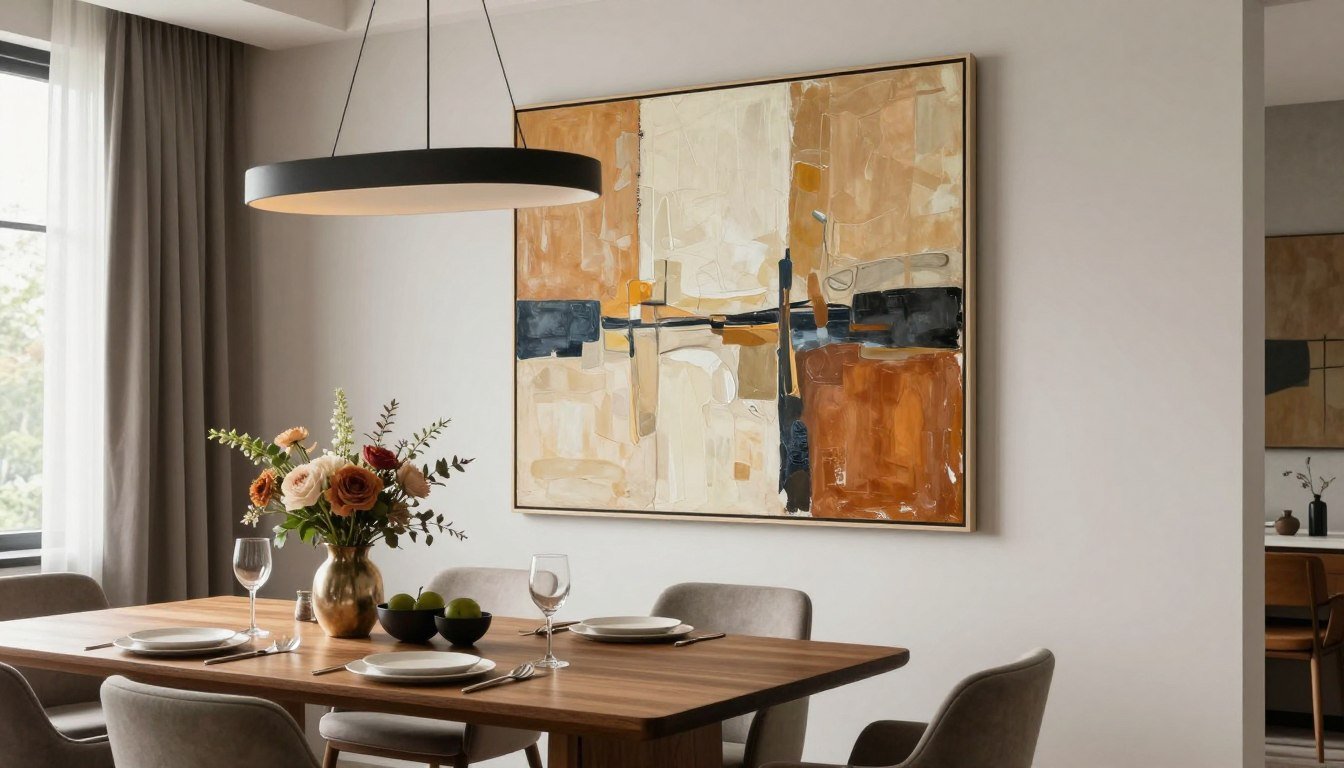

Your dining room walls hold untapped potential. The right large picture can transform a simple eating space into a gallery-worthy room where meals become memorable experiences. Whether you gather for weeknight dinners or host elaborate celebrations, the art on your walls sets the tone for every conversation and creates lasting impressions on your guests.
Large pictures for dining room walls serve a purpose beyond decoration. They anchor the space visually, draw the eye upward to make ceilings feel higher, and inject personality into a room that often gets overlooked during home design. The dining room offers a unique canvas because it balances formal and casual moments throughout your day.
Choosing the right large-scale artwork requires understanding proportion, style compatibility, and how art interacts with your dining furniture and lighting. This comprehensive guide walks you through every consideration, from measuring your wall space correctly to selecting colors that enhance your dining experience. You'll discover which art styles work best in dining environments, how to create stunning gallery arrangements, and where to find museum-quality pieces that match your vision.
Curator's Selection: Statement Pieces for Your Dining Room
Before exploring the technical aspects of selection, let's look at three exceptional pieces that exemplify how large pictures can transform dining room walls. These curated selections represent different aesthetic approaches while meeting the crucial requirements of scale, visual impact, and dining room compatibility.

Botanical Elegance Print
This oversized botanical canvas brings the tranquility of nature indoors. The rich green tones create a fresh atmosphere that complements food presentation beautifully. Perfect for dining rooms that connect to outdoor spaces or kitchens with natural elements.

Modern Abstract Geometry
Geometric abstraction adds sophistication without overwhelming conversation. The interplay of gold and deep navy creates visual interest that catches light beautifully during dinner hours. This piece works exceptionally well in contemporary and transitional dining spaces.

Classic Black & White Photography
Timeless black and white photography brings gallery sophistication to your dining area. The monochromatic palette ensures it complements any décor changes over time while maintaining strong visual presence. Ideal for formal dining rooms and spaces with statement lighting fixtures.
Each of these pieces demonstrates key principles we'll explore throughout this guide. They're sized appropriately for dining room scale, feature subjects that enhance rather than distract from dining experiences, and offer the visual weight necessary to anchor a room designed for gathering.
Why Large Pictures Make the Biggest Impact in Dining Rooms

Size matters significantly when selecting art for dining room walls. A piece that looks substantial in a gallery or store often shrinks visually once installed in your home, particularly in dining rooms where furniture and tables occupy substantial floor space. Large pictures command attention and create the focal point your dining room needs.
The psychology of space perception explains why undersized art disappoints. When artwork is too small for the wall, it creates visual tension rather than harmony. Your eye searches for something more substantial to anchor on, leaving the room feeling incomplete. Large pictures for dining room walls eliminate this problem by providing appropriate scale that balances your dining table, chairs, and other furnishings.
Large-scale art also influences how your guests experience the dining room. A substantial piece creates conversation topics and sets the mood before anyone sits down to eat. Whether you choose bold abstract compositions or serene botanical prints, the size ensures your selection makes a statement rather than fading into the background.
The Architectural Advantage of Large-Scale Art
Large pictures transform the perceived architecture of your dining room. They draw the eye upward, making standard eight-foot ceilings feel taller. In rooms with higher ceilings, substantial art prevents the upper wall space from feeling vacant and cold. The vertical or horizontal emphasis you choose can even alter the apparent proportions of the room itself.

Color distribution across a large canvas affects your room's atmosphere differently than small pieces. A large picture with warm tones can make a north-facing dining room feel cozier. Cool tones across a big canvas create a sophisticated, gallery-like ambiance. The expansive color field influences mood more effectively than scattered smaller pieces ever could.
Investment Value and Longevity
Quality large pictures for dining room walls represent a long-term design investment. Unlike trendy accessories that cycle in and out of style, substantial art pieces have staying power. A well-chosen large canvas from established artists like Chiara Rossetti maintains its visual appeal through décor updates and furniture changes.
The durability factor matters too. Museum-quality large prints on canvas withstand the unique challenges of dining room environments. Temperature fluctuations from nearby kitchens, humidity from cooking, and exposure to varied lighting conditions all affect art differently than in climate-controlled living spaces. Investing in properly produced large-format pieces ensures your wall art ages gracefully alongside your home.
How to Measure Your Dining Room Walls for Large Pictures
Accurate measurement prevents the disappointment of receiving artwork that's too small or overwhelmingly large for your space. The process involves more than pulling out a tape measure. You need to consider visual weight, furniture relationships, and architectural features that affect how your eye perceives size.
The Two-Thirds Rule for Dining Room Art

Interior designers rely on the two-thirds rule as a starting point for sizing wall art above dining tables. Measure the width of your dining table and multiply by 0.67. This calculation gives you the ideal minimum width for your large picture. For a standard 60-inch table, your art should be at least 40 inches wide to create visual balance.

"Coastal Silence Horizon" — neutral abstract horizontal canvas print — perfect for large dining room walls. View the piece →
The rule adapts for different table shapes. Rectangular tables following the formula above create pleasing proportions. Round tables require measuring the diameter and applying the same two-thirds calculation. For oval tables, measure the longest dimension to determine your artwork's ideal width.
Height considerations work differently. Measure from the top of your dining table to the ceiling, then plan for your art to occupy roughly one-half to two-thirds of that vertical space. Leave approximately 8-12 inches between the top of your table or buffet and the bottom of your artwork. This breathing room prevents the piece from appearing to sit directly on the furniture.
Accounting for Architectural Features
Doors, windows, and built-ins complicate wall measurements. Map out these features before shopping for large pictures for dining room walls. A beautiful piece that blocks a light switch or hangs too close to a door frame creates practical problems that undermine its aesthetic value.

Windows present special challenges. Art positioned on a wall with windows should relate to the window proportions. Consider the combined width of your windows and the wall space between them as your total canvas. Your large picture should feel proportional to this combined measurement rather than competing with the windows for attention.
Lighting fixtures, particularly wall sconces, dictate placement options. Measure the center point between sconces and plan for your artwork's center to align with that point. This creates symmetry that pleases the eye. If adding new sconces or updating existing ones, coordinate their placement with your intended art dimensions.
Room Proportions and Viewing Distance
The size of your dining room itself affects appropriate art scale. In smaller dining areas, a single large piece often works better than multiple smaller pieces that fragment the limited wall space. Measure your longest uninterrupted wall and consider using 60-75% of its width for maximum impact.
Viewing distance matters more than many realize. In a dining room where people typically sit 6-10 feet from the main wall, you can display larger pieces with more intricate details than in an entryway where viewers stand closer. The comfortable viewing distance in your specific room should influence both size and the detail level of your chosen artwork.
Consider creating a mockup before purchasing. Tape out the dimensions of your proposed large picture directly on the wall using painter's tape. Live with this mockup for a few days, sitting at your dining table during different times of day. This practice reveals whether the size truly works in your specific space and lighting conditions.
Choosing the Right Art Style for Your Dining Room
The art style you select influences how people feel in your dining room more than you might expect. Different styles create distinct atmospheres, from energizing and conversational to calm and contemplative. Understanding how various artistic approaches affect dining experiences helps you make selections that align with your goals for the space.

Abstract and Geometric Art for Modern Dining Spaces
Abstract compositions bring energy and sophistication to contemporary dining rooms without the distraction of recognizable imagery. The lack of literal subject matter means guests interpret the work individually, creating natural conversation starters. Geometric patterns add structure and rhythm to walls, complementing the clean lines of modern dining furniture.
Color plays a dominant role in abstract pieces. Bold, saturated colors energize the space and stimulate appetite and conversation. Muted, tonal abstracts create subtle sophistication for more formal dining experiences. The abstract canvas print collection offers both approaches, allowing you to match your dining room's mood perfectly.

Scale works particularly well with abstraction. Large format abstract pieces can be bold without overwhelming because the eye doesn't work to identify specific objects. The visual flow across a big canvas creates movement that enlivens the space without cluttering it with detail.
Botanical and Nature-Inspired Prints
Botanical artwork creates an organic connection in dining rooms that feels inherently appropriate. We associate plants and nature with growth, nourishment, and life – concepts that align naturally with the purpose of dining spaces. Large botanical prints bring the outdoors in while maintaining the sophistication expected in more formal rooms.
The color palette of botanical art typically includes greens, which color psychology tells us promote feelings of balance and calm. These natural tones complement food presentation beautifully, enhancing rather than competing with the visual appeal of plated meals. Explore botanical wall art prints that range from vintage botanical illustrations to contemporary leaf studies.

Botanical subjects work across design styles. Detailed vintage botanical illustrations suit traditional and transitional spaces. Bold, graphic leaf prints complement modern and minimalist interiors. Watercolor botanicals add softness to farmhouse and cottage-style dining rooms. The versatility makes botanical art a reliable choice when you're uncertain about style direction.
Portrait and Figurative Art
Portrait art in dining rooms creates an intimate, gallery-like atmosphere. Historical portraits add gravitas to traditional spaces while contemporary portraits bring artistic edge to modern rooms. The human presence in figurative work makes dining rooms feel inhabited and personal even when empty.
Consider the energy of figurative pieces carefully. Portraits with direct eye contact create engagement that some find welcoming and others find intense in a dining setting. Profile views and turned faces offer human presence without the directness of confrontational gazes. The portrait canvas collection includes various approaches to suit different comfort levels.

Cultural portraits and figurative works from specific artistic movements make strong statements. A large line-art portrait adds graphic sophistication. Impressionist-style figures create softer, more romantic dining atmospheres. Match the artistic treatment to your overall design aesthetic for cohesion.
Black and White Photography and Line Art
Monochromatic art offers flexibility that color pieces cannot match. Black and white large pictures for dining room walls work with any color scheme and remain relevant through décor changes and furniture updates. The timelessness of black and white photography or line drawings provides long-term value.
The graphic nature of black and white creates high impact without color distraction. Strong contrast draws the eye and provides visual weight that anchors a room effectively. Whether you choose architectural photography, landscape imagery, or abstract line art, the monochromatic palette ensures sophistication.

Line art represents a growing trend in dining room décor. The simplicity of continuous line drawings adds artistic interest without visual heaviness. These pieces work particularly well in smaller dining rooms where color-saturated large art might overwhelm. Browse line art canvas prints for minimalist sophistication.
Black and white art also offers practical advantages in dining rooms adjacent to kitchens. The neutral palette shows less obvious fading from kitchen heat and sunlight exposure than vibrant color pieces might over time.
Find Your Perfect Dining Room Art Style
Explore curated collections organized by aesthetic to discover large pictures that match your dining room's design vision. From bold contemporary abstracts to timeless botanical elegance, find pieces that transform your space into an inspiring gathering place.
Color Selection Strategies for Dining Room Wall Art
Color influences dining experiences more powerfully than any other single design element. The hues in your large pictures for dining room walls affect appetite, conversation energy, and how long guests want to linger at your table. Strategic color selection enhances your dining room's function while expressing your personal style.

Warm Colors for Energy and Appetite
Warm tones – reds, oranges, yellows, and warm browns – stimulate appetite and create energetic dining atmospheres. Restaurants use warm color schemes intentionally because they encourage people to eat more and engage in lively conversation. In home dining rooms, warm-toned art creates the same welcoming, social environment.

"Soft Rain Lines" — beige abstract minimalist canvas print with a warm, calming palette. View the piece →
Red artwork makes particularly bold statements. Deep burgundies and wine reds add sophistication appropriate for formal dining rooms. Bright scarlet and cherry reds energize casual dining spaces. The intensity of red means a little goes far – even a large canvas with red as an accent color rather than the dominant hue influences the room's warmth significantly.

Orange and terracotta tones provide warmth without red's intensity. These colors work beautifully in dining rooms with wood tones, creating cohesive organic palettes. Earth-toned large pictures for dining room walls suit both rustic and contemporary spaces when the specific shade and artistic treatment match the overall design aesthetic.
Golden yellows and amber tones bring optimism and warmth while remaining more neutral than reds or oranges. Yellow-toned art reflects light beautifully, making dining rooms feel brighter and more spacious. This quality proves valuable in dining rooms with limited natural light or northern exposures.
Cool Colors for Sophistication and Calm
Cool tones – blues, greens, and purples – create sophisticated, calming dining atmospheres. These colors suit formal dining rooms where elegant, measured conversation takes precedence over boisterous energy. Cool-toned art also works well in open-concept homes where the dining area flows into living spaces, providing visual calm in busy environments.
Blue art in dining rooms sparks debate among designers. Some avoid blue because it's considered appetite-suppressing. Others embrace blue's sophistication, particularly in formal spaces where the goal is elegant ambiance rather than encouraging hearty appetites. Deep navy and teal blues work better than bright blues, adding richness without the cold quality that concerns critics.

Green occupies a special position in dining room color theory. As the color most present in nature, green feels inherently appropriate in spaces devoted to nourishment. Green art doesn't suppress appetite like blue but creates the calm sophistication of cool tones. From sage to emerald, green works across design styles and complements virtually all wood furniture tones.
Purple and violet artwork adds creativity and luxury to dining spaces. Deep eggplant purples create drama appropriate for formal evening dining. Lavender and lilac tones bring softness to dining rooms designed for daytime use. Purple's relative rarity in décor makes it a distinctive choice that ensures your dining room stands out.
Neutral and Monochromatic Palettes
Neutral art – blacks, whites, grays, and beiges – offers maximum flexibility. These pieces work with any color scheme and remain relevant through multiple rounds of redecorating. In dining rooms where you change linens, dishes, and accessories seasonally, neutral large pictures provide a consistent sophisticated backdrop.
Black and white photography or prints create gallery aesthetics in dining rooms. The high contrast provides visual impact without color commitment. This approach works particularly well when your dining room opens to other spaces with different color schemes. The black and white canvas collection offers sophisticated options for neutral palettes.

Beige and cream-toned art creates softness in dining rooms without the coldness sometimes associated with gray or black and white pieces. Sepia-toned photographs and artwork with warm neutral palettes complement traditional furniture and create timeless appeal. These pieces work especially well in dining rooms with warm wood tones and traditional architecture.
Matching Art Colors to Existing Décor
Coordination between your large pictures and existing dining room colors requires strategy. The art doesn't need to match your wall color or furniture exactly. In fact, too much matching creates monotony. Instead, pull one or two accent colors from your art and repeat them in smaller elements like chair cushions, table runners, or decorative accessories.
Consider your room's undertones. Warm-toned rooms (with cream walls, golden wood, amber lighting) pair best with art that includes warm undertones even if the dominant color is cool. Cool-toned rooms (with gray walls, dark wood, silver fixtures) harmonize with art featuring cool undertones regardless of the primary color.
The 60-30-10 rule from interior design applies to art selection. Your wall color or wallpaper typically provides the 60% dominant color. Furniture and larger accessories represent the 30% secondary color. Your large dining room art and other accent pieces fill the final 10%, providing the color punch that makes the space memorable.
Lighting significantly affects how colors in your artwork appear. Test samples or view art images on your phone in your actual dining room at different times of day before committing to large purchases. Morning light, afternoon sun, and evening artificial light all change color appearance dramatically. What looks perfect in store lighting might appear completely different in your home's specific lighting conditions.
Proper Placement and Hanging Techniques for Large Art
Even the most beautiful large pictures for dining room walls fail to impress when hung incorrectly. Proper placement requires understanding visual relationships, practical hanging methods, and how height affects both aesthetics and function. Getting the placement right the first time saves wall damage and ensures your art looks its best.

The 57-Inch Rule and Dining Room Adaptations
Art galleries hang pieces with the center at 57 inches from the floor – average human eye height. This standard works well for hallways and living rooms where people stand while viewing art. Dining rooms require adaptation because people sit while viewing your large pictures most of the time.
Pro tip
Not sure how a large print will look in your dining room? Use our Live Preview tool — visualise any piece at scale on your wall, or upload a photo of your actual room. No guessing, no measuring stress. Available on every product page above the Add to Cart button.
For art above dining tables or buffets, measure 8-10 inches above the furniture's top surface to the bottom of your artwork. This spacing prevents the piece from appearing to rest on the furniture while maintaining visual connection. For a standard dining table at 30 inches high, your art's bottom edge should sit at approximately 38-40 inches from the floor.
Ceiling height influences ideal placement. In rooms with 8-foot ceilings, center your large artwork approximately 54-56 inches from the floor to account for the sitting viewpoint. In rooms with higher ceilings, you can move up to the standard 57-inch center point or even slightly higher to balance the vertical space above the piece.
Creating Gallery Walls with Large Focal Pieces
Gallery walls in dining rooms require different strategies than in living spaces. The presence of the dining table means your gallery arrangement should remain balanced but not perfectly symmetrical – too much symmetry combined with the symmetrical dining table creates rigidity rather than interest.

Start with your largest piece as the anchor, positioned slightly off-center. This creates visual interest while providing a clear focal point. Arrange smaller pieces around it, maintaining consistent spacing between frames. For dining rooms, 2-3 inches between pieces prevents the wall from looking cluttered while keeping the arrangement cohesive.
Limit gallery walls to one major wall in dining rooms. Unlike living rooms where gallery walls on multiple surfaces create intimacy, dining rooms need visual breathing room. Focus your gallery on the wall most visible from the dining table, keeping other walls simpler to prevent visual competition.
Consider canvas print sets designed to work together rather than mixing multiple unrelated pieces. Coordinated sets provide gallery impact with built-in cohesion, eliminating the guesswork of matching individual pieces yourself.
Hardware and Hanging Methods for Large Canvases
Large pictures require appropriate hanging hardware to stay secure. Canvas prints typically arrive with hanging wire or D-rings pre-installed. For pieces over 30 pounds, upgrade to heavy-duty wall anchors or hang directly into wall studs using a stud finder. The weight of large art makes proper anchoring essential for safety.
Wall type matters significantly. Drywall requires anchors rated for your artwork's weight plus a safety margin. Plaster walls need specialized anchors designed for plaster's particular properties. Brick or concrete walls require masonry anchors and appropriate drill bits. Never attempt to hang large, heavy artwork with basic picture hooks alone.

Leveling tools prevent the crooked-art problem that plagues many installations. Use a quality level rather than eyeballing placement. For very large pieces, a laser level marks perfectly straight lines for multi-point hanging systems. Mark your hanging points lightly with pencil first, step back to verify alignment, then proceed with installation.
French cleats provide the most secure hanging method for heavy large pictures for dining room walls. These two-part systems distribute weight evenly and allow micro-adjustments after installation. While French cleats require more initial setup than wire hanging, they offer superior security and peace of mind for expensive artwork.
Lighting Considerations for Displayed Art
Proper lighting transforms good art placement into exceptional presentation. Dining rooms present unique lighting challenges because they need both ambient lighting for meals and accent lighting for art appreciation. Layer your lighting to serve both purposes effectively.
Picture lights mounted directly above or below your artwork provide focused illumination that highlights texture and color. LED picture lights generate minimal heat, protecting your canvas from damage while providing excellent color rendering. Position picture lights to eliminate glare and shadows that distract from the artwork itself.

Track lighting offers flexibility for highlighting large art while providing general illumination. Adjustable heads let you direct light precisely where needed. In dining rooms with cathedral or vaulted ceilings, track systems work better than fixed fixtures because you can adjust angles as needed.
Avoid placing large pictures for dining room walls in direct sunlight paths. UV exposure fades canvas prints over time, diminishing color vibrancy and potentially damaging the material itself. If your dining room receives strong sunlight on the main wall, consider UV-protective glazing for framed pieces or select walls with less direct exposure for canvas prints.
Dimmer switches provide essential flexibility in dining rooms. Bright lighting showcases your art during daytime and casual meals. Dimmed lighting creates ambiance for formal dinners and entertaining. Install dimmers on all dining room light circuits to control both ambient and accent lighting independently.
Professional Art Styling Techniques
Understanding the principles behind professional art placement helps you achieve designer results in your own dining room. Watch this expert guide to see how design professionals approach large-scale art installation and styling in real dining spaces.
Professional designers consider multiple factors simultaneously when selecting and placing large pictures for dining room walls. The video demonstrates spatial relationships, proportion calculations, and styling techniques you can replicate in your own space. Notice how the art interacts with furniture placement, lighting design, and architectural features.
The techniques shown apply across various design styles and room sizes. Whether you're working with a compact breakfast nook or a formal dining room, these professional strategies help you achieve balanced, sophisticated results. Pay particular attention to how the designers address common challenges like odd wall dimensions, low ceilings, and existing architectural features.
How Dining Room Art Differs from Living Room and Bedroom Choices
Each room in your home serves distinct functions that influence appropriate art choices. Understanding these differences helps you select large pictures for dining room walls that enhance the space's specific purpose rather than simply applying living room or bedroom strategies that might not translate effectively.

Dining Rooms: Stimulating Yet Sophisticated
Dining room art strikes a balance between visual interest and sophistication that differs from other spaces. The artwork should stimulate conversation and create appetite appeal without overwhelming the senses. Unlike living rooms where you might display thought-provoking or edgy pieces, dining room selections lean toward universally appealing subjects that won't disturb anyone during meals.

"Procession" — bold black and white figurative canvas print — a dramatic statement for dining rooms. View the piece →
Color vibrancy in dining rooms typically runs higher than in bedrooms but remains more controlled than in active living spaces. The goal is creating an environment that feels special and intentional without the high energy suitable for family rooms or home offices. Rich, saturated colors work well, but harsh contrasts or jarring compositions might distract from dining experiences.

Subject matter for dining rooms traditionally avoids controversial or overly personal imagery. While your bedroom or office might display personal photographs or provocative art, dining rooms benefit from more neutral subjects that appeal to diverse guests. Food imagery, botanicals, landscapes, and abstracts remain safe choices that enhance without limiting your room's flexibility.
Living Room Art: Personal Expression and Conversation
Living room wall art embraces personal expression more fully than dining room selections. This space reflects your interests, travels, and personality without the need to consider guests' meal experiences. Conversation-starting pieces work beautifully in living rooms where discussing art forms part of the entertainment.
The viewing position differs significantly between living and dining rooms. In living rooms, people view art from various positions – standing, sitting on sofas at different angles, moving through the space. This dynamic viewing means living room art can include more detail and complexity than dining room pieces, where viewers typically face the art directly from seated positions.
Scale flexibility in living rooms exceeds dining room options. You might successfully display several medium-sized pieces in a living room gallery wall, while dining rooms generally favor fewer, larger statements. The furniture arrangement in living rooms (sofas, chairs, tables scattered throughout) creates more wall space for art distribution than dining rooms where the table dominates floor space.
Explore complementary living room canvas art that coordinates with your dining room selections when the spaces adjoin. Visual flow between connected spaces creates cohesive design even when the specific pieces differ in size or subject.
Bedroom Art: Calm and Personal Sanctuary
Bedroom wall art prioritizes calmness and personal meaning over social appeal. The colors, subjects, and energy of bedroom art should promote relaxation rather than stimulation. This represents the opposite goal from dining room selections designed to energize and engage.
Soft, muted colors dominate successful bedroom art choices. While dining rooms might feature bold reds or vibrant oranges to stimulate appetite and conversation, bedrooms benefit from gentle blues, soft greens, warm neutrals, and cool grays that encourage rest. The psychological impact of color becomes even more important in spaces dedicated to sleep and relaxation.

Personal photographs and intimate subjects work well in bedrooms but might feel too private for dining spaces. Bedrooms offer opportunities to display family photos, travel memories, and personally meaningful art without considering how guests might respond. This privacy makes bedrooms ideal for experimentation with art choices you find personally moving regardless of broader appeal.
Size constraints in bedrooms differ from dining rooms. Above the bed represents the primary art location in most bedrooms, and the headboard width determines ideal art dimensions. Dining rooms offer more flexibility in artwork sizing because the wall isn't constrained by bed dimensions. Browse bedroom canvas prints specifically sized and styled for over-bed placement.
Practical Considerations Across Rooms
Environmental factors affect art differently by room. Dining rooms, especially those adjacent to kitchens, experience more temperature fluctuation and humidity than bedrooms or living rooms. This makes canvas prints more practical than paper-based art, which responds poorly to moisture and temperature changes. Museum-quality canvas withstands these conditions better than delicate materials.
Lighting varies significantly by room function. Dining rooms often feature chandeliers or pendant lighting that creates dramatic shadows and highlights, requiring consideration when selecting reflective or textured art. Living rooms typically offer more flexible, adjustable lighting. Bedrooms prioritize soft, diffused light that shouldn't reflect harshly off glass or glossy surfaces.
Cleaning accessibility matters more in dining rooms than other spaces. Food particles, cooking vapors, and general use mean dining room art requires periodic cleaning. Canvas prints wipe clean more easily than framed pieces with glass, making them practical choices for dining environments. This functional consideration influences material selection beyond purely aesthetic concerns.
Framing Versus Canvas: Making the Right Choice for Large Dining Room Art
The presentation method you choose affects both the visual impact and longevity of your large pictures for dining room walls. Framed art and canvas prints each offer distinct advantages. Understanding these differences helps you select the presentation style that best serves your design goals and practical needs.

Gallery-Wrapped Canvas Prints: Modern and Practical
Gallery-wrapped canvases eliminate the visual interruption of frames, allowing the artwork itself to dominate. The image wraps around the stretcher bar edges, creating a three-dimensional object that appears to float on the wall. This contemporary presentation style suits modern and transitional dining rooms particularly well.
The practical advantages of canvas prints matter in dining room environments. Without glass covering the artwork, you eliminate glare problems from chandeliers and windows. Cleaning becomes simpler – dusting or gentle wiping maintains canvas prints without the careful glass-cleaning required for framed pieces. The lighter weight of canvas versus framed art simplifies hanging, especially important for large pictures.
Depth options with gallery-wrapped canvas allow customization. Standard 0.75-inch depth provides clean, minimal profiles. Deeper 1.5-inch gallery wraps create more substantial wall presence with enhanced dimensionality. The thicker option casts shadows that add visual interest and make the piece appear more substantial. Consider your wall space and lighting when selecting depth.

Color consistency remains truer on canvas than behind glass. Glass introduces reflective qualities and subtle color shifts depending on lighting angles. Canvas prints display colors as intended without this interference. In dining rooms where lighting changes throughout meals, color consistency provides reliable visual appeal.
The canvas print collection offers museum-quality materials that withstand dining room conditions. Professional-grade canvas resists sagging, and archival inks maintain color vibrancy for decades. These quality standards ensure your investment retains its beauty through years of use.
Framed Art: Traditional Elegance
Framed large pictures provide traditional formality appropriate for classic and formal dining rooms. The frame creates a boundary that focuses attention on the artwork while adding its own decorative element. In rooms with traditional architecture and furniture, frames often integrate more seamlessly than frameless canvas prints.
Frame selection significantly impacts the overall aesthetic. Ornate gold or silver frames create formal elegance suitable for traditional dining rooms with crystal chandeliers and upholstered chairs. Simple black or natural wood frames offer transitional appeal that bridges traditional and contemporary styles. White or painted frames suit cottage and coastal dining rooms with casual, light-filled aesthetics.

Matting adds breathing room between the artwork and frame, creating sophistication and drawing the eye toward the image. Wide mats work particularly well for large dining room pieces, adding perceived size without requiring larger frames. Double matting in complementary colors adds depth and luxury appropriate for formal spaces.
Glass protection preserves artwork but introduces practical challenges. Regular glass reflects light significantly, creating glare problems from dining room fixtures. Museum glass or anti-reflective glass solves this issue but increases cost substantially for large pieces. Acrylic glazing provides lighter weight and shatter resistance, important safety considerations for large pictures above dining tables.
Weight becomes significant with framed large pictures. A 40x60-inch framed piece might weigh 30-50 pounds depending on frame material and glass type. This requires professional-grade hanging hardware and potentially professional installation. Canvas prints of the same size typically weigh 10-15 pounds, making DIY installation more manageable.
Hybrid Approaches: Framed Canvas and Floating Frames
Floating frames offer compromise between canvas and traditional framing. These frames create a border around gallery-wrapped canvas without glass, combining the dimension of canvas with the finished look of framing. The gap between frame and canvas creates shadow lines that add architectural interest.
This approach works particularly well in transitional dining rooms that blend traditional and contemporary elements. The frame provides structure expected in classic spaces while the visible canvas edges and lack of glass maintain contemporary appeal. Floating frames come in various depths and finishes to complement different design aesthetics.

Cost considerations influence presentation choices. Quality framing for large pictures becomes expensive quickly, particularly with museum glass and custom matting. Gallery-wrapped canvas costs significantly less for the same visual impact. Budget-conscious shoppers often select canvas for this reason, allocating saved funds toward larger pieces or multiple artworks.
Room style guides your choice. Modern and contemporary dining rooms align naturally with gallery-wrapped canvas. Traditional and formal spaces typically call for framed presentations. Transitional spaces accommodate either approach or hybrid floating frame options. Let your overall design aesthetic determine which presentation method best serves your space.
Investing in Quality: What to Look for When Purchasing Large Dining Room Art
Quality differences in large pictures for dining room walls significantly impact both immediate appearance and long-term value. Understanding quality markers helps you make informed purchases that deliver satisfaction for years rather than disappointment shortly after installation. Budget and quality don't always correlate directly – knowing what matters helps you spend wisely.

Canvas Quality and Construction
Canvas material quality varies dramatically between suppliers. Professional-grade canvas uses tightly woven cotton or poly-cotton blends that resist sagging and maintain tension on stretcher bars for decades. Lower-quality canvas uses loose weaves that sag within months, creating waves and distortions that ruin the image appearance.
Thread count matters in canvas just as it does in bedding. Higher thread counts create smoother surfaces that accept ink better and display finer details. Premium canvas typically ranges from 340-400gsm (grams per square meter) weight. Lighter canvas lacks substance and durability appropriate for large format pieces that will hang for years.
Stretcher bar quality affects long-term appearance significantly. Solid wood stretcher bars with cross-bracing prevent warping and maintain proper tension. Cheap prints use lightweight, thin bars without bracing that warp under tension, creating visible waves in the canvas surface. For large pictures, cross-bracing becomes essential to maintain flatness.

Wrapping technique indicates manufacturing care. High-quality gallery wraps feature staple-free sides with staples hidden on the back. The canvas wraps smoothly around corners without bunching or pulling. Lower-quality products show visible staples on sides and corners with uneven tension that creates distortions in the displayed image.
Print Quality and Color Accuracy
Printing technology separates professional from amateur large format prints. Giclée printing uses specialized inkjet technology with archival pigment inks that resist fading for 100+ years when properly displayed. This museum-quality standard ensures colors remain vibrant through decades of display.
Resolution determines sharpness and detail. Large pictures require high-resolution source files to maintain clarity when printed at scale. Professionals use minimum 300 DPI (dots per inch) for all print sizes. Lower resolution results in visible pixelation and fuzzy edges that become more apparent as size increases.
Color calibration ensures what you see online matches what arrives at your home. Reputable sellers use calibrated monitors and professional printing equipment that maintains color accuracy. This process prevents the disappointment of receiving art with colors significantly different from what you expected based on website images.

Ink type affects both appearance and longevity. Pigment-based archival inks maintain color stability far longer than dye-based inks, which fade noticeably within 5-10 years even under normal lighting. In dining rooms with windows, UV-resistant archival inks become essential for protecting your investment from premature fading.
Authenticity and Artist Credentials
Original artwork and limited edition prints hold value differently than mass-produced pieces. Original paintings and sculptures from established artists appreciate over time while mass-produced prints remain purely decorative. If investment value matters beyond aesthetic appeal, research the artist's credentials and market presence.
Provenance and documentation matter for original artwork. Certificates of authenticity, artist signatures, and edition numbering add value and verify legitimacy. Reputable galleries and artists provide documentation that travels with the piece, protecting your investment and simplifying future resale if desired.
Artist background influences both current pricing and future value. Established artists with gallery representation, museum exhibitions, and documented sales history command higher prices but offer better investment potential. Emerging artists provide more affordable entry points while supporting developing talent.
The original paintings collection offers unique pieces created by artist Chiara Rossetti. These one-of-a-kind works provide investment value beyond mass-produced prints while maintaining reasonable pricing for collectors.
Seller Reputation and Customer Service
Return policies and guarantees protect your purchase, particularly important for large expensive pieces you can't fully evaluate until installed in your space. Look for sellers offering satisfaction guarantees, easy returns, and responsive customer service. These policies indicate confidence in product quality.
Shipping practices for large art separate professional operations from amateur sellers. Proper packaging with corner protection, moisture barriers, and appropriate box sizing prevents damage during transit. Insured shipping protects your investment if damage occurs despite proper packaging.

Installation support adds value to large picture purchases. Some sellers provide detailed hanging instructions, video guides, or even installation hardware included with purchase. This support proves particularly valuable for buyers without experience hanging large pieces.
Warranty coverage on print quality demonstrates manufacturer confidence. Look for fade warranties guaranteeing color stability for specific timeframes. Quality sellers stand behind their products with warranties of 25-100 years against fading under normal display conditions.
Museum-Quality Large Canvas Prints for Your Dining Room
Transform your dining space with handcrafted canvas art by Chiara Rossetti. Each piece features archival giclée printing on premium canvas, gallery-wrapped and ready to hang. Enjoy free worldwide shipping and a satisfaction guarantee on every order.
Seasonal and Trending Styles in Large Dining Room Wall Art
Art trends evolve continuously, influenced by interior design movements, color forecasts, and cultural shifts. While timeless pieces remain valuable investments, understanding current trends helps you select large pictures for dining room walls that feel fresh and contemporary. Balancing trend awareness with personal taste creates spaces that feel both current and authentic.

Current Design Movements Influencing Dining Room Art
Organic modernism dominates current design trends, bringing natural shapes and earthy colors into contemporary spaces. This movement translates to large dining room art through abstract pieces featuring flowing curves, natural textures, and earth-tone palettes. Shapes inspired by stones, water, and plant forms replace the rigid geometry that dominated previous decades.
Maximal minimalism represents an interesting paradox in current design – using minimal elements at maximal scale. One large statement piece replaces collections of smaller artworks. This approach suits dining rooms perfectly, where a single substantial canvas creates impact without visual clutter that might distract from meals and conversation.
Warm minimalism shifts the stark white aesthetic toward cream, beige, terracotta, and warm gray palettes. This softer approach to minimalist design influences art selections toward neutral pieces with subtle color variations rather than high-contrast black and white. The warmth creates inviting dining atmospheres while maintaining clean contemporary lines.

Biophilic design principles emphasize human connection to nature, making botanical and landscape art increasingly popular. Large-scale leaf prints, floral abstracts, and natural landscape photography align with this movement while providing the organic elements proven to enhance wellbeing. These pieces particularly suit dining rooms where we gather to nourish ourselves.
Color Trends for the Coming Years
Color forecasts from paint manufacturers and design institutes predict dominant palettes for coming years. These predictions help you select art that feels current rather than dated. While personal preference should guide final choices, awareness of color trends ensures your selections align with broader design movements.
Warm earth tones continue growing in popularity after years of cool gray dominance. Terracotta, rust, ochre, and warm browns appear increasingly in both interiors and art. These colors create cozy dining atmospheres while maintaining sophistication appropriate for formal spaces. They pair beautifully with natural wood dining furniture and brass or gold fixtures.
Deep jewel tones – emerald, sapphire, amethyst, and ruby – provide richness without the heaviness of black or dark gray. These colors work particularly well in dining rooms, where luxury and sophistication enhance the experience. Large pictures featuring jewel tones create drama appropriate for evening dining while remaining appropriate during daytime hours.

Muted pastels represent a gentler alternative to both neutral minimalism and bold jewel tones. Dusty rose, sage green, soft lavender, and powder blue create calm sophistication in dining spaces. These colors work across design styles from traditional to contemporary, offering flexibility for changing décor trends.
Digital violet and periwinkle emerge as trending colors influenced by technology and digital culture. These cool purples add modernity and creativity to spaces. In dining rooms, use these trending colors in moderation – perhaps as accents within abstract compositions rather than dominant hues.
Subject Matter and Artistic Styles Gaining Popularity
Abstract expressionism experiences renewed interest as people seek emotional art that invites interpretation. Large gestural paintings with visible brushwork create energy in dining spaces. The movement and emotion in these pieces generate conversation while maintaining the sophistication expected in dining rooms.
Oversized botanicals continue trending, but the specific style evolves. Vintage botanical illustrations give way to contemporary interpretations with bold scales and unexpected crops. Think extreme close-ups of single leaves or flowers filling entire large canvases rather than complete plant studies. These dramatic botanical pieces make strong statements while maintaining organic appeal.

Line art and continuous line drawings remain popular for their minimalist sophistication. These pieces suit both traditional and contemporary dining rooms because their simplicity allows integration with varied décor styles. The line art collection offers modern options for this enduring trend.
Textured and mixed-media pieces gain traction as homeowners seek tactile interest in their spaces. While physical texture on canvas presents maintenance challenges in dining rooms, printed textures that create visual depth without actual surface variation offer practical alternatives. These pieces add dimension that engages viewers without collecting dust or food particles.
Balancing Trends with Timelessness
Chasing every trend leads to frequently replacing expensive large pictures for dining room walls. Instead, apply trends selectively through elements you can change more easily. Choose foundational art pieces in classic styles and trending colors, then update accessories, linens, and smaller décor items as trends shift.
Consider the longevity of your chosen trend. Some movements have staying power while others fade within seasons. Organic shapes, botanical subjects, and abstract art have proven enduring across decades despite style variations. Hyper-specific trends – particular color combinations, pop culture references, or dated artistic treatments – risk appearing outdated quickly.
Personal resonance matters more than trend adherence. Art you genuinely love maintains its appeal regardless of whether it aligns with current movements. Dining rooms serve your household daily, making personal preference more important than impressing guests with trendy selections. Use trend awareness to validate existing preferences rather than overriding them.
Classic subjects treated with contemporary approaches offer the best balance. A botanical subject (timeless) rendered with modern colors and dramatic scale (contemporary) bridges tradition and trend. Abstract art (enduringly popular) in current color palettes serves similarly. This approach creates spaces that feel current without risking rapid obsolescence.
Maintaining and Caring for Large Canvas Prints in Dining Rooms
Proper care extends the life and appearance of your large pictures for dining room walls significantly. Dining rooms present unique maintenance challenges due to proximity to kitchens, temperature fluctuations, and exposure to food and moisture. Understanding care requirements helps protect your investment while maintaining the artwork's visual impact.

Regular Cleaning and Dust Prevention
Dust accumulation dulls artwork appearance gradually, making regular light cleaning essential. Canvas prints require gentler treatment than framed pieces with protective glass. Use soft microfiber cloths or artist brushes specifically designed for canvas to remove dust without abrading the surface or disturbing the ink.
Weekly dusting prevents buildup that becomes harder to remove over time. Hold the canvas steady with one hand while gently brushing or wiping with the other, using light pressure and sweeping motions that follow the canvas weave direction. Never press hard or scrub, which can damage the canvas surface or dislodge particles into the weave.
Dining rooms near kitchens experience airborne grease accumulation that regular dusting doesn't address. For this buildup, use slightly dampened (not wet) microfiber cloths with water only – no cleaning products. Test in an inconspicuous corner first to ensure the canvas coating tolerates moisture. Wipe gently and allow to air dry completely before rehanging if you've removed the piece.
Protecting Art from Kitchen Elements
Heat and moisture from cooking affect nearby dining room art. Position large pictures away from direct steam paths between kitchen and dining areas when possible. If your layout requires art near kitchen entrances, ensure proper ventilation to dissipate moisture and cooking fumes that can damage canvas and fade inks over time.

Grease deposits from cooking accumulate on all surfaces including artwork. In kitchens or open-concept spaces where cooking occurs near art, more frequent cleaning becomes necessary. Consider using canvas sealants specifically designed for art protection that create barriers against environmental contaminants without yellowing or changing appearance.
Temperature extremes stress canvas and stretcher bars. Avoid positioning large pictures directly above radiators, heating vents, or in paths of strong air conditioning drafts. These temperature fluctuations cause expansion and contraction that can loosen canvas tension over time, creating sagging or warping that diminishes appearance.
Managing Light Exposure
UV light causes gradual fading even in archival-quality prints. While dining rooms typically receive less direct sunlight than living rooms, windows still pose risks. Position large pictures on walls perpendicular to windows rather than directly across from them to minimize direct sun exposure during peak daylight hours.
Window treatments provide essential protection in sunny dining rooms. Sheer curtains or UV-filtering window film reduce harmful light without darkening the space. Close blinds or curtains during the brightest part of the day when direct sun hits your art wall, particularly in west-facing dining rooms that receive strong afternoon light.

Artificial lighting presents fewer risks than sunlight but still requires consideration. LED bulbs emit minimal UV light, making them ideal for dining room fixtures and picture lights. Replace older incandescent bulbs that generate heat and UV rays that contribute to fading over years of exposure.
Rotate artwork periodically if you have multiple large pieces in storage. This practice distributes light exposure across pieces rather than concentrating it on a single work displayed continuously. In dining rooms where one wall dominates as the primary art location, this strategy proves less practical than in spaces with multiple display walls.
Addressing Common Issues
Canvas sagging occurs over time, particularly with larger pieces or lower-quality construction. Address minor sagging by gently misting the back of the canvas (not the image side) with water and allowing it to dry naturally. The moisture causes canvas fibers to tighten as they dry. For severe sagging, professional restretching becomes necessary.
Surface scratches or scuffs sometimes occur despite careful handling. Minor surface issues often respond to gentle cleaning that removes dust making them more visible. For actual damage to the print surface, professional art restoration becomes necessary. Prevention through careful placement away from traffic patterns and potential impacts remains the best strategy.
Color fading happens gradually, often going unnoticed until comparing the piece to a photograph from installation day. High-quality archival prints should show minimal fading over decades when properly displayed. Significant fading within 5-10 years indicates either poor quality materials or excessive light exposure requiring corrective measures.

Moisture damage appears as discoloration, warping, or mold growth in severe cases. Address moisture immediately by moving the piece to a dry location with good air circulation. Gently blot visible moisture without rubbing. For valuable pieces showing moisture damage, consult professional art conservators rather than attempting DIY repairs that might cause further harm.
Long-Term Storage Considerations
Storing large pictures for dining room walls requires proper techniques to prevent damage during non-display periods. Wrap canvas prints in acid-free paper or clean cotton sheets – never plastic, which traps moisture and promotes mold growth. Store flat or upright in a climate-controlled space, avoiding basements or attics with temperature extremes and humidity fluctuations.
Label stored pieces clearly, including dimensions and subject for easy identification without unwrapping. Store multiple pieces with protective layers between each canvas to prevent transfer or abrasion. Never place heavy objects on top of stored canvas prints, which can create permanent creases or impressions.
Climate control in storage spaces protects long-term investment in quality art. Maintain consistent temperature around 70°F and relative humidity between 40-50%. Extreme cold cracks canvas and paint while high humidity promotes mold growth. Consider storage locations carefully, prioritizing stable environments over convenience.
Where to Buy Large Pictures for Dining Room Walls
Finding quality large pictures for dining room walls requires knowing where to shop and what to look for from various sources. Different retailers offer distinct advantages in terms of selection, pricing, quality, and customer service. Understanding your options helps you shop efficiently while ensuring satisfaction with your purchase.

Online Art Galleries and Specialty Retailers
Specialty online art galleries offer curated selections focusing on quality and artistic merit. These retailers typically provide detailed artwork information, artist backgrounds, and quality guarantees. The curation process means smaller selections than mass-market retailers but higher average quality standards.
Direct-from-artist platforms eliminate middlemen, often resulting in better pricing while supporting artists directly. Sites specializing in artist-direct sales provide unique pieces unavailable through traditional retail channels. The dining room wall art collection at RossettiArt exemplifies this approach, offering original designs directly from artist Chiara Rossetti.
Online shopping for large art provides convenience and selection breadth impossible in physical stores. You can compare countless options across styles, sizes, and price points from home. However, the inability to see pieces in person before purchasing requires careful attention to return policies and quality guarantees.
High-resolution images become essential when shopping online. Reputable sellers provide multiple detailed images showing overall composition, close-up details, and edge views for canvas prints. Request additional photos if the provided images don't adequately show the piece you're considering. Legitimate sellers accommodate such requests willingly.
Traditional Art Galleries and Local Artists
Brick-and-mortar galleries allow in-person viewing, letting you evaluate size, color accuracy, and quality directly. This advantage proves particularly valuable for large pieces where seeing the actual scale helps confirm appropriateness for your space. Gallery staff can often provide design consultation and room-specific recommendations.

Local artists offer customization opportunities unavailable with mass-produced pieces. Commissioning original work or prints in specific sizes and colors creates unique art perfectly matched to your dining room. This approach costs more than ready-made pieces but delivers precisely what you envision. Explore original paintings for one-of-a-kind options.
Gallery relationships provide ongoing support and potentially advantageous purchase terms. Developing rapport with gallery owners can lead to first access to new arrivals, payment plans for expensive pieces, and expert advice on building collections. This personalized service justifies gallery prices for many buyers.
Art fairs and open studio events connect buyers directly with artists in less formal settings than traditional galleries. These venues often offer more accessible pricing while maintaining quality standards. You can discuss the work directly with creators, gaining insights into techniques and inspirations that enhance your appreciation.
Home Décor Retailers and Mass-Market Options
Major home décor retailers offer affordable large pictures with convenient shopping and delivery. These sources suit budget-conscious buyers prioritizing immediate availability over artistic uniqueness. The quality varies significantly by retailer, making careful evaluation essential despite lower price points.
Print-on-demand services allow uploading your own images for large format printing. This option works well if you have high-resolution photographs or digital art you'd like displayed. Ensure your source images meet resolution requirements (minimum 300 DPI at full print size) to avoid disappointing quality.
Box stores and online marketplaces feature extensive selections at various price points. While convenient, these channels require careful quality assessment. Read reviews specifically mentioning print quality, canvas construction, and color accuracy. Return rates and complaint patterns reveal quality issues not apparent in product descriptions.

Antique Shops and Vintage Markets
Antique shops and vintage markets offer unique large pieces with character impossible to replicate in new productions. Original vintage artwork and prints provide distinctive style while often costing less than comparable new pieces. The treasure-hunt aspect appeals to shoppers who enjoy discovering one-of-a-kind finds.
Condition evaluation becomes critical with vintage pieces. Examine frames for stability, glass for cracks, and artwork itself for fading, staining, or damage. Factor restoration costs into your budget if needed. Sometimes the character gained from age adds to rather than detracts from appeal, particularly in dining rooms with vintage or eclectic décor.
Provenance research adds value to antique art purchases. Even non-famous works gain interest when you can document their history, original owners, or the artist's background. This story element enriches your dining room's ambiance, providing conversation pieces beyond the visual appeal itself.
Authentication matters more with vintage and antique pieces. For potentially valuable works, consider professional appraisal before purchasing. While most dining room art doesn't require this level of scrutiny, significant investments warrant expert evaluation to confirm authenticity and appropriate pricing.
Auction Houses and Estate Sales
Auction houses occasionally feature large art suitable for dining rooms at prices below gallery retail. Online auction platforms make this market more accessible than traditional live auctions. However, auction buying requires research, competitive bidding strategy, and acceptance of as-is conditions without return options in most cases.
Estate sales provide opportunities to find quality large pictures at favorable prices. Original owners often invested significantly in their art collections, meaning estate sale pieces sometimes exceed quality available at comparable prices through retail channels. Arrive early to estate sales for best selection of large pieces.

Preview days before auctions let you examine pieces in person and research items of interest. Use this opportunity to photograph dimensions, signatures, and condition details for reference during bidding. Set firm budget limits before auctions to avoid overspending in competitive bidding environments.
Buyer's premiums and additional fees in auctions affect actual costs significantly. Factor these add-ons into your maximum bid to avoid surprise expenses. Shipping large auction purchases often requires separate arrangement, adding further costs and logistics to consider before bidding.
Professional Installation Techniques for Large Dining Room Art
Proper installation ensures your large pictures hang securely and look their best. Watch this detailed guide to professional hanging techniques that you can implement yourself, saving installation costs while achieving gallery-quality results.
The video demonstrates measuring techniques, hardware selection, and step-by-step installation for large-format canvas prints. Pay particular attention to the weight distribution strategies shown, which prevent sagging and ensure long-term stability. These professional methods apply across various wall types and art sizes.
Following these proven techniques prevents common installation mistakes that damage both walls and artwork. The proper tools and hardware shown in the video prove essential for secure hanging of large pieces weighing 15-50 pounds. Invest in quality installation supplies to protect your art investment.
Complementary Décor: Completing Your Dining Room with Supporting Elements
Large pictures for dining room walls create focal points that require supporting décor to complete the space harmoniously. The art shouldn't exist in isolation but rather integrate within a carefully considered design scheme. Understanding how various elements interact helps you create cohesive dining rooms where every component enhances the overall aesthetic.

Furniture Selection and Arrangement
Your dining table represents the largest furniture piece in the room, directly influencing how art appears above or near it. The table's style should harmonize with your artwork's aesthetic. Modern abstract art pairs naturally with contemporary tables featuring clean lines and minimal ornamentation. Traditional artwork suits classic wooden tables with more detailed craftsmanship.
Color coordination between furniture and art creates unity without requiring exact matching. If your large picture features warm wood tones, select a dining table in similar temperature even if the actual colors differ. This subtle coordination prevents the jarring disconnect that occurs when mixing cool and warm palettes haphazardly.
Chair design impacts the overall aesthetic significantly. In rooms with bold art, simpler chairs prevent visual competition. When artwork leans minimalist or neutral, chairs with interesting designs or upholstery can add the personality that art alone doesn't provide. Balance visual weight between different elements rather than making everything equally prominent.

Buffets and sideboards positioned below large pictures need appropriate proportions. The combined visual weight of furniture plus art above it should feel balanced rather than top-heavy or bottom-heavy. A substantial buffet supports large art better than a small, delicate piece. Leave 8-12 inches between buffet top and art bottom for proper visual separation.
Lighting Design Strategies
Lighting transforms how your large dining room art appears throughout the day. Layered lighting – combining ambient, task, and accent light – provides flexibility for different dining occasions while highlighting your artwork effectively. Dimmer switches on all circuits allow fine-tuning brightness to suit activities from homework to formal dinners.
Chandeliers create dramatic focal points that can either complement or compete with wall art. Choose chandelier styles and finishes that echo elements in your artwork. A brass chandelier enhances art with gold tones. Crystal fixtures complement abstract pieces with light, ethereal qualities. Black metal fixtures suit bold contemporary art.

Picture lights dedicated to illuminating your art prevent it from disappearing in low ambient light during evening meals. LED picture lights provide warm illumination without heat damage to canvas. Position lights to eliminate glare and shadows while evenly illuminating the entire piece from edge to edge.
Natural light management affects both art preservation and dining experience quality. Sheer curtains or blinds control harsh direct sun while maintaining brightness during daytime. Consider how shadows from window treatments fall across your art wall throughout the day, adjusting curtain positions to minimize unflattering shadows during typical dining times.
Color Palette and Textile Coordination
Wall colors interact powerfully with large artwork. Neutral walls – whites, grays, beiges – allow artwork to dominate without competition. Colored walls should either pick up accent colors from your art or provide complementary contrast that enhances rather than fighting the piece. Test paint samples next to your artwork before committing to colored walls.
Table linens offer opportunities to echo colors or themes from your large pictures. A tablecloth picking up accent colors from your art creates instant coordination. However, avoid overly literal matching – if your art features blue, choose napkins in a complementary warm tone rather than identical blue to prevent overly coordinated appearance.

Curtains and upholstery should relate to your art's color story without directly matching it. If your large picture features warm earth tones, curtains in complementary neutrals maintain cohesion. Bold pattern mixing works when the scale differs – large-scale art with smaller-scale patterns in textiles prevents visual chaos.
Rug selection grounds the dining room while relating to wall art. The rug doesn't need to match your art's colors exactly, but should work within the same general palette. In rooms with bold colorful art, neutral rugs in beige, gray, or cream prevent overstimulation. With neutral monochromatic art, patterned or colored rugs add interest the walls don't provide.
Accessory Selection and Styling
Table centerpieces should complement without competing with large wall art. In dining rooms where art provides bold color and pattern, keep table arrangements simpler with neutral vessels and natural elements. When art leans minimal or neutral, table styling can incorporate more color and decorative elements.
Sculpture pieces or three-dimensional art create interesting dimension in dining rooms dominated by flat canvas prints. Consider modern sculptures on buffets or shelves as supporting elements that add depth to your design scheme. Keep sculptures scaled appropriately – they should enhance without competing with your large pictures.

Mirrors in dining rooms require careful consideration when large art already occupies wall space. Avoid placing mirrors opposite art, which creates visual confusion and reflection distraction. Instead, use mirrors on adjacent walls to bounce light and expand perceived space without competing with your artwork for attention.
Plants bring life and organic elements that complement botanical or nature-inspired large pictures beautifully. A substantial floor plant in a corner or potted plants on the buffet reinforce natural themes in your art. Even abstract or geometric art benefits from living plants that soften hard edges and add dimension.
Decorative objects on buffets and sideboards should maintain visual balance with art above them. Arrange objects in odd-numbered groupings with varying heights to create interest. Leave some empty space to prevent cluttered appearance – less is more when substantial art already provides visual focus.
Common Mistakes to Avoid When Selecting Large Dining Room Art
Even experienced decorators sometimes make errors when selecting or displaying large pictures for dining room walls. Understanding common pitfalls helps you avoid costly mistakes and ensures your art purchase succeeds aesthetically and functionally. Learning from others' missteps saves both money and disappointment.

Sizing and Scale Errors
The most common mistake involves selecting art too small for the available wall space. People consistently underestimate the size needed for appropriate visual impact. A 24x36-inch piece might look substantial in a store or gallery but disappears on an 8-foot dining room wall. Always measure carefully and consider the two-thirds rule when determining minimum dimensions.
Conversely, some buyers overcompensate with pieces too large for their space. Art extending too close to adjacent walls, doorways, or ceiling creates claustrophobic feelings rather than dramatic impact. Leave at least 6-12 inches between your artwork edges and room boundaries for proper visual breathing room.
Failing to consider viewing distance leads to poor scale decisions. Art sized perfectly for an up-close hallway view might appear undersized in a dining room where the primary viewing distance sits 8-10 feet away across the table. Always evaluate size from the actual positions where you'll typically see the piece.
Color and Style Mismatches
Choosing art based solely on personal preference without considering existing room elements creates disconnection. That beautiful abstract you love might clash horribly with your traditional cherry dining set. While personal taste matters tremendously, successful integration requires considering your room's established aesthetic.

Color temperature mistakes prove particularly problematic. Mixing cool-toned art with warm-toned furniture and walls creates subtle discord that feels wrong without being obviously identifiable. Maintain consistent color temperature throughout your dining room for cohesive results, or intentionally contrast temperatures with sufficient boldness to appear deliberate.
Trend-chasing without considering longevity leads to quick regret. That ultra-trendy piece perfectly aligned with current color-of-the-year might feel dated within two years. Balance trend awareness with classic elements that maintain appeal beyond fashion cycles, particularly important for expensive large-format pieces you'll live with for years.
Placement and Hanging Problems
Hanging art too high represents the most frequent placement error. The common impulse to hang art near the ceiling leaves it disconnected from the space below. Follow the 57-inch centerline rule (adjusted for sitting views in dining rooms) rather than defaulting to high placement that requires uncomfortable upward gazing.
Centering art over furniture without considering the furniture's actual visual center causes imbalance. If your buffet has drawers with prominent hardware creating a visual focal point off-center, align your art with that visual center rather than the mathematical center of the furniture piece.

Ignoring architectural features creates practical problems. Hanging large pictures too close to light switches, thermostats, or door swings causes daily frustration. Map these features during planning stages and leave appropriate clearance. The visual appeal of perfect placement means nothing if you can't access necessary wall functions.
Installing inadequate hanging hardware for your artwork's weight invites disaster. Canvas prints appear deceptively light but can weigh 20-40 pounds for large sizes. Use hanging systems rated for twice your piece's actual weight, and always secure into wall studs or use appropriate anchors for your specific wall type.
Quality and Investment Mistakes
Prioritizing price over quality leads to disappointment in months or years. That bargain-priced large print that seemed perfect initially might fade dramatically within two years or develop canvas sag visible across the room. Quality differences between budget and premium pieces justify the price gap through longevity and maintained appearance.
Impulse purchasing without living with digital mockups causes regret. Create a full-size paper template of your intended purchase and tape it to your wall. Live with this mockup for several days, viewing it during different times and activities. This practice reveals issues before you commit to expensive artwork purchases.

Failing to verify return policies before purchasing creates problems when pieces don't work as anticipated. Reputable sellers offer satisfaction guarantees and reasonable return windows. Avoid sellers with no-return policies on large pictures, particularly when buying online without seeing pieces in person first.
Neglecting proper lighting consideration during art selection means the piece you loved in bright gallery lighting might appear completely different in your dining room's specific lighting conditions. Whenever possible, view art in lighting similar to your home's, or request home trial periods before finalizing large purchases.
Maintenance and Longevity Oversights
Positioning art in high-risk locations without considering consequences leads to damage. Hanging large pictures on walls adjacent to active kitchen areas exposes them to grease, steam, and temperature fluctuations that accelerate deterioration. Choose appropriate locations and be prepared for more frequent cleaning when proximity to kitchens can't be avoided.
Ignoring UV protection in sunny dining rooms causes premature fading. Even archival-quality prints fade when exposed to direct sunlight daily. Invest in UV-filtering window treatments or select walls with less direct sun exposure for your most valuable pieces. The cost of proper window treatments proves minimal compared to replacing faded artwork.
Skipping proper cleaning and maintenance allows minor issues to become major problems. Dust accumulation, minor moisture exposure, and small damages worsen when ignored. Establish regular care routines from installation day to maximize your artwork's lifespan and maintain its appearance through years of display.
Creating Your Perfect Dining Room Gallery
Large pictures for dining room walls transform ordinary eating spaces into inspiring environments where meals become memorable experiences. The art you choose reflects your personality while creating atmosphere that enhances everything from weeknight family dinners to formal holiday celebrations. Every element matters – from size and style to color and placement.
Success requires balancing multiple considerations. Technical factors like proper sizing and hanging height ensure your art looks intentional and professional. Aesthetic choices involving style, color, and subject matter create emotional impact and establish your dining room's character. Practical elements including quality materials, appropriate maintenance, and smart shopping protect your investment long-term.

The process of selecting large pictures for dining room walls combines research, planning, and personal intuition. Use the guidelines and principles covered throughout this article as framework rather than rigid rules. Your dining room serves your household's unique needs and should reflect your authentic style preferences. The technical knowledge simply helps you execute your vision successfully.
Start by accurately measuring your space and understanding your room's proportions. Define your style preferences and color palette, considering both current décor and potential future changes. Set a realistic budget that balances quality with affordability, remembering that proper investment in substantial pieces provides value through years of enjoyment.
Shop strategically using resources that match your priorities. Those seeking unique artistic merit benefit from galleries and artist-direct sources like curated dining room collections. Budget-conscious buyers find value through careful quality assessment at mass-market retailers. Vintage enthusiasts discover character-filled pieces through estate sales and antique markets.
Quality matters more than any other single factor. High-quality canvas, archival inks, and proper construction ensure your large pictures maintain their beauty through decades of display. Cutting corners on quality to save money initially results in disappointment and replacement costs that exceed the savings. Invest wisely in pieces that reward you with lasting satisfaction.
Installation deserves as much attention as selection. Proper hanging height, secure hardware, and appropriate lighting maximize your artwork's impact while protecting your investment. Take time to get placement exactly right rather than rushing installation and living with suboptimal results.
Maintenance protects your artwork investment throughout its lifetime. Regular dusting, UV protection, and occasional deeper cleaning maintain appearance. Address minor issues promptly before they escalate into expensive problems requiring professional restoration.
Remember that your dining room evolves along with your life. The art you choose today should accommodate reasonable décor changes without requiring replacement. Classic subjects interpreted with contemporary approaches offer longevity that hyper-trendy pieces cannot match.
Trust your instincts while applying technical knowledge. The art that resonates with you personally will bring lasting enjoyment regardless of whether it perfectly follows design rules. Your dining room should feel like your space, expressing your aesthetic sensibility and creating an environment where you genuinely want to spend time.
Large pictures for dining room walls represent more than decoration – they're investments in your daily quality of life. The right piece elevates ordinary moments, provides daily inspiration, and creates the backdrop for countless memories made around your dining table. Choose thoughtfully, install carefully, and maintain properly to ensure your selection rewards you for years to come.
For those ready to explore high-quality options, discover museum-grade canvas prints and original artwork designed specifically for dining environments. Quality craftsmanship, archival materials, and thoughtful design create pieces worthy of your investment and attention.
Frequently Asked Questions About Large Dining Room Wall Art
What size picture should I hang above my dining table?
The ideal picture size depends on your table dimensions. Follow the two-thirds rule: measure your table width and multiply by 0.67 to get the minimum artwork width. For a 60-inch table, choose art at least 40 inches wide. For height, the piece should occupy one-half to two-thirds of the vertical space between your table and ceiling, with 8-12 inches between the table top and artwork bottom.
Consider ceiling height too. In rooms with 8-foot ceilings, keep total artwork height under 36 inches. Higher ceilings accommodate taller pieces proportionally. When in doubt, larger pieces create better impact than undersized art that gets lost on the wall. Explore dining room art in various sizes to find your perfect match.
Should I choose framed art or canvas prints for my dining room?
Both options work well, but canvas prints offer practical advantages in dining rooms. Gallery-wrapped canvas eliminates glare from lighting fixtures and windows that affects framed pieces with glass. Canvas weighs less than comparably sized framed art, simplifying installation. The contemporary frameless look suits modern and transitional spaces beautifully.
Framed art brings traditional elegance appropriate for formal dining rooms. The frame adds decorative detail and protection. If you choose framing, consider anti-reflective museum glass to minimize glare issues. For the best quality canvas options, view museum-quality canvas prints designed for longevity.
What colors work best for dining room wall art?
Warm colors like reds, oranges, and yellows stimulate appetite and create energetic dining atmospheres. These work excellently for casual dining spaces and rooms where you want to encourage lively conversation. Explore abstract art in warm tones for bold statements.
Cool colors like blues and greens create sophisticated, calm environments suitable for formal dining. Green particularly works well in dining spaces, bringing nature's tranquility without suppressing appetite like blue sometimes does. Neutral blacks, whites, and grays offer maximum flexibility, working with any color scheme. Consider black and white prints for timeless sophistication, or botanical art for organic appeal.
How high should I hang large pictures in my dining room?
For art above dining tables or buffets, position the bottom edge 8-10 inches above the furniture surface. This typically places the artwork's center at 54-56 inches from the floor when accounting for sitting eye level. The standard gallery height of 57 inches works for walls without furniture below.
Adjust slightly for ceiling height. In rooms with low ceilings (8 feet), hang slightly lower to prevent compressed appearance. With high ceilings (10+ feet), you can hang slightly higher to balance vertical space. Always step back and view from your typical dining positions before finalizing placement.
Can I use the same art style in my dining room and adjacent living room?
Yes, using related art styles in connected spaces creates cohesive flow while allowing subtle variations in subject or color. Choose pieces from the same artistic movement or style family – both abstract, both botanical, or both in similar color palettes. However, vary the specific subjects or compositions to prevent monotony.
Consider coordinating dining room art with living room pieces through shared colors or themes while keeping each space distinct. This approach works especially well in open-concept homes where visual flow matters greatly.
What's the best way to light large dining room artwork?
Layer your lighting with three components: ambient (chandelier or ceiling fixtures), task (focused on table), and accent (highlighting artwork). Picture lights mounted above your canvas provide dedicated art illumination. Choose LED picture lights that generate minimal heat while offering excellent color rendering.
Install dimmer switches on all circuits for flexibility. Bright lighting showcases art during daytime; dimmed settings create ambiance for evening dining. Position lights to eliminate glare and shadows. For canvas prints, angled lighting from above works well. For framed pieces with glass, use multiple light sources to minimize reflections.
How do I protect my canvas prints from kitchen grease and moisture?
Position art away from direct steam and cooking vapor paths when possible. Ensure good ventilation between kitchen and dining areas to dissipate moisture and airborne particles. Clean canvas regularly with soft microfiber cloths to prevent buildup. For dining rooms immediately adjacent to active kitchens, consider canvas sealants designed for art protection.
Choose museum-quality canvas with proper coating that resists moisture absorption better than uncoated materials. High-quality prints withstand environmental challenges better than budget options. Regular light cleaning prevents minor issues from becoming permanent staining or damage.
Should I buy original art or prints for my dining room?
This decision depends on your budget and goals. Original artwork provides unique pieces that may appreciate in value, particularly from established artists. Originals bring special energy and conversation value. Browse original paintings for one-of-a-kind options.
High-quality prints offer accessibility and affordability while maintaining professional appearance. Museum-grade giclée prints on premium canvas rival originals visually at fraction of the cost. For most homeowners, quality prints provide excellent value and satisfaction. Consider originals as investments; prints as beautiful, practical décor.
What's the difference between cheap and quality large canvas prints?
Quality differences include canvas material, ink type, printing resolution, and construction. Premium prints use tightly woven, substantial canvas (340+ gsm) with archival pigment inks guaranteed against fading for 75-100 years. Budget prints use lighter canvas with dye-based inks that fade noticeably within 5-10 years.
Construction quality matters too. Quality pieces feature solid wood stretcher bars with cross-bracing, staple-free sides, and even tension. Cheap prints use thin bars without bracing, visible staples, and uneven canvas tension that creates waves. Resolution differences become obvious in large formats – budget prints show pixelation while quality prints maintain sharpness.
Can I create a gallery wall in my dining room?
Yes, gallery walls work beautifully in dining rooms when properly executed. Start with one large focal piece slightly off-center, then arrange smaller coordinating pieces around it. Maintain 2-3 inches spacing between frames for clean appearance without clutter. Limit gallery walls to one major wall to prevent visual overwhelm.
Consider coordinated canvas print sets designed to work together, eliminating guesswork in mixing pieces. Keep the overall arrangement balanced without perfect symmetry, which can feel rigid combined with your symmetrical dining table. Plan the entire layout on the floor before hanging to ensure proper composition.
Where can I buy large pictures for dining room walls?
Multiple sources offer quality large dining room art. Online art galleries provide curated selections with quality guarantees and convenient shopping. Direct-from-artist platforms like RossettiArt.com offer unique pieces at fair prices while supporting artists directly. Traditional galleries allow in-person viewing and expert consultation.
Mass-market home décor retailers provide affordable options, though quality varies significantly. Antique shops and estate sales offer unique vintage finds with character. Research seller reputations, read reviews, verify return policies, and confirm quality standards before purchasing, especially for expensive large-format pieces you'll live with for years.
How do I know if a piece is too large or too small for my space?
Create a full-size paper template and tape it to your wall before purchasing. Live with this mockup for several days, viewing it from various positions and times of day. The template reveals whether the size truly works in your specific space with your furniture arrangement and lighting conditions.
As general guidance, art should occupy 60-75% of available wall width above furniture. It should feel substantial without overwhelming the space. If you can barely notice the template from your dining table, the size is too small. If it dominates to the point where you notice nothing else, it may be too large. Most people err on the side of too small rather than too large.
Start Your Dining Room Transformation Today
Browse curated collections of large pictures specifically designed for dining room walls. Each piece features museum-quality materials, archival printing, and artist-designed compositions that transform ordinary dining spaces into inspiring environments. Free worldwide shipping on all orders.
Explore additional collections: Abstract Art | Botanical Prints | Original Paintings | Design Inspiration Blog

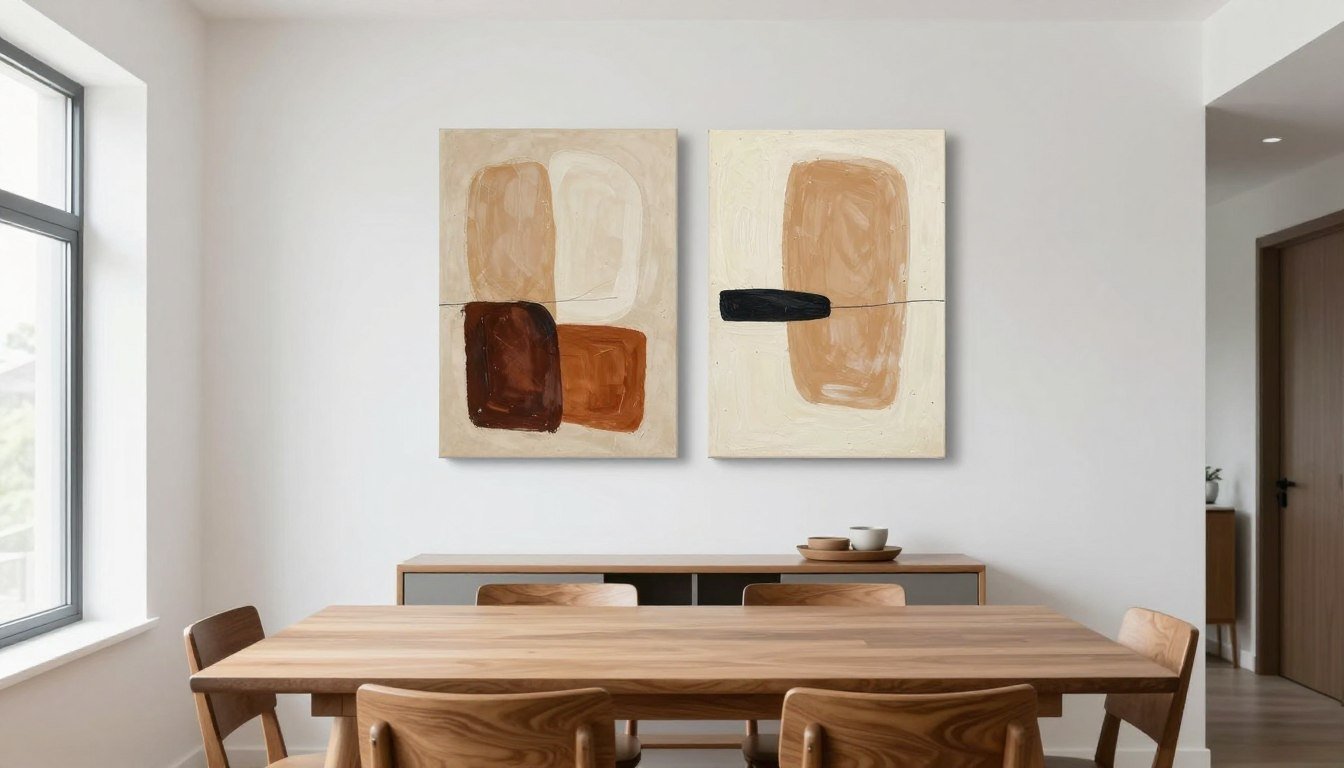

Leave a comment
This site is protected by hCaptcha and the hCaptcha Privacy Policy and Terms of Service apply.