

Sculpture stands as one of humanity's oldest and most enduring art forms. From ancient fertility figures carved in stone to modern abstract forms that challenge our perceptions, famous sculptures have shaped cultural identity and artistic expression across millennia. These three-dimensional works of art capture moments in time, preserve historical narratives, and reflect the values of civilizations that created them.
The history of sculpture spans over 30,000 years. Early examples like the Venus of Willendorf demonstrate humanity's drive to create lasting representations of the world around us. As civilizations advanced, so did sculptural techniques and materials. Ancient Greek sculptors perfected the depiction of the human form in marble. Renaissance artists like Michelangelo elevated sculpture to unprecedented heights of technical mastery and emotional depth.
Understanding famous sculpture art history provides insight into human creativity and cultural evolution. Each piece tells a story—whether of religious devotion, political power, or artistic innovation. This exploration examines the most iconic sculptures from antiquity to the modern era, revealing the techniques, contexts, and significance that make these works timeless masterpieces.
Venus of Willendorf: Prehistoric Fertility Symbol

The Venus of Willendorf represents one of the earliest known examples of sculptural art. This small limestone figure stands just over four inches tall but carries immense historical significance. Discovered in Austria in 1908, the figurine dates back approximately 25,000 years to the Paleolithic era.
The sculpture depicts a female figure with exaggerated features. The head shows detailed carving suggesting braided hair or a woven cap. The face lacks distinct features, focusing attention on the body's pronounced forms. The Venus of Willendorf emphasizes fertility and abundance through its rounded forms and ample proportions.
Scholars debate the exact purpose of this ancient work. The most widely accepted theory suggests it served as a fertility goddess or talisman. The figure's portable size indicates it may have been carried by nomadic peoples. The Venus of Willendorf demonstrates early humans' sophisticated understanding of form, symbolism, and the power of three-dimensional representation.
The sculpture's survival through millennia speaks to the durability of stone as a medium. The limestone material allowed for detailed carving while remaining stable across thousands of years. This prehistoric masterpiece influenced our understanding of early human culture and artistic expression.

Laocoön and His Sons: Hellenistic Drama in Marble

The Laocoön group stands as one of the most famous sculptures from classical antiquity. This marble masterpiece depicts the Trojan priest Laocoön and his two sons in their fatal struggle against sea serpents. Discovered in Rome in 1506, the sculpture immediately captured the imagination of Renaissance artists and scholars.
The work showcases exceptional technical skill in marble carving. Three intertwined figures create a complex composition that maintains visual coherence from multiple viewing angles. The sculptors captured intense emotion through facial expressions twisted in agony and bodies contorted in desperate struggle. Each muscle, tendon, and vein appears rendered with anatomical precision.
According to mythology, Laocoön warned the Trojans against accepting the Greek wooden horse. The goddess Athena, supporting the Greeks, sent serpents to silence him. The sculpture immortalizes this moment of divine punishment and human suffering. The Laocoön group influenced countless artists, including Michelangelo, who studied its dynamic composition and emotional intensity.
The sculpture demonstrates Hellenistic art's movement toward dramatic expression and complex forms. Unlike the serene classical Greek works that preceded it, this piece embraces movement, tension, and raw emotion. The intertwining of serpents with human forms creates a unified composition that draws viewers into the narrative's tragedy.

Michelangelo's David: Renaissance Perfection

Michelangelo's David represents the pinnacle of Renaissance sculpture and remains one of the world's most recognizable artworks. Completed in 1504, this colossal marble statue stands over 17 feet tall and depicts the biblical hero David before his battle with Goliath. The sculpture originally stood in Florence's Piazza della Signoria, symbolizing the city's republican values and defiance against larger powers.
The artist carved David from a single block of Carrara marble that previous sculptors had abandoned as flawed. Michelangelo worked for over two years to transform this challenging material into a masterpiece of human form. Unlike earlier depictions showing David after his victory, Michelangelo captured the moment of contemplation before battle—a psychological depth that was revolutionary for its time.
The sculpture demonstrates Michelangelo's unparalleled understanding of human anatomy. Every muscle, vein, and bone appears perfectly rendered in marble. The figure's weight shifts naturally through the contrapposto stance, a classical technique that creates dynamic balance. David's right hand hangs relaxed yet ready, while his left shoulder raises slightly as he gazes toward his unseen opponent.
The face reveals intense concentration and determination. Michelangelo carved subtle asymmetries that enhance realism and psychological complexity. The David's eyes, slightly enlarged and intensely focused, convey both youth and resolve. This combination of physical perfection and psychological depth elevates the work beyond mere technical achievement to profound artistic expression.

Inspired by Sculptural Masterpieces?
Explore contemporary sculpture that carries forward the artistic traditions of history's greatest masters. Our modern sculptures collection features works that blend classical techniques with innovative design, perfect for today's collectors and art enthusiasts.
Pietà by Michelangelo: Emotion Carved in Stone

Michelangelo completed his Pietà at the age of twenty-four, creating a work that would establish his reputation as one of history's greatest sculptors. This marble masterpiece depicts the Virgin Mary cradling the dead body of Christ after the crucifixion. The sculpture resides in St. Peter's Basilica in Vatican City, where it continues to move viewers with its profound beauty and spiritual depth.
The artist achieved remarkable technical feats in this work. Mary's face appears youthful and serene despite her grief, while Christ's body displays anatomical perfection even in death. The drapery flows with natural grace, each fold carved with precision. Michelangelo polished the marble to an almost translucent finish, making the stone appear soft as fabric or flesh.
The composition balances pyramidal stability with emotional tenderness. Mary's right hand gestures in acceptance of divine will while supporting her son's lifeless form. The scale relationship between mother and son creates visual harmony—Mary appears larger to support Christ's adult body while maintaining compositional coherence. This artistic choice demonstrates Michelangelo's willingness to adjust reality for aesthetic and symbolic purposes.
The Pietà represents the only work Michelangelo signed. His signature appears on the sash across Mary's chest, reportedly added after the sculptor overheard someone attribute the work to another artist. This signature stands as a rare assertion of authorship from an artist whose genius was already widely recognized in his lifetime.

The Discus Thrower: Athletic Perfection

The Discus Thrower, known in Greek as Discobolus, epitomizes classical Greek sculpture's celebration of athletic achievement and physical perfection. Originally created in bronze by the Greek sculptor Myron around 450 BCE, the work survives through Roman marble copies. The sculpture captures an athlete at the moment of greatest tension before releasing the discus.
Myron's composition achieves remarkable dynamism within a stable form. The figure's body twists in a powerful arc, with arms extended in opposite directions and weight balanced on the balls of the feet. This pose, impossible to hold for more than a moment, demonstrates the sculptor's ability to freeze motion in time. The work represents a transition from the static poses of earlier Greek sculpture toward more dynamic representations.
The athletic figure displays ideal proportions according to classical Greek standards. Every muscle appears engaged in the throwing motion, creating a sense of potential energy about to release. The face remains calm and focused despite the body's exertion, reflecting Greek ideals that valued mental composure alongside physical prowess.
The Discus Thrower influenced countless artists and became an enduring symbol of Olympic competition and athletic achievement. The work demonstrates ancient Greek culture's emphasis on physical education, competitive sports, and the harmonious development of body and mind. This bronze statue's form continues to inspire athletic imagery and serves as a touchstone for depicting human movement in sculpture.

The Thinker by Auguste Rodin: Modern Contemplation

Auguste Rodin's The Thinker stands as one of the most famous sculptures in modern art. Originally conceived as part of Rodin's monumental Gates of Hell, this bronze figure eventually gained independence as an iconic representation of human contemplation. The work depicts a nude male figure seated in deep thought, his chin resting on one hand in a pose that has become universally recognized.
Rodin created The Thinker to represent Dante, the author of the Divine Comedy, contemplating his epic poem. The figure's powerful musculature and intense concentration merge physical and intellectual strength. Unlike idealized classical sculptures, Rodin's figure appears rugged and real, with rough surface textures that catch light and create visual interest from every angle.
The sculpture's composition draws the eye through dynamic diagonals and contrasting forms. The figure leans forward, creating tension between stability and potential movement. The bent pose compresses energy while suggesting the weight of profound thought. Rodin's modeling technique left visible marks of the artistic process, rejecting smooth perfection for expressive authenticity.
The Thinker exists in numerous casts of various sizes, with the original small version created around 1880 and the monumental version cast in 1904. The sculpture has become a cultural icon, referenced and reproduced countless times. It represents the artist's ability to convey complex intellectual and emotional states through physical form, bridging traditional sculptural techniques with modern artistic sensibilities.

Discover Sculptures in Innovative Materials
While masters like Rodin worked in traditional bronze and marble, contemporary sculptors explore new possibilities. Our fiberglass sculpture collection showcases how modern materials create stunning artistic statements with enhanced durability and versatility for indoor and outdoor display.
David by Gian Lorenzo Bernini: Baroque Energy

Gian Lorenzo Bernini's David presents a dramatically different interpretation of the biblical hero compared to earlier Renaissance versions. Created in 1623-1624, this Baroque masterpiece captures David at the precise moment of action—hurling the stone at Goliath. The sculpture embodies Baroque art's emphasis on movement, emotion, and theatrical drama.
Bernini chose to depict David mid-action rather than before or after the battle. The figure's body twists with explosive energy, muscles tensed for maximum power. David's face contorts with determination and exertion, his brow furrowed in concentration. This intense expression marks a departure from the serene contemplation of Michelangelo's David, reflecting changing artistic priorities between the Renaissance and Baroque periods.
The composition breaks from the self-contained forms typical of earlier sculpture. David's extended limbs and twisted torso create dynamic diagonals that project energy outward into the surrounding space. Viewers become implicitly positioned as Goliath, creating psychological engagement with the work. This interaction between sculpture and viewer exemplifies Baroque art's theatrical approach.
Lorenzo Bernini carved this masterpiece at age twenty-five, demonstrating technical virtuosity equal to his artistic vision. The sculptor achieved remarkable detail in the rendering of flesh, fabric, and armor. The marble appears to transform into living tissue, with skin seeming to compress under David's grip on the sling. This technical mastery in service of dramatic expression established Bernini as one of sculpture's greatest practitioners.

The Ecstasy of Saint Teresa: Spiritual Transcendence

Gian Lorenzo Bernini's Ecstasy of Saint Teresa represents the apex of Baroque sculptural achievement. Completed in 1652 for the Cornaro Chapel in Rome, this marble masterpiece depicts the Spanish mystic Saint Teresa of Ávila experiencing spiritual rapture. The work combines sculpture, architecture, painting, and light to create a total artistic environment.
The composition shows an angel holding a golden arrow, poised to pierce Saint Teresa's heart in a physical manifestation of divine love. The saint reclines on clouds of marble, her eyes closed and mouth slightly open in ecstatic abandon. Bernini carved flowing drapery that seems to move with supernatural energy, creating hundreds of deep folds that catch light and shadow in constantly changing patterns.
The sculptor achieved extraordinary technical feats in rendering different textures in white marble. Flesh appears soft and yielding, while fabric flows with weightless grace. The angel's diaphanous garment contrasts with Teresa's heavy wool habit. Bernini even differentiated between the clouds supporting the figures and the spiritual rays descending from above, all carved from the same Carrara marble.
The work's setting enhances its impact through Bernini's complete artistic vision. Hidden windows direct natural light onto the sculpture, creating the illusion of divine illumination. Gilded bronze rays radiate behind the figures. On the chapel's side walls, marble portraits of the Cornaro family appear to watch the scene from opera boxes, blurring boundaries between earthly and heavenly realms. This Gesamtkunstwerk—total work of art—exemplifies Baroque art's ambition to engage all senses in service of religious experience.

Little Dancer Aged Fourteen by Edgar Degas: Revolutionary Realism

Edgar Degas shocked the art world when he exhibited the Little Dancer Aged Fourteen at the 1881 Impressionist exhibition in Paris. This sculpture broke conventions through its unflinching realism and unprecedented use of mixed materials. The work depicts a young ballet student standing in fourth position, her head tilted upward with an expression of concentration and defiance.
Degas originally created the sculpture in wax, a material that allowed extraordinary detail and realism. He then dressed the figure in real fabric—a linen bodice, gauze tutu, and satin hair ribbon. The dancer wore actual ballet slippers and had real human hair attached to her head. This radical combination of traditional sculptural form with everyday materials challenged fundamental assumptions about what sculpture could be.
The work portrays its subject without idealization. The young dancer's face shows the reality of hard training and uncertain social position. Degas captured the specific body type developed through ballet training—the turned-out legs, elongated neck, and precise positioning. Critics initially responded with harsh judgment, calling the figure ugly and brutish, yet this honesty ultimately established the work's significance.
After Degas' death, bronze casts were made from the original wax figure, with fabric elements recreated for each version. The bronze preserves Degas' detailed modeling while allowing the sculpture to survive across time. The Little Dancer remains revolutionary in its fusion of high art with humble materials and its compassionate yet unsentimental depiction of working-class life. The work influenced generations of artists exploring the boundaries between sculpture and everyday objects.


Expand Your Art Collection Beyond Sculpture
Great sculpture appreciators often collect diverse art forms. Our original paintings collection features works by talented contemporary artists, offering investment-quality pieces that complement any sculptural collection. Each painting carries the same attention to craftsmanship and artistic vision that defines sculpture art history.
Unique Forms of Continuity in Space by Umberto Boccioni: Futurist Movement

Umberto Boccioni's Unique Forms of Continuity in Space stands as the definitive sculptural statement of Italian Futurism. Created in 1913, this bronze work captures the Futurist obsession with speed, dynamism, and the mechanical age. The sculpture depicts a striding figure whose forms appear shaped by wind resistance and forward momentum.
The work abandons traditional anatomical representation in favor of expressing movement through space. The figure's legs transform into flame-like shapes that suggest rapid motion. Muscle masses merge and flow like molten metal. The headless torso leans forward with determined energy. Boccioni achieved his goal of representing not the figure itself but the interaction between the figure and the space it moves through.
The sculptor created Unique Forms of Continuity in Space at the height of Futurism's revolutionary fervor. This avant-garde movement rejected traditional art in favor of celebrating modern technology, speed, and industrial power. Boccioni's sculpture embodies these principles through its aerodynamic forms and sense of unstoppable forward progress. The work represents a complete break from classical sculptural traditions.
Originally modeled in plaster, the sculpture was cast in bronze after Boccioni's death in 1916. The bronze material paradoxically gives permanent form to a work celebrating transient motion and change. Unique Forms of Continuity in Space influenced modernist sculpture and appears on Italian 20-cent euro coins, cementing its status as an icon of modern art. The work demonstrates how sculpture can represent abstract concepts like movement and time rather than simply depicting physical reality.

The Gates of Hell by Auguste Rodin: Monumental Vision

Auguste Rodin's Gates of Hell represents one of sculpture history's most ambitious undertakings. Commissioned in 1880 for a proposed museum of decorative arts, this monumental bronze portal consumed Rodin for over three decades. The work remained unfinished at his death in 1917, yet stands as a masterpiece of expressive sculpture and the source of many of Rodin's most famous individual works.
The Gates draw inspiration from Dante's Inferno, depicting scenes of torment and damnation across two massive doors standing over twenty feet tall. Hundreds of figures writhe in relief and in the round, creating a complex visual tapestry of human suffering and passion. The Thinker originally crowned the composition, contemplating the scenes of hell below. The Three Shades stand above the doors, while other figures including The Kiss and various damned souls populate every surface.
Rodin abandoned traditional architectural principles for the gates' design. Rather than ordered panels and clear narrative progression, the composition appears organic and chaotic. Figures emerge from undefined spaces, overlap in impossible ways, and vary dramatically in scale. This approach mirrors the psychological chaos and spiritual anguish the work depicts, creating unity between form and content.
The sculptor worked continuously on the Gates, adding, removing, and modifying figures throughout his lifetime. Many sculptures that became famous as independent works—The Thinker, The Kiss, The Three Shades, Fugit Amor—originated as elements of this larger composition. The Gates of Hell thus functioned as a creative laboratory where Rodin developed ideas that would influence modern sculpture. The work demonstrates how a single artistic vision can generate countless derivative masterpieces while remaining powerful as a unified whole.

Transform Your Living Space with Museum-Quality Art
The famous sculptures explored here elevated their settings—from ancient temples to modern museums. Bring that same transformative power to your home with our living room canvas art collection. Each piece offers the visual impact and cultural sophistication that great art provides, perfectly sized and framed for residential display.
African Sculpture: Diverse Traditions and Global Influence

African sculpture encompasses thousands of years of diverse artistic traditions across the continent's many cultures. From ancient Nok terracotta heads to elaborate Benin bronze plaques, African sculptors developed sophisticated techniques and powerful aesthetic principles that profoundly influenced modern Western art. These works served religious, ceremonial, and social functions within their original contexts.
Wood carving dominated many African sculptural traditions, though artists also worked in bronze, ivory, terracotta, and stone. Sculptors created masks for ceremonial use, ancestor figures to honor the dead, and power objects believed to channel spiritual forces. The aesthetic emphasized abstraction, stylization, and symbolic meaning rather than naturalistic representation. Elongated forms, geometric patterns, and expressive distortion conveyed cultural values and spiritual concepts.
West African cultures developed particularly sophisticated bronze-casting techniques. The Benin Kingdom produced elaborate bronze plaques and sculptures using lost-wax casting methods of extraordinary refinement. These works documented royal history, honored ancestors, and demonstrated the kingdom's wealth and artistic achievement. European collectors later removed thousands of these pieces, raising ongoing questions about cultural heritage and repatriation.
African sculpture's influence on modern Western art cannot be overstated. Early twentieth-century artists including Picasso, Matisse, and the German Expressionists found inspiration in African works' formal boldness and expressive power. This encounter helped spark Cubism and other modernist movements. Contemporary understanding recognizes African sculpture not as "primitive art" but as sophisticated aesthetic traditions with their own complex histories and cultural meanings. Museums and scholars continue working to properly contextualize and honor these important artistic achievements.

Apollo Belvedere: Classical Ideal of Beauty

The Apollo Belvedere represents one of antiquity's most admired sculptures and a defining example of classical Greek aesthetic ideals. This marble work depicts the god Apollo in the moment after releasing an arrow. The figure stands in contrapposto, weight shifted to one leg, creating graceful curves through the torso. Discovered in Italy during the Renaissance, the sculpture became a touchstone for classical beauty and influenced artistic education for centuries.
The statue showcases ideal proportions according to classical Greek standards. The figure's anatomy combines naturalistic observation with aesthetic refinement. Muscles appear neither too pronounced nor too soft. The face displays serene perfection, emotionally detached from action. This combination of physical beauty and spiritual calm embodied Greek philosophical ideals about the harmony of body and soul.
Art historians believe the Apollo Belvedere to be a Roman marble copy of a Greek bronze original created around 330 BCE. The original sculptor remains uncertain, though some attribute the design to Leochares, one of ancient Greece's renowned artists. The work demonstrates how Roman copies preserved Greek sculptural achievements that would otherwise be lost, as most bronze originals were melted down in later periods.
The sculpture profoundly influenced European art from the Renaissance through the nineteenth century. Artists studied the Apollo Belvedere as a model of ideal form. The work appeared in countless drawings, paintings, and derivative sculptures. Neoclassical artists particularly revered it as representing the pinnacle of artistic achievement. Though modern tastes have moved away from such idealization, the Apollo Belvedere remains important for understanding the development of Western aesthetic standards and the enduring influence of classical art.

Winged Victory of Samothrace: Triumphant Motion

The Winged Victory of Samothrace, known in Greek as Nike of Samothrace, ranks among the most celebrated sculptures from the Hellenistic period. Created around 200 BCE, this marble masterpiece depicts Nike, the Greek goddess of victory, alighting on the prow of a ship. The sculpture was discovered in pieces on the Greek island of Samothrace in 1863 and now commands the grand staircase of the Louvre Museum in Paris.
The figure's composition captures extraordinary dynamism despite missing its head and arms. Nike's powerful wings spread behind her as she leans forward into the wind. The drapery appears soaked and pressed against her body by wind and sea spray, revealing the form beneath while creating hundreds of deeply carved folds. The sculptor achieved the remarkable effect of making marble appear as light as windblown fabric.
The work demonstrates Hellenistic sculpture's mastery of movement and drama. Unlike the calm equilibrium of earlier classical works, the Winged Victory embraces dynamic action and emotional intensity. The figure seems to have just landed, wings still beating, drapery still flowing. This frozen moment in time creates visual excitement and draws viewers into the narrative of victory being proclaimed.
The sculpture's original context enhanced its impact. Nike stood on a stone ship's prow positioned in a hillside sanctuary, with a pool of water reflecting the composition. This installation created the illusion of a goddess descending to announce naval victory. The monument likely commemorated a specific military triumph at sea. Though separated from its original setting, the Winged Victory retains extraordinary power through its formal mastery and expression of triumphant motion. The work exemplifies how Hellenistic artists pushed sculptural technique to new heights of virtuosity and emotional expression.

Terracotta Army: Ancient Chinese Funerary Art

The Terracotta Army represents one of archaeology's most spectacular discoveries and a monumental achievement in ancient Chinese art. Created around 210 BCE to guard the tomb of China's first emperor, Qin Shi Huang, this vast collection includes over 8,000 life-size warrior figures, along with horses, chariots, and other sculptures. Farmers discovered the first figures in 1974, leading to ongoing excavations that continue revealing this underground army's remarkable scale.
Each terracotta warrior displays individual features and characteristics. Sculptors created unique faces, varied expressions, different hairstyles, and distinctive body types. This extraordinary attention to detail extends to armor, weapons, and military ranks indicated through clothing and positioning. The army includes infantry, cavalry, archers, and officers, all arranged in military formation. The individualization of thousands of figures demonstrates both artistic ambition and sophisticated manufacturing techniques.
The sculptures were created using assembly-line methods combined with artisan craftsmanship. Workers produced standardized body parts from molds, then assembled and customized each figure. Artisans hand-crafted heads, refined details, and applied painted finishes. Originally, the warriors displayed bright colors—red, blue, green, and purple—that have largely faded since excavation exposed them to air. The technical organization required to produce such a vast sculptural project reveals advanced administrative and artistic capabilities.
The Terracotta Army served the emperor's afterlife needs according to Chinese beliefs about death and the spirit world. The figures were meant to protect and serve Qin Shi Huang in the afterlife, arranged in battle formation to guard his tomb. The project's scale reflects both the emperor's power and the importance Chinese culture placed on proper burial practices. This remarkable archaeological treasure provides insight into ancient Chinese military organization, artistic techniques, and beliefs about death. The ongoing excavation and conservation work continues to reveal new information about this extraordinary sculptural achievement.

Modern Abstract Sculpture: Breaking Traditional Forms

Modern abstract sculpture emerged in the early twentieth century as artists rejected representational art in favor of pure form, color, and composition. Sculptors including Constantin Brancusi, Henry Moore, and Barbara Hepworth explored how three-dimensional works could express ideas and emotions without depicting recognizable subjects. This revolutionary approach transformed sculpture from representation to exploration of space, material, and form itself.
Constantin Brancusi pioneered modern abstract sculpture with works like Bird in Space, which reduced the idea of flight to essential curved forms. His philosophy emphasized "direct carving"—allowing the material's inherent qualities to guide the final form. Brancusi's streamlined, elegant sculptures influenced countless artists and helped establish abstraction as a legitimate artistic approach. His work demonstrated that sculpture could suggest rather than depict its subject.
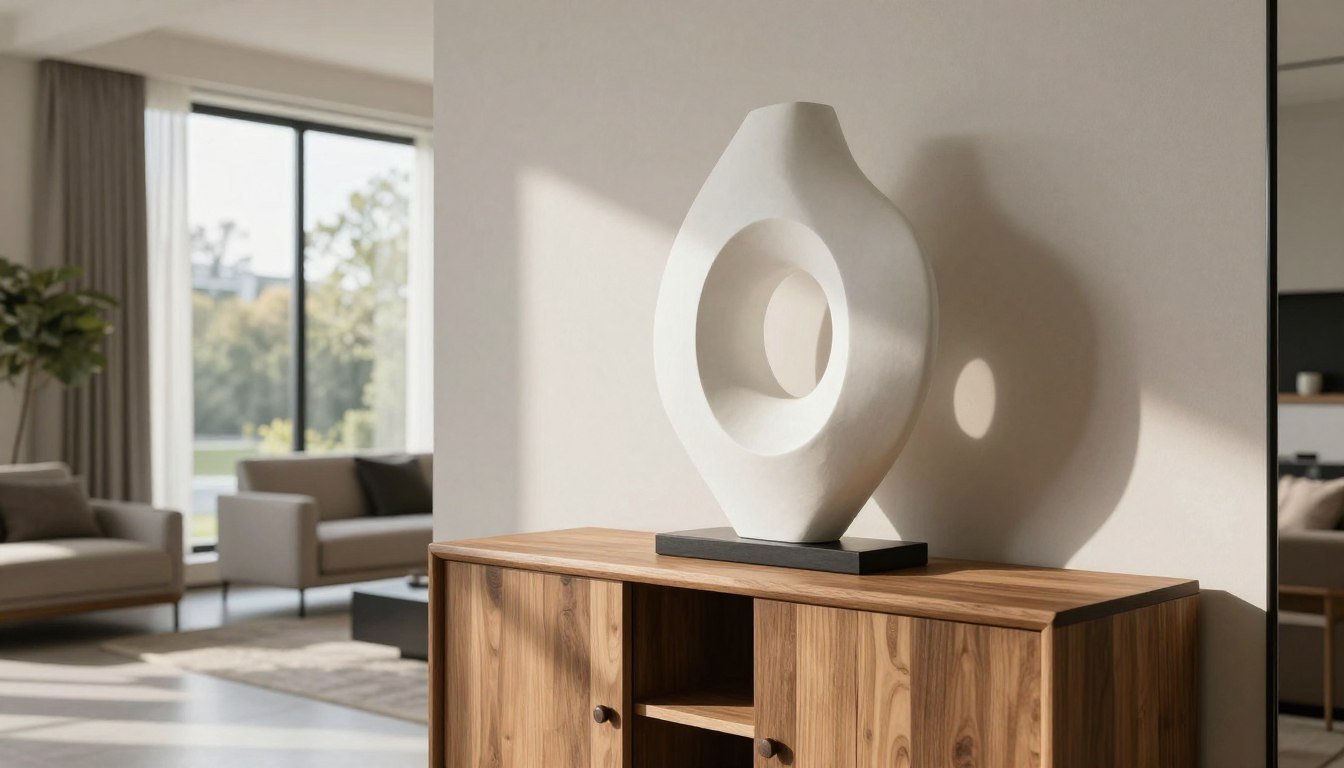
British sculptor Henry Moore developed a distinctive vocabulary of organic, rounded forms with hollow spaces and holes. His large-scale bronzes and stone carvings explored the relationship between solid mass and negative space. Moore's reclining figures abstracted the human form while maintaining a connection to natural, biological shapes. His work addressed fundamental sculptural concerns—weight, balance, interior versus exterior—while remaining accessible to broad audiences.
Contemporary abstract sculptors work in diverse materials including steel, aluminum, plastic, and found objects. Artists create works ranging from intimate tabletop pieces to monumental public installations. Abstract sculpture allows exploration of pure aesthetic relationships—how forms interact, how light affects surfaces, how viewers move around and through three-dimensional space. This approach continues evolving as artists develop new techniques and materials, pushing sculpture's boundaries while connecting to the fundamental human drive to create meaningful forms. Modern abstract sculpture demonstrates that art need not represent reality to engage viewers and express profound ideas about existence, perception, and experience.

The Enduring Legacy of Famous Sculptures

Famous sculptures across art history demonstrate humanity's enduring compulsion to create lasting three-dimensional forms. From prehistoric fertility figures to cutting-edge contemporary installations, sculpture has evolved while maintaining core concerns—representing the human experience, exploring materials, and creating meaningful objects that transcend their physical presence. Each era's sculptural achievements reflect cultural values, technical capabilities, and artistic vision.
The progression from ancient works like the Venus of Willendorf through classical Greek perfection, Renaissance mastery, Baroque drama, and modern abstraction shows sculpture's remarkable adaptability. Materials expanded from stone and bronze to include virtually any substance artists could manipulate. Subjects evolved from gods and rulers to everyday people and pure abstract forms. Techniques advanced from direct carving to casting, welding, and digital fabrication.
Understanding famous sculpture art history enriches appreciation for contemporary works. Today's sculptors build upon millennia of innovation while addressing current concerns. Public sculpture transforms urban spaces. Installation art creates immersive environments. Artists challenge traditional definitions by incorporating light, sound, and viewer interaction. The fundamental sculptural dialogue between artist, material, and viewer continues in new forms.
The famous sculptures examined here represent just a fraction of global sculptural achievement. Every culture has developed distinctive sculptural traditions. African, Asian, Pre-Columbian, and Pacific Island cultures created sophisticated works that influenced modern art and deserve recognition equal to European masterpieces. Broadening our understanding of sculpture's history reveals the universal human drive to create meaningful three-dimensional art.
Sculpture's future remains open to infinite possibilities as artists explore new materials, technologies, and concepts. Digital tools enable forms impossible to create by hand. Sustainable materials address environmental concerns. Interactive sculptures respond to viewers' presence. Yet the ancient appeal of transforming raw materials into meaningful objects persists. Whether carved in stone or printed in three dimensions, sculpture continues fulfilling its essential role—making ideas tangible and giving permanent form to human imagination.
Build Your Personal Art Collection Today
The masterpieces explored throughout sculpture art history inspire collectors and enthusiasts worldwide. While owning a Michelangelo remains impossible, contemporary sculpture and fine art offer accessible opportunities to begin or expand your collection. Rossetti Art curates exceptional works from talented artists working in various media and styles. Whether you seek modern sculptures that echo classical traditions or original paintings that transform your living space, our collections provide museum-quality art for discerning collectors.


About the Author
Chiara Rossetti
Chiara Rossetti is the founder of Rossetti Art, a canvas print and original art brand. She writes about interior design, wall art styling, and the art of making a home feel alive.


Leave a comment
This site is protected by hCaptcha and the hCaptcha Privacy Policy and Terms of Service apply.