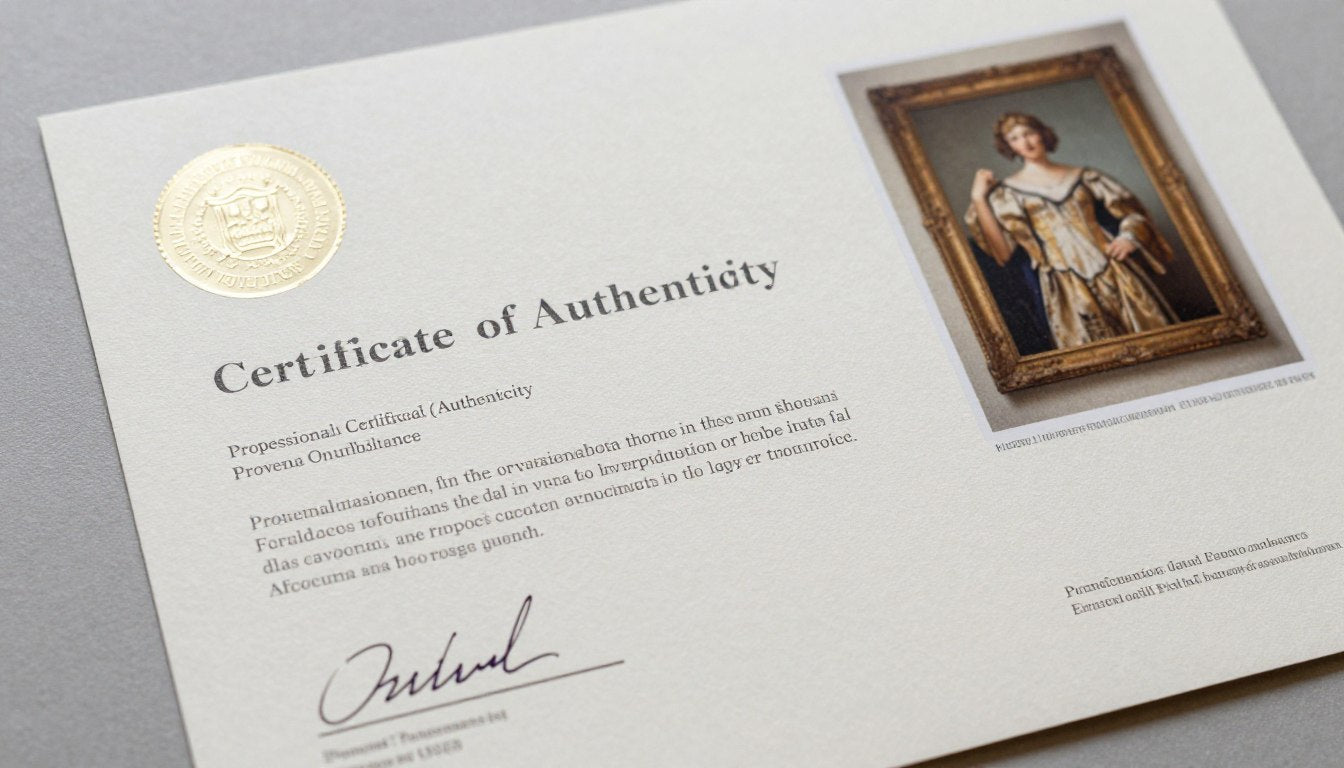
Purchasing artwork represents more than acquiring decoration. It means investing in creativity and culture. Yet how do you verify the piece hanging on your wall is genuine? A Certificate of Authenticity serves as your artwork's birth certificate and passport combined.
This document proves your art's legitimacy and protects its value over time. Whether you collect abstract canvas prints or invest in original paintings, understanding certificates of authenticity ensures your collection maintains its worth.

Understanding the Certificate of Authenticity
A Certificate of Authenticity (COA) is an official document that accompanies artwork. This certificate confirms the piece's legitimacy and provides crucial details about its creation. Think of it as a passport for art that travels with the work throughout its lifetime.
The certificate authenticity serves multiple functions in the art world. It establishes provenance, documents the artist's involvement, and creates a paper trail for future transactions. Art collectors rely on this document when purchasing pieces for their living room wall art displays.
Artists issue these documents to protect both their reputation and the buyer's investment. The COA transforms a beautiful painting into a verified artwork with documented history. Without this paper, proving authenticity becomes challenging and may reduce the piece's market value.

Authentic Art with Professional Documentation
Every canvas print includes a Certificate of Authenticity, ensuring your investment is protected. Explore museum-quality pieces with complete documentation.
Essential Components Every Certificate Must Include
A proper certificate authenticity template contains specific information that validates the artwork. Understanding these elements helps collectors verify they receive legitimate documentation with their purchases.
Artist Information and Signature
The artist name appears prominently on every COA. This includes the full legal name and any professional names used for creating art. The artist's signature adds personal verification that cannot be easily replicated.
Contact details or studio information provide additional verification. This allows future owners to trace the work back to its creator. Many artists include their website or professional contact information on the certificate.

Detailed Artwork Description
The certificate must describe the piece completely. This includes the title, creation date, and dimensions. Medium and materials used in the creation process receive detailed notation.
For photography and print editions, the edition number matters significantly. A certificate might state "Edition 25 of 100" to establish the print's place in a limited series. This number affects the artwork's value in the art market.
The description section often includes technical details about materials. Oil paintings note canvas type and paint brands. Canvas prints specify printing methods and archival quality standards.
Unique Identification Elements
A serial number or unique code helps track individual pieces. This becomes especially important for limited edition works or prints. The code prevents fraudulent reproduction of certificates.
Some artists photograph the artwork and include the image on the certificate authenticity template. This visual reference connects the document directly to the specific piece. Technology now allows QR codes linking to digital authentication databases.

Provenance and Exhibition History
Provenance traces the artwork's ownership history. The certificate may list previous collectors, galleries, or exhibitions where the work appeared. This information adds value and context to the piece.
Exhibition history demonstrates the work's significance in the art world. Pieces shown in prestigious venues or included in notable collections carry greater cultural weight. These details belong on a comprehensive COA.
COA Must-Have Elements
- Complete artist name and signature
- Artwork title and creation date
- Medium and materials used
- Dimensions and specifications
- Unique serial number or code
- Edition information (if applicable)
- Artist contact or studio details
Optional But Valuable Information
- Photograph of the artwork
- Exhibition history and provenance
- Artist statement about the work
- Authentication database links
- Conservation recommendations
- Insurance valuation guidance
- Sale date and original purchaser
Why Art Collectors Require Proper Documentation
Collectors face significant risks when purchasing artwork without proper documentation. The certificate authenticity protects investments and provides peace of mind for buyers across all price ranges.
Investment Protection and Value Preservation
Artwork value depends partly on verified authenticity. A COA maintains the piece's market value over time by proving its legitimacy. Without this document, resale becomes difficult and prices drop significantly.
Insurance companies require authentication when covering valuable art pieces. The certificate provides the proof insurers need to process claims. This makes the document essential for protecting your original paintings collection.
Future buyers want assurance they're purchasing genuine artwork. The certificate transfers with the piece, maintaining its credibility. This continuous chain of documentation preserves value across generations.

Fraud Prevention in the Art Market
The art market unfortunately includes counterfeit works and misrepresented pieces. A proper COA helps prevent fraud by establishing clear documentation trails. Buyers can verify details match the artwork in question.
Serial numbers and unique codes make certificate reproduction difficult. Many artists now include security features similar to currency. These measures protect both artists and collectors from fraudulent activities.
Galleries and auction houses verify COAs before accepting works for sale. This additional layer of scrutiny keeps the art market honest. Collectors should always make sure they receive proper documentation with purchases.
How Artists Benefit from Providing Certificates
Artists protect their professional reputation by issuing certificates of authenticity. These documents establish standards and create accountability in the art world. Providing COAs demonstrates professionalism and commitment to collectors.
Building Professional Credibility
Emerging artists establish credibility by providing proper documentation. This professional approach attracts serious collectors and galleries. The practice shows attention to detail and respect for the art market's standards.
Experienced artists maintain their reputation through consistent documentation practices. Each COA reinforces their brand and artistic integrity. This consistency builds trust with collectors over time.

Preventing Unauthorized Reproductions
COAs help artists track their work's distribution. This becomes important when creating limited editions or numbered prints. The certificate creates a record that prevents unauthorized reproductions.
Artists can include copyright information on certificates. This reinforces their rights and reminds collectors about proper usage. The document serves both as authentication and gentle legal protection.
For artists selling black and white canvas prints or color works, certificates establish edition limits. This scarcity adds value and prevents market flooding with reproductions.
Museum-Quality Art for Your Space
Transform your interior with professionally authenticated canvas prints. Each piece arrives ready to hang with complete documentation and free worldwide shipping.
Digital Certificates versus Physical Documentation
Technology introduces new options for authenticating artwork. Both digital and physical certificates serve the same purpose but offer different advantages. Understanding these differences helps collectors and artists make informed choices.
Traditional Physical Certificates
Paper certificates remain the standard in the art world. These tangible documents feature security elements like watermarks, embossed seals, and special paper. Physical certificates feel substantial and carry traditional authority.
Collectors appreciate physical COAs because they accompany the artwork directly. The document stays with the piece through ownership changes. This creates an unbroken chain of custody that digital records cannot always match.
However, physical certificates face risks. They can be lost, damaged, or forged. Proper storage becomes necessary to maintain the document's condition. Some collectors keep certificates in acid-free sleeves or safety deposit boxes.

Modern Digital Authentication Systems
Digital certificates use blockchain technology and secure databases. These systems create permanent, tamper-proof records that anyone can verify online. QR codes on artwork link directly to authentication databases.
The advantage lies in permanent accessibility. Digital records cannot be lost or physically damaged. They update easily to include new provenance information or exhibition history.
Some artists provide both physical and digital certificates. This hybrid approach combines traditional expectations with modern security. Collectors receive a paper certificate while gaining access to a digital verification system.
Physical Certificate Benefits
- Traditional art world acceptance
- Tangible accompaniment to artwork
- Security features difficult to replicate
- No technology required for verification
- Clear ownership transfer process
Digital Certificate Benefits
- Permanent tamper-proof records
- Instant verification capabilities
- Cannot be lost or damaged
- Easy updates for provenance
- Reduced forgery risks
Creating Your Own Certificate of Authenticity
Artists starting their careers need to establish documentation practices early. Creating professional certificates doesn't require expensive tools, but attention to detail matters significantly.
Design and Layout Considerations
A certificate authenticity template should look professional and be clearly readable. Use quality paper stock that resists aging and yellowing. The layout must include all essential information in an organized format.
Many artists design templates that reflect their artistic style while maintaining professionalism. Headers should be clear, fonts readable, and spacing appropriate. The certificate represents your work, so aesthetic quality matters.
Include your studio logo or personal mark if you have one. This adds a professional touch and makes forgery more difficult. Keep the design clean enough that information stands out clearly.

Essential Information to Include
Every COA must list the artist name, artwork title, and creation date. Add complete dimensions and medium details. Include a unique identifier or serial number for tracking purposes.
Your signature authenticates the document personally. Some artists add a small sketch or stamp as additional verification. Date the certificate to establish when authentication occurred.
If selling limited edition pop art canvas prints, include clear edition information. State both the individual number and total edition size.
Security Features and Anti-Fraud Measures
Simple security features prevent casual forgery attempts. Watermarks, embossed seals, or special paper stock add legitimacy. These don't need to be expensive but should be consistent across your work.
Consider photographing the artwork and including a small image on the certificate. This visual reference makes switching certificates between pieces more difficult. The photo should clearly show distinguishing features.
Maintain a master record of all certificates issued. This database helps you verify authenticity if questions arise later. Include the serial number, artwork details, and sale date in your records.
Professional Tip: Store digital copies of all certificates you issue. This backup system protects against document loss and provides verification when collectors contact you years later. A simple spreadsheet tracking serial numbers, artwork titles, and purchaser names creates an invaluable reference.
The Certificate's Role in Art Market Transactions
COAs play a crucial part when artwork changes hands. Galleries, auction houses, and private sales all require proper documentation. Understanding this role helps both buyers and sellers navigate transactions smoothly.
Gallery and Auction House Requirements
Professional galleries verify certificates before accepting consignments. They need to confirm artwork authenticity to protect their reputation. The COA provides essential information for catalog listings and buyer inquiries.
Auction houses conduct even stricter verification processes. They examine certificates alongside the physical artwork. Inconsistencies between the document and piece raise red flags that may prevent sale.
These institutions also use certificates to establish provenance chains. A well-documented history increases buyer confidence and often supports higher prices. Works with clear authentication sell more readily than pieces lacking documentation.

Private Sales and Collector Transfers
Private collectors buying directly from artists or other collectors rely heavily on COAs. The certificate provides assurance when purchasing modern sculptures or paintings through private channels.
During ownership transfers, the certificate should transfer with the artwork. Some artists ask to be notified of sales to update their provenance records. This practice maintains accurate documentation throughout the work's life.
Buyers should verify certificate details match the artwork exactly. Check dimensions, medium, and identifying features. Request additional verification from the artist or representing gallery if uncertainties exist.
International Standards and Best Practices
The art world lacks universal legal requirements for COAs, but professional standards exist. Understanding these practices helps artists and collectors maintain credibility across markets.
Industry Guidelines and Recommendations
Professional art organizations recommend specific information for certificates. The International Foundation for Art Research provides guidelines many institutions follow. These standards ensure consistency across the art market.
Museums maintain strict documentation requirements for their collections. Their standards often exceed commercial gallery practices. Artists can adopt museum-level documentation to demonstrate professionalism.
Different countries may have specific legal requirements for art sales. The European Union, for example, has resale rights laws affecting documentation needs. Artists selling internationally should research requirements for their target markets.

Adapting Standards to Your Practice
Emerging artists can start with basic templates and expand documentation over time. The important part is consistency and completeness. Each certificate should contain the same core information in a recognizable format.
As your career progresses, documentation practices may become more sophisticated. You might add exhibition histories, artist statements, or conservation notes. Maintaining consistent practices builds long-term credibility.
Consider your artwork category when designing certificates. Photography requires edition information that doesn't apply to unique paintings. Canvas print collections need edition numbers, while original works need unique identifiers.
Invest in Authenticated Original Art
Every original painting includes complete provenance documentation and Certificate of Authenticity. Museum-quality pieces with detailed authentication, ready to hang, with free worldwide shipping.
Maintaining Proper Certificate Records
Creating certificates represents only part of the authentication process. Artists and galleries must maintain organized records supporting their documentation systems.
Artist Record-Keeping Systems
Maintain a database tracking every certificate issued. This should include serial numbers, artwork details, sale dates, and purchaser information where appropriate. Digital spreadsheets work well for this purpose.
Back up your records regularly in multiple locations. Cloud storage provides accessibility and security. Physical backup copies protect against technology failures.
Photograph each piece before sale and link images to certificate records. These visual references help verify authenticity if questions arise years later. Detailed documentation protects both you and collectors.

Collector Documentation Responsibilities
Collectors should store certificates in acid-free sleeves away from direct light. Keep them with the artwork's purchase receipts and any correspondence with the artist. This complete file documents the piece's history.
Consider scanning certificates and maintaining digital copies. This protects against document loss while preserving the original. Digital files also make sharing information with insurers or appraisers convenient.
Update documentation when the piece appears in exhibitions or publications. Add these details to your records and inform the artist if possible. This information increases the work's value and historical significance.
The Future of Art Authentication and Documentation
Technology continues transforming how the art world authenticates pieces. Understanding emerging trends helps artists and collectors prepare for evolving practices.
Blockchain and NFT Technologies
Blockchain creates permanent, verifiable records impossible to alter retroactively. Some artists now register physical artwork on blockchain platforms. This technology provides ultimate provenance tracking.
NFTs (non-fungible tokens) represent digital ownership certificates. While controversial, they demonstrate growing acceptance of digital authentication methods. Physical artwork may soon routinely include blockchain registration.
These technologies don't replace traditional certificates immediately. Instead, they supplement existing practices. The art world values tradition, so new methods integrate gradually alongside established standards.

Evolving Market Standards
Younger collectors entering the art market expect digital verification options. They're comfortable with technology and value instant authentication. This generational shift encourages hybrid documentation systems.
Environmental concerns also influence documentation practices. Digital certificates reduce paper waste while maintaining verification capabilities. Some artists adopt eco-friendly practices throughout their creative and administrative processes.
The core purpose remains unchanged despite technological evolution. Certificates protect value, prevent fraud, and document artistic heritage. Whether physical, digital, or hybrid, proper authentication serves artists and collectors equally.
Common Mistakes to Avoid with Certificates
Understanding frequent errors helps artists create better documentation and collectors identify problematic certificates.
Incomplete or Vague Information
The most common mistake is providing insufficient detail. Stating "oil painting" without specifying canvas type, dimensions, or paint brands creates gaps. Complete documentation protects everyone involved.
Vague descriptions like "contemporary piece" or "mixed media" fail to serve authentication purposes. Be specific about materials, techniques, and processes used. This detail prevents confusion and supports accurate valuation.
Forgetting to include creation dates or misstating information undermines the certificate's credibility. Double-check all details before signing and issuing documentation.
Inconsistent Documentation Practices
Artists who change certificate formats frequently create confusion. Collectors expect consistent documentation styles throughout a career. Establish a template and maintain it across your body of work.
Using different numbering systems or identification methods complicates verification. Pick one system and apply it consistently. This might mean numbered series for prints and unique codes for original pieces.
Failing to maintain records of issued certificates creates problems later. Without a master list, verifying authenticity becomes difficult. Start organized record-keeping from the beginning of your career.
Warning: Never create certificates for work you didn't create. This represents fraud and damages the entire art market. Only the creating artist or their authorized estate representatives should issue certificates of authenticity.
Frequently Asked Questions About Certificates of Authenticity
Do I need a Certificate of Authenticity for every artwork I purchase?
While not legally required, a Certificate of Authenticity protects your investment significantly. Original artwork and limited edition prints should always include COAs. Even affordable pieces benefit from documentation, especially if you plan to resell them later. The certificate proves legitimacy, supports insurance claims, and maintains resale value. For bedroom canvas prints or investment pieces, always request proper documentation.
What should I do if I lose my Certificate of Authenticity?
Contact the artist or gallery immediately to request a replacement. Legitimate artists maintain records of certificates issued and can verify your purchase. Provide the artwork's serial number, purchase date, and any documentation you retained. Some artists charge a small fee for replacement certificates. This situation highlights why maintaining digital copies of all art documentation proves valuable.
Can I create my own Certificate of Authenticity as a beginning artist?
Absolutely. Creating COAs demonstrates professionalism from the start of your career. Design a template including all essential information: your name, signature, artwork details, unique identifier, and date. Use quality paper and maintain consistent formatting. Keep detailed records of every certificate issued. This practice builds credibility with collectors and protects your artistic reputation. Many successful artists designed their first certificate authenticity templates themselves before establishing gallery representation.
How do galleries verify Certificates of Authenticity?
Galleries contact artists directly to confirm certificate details. They compare the document against the physical artwork, checking dimensions, medium, and identifying features. Serial numbers get verified against artist records. Galleries examine the certificate itself for security features and consistency with other documentation from the same artist. Professional galleries maintain relationships with artists and recognize authentic certificates immediately. Suspicious documentation undergoes additional scrutiny or rejection.
Do digital prints need Certificates of Authenticity?
Yes, especially for limited editions. Digital prints from established artists should include COAs specifying edition size, printing method, paper type, and authentication. This documentation distinguishes legitimate limited editions from mass-market reproductions. The certificate confirms the print's authorized status and edition placement. Collectors of line art canvas prints or other digital works should always request proper documentation to protect their investment.
What's the difference between a Certificate of Authenticity and provenance?
A Certificate of Authenticity confirms the artwork's legitimacy and provides creation details. Provenance documents the ownership history throughout the piece's lifetime. The COA often represents the first provenance record, but provenance extends beyond initial authentication. It includes subsequent owners, exhibitions, publications, and sales. Both documents work together to establish an artwork's complete history and value. Comprehensive provenance including the original COA provides the strongest authentication.
Should Certificates of Authenticity include artwork value?
Most artists avoid listing specific values on COAs because artwork value fluctuates. Market conditions, artist reputation changes, and economic factors affect pricing. Instead, certificates document the piece's authenticity and details. For insurance or estate purposes, seek separate professional appraisals. These appraisals reference the COA but provide current market valuations. Keep certificates focused on authentication rather than valuation to maintain their long-term relevance.
Protecting Your Art Investment Through Proper Documentation
Certificates of Authenticity serve as essential tools in the art world. They protect collectors' investments, establish artists' credibility, and maintain artwork value over time. Whether you're purchasing your first piece or building an extensive collection, proper documentation matters.
Understanding what makes an effective certificate helps you make informed decisions. Look for complete information, security features, and consistent professional presentation. Artists benefit from establishing documentation practices early in their careers.
The art market continues evolving with new technologies and standards. Both traditional and digital authentication methods serve important roles. What remains constant is the need for verified, detailed documentation accompanying valuable artwork.
Collect pieces you love, but protect your investment with proper authentication. Whether choosing cityscape canvas prints for your office or investing in original paintings, always ensure you receive complete documentation. Your Certificate of Authenticity represents more than paper—it's your assurance of legitimacy and value preservation.
Visit our blog for more insights about building and protecting your art collection with confidence.


About the Author
Chiara Rossetti
Chiara Rossetti is the founder of Rossetti Art, a canvas print and original art brand. She writes about interior design, wall art styling, and the art of making a home feel alive.



Leave a comment
This site is protected by hCaptcha and the hCaptcha Privacy Policy and Terms of Service apply.