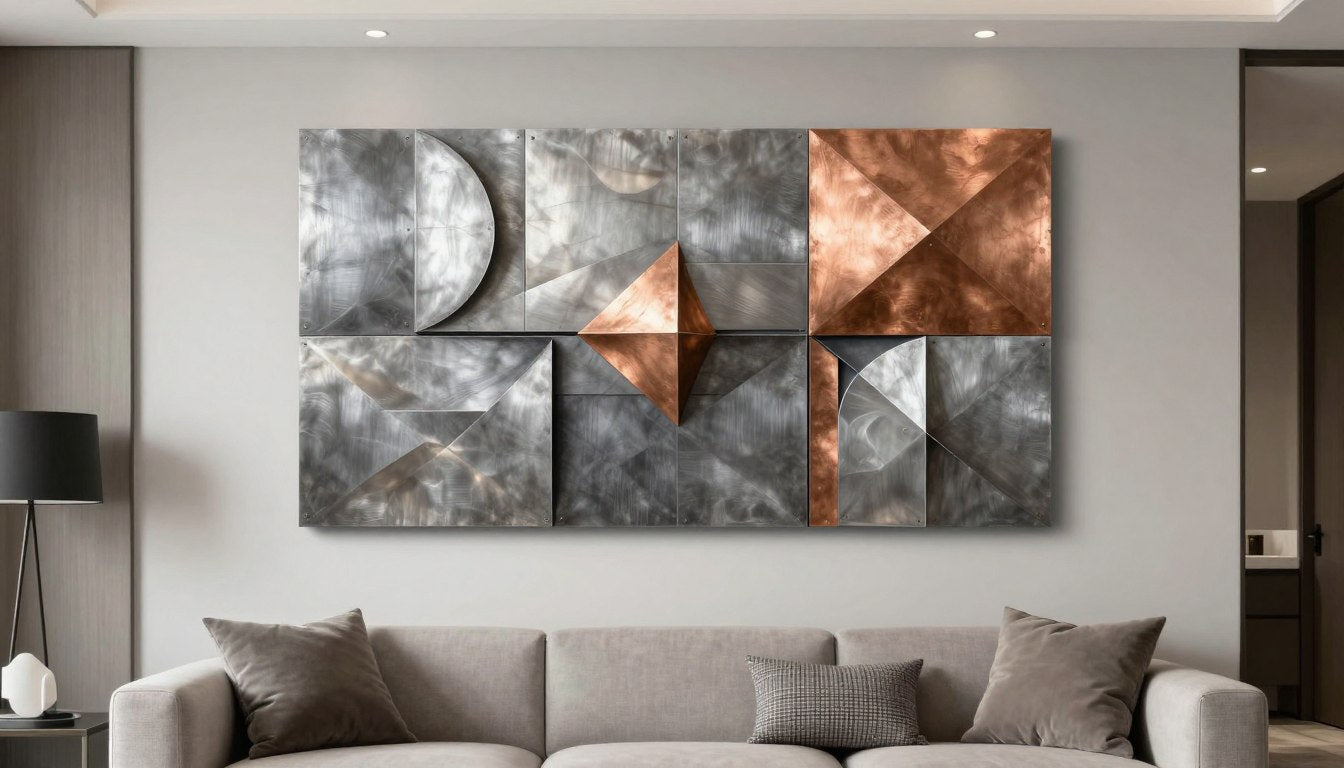

Your living room walls speak volumes about your style. Empty walls create a void that makes even the most expensive furniture feel incomplete. Abstract metal wall art for living room spaces has emerged as the solution that transforms blank walls into captivating focal points.
Metal wall decor brings a three-dimensional quality that flat art cannot achieve. The way light dances across textured metal surfaces creates visual interest throughout the day. Your space gains depth and character with every viewing angle.
Modern homeowners face a common challenge. They want art that makes a statement without overwhelming their carefully curated interiors. Abstract metal wall pieces offer the perfect balance between bold design and versatile styling.
This guide explores everything you need to know about selecting and styling abstract metal wall art. You'll discover how different metal finishes complement various design schemes. We'll walk through size considerations, placement strategies, and style combinations that work.
If You Love Abstract Metal Aesthetics: Explore These Canvas Print Options
Abstract metal wall art creates stunning visual impact, but canvas prints offer similar aesthetic benefits with added versatility. The modern abstract style translates beautifully across different mediums. Canvas provides texture and depth while offering easier installation and lighter weight.

Metallic Geometric Abstraction
This piece captures the sleek essence of metal art through bold geometric forms and a sophisticated metallic color palette. The composition mirrors the dimensional quality of metal wall decor while providing the warmth of canvas.

Monochrome Modern Statement
Black and white abstracts deliver the same striking contrast found in brushed metal pieces. This approach works beautifully in contemporary spaces where you want art that complements rather than competes with your metal accents.

Linear Elegance
Line art canvas prints echo the clean edges and precise forms of metal wall sculptures. These pieces bring sophisticated simplicity to your walls while maintaining the modern aesthetic that metal art lovers appreciate.
Canvas alternatives provide flexibility in sizing and customization that metal pieces sometimes cannot match. You can achieve the same modern aesthetic while enjoying easier installation and the ability to change your art as your style evolves. Consider exploring living room canvas art options that deliver contemporary impact.
Understanding Abstract Metal Wall Art

Abstract metal wall art represents a category of decorative pieces that combine sculptural elements with functional wall decor. These pieces use metal as the primary medium to create non-representational designs. The art form gained popularity in mid-century modern design and continues to evolve today.
Metal wall decor differs from traditional paintings or prints through its dimensional qualities. Each piece exists in three-dimensional space rather than flat on a wall. This creates shadows, depth, and visual interest that changes with lighting conditions throughout the day.
What Makes Metal Wall Art "Abstract"
The abstract designation means these pieces do not attempt to represent recognizable objects or scenes. Instead, they focus on form, line, texture, and composition. Geometric shapes, flowing curves, and industrial elements combine to create visual interest without depicting anything specific.

This non-representational approach offers decorating advantages. Abstract pieces complement various room styles without clashing with existing themes. A geometric metal sculpture works equally well in a contemporary loft or a transitional family home.
Common Materials and Finishes
Metal wall art incorporates several material types, each offering distinct aesthetic qualities:
- Steel provides durability and takes powder-coating or paint finishes beautifully
- Aluminum offers lightweight construction ideal for larger pieces
- Copper develops natural patina over time, creating evolving visual interest
- Brass brings warm metallic tones that complement traditional and modern spaces
- Iron delivers industrial character with substantial weight and presence

Surface treatments dramatically affect the final appearance. Brushed finishes create subtle texture that softens reflections. Polished surfaces maximize light reflection for dramatic effect. Powder-coated metals offer unlimited color options while protecting against corrosion.
The Appeal of Three-Dimensional Wall Decor
Flat art creates visual interest through color and composition alone. Metal wall sculptures add physical dimension that engages viewers differently. The interplay of light and shadow across metal surfaces creates dynamic viewing experiences.
This dimensional quality makes rooms feel more layered and sophisticated. A single metal wall piece can anchor an entire seating area. The way metal catches and reflects light adds movement to static wall space.

Modern metal wall decor serves both aesthetic and architectural functions. Large pieces can visually divide open-concept spaces without physical barriers. Smaller grouped pieces create gallery-style displays that draw the eye upward.
Why Choose Abstract Metal Wall Art for Your Living Room
The living room presents unique decorating challenges. This space needs to feel welcoming for family while impressive for guests. Abstract metal wall art addresses these dual requirements through versatile design and substantial visual impact.
Creates an Instant Focal Point
Every well-designed room needs a focal point that draws attention and anchors the space. Metal wall art naturally commands attention through its sculptural presence. The reflective qualities of metal catch light and create visual interest that pulls eyes across the room.

A substantial metal piece above your sofa immediately establishes the seating area as the room's primary zone. This works particularly well in open floor plans where visual anchors help define different functional areas. The metal wall becomes a conversation starter that gives guests something to admire and discuss.
Complements Multiple Design Styles
Abstract metal wall decor transcends specific design movements. A geometric metal sculpture works in minimalist interiors where clean lines dominate. The same piece can add contrast to traditional rooms filled with ornate furniture and rich fabrics.
- Contemporary spaces benefit from sleek metal finishes and geometric forms
- Industrial interiors gain authenticity through raw metal textures
- Transitional rooms find balance through abstract metal's versatility
- Modern farmhouse styles pair metal art with reclaimed wood elements
- Eclectic spaces use metal pieces to unify diverse decorating elements

The key lies in selecting finishes and forms that complement your existing palette. Warm metallic tones like copper and brass enhance spaces with wooden furniture and warm colors. Cool metals like brushed steel and aluminum complement gray, blue, and white color schemes.
Durability and Longevity
Metal wall art represents a long-term investment in your home decor. Unlike canvas prints that may fade or deteriorate, quality metal pieces maintain their appearance for decades. Proper finishing treatments protect against oxidation and environmental damage.
This durability makes metal art practical for busy households. The pieces resist damage from humidity, temperature changes, and incidental contact. You won't worry about children or pets damaging your wall art during everyday activities.

The permanence of metal also means your decorating investment grows with your home. As you update other elements like furniture and textiles, the metal wall art remains relevant. Its abstract nature prevents it from feeling dated as design trends evolve.
Low Maintenance Requirements
Wall art should enhance your life, not create additional chores. Metal wall decor requires minimal upkeep compared to other art forms. Most pieces need only occasional dusting with a soft cloth to maintain their appearance.
Sealed or powder-coated metals resist fingerprints and smudges. You won't need special cleaning products or techniques. This practical advantage particularly appeals to busy households where easy maintenance matters.
For those drawn to the aesthetic but seeking even easier care options, canvas prints offer similar visual impact with virtually zero maintenance needs.
Types and Styles of Abstract Metal Wall Art

Abstract metal wall art encompasses diverse styles and forms. Understanding these categories helps you identify pieces that align with your aesthetic preferences and room requirements. Each style offers unique visual qualities and works best in specific design contexts.
Geometric and Angular Designs
Geometric metal art uses mathematical precision to create visual harmony. Circles, squares, triangles, and rectangles combine in balanced compositions. These pieces appeal to those who appreciate order, symmetry, and clean lines in their decor.

Angular designs create dynamic energy through intersecting lines and sharp edges. The precision of metal fabrication allows for crisp corners and perfect alignment. These pieces work exceptionally well in modern and contemporary interiors where clean geometry dominates.
The visual impact of geometric metal art comes from the interplay between positive and negative space. Open frameworks create transparency that prevents large pieces from overwhelming walls. Solid geometric forms make bold statements through mass and presence.
Organic and Flowing Forms
Organic metal sculptures embrace curves, waves, and natural forms. These pieces feel softer and more approachable than geometric designs. Flowing lines create movement that guides the eye across the composition.

Nature-inspired abstracts might suggest wind, water, or plant forms without literal representation. The curves and flowing lines soften rooms filled with angular furniture and straight architectural elements. This style particularly suits spaces where you want to introduce visual warmth.
Layered organic pieces create depth through overlapping curves at different distances from the wall. This three-dimensional quality produces shadows that change throughout the day as light angles shift. The effect adds living, breathing quality to static wall space.
Industrial and Textured Pieces
Industrial metal art celebrates the raw material qualities of metal. Visible welds, rough edges, and unfinished surfaces create authentic character. These pieces appeal to those who appreciate honest materials and construction methods.

Texture plays a primary role in industrial designs. Hammered surfaces, corrugated patterns, and patinated finishes add tactile interest. The dimensional variations catch light differently across the surface, creating visual complexity.
This style works beautifully in loft spaces, converted warehouses, and homes with exposed brick or concrete. The raw metal aesthetic complements reclaimed wood furniture and Edison bulb lighting. Industrial metal art brings authenticity to spaces inspired by urban and warehouse design.
Minimalist and Sculptural Forms
Minimalist metal wall art distills design to essential elements. Simple forms, clean lines, and restrained compositions create sophisticated statements. These pieces prove that less truly can be more when execution is perfect.

Single-element sculptures might feature one perfect arc or a simple geometric form. The quality of the metal finish and precision of the fabrication become paramount. Every detail matters when the design contains few elements to examine.
Sculptural minimalism works in spaces where you want art that enhances rather than dominates. These pieces complement rather than compete with other room elements. The approach suits those who appreciate subtle sophistication over bold statements.
Consider how abstract geometric canvas prints can achieve similar minimalist impact through different mediums, offering flexibility in your wall art choices.
Match This Vibe to Your Space
Discover Your Perfect Wall Art Style
The modern aesthetic you love in metal art translates beautifully across our curated collections. Whether you're drawn to bold geometric forms, minimalist sophistication, or contemporary elegance, we've assembled pieces that bring that same energy to your walls. Each collection offers museum-quality artwork ready to transform your living room into a gallery-worthy space.

Bold and Dramatic
For those who want their walls to make powerful statements. Pieces with strong contrasts, oversized proportions, and commanding presence that anchor your entire room design.
See Bold Pieces
Minimalist Modern
Clean lines and restrained compositions for spaces where less delivers more. Sophisticated pieces that complement your design without overwhelming the carefully curated aesthetic you've created.
Discover Minimal Art
Warm and Inviting
Pieces that bring comfort and approachability to your walls. Art that makes your living room feel like home while maintaining contemporary style and visual interest.
View Warm StylesSelecting the Right Size for Your Living Room
Size selection dramatically affects how metal wall art impacts your space. Too small and the piece disappears on expansive walls. Too large and it overwhelms the room. The right proportions create balance and visual harmony with your furniture and architecture.

The Two-Thirds Rule
A reliable sizing guideline suggests wall art should span approximately two-thirds to three-quarters the width of the furniture below it. For a standard 84-inch sofa, this means selecting art between 56 and 63 inches wide. This proportion creates visual connection between the art and furniture.
The rule provides a starting point rather than an absolute requirement. Room proportions, ceiling heights, and personal preferences all influence ideal sizing. Higher ceilings can accommodate proportionally larger pieces that might overwhelm standard eight-foot ceilings.
| Furniture Width | Recommended Art Width | Minimum Height | Maximum Height |
| 60 inches | 40-45 inches | 24 inches | 36 inches |
| 72 inches | 48-54 inches | 28 inches | 42 inches |
| 84 inches | 56-63 inches | 32 inches | 48 inches |
| 96 inches | 64-72 inches | 36 inches | 54 inches |
Wall Space Considerations
Available wall space extends beyond just the width above furniture. Consider the entire wall from floor to ceiling and side to side. Large metal wall pieces need breathing room around them to prevent the composition from feeling cramped.

Leave at least 6 to 12 inches of clear wall space on each side of the art piece. This negative space allows the eye to focus on the artwork without visual competition. The buffer zone prevents the art from appearing squeezed between architectural elements or furniture.
Vertical spacing matters equally. Position the center of your art piece at approximately 57 to 60 inches from the floor, the standard eye level in galleries. When hanging above furniture, allow 6 to 12 inches between the furniture top and the art's bottom edge.
Ceiling Height Impact
Standard eight-foot ceilings limit vertical art dimensions. Taller pieces can make ceilings feel lower and rooms more cramped. Nine-foot and higher ceilings provide opportunity for vertical metal sculptures that draw eyes upward and emphasize room height.
Tall ceilings particularly suit vertical metal art installations. A piece measuring 48 or 60 inches tall creates dramatic impact while highlighting the generous ceiling height. This approach works well in two-story living rooms or homes with vaulted ceilings.

Creating Gallery Walls with Multiple Pieces
Multiple smaller metal pieces can create more visual interest than one large piece. Gallery wall arrangements allow you to combine different metal finishes, forms, and styles. This approach offers flexibility and the ability to add pieces over time.
When planning metal art gallery walls, maintain consistent spacing between pieces. A gap of 2 to 3 inches creates cohesion while allowing each piece to maintain its identity. Vary sizes and orientations while maintaining an overall balanced composition.

The total gallery wall dimension should still follow the two-thirds rule relative to furniture width. Sketch the arrangement on paper first or use painter's tape on the wall to visualize before committing to nail holes.
For those interested in multi-piece displays without the weight of metal, explore canvas print sets that offer coordinated gallery wall solutions with easier installation.
Color and Finish Selection for Metal Wall Decor
Metal finishes and colors dramatically affect how pieces integrate with your existing decor. The right choices enhance your color palette and design style. Wrong selections create visual discord that undermines your decorating efforts.

Metallic Finishes and Their Effects
Natural metal finishes offer inherent beauty through material authenticity. Each metal type brings distinct color qualities and aging characteristics. Understanding these differences helps you select finishes that complement your space long-term.
Stainless steel provides cool, silvery tones that pair beautifully with gray, white, and blue color schemes. The brushed finish softens reflections while maintaining contemporary sophistication. Polished steel creates mirror-like surfaces that maximize light reflection.

Copper brings warm, reddish tones that enhance spaces with wooden furniture and warm color palettes. Natural copper develops patina over time, shifting from bright penny tones to deep browns and eventually blue-green verdigris. This living finish appeals to those who appreciate evolving character.
Brass offers golden warmth without copper's dramatic aging. The metal maintains its yellow-gold color while developing subtle darkening that adds depth. Brass particularly suits traditional and transitional spaces where warm metallics enhance classic design elements.
Powder-Coated and Painted Options
Powder coating allows metal art in any color imaginable. This durable finish protects metal while providing consistent, vibrant color. The technique works particularly well when you want metal art that matches specific room colors.

Black metal wall decor offers timeless sophistication that works across design styles. Matte black finishes create dramatic contrast against light walls while maintaining subtle presence. The neutral color allows form and shape to take precedence over material.
White and metallic paint finishes lighten the visual weight of large metal pieces. These treatments make substantial sculptures feel less imposing while maintaining dimensional interest. Metallic paints can simulate natural metal finishes at lower cost points.
Mixed Metal Approaches
Contemporary metal wall art often combines multiple finishes in single pieces. Copper accents on steel frameworks create visual interest through material contrast. Gold and silver together add richness without requiring commitment to single metallic tones.

The mixed metal trend extends beyond wall art to entire room schemes. Designers now freely combine gold faucets, steel appliances, and copper accessories. Your metal wall art can incorporate this approach, pulling together diverse metallic elements throughout the space.
Coordinating with Existing Decor
Your metal wall art should enhance rather than fight with existing room elements. Take inventory of metallic finishes already present in light fixtures, furniture legs, and accessories. Repeating these finishes in your wall art creates cohesion.
- Cool-toned rooms with gray and blue benefit from steel and silver finishes
- Warm spaces with beige and brown pair beautifully with copper and brass
- High-contrast black and white schemes work with any metallic finish
- Earth-tone palettes welcome aged and patinated metal surfaces
- Jewel-tone rooms can handle bold colored powder-coated pieces

Don't feel constrained to match metals exactly. Complementary finishes often create more interesting results than perfect matches. A copper wall piece can work beautifully in a room with brass fixtures when other warm tones connect them.
Placement and Hanging Techniques
Proper installation ensures your metal wall art looks intentional and remains securely mounted. The physical weight of metal pieces requires more substantial mounting than lightweight canvas prints. Taking time to install correctly prevents damage to both your art and walls.

Above the Sofa Placement
The wall above your sofa represents prime real estate for statement art. This location naturally draws attention as people enter the room and sit facing the wall. Metal wall art in this position anchors your seating arrangement and completes the living room's primary focal point.
Center the art piece horizontally above the sofa's midpoint. This creates symmetrical balance that feels intentional and considered. For sectional sofas, center above the longest section or the space where people sit most frequently.

Maintain 6 to 12 inches between the sofa back and the art's bottom edge. This spacing prevents the piece from feeling like it's sitting on the furniture while keeping it visually connected. Too much space creates disconnection between art and furniture.
Focal Wall Installations
Rooms without dominant furniture pieces benefit from focal wall art installations. Select the wall visible upon entering the room or the largest uninterrupted wall space. A dramatic metal sculpture on this wall establishes visual hierarchy and draws attention.
Consider architectural features when selecting focal walls. Fireplaces, built-in shelving, and large windows compete with wall art for attention. Metal pieces work well flanking these features or on adjacent walls where they can shine without competition.

Hardware and Weight Considerations
Metal wall art weight requires appropriate hanging hardware. Small pieces under 10 pounds can hang from standard picture hooks. Medium pieces up to 30 pounds need wall anchors or screws into studs. Large installations exceeding 30 pounds demand professional mounting systems.
| Piece Weight | Recommended Hardware | Wall Type | Installation Difficulty |
| Under 10 lbs | Picture hooks or nails | Drywall | Easy DIY |
| 10-30 lbs | Drywall anchors or stud screws | Drywall with studs | Moderate DIY |
| 30-50 lbs | Toggle bolts or multiple stud screws | Reinforced mounting | Advanced DIY |
| Over 50 lbs | Professional mounting system | Structural mounting | Professional recommended |
Always verify the hanging hardware included with your metal art piece. Quality manufacturers provide appropriate mounting systems designed for the specific piece weight and balance point. Follow manufacturer instructions precisely to ensure secure installation.

Using a Level and Making Adjustments
A level tool is essential for professional-looking installations. Even slight tilting becomes obvious with geometric metal art where straight lines should appear perfectly horizontal or vertical. Mark your mounting points with a pencil before drilling any holes.
For pieces with multiple mounting points, measure carefully to ensure brackets align. Create a paper template matching the mounting hole pattern. Tape the template to the wall and drill through it to transfer hole positions accurately.
Step back frequently during installation to check overall positioning. What looks centered up close might appear off when viewed from across the room. Making small adjustments before fully securing hardware saves time and wall damage.
Alternative Mounting Solutions
French cleat systems offer exceptional holding power for heavy metal pieces. This two-part system mounts one cleat to the wall and one to the art, allowing the piece to hang securely while remaining removable. The system distributes weight across a larger wall area.

Rail systems allow flexibility in positioning and easy piece swapping. The rail mounts to the wall horizontally, and individual pieces hang from the rail using cables or hooks. This approach suits those who like changing their wall art arrangements periodically.
For renters or those avoiding wall damage, consider leaning large metal pieces on mantels or shelving. This casual approach works with certain sculptural forms, though it limits options to pieces with stable bases.
Styling Abstract Metal Wall Art with Furniture and Decor
Metal wall art doesn't exist in isolation. The piece must integrate with furniture, textiles, and accessories to create cohesive room design. Thoughtful styling amplifies the impact of both the art and your overall decorating scheme.

Balancing Hard and Soft Elements
Metal's hard, industrial quality benefits from pairing with soft textiles and organic materials. The contrast creates visual and tactile interest while preventing rooms from feeling cold or austere. Layer plush throw pillows, nubby textured blankets, and woven baskets near metal wall art.
Natural wood furniture warms spaces dominated by metal accents. The organic grain patterns and warm tones of wood complement the precision and cool character of metal. This combination appears frequently in modern farmhouse and transitional interiors.

Upholstered furniture in soft fabrics like velvet, linen, or chenille provides textural contrast to metal's smooth surfaces. The juxtaposition makes both elements more noticeable and appreciated. Rooms benefit from this interplay between hard and soft, industrial and organic.
Creating Color Connections
Pull colors from your metal wall art into other room elements for cohesive design. If your metal piece includes copper tones, repeat that warmth in throw pillows, artwork mats, or decorative objects. These color echoes create intentional connections across the space.
- Copper or brass metal pairs beautifully with rust, terracotta, and warm brown textiles
- Silver and steel finishes coordinate with gray, blue, and purple accent colors
- Black metal pieces anchor color schemes while allowing bold accent colors to shine
- Mixed metal art offers flexibility to pull multiple accent colors throughout the room
- Painted metal in specific colors demands repetition in at least two other room elements

Avoid matching colors too precisely. Exact matches can feel contrived and stiff. Instead, use colors in the same family or temperature. A brushed steel piece works with dove gray pillows and slate blue throws without requiring identical color matching.
Layering with Other Wall Decor
Metal wall art can coexist with other wall decor when layered thoughtfully. A large metal sculpture might share wall space with smaller framed prints or floating shelves. The key lies in maintaining visual hierarchy where one element clearly dominates.
Keep secondary pieces smaller in scale and quieter in visual impact. Black and white photography or simple line drawings complement bold metal art without competing. Avoid placing multiple statement pieces on the same wall where they fight for attention.

Floating shelves below or beside metal art provide opportunity for three-dimensional styling. Group small plants, books, and objects that complement the art's style and finish. Keep arrangements simple to avoid visual clutter that detracts from the main piece.
Lighting to Enhance Metal Art
Proper lighting transforms metal wall art from static decoration to dynamic focal point. The reflective qualities of metal respond dramatically to both natural and artificial light sources. Strategic lighting placement amplifies visual impact throughout the day.

Picture lights mounted above metal art create consistent illumination while adding sophisticated gallery ambiance. These fixtures highlight surface textures and cast shadows that emphasize dimensional qualities. Adjustable heads allow you to control light direction and intensity.
Track lighting offers flexibility to light multiple wall art pieces from a single ceiling-mounted system. Position lights at approximately 30-degree angles to the wall to minimize glare while maximizing shadow and dimension. Dimmable LED bulbs allow adjustment for different times of day and moods.
Natural window light creates evolving effects as sun angles change throughout the day. Position metal art where morning or afternoon sun can catch reflective surfaces. This free lighting source adds living quality to static wall decor.
Abstract Metal Wall Art Across Interior Design Styles
Abstract metal wall decor adapts to diverse design aesthetics. The key lies in selecting pieces whose forms, finishes, and scale complement your specific style. Understanding how metal art works across different design movements helps you make confident choices.

Contemporary and Modern Interiors
Contemporary spaces embrace metal wall art as natural design elements. Clean lines, geometric forms, and sophisticated finishes align perfectly with modern aesthetic principles. The marriage feels effortless and intentional.
Choose pieces with precise fabrication and refined finishes for contemporary rooms. Brushed stainless steel, polished chrome, and powder-coated surfaces in neutral colors work beautifully. Geometric compositions and minimalist forms maintain the clean, uncluttered aesthetic modern design requires.

Scale matters particularly in modern interiors where each element must earn its place. Large statement pieces command attention without unnecessary embellishment. The form and material quality speak for themselves without requiring decorative additions.
Industrial and Urban Loft Spaces
Industrial interiors find authentic character through raw metal wall art. Exposed welds, oxidized surfaces, and unfinished edges celebrate honest materials and construction methods. The aesthetic honors industrial heritage while creating livable residential spaces.
Reclaimed metal pieces or those with deliberately aged finishes amplify industrial authenticity. Look for visible rivets, corrugated textures, and patinated surfaces. These details connect with exposed brick, concrete floors, and visible ductwork common in loft conversions.

Size up in industrial spaces where high ceilings and open floor plans demand substantial art pieces. A metal sculpture measuring 48 or 60 inches across holds its own against dramatic architectural elements. Don't hesitate to go bold in spaces designed to celebrate industrial scale.
Transitional and Traditional Homes
Transitional design bridges traditional and contemporary elements. Metal wall art in these spaces should feel considered rather than jarring. The right pieces add contemporary edge while respecting traditional foundations.
Warm metal finishes like brass, copper, and bronze integrate more naturally with traditional design elements. Organic flowing forms feel less stark than hard-edged geometric pieces. The metal art can introduce contemporary influence without overwhelming classic room bones.

Scale conservatively in traditional rooms with lower ceilings and intimate proportions. Multiple smaller pieces often work better than one oversized statement. Gallery wall arrangements of varied metal pieces create interest while respecting traditional design preferences for collected, layered looks.
Scandinavian and Minimalist Aesthetics
Scandinavian design principles align beautifully with certain metal art approaches. The emphasis on function, quality materials, and restraint finds expression in minimalist metal sculptures. Each element must justify its presence through both beauty and purpose.

Choose simple forms with excellent craftsmanship and refined finishes. Single-element sculptures, pure geometric shapes, and restrained compositions fit the aesthetic. Matte black, white, or natural metal finishes maintain the calm, uncluttered feel Scandinavian design requires.
The negative space around minimalist metal art matters as much as the piece itself. Allow generous breathing room on all sides. The empty wall becomes active design element rather than simply background for the art.
Eclectic and Bohemian Spaces
Eclectic rooms welcome bold, unusual metal art pieces that might feel too daring in restrained spaces. Mixed metals, complex forms, and unexpected finishes contribute to the collected, personal quality eclectic design celebrates. Rules relax in favor of personal expression.
Layer metal art with diverse materials and styles. A contemporary metal sculpture might share wall space with vintage mirrors, textile wall hangings, and collected treasures from travels. The variety creates visual richness when curated with intentional eye.

Color becomes more adventurous in eclectic spaces. Powder-coated metals in unexpected hues add to the playful, personal atmosphere. Don't fear combining multiple metal finishes or mixing metal art with completely different art styles.
Maintaining and Caring for Metal Wall Art
Quality metal wall art requires minimal maintenance to maintain its beauty for years. Different metal types and finishes demand specific care approaches. Understanding proper maintenance prevents damage while keeping pieces looking their best.

Regular Dusting and Cleaning
Dust accumulates on metal surfaces just as it does on any wall decor. Regular dusting prevents buildup that dulls finishes and settles into textured areas. A soft, dry microfiber cloth removes dust without scratching delicate surfaces.
For general cleaning, slightly dampen the cloth with water only. Avoid cleaning solutions unless specifically recommended for your metal type and finish. Harsh chemicals can damage protective coatings or react negatively with certain metals.
- Dust metal wall art monthly or as needed based on household dust levels
- Use only soft microfiber or cotton cloths to prevent surface scratching
- Wipe in direction of any visible grain or brushed finish patterns
- Avoid excessive moisture that might promote oxidation or damage finishes
- Dry pieces thoroughly after any damp cleaning to prevent water spots
Protecting Different Metal Finishes
Raw or unsealed metals require more attention than powder-coated or painted pieces. Copper and brass develop natural patina over time. Decide whether you want to preserve the original finish or allow natural aging.

Steel and iron without protective coatings can rust if exposed to moisture. Keep these pieces away from humid areas or ensure proper sealing. Clear protective coatings preserve original appearance while guarding against oxidation.
Powder-coated and painted metal requires the least maintenance. The protective finish resists fingerprints, moisture, and environmental factors. Simple dusting typically suffices to maintain appearance indefinitely.
Preventing and Addressing Damage
Metal wall art resists many types of damage but can suffer from impacts, scratches, or environmental factors. Position pieces where they won't be bumped by furniture movement or high-traffic pathways. The dimensional nature of metal sculptures makes them more vulnerable than flat wall art.
Minor scratches on brushed finishes often blend in with the existing surface texture. Deeper scratches may require professional attention depending on the finish type. Document the original finish when you purchase the piece to facilitate any future repairs.

Environmental factors affect certain metals over time. Keep copper and brass pieces away from sources of moisture or extreme temperature changes. Steel benefits from climate-controlled environments where humidity remains stable.
When to Seek Professional Help
Significant damage, failing mounting systems, or finish restoration typically require professional expertise. Art conservators and metal craftspeople can assess damage and recommend appropriate repairs. Don't attempt DIY repairs on valuable or complex pieces.
Professional cleaning services exist for valuable metal art requiring more than simple dusting. These specialists understand how different metals and finishes respond to various cleaning methods. The investment protects valuable pieces from damage through improper home cleaning attempts.
Budget Considerations and Investment Value
Abstract metal wall art spans enormous price ranges. Understanding factors that influence pricing helps you make informed purchases that align with both aesthetic goals and financial realities. Quality pieces exist at multiple price points when you know what drives value.

What Affects Metal Wall Art Pricing
Several factors contribute to the final price of metal wall art pieces. Size represents an obvious variable, with larger pieces requiring more material and labor. The relationship isn't always linear though, as very large pieces may require specialized fabrication techniques that increase costs disproportionately.
Metal type significantly impacts price. Stainless steel and aluminum cost more than basic steel due to material properties and workability. Copper and brass command premium prices due to material costs. The metal market fluctuates, affecting prices for pieces made from expensive materials.
| Price Factor | Budget Impact | Considerations |
| Size and Scale | High | Larger pieces require more material and complex fabrication |
| Metal Type | High | Premium metals like copper and brass cost significantly more |
| Fabrication Method | Medium-High | Hand-crafted pieces cost more than mass-produced designs |
| Artist Recognition | High | Established artists command premium prices for their work |
| Finish Quality | Medium | Hand-finishing and special techniques increase costs |
| Production Volume | High | Limited editions and one-of-a-kind pieces cost significantly more |
Fabrication methods separate budget from investment pieces. Hand-welded, hand-finished metal art involves skilled labor that shows in both quality and price. Mass-produced pieces using automated cutting and finishing deliver lower prices with acceptable quality for many buyers.
Budget-Friendly Options
Entry-level metal wall art starts around fifty to one hundred dollars for small pieces. These mass-produced designs offer good value for those beginning to explore metal decor. The pieces won't match custom or artist-made quality but serve their decorative purpose well.

Painted or powder-coated steel offers affordable alternatives to expensive metals like copper or brass. The finish provides color and protection at fraction of premium metal costs. These pieces can look expensive while remaining budget-friendly.
Consider starting with smaller pieces or sets rather than investing in one large statement piece. Multiple smaller metal sculptures create impact through arrangement while distributing cost across several purchases over time. This approach allows you to develop your style preferences before major investments.
Mid-Range Investment Pieces
The two hundred to eight hundred dollar range offers significant quality improvements over budget options. Pieces at this level often feature better materials, more sophisticated designs, and superior finishing. The investment delivers noticeable quality that elevates your space.
Artisan-made pieces from emerging artists or established makers occupy this price tier. You're paying for skilled craftsmanship and unique designs not available in mass-market offerings. These pieces often become conversation starters and cherished elements of your home.

Limited edition runs allow artists to offer work at lower prices than one-of-a-kind pieces while maintaining exclusivity. Numbered editions of twenty-five or fifty pieces balance affordability with collectibility. These purchases support artists while building your collection.
Investment and Collector-Grade Pieces
High-end metal wall art exceeds one thousand dollars and can reach tens of thousands for recognized artists or monumental pieces. These investments purchase museum-quality work with potential appreciation over time. The pieces represent significant financial commitments requiring careful consideration.
Established artist names command premium prices based on reputation and demand. Gallery representation adds costs but provides authentication, provenance documentation, and investment potential. These pieces transcend decoration to become serious art collections.
For significant investments, research the artist's career trajectory, past sale prices, and critical reception. Consult with art advisors or gallery professionals who can provide market insights. Investment-grade art requires the same diligence as any major financial decision.
Alternative Investment: Canvas Art
Those drawn to the aesthetic of abstract wall art but working within tighter budgets should explore canvas alternatives. High-quality canvas prints deliver sophisticated visual impact at fraction of metal sculpture costs. The medium offers different but equally valuable artistic expression.

Canvas art allows larger scale pieces within reasonable budgets. A 48-inch canvas print costs significantly less than comparably sized metal sculpture while creating similar visual impact. The size advantage helps you make bold statements without major financial investment.
Discover how abstract canvas prints can deliver the modern aesthetic you love at accessible price points. Museum-quality printing and professional presentation create gallery-worthy results.
Where and How to Shop for Abstract Metal Wall Art
Finding the perfect metal wall art requires knowing where to look and what questions to ask. Multiple purchasing channels offer different advantages and considerations. Understanding your options leads to better buying decisions and more satisfying purchases.

Online Retailers and Marketplaces
Online shopping provides access to vast selections from numerous makers and retailers. Major home decor sites offer thousands of metal wall art options across all price ranges. The convenience and variety make online shopping attractive for busy people.
Quality varies enormously in online marketplaces. Read customer reviews carefully, paying attention to comments about materials, finish quality, and mounting hardware. Photos can misrepresent size and finish, so verify exact dimensions and material specifications.
- Check detailed product descriptions for metal type, dimensions, and weight specifications
- Read multiple customer reviews focusing on quality and shipping condition comments
- Verify return policies before purchasing, especially for large or expensive pieces
- Compare shipping costs which can add significantly to total price for heavy metal items
- Request additional photos if product images don't clearly show details and finish

Specialized art and decor websites often curate selections with higher quality standards than mass marketplaces. These sites may cost more but deliver better quality assurance. The curation saves time sorting through countless options of varying quality.
Art Galleries and Local Artists
Local galleries offer opportunities to see metal art in person before purchasing. This hands-on experience reveals scale, finish quality, and overall presence that photos cannot convey. You can examine craftsmanship details and ask questions directly.
Purchasing from galleries supports local art communities and economies. Gallery staff provide expertise about artists, materials, and care. The personal service and knowledge access justify higher prices compared to online mass retailers.

Commission custom pieces from local metalworkers and artists. This option delivers exactly the size, finish, and design you envision. The process takes longer and costs more but results in truly unique artwork made specifically for your space.
Home Decor and Furniture Stores
Major furniture retailers increasingly stock metal wall art alongside furniture and accessories. This shopping convenience allows you to coordinate art purchases with furniture selections. Seeing pieces displayed in room vignettes helps visualize how they'll look in your home.
In-store shopping provides immediate gratification without shipping waits. You take pieces home the same day and can return easily if they don't work. The tactile experience of lifting and handling pieces reveals weight and quality better than online descriptions.

Staff knowledge varies widely in retail stores. Some employees receive extensive product training while others know little beyond basic information. Prepare your own research about metal types, care requirements, and quality indicators.
Craft Fairs and Art Shows
Juried craft fairs and art shows offer access to numerous artists in single locations. These events provide opportunities to meet makers, learn about their processes, and see quality work across different price points. The festival atmosphere makes art shopping enjoyable rather than transactional.
Prices at art shows often compete favorably with galleries since artists sell directly without gallery commissions. You might negotiate prices, especially late in the show when artists prefer selling to packing and transporting pieces home.

The temporary nature of art shows creates urgency that can lead to impulsive purchases. Take photos of pieces you like and sleep on decisions if possible. Shows return annually, giving you time to consider significant investments.
Questions to Ask Before Purchasing
Informed buyers ask specific questions before committing to metal wall art purchases. These inquiries protect your investment and ensure the piece meets your needs and expectations.
Material and Construction Questions
- What specific metal or metals compose this piece?
- What fabrication methods were used in construction?
- Does the piece have protective coating or finish?
- How much does the piece weigh when fully assembled?
- What hardware is included for wall mounting?
Care and Warranty Questions
- What cleaning and maintenance does the piece require?
- Is the finish likely to change or patina over time?
- Does the piece carry any warranty or guarantee?
- What is the return policy if the piece doesn't work?
- Can the piece be repaired if damaged, and how?
Canvas Art: A Versatile Alternative Worth Considering
While metal wall art offers unique benefits, canvas prints provide compelling alternatives for modern abstract aesthetics. Understanding both options helps you make informed decisions that best serve your space, budget, and lifestyle needs.
Comparing Metal and Canvas Advantages
Metal and canvas each bring distinct qualities to wall art. Metal provides dimensional sculptural presence and dramatic light interaction. Canvas offers color vibrancy, easier installation, and typically lower price points for comparable sizes.
Metal Wall Art Advantages
- Three-dimensional sculptural presence
- Dynamic light reflection and shadow play
- Exceptional durability and longevity
- Unique textural qualities
- Strong architectural presence
Canvas Art Advantages
- Vibrant color reproduction capabilities
- Lighter weight for easier installation
- More affordable at comparable sizes
- Wider variety of available designs
- Simpler shipping and handling

When Canvas Makes More Sense
Certain situations favor canvas over metal for practical or aesthetic reasons. Budget-conscious buyers achieve larger scale impact with canvas at fraction of metal sculpture costs. A 60-inch canvas print might cost what a 24-inch metal piece demands.
Renters benefit from canvas art's lighter weight and simpler mounting requirements. Large metal pieces require substantial wall anchors that may violate lease agreements. Canvas mounts with simple picture hooks that leave minimal wall damage.

Frequent redecorators appreciate canvas art's easy swappability. Changing canvas pieces requires minimal effort compared to remounting heavy metal sculptures. This flexibility suits those who enjoy refreshing their decor seasonally or following design trends.
Achieving Similar Aesthetics Through Canvas
Modern printing techniques allow canvas to capture many aesthetic qualities associated with metal art. Metallic inks create shimmering effects that mimic brushed metal surfaces. Textured gel mediums add dimensional quality approaching metal's sculptural presence.
Abstract geometric designs translate beautifully to canvas. Bold lines, shapes, and color blocking create similar visual impact to geometric metal sculptures. The contemporary aesthetic remains intact across different mediums.

Color options expand dramatically with canvas compared to metal. While metal finishes limit color choices to what powder coating can achieve, canvas reproduces any color imaginable. This freedom allows perfect matching to existing room palettes.
Explore how living room canvas art delivers contemporary impact while offering installation simplicity and budget flexibility. The medium provides sophisticated design solutions across multiple aesthetic approaches.
Combining Metal and Canvas Elements
The most dynamic wall art arrangements often combine different mediums. A large canvas print flanked by smaller metal accent pieces creates textural variety and visual interest. The combination allows you to enjoy benefits of both mediums.

Mixed-medium walls prevent monotony while maintaining cohesive design. Canvas provides color and large-scale impact while metal adds dimensional variety and reflective interest. The interplay creates more engaging displays than single-medium approaches.
Common Mistakes to Avoid When Selecting Metal Wall Art
Even experienced decorators make errors when purchasing and installing metal wall art. Learning from common mistakes helps you avoid frustration, wasted money, and disappointing results. Awareness prevents problems before they occur.

Sizing Errors That Undermine Impact
The most frequent mistake involves selecting pieces too small for the intended wall space. Undersized art disappears on large walls, failing to create the focal point you desire. The timid approach wastes both money and wall space.
Fear of overwhelming the room leads many buyers toward conservative sizing. In reality, slightly oversized art rarely feels too large while undersized pieces almost always disappoint. When uncertain between two sizes, the larger option typically delivers better results.
- Measure your wall space and furniture before shopping to determine appropriate scale
- Use painter's tape to outline potential art dimensions on your wall before purchasing
- Remember the two-thirds rule: art should span 66-75% of furniture width below it
- Consider ceiling height when selecting vertical dimensions for proper proportion
- Don't fear going large in spacious rooms with high ceilings and substantial furniture
Ignoring Weight and Installation Requirements
Metal art weight catches many buyers off guard. What looked manageable in store photos becomes installation challenge when the heavy piece arrives. Inadequate mounting hardware leads to fallen art, wall damage, and potential injury.

Always verify included mounting hardware before purchase. Quality sellers provide appropriate mounting systems for their pieces' weight. Cheap or absent hardware signals potential quality issues beyond just the mounting system.
Consider installation complexity honestly. Large or heavy pieces may require two people and professional help. Factor these costs into your budget rather than struggling with difficult installations that risk damage.
Finish Mismatches with Existing Decor
Choosing metal finishes that clash with room metallics creates visual discord. A copper wall piece in a room full of chrome and stainless steel feels out of place. While mixing metals can work, it requires thoughtful approach rather than random combination.
Take photos of your space showing existing metallic finishes before shopping. These references help you select compatible metal art finishes. Consider both large elements like light fixtures and smaller details like picture frames and hardware.

Temperature matters when mixing metals. Warm metals like copper, brass, and gold combine well together. Cool metals like chrome, stainless steel, and silver form another compatible family. Crossing temperature families requires careful balance.
Hanging Height Mistakes
Hanging art too high represents one of the most common and easily avoided mistakes. The center of your art should sit at approximately 57-60 inches from the floor, standard gallery height. This places art at natural eye level for most viewers.
Above furniture, maintain 6-12 inches between the furniture top and art bottom. This spacing connects the elements visually without making the art appear to rest on the furniture. Too much space creates disconnection between art and furniture.

In rooms with very high ceilings, you may adjust standard heights upward slightly. The goal remains keeping art at viewable height rather than floating near the ceiling. Even in tall rooms, art should relate to human scale and furniture arrangement.
Impulse Purchases Without Planning
Falling in love with a piece without considering your actual space leads to disappointing results. That perfect metal sculpture from the art show may not work in your home's specific conditions. Measure, plan, and visualize before emotional purchases.
Take room measurements and photos when shopping. Reference these materials before committing to purchases. The extra diligence prevents buying pieces that won't fit, match, or work in your intended location.
Consider your long-term design direction. A trendy piece that feels perfect today might not age well with your evolving aesthetic. Abstract metal art should serve you for years, making thoughtful selection important.
Design Inspiration: Real Rooms with Abstract Metal Wall Art
Seeing metal wall art in actual room settings provides valuable inspiration and practical insights. These examples demonstrate how different pieces work across various design styles, room sizes, and decorating approaches. Learn from successful installations to inform your own selections.

Contemporary Minimalist Living Room
This contemporary space demonstrates how single statement pieces anchor minimalist rooms. The brushed steel geometric sculpture spans 60 inches across the main seating wall. Clean lines and neutral tones allow the art to command attention without overwhelming the serene atmosphere.
Notice the generous negative space surrounding the piece. The empty wall becomes active design element rather than wasted space. This breathing room prevents the minimalist interior from feeling cluttered or busy despite the art's substantial size.

The metal finish coordinates with stainless steel light fixtures and furniture legs throughout the room. This repetition of cool metallic tones creates cohesion without requiring exact matches. The approach demonstrates successful metal mixing within single temperature family.
Industrial Loft with Textured Metal Installation
Exposed brick and concrete provide authentic industrial backdrop for raw metal wall art. The oxidized steel pieces show visible welds and rough edges that honor industrial aesthetic principles. The installation's scale matches the dramatic ceiling height and open floor plan.

Multiple pieces arranged as gallery wall create more visual interest than one massive sculpture would provide. The varied sizes and forms prevent monotony while maintaining cohesive industrial character. This approach works particularly well in large, open spaces requiring multiple visual anchors.
Warm Edison bulb lighting highlights the metal's textured surfaces and casts dramatic shadows. The interplay of light and dimension transforms throughout the day as natural light angles change. This living quality makes the installation feel dynamic rather than static.
Transitional Space Blending Traditional and Modern
This transitional living room successfully bridges traditional and contemporary elements. The organic metal wall art features flowing curves in warm brass finish. The form feels less stark than geometric pieces while maintaining contemporary sophistication.

Traditional upholstered furniture in classic silhouettes grounds the room in familiar comfort. The contemporary metal art introduces modern edge without jarring against the traditional foundation. This balance represents successful transitional design where old and new coexist harmoniously.
Warm brass tones coordinate with gold-toned picture frames and lamp bases throughout the space. The repetition of warm metallics creates thread connecting diverse design elements. Notice how the modern art doesn't fight with traditional crystal chandelier but complements it.
Eclectic Bohemian Living Space
Eclectic rooms welcome bold artistic statements that might overwhelm more restrained spaces. This living room combines vibrant abstract metal art with textile wall hangings, vintage mirrors, and collected treasures. The variety creates personal, layered character.

Powder-coated metal in unexpected colors adds to the playful atmosphere. The pieces don't attempt to match other elements but contribute to the overall energetic vibe. This approach demonstrates how rules relax in eclectic spaces where personal expression dominates.
Multiple small and medium pieces create gallery walls that evolve over time. The collection tells story of accumulated treasures rather than one-time decorating effort. This organic approach suits those who enjoy continually refreshing and adding to their spaces.
Scandinavian-Inspired Simplicity
Nordic design principles find expression through restrained metal art selection. This living room features single matte black metal sculpture with pure geometric form. The piece provides visual interest while maintaining the calm, uncluttered aesthetic Scandinavian design requires.

Light wood furniture and white walls create bright, airy atmosphere that maximizes natural light. The black metal art provides necessary contrast without introducing visual chaos. The form's simplicity aligns with Scandinavian preference for essential rather than decorative elements.
Generous negative space around the piece follows Nordic design principles. The empty wall serves compositional purpose rather than representing missed opportunity. This restraint requires confidence but delivers sophisticated, timeless results.
Ready to Transform Your Living Room Walls
Museum-Quality Art for Your Home
Transform your living room with artwork that captures the same modern aesthetic you admire in metal wall art. Our curated collections feature contemporary designs printed on premium canvas, ready to hang straight from the box. Every piece ships free worldwide and comes backed by our quality guarantee. Your walls deserve art that reflects your sophisticated style.

Your living room represents your home's heart. The space where family gathers and guests receive their first impression deserves thoughtful design attention. Wall art plays crucial role in creating atmosphere, establishing style, and making the room feel complete.
Abstract metal wall art offers one powerful approach to wall design. The dimensional quality, material authenticity, and contemporary aesthetic create striking focal points. For those drawn to this look, metal pieces deliver unique visual and tactile qualities.
Canvas alternatives provide complementary path to achieving modern wall art impact. The medium offers flexibility in sizing, easier installation, and accessible price points while delivering sophisticated visual results. Many homeowners find canvas and metal work beautifully together in mixed-medium displays.

Explore Abstract Designs
Discover geometric and abstract pieces that bring modern sophistication to your walls. Our collection features bold compositions and refined aesthetics that transform ordinary rooms into extraordinary spaces.
See Abstract Art
Living Room Curated Art
Browse pieces specifically selected for living room environments. Each artwork considers scale, style, and impact appropriate for the home's most important gathering space.
Shop Living Room
Original Art & Sculptures
For those seeking truly unique pieces, explore original paintings and modern sculptures. Each piece represents individual artistic vision and one-of-a-kind expression.
View OriginalsThe journey to perfect wall art begins with understanding your space, style, and priorities. Whether you choose metal sculpture, canvas prints, or combination of both mediums, the right pieces will transform your living room from simply furnished to truly designed.
Take time to measure your space, consider your color palette, and envision your ideal room atmosphere. These preliminary steps ensure your art purchases deliver the impact and satisfaction you desire. Your walls await transformation into the gallery-worthy spaces they deserve to become.
For additional design inspiration and tips, visit our art and design blog where we regularly share expert advice on creating beautiful, well-designed living spaces.
Frequently Asked Questions About Abstract Metal Wall Art for Living Rooms
What size metal wall art should I choose for above my sofa?
Select metal wall art that spans approximately two-thirds to three-quarters of your sofa's width. For a standard 84-inch sofa, this means choosing pieces between 56 and 63 inches wide. The art should hang 6-12 inches above the sofa back with its center positioned at roughly 57-60 inches from the floor. This proportion creates visual balance while ensuring the piece feels connected to the furniture below rather than floating independently on the wall.
How do I clean and maintain abstract metal wall art?
Most metal wall art requires only simple dusting with a soft, dry microfiber cloth to maintain its appearance. For more thorough cleaning, use a slightly damp cloth with water only, avoiding harsh chemicals that might damage protective finishes. Wipe in the direction of any visible grain or brushed patterns. Powder-coated and painted pieces need minimal maintenance, while unsealed copper or brass may develop natural patina over time. Always dry metal thoroughly after cleaning to prevent water spots or oxidation.
Can metal wall art work in traditional or transitional interiors?
Yes, abstract metal wall art adapts well to traditional and transitional spaces when chosen thoughtfully. Select pieces with warm metal finishes like brass, copper, or bronze that complement traditional design elements. Organic flowing forms feel less stark than hard-edged geometric pieces in classic interiors. The key lies in choosing appropriate scale and finish while maintaining balance between contemporary art and traditional room bones. Many transitional spaces successfully use metal art to introduce modern edge while respecting classic foundations.
What's the difference between powder-coated and natural metal finishes?
Powder-coated finishes involve applying colored powder electrostatically to metal, then curing it under heat to create a durable, uniform coating. This process allows any color imaginable while protecting the metal from oxidation and wear. Natural metal finishes showcase the inherent color and characteristics of metals like copper, brass, or steel without added coatings. Natural finishes may develop patina over time and require more careful maintenance, while powder-coated pieces offer consistent color and easier care with resistance to fingerprints and environmental factors.
How much weight can my walls support for metal art installations?
Standard drywall with appropriate anchors safely supports pieces up to 30 pounds when weight distributes across multiple points. Mounting directly into wall studs allows heavier pieces up to 50 pounds with proper hardware. Pieces exceeding 50 pounds typically require professional mounting systems like French cleats that distribute weight across larger wall areas. Always verify included mounting hardware matches your piece's weight and consult professionals for large or extremely heavy installations to prevent wall damage or falling art.
Should I match metal wall art finish to my light fixtures and hardware?
Perfect matching isn't necessary and can actually feel overly coordinated. Instead, ensure metal finishes share the same temperature family—either warm (copper, brass, gold) or cool (steel, chrome, silver). Repeating the same finish in at least one other room element creates cohesion without requiring exact matches throughout. Current design trends embrace thoughtful metal mixing, where complementary finishes work together harmoniously. Consider your room's overall metallic balance when selecting wall art finish rather than trying to match any single element exactly.
Can I create a gallery wall using multiple metal art pieces?
Absolutely. Gallery walls using multiple metal pieces create dynamic visual interest and allow you to combine different finishes, sizes, and forms. Maintain consistent spacing of 2-3 inches between pieces for cohesion while allowing each element to maintain its identity. The total gallery wall dimension should still follow the two-thirds rule relative to furniture width below it. Plan your arrangement on paper or use painter's tape on the wall to visualize before installing. This approach offers flexibility to add pieces over time as you discover new works that complement your collection.
What are budget-friendly alternatives to expensive metal wall sculptures?
Canvas prints offer compelling alternatives that deliver similar modern aesthetics at more accessible price points. High-quality abstract canvas art provides bold visual impact and contemporary style while costing significantly less than comparable metal pieces. Canvas also weighs less for easier installation and allows larger scale pieces within reasonable budgets. Powder-coated steel pieces cost less than premium metals like copper or brass while offering unlimited color options. Starting with smaller metal pieces or sets rather than one large statement piece spreads cost across multiple purchases while still creating visual impact.
How do I know if metal wall art is too large for my space?
Use painter's tape to outline your intended art dimensions directly on the wall before purchasing. This visualization reveals whether the size feels appropriate for your space and furniture scale. Generally, art feels too large when it extends beyond furniture edges below it or crowds architectural elements like windows or doorways. However, slightly oversized art rarely disappoints while undersized pieces almost always feel inadequate. When choosing between two sizes, the larger option typically delivers better results in most living room applications, especially with today's trend toward bold, statement-making wall art.
Does metal wall art work well with canvas prints in the same room?
Yes, combining metal and canvas creates interesting mixed-medium displays with textural variety. A large canvas print flanked by smaller metal accent pieces provides visual interest through material contrast. The combination allows you to enjoy dimensional metal qualities alongside canvas's color vibrancy and affordability. Ensure pieces share complementary styles, color palettes, or themes for cohesion despite different mediums. This approach prevents monotony while maintaining unified design direction. Many sophisticated interiors successfully layer different art mediums to create dynamic, personally curated spaces that feel collected rather than one-time decorated.
Final Thoughts on Choosing Abstract Metal Wall Art

Abstract metal wall art for living room spaces represents more than mere decoration. These pieces anchor your design scheme, express personal style, and transform ordinary walls into captivating focal points. The three-dimensional quality and material authenticity of metal creates visual experiences flat art cannot match.
Your selection process deserves thoughtful consideration of size, finish, style, and placement. Measure carefully, visualize thoroughly, and choose pieces that resonate with both your aesthetic sensibilities and practical needs. Quality metal art serves your home for decades when selected with care and installed properly.
Remember that alternatives exist for those drawn to modern abstract aesthetics but working within different parameters. Canvas prints deliver sophisticated visual impact with easier installation and accessible pricing. The mediums complement each other beautifully, allowing mixed displays that maximize both benefits.
Whether you choose metal sculpture, canvas art, or thoughtful combination of both, the right pieces transform your living room from simply furnished to genuinely designed. Your walls deserve this attention and your home will reward your efforts with spaces that feel complete, considered, and uniquely yours.
Begin your wall art journey by exploring options that speak to your style. Trust your instincts while applying the practical guidance shared throughout this guide. The perfect pieces await discovery, ready to complete your living room's transformation into the beautiful, well-designed space you envision.

About the Author
Chiara Rossetti
Chiara Rossetti is the founder of Rossetti Art, a canvas print and original art brand. She writes about interior design, wall art styling, and the art of making a home feel alive.


Leave a comment
This site is protected by hCaptcha and the hCaptcha Privacy Policy and Terms of Service apply.