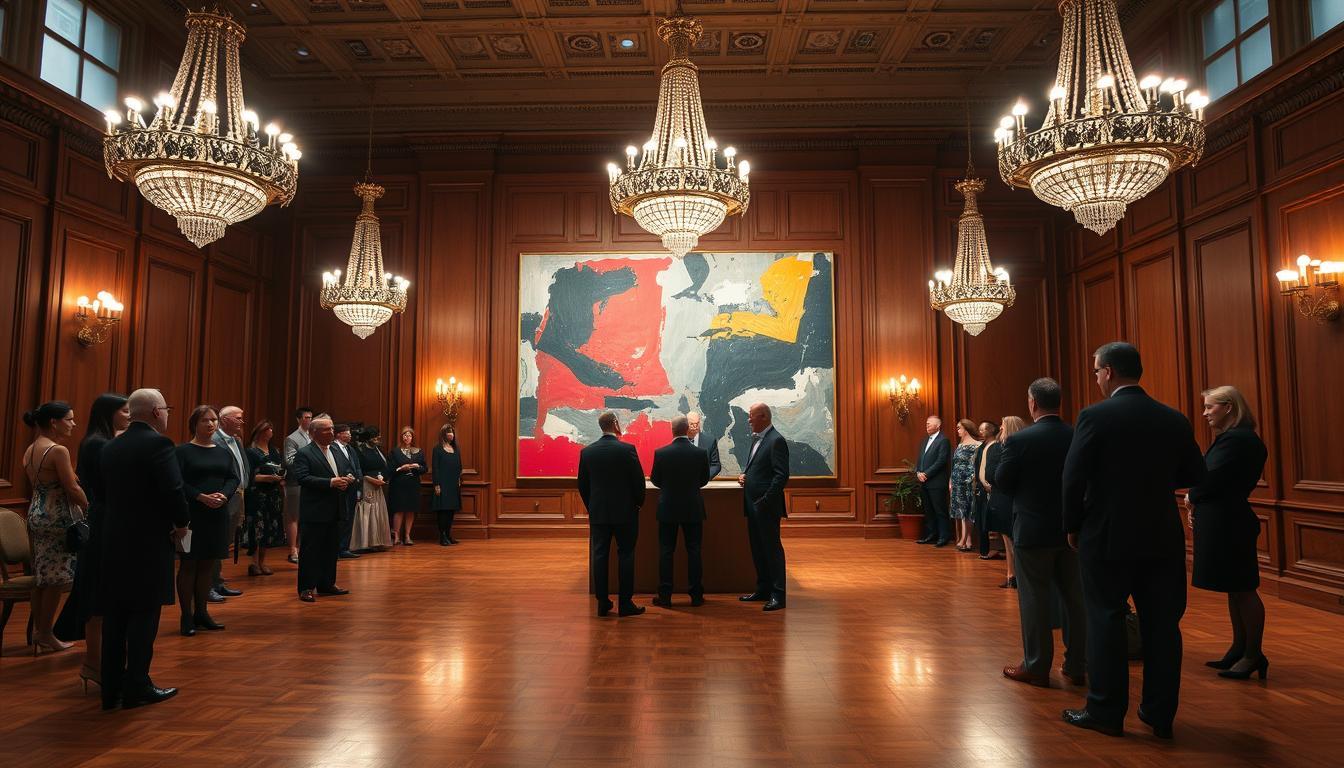
The most common public “about $70M” auction reference is Mark Rothko’s White Center (Yellow, Pink and Lavender on Rose), widely reported at $72.8M at a Sotheby’s New York evening sale. The number you see in headlines is usually the inclusive total (hammer + buyer’s premium), which is why it gets rounded in summaries.
This matters because the last bid and the published total are not the same thing. A high-sixties hammer can become a $70M-plus headline once premiums and fees are added. If you want to read real demand, you translate the headline back into the hammer.
Below is a fast walkthrough: the cleanest $70M reference point, the simplest premium math, and the practical signals that push a painting into that band.

Key takeaways
- The “about $70M” number is typically an inclusive total, not the final bid.
- White Center is a commonly cited public match near this price band.
- Buyer’s premium is the main reason headlines look higher than bidding.
- Provenance, estimate strategy, and lot timing heavily influence results.
- For home buyers: focus on scale, materials, and finish—not auction hype.
Bring that “high-end wall” feeling home
Skip the auction drama and go straight to the effect: scale, colour, and finish. Explore our Modern Canvas Prints, designed to look intentional the moment they’re on the wall.
Explore Modern Canvas PrintsThe painting that sold for about $70 million
The cleanest shorthand reference is Rothko’s White Center, widely reported at $72.8M in a Sotheby’s New York evening sale. It gets mentioned so often because it sits right on the “round number” line journalists like to use.
Why this sale is referenced
- It’s close enough to be rounded without changing the story.
- New York evening sales concentrate global bidders and attention.
- Strong provenance and positioning reduce doubt and increase confidence.
- The published number includes the premium, not just the bidding.
Browse more art market articles here: Rossetti Art Blog.
A short video explanation
If you prefer the visual version, here’s a quick breakdown from our YouTube channel.
Why a painting reaches this price band
- Confidence: clean provenance and condition reduce buyer doubt.
- Scale: room-dominating works tend to pull bigger bidding.
- Placement: prime evening-sale slots get the most attention.
- Story: catalogue narrative can widen the bidder pool.
- Competition: two determined bidders can change the number instantly.
Prefer one-of-one?
If what you like about auctions is uniqueness, browse our Original Paintings. One piece, one owner, no guessing.
Explore Original PaintingsWhat this means if you're buying art for your home
Auction headlines are useful context, but home buying is simpler. Focus on what changes a room: scale, materials, and finish. A strong focal piece makes your space feel pulled together instantly.
- Size: bigger often looks more intentional when the wall can handle it.
- Palette: warm tones are one of the fastest ways to add depth.
- Finish: framing and ready-to-hang details are what make it feel expensive.
Want a gallery feel without more wall art?
Sculptures change a space even when you’re not looking at them. Explore our Modern Sculptures collection.
Explore Modern SculpturesFAQ
Which painting is the closest public match to “about $70M”?
Rothko’s White Center is widely reported around $72.8M, and often gets rounded in summaries.
What is the buyer’s premium?
It’s an extra percentage added to the hammer price by the auction house. It’s the main reason headlines often look higher than the final bid.
Should I use auction headlines to set my home art budget?
Not directly. Use headlines as context, but for home purchases focus on size, quality, and finish. Those are what change how a piece looks on the wall.

About the Author
Chiara Rossetti
Chiara Rossetti is the founder of Rossetti Art, a canvas print and original art brand. She writes about interior design, wall art styling, and the art of making a home feel alive.



Leave a comment
This site is protected by hCaptcha and the hCaptcha Privacy Policy and Terms of Service apply.