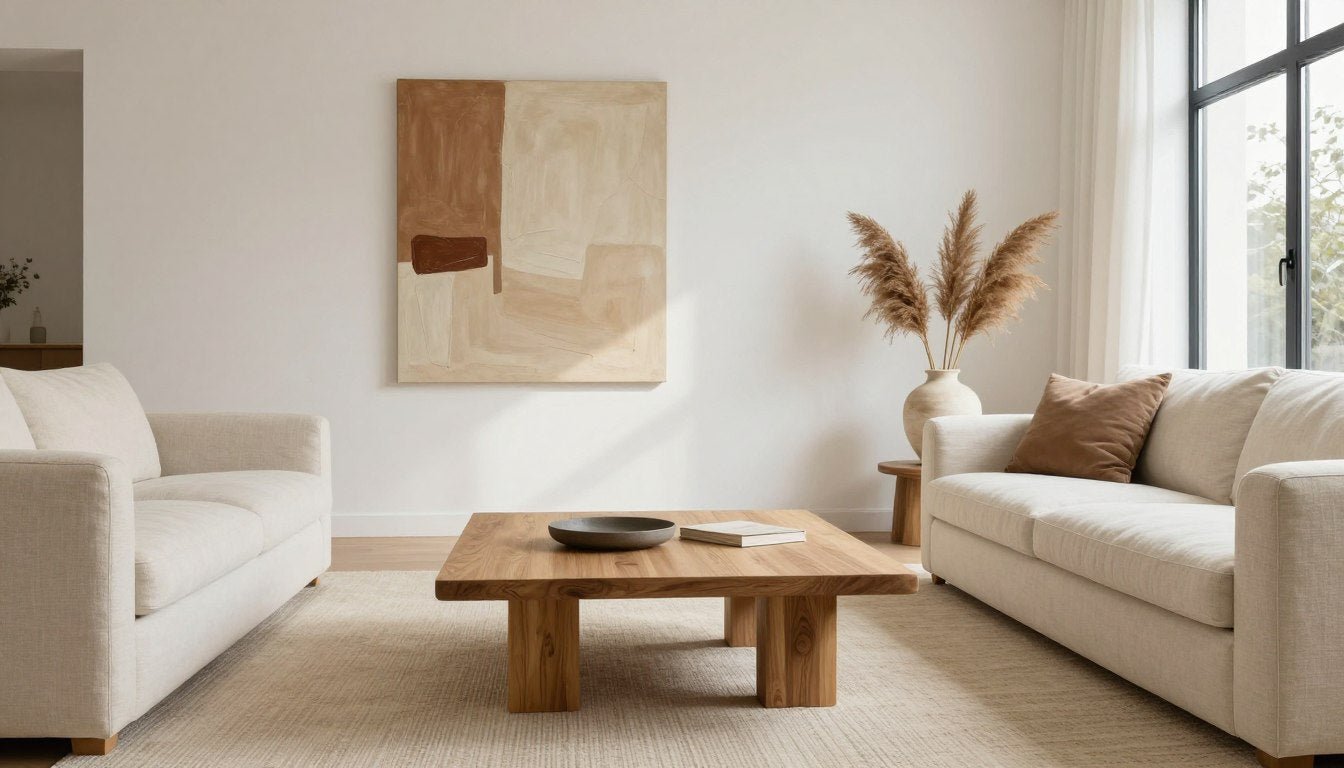

The evolution of minimalism interior design has brought us something truly transformative. Warm minimalism interior styling represents a thoughtful departure from the stark, clinical spaces that once defined minimalist aesthetics. This approach embraces the foundational principles of traditional minimalism while layering in texture, natural materials, and carefully selected pieces that invite comfort rather than distance.
Today's design-conscious homeowners seek spaces that feel both curated and livable. They want clean lines without coldness, simplicity without sterility. In this comprehensive guide, you'll discover how to create a warm minimalist interior that reflects sophistication while embracing genuine warmth. We'll explore color palettes, furniture selection, lighting strategies, and the essential role of art in transforming minimalist spaces into sanctuaries of calm elegance.
Understanding Warm Minimalism Interior Design Philosophy

The Evolution Beyond Traditional Minimalism
Traditional minimalism emerged from modernist movements that prioritized function and form reduction. These spaces often featured monochromatic palettes, industrial materials, and an almost austere quality. While visually striking, many found these interiors emotionally distant.
Warm minimalism interior design philosophy evolved as a response to this coldness. It maintains the decluttered aesthetic and intentional design choices of minimalism while introducing elements that engage the senses. Natural wood replaces cold metal. Linen and wool soften hard surfaces. Warm whites and earth tones create visual warmth that bright white never could.
Core Principles of Warm Minimalist Spaces
The foundation of this design approach rests on several key principles. Quality over quantity guides every purchase decision. Each piece of furniture serves a purpose while contributing to the overall aesthetic. Space remains uncluttered, but thoughtfully filled rather than empty.
Natural materials form the backbone of warm minimalism. Wood, stone, linen, cotton, wool, and ceramic bring organic texture to spaces. These materials age gracefully, developing character that synthetic alternatives cannot match. The connection to nature inherent in these choices creates psychological warmth that transforms the entire room.
Minimalist Foundations
These elements maintain the minimalist framework that keeps spaces from feeling cluttered or chaotic.
- Clean lines and uncluttered surfaces
- Functional furniture with purpose
- Limited color palettes
- Emphasis on negative space
- Quality over quantity philosophy
Warming Elements
These additions transform stark minimalism into inviting, livable warm minimalist interior spaces.
- Natural wood tones and textures
- Soft textiles in organic fabrics
- Layered lighting for ambiance
- Organic shapes and curved forms
- Carefully curated art pieces
Material Choices
Selecting the right materials ensures your space feels warm rather than cold and clinical.
- Oak, walnut, and teak woods
- Natural stone and ceramic
- Linen, cotton, and wool textiles
- Brass and bronze metal accents
- Handcrafted artisan pieces
Color Philosophy
Warm neutral palettes create the foundation for inviting minimalist interior design schemes.
- Warm whites and creams
- Beige, taupe, and sand tones
- Terracotta and clay accents
- Soft grays with warm undertones
- Muted earth tone highlights
Warm Minimalism Color Palettes and Material Selection

Building Your Warm Neutral Color Palette
The warm neutral color palette forms the visual foundation of this aesthetic. Unlike the stark whites of traditional minimalism, warm minimalism embraces ivory, cream, beige, and taupe as base colors. These hues create an enveloping quality that makes spaces feel intimate rather than institutional.
Layer these neutrals with intention. Your walls might feature a warm white with subtle yellow or pink undertones. Furniture in natural linen brings texture in slightly deeper beige tones. Wood elements introduce honey, caramel, or walnut shades. This graduated approach to color creates depth while maintaining the cohesive simplicity that defines minimalism.
Accent colors in warm minimalism remain subdued but meaningful. Terracotta, rust, sage green, and dusty rose can appear in carefully selected pieces. A single accent chair in burnt orange or a collection of earth-tone ceramics provides visual interest without overwhelming the space. The rule remains consistent: every color choice should feel intentional and restrained.
Selecting Natural Materials for Texture and Warmth
Natural materials distinguish warm minimalist interior design from its cooler predecessor. Wood becomes the hero material, appearing in furniture, flooring, and architectural details. Oak offers light, honey tones perfect for Scandinavian-influenced spaces. Walnut provides richer, more dramatic warmth. Teak brings golden undertones that age beautifully.
Stone and ceramic add tactile variation. Marble with warm veining works for countertops and accent tables. Limestone flooring in cream or beige tones provides subtle texture underfoot. Handcrafted ceramic pieces, whether vases or lighting fixtures, introduce organic imperfection that machine-made items cannot replicate.

Textiles bring essential softness to minimalist interior spaces. Linen, with its natural slubs and wrinkles, adds casual sophistication to upholstery and window treatments. Cotton in substantial weaves provides comfort without fussiness. Wool appears in area rugs, throws, and upholstery, offering both visual warmth and actual insulation.
Metal finishes in warm minimalism trend toward brushed brass, oil-rubbed bronze, and matte gold. These materials age gracefully, developing patina that adds character. They provide visual warmth that chrome and polished nickel cannot match. Use them sparingly in lighting fixtures, cabinet hardware, and furniture accents.
Furniture Selection for Warm Minimalist Interior Spaces

Choosing Pieces with Clean Lines and Organic Forms
Furniture in warm minimalism interior design balances geometric precision with organic softness. A sofa might feature clean lines in its overall silhouette while incorporating rounded arms or curved backs. This approach softens the rigid geometry of traditional minimalism without abandoning its foundational clarity.
The coffee table serves as an excellent example of this balance. A round or oval table in natural wood provides organic form while maintaining minimalist simplicity. The grain pattern and warm tone of the wood add visual interest without requiring ornamental details. Scale remains important—furniture should be appropriately sized for the space, neither oversized nor uncomfortably diminutive.
Quality Over Quantity in Furniture Selection
The principle of quality over quantity cannot be overstated in this design approach. Each piece of furniture should justify its presence through function, beauty, and craftsmanship. Investment pieces in solid wood or premium upholstery will outlast and outperform budget alternatives.
A warm minimalist living room might contain only a sofa, two accent chairs, one coffee table, and one side table. This restraint allows each piece to breathe and be appreciated individually. The sofa in natural linen becomes a statement of understated luxury. The accent chair in a slightly deeper tone provides visual variation without clutter.
Dining spaces follow similar principles. A solid wood dining table in oak or walnut anchors the room. Chairs might feature simple wooden frames with linen cushions, combining visual lightness with practical comfort. The table itself becomes sculptural when not in use, its wood grain and form creating interest in an otherwise spare space.

Storage Solutions That Maintain Visual Calm
Storage furniture in warm minimalism must be both functional and beautiful. Built-in cabinetry in natural wood maintains clean lines while providing essential storage. Freestanding pieces should feature thoughtful design—closed storage that conceals clutter while contributing to the room's aesthetic.
A credenza in warm walnut might serve multiple purposes in a living room: media storage, display surface for carefully selected pieces, and visual anchor. Its horizontal lines and natural material align perfectly with warm minimalist principles. Similarly, bedroom storage in light oak keeps clothing hidden while its clean design maintains the room's tranquil atmosphere.
Layered Lighting Design for Warmth and Depth

Creating Ambient Lighting Foundations
Lighting transforms minimalist interior design from stark to inviting. Ambient lighting provides the foundation, establishing overall illumination levels. In warm minimalism, this layer emphasizes soft, diffused light rather than harsh overhead fixtures.
Recessed lighting with warm LED bulbs creates even, shadow-free illumination. The key lies in color temperature selection—2700K to 3000K provides the warm glow that supports this aesthetic. Dimmer switches offer control, allowing you to adjust lighting intensity throughout the day.
Natural light remains the most important lighting element. Large windows without heavy treatments allow sunlight to fill spaces. Sheer linen curtains provide privacy while maintaining light flow. The interplay between natural and artificial lighting creates dynamic spaces that change with the sun's movement.
Task and Accent Lighting for Functionality and Drama
Task lighting serves specific functions while contributing to the design aesthetic. A floor lamp with a linen shade and brass base provides reading light while serving as a sculptural element. Swing-arm wall sconces beside the bed offer practical functionality in forms that enhance rather than detract from the space.
Accent lighting highlights architectural features, art, and carefully selected pieces. Picture lights in warm brass illuminate wall art, creating focal points in otherwise minimal spaces. Under-cabinet lighting in the kitchen provides functional illumination while emphasizing natural wood cabinetry. These layers build depth and interest essential to warm minimalism.

Choosing Lighting Fixtures as Design Elements
Light fixtures in warm minimalism interior spaces function as both illumination sources and art pieces. A pendant light in handblown glass with amber tones becomes a sculptural focal point above the dining table. Its organic form and warm material align perfectly with this design philosophy.
Floor lamps and table lamps offer opportunities for introducing texture and form. A floor lamp with a natural linen shade and walnut tripod base combines multiple warm materials in a single functional piece. Table lamps in ceramic with organic shapes add sculptural interest to side tables and consoles.
Wall Art and Textiles: Adding Warmth Through Carefully Selected Pieces

Selecting Minimalist Wall Art That Adds Warmth
Art plays a crucial role in elevating warm minimalist interior design from pleasant to exceptional. The right pieces add personality, color, and visual interest while maintaining the restrained aesthetic. Abstract works in warm earth tones complement neutral palettes without overwhelming them.
Large-scale pieces create impact without requiring multiple smaller works that can feel cluttered. A single oversized canvas in warm neutrals might anchor an entire living room wall. The scale allows the artwork to become a focal point while the muted palette maintains visual calm. This approach aligns with the minimalist principle of intentional, meaningful objects over collections.
For those seeking to introduce art that enhances rather than dominates warm minimalist spaces, our canvas prints collection offers carefully curated pieces designed to complement sophisticated interiors. These works feature the warm earth tones and abstract compositions that define this aesthetic.

Abstract Canvas Prints
Our abstract canvas prints bring warmth and sophistication to minimalist interiors. Featuring earthy palettes and organic compositions, these pieces serve as focal points without overwhelming clean-lined spaces.

Original Paintings
Original paintings introduce unique texture and depth that reproductions cannot match. Each brushstroke adds dimension, creating visual interest that complements the tactile quality of natural materials throughout your space.

Sculptural Elements
Three-dimensional art pieces add architectural interest to warm minimalist interiors. Sculptures in organic forms and natural materials provide focal points on consoles, shelves, and coffee tables.
Incorporating Textiles for Softness and Texture
Textiles bring essential warmth and comfort to minimalist interior spaces. Area rugs in natural fibers define spaces while adding texture underfoot. A large wool rug in cream or beige anchors a seating area, its subtle texture visible without being distracting. The rug's neutral tone supports the overall palette while its material adds warmth that hard flooring cannot provide.

Throw pillows and blankets offer opportunities for layering textures and subtle color variation. Pillows in linen, cotton, and wool combine different tactile qualities in a cohesive color story. A chunky knit throw in cream adds visual and physical warmth to a sofa. These elements can be easily changed with seasons, allowing subtle updates to the space.
Window treatments in warm minimalism favor natural fabrics that filter light beautifully. Floor-to-ceiling linen curtains in warm white or cream soften windows while maintaining the clean lines essential to this aesthetic. When drawn, they create soft folds that add organic movement to otherwise structured spaces.
Rugs as Foundation Elements
The right area rug can define and anchor a warm minimalist interior. Natural fiber rugs in jute or sisal provide texture and neutral tone perfect for this aesthetic. Their organic quality and subtle variation create visual interest without pattern or bright color.
Wool rugs offer more softness underfoot while maintaining the natural material philosophy. A low-pile wool rug in cream or warm gray provides comfort in living spaces and bedrooms. Hand-woven options introduce slight imperfections that enhance the handcrafted quality valued in warm minimalism.
Size matters significantly in minimalist spaces. Rugs should be large enough to anchor furniture groupings—all furniture legs should rest on the rug, or at minimum, front legs of sofas and chairs. This creates cohesive zones within open floor plans while maintaining the spacious quality that defines minimalism.
Room-by-Room Guide to Warm Minimalism Interior Design

Creating a Warm Minimalist Living Room
The living room serves as the heart of warm minimalism interior design. Begin with a neutral foundation—warm white walls and natural wood or limestone flooring. A sectional sofa in natural linen provides ample seating while its clean lines maintain minimalist integrity. Position it to create conversation areas rather than pushing furniture against walls.
The coffee table becomes a focal point for carefully selected pieces. A round table in natural oak or walnut offers organic form and warm material. Keep its surface mostly clear—perhaps a single coffee table book, a small ceramic vase with dried stems, and a textured tray for remotes. This restraint allows the table's beauty to be appreciated.
Wall art should be thoughtfully placed at eye level, approximately 57 inches from the floor to the center of the artwork. One large piece creates more impact than multiple smaller works. Select art with warm earth tones that complement your neutral palette while adding visual interest. The right piece transforms a wall from empty to elegantly appointed.
Designing a Serene Warm Minimalist Bedroom
Bedrooms in this style prioritize calm and rest above all else. A low platform bed in light oak creates a floating quality that makes the room feel spacious. Dress it with layers of natural textiles—linen sheets, a cotton duvet cover, and a wool throw in graduated neutral tones.

Nightstands should be simple and functional. A single wooden nightstand on each side of the bed provides necessary surface area without visual weight. Top each with a small lamp in brass or ceramic and perhaps a single book or small plant. This restraint maintains the calm atmosphere essential for rest.
Lighting in the bedroom requires particular attention. Ambient lighting from recessed fixtures should be dimmable for evening relaxation. Bedside lamps with linen shades provide reading light with warm glow. Consider adding a statement pendant or chandelier in natural materials as a sculptural element that enhances the room's design.
Crafting a Functional Warm Minimalist Kitchen
Kitchens balance function with aesthetics in warm minimalism. Flat-front cabinetry in natural wood or warm white creates clean lines. Open shelving in natural wood displays carefully curated dishware and glassware while adding warmth. The key lies in restraint—only beautiful, frequently used items should be visible.
Countertops in natural stone or quartz with warm veining provide durable work surfaces that complement the aesthetic. A single large sink in brushed brass or matte black creates a focal point. Faucets and hardware in warm metals tie into the overall design while providing functional elements that elevate the space.
The dining table extends the kitchen's warm minimalist aesthetic. A solid wood table in oak or walnut seats family and guests while serving as a design statement. Pair it with simple wooden chairs, perhaps with linen cushions for comfort. A single pendant light in natural materials or brass hangs above, providing both illumination and visual anchor.
Bathroom Design in Warm Minimalist Style
Bathrooms offer opportunities for spa-like serenity through warm minimalism. Natural stone tiles in warm beige or cream cover floors and shower walls. Floating vanities in natural wood provide storage while maintaining visual lightness. Vessel sinks in ceramic or stone add organic form to otherwise geometric spaces.
Fixtures in brushed brass or matte black provide subtle contrast against neutral backgrounds. A freestanding tub in white porcelain becomes a sculptural element, its curved form softening the angular quality of tile work. Windows dressed with simple roller shades in natural fabric maintain privacy while allowing natural light.
Styling Details and Finishing Touches

The Art of Curated Living Space Display
Styling in warm minimalism requires restraint and intention. Every object on display should serve aesthetic or functional purpose—ideally both. A console table might hold a single ceramic vase with dried branches, a stack of two art books, and a small wooden bowl. This edited approach creates visual interest without clutter.
Organic forms and shapes soften the geometric quality of furniture and architecture. Round vases, curved bowls, and sculptural objects in natural materials add dimension. These pieces break up straight lines while maintaining the cohesive material palette essential to this style.
Collections should be thoughtfully curated rather than comprehensive. Three ceramic pieces in varying heights and shapes create more impact than a dozen disparate objects. This restraint allows each piece to be appreciated individually while contributing to a cohesive whole.
Bringing Nature Indoors
Natural elements connect interior spaces to the outdoors, an important aspect of warm minimalism. Large potted plants in simple ceramic or terracotta planters add life and organic form. Select plants with architectural quality—fiddle leaf figs, snake plants, or olive trees in decorative planters.
Dried botanicals offer low-maintenance natural beauty. Pampas grass in tall vases creates dramatic vertical interest. Dried eucalyptus or palm fronds in simple vessels add subtle color and texture. These elements bring nature indoors while requiring minimal care and lasting through seasons.

Seasonal Adjustments Within the Aesthetic
Warm minimalism interior design allows for subtle seasonal changes without abandoning core principles. In cooler months, add wool throws in slightly deeper tones. Swap lighter linen pillows for heavier cotton or velvet in warm earth tones. These small changes create seasonal comfort while maintaining the overall aesthetic.
Summer might see lighter linens return, perhaps in slightly cooler beige or warm gray tones. Remove heavier throws and switch to lighter cotton blankets. The changes remain subtle—this design approach doesn't require complete seasonal overhauls, just thoughtful adjustments that respond to changing needs.
Common Mistakes to Avoid in Warm Minimalism Interior Design

Avoiding the Cold Minimalism Trap
The most common mistake involves creating spaces that feel sterile rather than serene. This happens when designers focus solely on minimalist principles without incorporating warming elements. All-white palettes without warm undertones create clinical rather than calm environments. The solution lies in choosing warm whites—ivory, cream, or whites with slight yellow or pink undertones.
Another pitfall involves neglecting texture in pursuit of clean lines. A room can maintain minimalist aesthetics while incorporating multiple textures through materials. Smooth wood, rough linen, soft wool, and matte ceramics create tactile interest without visual clutter. Each material contributes warmth that perfectly smooth surfaces cannot provide.
Finding Balance Between Minimal and Livable
Some interpreters of minimalism interior design create spaces so spare they feel uninhabitable. Warm minimalism should feel inviting and comfortable, not like a museum. Include enough seating for family and guests. Provide surfaces for setting drinks and books. Ensure adequate lighting for activities beyond contemplation.
Storage becomes crucial in preventing clutter that destroys minimalist aesthetics. Without adequate hidden storage, daily life items accumulate on surfaces, creating visual chaos. Invest in beautiful storage furniture that keeps necessities accessible but out of sight. This allows spaces to maintain their calm aesthetic while supporting real life.
Scale and Proportion Considerations
Furniture too small for a space creates an uncomfortable, floating quality that undermines the grounded feeling warm minimalism should provide. Conversely, oversized pieces overwhelm rooms and prevent the breathing space minimalism requires. Measure carefully and select appropriately scaled furniture.
Art scale matters equally. A tiny piece on a large wall feels lost and creates visual imbalance. Follow the two-thirds rule—artwork should be approximately two-thirds the width of the furniture piece below it. For standalone wall art, larger pieces generally create more impact than collections of smaller works.
Creating Warm Minimalism on Various Budgets

Investment Pieces Worth Prioritizing
When budget requires prioritization, invest in foundational pieces that will last decades. A quality sofa in durable natural fabric serves you for years and anchors your living space. Solid wood dining tables and beds appreciate with age, their materials developing character that particleboard alternatives never achieve.
Lighting represents another worthy investment area. Quality fixtures in timeless designs and durable materials like brass or ceramic outlast trendy alternatives. They also significantly impact how spaces feel—good lighting transforms entire rooms and justifies its cost through daily experience.
Budget-Friendly Approaches to the Aesthetic
Create warm minimalist interior spaces on limited budgets by focusing on paint, textiles, and careful editing. Fresh paint in warm white costs relatively little but dramatically impacts how spaces feel. Decluttering costs nothing and immediately moves interiors toward minimalist aesthetics.
Thrift stores and secondhand markets offer solid wood furniture at fraction of retail costs. A dated wooden dresser becomes beautiful with light sanding and natural oil finish. Similarly, natural fiber rugs and linen textiles appear at discount retailers—the key lies in selecting simple, quality basics rather than trendy pieces.
Art need not break budgets to enhance warm minimalism. Our canvas prints collection offers accessible options for those seeking museum-quality artwork at approachable price points. These carefully curated pieces bring the sophistication of original art to various budgets.
DIY Projects That Enhance the Aesthetic
Simple DIY projects can significantly enhance warm minimalist spaces without professional costs. Floating shelves in natural wood provide display and storage while adding warmth to walls. Creating simple plywood furniture with clean lines and natural oil finish achieves the aesthetic at minimal cost.
Textile projects offer another accessible entry point. Sewing simple linen pillow covers costs little but adds custom touches. Dyeing fabric in warm earth tones using natural dyes creates one-of-a-kind pieces. These projects infuse spaces with personality while maintaining the aesthetic's core principles.
Curate Your Warm Minimalist Space with Carefully Selected Art
The difference between stark minimalism and warm minimalism interior design often comes down to the art you choose. Thoughtfully selected pieces add warmth, personality, and visual interest while maintaining the clean aesthetic you desire. Our collections feature works specifically curated for sophisticated interiors where every element must earn its place. From abstract canvases in earth tones to sculptural pieces that add dimension, each work brings the refined touch that elevates minimalist spaces from simple to exceptional.
Frequently Asked Questions About Warm Minimalism Interior Design
What is the difference between minimalism and warm minimalism interior design?
Traditional minimalism emphasizes stark simplicity, often featuring all-white palettes, industrial materials like steel and glass, and a somewhat austere quality. Warm minimalism interior design maintains the uncluttered aesthetic and clean lines of minimalism while incorporating natural materials, warm neutral color palettes, and textural elements that create inviting rather than clinical spaces.
The key distinction lies in material choices and color temperature. Warm minimalism embraces wood, linen, wool, and ceramic in place of cold metals and plastics. Color palettes shift from bright white to warm whites, creams, beiges, and earth tones. This approach preserves the intentional, edited quality of minimalism while creating spaces people actually want to inhabit long-term.
How do I choose the right warm neutral color palette for my minimalist interior?
Start by selecting a warm white for walls—look for whites with subtle yellow, pink, or beige undertones rather than cool whites with blue or gray bases. Test paint samples in your actual space, as lighting dramatically affects how colors appear. Your base white should feel creamy rather than stark.
Layer additional neutrals in graduated tones. Furniture might introduce beige or taupe, while wood elements bring honey, caramel, or walnut tones depending on species. Textiles can add slightly deeper shades—a warm gray throw or terracotta accent pillow. The key is maintaining a cohesive temperature throughout—all warm or all cool, never mixed, which creates visual discord.
What types of art work best in warm minimalist interior spaces?
Abstract artwork in earth tones complements warm minimalism beautifully. Look for pieces featuring warm beiges, terracottas, creams, muted greens, and soft grays. The composition should be relatively simple—busy, complex works can overwhelm the clean aesthetic. Large-scale pieces create more impact than collections of smaller works, following the minimalist principle of quality over quantity.
Original paintings add texture through visible brushstrokes, introducing tactile dimension that complements the natural materials throughout your space. Canvas prints offer accessibility while maintaining visual impact. Avoid overly bright colors or busy patterns that compete with the calm aesthetic. Instead, select art that serves as a sophisticated focal point while supporting the overall warm neutral palette.
How can I make my minimalist interior feel warmer without adding clutter?
Focus on material and texture rather than quantity of objects. Replace cool materials with warm alternatives—swap chrome for brass, plastic for ceramic, polyester for linen. Add a chunky wool throw to your sofa, layer textured pillows in natural fabrics, and introduce a natural fiber area rug. These additions create warmth without visual clutter.
Lighting makes an enormous difference in how warm spaces feel. Replace cool LED bulbs with warm ones (2700K-3000K color temperature). Add table lamps with linen shades that cast warm glows. Introduce natural elements like plants or dried botanicals in simple vessels. Each addition should be intentional and beautiful, earning its place in your carefully curated space.
Is warm minimalism suitable for small spaces?
Warm minimalism works exceptionally well in small spaces, perhaps even better than in large ones. The uncluttered nature of minimalist interior design makes rooms feel more spacious, while warm materials and colors prevent them from feeling cold or institutional. The key lies in careful furniture selection and restraint in accessories.
Choose multifunctional furniture that serves storage needs while maintaining clean lines. A bed with built-in drawers eliminates the need for a separate dresser. Floating shelves provide display and storage without floor space. Light wood tones make spaces feel larger than dark woods. By maintaining the edited, intentional approach of minimalism while incorporating warm materials, small spaces become cozy retreats rather than cramped quarters.
How do I incorporate personal items in a warm minimalist home?
Personal items can exist in warm minimalism interior design when thoughtfully curated and displayed. Rather than showing every collected object, select a few meaningful pieces that align aesthetically with your space. A single piece of inherited pottery displayed on a shelf makes more impact than a crowded collection.
Use the "one in, one out" rule to prevent accumulation. When adding new items, remove something else. Store seasonal or rotating items in beautiful boxes or baskets, swapping displays periodically. This approach allows you to enjoy personal treasures while maintaining the visual calm essential to minimalism. The key is editing rigorously—only the most meaningful, beautiful items earn display space in your carefully crafted environment.
What are the best flooring options for warm minimalist interiors?
Natural hardwood flooring in light to medium tones works beautifully in warm minimalism. Oak offers honey tones that brighten spaces while adding warmth. Walnut provides richer, deeper warmth for those who prefer more drama. Both age gracefully, developing character over years that synthetic alternatives cannot match.
Light-colored natural stone like limestone or travertine offers another excellent option, particularly in kitchens and bathrooms. These materials bring subtle texture and warm neutral tones. For budget-conscious projects, high-quality laminate in realistic wood tones can work, though natural materials should be prioritized when possible. Avoid very dark floors or cool-toned grays, which undermine the warm aesthetic you're creating.
Creating Your Warm Minimalist Sanctuary

Warm minimalism interior design represents an evolution in how we approach our living spaces. It proves that minimalism need not mean cold or austere. By thoughtfully incorporating natural materials, warm neutral color palettes, and carefully selected pieces, we create environments that soothe rather than stress, welcome rather than intimidate.
The journey toward warm minimalist interior spaces requires patience and intention. Each piece you bring into your home should serve a purpose, whether functional or aesthetic—ideally both. Quality consistently trumps quantity. Natural materials age beautifully, developing patina and character that synthetic alternatives never achieve. This investment in quality and authenticity pays dividends in spaces that improve with time rather than requiring constant updates.
Remember that warm minimalism allows for personal expression within its framework. Your space should reflect your needs and aesthetic preferences while maintaining the core principles of intentionality, restraint, and warmth. Whether you're drawn to Scandinavian-inspired interiors with lighter woods or prefer the richness of walnut and deeper earth tones, the fundamental approach remains consistent.
Art plays an essential role in elevating these spaces from merely pleasant to truly exceptional. The right pieces add depth, personality, and visual interest while supporting the overall aesthetic. As you refine your warm minimalist interior, consider how thoughtfully selected artwork can transform your carefully curated space into something that feels uniquely yours. Explore our collections to discover pieces that bring the warmth and sophistication your minimalist sanctuary deserves.

Leave a comment
This site is protected by hCaptcha and the hCaptcha Privacy Policy and Terms of Service apply.