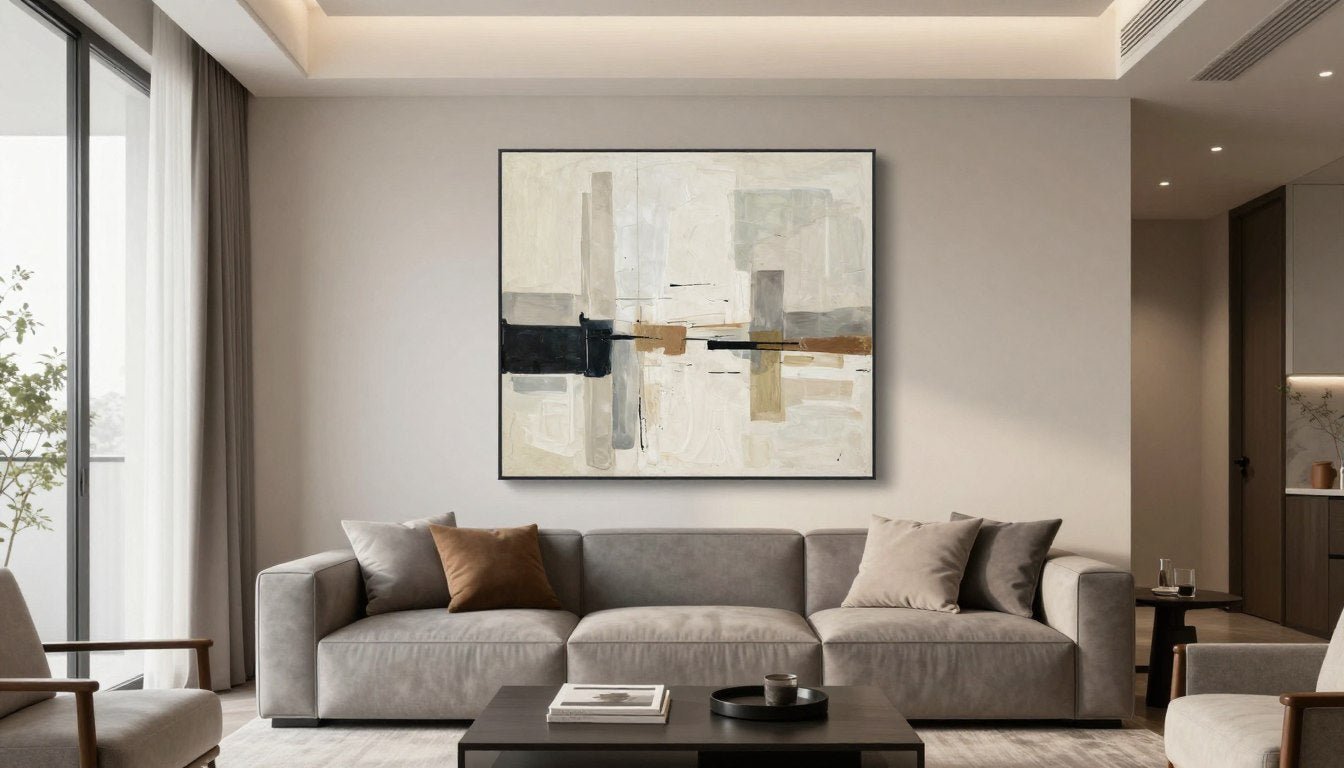

Choosing the right art above sofa can transform your living room from ordinary to extraordinary. The space above your couch serves as a focal point that anchors the entire room's design aesthetic. Yet many homeowners struggle with critical decisions: how large should the artwork be, what height creates visual balance, and which style complements existing decor?
This comprehensive guide provides expert-level advice on selecting, sizing, and hanging wall art above your sofa. You'll discover proven design rules used by professional interior designers, learn precise measurements that create harmonious proportions, and explore style coordination strategies that elevate your living space. Whether you're considering canvas prints, original paintings, or creating a gallery wall, these actionable insights will help you achieve a polished, professional look.
How to Choose the Right Size Art for Your Sofa

The relationship between your artwork and sofa dimensions determines whether your living room feels balanced or awkward. Professional designers rely on specific proportional guidelines to create visual harmony.
The Two-Thirds Rule for Wall Art Width
The foundational principle for sizing art above sofa is the two-thirds rule. Your artwork should measure approximately two-thirds the width of your sofa to create ideal visual proportions.
For example, if your couch measures 90 inches wide, your wall art should span roughly 60 inches. This proportion prevents artwork from appearing too small and insignificant or overwhelmingly large.

When working with single large pieces, aim for 50-75% of sofa width. Gallery walls offer more flexibility but should still respect the two-thirds guideline as an overall composition.
Scale Considerations for Different Sofa Sizes
Different sofa dimensions require adjusted approaches to artwork scale:
Small Sofas (60-72 inches)
Compact seating works beautifully with focused artwork that doesn't overwhelm the space.
- Single artwork: 40-50 inches wide
- Vertical orientation creates height
- Consider a diptych (two-panel piece)
- Avoid overly large landscape pieces
Standard Sofas (80-90 inches)
Most common sofa size offers excellent flexibility for various artwork configurations.
- Single artwork: 55-65 inches wide
- Gallery wall: 50-70 inches total width
- Large canvas prints work exceptionally well
- Room for creative arrangement styles
Sectional Sofas (100+ inches)
Expansive seating demands substantial wall art to maintain visual balance.
- Single artwork: 70-80 inches wide
- Multiple large pieces in series
- Extensive gallery wall compositions
- Consider triptych arrangements
Apartment-Size Sofas (70-78 inches)
Space-conscious furniture benefits from thoughtfully proportioned art.
- Single artwork: 45-55 inches wide
- Medium-scale canvas prints ideal
- Vertical pieces add perceived height
- Avoid horizontal dominance
Height and Ceiling Considerations
Ceiling height significantly influences how artwork scale impacts your room. Standard 8-foot ceilings accommodate most artwork sizes comfortably. Higher ceilings demand larger pieces or vertically-oriented compositions to fill space appropriately.

In rooms with 9-10 foot ceilings, consider artwork that extends higher on the wall. Vertical pieces or stacked arrangements prevent that awkward gap between artwork and ceiling that makes spaces feel incomplete.
Low ceilings require careful consideration. Avoid tall artwork that crowds the space. Instead, select wider, landscape-oriented pieces that draw the eye horizontally, creating an illusion of expanded space.
Discover Perfectly Proportioned Canvas Prints
Explore our curated collection of large-scale canvas prints designed to create stunning focal points above your sofa. Each piece is available in multiple sizes to match your specific proportions.
The 57-Inch Rule and Proper Hanging Height

Proper hanging height transforms good artwork placement into exceptional room design. The 57-inch rule, used by museums and galleries worldwide, provides a reliable starting point for hanging wall art.
Understanding the 57-Inch Eye-Level Rule
This design principle states that the center of your artwork should hang at 57 inches from the floor. This measurement represents average human eye level and creates comfortable viewing for most people.
To apply this rule, measure 57 inches up from your floor and mark lightly with pencil. This mark represents where the artwork's center should align, not the hanging hardware or frame top.
Calculate your hanging point by measuring your artwork height, dividing by two, then adding the distance from the top edge to your hanging hardware. Subtract this number from 57 inches to find your nail placement.
Adjusting for Sofa Proportions
While the 57-inch rule works beautifully in hallways and dining rooms, artwork above a sofa requires modification. The general rule suggests leaving 6-12 inches of space between your sofa back and the artwork bottom edge.

Standard sofas with backs around 33-36 inches high work well with artwork hung so the bottom edge sits approximately 40-48 inches from the floor. This creates the recommended visual breathing room without artwork appearing to float disconnected from furniture.
For low-profile modern sofas with backs around 28-30 inches, you can high hang artwork slightly higher. The gap between furniture and art can extend to 10-14 inches while maintaining visual connection.
Special Considerations for Different Room Types
Living room layouts influence optimal hanging height:
- Open-concept spaces benefit from higher artwork placement to remain visible from adjacent areas
- Formal living rooms with conversation-focused seating arrangements work well with standard 6-8 inch gaps
- Media rooms where sofas face televisions can accommodate artwork hung higher since viewing angle differs
- Small spaces with lower furniture may require tighter 5-6 inch gaps to maximize wall coverage
The High Hang Approach
Contemporary interior design increasingly embraces the high hang technique. This approach positions artwork higher on the wall than traditional rules suggest, creating drama and drawing eyes upward.

High hang works particularly well in rooms with tall ceilings where standard placement would leave excessive empty space above artwork. Consider this technique when your ceiling height exceeds 9 feet and your sofa has a lower back profile.
The key to successful high hang placement is maintaining visual connection between furniture and wall art. Even when positioned higher, artwork should still relate to the sofa through color, scale, or style continuity.
Coordinating Art Style with Your Living Room Design

Your artwork selection should harmonize with your living room's overall design aesthetic. The right style choice enhances your existing decor while expressing personal taste.
Modern and Contemporary Living Rooms
Clean lines and minimalist furniture pair beautifully with bold, statement-making wall art. Modern spaces often feature neutral color palettes that allow artwork to introduce vibrant color or dramatic contrast.
Abstract art dominates modern living room design. Large-scale abstracts with geometric patterns or expressive brushwork create focal points without competing with streamlined furniture. Consider pieces with strong color blocking or monochromatic compositions for sophisticated impact.

Black and white photography offers another excellent choice for contemporary spaces. Architectural photographs, nature studies, or urban landscapes rendered in monochrome provide visual interest while maintaining modern restraint.
Many homeowners working with modern design choose canvas prints for their clean presentation without traditional framing. The gallery-wrapped edges create seamless integration with minimalist aesthetics. If you're also refreshing your sofa this year, our look at 2026 sofa trends and the art that pairs with them breaks down which upholstery styles are trending and how to choose wall art that complements them.
Traditional and Transitional Spaces
Classic furniture styles welcome artwork with historical depth and refined subject matter. Traditional living rooms often feature rich wood tones, detailed upholstery, and layered textures that call for equally substantial art.
Landscape paintings bring timeless elegance to traditional spaces. Whether depicting pastoral countryside, seascapes, or mountain vistas, landscape art introduces nature and creates calming focal points. Look for pieces with classical composition and rich, developed color palettes.

Impressionist works bridge traditional and more contemporary tastes beautifully. The recognizable subject matter appeals to classic sensibilities while loose, expressive brushwork introduces artistic sophistication.
Transitional design—blending traditional and modern elements—allows broader artistic flexibility. This style accommodates both realistic and abstract artwork, provided the color palette coordinates with room furnishings.
Bohemian and Eclectic Interiors
Layered, personality-rich spaces invite artistic experimentation. Bohemian living rooms thrive on mix-and-match aesthetics where artwork contributes to the collected-over-time feel.
Gallery walls excel in eclectic settings. Mix different frame styles, artwork sizes, and artistic mediums to create dynamic visual interest. Combine prints, paintings, textiles, and even three-dimensional pieces like small sculptures or wall-mounted objects.

Textile art and tapestries align beautifully with bohemian aesthetics. Woven wall hangings, vintage textiles, or contemporary fiber art introduce texture and warmth while maintaining the relaxed, global-inspired feel.
Don't hesitate to incorporate cultural artifacts, vintage finds, or travel-inspired pieces. The eclectic approach celebrates personal history and individual style expression.
Find Your Perfect Art Style
Browse our curated collection of original paintings spanning impressionism, abstract expressionism, contemporary realism, and landscape art. Each piece is selected to complement sophisticated interior design.
Minimalist and Scandinavian Design
Pared-down aesthetics require thoughtful artwork selection that honors the "less is more" philosophy. Minimalist living rooms feature limited color palettes, natural materials, and intentional negative space.
Single, impactful pieces work better than busy compositions in minimalist settings. Choose artwork with clean compositions, limited color schemes, and strong visual presence without overwhelming detail.
Line drawings, simple abstracts, and photography with negative space complement Scandinavian design beautifully. Look for pieces that introduce warmth through natural tones—soft grays, warm whites, muted earth tones—rather than bold color contrasts.

Natural subjects rendered simply—botanical studies, simple landscapes, or abstract organic forms—reinforce the connection to nature central to Scandinavian design philosophy.
Color Coordination and Palette Selection

Color creates the emotional foundation of your living room. Strategic artwork color selection either harmonizes with existing palettes or introduces intentional contrast that energizes the space.
Complementary Color Strategies
The safest approach pulls artwork colors directly from existing room elements. Identify the dominant colors in your sofa upholstery, throw pillows, rugs, and window treatments, then select wall art incorporating those same hues.
This complementary strategy creates cohesive, professionally designed spaces where every element feels intentionally connected. Even if artwork introduces additional colors, maintaining some overlap with room furnishings ensures visual harmony.
For neutral living rooms dominated by grays, beiges, and whites, artwork provides opportunity to introduce accent colors. A single vibrant piece can define the entire room's color mood while neutral backgrounds allow the art to command full attention.
Creating Contrast and Visual Interest
While coordination ensures harmony, strategic contrast prevents rooms from feeling flat or monotonous. Artwork can introduce colors absent from your existing palette to create dynamic visual interest.

Consider the color wheel when planning contrast. Complementary colors—those opposite each other on the wheel—create vibrant, energizing combinations. A predominantly blue room gains warmth and energy from artwork featuring orange or coral tones.
Analogous color schemes use colors adjacent on the wheel for subtle sophistication. A green sofa pairs beautifully with artwork incorporating blue-greens and yellow-greens for a nature-inspired, cohesive feel.
Neutral Artwork in Colorful Rooms
Rooms with bold, colorful furniture and accessories sometimes benefit from neutral wall art that provides visual rest. Black and white photography, sepia-toned prints, or monochromatic paintings prevent sensory overload in vibrant spaces.
This approach works particularly well when architectural elements, textiles, or furniture already compete for attention. Neutral artwork anchors the space without adding additional color complexity.
Seasonal and Mood Considerations
Different colors evoke distinct emotional responses that influence room mood:
- Cool blues and greens create calming, serene atmospheres ideal for relaxation-focused living rooms
- Warm reds, oranges, and yellows energize spaces and encourage social interaction and conversation
- Earth tones—browns, tans, terracottas—ground spaces with natural, organic warmth
- Jewel tones—emerald, sapphire, ruby—add luxury and richness to formal living areas
- Pastels introduce softness and gentle sophistication without overwhelming neutral foundations

Consider how natural light affects color perception in your room throughout the day. Colors appear different under morning sunlight versus evening artificial lighting. View potential artwork in your actual space at different times before committing to ensure colors work in all lighting conditions.
Single Statement Piece vs. Gallery Wall Above Sofa

Deciding between a single large artwork and a gallery wall depends on your aesthetic preferences, available artwork, and design goals for the space.
Benefits of Single Large-Scale Artwork
One substantial piece creates immediate visual impact with minimal complexity. Large-scale art commands attention and establishes a clear focal point without requiring careful arrangement planning.
Single pieces suit minimalist aesthetics and modern design sensibilities. They create clean, uncluttered walls that emphasize the artwork itself rather than compositional relationships between multiple pieces.
From a practical standpoint, hanging one piece proves significantly easier than arranging multiple artworks. You make one measurement decision, install one hanging system, and achieve instant completion.

Large canvas prints and original paintings work particularly well as single statement pieces. Their substantial presence fills wall space effectively while maintaining design simplicity.
Gallery Wall Advantages and Considerations
Multiple pieces arranged thoughtfully create dynamic, personalized walls that showcase varied interests and artistic styles. Gallery walls feel collected, curated, and tell visual stories through artwork combinations.
This approach offers flexibility to incorporate different sizes, frames, and even three-dimensional elements like small sculptures or decorative objects. Mix art prints, photographs, and paintings for rich textural and stylistic variety.
Gallery walls accommodate budget-conscious decorating. Rather than investing in one large piece, you can build your gallery over time, adding pieces as you discover them and budget allows.

Gallery Wall Layout Strategies
Successful gallery wall arrangements follow specific organizational principles:
Grid Layout
Uniform spacing and aligned edges create structured, contemporary gallery walls. This approach works best when all pieces share similar frame styles and sizes.
Grid arrangements suit modern and transitional spaces where order and symmetry enhance the overall design. Maintain consistent spacing between frames—typically 2-3 inches—for professional results.
Salon Style
Organic, asymmetrical arrangements mixing various sizes create traditional, collected aesthetics. Salon-style gallery walls feel personal and artistically expressive.
Start with your largest piece positioned slightly off-center, then build around it with progressively smaller works. Maintain relatively consistent spacing but allow shapes and sizes to vary naturally.
Planning Your Gallery Wall Layout
Before hammering any nails, plan your entire arrangement on the floor or create paper templates. Cut paper or newspaper to match each artwork's dimensions, tape them to the wall, and adjust until the composition feels balanced.
The overall gallery wall should still respect the two-thirds rule relative to sofa width. Measure your total arrangement as if it were a single piece, ensuring the combined width achieves proper proportions.

Maintain visual balance by distributing visual weight evenly. Large, dark pieces carry more weight than small, light ones. Avoid clustering all heavy pieces on one side, which creates unbalanced, lopsided arrangements.
When to Choose Each Approach
Select a single large piece when:
- Your design aesthetic leans minimalist or contemporary
- You want immediate impact without arrangement complexity
- Wall space is limited and one substantial piece fits better than multiple smaller ones
- You've found a standout artwork that deserves solo prominence
Choose a gallery wall when:
- You have multiple smaller pieces you love and want to display together
- Your style embraces eclectic, bohemian, or traditional aesthetics
- You want flexibility to change and rearrange over time
- You're working with a very large wall space above a sectional sofa
Framing, Matting, and Finishing Options

Frame selection influences how artwork integrates with your living room design. The right framing complements both the art and surrounding decor while protecting your investment.
Frame Style Selection
Frame style should harmonize with both artwork characteristics and room aesthetics. Different design approaches call for distinct framing solutions.
Modern and contemporary spaces favor simple frames with clean lines. Thin metal frames in black, silver, or gold create sophisticated borders without visual weight. Floating frames—where artwork appears suspended within a shallow box—suit contemporary abstracts and photography beautifully.
Traditional rooms welcome more substantial frames with decorative details. Wood frames with carved elements, ornate corners, or gilded finishes complement classical artwork and formal furniture styles.

Natural wood frames work across multiple design styles. Light woods like oak or maple suit Scandinavian and coastal aesthetics, while darker walnut or espresso frames complement traditional and transitional spaces.
Canvas Prints and Frameless Options
Gallery-wrapped canvas prints eliminate framing entirely for streamlined, modern presentation. The printed image wraps around stretcher bar edges, creating a finished look suitable for immediate hanging.
This frameless approach reduces visual clutter and allows artwork to float cleanly on the wall. Canvas prints work particularly well in modern, minimalist, and contemporary living rooms where traditional frames might feel too formal or fussy.
Many collectors appreciate canvas prints for practical reasons beyond aesthetics. They're typically lighter than framed pieces, making installation easier. They're also less fragile during moves or rearrangement.

Matting Considerations
Mats—the bordered space between artwork and frame—serve both aesthetic and preservation functions. They create visual breathing room around images while preventing artwork from touching glass.
Standard mat width ranges from 2-4 inches, though larger pieces sometimes benefit from wider mats. The general rule suggests mat width should not exceed artwork dimensions—oversized mats overwhelm the art itself.
White and off-white mats suit most artwork and design styles. They create clean, gallery-quality presentation without competing with image colors. Colored mats work when chosen to complement artwork hues, but exercise restraint—poorly matched colored mats detract from professional presentation.
Glass and Acrylic Protection
Protective glazing shields artwork from dust, moisture, and UV damage. Standard glass works for most applications, while non-reflective or museum glass reduces glare in bright rooms or under direct lighting.
Acrylic glazing offers a lighter alternative to glass, particularly valuable for large pieces where glass weight becomes prohibitive. Quality acrylic provides comparable clarity with superior impact resistance.
UV-filtering glazing extends artwork lifespan by blocking harmful light rays that cause fading. While more expensive, UV protection proves worthwhile for valuable art prints or pieces positioned in sunny locations.

Coordinating Multiple Frames in Gallery Walls
Gallery wall frame selection balances cohesion with variety. Complete uniformity—identical frames throughout—creates structured, contemporary aesthetics. Varied frames produce collected, eclectic character.
A middle approach uses frames with unifying elements: all wood frames in varied styles, all black frames in different widths, or all frames sharing similar profiles but different finishes.
When mixing frame styles, maintain at least one consistent element. Uniform mat colors or consistent mat widths create subtle cohesion even when frame styles differ significantly.
Common Mistakes to Avoid When Hanging Art Above Sofa

Even beautiful artwork can fail to enhance your living room when installation errors undermine design potential. Awareness of common pitfalls helps you achieve professional results.
Sizing Errors and Proportion Problems
The most frequent mistake involves selecting artwork that's too small for the space. Undersized pieces appear insignificant and fail to anchor the wall or relate properly to sofa scale.
Remember the two-thirds rule as your minimum guideline. Erring slightly larger generally produces better results than choosing conservatively small pieces. Your room can accommodate more substantial artwork than you might initially assume.
Conversely, excessively large artwork overwhelms spaces and crowds walls uncomfortably. While generous sizing creates impact, artwork should still allow appropriate wall space as visual breathing room.
Hanging Too High or Too Low
Artwork positioned too high disconnects from furniture, appearing to float awkwardly on the wall. The gap between sofa back and artwork bottom should remain between 6-12 inches for most applications.

Hanging too low creates equally problematic results. Artwork positioned too close to furniture appears cramped and can actually touch sofa backs when people sit, causing potential damage.
The 57-inch center-point rule provides an excellent starting reference, but don't follow it slavishly when working above furniture. Adjust based on your specific sofa height and ceiling height to achieve optimal visual balance.
Ignoring Room Lighting
Artwork positioned in poorly lit locations loses visual impact regardless of quality. Consider both natural and artificial light sources when planning wall art placement.
Avoid hanging valuable or light-sensitive artwork in direct sunlight, which causes fading and deterioration. If your sofa wall receives strong afternoon sun, choose fade-resistant canvas prints or position art slightly offset from direct rays.
Insufficient artificial lighting also diminishes artwork visibility during evening hours. Consider adding picture lights, track lighting, or adjustable wall sconces that illuminate your wall art after dark.
Mismatched Style and Color
Artwork that clashes with room aesthetics creates visual discord rather than harmony. While personal taste matters most, extreme style mismatches can make spaces feel chaotic or unintentional.

Contemporary abstract art can work in traditional spaces when color palettes coordinate and scale fits appropriately. Similarly, classical artwork can enhance modern rooms when framed and presented with contemporary sensibility.
The key involves finding common ground—shared colors, complementary moods, or bridging elements that connect seemingly disparate styles cohesively.
Inadequate Installation Hardware
Using inappropriate or insufficient hanging hardware risks artwork damage and safety hazards. Heavy pieces require wall anchors or mounting into wall studs, not just drywall nails.
Invest in quality picture hanging systems appropriate for your artwork weight. Heavy original paintings and large-scale frames need robust support exceeding what lightweight art prints require.
Gallery walls demand especially careful installation planning. Use a level to ensure proper alignment and mark all positions before beginning. Freehand hanging without planning inevitably produces crooked, unprofessional results.
Neglecting Visual Balance
In gallery wall arrangements, poor visual weight distribution creates lopsided, uncomfortable compositions. Large, dark pieces carry more visual weight than small, light ones.
Distribute your heaviest pieces throughout the arrangement rather than clustering them on one side. Step back frequently during installation to assess overall balance from conversational distances.

Consider symmetrical arrangements if perfect balance appeals to your design sensibility. Mirror-image layouts create formal, traditional aesthetics with inherent visual equilibrium.
Transform Your Living Room with Premium Art
Selecting the perfect art above sofa elevates your entire living room from ordinary to extraordinary. Quality artwork serves as the focal point that anchors your design, expresses your personality, and creates the mood you want your space to convey.

Whether you're drawn to bold abstracts, serene landscapes, or contemporary impressionism, the right piece awaits to complete your space. Consider these curated categories designed specifically for discerning collectors and design enthusiasts.

Canvas Prints Collection
Museum-quality canvas prints offer the perfect combination of artistic sophistication and contemporary presentation. Our gallery-wrapped canvases arrive ready to hang, featuring fade-resistant inks and premium materials that ensure lasting beauty.
Available in multiple sizes to match your specific proportions, from intimate accent pieces to commanding statement works. Each print is carefully selected for design versatility and timeless appeal.
- Gallery-wrapped edges for frameless modern presentation
- UV-resistant archival inks prevent fading
- Multiple size options for perfect proportions
- Contemporary abstract and landscape selections

Original Paintings
Invest in one-of-a-kind original artwork that brings authentic artistic expression to your living room. Each painting carries the unique vision and skilled craftsmanship of talented artists working across diverse styles and mediums.
From impressionist landscapes to bold contemporary abstracts, our original paintings transform walls into galleries. These investment pieces appreciate in value while providing daily aesthetic pleasure.
- Unique, one-of-a-kind original artwork
- Certificate of authenticity included
- Diverse styles from classical to contemporary
- Investment-quality pieces from established artists

Sculpture Collection
Add dimensional interest to your living room with sculptural elements that complement wall art. While sculptures typically accent console tables or shelves, wall-mounted pieces offer innovative alternatives to traditional hanging artwork.
Three-dimensional art introduces textural depth and creates conversation-starting focal points. Consider pairing wall sculptures with traditional artwork for layered, gallery-inspired sophistication.
- Wall-mounted and freestanding options
- Contemporary abstract and figurative styles
- Premium materials including bronze, ceramic, and metal
- Unique dimensional interest beyond flat artwork
Each piece in our collection is selected with the discerning collector in mind. We understand that art above your sofa does more than fill empty wall space—it defines your room's character, reflects your personal taste, and creates the atmosphere where you live, relax, and entertain.
Professional Installation Tips and Techniques

Proper installation ensures your carefully selected artwork hangs securely and displays at optimal positioning. Professional techniques prevent costly mistakes and achieve gallery-quality results.
Essential Tools and Materials
Gather necessary supplies before beginning installation to ensure smooth, efficient work:
- Laser level or traditional bubble level for precise alignment
- Measuring tape for accurate positioning calculations
- Pencil for light wall marking (erasable)
- Appropriate hanging hardware: picture hooks, wall anchors, D-rings, or wire
- Hammer or drill depending on wall type and hardware choice
- Stud finder for locating solid mounting points in walls
- Painter's tape for creating temporary placement guides
Step-by-Step Hanging Process
Follow this systematic approach for professional installation results:
- Measure your sofa width and calculate two-thirds measurement for artwork sizing verification
- Measure sofa back height and add 6-12 inches to determine artwork bottom edge position
- Measure your artwork height and calculate center point
- Mark wall at desired center height (typically 57 inches, adjusted for sofa)
- Measure distance from artwork top to hanging hardware
- Calculate final nail/hook position by subtracting hardware distance from center mark
- Use level to ensure marking accuracy before installation
- Install appropriate hardware based on artwork weight and wall type
- Hang artwork and verify level positioning
- Make minor adjustments as needed for perfect alignment
Installation Steps

Hardware Selection by Wall Type
Different wall constructions require specific mounting approaches:
Drywall Installation
Standard drywall demands anchors or stud mounting for heavy pieces. Lightweight artwork under 5 pounds can hang safely on standard picture hooks.
For pieces weighing 5-20 pounds, use threaded drywall anchors that distribute weight across larger wall areas. Install anchors at slight downward angles for maximum holding power.
Very heavy artwork exceeding 20 pounds should mount directly into wall studs using appropriate screws. Use a stud finder to locate solid mounting points, typically spaced 16 inches apart.
Plaster and Masonry Walls
Plaster walls require gentler treatment to prevent cracking. Pre-drill small pilot holes before installing hooks or anchors.
Masonry walls (brick, concrete) need specialized hardware. Use masonry anchors and appropriate drill bits designed for hard surfaces.
Consider using adhesive picture hangers for lighter pieces on delicate plaster. These damage-free options support up to 8 pounds without drilling.
Gallery Wall Installation Strategy
Multiple-piece arrangements require additional planning beyond single artwork installation. Create a paper template system for foolproof results.
Trace each artwork onto paper or newspaper. Cut out templates and arrange them on the floor in your desired composition. Number each piece and corresponding template for reference.

Transfer templates to the wall using painter's tape. Step back to assess the overall arrangement from conversational distance. Adjust as needed before making any permanent marks.
Once satisfied with placement, mark nail positions through the paper templates. Remove templates and install hardware at marked positions. This systematic approach prevents measurement errors that lead to uneven arrangements.
Dealing with Uneven Walls
Older homes often feature walls with subtle irregularities that affect artwork hanging. Use adjustable picture hangers or wire systems that accommodate minor wall variations.
For significantly uneven walls, consider using multiple mounting points to distribute weight and maintain level positioning despite wall irregularities.
Damage-Free Hanging Solutions
Renters and those avoiding permanent wall damage can use alternative hanging systems. Adhesive strips rated for appropriate weight support lightweight to medium artwork without nails or screws.
Picture rail molding systems allow hanging adjustments without wall penetration. Rails mount once, then accommodate movable hooks that support changeable artwork displays.

Tension rods placed between ceiling and floor create vertical hanging systems for lightweight fabric art or prints. This unconventional approach suits bohemian and eclectic design aesthetics.
Frequently Asked Questions About Art Above Sofa
How high should I hang art above my sofa?
The general rule suggests leaving 6-12 inches of space between your sofa back and the bottom edge of your artwork. For standard sofas with backs around 33-36 inches high, this places artwork with its bottom edge at approximately 40-48 inches from the floor.
While the museum standard of 57 inches to artwork center works well for hallways, adjust this measurement when hanging above furniture. The goal is creating visual connection between your sofa and wall art while maintaining appropriate breathing room.
Consider ceiling height in your calculations. Rooms with ceilings higher than 8 feet can accommodate artwork hung slightly higher, while lower ceilings require more conservative placement to avoid crowding.
What size art should I put above my sofa?
Follow the two-thirds rule: your artwork should measure approximately two-thirds the width of your sofa. For a 90-inch sofa, select artwork around 60 inches wide.
This proportional guideline applies whether you choose a single large piece or a gallery wall arrangement. Measure the total width of your gallery wall composition as if it were a single piece when calculating appropriate sizing.
You can range from 50-75% of sofa width depending on your design aesthetic. Modern minimalist spaces sometimes use slightly smaller proportions for breathing room, while traditional designs often favor fuller coverage approaching 75% of sofa width.
Should I choose one large piece or a gallery wall above my sofa?
This decision depends on your design aesthetic and available artwork. Single large pieces suit modern, minimalist, and contemporary interiors where clean lines and simplicity dominate. They create immediate impact with minimal installation complexity.
Gallery walls work beautifully in eclectic, bohemian, and traditional spaces where layered, collected aesthetics feel appropriate. They offer flexibility to display multiple beloved pieces and can be built gradually over time as budget allows.
Consider your lifestyle too. Single pieces require one installation decision and can easily move to new locations. Gallery walls demand more planning and installation time but provide opportunities for creative expression and personalization.
What color artwork should I choose for my living room?
Pull colors from existing room elements for cohesive design. Identify dominant hues in your sofa upholstery, throw pillows, rugs, and window treatments, then select artwork incorporating those same colors.
Alternatively, use artwork to introduce intentional accent colors absent from your existing palette. Neutral rooms dominated by grays, beiges, and whites provide blank canvases where vibrant artwork defines the entire color mood.
Consider the emotional atmosphere you want to create. Cool blues and greens produce calming, serene spaces, while warm reds, oranges, and yellows energize rooms and encourage social interaction. Earth tones ground spaces with organic warmth, and jewel tones add luxury to formal areas.
Can I hang canvas prints without frames?
Absolutely. Gallery-wrapped canvas prints are specifically designed for frameless hanging. The printed image wraps around stretcher bar edges, creating a finished look that requires no additional framing.
This contemporary presentation style works beautifully in modern, minimalist, and transitional living rooms. Frameless canvas prints reduce visual clutter and create clean, streamlined wall displays that emphasize the artwork itself.
Canvas prints offer practical advantages too. They're lighter than framed pieces, making installation easier, and less fragile during moves. Many homeowners appreciate the flexibility to display museum-quality art without investing in expensive custom framing.
How do I hang heavy artwork safely?
Heavy artwork exceeding 20 pounds should mount directly into wall studs using appropriate screws rather than relying on drywall alone. Use a stud finder to locate solid mounting points, typically spaced 16 inches apart in standard construction.
For pieces weighing 5-20 pounds, quality drywall anchors distribute weight safely across larger wall areas. Choose threaded anchors or toggle bolts rated for your specific artwork weight.
Consider professional installation for very valuable or extremely heavy pieces. The modest cost of expert installation protects your investment and ensures long-term secure mounting that prevents wall damage or artwork accidents.
What's the best lighting for artwork above a sofa?
Dedicated picture lights mounted directly above frames provide focused illumination that enhances artwork visibility during evening hours. Choose fixtures with adjustable arms to direct light precisely where needed.
Track lighting or adjustable recessed spotlights offer flexible solutions that can highlight artwork while providing ambient room lighting. Position lights to minimize glare on glass-covered pieces.
Natural lighting requires careful consideration. While sunlight beautifully illuminates artwork during day hours, direct sun exposure causes fading over time. If your sofa wall receives strong sunlight, position artwork slightly offset from direct rays or choose fade-resistant canvas prints with UV-protective coatings.
Should my artwork match my sofa color?
Artwork doesn't need to match your sofa precisely, but it should coordinate with the overall room palette. The safest approach incorporates at least some colors from your sofa, pillows, or other room elements to create visual cohesion.
However, strategic contrast often produces more dynamic, interesting results than perfect matching. Neutral sofas provide opportunities for artwork to introduce vibrant accent colors that energize the space and define the room's color mood.
Focus on creating harmony through color families or tonal relationships rather than exact matching. A blue-gray sofa pairs beautifully with artwork featuring various blues, greens, or even purple-gray tones without requiring precise color duplication.
Create Your Perfect Living Room Focal Point

Selecting and hanging art above sofa transforms your living room from a simple seating area into a thoughtfully designed space that reflects your personal style and creates lasting impressions. The principles covered in this guide—proper sizing using the two-thirds rule, strategic placement following the adjusted 57-inch guideline, style coordination, and professional installation techniques—provide the foundation for achieving designer-quality results.
Remember that successful room design balances established rules with personal expression. While proportional guidelines and placement measurements create visual harmony, your individual taste ultimately determines which artwork speaks to you and enhances your daily living experience.
Whether you choose a single commanding piece that anchors your room or a carefully curated gallery wall that tells your personal story, quality artwork elevates your entire living space. The wall above your sofa serves as a canvas for artistic expression that you'll enjoy for years to come.
Explore Premium Art for Your Living Room
Discover our complete collection of canvas prints, original paintings, and sculptures carefully curated for discerning collectors and design enthusiasts. Each piece is selected to complement sophisticated interiors and create the focal point your living room deserves.
Your living room reflects who you are and how you want to live. The right artwork above your sofa completes that vision, creating a space where beauty, comfort, and personal style converge.

About the Author
Chiara Rossetti
Chiara Rossetti is the founder of Rossetti Art, a canvas print and original art brand. She writes about interior design, wall art styling, and the art of making a home feel alive.

Leave a comment
This site is protected by hCaptcha and the hCaptcha Privacy Policy and Terms of Service apply.