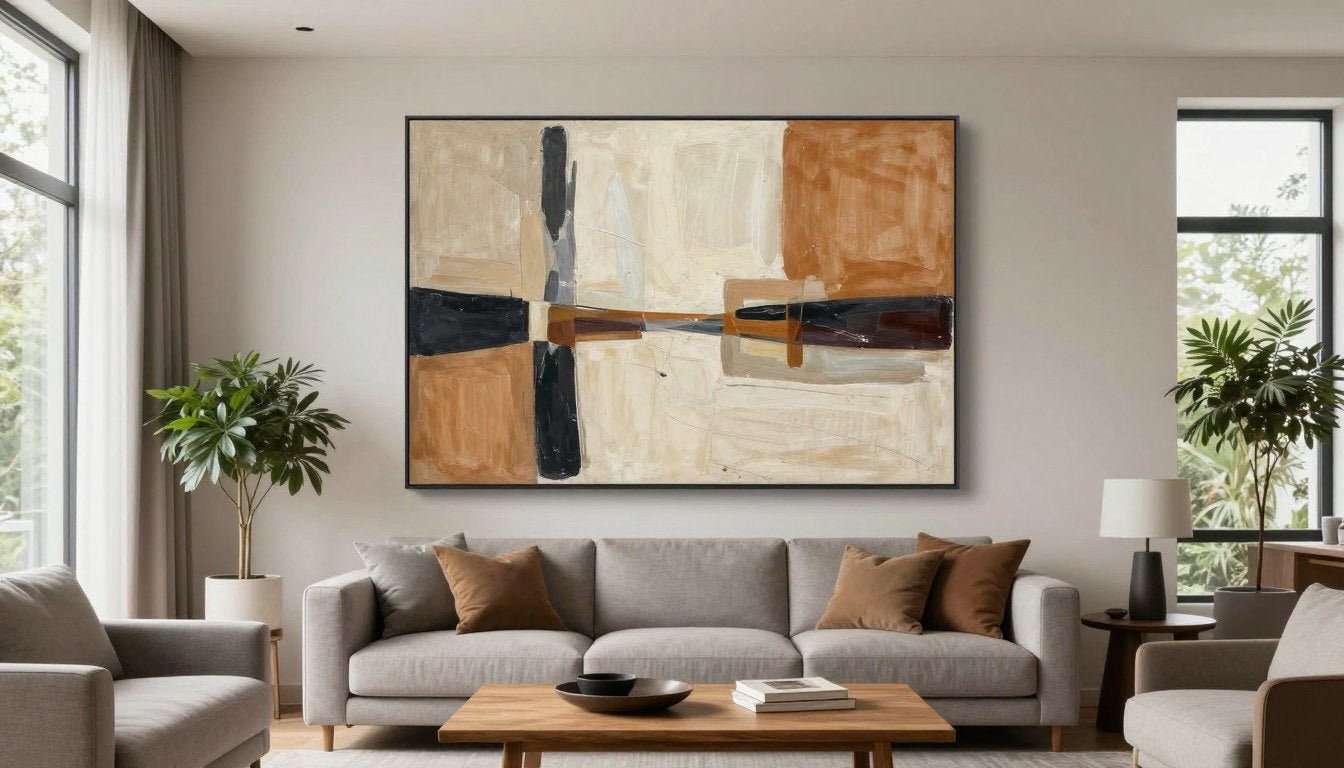
The right wall painting transforms your living room from a simple seating area into a space that tells your story. Whether you're drawn to bold abstract canvas art or serene landscape pieces, choosing artwork for this central gathering space requires more than picking something pretty. It demands understanding how art interacts with light, furniture, and the life that happens around it every single day.
Your living room wall deserves art that makes you pause. The kind of painting that catches afternoon sunlight just right, sparks conversations with visitors, and feels like it's always belonged there. This guide walks you through everything from understanding different canvas wall art styles to mastering placement principles that interior designers rely on when creating rooms that feel both curated and completely livable.

Understanding Living Room Wall Art: What Makes It Work
Living room wall painting serves as the visual anchor that pulls together furniture, lighting, and architectural elements into a cohesive design. Unlike bedroom art chosen for personal reflection or kitchen decor selected for cheerfulness, living room pieces must balance aesthetic impact with conversation-worthy presence. They occupy the most visible wall in your home while remaining comfortable to live with daily.
The best wall painting for living room spaces accomplishes three essential functions: it establishes a focal point that naturally draws the eye, it reinforces your chosen color palette without overwhelming it, and it reflects your personal taste in a way guests can appreciate. These aren't just decorative objects to fill empty space. They're design elements that influence how people experience and move through your most-used room.

Why Canvas Wall Art Dominates Living Room Design
Canvas prints have become the preferred choice for living room wall decor for compelling practical reasons. The material itself absorbs and reflects light differently than framed paper prints or metal art, creating depth that changes subtly throughout the day as natural light shifts. A quality canvas piece printed using archival inks maintains its color integrity for decades, making it an investment rather than temporary decoration.
The texture of hand-stretched canvas adds dimensional interest that flat prints simply cannot match. When you stand at an angle to a canvas wall painting, you notice the subtle relief of the fabric weave and the way paint or ink sits atop the surface. This tactile quality makes even reproductions feel more substantial and original than they would on paper or poster board.

Gallery-quality canvas also offers installation advantages. Pieces mounted on pine wood frames or oak floater frames hang securely with minimal hardware while maintaining clean, modern profiles. Unlike heavy traditional frames with glass that require substantial wall anchors, canvas art keeps installation straightforward even for large-scale pieces that make powerful statements above sofas or entertainment centers.

Traditional vs. Contemporary Canvas Options
Traditional living rooms often feature landscape paintings or portrait canvas prints that echo classical art movements. These pieces typically incorporate muted, sophisticated color palettes and recognizable subject matter that creates comfort through familiarity.
Contemporary spaces lean toward abstract canvas wall art, geometric compositions, or bold line art canvas prints that function as statement pieces. These options use color and form more dramatically, often becoming the room's primary design element rather than a supporting player.
The frame choice reinforces your direction. Oak floater frames provide modern, gallery-style presentation that emphasizes the artwork itself. Pine wood frames offer warmer, more approachable aesthetics that suit both transitional and traditional spaces without appearing overly formal.
The Psychology of Living Room Wall Painting Selection
What you hang on your living room wall communicates before a single word is spoken. Abstract pieces suggest creativity and openness to interpretation. Botanical wall art signals connection to nature and appreciation for organic beauty. Cityscape canvas prints indicate urban sensibility and appreciation for architectural form. Understanding these psychological associations helps you choose art that authentically represents how you want your home to feel.

Scale plays equally important psychological roles. Oversized canvas art projects confidence and contemporary sensibility. It tells visitors this is a space designed with intentionality. Conversely, smaller gallery wall arrangements suggest curation, collection-building over time, and layered personal history. Neither approach is superior, but each creates distinctly different emotional environments.
Color temperature affects room perception profoundly. Warm-toned paintings in reds, oranges, and yellows make spaces feel cozier and more intimate, ideal for living rooms used primarily for evening gathering. Cool blues, greens, and greys create calm, spacious feelings that work beautifully in naturally bright rooms that might otherwise feel too energetic. The wall painting you select literally changes how room temperature is perceived.
Selecting the Perfect Canvas Painting Style for Your Space
Your living room wall painting style should emerge from the intersection of personal preference, existing decor, and architectural context. A mid-century modern space with clean lines and minimal ornamentation calls for different art than a maximalist room layered with patterns and textures. Start by identifying your room's dominant design language, then select canvas wall art that either harmonizes with or intentionally contrasts against that foundation.

Abstract Canvas Wall Art for Contemporary Spaces
Abstract art offers unmatched versatility for modern living rooms because it works with interpretation rather than literal representation. A quality abstract canvas piece provides color, movement, and visual interest without dictating a specific mood or subject matter. This makes it easier to evolve your space over time without artwork becoming outdated or mismatched.
When selecting abstract canvas prints, consider the painting's color distribution and visual weight. A canvas dominated by dark, heavy brushstrokes anchors a room differently than one with airy, light-filled composition. Bold geometric abstracts create structure and sophistication, while fluid, organic abstracts soften angular furniture and architectural elements.

The beauty of abstract canvas wall art lies in its conversation-starting ambiguity. Unlike representational art where everyone sees the same mountain or flower, abstract pieces invite personal interpretation. Guests project their own meanings, creating engagement that makes your living room feel dynamic and thought-provoking rather than simply decorated.

Geometric Abstracts
Sharp lines and defined shapes create structure and sophistication. These pieces complement modern furniture with clean silhouettes and work especially well in rooms with architectural interest like coffered ceilings or geometric tile work.

Fluid Abstracts
Organic, flowing compositions soften hard-edged spaces. Watercolor-effect abstracts or pieces with blended color transitions add movement and gentleness to rooms that might otherwise feel too rigid or masculine in design sensibility.

Textured Abstracts
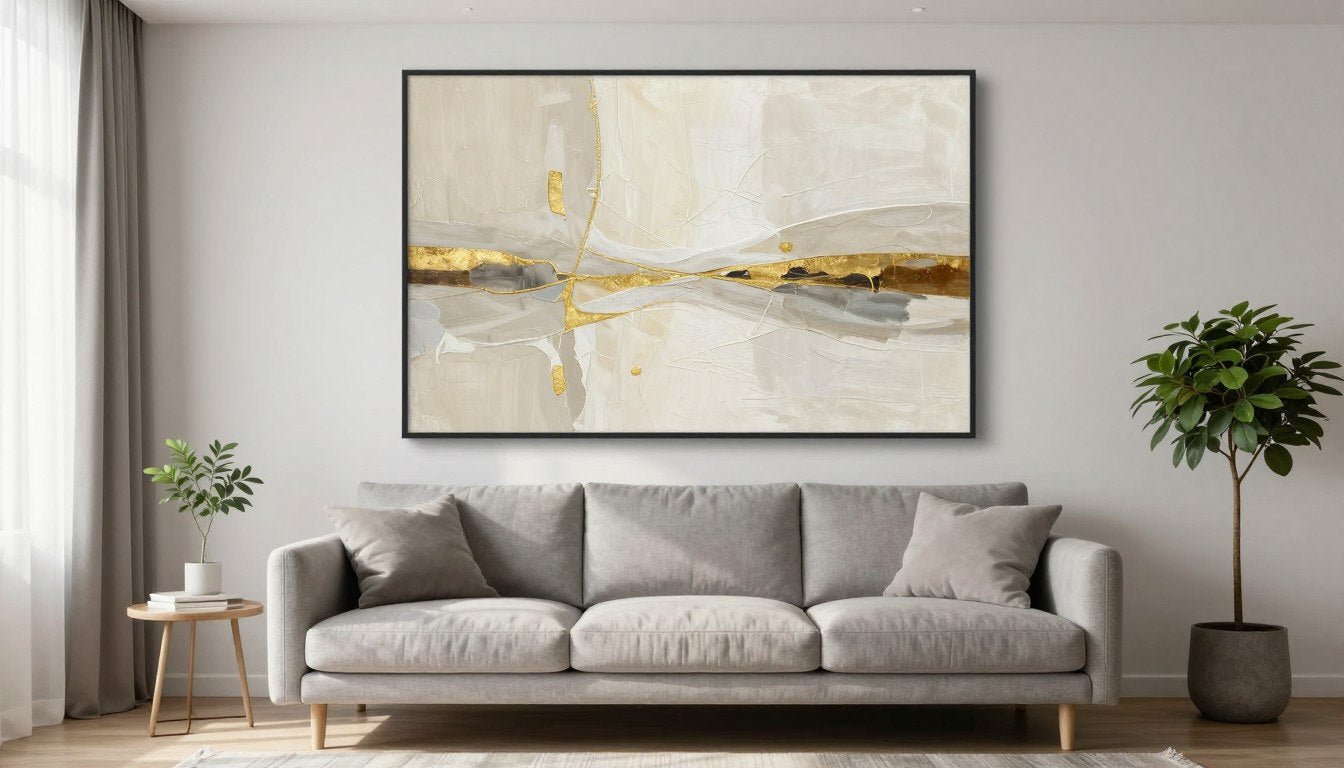
Heavy impasto or mixed-media effects create dimensional interest that changes dramatically with lighting angles. These pieces add tactile richness to minimalist spaces that might otherwise feel too sterile or under-furnished.
Botanical and Nature-Inspired Canvas Prints
Botanical wall art brings organic beauty indoors without the maintenance requirements of actual plants. These pieces range from vintage botanical illustration styles with detailed scientific rendering to contemporary interpretations using bold colors and simplified forms. The natural subject matter creates universal appeal that works across decorating styles from farmhouse to modern.
Large-scale botanical canvas prints make particularly strong statements in living rooms with natural light. A oversized leaf print or forest landscape catches sunlight during the day and creates dramatic shadows as evening approaches. The organic shapes provide visual relief in rooms dominated by rectangular furniture, windows, and architectural elements.

Consider botanical nature canvas prints in varied presentation styles. Watercolor botanicals offer softness and femininity without being overtly decorative. Black and white botanical line drawings provide graphic impact suitable for masculine or minimalist spaces. Full-color photography-style botanical prints deliver maximum realism and vibrant life.


Landscape paintings operate similarly but with broader scope. Forest landscapes create depth and tranquility. Beach and ocean scenes bring vacation-inspired relaxation into daily life. Desert and mountain landscapes offer dramatic, sculptural beauty. Each landscape type shifts the emotional temperature of your living room in measurable ways.
Portrait and Figurative Canvas Art
Portrait canvas prints add human presence and narrative interest to living rooms. Contemporary portrait art has evolved far beyond traditional seated figures in formal attire. Modern portrait work includes abstract faces, partial figures, and expressive character studies that function as design elements while maintaining emotional resonance.

The key with figurative portrait canvas prints is matching intensity to room function. Intimate, contemplative portraits suit quiet conversation areas or reading nooks within larger living spaces. Bold, graphic portraits with strong color contrast work as statement pieces above sofas or fireplace mantels where they command attention.
Black and white portrait photography printed on canvas bridges traditional and contemporary aesthetics beautifully. The timeless quality of monochrome imagery prevents dating while the canvas medium keeps presentation feeling current and design-forward rather than simply nostalgic.
Sizing and Placement Principles That Transform Rooms
The most beautiful wall painting for living room spaces fails if hung incorrectly. Proper sizing and placement make the difference between art that elevates your space and art that feels awkwardly positioned or visually lost. Professional interior designers follow established principles that account for furniture relationships, viewing distances, and the natural flow of movement through a room.

The Golden Ratios for Canvas Wall Art Sizing
Above a sofa, your canvas wall art should occupy approximately two-thirds to three-quarters of the furniture width. A 90-inch sofa pairs beautifully with a single 60-inch wide canvas or a gallery arrangement totaling 54-68 inches across. This proportion creates visual balance without the art appearing timid or overwhelming relative to the furniture below it.
For height considerations, the center of your canvas painting should hang at eye level, typically 57-60 inches from the floor. In living rooms where people are usually seated, err slightly lower, around 54-56 inches center height. This ensures the art occupies natural sightlines whether you're standing in conversation or relaxing on the sofa.

When working with high ceilings, resist the urge to hang art near the ceiling line. Maintain the 57-inch center rule but increase piece size proportionally. A room with 12-foot ceilings can accommodate 60-72 inch tall vertical canvases without overwhelming the space, provided the art remains tethered visually to furniture groupings below.

Scaling for Smaller Living Rooms
Smaller spaces require restrained sizing but shouldn't default to tiny art. A 10x12 foot living room still benefits from a substantial 36x48 inch canvas rather than multiple small pieces that can make the room feel cluttered.
Use the room wall itself as your guide. Measure the intended wall space and aim for a single piece or grouped arrangement that covers roughly 50-60% of available wall area between furniture and ceiling. This creates impact without the claustrophobic feeling of oversized art in tight quarters.
Consider vertical orientation in rooms with limited horizontal wall space. A tall, narrow canvas draws the eye upward, making ceilings appear higher and rooms more spacious than wide horizontal pieces.
Strategic Placement for Maximum Impact
Your living room wall painting should anchor a clear focal point, typically above the main seating area or fireplace mantel. Avoid competing focal points by limiting significant art to one primary wall. Secondary walls can feature smaller complementary pieces, but the hierarchy should remain clear to prevent visual confusion.

Account for furniture swing and door clearances. Art shouldn't interfere with window treatments, heating vents, or the natural arc of doors opening into the room. Leave 4-6 inches between the top of furniture and the bottom of canvas frames to prevent visual crowding while maintaining clear relationships between elements.
Lighting dramatically affects how your canvas wall art appears. South-facing walls receive intense, potentially fading sunlight throughout the day. Position UV-resistant canvas prints on these walls to prevent color degradation. North-facing walls receive cooler, more consistent light that suits artwork beautifully. Consider adding picture lights or adjustable track lighting for evening viewing.

Above Sofas
Leave 6-8 inches between sofa top and art bottom. Center the piece on the sofa rather than the wall, ensuring visual connection between furniture and art.

Above Mantels
Center art on the mantel width, not wall width. Position 3-6 inches above mantel top, adjusting based on ceiling height and art size.

On Empty Walls
Use the 57-inch center rule as your anchor. Add flanking elements like wall sconces or shelving only if the canvas alone feels insufficient at scale.
📐 Not sure what size to choose? Use our free Wall Art Size Calculator → https://rossettiart.com/blogs/news/wall-art-size-calculator
Hanging Hardware and Installation Considerations
Gallery-quality canvas art on wood frames requires secure hanging that supports weight while maintaining level positioning. For pieces under 30 pounds, standard picture hangers rated for the canvas weight work adequately. Larger, heavier pieces benefit from wall anchors or mounting directly into wall studs using heavy-duty hangers.

Hand-stretched canvas on pine wood frames or oak floater frames typically includes pre-installed hanging hardware. Verify that D-rings are secured into the frame rather than just the canvas backing, as this distributes weight properly. Use picture-hanging wire rated for 10-20 pounds more than your actual canvas weight to ensure safety margin.
For renters or those wanting installation flexibility, consider command picture hanging strips rated for appropriate weights. Quality strips hold securely while removing cleanly, though they work best for lighter pieces under 15 pounds. Heavier gallery-quality canvas art requires traditional hanging methods for security.
Color Coordination and Room Harmony Strategies
Your wall painting for living room should either complement or intentionally contrast with existing room colors. The most successful approaches pull at least one color from the artwork into other room elements like throw pillows, rugs, or decorative accessories. This creates visual cohesion that makes spaces feel professionally designed rather than randomly assembled.

Working with Existing Color Palettes
If your living room already has established colors through furniture, walls, or flooring, select canvas wall art that incorporates those hues. A predominantly grey room gains warmth from canvas prints featuring grey plus gold or copper accents. Navy sofas pair beautifully with abstract canvas wall art mixing navy, white, and warm wood tones.
The 60-30-10 design rule applies to integrating art into color schemes. Your dominant room color should appear in approximately 60% of the space through walls, large furniture, and flooring. The secondary color occupies 30% via smaller furniture pieces, window treatments, and area rugs. Your accent color, which can be the boldest shade from your canvas painting, should represent 10% through accessories, pillows, and decorative objects.

Neutral rooms with beige, grey, or white as the dominant palette offer maximum flexibility. Here, your canvas art can introduce virtually any color story. Consider seasonal rotation if you select bold, color-specific pieces. A vibrant botanical canvas print for spring and summer can swap with warm-toned abstract art for fall and winter, refreshing your space without major redecorating.


Creating Contrast for Visual Interest
Intentional contrast prevents rooms from feeling too coordinated or sterile. A predominantly cool-toned room with blues and greys benefits from canvas wall art incorporating warm oranges, reds, or yellows. Conversely, warm-toned spaces gain sophistication through cool-toned artwork that provides visual relief.
Black and white canvas prints offer ultimate flexibility and timeless contrast. A classic black and white photograph or line art canvas print works in virtually any color scheme, providing graphic impact without introducing competing colors. This makes black and white pieces ideal for rooms you plan to redecorate periodically or for homes with frequently changing seasonal decor.

Monochromatic rooms require textural and tonal contrast through art. A grey room furnished entirely in various grey shades needs canvas art with significant value range—very light to very dark greys plus white and black. Without tonal variety, monochromatic spaces feel flat and lifeless despite being technically color-coordinated.
Accent Wall Strategies with Canvas Art
An accent wall painted in a bold color creates dramatic backdrop for canvas wall art. The key is selecting artwork that either complements the wall color through analogous hues or contrasts dramatically for maximum pop. A deep navy accent wall showcases gold-toned abstract art beautifully. Sage green walls provide elegant backdrop for botanical canvas prints in deeper forest greens.

Avoid matching accent wall and art too closely in saturation and value. A red accent wall with equally saturated red artwork creates visual vibration that's uncomfortable to look at. Instead, pair saturated walls with artwork incorporating that color in lighter tints or darker shades, adding white, black, or neutral elements to prevent overwhelming intensity.
Consider the room wall's existing color temperature when selecting your living room wall painting. Warm accent walls (reds, oranges, yellows, warm browns) pair naturally with warm-toned art. Cool walls (blues, greens, purples, cool greys) harmonize with cool-toned pieces. Cross-temperature pairings create energetic, dynamic spaces but require careful color selection to avoid clashing.
Framing, Hanging, and Quality Considerations
The frame surrounding your canvas painting affects its visual impact as significantly as the artwork itself. Modern canvas art typically features gallery wrapping where the image extends around the frame edges, eliminating the need for traditional framing. This clean, contemporary presentation keeps focus on the artwork while simplifying installation and reducing overall cost compared to custom framing.

Understanding Canvas Frame Options
Pine wood frames represent the standard for quality canvas prints, offering sturdy construction at accessible price points. Pine provides sufficient rigidity to prevent warping while remaining lightweight enough for straightforward hanging. The wood's natural properties allow it to expand and contract slightly with humidity changes without damaging the stretched canvas.
Oak floater frames elevate canvas presentation to gallery-quality status. These frames create a small gap between canvas edge and frame interior, making the artwork appear to float within the frame. The visual separation adds dimensionality and draws attention to the canvas itself. Oak's premium grain and durability justify the higher investment for living room focal pieces where quality matters most.

Frame depth affects visual weight and shadow casting. Standard 0.75-inch deep frames suit most spaces and artwork styles. Deeper 1.5-inch frames create more substantial presence and cast stronger shadows, emphasizing the three-dimensional quality of canvas wall art. Consider deeper frames for larger pieces where added visual weight enhances rather than overwhelms.

Matching Frames to Room Style
Pine wood frames work beautifully in casual, transitional, and farmhouse-style living rooms. The lighter wood tone complements warm color palettes and doesn't compete visually with the artwork itself.
Oak floater frames suit contemporary, modern, and upscale traditional spaces where premium details matter. The floating effect adds sophistication that justifies the investment in rooms serving as primary entertaining spaces.
Black or white painted frames offer alternative options when wood tones conflict with existing furniture. Black frames create crisp, gallery-like presentation. White frames provide clean, airy aesthetics for coastal or Scandinavian-inspired rooms.
Quality Indicators in Canvas Wall Art
Premium canvas prints use archival inks that resist fading for decades when properly displayed. These pigment-based inks bond permanently with canvas fibers rather than sitting on the surface like dye-based inks. The difference becomes apparent after several years when cheaper prints show noticeable color shift while archival pieces remain vibrant.
UV-resistant coatings provide additional protection for living room wall paintings exposed to natural light. This invisible layer filters harmful ultraviolet rays before they reach the ink layer, dramatically extending the lifespan of your canvas art. Rooms with south or west-facing windows particularly benefit from UV-resistant canvas prints that maintain color integrity despite sun exposure.

Hand-stretched canvas indicates superior construction compared to machine-stretched alternatives. Hand-stretching allows craftspeople to maintain consistent tension across the entire canvas surface, preventing sagging or rippling that occurs with poorly stretched pieces. The extra labor cost translates to artwork that remains taut and professional-looking for years.
Made-to-order canvas prints offer significant quality advantages over pre-printed inventory. Custom printing allows for optimized color calibration, proper sizing for your specific wall space, and printing only when you order, ensuring maximum freshness of inks and materials. While delivery takes slightly longer, the quality improvement justifies the brief wait.
Hanging Methods for Different Wall Types
Drywall requires appropriate anchors for secure canvas hanging. For lightweight pieces under 20 pounds, plastic anchors or picture hangers work adequately. Medium-weight canvas art between 20-50 pounds needs metal anchors or molly bolts. The heaviest pieces exceeding 50 pounds should mount directly into wall studs using wood screws and heavy-duty picture hangers.

Plaster walls demand gentle handling and specialized hardware. Use self-drilling anchors specifically designed for plaster to prevent cracking. Pre-drill small pilot holes before inserting anchors, and work slowly to avoid fracturing the plaster. Never use hammer-in anchors on plaster as impact shatters the brittle material.
Brick or concrete walls require masonry bits and anchors. Mark your hanging point, drill with an appropriate masonry bit, insert plastic masonry anchors, then secure screws or hooks. Brick offers excellent holding strength once properly anchored. Consider professional installation for large, valuable pieces wall if you're unfamiliar with masonry drilling techniques.
- Use level tool for precise horizontal alignment
- Install two hanging points for canvases over 36 inches wide
- Select hardware rated for 2x canvas actual weight
- Mark wall lightly with pencil before drilling
- Use wall anchors appropriate for wall material
- Allow wire slack of 2-3 inches for adjustment
Proper Hanging Practices
- Eyeballing horizontal level instead of using tools
- Using single hanging point on wide, heavy pieces
- Underestimating weight and using inadequate hardware
- Drilling without marking, requiring multiple attempts
- Using drywall anchors in plaster walls
- Wire stretched too taut, preventing angle adjustment
Hanging Mistakes to Avoid
Creating Gallery Walls and Multi-Piece Displays
Gallery walls transform empty room wall space into curated art displays that tell visual stories through multiple canvas pieces. Unlike single statement artwork, gallery arrangements allow for layered storytelling, mixing styles, sizes, and subjects to create personality-rich installations. The key lies in establishing visual cohesion among diverse elements so the wall reads as intentional collection rather than random grouping.

Planning Gallery Wall Layouts
Before hammering a single nail, plan your gallery wall layout on the floor or digitally. Cut paper templates matching each canvas size and arrange them on the floor beneath your target wall. This allows experimentation with spacing and composition without wall damage. Photograph your preferred arrangement for reference during installation.
Maintain consistent spacing between pieces for professional appearance. Two to three inches between canvas edges creates unity without crowding. Tighter spacing makes the wall feel busy and overwhelming. Wider gaps can make the arrangement feel disconnected. The consistent negative space between pieces acts like grout lines in tile work, unifying separate elements into cohesive whole.

Choose a layout style that matches your living room aesthetic. Grid layouts with uniform spacing and aligned edges suit modern, minimalist spaces. Salon-style arrangements with organic, asymmetrical compositions fit eclectic or traditional rooms. Horizontal arrangements work beautifully above sofas. Vertical arrangements flank architectural features like windows or doorways effectively.

Grid Gallery Walls
Use identical-size canvas prints arranged in perfect rows and columns. This structured approach suits modern spaces and creates powerful impact through repetition and order.

Salon-Style Arrangements
Mix various sizes and subjects in organic, asymmetrical layouts. Balance visual weight rather than physical symmetry, creating collected-over-time appearance.

Linear Horizontal Layouts
Arrange three to five pieces wall in a single horizontal line. Vary sizes slightly while maintaining aligned top or bottom edges for cohesive appearance.
Coordinating Multiple Canvas Pieces
Successful multi-piece displays require unifying elements that tie disparate artworks together. Common frame styles provide instant cohesion—all pine wood frames or all oak floater frames create visual rhythm. Alternatively, coordinate through consistent color palettes where each piece shares at least one common hue even if subjects and styles vary.
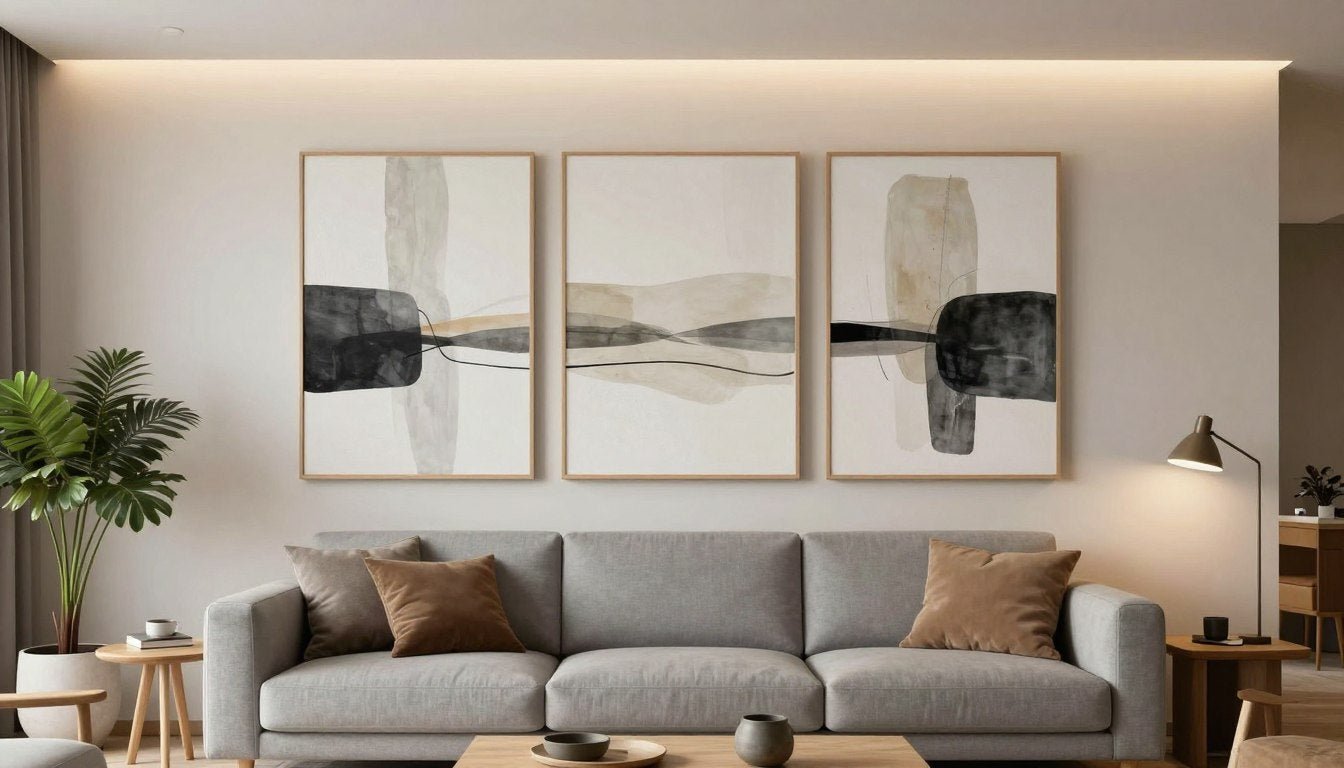
Canvas print sets designed as triptychs or diptychs eliminate coordination guesswork. These multi-panel pieces feature single images split across two or three canvases, creating striking installations with built-in visual unity. Large abstract canvas compositions gain drama when split across multiple panels with small gaps revealing wall color between sections.

Theme-based gallery walls tell clear stories through subject matter. A botanical-themed wall might combine various botanical nature canvas prints from ferns to flowers to trees. A travel-inspired wall could mix cityscape urban canvas prints from favorite destinations. The common thread makes diverse styles and sizes work together coherently.


Balancing Visual Weight in Multi-Piece Arrangements
Visual weight distribution prevents gallery walls from feeling lopsided or unstable. Darker, more saturated pieces carry more visual weight than light, airy ones. Larger canvases dominate smaller pieces. Balance heavy elements by positioning them near arrangement centers or distributing them evenly rather than clustering.
Use an anchor piece as your gallery wall's foundation. This largest or most visually significant canvas establishes the arrangement's focal point. Position it first, typically at eye level in a central location, then build surrounding pieces around it. The anchor piece prevents the arrangement from feeling like random collection without clear hierarchy.

Consider negative space as active design element. Don't feel compelled to fill every inch of wall. Strategic empty areas let individual pieces breathe and prevent visual overwhelm. A gallery wall occupying 60-70% of available wall space often feels more curated than one covering every square inch.
Installation Tips for Complex Gallery Walls
Install gallery walls from center outward. Hang your anchor piece first at optimal height, then add surrounding pieces while maintaining your pre-planned spacing. This prevents accumulating spacing errors that throw off the entire arrangement's balance by the time you reach outer pieces.
Use a laser level or chalk line to establish consistent horizontal baselines for rows. Individual piece variations become less noticeable when multiple canvases share aligned top or bottom edges. These invisible alignment lines create order within apparent asymmetry.

Number the back of each canvas piece corresponding to your floor layout plan. This simple step prevents confusion mid-installation when you're balancing on a ladder with multiple similar-looking canvases. Mark the wall lightly where each piece hangs using your numbered system as reference.
Room-Specific Considerations and Special Situations
Living room configurations vary dramatically, requiring adaptable approaches to wall painting selection and placement. Open-concept spaces, formal sitting rooms, dual-purpose living areas, and rooms with challenging architecture each present unique opportunities and constraints. Understanding these special situations ensures your canvas wall art enhances rather than fights your space's inherent character.

Open-Concept Living Spaces
Open floor plans connecting living, dining, and kitchen areas require coordinated art that maintains visual flow between zones. Select canvas paintings sharing common color palettes or stylistic approaches even if subjects differ. A modern abstract canvas wall in the living area might coordinate with botanical prints in the dining zone through shared blues and greens.
Use art to define separate functional zones within open spaces. A large statement piece above the living room sofa establishes that area's focal point distinct from the dining zone's chandelier or the kitchen's backsplash. The wall art helps visitors unconsciously understand room divisions despite absent walls.

Maintain consistent frame styles throughout connected open spaces for cohesion. All pine wood frames or all oak floater frames create subtle visual threads linking separate zones. Mixing frame materials works only if intentionally grouped within single zones—all wood in living area, all metal in dining, for example.
Small Living Rooms and Apartments
Compact spaces benefit from larger single pieces rather than numerous small artworks that create visual clutter. One impactful 40x60 inch canvas makes stronger design statement than five smaller pieces while actually making the room feel larger by reducing visual fragmentation.
Light-colored, airy canvas prints enhance perceived spaciousness in tight quarters. Abstract pieces with significant white or light grey areas, pale botanical prints, or beach landscapes in soft blues and whites reflect light and open up walls. Avoid dark, heavy artwork that visually closes in small spaces.

Consider vertical canvas orientations in rooms with more height than width. Tall, narrow pieces draw eyes upward, emphasizing ceiling height and making rooms feel more spacious. This works particularly well flanking windows or in narrow wall sections between doorways and corners.

Maximizing Small Space Impact
Choose pieces with depth and perspective that draw the eye into the artwork rather than emphasizing flat wall surfaces. Landscape paintings with vanishing points or abstract pieces with layered depth create the illusion of space extending beyond the wall.
Mirrors adjacent to canvas art amplify impact while adding functional light reflection. A large canvas on one side of a fireplace with a coordinating mirror opposite creates balanced symmetry that makes rooms feel intentionally designed rather than cramped.
Avoid ornate, heavily detailed artwork in small spaces. Simpler compositions with bold forms and fewer elements read better from close viewing distances typical in compact rooms.
Living Rooms with Challenging Architectural Features
Sloped ceilings, exposed beams, built-in shelving, and prominent windows require creative art placement strategies. Work with architecture rather than fighting it. Hang canvas art to emphasize attractive features while downplaying problematic ones.
Vaulted ceilings accommodate dramatic vertical arrangements impossible in standard rooms. Create ascending gallery walls that follow ceiling slopes, or position single oversized pieces to celebrate rather than fight the dramatic height. Avoid tiny art that gets lost against expansive wall areas.

Rooms dominated by large windows require positioning art on solid wall sections rather than competing with views. Flanking artwork on walls adjacent to window walls creates frames for the view itself. Choose pieces that complement outdoor scenery—forest landscapes if you overlook woods, abstract blues near water views.
Built-in shelving presents opportunities for integrating canvas art within architectural elements. Lean smaller canvas pieces on shelves among books and objects, creating layered vignettes. Alternatively, hang art in wall sections between shelving units, using the architecture to frame and support the artwork.

Working with Built-Ins
Position art in wall sections between shelving units where it functions as focal points within architectural frames. The shelving edges naturally define art boundaries.

Managing Exposed Beams
Hang art between beams rather than partially overlapping them. Let architectural elements maintain their rhythm while art occupies the spaces they define.

Rooms with Dominant Windows
Coordinate art colors with outdoor views visible through major windows. Forest greens for wooded views, ocean blues for water views, creating harmony between interior and exterior.
Seasonal and Rotational Art Strategies
Consider building a rotation of canvas paintings that refresh your living room seasonally. Lighter, brighter pieces for spring and summer swap with warmer, richer-toned art for fall and winter. This approach keeps spaces feeling current without requiring constant furniture or paint changes.
Store off-season canvas art properly to maintain quality. Keep pieces in dry, temperature-controlled areas away from direct sunlight. Cover with breathable fabric rather than plastic to prevent moisture buildup. Stack carefully with protective material between pieces to prevent scratching or transfer damage.

Rotating art provides opportunity to thoroughly clean walls and check hanging hardware annually. This maintenance time catches potential issues before damage occurs and keeps your display looking professionally maintained.
Frequently Asked Questions
Q: What size wall painting should I choose for my living room?
A: For wall painting above sofas, choose canvas art measuring two-thirds to three-quarters of the furniture width. A 90-inch sofa pairs well with a 60-inch wide piece or gallery arrangement totaling 54-68 inches across. Measure your space and use our free Wall Art Size Calculator at https://rossettiart.com/blogs/news/wall-art-size-calculator for personalized recommendations based on your specific room dimensions.
Q: How high should I hang canvas wall art in my living room?
A: The center of your canvas painting should hang at 57-60 inches from the floor at eye level. In living rooms where people are primarily seated, position slightly lower at 54-56 inches center height. Above sofas, leave 6-8 inches between the furniture top and the bottom edge of your canvas art to maintain proper visual relationship between elements.
Q: What colors of wall painting work best for living rooms?
A: Choose canvas wall art colors that either complement or intentionally contrast with your existing palette. Pull at least one color from the artwork into room accessories like pillows or rugs for cohesion. Neutral rooms offer maximum flexibility for any color. Cool-toned rooms benefit from warm art and vice versa for balanced visual temperature. Abstract canvas prints in mixed tones provide versatility that works across changing decor.
Q: Should I choose one large canvas or multiple smaller pieces for my living room wall?
A: Both approaches work depending on your aesthetic preference and space characteristics. A single large statement piece creates bold, contemporary impact with simpler installation. Gallery walls with multiple smaller canvases allow for storytelling through varied subjects and create collected-over-time personality. Small rooms often benefit from one larger piece rather than several small ones that can make spaces feel cluttered.
Q: What's the difference between canvas prints and framed art prints?
A: Canvas prints feature images printed on textile canvas material stretched over wood frames, creating three-dimensional pieces with texture and depth. They typically use gallery wrapping where the image extends around edges, eliminating need for additional framing. Framed art prints place paper prints behind glass within frames. Canvas offers modern, textural presentation while framed prints provide traditional, protected display. Canvas wall art is generally lighter and easier to hang than glass-covered framed pieces.
Q: How do I protect canvas wall art from fading?
A: Choose canvas prints made with archival inks and UV-resistant coatings that filter harmful ultraviolet rays. Position art away from direct, intense sunlight when possible, particularly avoiding south and west-facing walls that receive strongest sun exposure. Quality canvas printed using archival inks on UV-resistant materials maintains color vibrancy for decades even in naturally lit rooms. Avoid placing valuable art directly across from unfiltered windows where sunlight hits intensely for hours daily.
Q: What artwork style is most popular for modern living rooms?
A: Abstract canvas wall art dominates contemporary living room design due to its versatility and ability to work with interpretation rather than literal representation. Geometric abstracts create structure and sophistication while fluid abstracts add softness and movement. Botanical canvas prints remain timeless favorites that bridge modern and traditional aesthetics. Black and white line art and monochromatic pieces offer graphic impact that suits minimalist spaces. The best style ultimately reflects your personal taste rather than following trends.
Q: Can I hang canvas art in a room with high humidity?
A: Standard living rooms typically maintain suitable humidity levels for canvas art. However, avoid hanging valuable canvas paintings in bathrooms or other high-moisture environments where consistent humidity exceeds 65%. Extreme humidity can cause canvas to loosen on frames or promote mold growth. Living rooms in humid climates benefit from climate control and dehumidifiers to protect both art and furnishings. Quality hand-stretched canvas on proper wood frames tolerates normal household humidity fluctuations without issue.
Creating Your Perfect Living Room Art Experience
Selecting the ideal wall painting for living room spaces combines practical design principles with personal aesthetic vision. The canvas art you choose becomes part of your daily life, greeting you each morning and providing backdrop for countless conversations, quiet evenings, and family gatherings. This significance elevates art selection beyond simple decoration into meaningful home curation.

The principles outlined throughout this guide—proper sizing, thoughtful placement, color coordination, and quality considerations—provide framework for confident decisions. But rules exist to support your intuition, not replace it. Trust your response to artwork. The piece that makes you pause, that you return to repeatedly, that sparks something when you see it belongs in your space regardless of whether it follows every design convention.
Quality matters in canvas wall art because you'll live with these pieces for years. Gallery-quality prints using archival inks on hand-stretched canvas maintain their beauty and integrity far longer than cheap alternatives that fade and sag. Made-to-order pieces ensure optimal color accuracy and freshness. The investment in quality pays dividends in longevity and daily visual pleasure.
Your living room deserves art that reflects who you are and how you want to feel in your most-used space. Whether you choose bold abstract canvas art, serene botanical prints, or striking black and white photography, select pieces that genuinely resonate. Art should inspire, comfort, and energize in equal measure.
Explore our Canvas Prints collection to discover gallery-quality artwork printed using archival inks on hand-stretched canvas with your choice of pine wood frame or oak floater frame options. Each piece ships made-to-order, ensuring you receive the freshest, highest-quality canvas wall art for your living room.


About the Author
Chiara Rossetti
Chiara Rossetti is the founder of Rossetti Art, a canvas print and original art brand. She writes about interior design, wall art styling, and the art of making a home feel alive.

Leave a comment
This site is protected by hCaptcha and the hCaptcha Privacy Policy and Terms of Service apply.