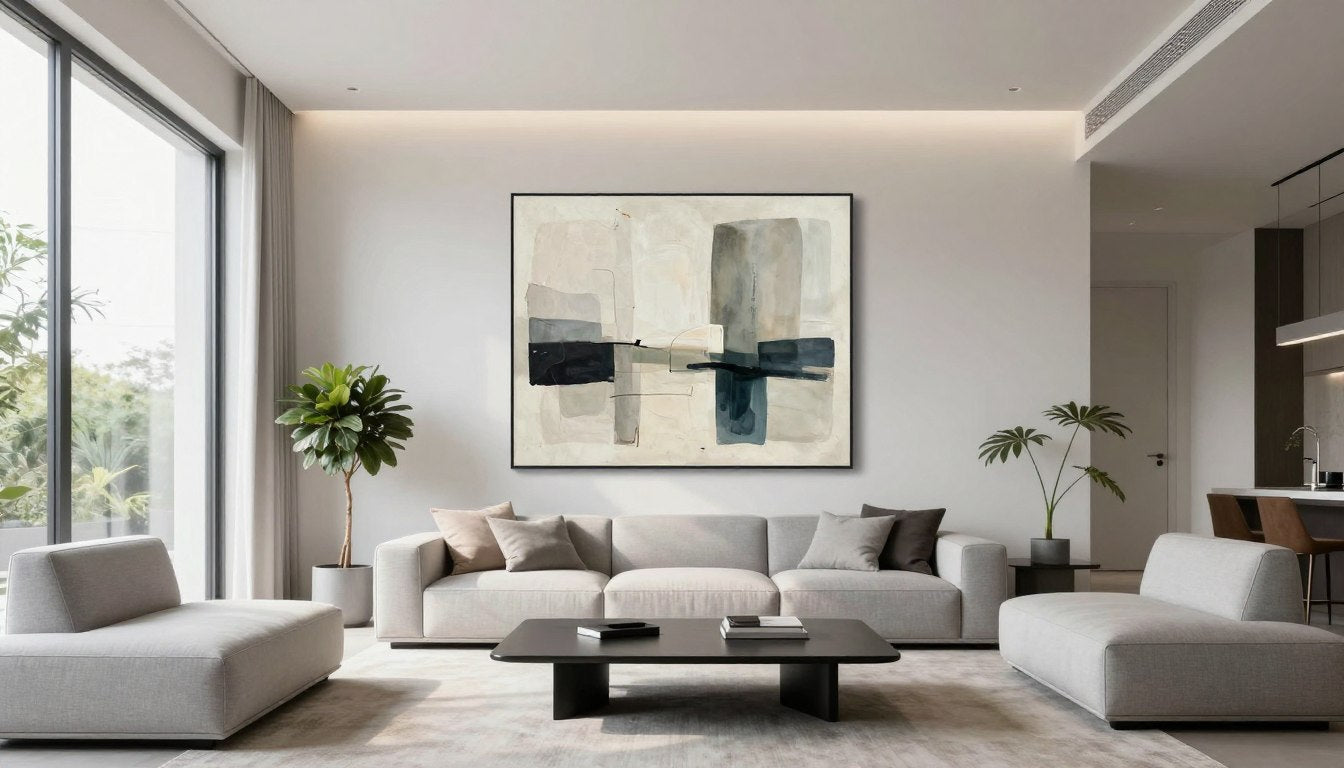
The right wall decor for living room modern spaces does more than fill empty walls. It creates atmosphere, reflects personality, and transforms a room from ordinary to extraordinary. Finding pieces that speak to your aesthetic while maintaining the clean lines and intentional design of modern interiors requires both vision and strategy.
Whether you're working with a minimalist Scandinavian palette or bold contemporary contrasts, the art you choose becomes the room's focal point. It sets the tone for conversations, anchors your furniture arrangement, and makes your space feel complete.


What Defines Modern Wall Decor for Living Rooms
Modern wall decor embraces simplicity, clean lines, and intentional design choices. It moves away from ornate frames and heavy traditional pieces toward streamlined art that complements contemporary architecture and furniture.
The modern aesthetic values quality over quantity. You'll see fewer pieces displayed with more breathing room, allowing each work to command attention. This approach creates visual calm while making bold statements through carefully selected art.

Gallery-quality materials matter in modern spaces. Canvas prints on hand-stretched frames offer the professional finish that modern interiors demand. The texture of canvas adds subtle depth, while clean edges maintain the streamlined look that defines contemporary design.
Key Characteristics of Modern Wall Art
Visual Elements
Modern pieces feature bold contrasts, geometric patterns, or organic abstraction. The compositions tend toward asymmetry and negative space.
- Abstract shapes and forms
- Bold color blocking
- Minimalist line drawings
- Geometric compositions
- Monochromatic palettes
Material Choices
Contemporary wall decor prioritizes materials that age well and maintain their visual impact over time.
- Canvas with archival inks
- Metal wall sculptures
- Acrylic or glass prints
- Wood wall accents
- Mixed media pieces
Frame Styles
Frames either disappear entirely or make deliberate design statements in modern spaces.
- Frameless wrapped canvas
- Thin black metal frames
- Natural wood floater frames
- White or light wood frames
- Oak floater frame options
Scale Approach
Modern design often employs oversized pieces or carefully curated groupings rather than cluttered arrangements.
- Single statement pieces
- Diptych or triptych sets
- Balanced asymmetry
- Generous spacing
- Floor-to-ceiling options

The beauty of modern wall art lies in its versatility. Abstract canvas prints work equally well in loft apartments and suburban homes. The key is choosing pieces that reflect your personal style while honoring the principles of contemporary design.
Modern Versus Contemporary: Understanding the Difference
People often use these terms interchangeably, but they describe different design approaches. Modern design refers specifically to a movement from the early to mid-20th century, characterized by clean lines, neutral palettes, and lack of ornamentation.
Contemporary design describes what's current right now. It borrows from various styles and tends toward curves, comfortable textures, and warmer tones. Both approaches value simplicity and quality in wall decor.

Design Tip: Modern spaces thrive on contrast. If your furniture features warm wood tones, consider cooler artwork. If your room leans minimal, let your wall decor provide personality and color.

The modern aesthetic also embraces the concept of breathing room. Empty wall space isn't wasted space. It allows your eye to rest and your featured art to truly shine. This principle separates modern design from maximalist or traditional approaches.

The Role of Texture in Modern Wall Decor
While modern design values smooth surfaces and clean lines, texture adds crucial depth and interest. Canvas naturally provides subtle texture that catches light throughout the day, creating visual interest without visual clutter.

UV-resistant inks on quality canvas maintain color vibrancy for years. This durability matters in modern interiors where pieces often occupy prominent positions with significant light exposure.

Texture Combinations That Work
Layering different textures creates depth without compromising the modern aesthetic. Consider pairing smooth canvas with rougher elements in the room.
- Canvas art with leather furniture
- Metal accents with fabric pieces
- Glossy prints with matte walls
- Wood frames with glass tables

Choosing the Right Wall Art Pieces for Your Space
Selecting wall art for a modern living room starts with understanding your space's existing design language. The architecture, furniture style, and natural light all inform which pieces will feel harmonious versus jarring.
Start by identifying your room's color story. Pull colors from existing furniture, rugs, or accent pieces. Your wall decor can either complement these tones or provide strategic contrast. Both approaches work, but the choice should feel intentional.

Assessing Your Space Before Shopping
Measure your wall space carefully before falling in love with any piece. A common mistake is choosing art that's too small for the wall. In modern design, you want pieces that make a statement, not ones that get lost in the space.
A good rule: Your art should take up roughly two-thirds to three-quarters of the wall space above your furniture. This creates visual balance and proper scale.

Consider your ceiling height too. Rooms with standard eight-foot ceilings benefit from horizontal pieces that draw the eye sideways, making the room feel wider. Higher ceilings can accommodate vertical pieces or multi-panel arrangements that emphasize height.
Understanding Your Personal Style
Modern doesn't mean cold or impersonal. Your wall art should reflect who you are. If you love nature, botanical prints or landscape photography work beautifully in modern frames. Music enthusiasts might choose iconic music and cinema legends prints for a personal touch.


Style Archetypes in Modern Design
Different modern styles call for different art approaches. Identify which resonates with you:
- Minimalist Modern: Monochromatic pieces, simple lines, plenty of white space
- Scandinavian Modern: Nature-inspired prints, muted colors, organic shapes
- Industrial Modern: Urban photography, metal accents, raw textures
- Mid-Century Modern: Geometric patterns, warm tones, retro-inspired art

Quality Indicators to Look For
Not all canvas prints offer the same quality. Look for gallery-quality prints made to order with archival inks. These materials ensure your investment maintains its appearance for decades.

- Archival inks that resist fading
- UV-resistant coating for longevity
- Hand-stretched canvas on pine wood frame
- Gallery wrap with mirrored edges
- Made to order for freshness
- Crisp, vibrant color reproduction
High-Quality Canvas Prints
- Standard inks that fade quickly
- No UV protection
- Stapled or loosely mounted canvas
- White or black edges only
- Mass-produced inventory items
- Dull or inconsistent colors
Lower-Quality Options

Frame options matter in modern spaces. A hardwood frame offers warmth, while an oak floater frame creates the illusion that your canvas hovers off the wall. Both choices add sophistication to your wall decor.

Shopping Smart for Wall Art
When shopping online for wall decor, pay attention to how pieces are photographed. Quality brands show their prints in realistic room settings and provide detailed product shots that reveal texture and finish.

Pro Tip: Many modern living rooms benefit from canvas print sets that create cohesion across the space. Sets take the guesswork out of color coordination and sizing.
Read product descriptions carefully. Look for details about materials, printing methods, and frame construction. These specifics separate premium products from budget alternatives.
 [YOUTUBE VIDEO — https://youtu.be/EtnpEMViJdo?t=1]
 Popular Modern Wall Decor Styles That Transform Spaces
Modern wall art encompasses diverse styles, each bringing its own personality to a living room. Understanding these categories helps you identify what resonates with your space and personal taste.
The right style choice depends on your room's overall design direction and the mood you want to create. Some styles energize a space, while others promote calm and contemplation.

Abstract and Geometric Art
Abstract pieces dominate modern living rooms for good reason. They add color and visual interest without depicting specific subjects, making them incredibly versatile. Geometric abstracts bring structure through shapes and patterns, while fluid abstracts offer movement and emotion.

These pieces work especially well when you want art that complements rather than competes with your furniture. The ambiguity of abstract work means it pairs beautifully with various design elements in your room.
Why Abstract Works in Modern Spaces
Abstract art aligns perfectly with modern design principles. Both celebrate simplicity, embrace negative space, and rely on thoughtful composition rather than ornate detail.
- Doesn't demand literal interpretation
- Adapts to changing decor
- Creates conversation without controversy
- Available in any color palette
- Works at any scale
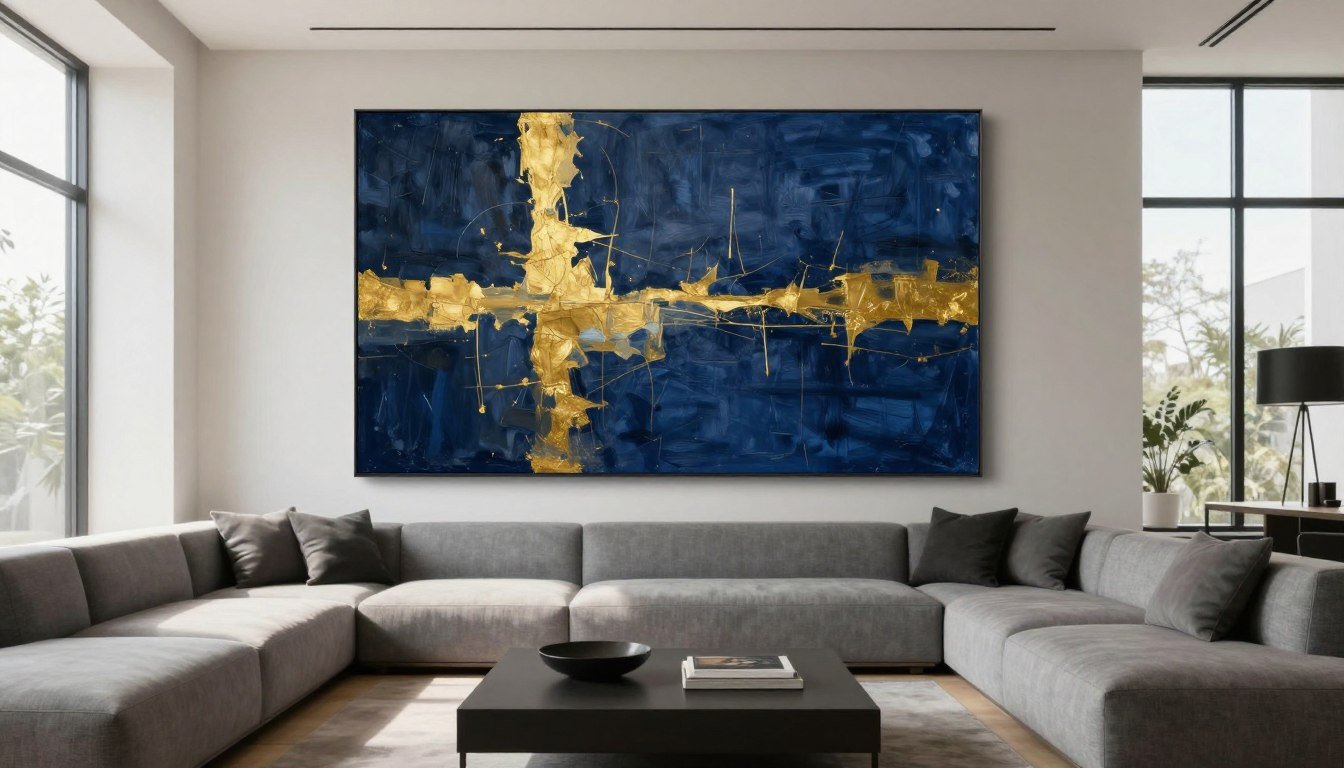
Color blocking in abstract pieces can tie together disparate elements in your room. A canvas featuring navy and gold might bridge the gap between your navy sofa and gold metal lighting fixtures.


Minimalist Line Art
Line art brings sophistication through restraint. These drawings use single continuous lines or stark black-and-white compositions to create striking images. Faces, figures, and abstract shapes all translate beautifully to this medium.

Line art canvas prints create maximum impact with minimum visual weight. They're perfect for spaces that already feature bold furniture or patterns, providing art that doesn't overwhelm.
Where Line Art Shines

All-White Spaces
Line art prevents all-white rooms from feeling sterile while maintaining the clean aesthetic.

Patterned Furniture
Simple line drawings balance rooms with busy textiles or geometric rugs.

Small Spaces
The visual lightness of line art keeps compact rooms feeling open and uncluttered.
Botanical and Nature-Inspired Prints
Bringing the outdoors in remains a cornerstone of modern design. Botanical prints range from photographic leaf close-ups to illustrated plant portraits. The organic shapes provide welcome contrast to the angular lines common in modern furniture.
These pieces add life and freshness to modern spaces without compromising the clean aesthetic. Oversized leaf prints make particularly strong statements, working as standalone focal points.
Botanical wall art works year-round and never goes out of style. Unlike seasonal decor, plants and florals maintain relevance through every trend cycle.

Black and White Photography and Prints
Monochromatic art brings timeless sophistication to modern living rooms. Whether depicting cityscapes, portraits, or abstract compositions, black and white canvas prints create drama through contrast and composition alone.

This classic approach works with any color scheme in your room. Black and white art acts as a neutral that enhances rather than clashes with your existing palette.
When to Choose Monochrome
- Colorful Rooms: Black and white art prevents color overload in spaces with bold furniture or accents
- Neutral Spaces: Monochrome prints add visual interest without introducing new colors
- Traditional Mixing: Black and white bridges the gap when mixing modern and traditional pieces
- Gallery Walls: Monochrome creates cohesion when displaying multiple different images
- Timeless Appeal: Black and white never looks dated, protecting your investment

Pop Art and Graphic Prints
For those who love bold statements, pop art brings energy and personality. These pieces feature vibrant colors, graphic compositions, and often playful or iconic imagery. Pop art works best in modern spaces that embrace color and visual excitement.

This style requires confidence and commitment. Pop art becomes the room's focal point, so other elements should support rather than compete with it. Keep surrounding walls relatively clear and furniture streamlined.
📐 Not sure what size to choose? Use our free Wall Art Size Calculator → https://rossettiart.com/blogs/news/wall-art-size-calculatorTextured and Mixed Media Art
While canvas prints dominate, incorporating some textured pieces adds dimensional interest. Metal wall sculptures, wood wall accents, or woven fiber art create contrast against the smooth surfaces common in modern rooms.

These pieces catch light differently throughout the day, creating dynamic visual interest. The depth they provide prevents walls from feeling flat while maintaining the modern aesthetic.

Mixing Canvas with Textured Elements
Combining different media creates sophisticated, layered looks. The key is maintaining visual balance:
- Limit to two or three different materials
- Maintain a cohesive color story
- Vary sizes to create hierarchy
- Leave adequate spacing between pieces
- Anchor with a dominant focal piece

Wall Art Placement and Layout Strategies
Even the most beautiful wall art falls flat with poor placement. Modern design relies on precise positioning and thoughtful spacing to create visual harmony. The goal is making your pieces feel intentional rather than arbitrary.
Standard rules provide helpful starting points, but your specific room dimensions and furniture arrangement should guide final decisions. Trust your eye once you understand the principles.

The Essential Height Rule
Art should hang so its center sits at eye level, typically 57 to 60 inches from the floor. This standard comes from gallery practices and ensures comfortable viewing. When hanging art above furniture, adjust slightly lower so it relates to the piece below rather than floating near the ceiling.
Above Furniture Rule: Leave 6 to 12 inches between your furniture and the bottom of your artwork. This creates visual connection while preventing the art from feeling cramped.

Single Statement Piece Placement
A single large canvas makes a powerful statement in modern spaces. This approach suits minimalist aesthetics and creates a clear focal point. The piece should be substantial enough to anchor the wall without overwhelming it.

Center your piece horizontally over your sofa or main furniture. If your couch is 84 inches wide, your art should measure roughly 56 to 70 inches wide to maintain proper proportion. This creates the visual balance that modern design demands.

Sizing for Single Pieces
Calculate your ideal art width using this simple formula:
- Measure your sofa or furniture width
- Multiply by 0.66 (for two-thirds coverage)
- The result is your minimum art width
- Maximum width is 0.85 times furniture width
- Height should maintain pleasing proportions
For an 80-inch sofa, you want art between 53 and 68 inches wide. This range ensures proper scale and visual weight.
Diptych and Triptych Arrangements
Multi-panel pieces create contemporary sophistication. These coordinated sets span wider wall spaces while maintaining cohesion. The spacing between panels matters as much as the pieces themselves.

Leave 2 to 6 inches between panels depending on their size. Larger panels can handle more spacing, while smaller pieces look better closer together. Treat the entire group as one unit when centering over furniture.

Diptych Spacing
Two-panel sets work best with 2-4 inch spacing. Align top edges perfectly for clean visual flow.

Triptych Layout
Three-panel sets should maintain equal spacing. The center piece anchors the composition while outer panels balance it.

Quad Layouts
Four-panel arrangements work in grid formation or linear sequence depending on your wall dimensions.
Asymmetrical Modern Arrangements
Breaking from traditional symmetry creates dynamic energy in modern spaces. Asymmetrical layouts require more planning but deliver striking results when executed well.

Balance asymmetry through visual weight rather than mirror placement. A large piece on one side can balance two smaller pieces on the other if their combined visual impact feels equivalent.
Creating Balanced Asymmetry
- Establish a dominant anchor piece
- Add supporting pieces that relate in color or style
- Vary sizes but maintain proportional relationships
- Create implied geometric relationships between pieces
- Step back frequently to assess overall balance
- Use consistent spacing measurements throughout

Corner and Sectional Placements
Modern sectionals and corner arrangements present unique challenges. The key is treating each wall section individually while maintaining overall coherence across the room.

For L-shaped sectionals, you can either place art on both walls or focus on the dominant section. If using both walls, choose pieces that share a color story or theme to create visual connection across the corner.
Avoid This Mistake: Don't hang identical pieces on both walls of a corner sectional. Instead, use complementary pieces that relate without repeating. This prevents visual monotony while maintaining cohesion.

Floating Walls and Room Dividers
In open-concept spaces, floating walls or the back of your sofa might need art attention. These pieces should look finished from multiple viewing angles. Consider your traffic patterns and sight lines when planning placement.

For walls visible from the dining area or kitchen, choose pieces that complement the entire open space rather than just the living room. This creates flow and prevents visual jarring as you move through the home.

Size and Scale Considerations for Modern Interiors
Getting size wrong is the most common mistake in wall art selection. Too small, and your pieces disappear into the wall. Too large, and they overwhelm the space. Modern design demands proper scale to achieve its characteristic balance and intentionality.
The good news is that modern aesthetics lean toward larger pieces, which actually makes sizing easier. One substantial canvas often works better than multiple small pieces fighting for attention.

Understanding Visual Weight
Visual weight isn't just about physical dimensions. A dark, bold piece carries more weight than a light, minimal one of the same size. Color intensity, pattern complexity, and subject matter all affect how heavy a piece feels in your space.

Modern spaces with minimal furniture and clean lines can handle visually heavier art. The simplicity of your surroundings lets bold art shine without creating chaos. Conversely, busier rooms benefit from simpler, lighter-weight pieces.
High Visual Weight
These elements make art feel substantial and commanding in a space:
- Dark or saturated colors
- High contrast compositions
- Dense patterns or details
- Dramatic subject matter
- Bold, graphic designs
- Black metal or dark wood frames
Light Visual Weight
These characteristics create airiness and subtlety:
- Soft, muted colors
- Low contrast compositions
- Minimal detail or pattern
- Abstract or atmospheric subjects
- Delicate line work
- White or light wood frames
Balancing Heavy Pieces
When working with visually heavy art:
- Ensure adequate wall space around it
- Keep surrounding decor minimal
- Use lighter furniture colors
- Increase room lighting
- Limit additional wall accents
Working with Light Pieces
Lighter artwork requires different support:
- May need larger physical size
- Can group multiple pieces together
- Works well with textured walls
- Pairs nicely with bolder furniture
- Allows for layered wall styling

Room Size and Art Proportions
Your room dimensions directly influence ideal art sizes. Small rooms need appropriately scaled pieces that don't dwarf the space, while large rooms demand substantial art to avoid looking sparse.
| Room Size | Recommended Art Width | Recommended Height | Best Layout Type |
| Small (100-150 sq ft) | 24-48 inches | 24-36 inches | Single medium piece or small gallery |
| Medium (150-250 sq ft) | 40-60 inches | 30-48 inches | Large single or diptych set |
| Large (250-400 sq ft) | 60-80 inches | 40-60 inches | Oversized single or triptych |
| Extra Large (400+ sq ft) | 72-96+ inches | 48-72 inches | Multiple focal walls or gallery |

Ceiling Height Considerations
Standard eight-foot ceilings call for horizontal orientations that emphasize width. This makes rooms feel more expansive. Higher ceilings open opportunities for vertical pieces or stacked arrangements that draw the eye upward.

In rooms with soaring ceilings, don't be afraid to hang art higher than the standard eye level. The piece should relate to your furniture and human scale while acknowledging the architectural height.
Ceiling Height Guidelines
- 8-foot ceilings: Stick with horizontal pieces 36-48 inches tall maximum
- 9-foot ceilings: Mix horizontal and vertical, up to 54 inches tall
- 10-12 foot ceilings: Vertical pieces up to 72 inches create drama
- Higher than 12 feet: Consider floor-to-near-ceiling statement pieces or stacked arrangements

The Oversized Art Advantage
Modern design loves oversized art for good reason. Large pieces create instant impact and eliminate the fussy feeling that comes from arranging multiple smaller items. One substantial canvas makes a stronger statement than five small prints.

Going larger than you initially think appropriate often yields the best results. Many people select art that's too small out of caution, only to realize later that they should have sized up.
Scale Test: Before committing to a size, tape out the dimensions on your wall using painter's tape. Live with it for a day or two. If it starts feeling small, go up a size. If it feels overwhelming, scale down slightly.

Furniture Relationship and Scale
Your art must relate proportionally to the furniture below it. A tiny piece above a large sectional looks disconnected and awkward. The furniture and art should feel like partners in the same design conversation.


Furniture-Art Ratio Guide
Use your largest furniture piece as your sizing anchor:
- Small loveseat (50-60"): 35-50" wide art
- Standard sofa (72-84"): 50-70" wide art
- Large sofa (90-96"): 65-80" wide art
- Sectional (100"+): 75-90"+ wide art or multiple pieces
These ranges maintain the two-thirds to three-quarters coverage rule that creates visual harmony.
Multiple Walls and Room Balance
When decorating several walls in one room, vary your art sizes to create visual hierarchy. One wall should feature your largest, most impactful piece, while other walls support with smaller or less visually dominant art.

This prevents every wall from competing for attention and creates a more sophisticated, curated feeling. The variety in scale adds visual interest while maintaining modern simplicity.

Color Coordination and Design Harmony
Color creates the emotional foundation of your living room. The wall art you choose either enhances or disrupts this carefully crafted palette. Modern design approaches color with intention, using art to reinforce the room's overall mood and aesthetic direction.
You're not limited to exact color matching. In fact, modern spaces often thrive on strategic color relationships that create interest while maintaining cohesion. Understanding these relationships transforms color selection from guesswork to confident decision-making.

Working with Existing Color Palettes
Start by identifying your room's dominant colors. These might come from your sofa, area rug, or wall paint. Your art can either echo these colors directly, introduce complementary tones, or provide strategic contrast.

Pull inspiration from elements already in your space. If you love the muted sage green in your favorite throw pillow, find art that features similar tones. This creates subtle connections that make the room feel intentionally designed.

Color Relationship Strategies
Different color approaches create different effects in modern spaces:
- Monochromatic: Variations of one color create calm sophistication
- Analogous: Adjacent colors (blue-green-teal) feel harmonious
- Complementary: Opposite colors (blue-orange) create vibrant energy
- Neutral with Accent: Grays and beiges with one bold color pop
- High Contrast: Black, white, and one additional color for drama

Neutral Rooms with Bold Art
If your living room features neutral furniture and walls, art becomes your opportunity for color introduction. This approach gives you flexibility to change your room's personality simply by swapping art pieces.

Bold art in neutral spaces creates instant sophistication. The restraint of your foundational elements lets the art fully shine. This is where pop art canvas prints particularly excel, bringing personality to understated backgrounds.
Choosing Art Colors for Neutral Spaces

Jewel Tones
Deep emerald, sapphire, or ruby adds richness without overwhelming neutral foundations.

Warm Accents
Terracotta, mustard, or burnt orange warms up cool gray or white spaces beautifully.

Cool Contrast
Blues, teals, or cool greens provide refreshing contrast in warm beige or tan rooms.
Colorful Rooms Requiring Careful Art Selection
When your room already features strong colors, your art needs to either coordinate carefully or commit to controlled chaos. Modern design typically leans toward the former—finding art that complements without competing.

Look for pieces that bridge your existing colors. If you have a navy sofa and gold accents, art featuring both tones creates visual harmony. The art acts as a mediator, tying separate color elements into a cohesive story.
Color Rule: In rooms with three or more bold colors, choose art that features at least two of those colors. This ensures your art integrates rather than clashes with the existing palette.

The Power of Black and White in Any Palette
When color coordination feels overwhelming, black and white art provides a sophisticated solution. These pieces work with absolutely any existing palette, adding graphic interest without introducing new colors to balance.

Black and white pieces also add valuable visual rest in colorful spaces. They give your eye a place to pause, preventing color overload while maintaining visual interest through contrast and composition.
Seasonal and Changeable Color Approaches
Modern design often embraces flexibility. If you like changing your decor with seasons, choose art with versatile color palettes that work across multiple styling iterations.

Art featuring neutrals with one accent color gives you anchored flexibility. The neutral tones provide year-round consistency while the accent can coordinate with seasonal pillow or throw changes.
Multi-Season Color Strategies
- Choose art with 60% neutrals, 40% accent colors for maximum versatility
- Favor natural tones (sage, terracotta, navy) that work across seasons
- Select pieces with metallic accents (gold, copper) that coordinate with multiple palettes
- Consider abstract pieces where colors blend rather than dominate
- Invest in statement art with timeless color combinations

Undertones and Temperature Matching
Color undertones significantly affect how pieces work together. Cool grays clash with warm grays. Blue-reds look odd with orange-reds. Matching undertones creates polish in modern spaces.

Test your room's temperature by examining your existing pieces in natural daylight. Do your neutrals lean warm (beige, cream, warm gray) or cool (true gray, white with blue undertones)? Select art that matches this temperature for seamless integration.
Undertone Clash Alert: The most common color mistake is mixing warm and cool versions of the same neutral. A warm beige sofa with cool gray art creates subtle discord that makes the room feel slightly off.

Mixing Materials and Textures in Wall Decor
Modern wall decor extends beyond canvas prints to include metal sculptures, wood accents, and mixed media pieces. The interplay between different materials creates dimensional interest that flat surfaces alone cannot achieve. This layering adds sophistication while maintaining the clean modern aesthetic.
The key to successful material mixing is maintaining visual coherence through color, style, or theme. Your pieces should feel like a curated collection rather than random assortment.

Canvas and Metal Combinations
Pairing canvas with metal accents creates textural contrast that catches light beautifully. A soft, matte canvas beside a reflective metal piece adds depth and visual intrigue without cluttering your wall.

Gold metal accents work particularly well with warm-toned canvas prints, while black metal complements cooler palettes or monochromatic pieces. The metal catches and reflects light, adding sparkle to your wall throughout the day.
Effective Canvas-Metal Pairings
These combinations consistently deliver modern sophistication:
- Abstract canvas with geometric metal sculpture
- Botanical print with brass leaf accents
- Black and white photography with black metal frames
- Colorful abstract canvas with gold metal sunburst
- Minimalist line art with copper wire sculpture
- Oversized canvas anchored by small metal accents
The size relationship matters. Let your canvas dominate while metal pieces provide punctuation rather than competition.


Wood Wall Art Integration
Wood wall accents bring organic warmth to modern spaces. These pieces range from carved geometric designs to natural branch arrangements. Wood adds texture and a connection to nature that balances modern's sometimes stark minimalism.

Consider your existing wood tones when selecting wood wall pieces. Matching your furniture's wood finish creates cohesion, while contrasting tones add intentional variety. Both approaches work when executed thoughtfully.
Wood Wall Decor Options for Modern Spaces

Geometric Sculptures
Angular wood pieces with varying depths create shadow play and dimensional interest.

Natural Elements
Preserved branches or root systems bring organic forms into structured modern rooms.

Layered Panels
Stacked wood pieces in varying lengths create abstract compositions with physical depth.
Mixing Multiple Material Types
Advanced wall styling involves combining three or more material types. This requires careful curation to avoid visual chaos. The trick is maintaining a unifying element—usually color or style—across all pieces.

Limit yourself to three material types maximum in a single wall arrangement. Canvas, metal, and wood work beautifully together. Adding more risks crossing from curated to cluttered.
Material Mixing Formula: Choose one dominant material (usually canvas), one supporting material (metal or wood), and optionally one accent material. The 60-30-10 rule applies—60% dominant, 30% supporting, 10% accent.

Texture Through Canvas Choices
Even within canvas prints, texture varies. Gallery-wrapped canvas on hand-stretched frames has subtle texture from the fabric weave. This creates micro-shadows and light variation that adds life to your walls.

Premium canvas stretched over pine wood frames maintains taut, professional appearance. The depth of the frame affects how the piece sits on your wall, with deeper stretchers creating more dramatic shadow lines.
Canvas Depth and Frame Options
| Frame Depth | Visual Effect | Best For | Style Impact |
| 0.75 inches | Slim profile, minimal shadow | Smaller pieces, grouped arrangements | Understated, classic |
| 1.5 inches | Standard depth, balanced shadow | Most applications, versatile choice | Professional, gallery-quality |
| 2-3 inches | Dramatic depth, strong shadow | Statement pieces, bold walls | Contemporary, commanding |
| Floater frame | Canvas appears to float off wall | Premium pieces, focal walls | Sophisticated, high-end |

Reflective Surfaces and Light Play
Metal and glass elements interact with room lighting differently than canvas. Metal sculptures catch and reflect light, creating sparkle and movement. This dynamic quality adds life to otherwise static wall arrangements.

Position reflective pieces where they'll catch natural light during your room's most-used hours. A metal accent that sparkles during morning coffee or evening relaxation adds more value than one hidden in shadow.
Strategic Reflective Placement
- Place metal pieces perpendicular to windows for maximum light catch
- Use reflective elements to bounce light into darker wall sections
- Position metallic accents where they'll reflect warm evening lamp light
- Avoid placing reflective pieces where they'll create glare on TV screens
- Consider how metal finishes (brass, copper, silver) affect light color

Balancing Smooth and Textured Elements
Modern design thrives on contrast. Pairing smooth canvas with roughly textured wood or porous concrete-look pieces creates visual interest through juxtaposition. The variety prevents monotony while maintaining sophistication.

Think of texture as another design dimension alongside color and scale. Rooms with predominantly smooth surfaces (leather, glass, polished wood) benefit from textured wall elements that add tactile interest.

Texture Pairing Principles
Create sophisticated contrast through thoughtful texture combinations:
- Smooth canvas with rough wood accents
- Polished metal with matte canvas
- Glossy furniture with textured wall pieces
- Flat prints with dimensional sculptures
- Uniform surfaces with varied wall textures
The goal is preventing visual monotony without creating chaos. Each textural element should have space to register before encountering the next.
Creating Stunning Gallery Walls
Gallery walls represent the ultimate expression of curated style in modern living rooms. These carefully arranged collections tell visual stories while filling significant wall space with personality and artistic flair. The key difference between gallery walls that sing and those that overwhelm lies in the planning.
Modern gallery walls differ from traditional salon-style hanging through their intentional restraint. You'll see more breathing room between pieces, cohesive color stories, and often a unifying theme that ties diverse elements together.

Planning Your Gallery Wall Layout
Start by laying out your arrangement on the floor. This lets you experiment with positioning without putting holes in your wall. Photograph different configurations to compare options before committing.

Use kraft paper or newspaper cut to your pieces' exact dimensions and tape them on the wall. This step prevents costly mistakes and lets you live with the arrangement for a day or two before making it permanent.
Gallery Wall Secret: Map your layout so the entire arrangement's center sits at 57-60 inches from the floor, not each individual piece. Treat the whole collection as one unit when determining height.

Cohesive Versus Eclectic Approaches
Modern gallery walls typically follow one of two paths. Cohesive galleries feature similar frames, coordinated colors, or unified themes. Eclectic galleries embrace variety while maintaining connection through one unifying element.

Cohesive galleries feel calmer and more controlled. They work beautifully in minimalist spaces where restraint matters. Eclectic galleries bring more energy and personality, suiting spaces that embrace layered, collected aesthetics.

Cohesive Gallery Elements
- Matching frame styles and colors
- Unified color palette across all pieces
- Similar artistic styles (all abstract, all photography)
- Consistent matting and spacing
- Symmetrical or grid-based arrangements

Eclectic Gallery Connectors
- Shared color palette despite varied content
- Mix of frames unified by one finish (all gold, all wood)
- Varied subjects connected by theme (all nature, all urban)
- Different sizes following clear pattern
- Intentional spacing creating rhythm
Grid Versus Organic Arrangements
Grid galleries bring order and clarity to modern walls. Equal-sized pieces in uniform rows create clean, architectural impact. This approach works particularly well with canvas print sets designed to work together.

Organic arrangements feel more casual and collected. They mix sizes and positions while maintaining overall balance. These galleries require more planning to achieve the casual-but-intentional look that modern design demands.
Grid Gallery Guidelines
- Select pieces of identical or proportionally related sizes
- Maintain consistent spacing between all pieces (2-4 inches works well)
- Use matching frames for maximum impact
- Arrange in equal rows and columns
- Center the entire grid over your furniture
- Consider odd numbers (3x3, 3x5) for visual interest

Organic Gallery Wall Strategy
Creating balanced asymmetry requires understanding visual weight. Larger pieces anchor the arrangement, while smaller pieces fill and balance. The goal is making it look effortless while being completely intentional.

Start with your largest piece off-center. Build around it with medium and smaller pieces, stepping back frequently to assess balance. The arrangement should feel stable even though it's asymmetrical.
Balance Test: If you mentally draw a line down the center of your gallery wall, both sides should feel equally weighted even if they're not identical. Dark colors and large sizes carry more visual weight.

Spacing and Margins in Modern Galleries
Modern gallery walls need breathing room. Spacing between pieces should be consistent and generous—typically 2 to 4 inches. This prevents the cluttered feeling that fights against modern aesthetics.

Leave at least 8-12 inches of empty wall space around your entire gallery arrangement. This margin separates your curated collection from simply filling a wall.
Spacing Rules for Different Arrangements
| Gallery Type | Between Pieces | Margin Around Gallery | Modern Impact |
| Tight Grid | 2-3 inches | 8-10 inches minimum | Clean, architectural |
| Relaxed Grid | 3-4 inches | 10-12 inches | Balanced, approachable |
| Organic Mixed | 2-6 inches varied | 12-15 inches | Dynamic, curated |
| Salon Style | 1-2 inches tight | 6-8 inches | Traditional, busy |

Color Coordination in Multi-Piece Galleries
Gallery walls require thoughtful color curation. Too many competing colors creates chaos. A cohesive palette with intentional variety creates sophistication.

Choose a dominant color that appears in at least 60% of your pieces. Add one or two accent colors that appear sporadically. This creates connection across diverse subjects and styles.
Gallery Color Strategies
- Monochrome Magic: All black and white pieces for timeless cohesion
- Tonal Harmony: Variations of one color family (all blues, all earth tones)
- Accent Pop: Mostly neutral pieces with one or two colorful accents
- Complementary Duo: Two opposite colors (blue and orange) throughout
- Analogous Flow: Adjacent colors (blue, teal, green) creating smooth transitions

Frame Selection for Gallery Walls
Frames unify or diversify your gallery depending on your approach. Matching frames create instant cohesion even with varied art. Mixed frames require connection through color or finish to avoid looking random.

In modern spaces, simpler frames work better. Thin black metal, natural wood, or white frames let your art shine while providing necessary structure. Avoid ornate or heavily detailed frames that fight modern aesthetics.

Modern Gallery Frame Choices
These frame styles consistently deliver contemporary sophistication:
- Thin Black Metal: Classic, versatile, works with anything
- Natural Wood: Adds warmth while maintaining simplicity
- White or Off-White: Creates floating effect on light walls
- Gallery Wrap Canvas: Frameless modern option
- Floater Frames: Premium look creating hover effect
Lighting Your Wall Art Effectively
Proper lighting transforms good wall art into showstopping focal points. Modern spaces rely on layered lighting that illuminates art without creating glare or hotspots. The interplay between natural and artificial light throughout the day affects how your pieces appear and feel.
Many people hang beautiful art and never consider how lighting affects its impact. Strategic lighting can make colors pop, create dramatic shadows with dimensional pieces, and ensure your investment looks its best at all hours.

Natural Light Considerations
Natural light brings art to life but requires careful management. Direct sunlight can fade prints over time, even those printed with UV-resistant archival inks. Position your most valuable or light-sensitive pieces away from direct sun exposure.

North-facing walls receive consistent, indirect natural light throughout the day—ideal for art display. South-facing walls get intense direct sun that may require window treatments to protect your pieces during peak hours.
UV Protection: Quality canvas prints made with UV-resistant inks and coatings withstand normal indoor light exposure for decades. However, direct continuous sunlight still poses risks over time.

Artificial Lighting Solutions for Wall Art
Dedicated art lighting elevates your pieces from decoration to gallery-quality focal points. Several approaches work in modern living rooms, each creating different effects and requiring varying levels of installation.

Picture Lights
Mounted directly above your artwork, picture lights provide focused illumination that highlights your piece while creating ambient glow. Modern picture lights come in sleek finishes that complement contemporary spaces.

LED picture lights offer energy efficiency and minimal heat output—important for protecting your art from damage. Choose adjustable fixtures that let you direct light precisely where needed.
Track and Rail Lighting
Track systems provide ultimate flexibility, letting you position and aim lights exactly where wanted. This approach works beautifully for gallery walls or when you like changing your art arrangement.

Modern track lighting has evolved beyond utilitarian. Sleek black or brushed metal tracks blend into contemporary ceilings while providing professional-grade illumination.
Recessed and Wall-Washer Lighting
Recessed lights create clean, unobtrusive illumination when positioned correctly. Place them about 2-3 feet from the wall and aim them at your art to create even light distribution without harsh shadows or bright spots.

Wall-washer recessed lights specifically designed for art illumination spread light evenly across your pieces. These fixtures cost more than standard recessed lights but deliver superior results for serious art display.

Lighting Angle Best Practices
The angle of light dramatically affects how your art appears:
- 30-degree angle: Ideal for most flat art, prevents glare
- 45-degree angle: Creates slight shadow for dimensional pieces
- Direct overhead: Creates harsh shadows and glare—avoid this
- Too shallow: Results in uneven illumination with dark spots
- Adjustable fixtures: Let you fine-tune angles for perfect results
Color Temperature and Art Appearance
Light color temperature significantly affects how art colors appear. Measured in Kelvin, this characteristic determines whether light feels warm (yellow-toned) or cool (blue-toned).

For accurate color rendering that makes art look as intended, choose bulbs between 3000K and 4000K. This neutral-to-slightly-warm range shows colors truthfully without adding heavy yellow or blue casts.
| Color Temperature | Light Character | Effect on Art | Best Use |
| 2700K - Warm White | Warm, yellow-toned | Adds warmth, shifts blues toward green | Cozy evening ambiance, warm palettes |
| 3000K - Soft White | Neutral-warm | Minimal color shift, slightly warm | Most residential art lighting |
| 3500K - Neutral White | True neutral | Accurate color rendering | Gallery-quality art display |
| 4000K - Cool White | Crisp, slightly cool | Brightens whites, slight blue cast | Modern spaces, high-contrast art |
| 5000K+ - Daylight | Blue-white, stark | Can appear harsh, shifts warm colors cool | Task lighting, not ideal for art |
Ambient, Task, and Accent Lighting Balance
Modern living rooms need layered lighting. Ambient lighting provides overall illumination, task lighting serves functional needs, and accent lighting highlights architectural features and art.

Your art lighting falls into the accent category. It should be separately controlled from ambient lighting so you can create different moods throughout the day. Dimmer switches offer even more flexibility.
Creating Effective Lighting Layers
- Ambient Base: Recessed lights or ceiling fixtures provide overall room light
- Task Additions: Table and floor lamps for reading and close work
- Accent Highlights: Dedicated art lights, spotlights on architectural features
- Decorative Touches: Statement fixtures that add style while providing light
- Natural Integration: Window treatments that control natural light levels

Avoiding Common Lighting Mistakes
Glare ruins art viewing experience. Canvas with any reflective coating or glass-covered pieces become mirrors under poorly positioned lights. Always test your lighting setup before finalizing installation.

Glare Check: Stand in your usual seating positions and verify you don't see bright reflections on your art. If you do, adjust the light angle or position until reflections disappear from all typical viewing spots.
Overlighting washes out colors and details. Art doesn't need spotlights that make it look interrogated. Subtle highlighting that makes pieces glow without overwhelming works better in residential spaces.

Smart Lighting and Automation
Modern technology lets you program perfect lighting scenes for different times of day. Morning might feature bright ambient light with minimal art accent. Evening could dim ambient while bringing up art lights for dramatic effect.

Smart bulbs and switches don't require extensive rewiring. They offer color temperature adjustment, dimming, and scheduling through phone apps—bringing gallery-level control to residential settings.
Common Mistakes to Avoid
Even with perfect art and good intentions, common pitfalls can undermine your wall decor efforts. Understanding these mistakes before you make them saves time, money, and frustration. Most errors involve scale, placement, or cohesion—all fixable with awareness.
Learning from others' missteps lets you skip straight to sophisticated results. These mistakes appear repeatedly because they seem logical in the moment but create problems in practice.

Choosing Art That's Too Small
This tops the list of most common mistakes. People buy art that seems large in the store but disappears once hung above their sofa. Modern design especially suffers from undersized art because the aesthetic relies on bold, intentional statements.

When in doubt, size up. An 48-inch canvas rarely looks too large, but a 24-inch piece often looks insignificant on a standard wall. Your art should command attention, not shrink into the background.
Signs Your Art Is Properly Sized
- It draws your eye immediately upon entering the room
- It feels balanced with the furniture below it
- There's adequate wall space around it but it doesn't float
- It anchors the wall as a focal point
- Multiple people comment on it positively
Signs Your Art Is Too Small
- It looks lost on the wall with too much empty space
- Guests don't notice or comment on it
- It appears to float without purpose
- The furniture below overwhelms it
- You find yourself wishing it were bigger

Hanging Art at the Wrong Height
Art hung too high is a pandemic in homes everywhere. The standard 57-60 inch center height exists for a reason—it aligns with average eye level and looks right from typical viewing distances.

Above furniture, the 6-12 inch gap rule matters. Too much space disconnects the art from the furniture. Too little makes both pieces feel cramped. This relationship between art and furniture creates visual unity.
Height Mistake Fixes
- The Float: Art with excessive space below furniture appears to float aimlessly—lower it
- The Crowd: Art too close to furniture feels cramped—raise it slightly
- The Ceiling Hug: Art positioned near ceiling looks awkward—bring it down significantly
- The Asymmetric Disaster: Off-center placement without reason looks accidental—center it or make asymmetry intentional

Ignoring Color Relationships
Buying art you love without considering your room's colors creates discord. A beautiful piece that clashes with your existing palette becomes a constant source of visual tension rather than harmony.

Before purchasing, photograph your room and bring those photos when shopping for art. Better yet, many online retailers let you visualize pieces in your space. This simple step prevents expensive color mistakes.
Color Coordination Shortcut: If you're unsure about color relationships, choose art that pulls at least one color from your existing room palette. This guaranteed connection creates instant cohesion.

Mixing Too Many Styles
Modern spaces thrive on curated cohesion. Mixing rustic farmhouse art with sleek contemporary prints with traditional landscapes creates visual confusion. Your wall decor should tell a consistent style story.

Eclecticism works when unified by one element—color, frame style, subject theme. Without that unifying factor, mixed styles just look random and unplanned.
Style Cohesion Strategies

Style Consistency
All pieces share the same aesthetic approach—all modern abstract, all minimalist line art, all contemporary photography.

Color Unification
Diverse styles work together through shared color palette—all black and white, all earth tones, all jewel tones.

Frame Consistency
Different subjects and styles connect through identical or similar framing creating visual unity.
Neglecting Proper Spacing
Gallery walls suffer most from spacing mistakes. Pieces crammed together look cluttered. Pieces too far apart lose visual connection. Modern design demands intentional, consistent spacing that creates breathing room.

Use consistent measurements between all pieces in a gallery arrangement. Two to four inches between pieces works for most modern applications. Measure, mark, and verify before hanging.
Spacing Trap: What looks good when laid out on the floor often needs adjustment on the wall. Vertical spacing appears tighter than horizontal spacing at the same measurement. Account for this visual effect.

Forgetting About Lighting
Beautiful art in poorly lit spaces never reaches its potential. Inadequate lighting makes colors appear dull and details disappear. Harsh lighting creates glare that makes viewing unpleasant.

Plan lighting when planning your art placement. Dedicated art lights, well-positioned recessed lights, or strategic table lamps make dramatic differences in how your pieces appear and how your room feels.
Ignoring Room Architecture
Fighting your room's existing architectural features creates tension. Hanging rectangular art on a wall with prominent vertical elements ignores natural lines. Placing art that cuts across window trim looks unconsidered.

Work with your space's bones. Let architectural features guide placement decisions. Center art between windows rather than covering trim. Follow the lines your room naturally provides.
Architecture-Friendly Placement
- Center art between architectural features like windows or doorways
- Align art edges with existing architectural lines when possible
- Respect window and door trim—don't overlap it
- Use vertical art on walls with vertical architectural emphasis
- Let horizontal features guide horizontal art placement
- Consider ceiling molding and baseboards as your vertical boundaries

Buying Art Impulsively Without Planning
Falling in love with a piece and buying it without considering size, color, or placement in your home leads to expensive mistakes. That gorgeous canvas might not fit your wall or match your palette.

Measure your space. Photograph your room. Consider your existing colors and style. Then shop with purpose. Quality art represents an investment—make certain it works before purchasing.
Smart Shopping Process: Measure your wall space, photograph your room in natural light, identify your color palette, determine your size needs, then begin searching for pieces that meet all these criteria.
Frequently Asked Questions
Q: What size wall art should I get for my living room?
A: Your wall art should be approximately two-thirds to three-quarters the width of the furniture below it. For a standard 84-inch sofa, choose art between 56 and 70 inches wide. Measure your wall space and furniture, then select art that creates proper proportion without overwhelming or disappearing into the space.
Q: How high should I hang wall decor above my sofa?
A: Leave 6 to 12 inches between the top of your sofa and the bottom of your wall art. The art's center should sit approximately 57 to 60 inches from the floor, matching standard eye level. This creates proper visual connection between your art and furniture while maintaining comfortable viewing height.
Q: What are the best colors for modern living room wall art?
A: The best colors depend on your existing palette, but modern living rooms often feature abstract art in neutrals with bold accent colors, monochromatic black and white pieces, or earth tones like terracotta, sage, and navy. Choose art that either complements your room's colors or provides strategic contrast. For neutral spaces, bolder colors work well. For colorful rooms, consider coordinating tones or sophisticated black and white.
Q: Should I choose one large piece or multiple smaller pieces for my wall?
A: One large statement piece typically creates stronger impact in modern spaces and requires less planning than multiple pieces. However, gallery walls or coordinated sets work beautifully when you want to cover more wall space or create visual variety. Consider your wall size, furniture scale, and personal preference. Large walls above sectionals often benefit from single oversized pieces, while smaller walls or those with interesting architectural features can showcase curated groupings.
Q: What makes canvas prints better than posters or other wall art?
A: Gallery-quality canvas prints offer superior durability, texture, and professional appearance compared to posters. Canvas printed with archival inks on hand-stretched frames maintains color vibrancy for decades, while posters fade and curl. The fabric texture of canvas adds dimensional interest that flat paper cannot provide. Canvas also arrives ready to hang without requiring framing, and the gallery-wrapped edges create a polished, finished look appropriate for modern interiors.
Q: How do I create a cohesive gallery wall?
A: Successful gallery walls need one unifying element—matching frames, coordinated colors, or consistent theme. Plan your layout on the floor first, maintaining 2-4 inches spacing between pieces. Use kraft paper templates on the wall before hanging. Treat the entire arrangement as one unit, centering the whole collection rather than individual pieces. Start with your largest piece and build around it, stepping back frequently to assess balance.
Q: Can I mix different art styles in one room?
A: Yes, but maintain cohesion through color palette, frame style, or theme. Modern design allows eclectic mixing when unified by one consistent element. Avoid combining more than three distinct styles in one space, and ensure pieces share visual weight and proportional relationships. A room featuring abstract art and photography can work beautifully if unified by black and white color scheme or matching frames.
Q: How much should I spend on living room wall art?
A: Investment in wall art varies widely based on size, medium, and whether pieces are original or prints. Quality canvas prints range from affordable to premium depending on size and customization. Prioritize pieces for your most visible walls and main focal points, where the impact justifies higher investment. Gallery-quality prints made to order with archival materials protect your investment through longevity and maintained appearance.
Q: What wall art works best in small living rooms?
A: Small living rooms benefit from one medium-to-large piece rather than multiple small pieces that can make the space feel cluttered. Choose lighter colors and simpler compositions that don't visually overwhelm. Vertical pieces can make ceilings feel higher in compact spaces. Avoid dark, heavy visual weight unless balanced by light furniture and adequate lighting. Minimalist line art or soft abstracts work particularly well in smaller rooms.
Q: How do I protect my wall art from fading?
A: Choose prints made with UV-resistant archival inks, which protect against normal indoor light exposure. Position valuable pieces away from direct sunlight, especially on south-facing walls. Use window treatments during peak sun hours if needed. Quality canvas prints designed for longevity maintain color vibrancy for decades when properly positioned. Avoid hanging art directly above heat sources like radiators or fireplaces, which can accelerate degradation.
Creating Your Perfect Modern Living Room Wall
Transforming your living room through thoughtful wall decor choices brings personality and polish to your space. The principles of scale, color coordination, and intentional placement guide you toward arrangements that feel both striking and harmonious.
Modern wall decor celebrates simplicity, quality, and bold choices. Whether you choose one statement canvas or a carefully curated gallery wall, your art should reflect who you are while honoring the clean aesthetic that defines contemporary design.

Remember that your walls tell your story. The art you select, how you arrange it, and the care you take in placement all contribute to a space that welcomes you home every day and impresses everyone who enters.
Start with one focal wall, apply these principles with confidence, and watch your living room transform. The difference between average and extraordinary often comes down to proper sizing, thoughtful placement, and choosing pieces that genuinely speak to you.

Explore our Abstract Canvas Prints or Canvas Print Sets to find pieces that bring your modern living room vision to life.

About the Author
Chiara Rossetti
Chiara Rossetti is the founder of Rossetti Art, a canvas print and original art brand. She writes about interior design, wall art styling, and the art of making a home feel alive.

Leave a comment
This site is protected by hCaptcha and the hCaptcha Privacy Policy and Terms of Service apply.