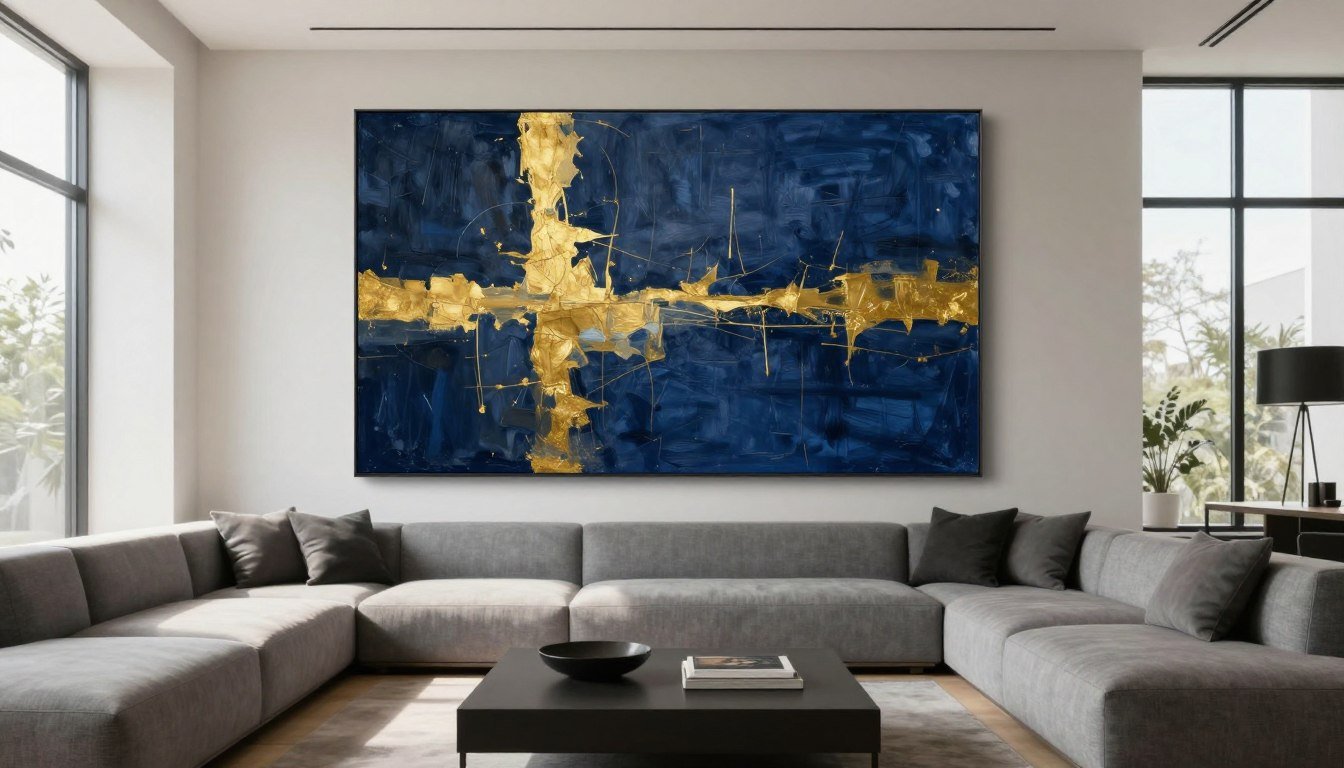
That empty wall above your sofa stares back at you every single day. You know it needs something bold, something that pulls the entire room together, but choosing wall art for living room large spaces feels overwhelming. The wrong piece can throw off your carefully curated design, while the perfect artwork transforms your space from ordinary to extraordinary.
Large wall art serves as more than decoration. It creates a focal point that anchors your furniture arrangement and sets the emotional tone for your most-used space. Whether you gravitate toward abstract expressions, botanical scenes, or timeless black and white photography, the right oversized piece commands attention without overwhelming your room.

Discover Your Perfect Large Canvas Print
Explore our curated collections of gallery-quality wall art, printed with archival inks and hand-stretched on premium canvas.
Why Large Wall Art Matters in Your Living Room
Your living room serves as the heart of your home. It's where conversations flow, where families gather, and where first impressions form. Large wall art establishes immediate visual impact that smaller pieces simply cannot achieve. A substantial artwork draws the eye upward, making ceilings appear higher and spaces feel more intentional.
Scale matters profoundly in interior design. A tiny print floating on an expansive wall creates visual discomfort and makes your room feel unfinished. Conversely, an appropriately sized large piece provides balance and proportion. It tells visitors that you've thoughtfully considered every element of your space.

Beyond aesthetics, wall decor influences mood and atmosphere. Vivid colors energize a space, while muted tones create calm. Abstract wall art stimulates creativity and conversation, whereas landscape prints bring nature's tranquility indoors. Your chosen artwork becomes a daily backdrop to your life, subtly affecting your emotional state.
Large format pieces also solve common decorating challenges. They eliminate the need for complicated gallery walls that require precise measurements and multiple nail holes. One stunning oversized canvas achieves what ten smaller frames struggle to accomplish. This simplification creates a cleaner, more sophisticated aesthetic.
Featured Snippet Answer: Large wall art for living rooms should be proportional to your furniture and wall space. As a general rule, artwork should cover 60-75% of the furniture width beneath it. For a standard sofa measuring 90 inches wide, your art should span 54-68 inches to create proper visual balance and serve as an effective focal point.

The right large artwork also increases your home's perceived value. Real estate professionals consistently note that well-decorated homes with thoughtful art selections sell faster and command higher prices. Quality wall art signals that a home has been cared for and professionally designed, even when the homeowner has styled it themselves.
Choosing the Right Size for Your Wall Space
Determining the correct dimensions for wall art for living room large spaces requires more than guesswork. Mathematical proportions create visual harmony that feels instinctively right. Professional designers follow specific formulas to ensure artwork complements rather than competes with existing furniture and architectural features.
Start by measuring your available wall space. Use painter's tape to outline different size options directly on the wall. This hands-on approach lets you visualize scale before committing. Step back frequently to assess from multiple viewing angles, particularly from your primary seating area.

Furniture-Based Sizing
Your art should relate directly to the furniture beneath it. For sofas and consoles, the artwork width should span 60-75% of the furniture's width. This creates visual connection while leaving breathing room on each side.
- Sofa under 84 inches: 50-63 inch wide art
- Sofa 84-96 inches: 63-72 inch wide art
- Sofa over 96 inches: 72+ inch wide art or diptych
- Console tables: art should be 50-60% of table width
Wall-Based Sizing
For statement walls without furniture below, different rules apply. The art should fill the space without overwhelming it, leaving approximately 6-12 inches of empty wall on all sides for visual breathing room.
- 8-foot wall: consider 60-72 inch wide art
- 10-foot wall: 72-96 inch wide art works well
- 12-foot wall: 96+ inch or multi-panel options
- High ceilings: consider vertical orientation

Ceiling height significantly impacts size selection. Standard 8-foot ceilings accommodate art up to 48 inches tall above furniture. Higher ceilings offer more flexibility. In rooms with 10-foot or taller ceilings, you can confidently select oversized wall art measuring 60-72 inches in height without overwhelming the space.
Consider sight lines and viewing distance. Art positioned opposite your main seating area can be larger because viewers see it from farther away. Pieces flanking a fireplace or on adjacent walls should be slightly smaller since viewers stand closer to them. The goal is comfortable viewing without neck strain or excessive head turning.

Find Your Ideal Canvas Size
Browse our collection of large-format canvas prints available in multiple sizes to fit your exact wall dimensions.
Style Guide: Finding Your Perfect Large Wall Art
Style selection represents the most personal aspect of choosing wall art. Your large canvas should resonate with your aesthetic preferences while complementing your existing decor. Abstract wall art offers versatility that works across multiple design styles, from mid-century modern to contemporary minimalism.
Abstract pieces provide interpretive freedom that allows each viewer to find their own meaning. Geometric patterns bring structure and modernity, while fluid brushstrokes create movement and energy. These works pair beautifully with neutral furniture, allowing the art to become the room's color story.

Botanical and nature-inspired art brings organic elements indoors, creating connections to the natural world. Oversized leaf prints, forest scenes, and floral compositions work particularly well in spaces with natural light and organic textures. These themes complement both traditional and contemporary interiors, offering timeless appeal.
For those drawn to sophistication and drama, black and white canvas prints deliver striking visual impact without color competition. Monochromatic artwork allows you to experiment with other room elements—throw pillows, rugs, curtains—without worrying about clashing hues.

Modern & Contemporary

Clean lines, bold colors, and graphic elements define modern wall art. Abstract geometric prints and minimalist compositions work beautifully in contemporary spaces with streamlined furniture.
- Geometric abstract patterns
- Bold color blocking
- Minimalist line art
- Contemporary photography
Traditional & Classic

Timeless subjects and refined compositions suit traditional interiors. Landscape scenes, classical reproductions, and vintage-inspired artworks complement elegant furnishings and architectural details.
- Landscape and seascape scenes
- Botanical illustrations
- Vintage maps and prints
- Classical art reproductions
Eclectic & Bohemian

Mix patterns, colors, and cultural influences for personality-driven spaces. Eclectic rooms embrace unexpected combinations that reflect individual taste and collected treasures.
- Global-inspired patterns
- Mixed media compositions
- Vibrant color palettes
- Textural abstract works
Portrait and figurative art makes powerful statements in living rooms. Whether contemporary line art portraits or classical figure studies, human subjects create immediate emotional connection. These pieces work particularly well in conversation areas where guests naturally gather.

Urban and cityscape prints appeal to those with cosmopolitan tastes. Skyline silhouettes, architectural photography, and street scenes bring metropolitan energy into suburban or rural homes. These artworks particularly resonate with frequent travelers and city dwellers seeking to celebrate their favorite locations.
Consider exploring abstract canvas prints if you want flexibility in your design scheme. Abstract art transcends specific trends, ensuring your investment remains stylistically relevant as your tastes evolve and your home's decor shifts over time.

📐 Not sure what size to choose? Use our free Wall Art Size Calculator → https://rossettiart.com/blogs/news/wall-art-size-calculator
Placement and Hanging Tips for Large Artwork
Proper placement elevates good art to great visual impact. The most common mistake involves hanging artwork too high, creating disconnection between the art and the room's furniture arrangement. Eye-level placement creates intimate connection with the artwork, making it feel integrated rather than floating arbitrarily on the wall.
The industry standard suggests hanging art so the center sits 57-60 inches from the floor—the average human eye level in museums and galleries. However, this rule adjusts when art hangs above furniture. In these cases, leave 6-12 inches between the furniture top and the artwork's bottom edge to create visual connection.

Above Furniture Placement
When hanging large wall art above sofas, consoles, or beds, maintain 8-10 inches of space between the furniture and the bottom frame edge. This creates grouping without feeling cramped.
The artwork should feel anchored to the furniture piece, not floating independently. If you can fit an entire dinner plate between the furniture and art, your piece hangs too high. This visual gap disrupts the composition.

Statement Wall Placement
For walls without furniture, the standard 57-60 inch center height applies. Measure from the floor to where you want the artwork's center, then calculate upward and downward from that point based on your piece's dimensions.
Mark lightly with pencil before committing to nail placement. Use a level to ensure perfectly straight hanging—even slight tilts become glaringly obvious with large-format pieces that command visual attention.

For rooms with tall ceilings, you may adjust the standard hanging height slightly higher to account for the expanded vertical space. However, resist the urge to hang art too high. Maintain connection to the room's human scale rather than the architectural scale.

"The most common hanging mistake I see is artwork floating too high on the wall, disconnected from the furniture and the people enjoying the space. Art should engage with you at a comfortable viewing height."
Hanging Hardware Matters
Large canvas pieces require appropriate hanging systems. Standard picture hooks work for lightweight frames up to 20 pounds. Beyond that weight, use wall anchors rated for your artwork's specific weight, or mount directly into wall studs for maximum security.
For particularly heavy or valuable pieces, consider professional installation. Many galleries and framing shops offer hanging services that ensure your investment is securely and beautifully displayed. The modest cost provides peace of mind.

Lightweight Options (Under 20 lbs)
- Standard picture hooks with nails
- Adhesive picture hanging strips
- Traditional picture wire and hooks
- Sawtooth hangers for smaller pieces
Heavy-Duty Options (Over 20 lbs)
- Wall anchors rated for weight
- Direct stud mounting with screws
- French cleat hanging systems
- Professional installation services
When hanging multiple large pieces in one space, maintain consistent height across all artworks. The center lines should align even if the pieces vary in size. This creates visual rhythm and professional polish that elevates your entire room's appearance.
Frame Options That Elevate Your Large Canvas
Frame selection dramatically impacts how your wall art integrates with your space. The right frame enhances without overwhelming, creating a finished presentation that protects your investment. Gallery-quality frames transform canvas prints into museum-worthy installations that command respect and admiration.
For contemporary and modern spaces, floater frames create sophisticated presentation. These frames suspend the canvas within the frame, creating a shadow gap that adds depth and dimension. Oak floater frames bring warm, natural tones that soften modern spaces, while black floaters offer sleek, gallery-style presentation.

Floater Frames

Floater frames create a floating effect with a shadow gap between the canvas edge and frame. This modern presentation style adds depth while maintaining clean lines perfect for contemporary interiors.
- Creates dimensional depth
- Modern, gallery aesthetic
- Available in various finishes
- Highlights canvas edges
Traditional Frames

Traditional frames with enclosed edges offer classic presentation. Pine wood frames in natural or stained finishes provide versatile options that complement various decor styles from transitional to traditional.
- Enclosed, finished edges
- Wide range of finishes
- Complements traditional decor
- Protective frame structure
Gallery Wrap

Gallery-wrapped canvases extend the image around the edges, eliminating the need for frames. This frameless option offers clean, contemporary presentation ideal for modern and minimalist spaces.
- No frame required
- Image wraps around edges
- Minimalist presentation
- Cost-effective option
The frame finish should complement rather than match your furniture exactly. If your room features predominantly warm wood tones, an oak floater frame harmonizes beautifully. For spaces with metal accents and cool tones, consider frames in black, white, or metallic finishes that echo those elements.
Frame depth matters with large artwork. Deeper frames (2-3 inches) add substantial presence that suits oversized pieces. Shallow frames work better for smaller to medium art. The frame should feel proportional to the canvas size—a massive 60x80 inch print deserves a substantial frame that matches its visual weight.

Frame Color Psychology
Black frames create drama and sophistication, making colors within the artwork appear more vibrant through contrast. White frames offer fresh, clean presentation that expands visual space. Natural wood frames bring warmth and organic connection, particularly effective with botanical art and nature scenes.
Consider your wall color when selecting frames. Dark frames against white walls create bold definition, while white frames on white walls offer subtle, ethereal presentation. Wood frames on painted accent walls bring additional texture and dimensional interest to your overall design composition.

Pro Tip: When selecting frames for multiple pieces in one room, maintain consistency in frame style even if colors vary. Three black floater frames and two oak floater frames work together because the frame style matches. Mixing floater frames with traditional enclosed frames creates visual discord.
All Rossetti Art canvas prints come with hand-stretched canvas over solid hardwood frames as standard. This ensures your artwork arrives gallery-ready with UV-resistant archival inks that protect your investment from fading. Optional oak floater frame upgrades provide additional elegant presentation for discerning collectors.
Gallery-Quality Canvas Prints with Premium Framing
Each canvas is hand-stretched and available with optional oak floater frames for elegant presentation.
Color Coordination and Room Harmony
Color creates emotional impact and visual cohesion throughout your living room. Your large wall art introduces a color story that can anchor your entire design scheme. Strategic color coordination transforms disjointed spaces into harmonious environments that feel professionally designed and intentionally curated.
Start by identifying your room's dominant colors—the hues appearing in your largest furniture pieces, window treatments, and permanent fixtures. Your wall art should incorporate at least one of these existing colors to create connection. However, art also provides opportunity to introduce new accent colors that energize your space.

Complementary Color Schemes
Complementary colors sit opposite each other on the color wheel—blue and orange, red and green, purple and yellow. These high-contrast combinations create vibrant, energetic spaces that stimulate conversation and activity.
Art featuring complementary colors works beautifully in social spaces where you want to create dynamic energy. Balance the intensity by choosing one dominant color and using its complement as an accent rather than equal distribution.

Analogous color schemes use colors adjacent on the color wheel—like blues and greens, or reds and oranges. These harmonious combinations create serene, cohesive spaces that feel naturally balanced. Analogous schemes work particularly well in rooms designed for relaxation and contemplation.
Monochromatic schemes explore variations of a single color family, creating sophisticated, unified spaces. A room featuring various shades of blue with cream accents demonstrates this approach. Wall art in navy, teal, and sky blue tones would enhance this scheme while adding visual interest through tonal variation.

The 60-30-10 Color Rule
Interior designers frequently apply the 60-30-10 rule for balanced color distribution. Your dominant color should cover 60% of the space (typically walls and large furniture), your secondary color 30% (upholstery, rugs, curtains), and your accent color 10% (accessories, art, pillows).
Large wall art provides perfect opportunity to introduce or reinforce your accent color. A predominantly neutral room with beige walls and grey furniture comes alive with a large canvas featuring bold accent colors like coral, emerald, or mustard. The art becomes the room's jewelry—the finishing touch that completes the design.

Working with Neutrals
Neutral spaces offer maximum flexibility for artwork selection. Rooms dominated by whites, grays, beiges, and blacks accommodate virtually any color palette in your wall decor. This versatility allows you to change accessories seasonally while keeping the same foundational art piece.
- Creates versatile backdrop
- Allows bold art choices
- Simplifies seasonal updates
- Timeless, adaptable design
Working with Bold Colors
Rooms featuring bold wall colors or vibrant furniture require more careful art coordination. Select artwork that either matches the intensity level or provides sophisticated contrast through complementary hues. Avoid competing for visual attention.
- Coordinate intensity levels
- Use complementary contrasts
- Create intentional focal point
- Balance visual weight
Don't overlook the power of black and white art in color coordination. Monochrome pieces provide sophisticated presence without introducing additional colors to manage. They work universally well across all color schemes, offering timeless appeal that transcends changing color trends.
Consider how natural light affects your artwork's colors throughout the day. Colors appear warmer in morning light and cooler in afternoon light. Test paint samples and fabric swatches at different times before finalizing your art selection to ensure the colors work harmoniously under varying lighting conditions.

Lighting Your Large Wall Art Properly
Proper lighting transforms good artwork into stunning focal points that command attention. Without adequate illumination, even the most beautiful piece disappears into shadow, losing impact and detail. Strategic lighting enhances texture, color, and dimensionality while creating ambiance that elevates your entire living room atmosphere.
Three lighting types work together to properly illuminate wall art: ambient lighting provides overall room illumination, accent lighting highlights specific artworks, and natural lighting introduces dynamic changes throughout the day. Balance these sources for optimal presentation that adapts to different times and occasions.

Natural Light Considerations
Natural light beautifully illuminates artwork but requires protective measures. Direct sunlight causes fading over time, even with UV-resistant archival inks. Position large wall art on walls perpendicular to windows rather than directly opposite them to minimize direct exposure while still benefiting from natural illumination.
Consider how light shifts throughout the day. Morning light from east-facing windows casts warm, golden tones. Afternoon light from west-facing windows tends cooler and harsher. North-facing light remains most consistent—the reason artists historically preferred north-facing studios. South-facing light varies most dramatically between seasons.

UV Protection: All Rossetti Art prints use UV-resistant archival inks specifically formulated to resist fading. However, avoiding direct sunlight exposure adds additional protection that ensures your investment maintains its vibrancy for decades. Consider UV-filtering window films for windows near valuable artwork.
Accent Lighting Options
Picture lights mounted directly above or below artwork provide dedicated illumination that draws attention to your focal point. Traditional brass or bronze picture lights suit classic interiors, while sleek LED strips offer contemporary solutions. LED options use minimal electricity and generate no heat that could damage artwork.
Track lighting offers flexible accent lighting that you can adjust and redirect as needed. Position track heads approximately 30 degrees from the wall to minimize glare while providing adequate illumination. Use multiple heads for large artwork to eliminate shadows and ensure even coverage across the entire canvas.

Picture Lights

Mounted directly above or below artwork
- Dedicated art illumination
- Traditional or modern styles
- LED or halogen options
- Hardwired or plug-in
Track Lighting

Adjustable heads for flexible positioning
- Multiple light sources
- Adjustable direction
- Gallery-style presentation
- Even illumination coverage
Recessed Lighting

Built into ceiling for clean aesthetics
- Wall-washing technique
- Clean, minimal appearance
- Requires installation planning
- Professional look
Wall-washing techniques use recessed lights positioned to graze the entire wall with even illumination. This approach creates ambient lighting that highlights wall art without harsh spotlighting. Space recessed lights approximately 24-30 inches from the wall and 36 inches apart for optimal coverage.
Color Temperature Matters
Light bulb color temperature dramatically affects how artwork appears. Measured in Kelvin, lower numbers (2700-3000K) produce warm, yellowish light similar to traditional incandescent bulbs. Higher numbers (4000-5000K) create cooler, bluish light resembling daylight. Mid-range (3500K) offers neutral balance.
For most residential applications, 3000K provides warm white light that flatters skin tones and creates inviting ambiance while rendering colors accurately. Avoid mixing color temperatures in the same room, as this creates visual discord. Maintain consistency across all bulbs for cohesive lighting quality.

Dimmer switches provide flexibility to adjust lighting intensity based on time of day and mood. Bright lighting showcases artwork during daytime social gatherings, while dimmed lighting creates intimate evening ambiance. Install dimmers on circuits controlling art lighting for maximum versatility in your living room design.
Maintaining Your Gallery-Quality Prints
Proper care extends the life of your investment, ensuring your wall art maintains its original beauty for years. Canvas prints require minimal maintenance compared to original paintings, but simple preventive measures protect against dust accumulation, moisture damage, and accidental harm. Regular attention to basic care keeps your artwork looking gallery-fresh.
Dust represents the primary concern for canvas art. Light dust accumulation dulls colors and creates a dingy appearance over time. Address dust monthly using a soft, dry microfiber cloth or a clean, soft-bristled brush. Gently wipe or brush the surface in one direction rather than circular motions to avoid grinding particles into the canvas texture.

Cleaning Guidelines
Regular Maintenance
- Dust monthly with soft, dry cloth
- Use soft-bristled brush for textured areas
- Wipe in single direction, not circles
- Keep away from direct sunlight
- Maintain moderate humidity levels
- Avoid touching canvas surface
What to Avoid
- Never use water or cleaning solutions
- Avoid abrasive cleaning materials
- Don't spray anything on canvas
- Keep away from heat sources
- Avoid humid environments (bathrooms)
- Don't place in direct sunlight paths
Never use water, glass cleaner, or any liquid solutions on canvas prints. Canvas is porous and will absorb liquids, causing warping, discoloration, and permanent damage. If you encounter stubborn marks or stains, consult a professional art restorer rather than attempting aggressive cleaning methods yourself.

Environmental Protection
Humidity and temperature fluctuations pose risks to canvas integrity. Ideal conditions range between 40-50% relative humidity and 65-75°F temperature. Avoid hanging canvas art in bathrooms where steam creates moisture problems, or above fireplaces where heat causes expansion and contraction that leads to warping.
UV-resistant archival inks provide substantial protection against fading, but cumulative exposure still causes gradual color shift over decades. Rotate seasonal accessories and lighting to distribute exposure evenly across your art. Consider professional UV-filtering glazing for especially valuable pieces in bright rooms.

Handling and Moving
When moving or adjusting large wall art, always lift by the frame rather than pulling on the canvas. Canvas can separate from its stretcher bars if handled roughly. Have a second person help with pieces larger than 36 inches to prevent accidents and ensure controlled movement.
Store artwork in climate-controlled spaces if you need to rotate pieces seasonally. Wrap canvas carefully in acid-free paper or clean cotton sheets—never plastic, which traps moisture. Store vertically rather than stacked to prevent pressure that causes indentations or warping over time.

Professional Tip: Document your artwork with photographs and keep purchase records. This documentation proves invaluable for insurance purposes if damage occurs. Quality canvas prints with proper care maintain their value and beauty indefinitely, making them worthy investments for your home.
Hand-stretched canvas on solid frames maintains superior longevity compared to machine-stretched alternatives. The tension remains consistent, preventing sagging or warping that occurs with lower-quality construction. This craftsmanship, combined with UV-resistant printing and premium materials, ensures Rossetti Art pieces become lasting elements of your home's design story.
Budget vs. Value: Investing in Quality Wall Art
Price considerations naturally influence art selection, but understanding true value transforms how you approach this investment. The cheapest option rarely represents the best value over time. Quality materials and construction determine longevity, affecting both aesthetic satisfaction and cost-per-year of ownership as you enjoy your piece daily.
Consider that large wall art becomes a permanent fixture in your most-used space. A quality canvas print at $300 that maintains its beauty for 20 years costs $15 annually. A cheap print at $50 that fades or warps within 3 years costs nearly $17 annually—and requires replacement, creating additional expense and inconvenience.

What Determines Canvas Print Value
| Quality Factor | Budget Option | Premium Quality | Long-Term Impact |
| Canvas Material | Thin, synthetic blend | Heavy-weight cotton/poly | Durability, texture quality |
| Ink Type | Standard dye-based | Archival, UV-resistant | Color longevity, fade resistance |
| Stretcher Bars | Thin, stapled construction | Solid pine wood, proper tension | Shape maintenance, no warping |
| Stretching Method | Machine stretched | Hand-stretched canvas | Even tension, professional finish |
| Print Resolution | Low DPI, visible pixels | High DPI, crisp details | Image clarity at viewing distance |
Archival inks distinguish quality prints from disposable decor. These specialized inks resist fading from UV exposure, maintaining color vibrancy for decades rather than years. The initial price premium pays dividends as your artwork continues looking fresh while cheaper alternatives noticeably deteriorate.
Hand-stretched canvas over solid pine wood frames demonstrates construction quality that affects both appearance and longevity. Machine-stretched canvas often exhibits uneven tension that creates waves or sagging over time. Hand-stretching ensures museum-quality presentation that maintains its taut, professional appearance indefinitely.

Cost-Saving Strategies
Quality doesn't always require maximum budget. Strategic shopping and smart choices deliver excellent value without compromise. Made-to-order prints eliminate retail markup and middleman costs, connecting you directly with quality products at fair prices. This business model explains how brands like Rossetti Art offer gallery-quality pieces at accessible price points.
Smart Value Approaches
- Choose made-to-order over retail markup
- Invest in quality core pieces first
- Start with gallery-wrapped (frameless) option
- Add premium frames later if desired
- Buy during seasonal promotions
- Select timeless styles over trends
False Economy Traps
- Poster prints passed off as canvas
- Pre-made inventory with unknown age
- Non-archival inks that fade quickly
- Flimsy frames requiring replacement
- Extremely cheap prices hiding poor quality
- No guarantees or return policies
Consider starting with gallery-wrapped canvases that don't require frames. You receive the same quality canvas and printing at lower initial cost. Add an oak floater frame later when budget allows, instantly upgrading presentation without replacing the entire piece. This phased approach makes quality accessible while preserving upgrade options.

Investment Perspective
Quality wall art appreciates emotionally even if not financially. The daily joy of viewing beautiful artwork in your home provides immeasurable value that transcends dollars. Unlike trendy accessories discarded during the next refresh, timeless large-scale art becomes part of your home's story, potentially moving with you through multiple residences.
Original art from emerging artists represents speculative investment that may appreciate financially. Canvas prints of established artworks offer aesthetic value without speculative risk. Both serve legitimate roles depending on your goals—collection building versus home beautification. Neither approach is wrong; they simply serve different purposes.

"Quality is remembered long after price is forgotten. The canvas you live with daily deserves materials and craftsmanship that respect both the artwork and your home."
Calculate value holistically, considering aesthetics, construction quality, longevity, and emotional satisfaction. A moderately priced piece that perfectly completes your space offers superior value to an expensive piece that never quite feels right. Trust your instincts while insisting on quality materials that ensure your choice stands the test of time.
Seasonal Styling with Large Wall Decor
While large wall art remains a permanent fixture, surrounding decor provides opportunities for seasonal refresh without rehang heavy pieces. This layered approach keeps your space feeling current and intentional throughout the year. Strategic accessory changes create seasonal atmosphere while your investment artwork provides consistent visual foundation.
Your large canvas acts as the anchor that grounds seasonal variations. Select artwork with versatile color palettes that accommodate different seasonal accessories. Abstract pieces with neutral backgrounds and multiple colors offer maximum flexibility, working equally well with spring pastels, summer brights, autumn earth tones, and winter jewel tones.

Spring & Summer Refresh
Lighter, brighter accessories complement warmer months. Swap heavy velvet pillows for linen or cotton in soft whites, sky blues, and coral tones. Botanical wall art particularly shines during growing seasons, harmonizing with fresh flowers and greenery. The connection between indoor art and outdoor nature creates cohesive seasonal flow.
Consider temporarily adding smaller complementary pieces flanking your large artwork for dimensional interest. Lightweight floating shelves accommodate seasonal objects, small framed prints, or sculptural elements that echo colors from your main piece. This creates layered gallery effect without permanent commitment.

Fall & Winter Coziness
As temperatures drop, layer richer textures and deeper colors around your permanent artwork. Jewel-toned velvet pillows, chunky knit throws, and metallic accents create warmth without changing your wall art. Abstract wall art in warm color palettes particularly suits cozy autumn styling, reinforcing seasonal comfort.
Adjust lighting for seasonal atmosphere. Longer winter evenings benefit from warmer light bulbs (2700K) and additional table lamps that create intimate pools of light. These changes affect how your wall art appears, with warmer lighting enhancing reds, oranges, and yellows while slightly muting cooler blues and greens.

Spring/Summer Updates
- Light linen and cotton textiles
- Pastel and bright accent colors
- Fresh flowers and greenery
- Airy, open arrangements
- Natural light emphasis
- Coastal or botanical themes
Fall/Winter Updates
- Velvet and wool textures
- Jewel tones and metallics
- Layered throws and pillows
- Cozy, intimate groupings
- Warm ambient lighting
- Rich, saturated palettes
Year-Round Anchors
- Neutral large wall art
- Quality furniture pieces
- Architectural elements
- Area rugs in versatile colors
- Window treatments
- Core lighting fixtures
Holiday Styling
Major holidays provide opportunities for temporary, festive adjustments without compromising your large artwork's presence. Garland draped around frames, subtle ornamental additions, or coordinating seasonal colors in nearby decor celebrate occasions while respecting your permanent design investment.
Resist the urge to cover or compete with your primary wall art. If you've invested in quality large pieces, they deserve to remain focal points year-round. Holiday decorations work best when they complement rather than conceal your permanent artwork. Think enhancement rather than replacement.

Styling Tip: Photograph your seasonal arrangements to create a styling reference library. This documentation helps you recreate successful looks in future years and track which color combinations worked best with your permanent wall art. Digital organization makes seasonal decorating easier and more consistent.
Maintain flexibility by selecting wall art with complex color palettes rather than single-color compositions. A piece incorporating navy, coral, cream, and gold accommodates far more seasonal styling options than a purely blue abstract. This versatility maximizes your investment by ensuring the piece works beautifully across all seasonal expressions.
If you enjoy frequent change, consider rotating between two or three large pieces seasonally. Store off-season artwork properly as described in the maintenance section. This rotation approach satisfies the desire for novelty while protecting each piece from continuous UV exposure, extending longevity for all pieces in your collection.
Complete Your Living Room Design
Discover large-format canvas prints in styles that work beautifully year-round, printed with UV-resistant archival inks and made to order just for you.
Frequently Asked Questions
Q: How large should wall art be for a living room?
A: Large wall art for living rooms should cover 60-75% of the furniture width beneath it. For a standard 90-inch sofa, choose artwork measuring 54-68 inches wide. On empty walls without furniture below, the art should fill the space while leaving 6-12 inches of breathing room on all sides. Rooms with high ceilings can accommodate taller pieces, with artwork up to 72 inches in height working well in spaces with 10-foot or higher ceilings.
Q: What style of wall art is best for living rooms?
A: The best style depends on your existing decor and personal taste. Abstract wall art offers versatility that complements modern, contemporary, and transitional spaces. Botanical prints bring natural elements that work in both traditional and modern settings. Black and white photography provides sophisticated drama without color management concerns. Choose artwork that incorporates at least one color from your existing palette while introducing complementary accent colors for visual interest.
Q: How high should I hang large wall art above a sofa?
A: Hang large artwork 8-10 inches above the sofa back to create visual connection between the furniture and art. The artwork's bottom edge should sit within this range, not the hanging wire position. This spacing anchors the piece to the furniture while providing comfortable viewing from seated positions. If you can fit an entire dinner plate between the sofa and art, the piece hangs too high and will appear disconnected from the room's furniture arrangement.
Q: Should large wall art be framed or unframed?
A: Both options work beautifully depending on your style preference and budget. Gallery-wrapped canvas with the image extending around the edges offers clean, contemporary presentation without frames. Floater frames add dimensional depth through shadow gaps between canvas and frame, creating gallery-style sophistication. Traditional enclosed frames suit classic interiors. Many collectors start with gallery-wrapped presentation and add frames later, allowing phased investment while maintaining quality from the beginning.
Q: What colors work best for large living room wall art?
A: Select artwork that incorporates at least one existing room color while introducing new accent hues. The 60-30-10 color rule suggests your art can reinforce your 10% accent color, providing cohesion. Neutral spaces accommodate any color palette. Rooms with bold colors benefit from artwork that either matches the intensity level or provides sophisticated contrast through complementary colors. Multi-color abstract pieces offer maximum versatility for seasonal accessory changes.
Q: How do I protect wall art from fading?
A: Choose canvas prints made with UV-resistant archival inks that resist fading. Position artwork on walls perpendicular to windows rather than directly opposite them to minimize direct sunlight exposure. Consider UV-filtering window films for rooms with intense sun exposure. Maintain moderate humidity (40-50%) and avoid temperature extremes. Regular dusting with soft microfiber cloth prevents buildup that dulls colors. Quality materials combined with proper placement ensure your investment maintains vibrancy for decades.
Q: Can I hang multiple large pieces in one living room?
A: Yes, but maintain visual balance and intentional placement. Multiple large pieces work best on different walls rather than competing on the same wall. Maintain consistent hanging height across all pieces—align the center lines even if sizes vary. Ensure adequate spacing between pieces (minimum 4-6 inches) and between art and architectural features. Consider limiting to one statement piece per wall to prevent visual overcrowding, or create intentional gallery wall arrangements with deliberate composition.
Q: What's the difference between canvas prints and posters?
A: Canvas prints use heavy-weight canvas material stretched over solid wood frames, creating textured, gallery-quality presentation. They require no glass and feature archival inks for longevity. Posters are paper-based prints requiring frames and glass protection, with a flat appearance lacking dimensional texture. Canvas offers superior durability, professional presentation, and longevity. Quality canvas prints with hand-stretched construction and UV-resistant inks represent genuine investment in your home's design, while posters serve as temporary decor solutions.
Q: How do I choose between horizontal and vertical orientation?
A: Wall and furniture proportions guide orientation selection. Above sofas and horizontal furniture, choose landscape (horizontal) orientation that echoes the furniture's lines. On narrow walls or between windows, vertical (portrait) orientation maximizes space. High ceilings accommodate vertical pieces that draw the eye upward, making rooms feel taller. Consider the room's overall proportions—wide, low-ceilinged rooms benefit from horizontal pieces, while tall rooms with vertical emphasis suit vertical artwork that emphasizes height.
Q: What makes canvas prints gallery-quality?
A: Gallery-quality canvas prints feature several distinguishing characteristics: heavy-weight canvas material (typically 400+ gsm), UV-resistant archival inks rated for 100+ years, hand-stretched canvas over solid wood stretcher bars, even tension preventing warping, high-resolution printing (300+ DPI), and proper finishing with wrapped edges or floating frames. These elements combine to create museum-worthy presentation that maintains its beauty indefinitely. Made-to-order production ensures fresh materials rather than pre-made inventory of unknown age sitting in warehouses.
Transform Your Living Room with Confidence
Selecting wall art for living room large spaces represents more than decorating—it's creating an environment that reflects your personality and enhances daily life. The right piece transforms empty walls into meaningful focal points that anchor your design and provide lasting satisfaction.
You now understand the principles of proper sizing, strategic placement, style selection, and quality assessment. These fundamentals empower confident decisions that result in professionally designed spaces you'll love for years. Trust your instincts while insisting on quality materials and construction that honor your investment.

Your living room deserves artwork that sparks joy every time you enter the space. Whether you gravitate toward bold abstract expressions, serene botanical scenes, dramatic monochrome photography, or timeless landscapes, the perfect piece awaits to complete your vision and make your house feel like home.
Explore Our Gallery-Quality Canvas Prints
Discover large-format wall art printed with archival inks, hand-stretched on premium canvas, and available in multiple frame options. Made to order for your perfect space.

About the Author
Chiara Rossetti
Chiara Rossetti is the founder of Rossetti Art, a canvas print and original art brand. She writes about interior design, wall art styling, and the art of making a home feel alive.


Leave a comment
This site is protected by hCaptcha and the hCaptcha Privacy Policy and Terms of Service apply.