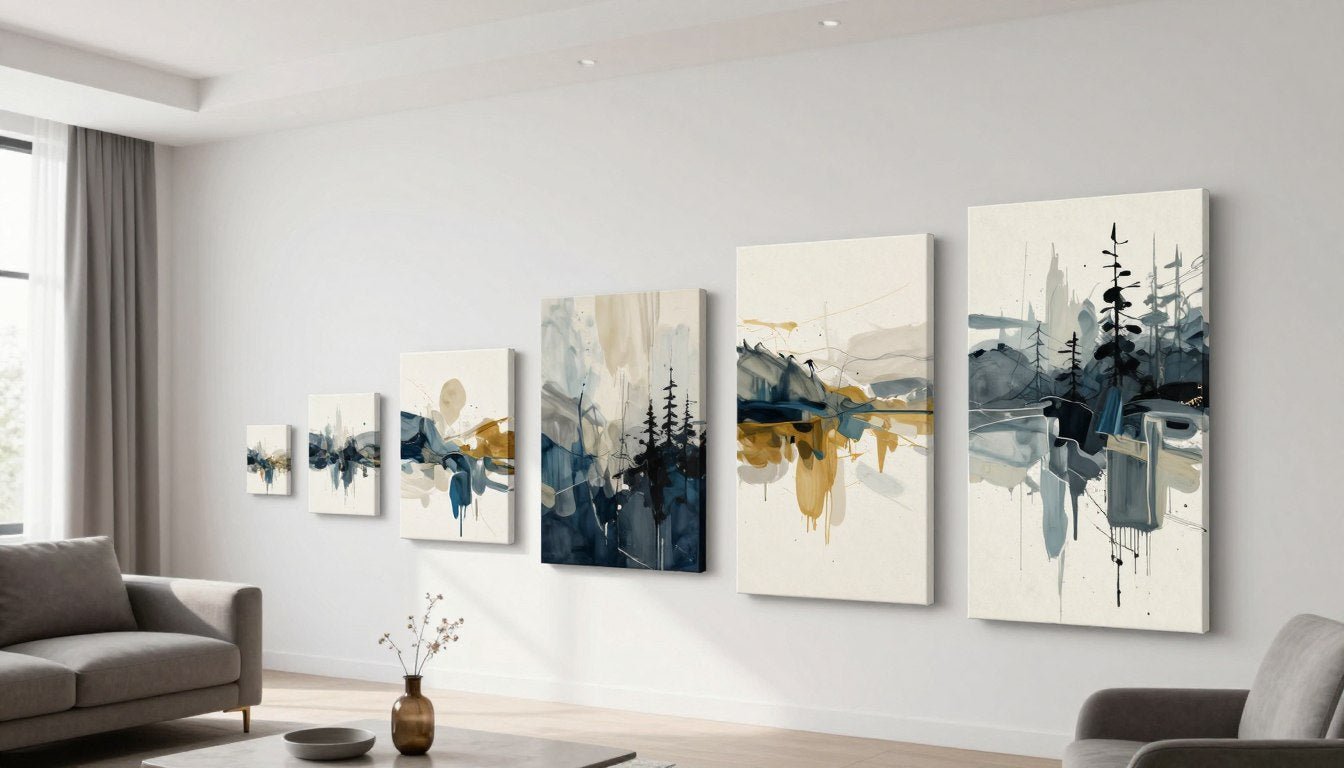

Choosing the right size wall art can transform a room from ordinary to extraordinary. Many homeowners struggle with this decision. They buy art that's too small and it gets lost on the wall. Or they choose pieces that overwhelm the space. This wall art sizing guide will help you make confident decisions about dimensions. You'll learn the exact measurements that work for different rooms and walls.
The right size creates balance and visual harmony. It draws the eye without dominating the space. Professional interior designers use specific formulas to determine ideal proportions. These same principles apply whether you're hanging a single statement piece or creating a gallery wall. Understanding these guidelines will save you from costly mistakes.
We'll cover everything from measuring your wall space to selecting proportions that complement your furniture. You'll discover how ceiling height affects size choices. We'll explore room-specific recommendations and gallery wall layouts. By the end of this guide, you'll know exactly what size wall art suits each space in your home. Let's dive into the essential principles that will transform your walls into stunning focal points.
Understanding Wall Art Proportions and Scale
Wall art size isn't just about measurements in inches. It's about how the piece relates to the wall and surrounding furniture. The concept of scale determines whether art looks appropriately sized or out of place. A piece that works perfectly in a spacious living room might overwhelm a small bedroom. Understanding proportions helps you make better decisions.

The Two-Thirds Rule for Wall Coverage
The most important principle in wall art sizing is the two-thirds rule. Your art should occupy about two-thirds to three-quarters of the available wall space above furniture. This creates visual balance without overwhelming the area. For example, if your sofa measures 90 inches wide, your wall art should span roughly 60 inches. This proportion feels natural to the eye.
Many people make the mistake of choosing art that's too small. A tiny 16x20 inch print above a large couch looks disconnected and insignificant. It creates an awkward gap that draws attention for the wrong reasons. The space feels incomplete and poorly planned. Following the two-thirds guideline ensures your art has the presence it deserves.
This rule applies to various furniture pieces. Above a dining room buffet, console table, or bed headboard, the same principle creates harmony. Measure the furniture width and multiply by 0.66 to find your ideal art width. You can use a single large piece or multiple smaller pieces that span this distance together. Both approaches work when following this fundamental sizing principle.
Considering Ceiling Height in Your Calculations
Ceiling height dramatically impacts how you perceive wall art size. Standard 8-foot ceilings require different approaches than 10 or 12-foot ceilings. In rooms with lower ceilings, horizontal pieces often work better than vertical ones. They emphasize width rather than drawing the eye upward into limited space. This creates a sense of spaciousness.
Higher ceilings provide opportunities for larger and taller artwork. A space with 10-foot ceilings can accommodate 36x48 inch vertical pieces beautifully. These dimensions that might overwhelm a standard room look perfectly proportioned with extra height. The abstract canvas prints collection offers various sizes suitable for different ceiling heights.
The relationship between art height and ceiling height follows another guideline. Leave at least 6 to 12 inches between the top of your art and the ceiling. This breathing room prevents the piece from feeling cramped or pushed into the corner. It allows the eye to appreciate the full composition without visual constraints. Proper spacing makes rooms feel more open and thoughtfully designed.
Creating Visual Weight and Balance
Visual weight refers to how heavy or substantial art appears in a space. Larger pieces naturally carry more visual weight. Dark colors and bold compositions increase perceived weight even in smaller dimensions. Understanding this concept helps you distribute art throughout a room effectively. You want balance rather than all visual weight concentrated in one area.
A single large piece creates a strong focal point. Multiple smaller pieces can achieve similar visual weight when grouped together. Gallery walls distribute weight across a larger area. This approach works particularly well in spaces where no single wall dominates. The living room wall art collection includes pieces designed to create perfect visual balance in gathering spaces.
Popular Wall Art Sizes for Modern Homes

Understanding standard size wall art dimensions helps you make informed purchasing decisions. These measurements have become popular because they work well in most residential spaces. They balance visual impact with practical considerations.
- 16x20 inches: Perfect for smaller walls, bathrooms, and gallery wall components
- 24x36 inches: Versatile medium size for bedrooms, offices, and above narrow furniture
- 30x40 inches: Statement size for dining rooms, entryways, and bedroom focal walls
- 40x60 inches: Large wall art for spacious living rooms and above king-size beds
- 48x72 inches: Dramatic oversized pieces for two-story walls and expansive spaces
Matching Art Sizes to Furniture Dimensions

Your furniture provides the foundation for size wall art decisions. The width of key pieces dictates what dimensions will create harmonious proportions. This approach takes guesswork out of the selection process.
- Twin bed (39" wide): 20-26 inch wide art works best above the headboard
- Full bed (54" wide): 30-36 inch wide art creates appropriate scale
- Queen bed (60" wide): 36-40 inch wide art provides balanced proportions
- King bed (76" wide): 48-60 inch wide art or diptych sets work beautifully
- Standard sofa (84-96"): 55-65 inch wide art creates proper visual weight
Explore Museum-Quality Canvas Prints in All Sizes
Our curated collection includes canvas prints sized perfectly for every room. Each piece is ready to hang and ships free worldwide. Browse abstract, botanical, and portrait styles in dimensions from 16x20 to 48x72 inches.
Living Room Wall Art Size Guide: Creating the Perfect Focal Point
The living room presents unique sizing challenges. It's typically the largest gathering space in your home. Multiple seating areas and varied wall sizes require thoughtful planning. The right size wall art transforms this space into a cohesive, inviting environment. Your art should complement the room's scale without overwhelming conversation areas.

Above the Sofa: The Most Important Wall
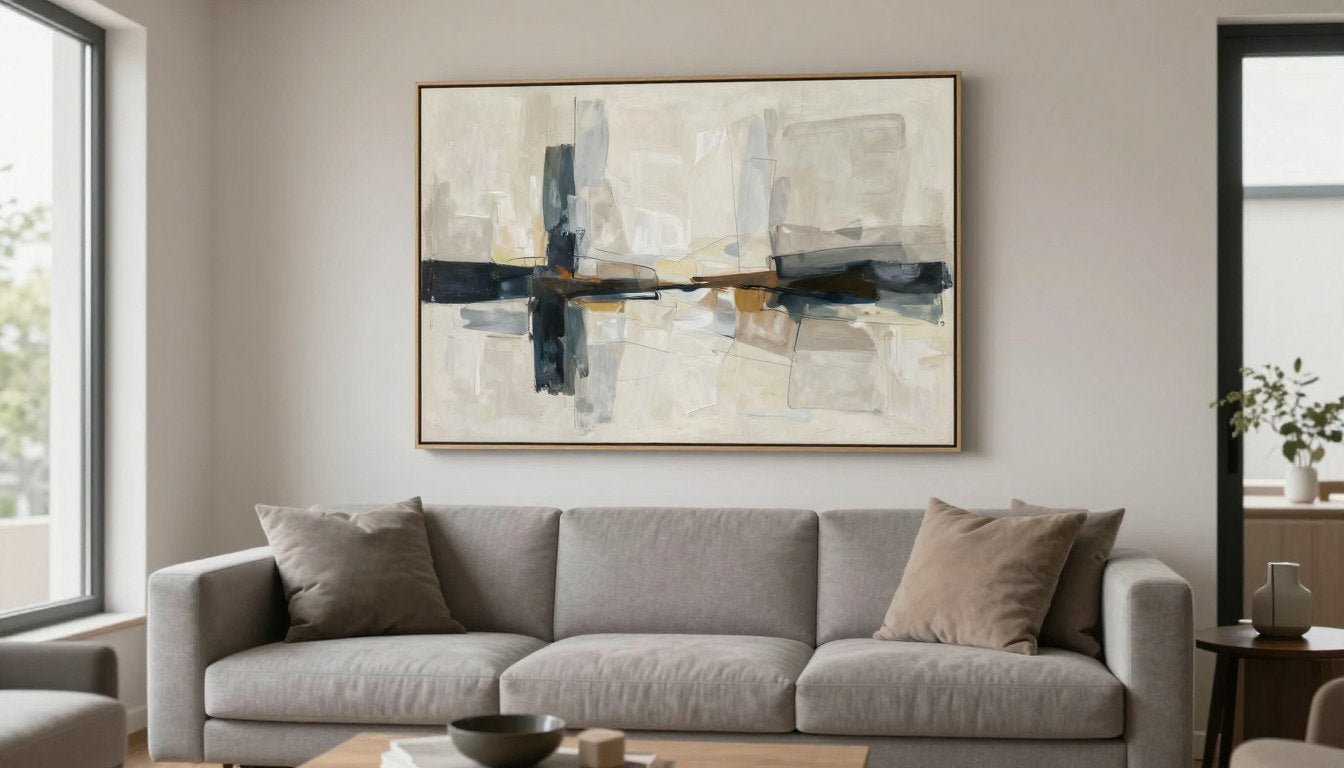
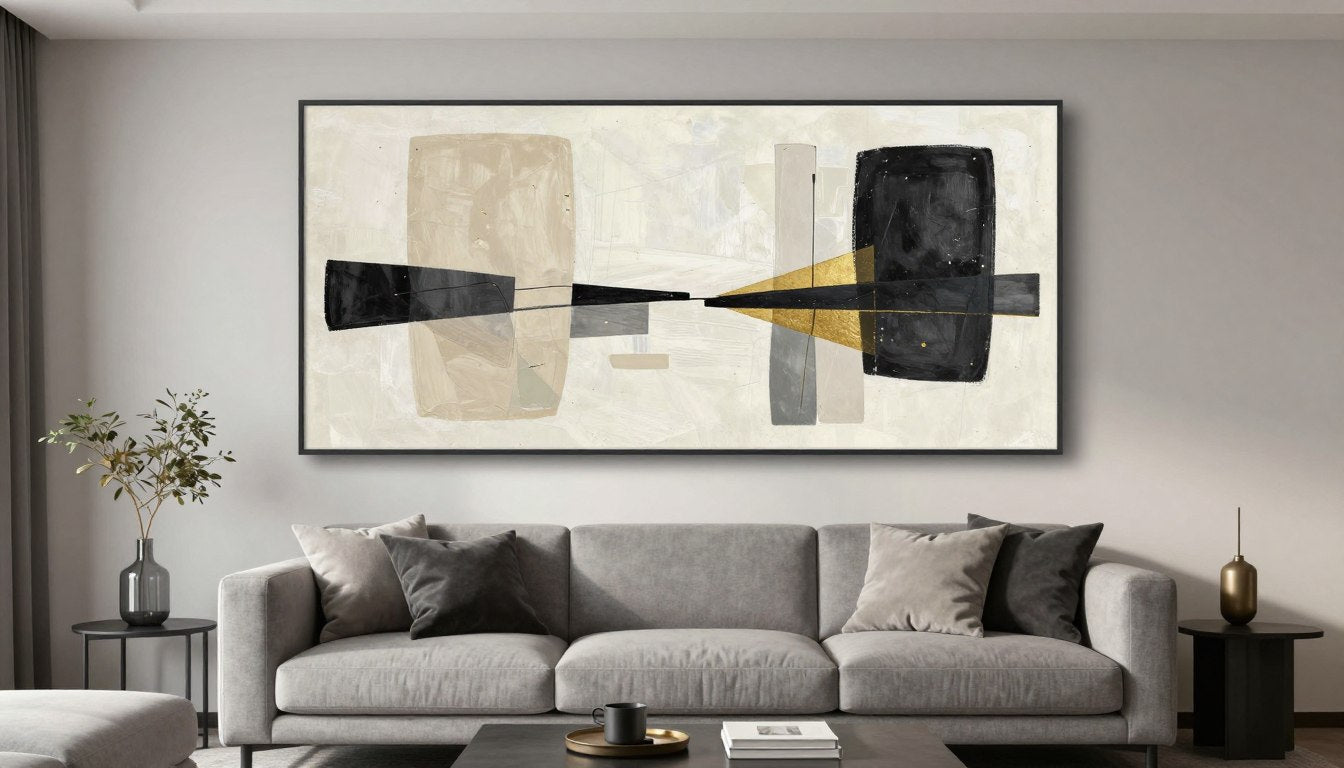
The wall above your sofa typically serves as the living room's primary focal point. This space demands attention and sets the tone for the entire room. Most sofas measure between 72 and 96 inches wide. Following the two-thirds rule, your art should span 48 to 64 inches. This proportion creates instant visual harmony.
Hang your art so the center sits at eye level when standing. This typically places the center point 57 to 60 inches from the floor. Leave 6 to 10 inches of space between the sofa back and the bottom of your artwork. This gap prevents the piece from feeling crowded or resting directly on the furniture. It allows both elements to breathe.
For a standard 84-inch sofa, a 40x60 inch horizontal piece works beautifully. Alternatively, you could use two 24x36 inch pieces hung side by side with 4 inches between them. Both approaches achieve the ideal width while offering different aesthetic options. The abstract canvas prints collection offers both configurations for versatile styling.
Accent Walls and Large Empty Spaces
Empty walls without furniture underneath present different opportunities. These spaces can accommodate larger statement pieces that might overwhelm furniture-backed walls. A wall measuring 10 to 12 feet wide can support artwork spanning 60 to 84 inches. These dramatic dimensions create impressive focal points visible from across the room.
Consider your viewing distance when selecting large wall art for open walls. If people typically view the art from 10 feet away or more, you can confidently choose oversized pieces. The human eye needs sufficient distance to appreciate large-scale work. From too close, viewers can't take in the full composition. From proper distance, the impact is stunning.
Vertical pieces work well on accent walls with high ceilings. A 36x48 inch or 40x60 inch vertical orientation draws the eye upward. This emphasizes ceiling height and creates a sense of grandeur. The portrait canvas prints collection includes striking vertical pieces perfect for accent wall installations.
Sizing for Sectionals and L-Shaped Arrangements
Sectional sofas complicate sizing decisions. Their extended length might suggest very wide art, but this isn't always necessary. Focus on the longest uninterrupted section rather than the total length. A sectional with a 90-inch main section and a perpendicular chaise works best with 60-inch wide art above the main portion.
L-shaped arrangements create corner focal points. These spaces work well with either a single large piece or a gallery wall arrangement. The corner itself can remain empty, with art flanking it on both walls. This approach creates balance without forcing artwork into an awkward corner position. Each wall receives appropriate attention.
Bedroom Wall Art Sizing: Creating Restful Personal Spaces
Bedroom wall art size requires a gentler approach than living spaces. These private retreats benefit from art that enhances relaxation rather than demanding attention. The scale should feel intimate and personal. Your art choices here reflect individual taste more than formal design rules. Comfort and personal meaning take precedence.

Above the Bed: Proportions for Different Mattress Sizes
The wall above your bed is the bedroom's natural focal point. Art size here depends entirely on mattress width. A twin bed (39 inches wide) works best with art spanning 20 to 26 inches. Full beds (54 inches) accommodate 30 to 36-inch pieces comfortably. These proportions maintain proper scale without overwhelming the sleeping area.
Queen beds (60 inches wide) pair beautifully with 36 to 40-inch wide art. King beds (76 inches) can support 48 to 60-inch pieces or diptych arrangements. Many designers prefer slightly smaller art in bedrooms compared to living spaces. This creates a more intimate, cocoon-like atmosphere. The softer scale promotes relaxation and restful sleep.
Position your art 6 to 8 inches above the headboard. If you don't have a headboard, hang the piece so its center sits 56 to 60 inches from the floor. This places it at a comfortable viewing height from both standing and reclining positions. The bedroom canvas prints collection features calming pieces sized perfectly for sleeping spaces.
Dresser and Nightstand Wall Art
Dressers typically measure 48 to 60 inches wide. Following our proportion rule, art above a dresser should span 32 to 40 inches. A single 30x40 inch piece works wonderfully here. Alternatively, create an arrangement with two or three smaller pieces totaling this width. The grouping adds visual interest while maintaining proper scale.
Nightstand walls offer opportunities for more intimate art pieces. These smaller areas work well with 16x20 or 20x24 inch prints. The reduced scale feels appropriate for these personal spaces. Consider using matching pieces on both sides of the bed for symmetry. Or choose complementary but different pieces for an eclectic, collected-over-time aesthetic.
Vertical pieces work particularly well beside beds. A 16x24 or 20x30 inch vertical print emphasizes ceiling height without encroaching on limited wall width. This orientation leaves room for bedside lamps and creates an elegant, sophisticated look. The botanical wall art prints collection includes many vertical options perfect for bedroom spaces.
Creating Calming Gallery Walls in Bedrooms
Gallery walls work beautifully in bedrooms when executed thoughtfully. The key is maintaining a cohesive, calming aesthetic rather than chaotic energy. Limit your color palette to 2 or 3 complementary tones. Choose images that evoke tranquility – soft landscapes, minimalist line art, or gentle abstracts work well.
For bedroom gallery walls, use fewer pieces in larger sizes rather than many small ones. Five to seven pieces typically suffice for the wall above a queen bed. This creates interest without visual overwhelm. Space pieces 2 to 3 inches apart for a cohesive look. The negative space between frames becomes part of the overall composition.

If You Love Serene Botanical Aesthetics

These nature-inspired prints bring organic tranquility to sleeping spaces. Each piece features soft greens and earth tones that promote restful sleep. Perfect for creating a spa-like bedroom atmosphere that encourages relaxation.
- Monstera Leaf Study – 30x40 inch statement piece above queen beds
- Eucalyptus Branch Print – 24x36 inch versatile size for various arrangements
- Delicate Fern Collection – 16x20 inch perfect for nightstand walls
Minimalist Line Art for Modern Bedrooms

Clean lines and minimal compositions create sophisticated bedroom focal points. These pieces work beautifully in contemporary spaces where simplicity reigns. The black and white palette coordinates with any color scheme effortlessly.
- Abstract Face Line Drawing – 24x36 inch bold statement for feature walls
- Continuous Figure Study – 20x30 inch vertical piece ideal beside beds
- Minimalist Portrait Series – 16x24 inch perfect for gallery arrangements
Soft Abstract Prints for Restful Spaces

Gentle abstracts in muted tones provide visual interest without disrupting bedroom serenity. Fluid shapes and soft color transitions create dreamlike atmospheres. These pieces become meditation points that enhance your evening wind-down routine.
- Blush Waves Abstract – 30x40 inch calming presence above beds
- Sage Organic Shapes – 24x36 inch versatile size for multiple placements
- Warm Earth Tones Abstract – 20x30 inch ideal for dresser walls
Dining Room Wall Art: Sizing for Social Spaces
Dining rooms benefit from bold, conversation-starting art pieces. These social spaces can handle more dramatic size wall art than bedrooms. The art becomes a talking point during meals and gatherings. Scale here should match the formality and size of your dining furniture. A substantial dining table deserves equally substantial wall art.

Wall Art for Dining Tables and Buffets
The wall behind your dining table or above a buffet creates opportunities for impressive art displays. Most dining tables measure 60 to 96 inches long. Art for the wall behind the table should span 40 to 65 inches. This proportion creates visual connection between furniture and wall decoration. The piece should be wide enough to feel substantial but not extend beyond the table edges.
Buffets and sideboards typically measure 48 to 72 inches wide. Apply the two-thirds rule here as well. For a 60-inch buffet, choose art that's 40 to 48 inches wide. A 30x40 inch vertical piece works beautifully. Or consider a horizontal 40x30 inch orientation. Both create appropriate scale while leaving room for decorative objects on the buffet surface.
Hang dining room art slightly higher than in other rooms. Position pieces so the center sits 60 to 65 inches from the floor. This accounts for the fact that viewers typically see dining room art while seated. The higher placement ensures the composition remains visible and well-proportioned from a seated viewing position. The dining room wall art collection features pieces specifically curated for these social gathering spaces.
Statement Pieces for Large Dining Spaces
Formal dining rooms with ample wall space can accommodate truly impressive large wall art. Pieces measuring 48x60 or even 48x72 inches create dramatic focal points. These oversized dimensions work best in rooms with 10-foot or higher ceilings. The scale matches the grandeur of formal dining spaces and sets a sophisticated tone.
Consider the color palette in your dining room when selecting large pieces. Bold colors and abstract compositions work well in contemporary spaces. Traditional dining rooms might prefer classical landscapes or still life subjects in more muted tones. The art should complement your dining furniture's formality level while adding personality and visual interest.
Gallery Wall Layouts: Sizing Multiple Pieces for Cohesive Arrangements
Gallery walls allow you to display multiple pieces in coordinated arrangements. These collections create visual impact through the relationship between individual pieces. Proper sizing and spacing transform separate artworks into a unified installation. The overall dimensions of your gallery wall should follow the same proportion rules as single pieces.

Planning Your Gallery Wall Dimensions
Start by measuring the total wall space you want to fill. Apply the two-thirds rule to this measurement. If your wall measures 96 inches wide, your gallery should span 64 to 72 inches. Mark this area on the wall with painter's tape. This visual boundary guides your arrangement and ensures proper proportions.
Gallery walls typically include pieces ranging from 8x10 inches to 24x36 inches. Mixing sizes creates visual interest and dynamic energy. The largest piece typically serves as an anchor, with smaller pieces arranged around it. Maintain 2 to 3 inches of space between all frames. This spacing creates cohesion while allowing each piece to retain its individual identity.
The total height of your gallery wall should typically range from 24 to 48 inches. Taller arrangements work in spaces with high ceilings. Wider, shorter arrangements suit standard ceiling heights. The center of your entire arrangement should sit at 57 to 60 inches from the floor. This eye-level placement ensures comfortable viewing of all pieces. The canvas print sets collection offers pre-coordinated pieces sized to work together beautifully.
Gallery Wall Layouts for Different Spaces
Grid layouts work well in modern, minimalist spaces. These arrangements use uniform frame sizes and spacing. A 3x3 grid of 16x20 inch pieces creates a bold statement. The repetition and order feel clean and intentional. This layout works particularly well with black and white photography or minimalist prints.
Salon-style galleries feel more organic and collected. Mix portrait and landscape orientations in various sizes. Start with your largest piece as an anchor. Arrange smaller pieces around it, maintaining consistent spacing. This approach works beautifully with eclectic art collections. It allows you to display personal favorites regardless of matching sizes or styles.
Linear galleries arrange pieces in a single horizontal row. This layout works perfectly above sofas, beds, or console tables. Use 3 to 5 pieces of varying sizes aligned along their bottom or center points. The horizontal emphasis creates a modern, streamlined look. It's easier to install than complex grid arrangements while still providing gallery wall impact.
Spacing and Hanging Guidelines
Consistent spacing between pieces creates professional-looking gallery walls. Maintain 2 to 3 inches between all frames. Use the same spacing throughout the arrangement for visual cohesion. This uniform distance creates negative space that becomes part of the overall design. The gaps allow each piece room to breathe.
Create templates of your frames using craft paper. Arrange these paper templates on the floor first. This allows you to experiment with layouts without putting holes in your wall. Once satisfied with the arrangement, tape the templates to the wall. Mark hanging points through the paper. Remove templates and install your art with confidence.

Match Your Space's Vibe with Curated Collections
Discover canvas prints organized by style and mood. Whether you prefer bold abstracts, serene botanicals, or dramatic portraits, find pieces sized perfectly for your walls. Each collection features multiple size options to fit any space.
Office and Entryway Wall Art: First Impressions and Productivity
Office and entryway spaces require different sizing considerations than living areas. These transitional zones make first impressions. Your art choices here set the tone for entire homes or workspaces. Entryways benefit from welcoming, moderately sized pieces. Offices need art that inspires without distracting from work.

Entryway Art Sizing for Welcoming Spaces
Entryways are typically narrow spaces with limited wall area. A standard entryway console table measures 30 to 48 inches wide. Following our proportion rule, art above the console should span 20 to 32 inches. A 20x30 or 24x36 inch piece creates appropriate scale. Vertical orientations work particularly well in these narrow spaces.
The art piece itself should hang 6 to 8 inches above the console surface. This creates visual connection between furniture and wall decoration. If you don't have a console table, hang your art so the center sits 60 inches from the floor. This eye-level placement ensures guests see the piece immediately upon entering. The entryway wall art collection features pieces that create welcoming first impressions.
Consider the viewing distance in your entryway. If guests see the wall from 6 to 8 feet away, a 24x36 inch piece provides sufficient visual impact. Smaller entryways with closer viewing distances can use 16x20 or 20x24 inch pieces effectively. The key is creating presence without overwhelming the compact space. Bold colors or striking compositions help smaller pieces command attention.
Home Office Wall Art for Focus and Inspiration
Home office art serves dual purposes – inspiration and professionalization. If you take video calls, the wall behind your desk becomes part of your professional presentation. Art here should be sophisticated but not distracting. Pieces measuring 24x36 or 30x40 inches work well behind typical desk setups. They're visible on camera without dominating the frame.
Position office art at seated eye level. When you're sitting at your desk, the center of the artwork should align with your line of sight. This typically places the center 48 to 52 inches from the floor. This lower placement accommodates the fact that you view the art while seated. It creates comfortable viewing angles during long work sessions.
Side walls in offices can accommodate slightly larger pieces. A wall perpendicular to your desk might feature a 30x40 or 36x48 inch piece. These provide visual interest when you glance away from your screen. Abstract art or inspiring landscapes work well here. They offer mental breaks without pulling focus from work tasks. The office canvas art collection includes pieces that enhance productivity and creativity.
Kids' Rooms and Nursery Art Sizing
Children's spaces require special sizing considerations. Art should hang at heights appropriate for young viewers. For nurseries, standard adult eye-level works fine since parents are the primary viewers. But in kids' rooms for older children, consider hanging pieces slightly lower. This allows children to engage with the art directly.
Kids' room art typically ranges from 16x20 to 24x36 inches. These moderate sizes create impact without overwhelming young occupants. Above a twin bed, a 20x24 inch piece works perfectly. Over a dresser or desk, 16x20 or 20x24 inch pieces provide appropriate scale. Multiple smaller pieces in gallery wall arrangements work particularly well in these playful spaces.
Choose subjects and colors that match the room's energy level. Bright, playful pieces work in active play areas. Softer, calming art suits sleeping zones. As children grow, their art can evolve with them. Starting with appropriately sized pieces makes future updates easier. The kids room canvas prints collection features whimsical pieces in child-appropriate sizes.

Sizing Wall Art for Bathrooms, Kitchens, and Unique Spaces
Bathrooms and kitchens present unique challenges for wall art sizing. These functional spaces often have limited wall area. Moisture and temperature considerations affect material choices. Despite these constraints, thoughtfully sized art transforms utilitarian rooms into designed spaces. Small pieces can make big impacts in these often-overlooked areas.

Bathroom Art Proportions
Bathrooms typically accommodate art pieces ranging from 8x10 to 20x24 inches. The exact size depends on available wall space. Above a toilet, a 16x20 inch piece works beautifully. Beside a mirror, two 8x10 or 11x14 inch pieces create symmetrical interest. These smaller dimensions suit bathroom scale while providing decorative impact.
Hang bathroom art at standard eye level – 57 to 60 inches to the center. The humid environment requires special considerations. Canvas prints handle moisture better than paper-based art. They resist warping and damage from steam. Proper ventilation through exhaust fans further protects your investment. Botanical themes work particularly well in bathrooms, connecting to the room's water-focused function.
Kitchen Wall Art Scale
Kitchen wall space often competes with cabinets, windows, and functional elements. The available areas tend to be small and awkwardly shaped. Vertical spaces beside windows or at the end of cabinet runs work well for art. Pieces measuring 12x16 to 20x24 inches fit these spaces without interfering with function.
Food-related art naturally suits kitchens – botanical prints of herbs, vintage produce advertisements, or abstract pieces in appetizing colors. Keep art away from direct heat sources like ranges and ovens. Heat and cooking oil can damage canvas and frames over time. Position pieces on walls perpendicular to cooking areas for maximum longevity and minimum maintenance.
Hallway and Stairwell Sizing
Hallways present long, narrow spaces perfect for gallery wall arrangements. A hallway measuring 12 feet long can accommodate 5 to 7 pieces of varying sizes. Arrange them in a linear gallery spanning 8 to 10 feet of the total length. This creates a journey through your art collection as people walk the hallway.
Stairwells require special considerations. Art should ascend with the staircase, following the angle of the stairs. Hang pieces so they maintain consistent height relationships to each step. The center of each piece should sit 60 to 66 inches above each stair tread. This creates visual flow that guides the eye upward naturally. Mix sizes from 11x14 to 20x24 inches for dynamic movement.

Measuring Your Space: Practical Steps for Perfect Sizing
Accurate measurements prevent costly sizing mistakes. Before purchasing wall art, invest time in proper measurement. This process takes only minutes but saves potential heartache. The right tools and techniques ensure your art fits perfectly. Follow these professional steps for measurement success.
Essential Measurement Tools and Techniques
Gather these tools before measuring: a metal tape measure (at least 25 feet long), painter's tape, a pencil, and paper for notes. Metal tape measures provide more accurate readings than cloth versions. The length allows you to measure large walls without repositioning. Painter's tape lets you visualize potential art placement without damaging walls.
Measure the full width and height of your wall space first. Note any obstacles like light switches, outlets, or architectural features. These elements affect where art can hang. Next, measure furniture that sits against the wall. Record the width of sofas, beds, console tables, and other key pieces. These measurements become your reference points for applying the two-thirds proportion rule.
Use painter's tape to mark potential art boundaries on your wall. Create rectangles in various sizes to visualize how different dimensions would look. Live with these tape outlines for a day or two. View them from different angles and distances. This simple technique reveals what size will work best before you commit to purchasing.
Calculating Ideal Dimensions
Once you have furniture measurements, calculate ideal art dimensions. For a sofa measuring 84 inches wide, multiply by 0.67 (two-thirds). This gives you 56 inches – your target art width. You can go slightly larger (up to 60 inches) or smaller (down to 50 inches) while maintaining good proportions. This range provides flexibility in your selection.
Consider the aspect ratio next. Horizontal pieces (landscape orientation) work well above most furniture. A 40x60 inch horizontal piece provides 60 inches of width. Vertical pieces (portrait orientation) suit narrow walls. A 30x40 inch vertical provides 30 inches of width but draws the eye upward. Square pieces offer versatility but may not create the visual impact of rectangular orientations.
Common Sizing Mistakes to Avoid
- Choosing art too small for the space – the most frequent error
- Hanging pieces too high or too low relative to eye level
- Ignoring furniture proportions when selecting sizes
- Forgetting to account for frame width in final measurements
- Placing art too close to furniture without breathing room
- Mixing too many sizes in gallery walls without a coherent plan
Professional Installation Tips
- Use a level to ensure perfectly straight hanging
- Mark wall stud locations for heavy pieces requiring extra support
- Install appropriate hanging hardware based on art weight
- Create paper templates of art dimensions for placement planning
- Measure twice, install once – accuracy prevents wall damage
- Consider professional installation for valuable or oversized pieces
Digital Tools for Size Visualization
Modern technology offers helpful visualization tools. Several smartphone apps let you project digital art onto your walls through augmented reality. These apps show how different sizes would look in your actual space. While not perfect, they provide better size context than imagining dimensions alone.
Online art retailers sometimes offer room visualization tools. Upload a photo of your wall, and the software superimposes art at various sizes. This helps you compare 30x40 versus 40x60 inch options in your specific room. The visual comparison often reveals that larger sizes work better than initially expected. This confirmation builds confidence in your purchasing decision.

Balancing Size with Style and Color Considerations
Art size doesn't exist in isolation. It works in concert with style, color, and composition. A bold, colorful abstract piece can visually handle smaller dimensions than a subtle, muted photograph might. Understanding these relationships helps you choose size wall art that creates the impact you desire. Visual weight and actual dimensions aren't always the same.
How Color Affects Perceived Size
Dark colors and high contrast increase visual weight. A 30x40 inch piece with deep blacks and rich colors commands more attention than a similarly sized piece in soft pastels. If you want maximum impact from smaller dimensions, choose bold colors and strong contrast. Conversely, large pieces in muted tones feel less overwhelming in compact spaces.
Warm colors (reds, oranges, yellows) appear to advance toward viewers. They create energy and command attention. Cool colors (blues, greens, purples) recede into the background. They promote calm and require larger sizes to achieve the same visual impact. Consider your color preferences when determining appropriate dimensions. Bold color choices allow you to size down while maintaining presence.
Monochromatic and minimalist art requires larger dimensions to make statements. A simple black and white line drawing needs substantial size to avoid appearing insignificant. Complex, detailed pieces work effectively in smaller sizes because the eye finds more to explore. The black and white canvas prints collection demonstrates how strong contrast creates impact across various sizes.
Compositional Complexity and Size
Busy, detailed compositions work well in smaller sizes. The eye requires closer viewing to appreciate intricate details. A complex abstract piece at 24x36 inches invites intimate inspection. The same complexity at 48x72 inches might overwhelm viewers. Match compositional complexity to intended viewing distance and available space.
Simple, bold compositions benefit from larger sizes. A minimalist piece with large color blocks needs substantial dimensions to create impact. The simplicity that works beautifully at 40x60 inches might disappoint at 16x20 inches. The design lacks sufficient presence in smaller format. Consider the relationship between complexity and size when making selections.

Ready-to-Hang Museum-Quality Canvas Prints
Every Rossetti Art canvas print arrives ready to hang with pre-installed hardware. Enjoy free worldwide shipping on all sizes. Our museum-quality canvases feature fade-resistant inks and gallery-wrapped edges. Each piece is curated by artist Chiara Rossetti to ensure exceptional quality and style.
Current Trends in Wall Art Sizing and Expert Recommendations
Wall art sizing trends evolve with interior design movements. Current preferences lean toward larger statement pieces rather than multiple small items. Oversized art creates drama and sophistication. Understanding these trends helps you make choices that feel contemporary. But timeless principles of proportion remain more important than fleeting trends.

The Shift Toward Oversized Statement Pieces
Interior designers increasingly recommend going larger than you think necessary. The "go big or go home" approach has replaced cautious sizing. A piece that feels slightly too large when first hung often looks perfect after a few days. Your eye adjusts to the scale. Meanwhile, art that seems appropriately sized often ends up looking timid.
This trend toward size reflects open floor plans and high ceilings in modern construction. Homes built in recent decades feature more expansive wall spaces. These areas demand substantial art to avoid looking underfurnished. A 40x60 or 48x72 inch piece that would overwhelm a traditional room works perfectly in contemporary spaces with 10-foot ceilings and open layouts.
The oversized trend extends beyond dimensions. Larger works allow artists to create more impactful compositions. Details visible at grand scale would disappear in smaller formats. Gallery-worthy pieces translate effectively to home installations when sized generously. The original paintings collection includes statement pieces that exemplify this contemporary approach to scale.
Balancing Trend with Timeless Proportion
While trends favor larger sizes, fundamental proportion rules remain constant. The two-thirds guideline works regardless of whether you choose 30x40 or 48x60 inches. Both can be "right" depending on your space. Trends should inform but not dictate choices. Your specific room dimensions and personal preferences matter more than current fashion.
Consider your long-term plans when selecting sizes. Will this art move with you to future homes? Extremely large pieces lose versatility. A 48x72 inch canvas perfect for your current living room might not fit in your next space. Sizes in the 30x40 to 40x60 inch range offer more adaptability. They work in various rooms and configurations over time.
Expert Designer Recommendations by Room Type
Professional interior designers share consistent guidance across room types. For living rooms, they recommend pieces spanning 55 to 75 percent of sofa width. This creates stronger impact than the conservative two-thirds rule while maintaining balance. For bedrooms, designers suggest staying closer to 60 percent of bed width. The more intimate space benefits from slightly smaller proportions.
Dining rooms present opportunities for the boldest sizing choices. Designers often recommend art spanning 70 to 80 percent of buffet or table width. The formal nature of dining spaces supports these generous proportions. Gallery walls should occupy 65 to 75 percent of available wall width. This creates cohesive installations that feel intentional rather than scattered.
The consensus among design professionals: when in doubt, size up rather than down. Returning art because it's too small happens far more frequently than returns for oversized pieces. Your perception adjusts to larger sizes within days. Small art remains disappointingly insignificant indefinitely. This consistent professional guidance should inform your decision-making process.
Budget-Friendly Sizing Strategies and Value Considerations
Larger art typically costs more than smaller pieces. This reality affects sizing decisions when working within budgets. Several strategies help you achieve appropriate scale without overspending. Understanding the relationship between size, price, and value guides smarter purchasing. Quality sometimes matters more than maximum dimensions.
Maximizing Impact Within Budget Constraints
Canvas prints offer excellent value compared to framed art. Frames add significant cost, especially for larger sizes. Gallery-wrapped canvas eliminates framing expenses while creating modern, clean presentations. A 40x60 inch canvas print costs substantially less than the same image in a custom frame. The savings allow you to size up while staying within budget.
Consider digital prints on canvas versus original paintings. Original art commands premium pricing, particularly in larger sizes. High-quality canvas prints reproduce artistic works at accessible prices. The size wall art you can afford in print form might be three to five times larger than original artwork at the same price point. Both have places in home decoration.
Set pricing provides another budget-friendly approach to achieving scale. Many retailers offer multi-piece sets at lower per-piece costs. Three coordinating 20x24 inch canvases might cost less combined than a single 40x60 inch piece. The set achieves similar overall dimensions while distributing cost. This strategy works particularly well for gallery wall installations.
Investment Pieces Worth Sizing Up
Certain rooms justify investment in larger sizes. Your living room typically sees the most use and receives the most visitors. Prioritizing a large statement piece here makes sense. This central gathering space benefits most from impressive scale. Budget constraints in less prominent rooms like guest bedrooms become more acceptable.
Original paintings represent long-term investments when purchased in appropriate sizes. While more expensive initially, original art appreciates potentially. A properly sized original piece serves as both decoration and investment. Canvas prints excel for trend-following pieces you might replace as tastes evolve. Mix these approaches strategically across your home.
Quality matters as much as size. A beautifully executed 30x40 inch piece surpasses a poorly produced 48x60 inch canvas. Invest in high-quality materials, printing, and construction. Museum-quality canvas prints with fade-resistant inks maintain their appearance for decades. The slightly higher upfront cost pays dividends in longevity and maintained visual appeal. The modern sculptures collection offers complementary three-dimensional art that adds dimension without requiring large wall space.

Frequently Asked Questions About Wall Art Sizing
What is the ideal wall art size for above a sofa?
The ideal size wall art for above a sofa should span approximately two-thirds to three-quarters of the sofa's width. For a standard 84-inch sofa, choose art that measures 56 to 63 inches wide. A 40x60 inch horizontal piece works perfectly in this scenario. Alternatively, you can use multiple pieces that span this width when combined. Leave 6 to 10 inches of space between the sofa back and the bottom edge of your artwork.
Explore perfectly sized options in our living room canvas art collection featuring pieces from 30x40 to 48x72 inches.
How do I determine the right size art for my bedroom?
Bedroom art size depends primarily on your bed width. For queen beds (60 inches wide), choose art spanning 36 to 40 inches. King beds (76 inches) accommodate 48 to 60-inch pieces comfortably. Position the art 6 to 8 inches above your headboard, or hang it so the center sits 56 to 60 inches from the floor if you don't have a headboard. Bedrooms benefit from slightly smaller proportions than living spaces to maintain an intimate, restful atmosphere.
Discover calming bedroom pieces in various sizes at our bedroom canvas prints collection.
Should I choose one large piece or multiple smaller pieces?
Both approaches work beautifully when executed correctly. A single large piece creates a bold focal point and works well in modern, minimalist spaces. This approach simplifies installation and creates immediate impact. Multiple smaller pieces offer flexibility and work well for eclectic, collected aesthetics. Gallery walls allow you to display personal favorites regardless of matching sizes. Consider your decorating style, available time for installation, and budget. Large pieces typically cost more but install more quickly than multi-piece arrangements.
For coordinated multi-piece options, browse our canvas print sets designed to work together beautifully.
What size wall art works best in small rooms?
Small rooms benefit from appropriately scaled art that doesn't overwhelm the space. For rooms under 100 square feet, consider pieces in the 20x24 to 30x40 inch range. Contrary to popular belief, small rooms can handle moderately sized art. Tiny pieces make spaces feel cluttered rather than cozy. The key is maintaining proper proportion to furniture width rather than dramatically downsizing. Vertical orientations often work better in compact spaces as they draw the eye upward, creating an illusion of height.
How high should I hang wall art?
The standard rule places the center of your artwork at 57 to 60 inches from the floor. This "gallery height" aligns with average eye level for most adults. However, adjust this guideline for specific situations. Above furniture, leave 6 to 10 inches between the furniture top and art bottom. In dining rooms where people are seated, hang art slightly higher at 60 to 65 inches to center. In children's rooms, consider lowering art so young occupants can engage with it directly.
For more decorating guidance, visit our design inspiration blog featuring expert tips and styling ideas.
What size art should I choose for a gallery wall?
Gallery walls typically include pieces ranging from 8x10 to 24x36 inches. The total arrangement should follow the two-thirds rule for the overall wall space. If your wall measures 96 inches wide, your gallery should span 64 to 72 inches total. Include one or two larger pieces (20x24 or 24x36 inches) as anchors, with smaller pieces (8x10, 11x14, 16x20 inches) arranged around them. Maintain 2 to 3 inches of consistent spacing between all frames. The variety in sizes creates visual interest while the uniform spacing provides cohesion.
Can wall art be too big for a space?
While art can theoretically be too large, this happens less frequently than choosing pieces that are too small. Art that initially feels oversized often looks perfect after a few days as your eye adjusts. However, art that extends beyond furniture edges or comes too close to adjacent walls can create visual tension. Maintain at least 6 inches of clearance between art edges and doors, windows, or perpendicular walls. If art physically interferes with room function or blocks architectural features, it's genuinely too large for that specific location.
How does ceiling height affect art size choices?
Ceiling height significantly impacts appropriate art dimensions. Standard 8-foot ceilings work well with art up to 36 inches tall. Higher 10-foot ceilings can accommodate 48 to 60-inch tall pieces. Leave 6 to 12 inches between the art's top edge and the ceiling to prevent a cramped appearance. Rooms with tall ceilings benefit from vertical orientations that draw the eye upward. Horizontal pieces in high-ceilinged rooms should be wider to maintain proper proportions and avoid appearing lost on the wall.
What are standard canvas print sizes?
Common canvas print sizes include 16x20, 20x24, 24x36, 30x40, 40x60, and 48x72 inches. These dimensions have become standards because they work well in most residential spaces and provide good proportions. Sizes from 16x20 to 24x36 inches work in smaller rooms, above dressers, and as gallery wall components. Dimensions from 30x40 to 40x60 inches serve as statement pieces in living rooms and bedrooms. Oversized 48x72 inch pieces create dramatic focal points in spaces with high ceilings and expansive walls.
Browse all standard sizes at our canvas prints main collection featuring hundreds of designs in multiple size options.
Should dining room art be larger than bedroom art?
Dining rooms can typically accommodate bolder, larger art proportions than bedrooms. Dining spaces benefit from conversation-starting pieces that command attention. Art spanning 70 to 80 percent of buffet or table width creates appropriate impact. Bedrooms prioritize calm and intimacy, working better with slightly smaller proportions around 60 percent of bed width. However, the specific furniture dimensions in each room matter more than room type alone. Always calculate proportions based on actual measurements rather than room labels.
Discover sophisticated dining room options in our dining room wall art collection.
Choosing Your Perfect Wall Art Size with Confidence
Selecting the right size wall art transforms houses into homes. The principles covered in this wall art sizing guide provide framework for confident decisions. Remember the fundamental two-thirds rule for furniture proportions. Consider ceiling height, viewing distance, and room function. These factors work together to determine ideal dimensions for your specific spaces.
Start by measuring carefully. Calculate proportions based on actual furniture dimensions. Use painter's tape to visualize potential sizes on your walls. When uncertain between two sizes, the larger option typically works better. Your perception adjusts to substantial art within days. Small pieces rarely gain presence over time.

Consider the relationship between size, style, and color. Bold compositions and dark colors increase visual weight. They allow you to achieve impact with moderate dimensions. Subtle, minimalist pieces require larger sizes to make statements. Match your size choices to the artistic style you prefer. This coordination creates cohesive, well-designed spaces.
Don't let budget constraints force you into undersized selections. Canvas prints offer excellent value in larger dimensions. Gallery-wrapped styles eliminate expensive framing costs. Prioritize investment in rooms you use most frequently. Your living room deserves a properly sized statement piece more than rarely-used guest bedrooms.
Current design trends favor larger, bolder art than traditional guidelines suggested. Professional designers consistently recommend sizing up rather than down. This contemporary approach creates dramatic focal points that define spaces. The oversized trend reflects modern architecture with higher ceilings and more open layouts. Your art should match the scale of contemporary living spaces.
Trust these guidelines but also trust your instincts. You live with your art choices daily. Personal preference deserves consideration alongside design principles. If you love a piece, proper sizing ensures it looks its best in your home. The right dimensions allow art to shine and transform your environment.
Wall art sizing isn't merely technical calculation. It combines measurement, proportion, aesthetics, and personal taste. This guide provides the foundation for informed decisions. Apply these principles to your specific spaces. Measure carefully, calculate proportions, visualize options, and choose confidently. Your walls await transformation through thoughtfully sized, beautifully selected art.
Begin your art selection journey with measurements and clear understanding of proportion rules. End with spaces that feel complete, balanced, and personally meaningful. The right size wall art makes all the difference between disappointing decoration and inspiring design. Now you have the knowledge to make those perfect selections for every room in your home.

Leave a comment
This site is protected by hCaptcha and the hCaptcha Privacy Policy and Terms of Service apply.