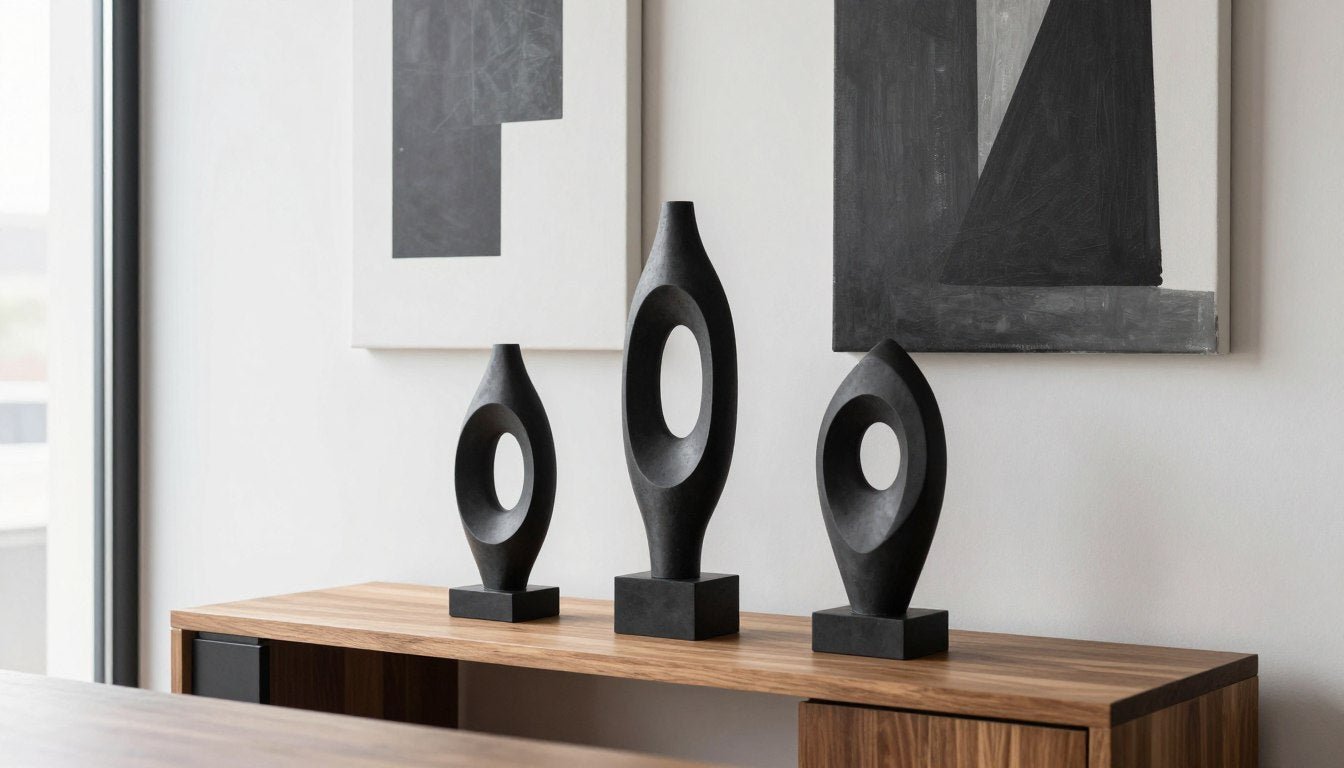

Your tabletop surfaces tell a story about who you are. Whether it's a console table in your living room or a credenza in your office, these spaces offer the perfect canvas for personal expression through art. Sculptures bring dimension, texture, and conversation to any room, transforming flat surfaces into dynamic focal points that capture the eye and spark interest.
Many people struggle with styling these three-dimensional pieces. They worry about scale, placement, and how to create cohesive displays that feel intentional rather than cluttered. The good news is that with a few key principles, anyone can master the art of tabletop styling.
This guide will walk you through everything you need to know. You'll learn how to select the right pieces for your space, arrange them with confidence, and create displays that reflect your personal style while enhancing your home or office environment.
Understanding Sculptural Elements in Interior Design

Sculptures serve as three-dimensional art that adds depth to your interior design. Unlike flat wall art, these pieces create visual interest from multiple angles. They invite viewers to move around them, discovering new perspectives and details with each viewpoint.
The materials used in sculptures contribute significantly to the overall aesthetic. Metal pieces often bring a modern, industrial feel to a space. Ceramic and porcelain sculptures offer smooth, refined textures that work beautifully in contemporary settings. Wood sculptures introduce warmth and organic elements that soften minimalist designs.
Understanding these material characteristics helps you make informed choices. Each material interacts differently with light and surrounding decor elements. This knowledge becomes your foundation for creating harmonious displays that enhance rather than overwhelm your space.
If You Love Contemporary Minimalist Style
Here are three print collections that bring that refined mood into your room and complement sculptural displays perfectly.

Abstract Geometric Prints
Clean lines and sophisticated compositions that echo the form of modern sculptures.

Black & White Canvas Prints
Timeless monochrome pieces that create striking visual contrast with sculptural forms.

Line Art Canvas Prints
Delicate continuous-line designs that complement sculptural displays without competing.
Choosing the Right Sculptures for Your Space

Scale plays a critical role in successful sculpture placement. A piece that's too small disappears on a large surface, while an oversized sculpture overwhelms a compact table. The key is finding the right proportion between your sculpture and the furniture piece it sits on.
For coffee tables, consider pieces between 6 to 12 inches in height. Console tables can accommodate larger statement pieces ranging from 12 to 24 inches tall. Desk sculptures work best when they're 4 to 10 inches, ensuring they don't obstruct your workspace or sightlines.
Scale Guidelines for Different Surfaces
Your table size directly impacts sculpture selection. Measure your surface area before shopping. A good rule of thumb is that your sculpture or grouping should take up no more than one-third of the available surface space.
- Coffee tables (36-48 inches): One medium sculpture or a grouping of 2-3 smaller pieces
- Console tables (48-72 inches): One large statement piece or multiple pieces arranged in odd-numbered groups
- Side tables (18-24 inches): One small to medium sculpture that doesn't overwhelm the compact surface
- Office desks (48-60 inches): One or two small accent pieces that inspire without distracting
Material Selection for Different Room Functions
The function of your space should guide material choices. Office environments benefit from sculptures that project professionalism and focus. Modern sculptures in metal or polished stone create this effect beautifully.
Living rooms allow for more personal expression and warmth. Ceramic pieces, wood sculptures, or mixed-media art invite conversation and reflect personality. These materials create a welcoming atmosphere that encourages guests to linger and engage with your space.
Consider the existing color palette in your room. Neutral sculptures work universally, complementing any decor scheme. Bold, colorful pieces make powerful statements but require more careful integration with your existing design elements and wall art selections.
Styling Principles for Tabletop Displays
The rule of three creates visually appealing arrangements that feel balanced and intentional. This design principle suggests that odd-numbered groupings, particularly sets of three, are more interesting and memorable than even numbers. Your eye naturally finds these arrangements more dynamic and engaging.
When working with three pieces, vary their heights to create visual rhythm. Place the tallest piece slightly off-center, with medium and small pieces flanking it at different distances. This asymmetrical arrangement feels natural and draws the eye through the entire composition.
Creating Visual Balance Through Height Variation

Height variation prevents monotony in your displays. Start with your tallest piece as the focal point. This becomes your anchor, around which other elements revolve. The second piece should be approximately two-thirds the height of your tallest sculpture.
Your smallest piece should be roughly half the height of your main sculpture. This graduated progression creates a pleasing visual flow that guides the viewer's eye naturally through your arrangement. The result is a display that feels professionally styled rather than randomly placed.
Incorporating Negative Space
Negative space, or empty areas around your sculptures, is just as important as the pieces themselves. Crowding too many objects onto a surface creates visual chaos and diminishes the impact of individual pieces. Each sculpture needs room to breathe and be appreciated on its own merits.
Leave at least 4 to 6 inches between grouped items. This spacing allows each piece to maintain its individual presence while contributing to the overall composition. The empty space actually enhances the visual weight of your sculptures, making them appear more significant and intentional.
- Allow sculptures to breathe with adequate spacing between pieces
- Balance filled and empty areas on your tabletop surface
- Use negative space to direct attention to focal point sculptures
- Avoid cluttering surfaces with too many competing elements
Color Coordination and Complementary Pieces

Color creates the emotional tone of your space. Monochromatic sculptures in blacks, whites, and grays offer versatility and sophistication. These neutral pieces work with virtually any decor style and won't clash with seasonal changes in your room's color scheme.
If you're drawn to color, consider how your sculpture hues interact with existing room colors. Pull accent colors from your upholstery, rugs, or living room wall art to create cohesion. This approach ties your sculptural display into the broader design narrative of your space.
Pairing Sculptures with Other Decor Elements
Sculptures rarely live in isolation. They share space with books, plants, trays, and other decorative objects. The key is ensuring these additional elements support rather than compete with your main sculptural pieces.
Books provide both height variation and intellectual interest. Stack two or three coffee table books of different sizes to create varied levels within your display. Choose book covers whose colors complement your sculpture tones. This creates visual continuity across your entire arrangement.
Plants introduce organic shapes and living texture to sculptural displays. Small succulents or trailing plants soften the hard edges of geometric sculptures. The contrast between natural and manufactured forms creates dynamic visual interest that engages viewers and adds depth to your styling.
Textures That Enhance Sculptural Displays

Texture adds tactile interest to visual displays. Smooth, polished sculptures gain impact when placed on rough, natural surfaces like reclaimed wood or woven textiles. This contrast creates sensory richness that makes your display more memorable and engaging.
Mix glossy and matte finishes within your groupings. A high-shine metallic sculpture paired with matte ceramic pieces creates visual dialogue through surface quality. These textural conversations add sophistication to your arrangements without requiring additional items or complexity.
Match This Vibe to Your Space
Discover curated collections designed specifically for different rooms in your home.

Office Canvas Art
Professional pieces that inspire focus and creativity in your workspace. Pair sculptures with motivational and sophisticated canvas prints.

Living Room Canvas Art
Statement pieces that create conversation and warmth in your main entertaining space. Perfect companions to your favorite sculptures.
Office Sculpture Styling Strategies

Office spaces demand a different approach than residential rooms. Your sculptural choices should project competence and professionalism while still reflecting personality. The goal is creating an environment that inspires productivity without becoming distracting or overly casual.
Position sculptures where they'll catch your eye during natural breaks in work. A piece placed at eye level when you look up from your computer provides visual rest and mental refreshment. This strategic placement supports focus rather than disrupting it.
Desk and Credenza Placement
Desk sculptures should occupy minimal surface area while making maximum impact. Choose pieces between 4 to 8 inches tall that won't obstruct sightlines during video calls or in-person meetings. Place them to one side of your workspace rather than front and center.
Credenzas and console tables behind your desk offer better opportunities for larger statements. These surfaces aren't active workspaces, so you can be more ambitious with scale and groupings. A 12 to 18-inch sculpture or group of three pieces creates an impressive backdrop for video calls.
Professional Material Choices
Metal sculptures project authority and modernity in office settings. Stainless steel, brass, or bronze pieces communicate sophistication and permanence. These materials catch light beautifully, adding subtle movement to static environments without becoming distracting.
Stone sculptures, whether actual stone or stone-look ceramics, ground your space with weight and substance. These pieces suggest stability and thoughtfulness, qualities that build trust in professional relationships. Pair them with professional office canvas art for a cohesive look.
- Choose sculptures that inspire without distracting from work tasks
- Maintain clear sightlines for video conferences and meetings
- Select materials that project professionalism and competence
- Position pieces where they provide visual breaks during work
- Keep desk surfaces primarily functional with minimal decorative items
Living Room Sculpture Arrangements

Living rooms give you freedom to express personality and create conversation pieces. These social spaces benefit from sculptures that invite discussion and reveal something about your tastes and interests. Don't shy away from bold choices that make statements about who you are.
Coffee tables offer prime real estate for sculptural displays. These low surfaces allow sculptures to be viewed from seated positions, making them perfect for entertaining. Choose pieces that look interesting from all angles since guests will view them from different seating positions around the table.
Console Table Compositions
Console tables behind sofas or against walls provide excellent opportunities for dramatic displays. These surfaces can accommodate larger pieces and more complex groupings since they're viewed primarily from one direction. Build depth by layering items at different distances from the wall.
Create a triangular composition with your tallest sculpture placed off-center. Add medium-height elements like stacked books or a plant on the opposite side. Fill the remaining space with your smallest sculptural accent. This arrangement creates visual balance while maintaining interest and energy.
Pairing Wall Art with Tabletop Sculptures

The relationship between wall art and tabletop sculptures deserves careful attention. When placing sculptures on surfaces below wall art, ensure the pieces complement rather than compete. The sculpture should echo colors, themes, or styles present in the artwork above it.
Leave adequate space between your sculpture and the bottom edge of wall art. A minimum of 6 to 12 inches prevents the composition from feeling cramped. This breathing room allows each piece to maintain its identity while contributing to a cohesive overall look.
Consider scale relationships between wall art and tabletop pieces. Your wall art should be the dominant element, with sculptures serving as supporting players. If your sculptures are particularly bold or large, choose more subdued wall art that won't create visual competition. Browse botanical wall art prints for complementary pieces that work beautifully with organic sculptural forms.
Lighting Techniques for Sculptural Displays

Lighting transforms sculptures from static objects into dynamic focal points. The right illumination reveals texture, creates drama, and directs attention to your carefully curated displays. Poor lighting, conversely, can render even spectacular pieces invisible or unflattering.
Natural light provides the most flattering illumination for most sculptures. Position pieces near windows where indirect sunlight can highlight their forms throughout the day. Be mindful of harsh direct sunlight, which can create unflattering shadows or damage certain materials over time.
Artificial Lighting Options
Table lamps positioned near sculptures create ambient glow that highlights pieces after dark. Place lamps slightly behind and to the side of sculptures to cast interesting shadows that emphasize three-dimensional forms. This positioning adds drama without creating harsh, unflattering light.
Track lighting or adjustable spotlights offer precise control over sculpture illumination. Direct these lights at a 30 to 45-degree angle from above to create natural-looking highlights and shadows. This technique is particularly effective for larger statement pieces that deserve spotlight treatment.
- Position sculptures to take advantage of natural window light when possible
- Use table lamps to create ambient glow that highlights evening displays
- Install adjustable spotlights for dramatic emphasis on statement pieces
- Avoid harsh overhead lighting that flattens three-dimensional forms
- Experiment with lighting angles to find the most flattering presentation
Seasonal and Rotating Displays

Rotating your sculptural displays prevents visual fatigue and keeps your space feeling fresh. You don't need to completely overhaul arrangements; small changes create significant impact. Swap one sculpture for another, or simply rearrange existing pieces in new configurations to transform the look.
Seasonal rotations offer natural opportunities for refreshing displays. Lighter, airier pieces work beautifully in spring and summer. Richer, more substantial sculptures feel appropriate for fall and winter months. These subtle shifts keep your interior design responsive to the changing year.
Storage and Care Considerations
Proper storage protects sculptures during off-season periods. Wrap delicate pieces in acid-free tissue paper before placing them in storage containers. Label boxes clearly to make rotating displays easier and prevent damage from unnecessary handling or searching.
Different materials require specific care approaches. Dust metal sculptures with soft, dry cloths to maintain their luster. Clean ceramic pieces with slightly damp cloths, avoiding harsh chemicals that might damage finishes. Wood sculptures benefit from occasional treatment with appropriate wood conditioners to prevent drying and cracking.
Common Styling Mistakes to Avoid

Overcrowding ranks as the most common mistake in tabletop styling. When every inch of surface space is filled, individual pieces lose impact and the overall effect becomes chaotic rather than curated. Less is genuinely more when it comes to creating sophisticated sculptural displays.
Respect the scale of your furniture. A tiny sculpture on a massive console table looks lost and insignificant. Conversely, an oversized piece on a small side table appears awkward and out of proportion. Always consider the relationship between sculpture size and the surface it occupies.
Avoiding Design Pitfalls
Matching everything too precisely creates displays that feel sterile and staged rather than collected and personal. While coordination matters, perfect matching suggests lack of confidence or personality. Mix styles, materials, and colors thoughtfully for displays that feel authentic and interesting.
Ignoring the viewing angle leads to compositions that look great from one position but fail from others. Walk around your displays and view them from different positions in the room. Make adjustments to ensure the arrangement works from multiple perspectives, especially in high-traffic areas.
- Avoid overcrowding surfaces with too many competing elements
- Respect scale relationships between sculptures and furniture
- Don't match everything perfectly; embrace thoughtful variety
- Consider viewing angles from different positions in the room
- Resist the urge to fill every empty space on every surface
- Don't place sculptures where they'll be constantly knocked over or bumped
Budget-Friendly Styling Approaches

Creating beautiful sculptural displays doesn't require unlimited budgets. Start with one quality statement piece and build around it with less expensive supporting elements. This approach gives you a sophisticated focal point while keeping overall costs manageable.
Shop secondhand stores and estate sales for unique sculptural pieces at fraction of retail prices. Vintage sculptures often possess character and craftsmanship that new mass-produced pieces lack. These finds add authentic personality to your displays while respecting budget constraints.
Maximizing Impact with Minimal Investment
Use items you already own in new ways. Books become sculptural elements when stacked creatively. Interesting bottles, vintage cameras, or collected objects can function as sculptural elements when displayed with intention. Look around your home with fresh eyes to identify overlooked pieces with display potential.
DIY sculptures offer another budget-friendly option. Simple plaster casting, wood carving, or assemblage projects let you create custom pieces that reflect your exact aesthetic preferences. These handmade elements add deeply personal touches that purchased items can't replicate.
Transform your space with professionally crafted art pieces. Free worldwide shipping on all orders.
Personal Style Expression Through Sculptural Choices

Your sculptural choices should reflect your authentic personality rather than following trends blindly. Collect pieces that speak to you personally, whether they represent your travels, interests, or simply objects whose forms you find beautiful. These meaningful selections create displays with genuine character.
Don't feel pressured to commit to one style exclusively. Eclectic mixes often create the most interesting and personal displays. A modern abstract sculpture can live harmoniously with a traditional ceramic piece if they share similar scale, color tones, or thematic elements.
Building a Cohesive Personal Collection
Start by identifying your aesthetic preferences. Do you gravitate toward organic, flowing forms or angular, geometric shapes? Are you drawn to neutral tones or bold colors? Understanding these preferences helps you build a collection that feels cohesive even when pieces span different styles or eras.
Purchase thoughtfully rather than impulsively. Live with potential purchases in your imagination before buying. Consider how each piece will work with items you already own and whether it will maintain your interest over time. Quality pieces that truly resonate with you prove their value year after year.
According to Architectural Digest's styling experts, the most successful sculptural displays balance personal meaning with design principles, creating spaces that feel both curated and authentic.
Working with Different Interior Design Styles

Modern minimalist spaces call for clean-lined sculptures with restrained forms. Choose pieces in monochromatic palettes that emphasize shape over decoration. Metal, stone, or simple ceramic sculptures work beautifully in these pared-down environments, where each object carries significant visual weight.
Traditional interiors accommodate more ornate sculptural choices. Classic figurative pieces, decorative ceramics, or pieces with historical references feel at home in these settings. The key is ensuring your sculptures respect the formal balance and symmetry typical of traditional design.
Adapting Sculptures to Eclectic and Transitional Styles
Eclectic interiors offer the most freedom in sculptural selection. Mix periods, materials, and styles with confidence. The unifying factor in eclectic displays is often color palette or scale rather than stylistic consistency. This approach lets you follow your instincts and create truly personal spaces.
Transitional spaces bridge traditional and contemporary aesthetics. Sculptures in these environments should lean toward simpler forms than pure traditional pieces but with more warmth than stark modern choices. Look for pieces with classic forms executed in contemporary materials or finishes.
Sculpture and Canvas Art Pairing Strategies

Sculptures and canvas prints create powerful partnerships when paired thoughtfully. Use similar color palettes to establish visual connections between three-dimensional pieces and wall art. A sculpture with blue undertones looks intentional beneath a canvas print featuring the same blue hues.
Thematic connections also create cohesion. Abstract sculptures pair naturally with abstract canvas prints, while organic sculptural forms complement botanical wall art. These conceptual links make your space feel curated and thoughtful.
Creating Visual Dialogue Between Mediums
Let sculptures and canvas art have conversations without repeating the same statement. If your wall art is bold and colorful, choose more subdued sculptural pieces that won't compete. Conversely, if your canvas prints are minimal and neutral, your sculptures can be more adventurous in form or color.
Consider the visual weight of both elements. Large-scale canvas art paired with delicate sculptures creates interesting contrast. Massive sculptural statements work beautifully with smaller, more numerous canvas prints that don't overwhelm the three-dimensional focal point.
Professional Tips from Interior Designers

Interior designers consistently emphasize the importance of editing your displays. When you think your arrangement is complete, try removing one element. Often the display becomes stronger and more focused. This discipline prevents the cluttered look that undermines even beautiful individual pieces.
Professionals recommend the "overnight test" for new arrangements. Style your display, then leave it overnight before making final judgments. Fresh eyes the next morning reveal whether the composition truly works or needs adjustment. This pause prevents hasty decisions you'll regret later.
Designer Secrets for Elevated Styling
Layer items at different depths on your surface. Don't line everything up at the same distance from the wall. Bring some pieces forward and push others back to create dimensional interest. This depth makes displays feel more dynamic and professionally styled.
Use trays to create intentional groupings within larger surfaces. A tray containing a small sculpture, a candle, and a decorative object becomes a curated micro-arrangement within your overall composition. This designer trick adds structure to displays and makes restyling easier.
According to Elle Decor's interior experts, successful sculptural displays balance form and function, ensuring beauty doesn't compromise the practical use of surfaces.
- Edit ruthlessly, removing elements until the display feels balanced
- Layer items at different depths to create dimensional interest
- Use trays to create structured groupings within larger compositions
- Test arrangements overnight before finalizing placement decisions
- Balance aesthetic appeal with practical surface functionality
- Consider how displays photograph; good styling translates to images
Maintaining and Refreshing Your Displays

Regular maintenance keeps your sculptural displays looking fresh and intentional. Dust sculptures weekly using soft microfiber cloths that won't scratch surfaces. For intricate pieces with crevices, use soft-bristled brushes to reach detailed areas without damaging delicate features.
Evaluate your displays monthly with critical eyes. Over time, you become blind to your own arrangements. Fresh assessment reveals whether pieces still work together or if the composition has grown stale. Small adjustments, like swapping positions of two sculptures, can revitalize entire displays.
When to Completely Restyle
Complete restyling becomes necessary when your displays no longer spark joy or reflect your current aesthetic. Changing seasons, new furniture, or evolving personal taste all signal opportunities for fresh approaches. Don't cling to arrangements that no longer serve your space well.
Before dismantling successful displays, photograph them from multiple angles. These images become references if you want to recreate similar looks in different spaces or simply remember what worked well. Building a personal styling archive helps you develop your eye over time.
Conclusion

Mastering the art of tabletop sculpture styling transforms ordinary surfaces into personal galleries that reflect your taste and enhance your daily environment. The principles covered here, from scale and proportion to color coordination and lighting, provide the foundation for creating displays with professional polish.
Remember that rules exist to guide, not restrict. Once you understand the fundamentals, trust your instincts and personal preferences. The most successful displays balance design principles with authentic personal expression, creating spaces that feel both curated and genuinely yours.
Start small with one surface and one or two quality pieces. Build your skills and collection gradually. As you gain confidence, you'll develop an intuitive sense for what works in your specific spaces. The journey of creating beautiful sculptural displays is ongoing, evolving with your tastes and life circumstances.
Your home and office deserve the visual interest and personal expression that thoughtful sculptural displays provide. Apply these strategies to transform your tabletop surfaces into focal points that capture attention, spark conversation, and bring daily joy to your environment.
Frequently Asked Questions
How many sculptures should I place on a coffee table?
For most coffee tables, one medium-sized sculpture or a grouping of 2-3 smaller pieces works best. The key is leaving adequate surface space for functionality. Your sculptures should occupy no more than one-third of the total table surface.
Consider the table's size and your lifestyle. If you frequently use the coffee table for drinks, books, or entertaining, err on the side of fewer pieces. You can always add seasonal elements temporarily when hosting guests.
What's the ideal height for office desk sculptures?
Office desk sculptures should be between 4 to 8 inches tall. This height range provides visual interest without obstructing your view during video calls or creating distractions during focused work. Pieces in this size range make statements while maintaining professional appropriateness.
For credenzas or shelving behind your desk, you can go larger, up to 12-18 inches. These background pieces create impressive visual interest without interfering with your active workspace. Browse modern sculptures designed specifically for professional environments.
How do I choose sculptures that match my existing decor?
Start by identifying your room's dominant colors and pulling one or two of those hues into your sculpture selection. If your space features mostly neutrals, you have flexibility to choose either neutral sculptures for cohesion or colorful pieces for contrast.
Consider your existing furniture style. Modern, clean-lined furniture pairs well with abstract or geometric sculptures. Traditional furniture accommodates more ornate or figurative pieces. When in doubt, neutral-toned sculptures in simple forms work universally across decor styles.
Can I mix different sculpture materials in one display?
Yes, mixing materials creates visual interest and textural variety. The key is finding a unifying element, such as similar color tones, complementary sizes, or related themes. A metal sculpture paired with ceramic and wood pieces can work beautifully if they share similar scale and color palettes.
Contrast in materials actually enhances displays by preventing monotony. A smooth, polished piece gains impact when placed near something with rough or matte texture. This variety engages viewers and adds sophistication to your arrangements.
Where should sculptures be placed in relation to wall art?
Position sculptures on surfaces directly below or adjacent to wall art, maintaining 6-12 inches of space between the sculpture's highest point and the bottom edge of the artwork. This spacing prevents the composition from feeling cramped while establishing clear visual connection.
The sculpture and wall art should complement each other through color, theme, or style. When pairing pieces, ensure the wall art remains the dominant element, with the sculpture serving as a supporting player. Explore canvas print collections that coordinate beautifully with sculptural displays.
How often should I change my sculptural displays?
Refresh displays seasonally, approximately every 3-4 months, to prevent visual fatigue. You don't need to completely overhaul arrangements; small changes create significant impact. Swap one piece for another, rearrange existing items, or add seasonal elements like branches or holiday accents.
Monthly evaluations help identify when displays have grown stale. Trust your instincts; if you no longer notice or appreciate your arrangement, it's time for a refresh. Even simply swapping the positions of two sculptures can revitalize a tired composition.
What's the best way to clean different sculpture materials?
Metal sculptures should be dusted with soft, dry microfiber cloths. For fingerprints or smudges, use a slightly damp cloth followed immediately by a dry cloth. Avoid harsh chemicals that can damage finishes or patinas.
Ceramic and porcelain pieces can be cleaned with damp cloths and mild soap if necessary. Dry thoroughly to prevent water spots. Wood sculptures benefit from occasional treatment with appropriate wood conditioners to prevent drying and maintain luster. Always check manufacturer care instructions for specific pieces.
Are there sculptures that work in both office and home settings?
Abstract geometric sculptures in neutral tones work beautifully in both professional and residential spaces. These versatile pieces project sophistication in offices while adding contemporary flair to home environments. Metal or stone-look pieces in simple forms transition seamlessly between contexts.
Avoid overly personal or whimsical pieces for dual-purpose selections. Choose sculptures with clean lines and universal appeal that won't feel inappropriate in professional settings. These transitional pieces let you maintain consistent aesthetic across your workspace and home, simplifying decorating decisions.
How do I prevent small sculptures from getting lost on large surfaces?
Use platforms or pedestals to elevate small sculptures, giving them visual prominence on large surfaces. Small wooden boxes, stacked books, or decorative trays serve this purpose while adding layered interest to your composition.
Group multiple small sculptures together to create collective visual weight that registers on large surfaces. Three or five small pieces arranged in a cluster carry more impact than the same pieces scattered across a large table. This grouping strategy also creates negative space that enhances the overall display.
Where can I find quality sculptures for my home or office?
Quality modern sculptures are available from specialized art retailers that curate contemporary pieces for home and office environments. Look for vendors offering museum-quality pieces with attention to craftsmanship and design.
Consider pairing your sculptural purchases with complementary canvas art for living rooms or office spaces. This coordinated approach ensures all your art pieces work together to create cohesive, professionally styled environments with ready-to-hang convenience and free worldwide shipping.


Leave a comment
This site is protected by hCaptcha and the hCaptcha Privacy Policy and Terms of Service apply.