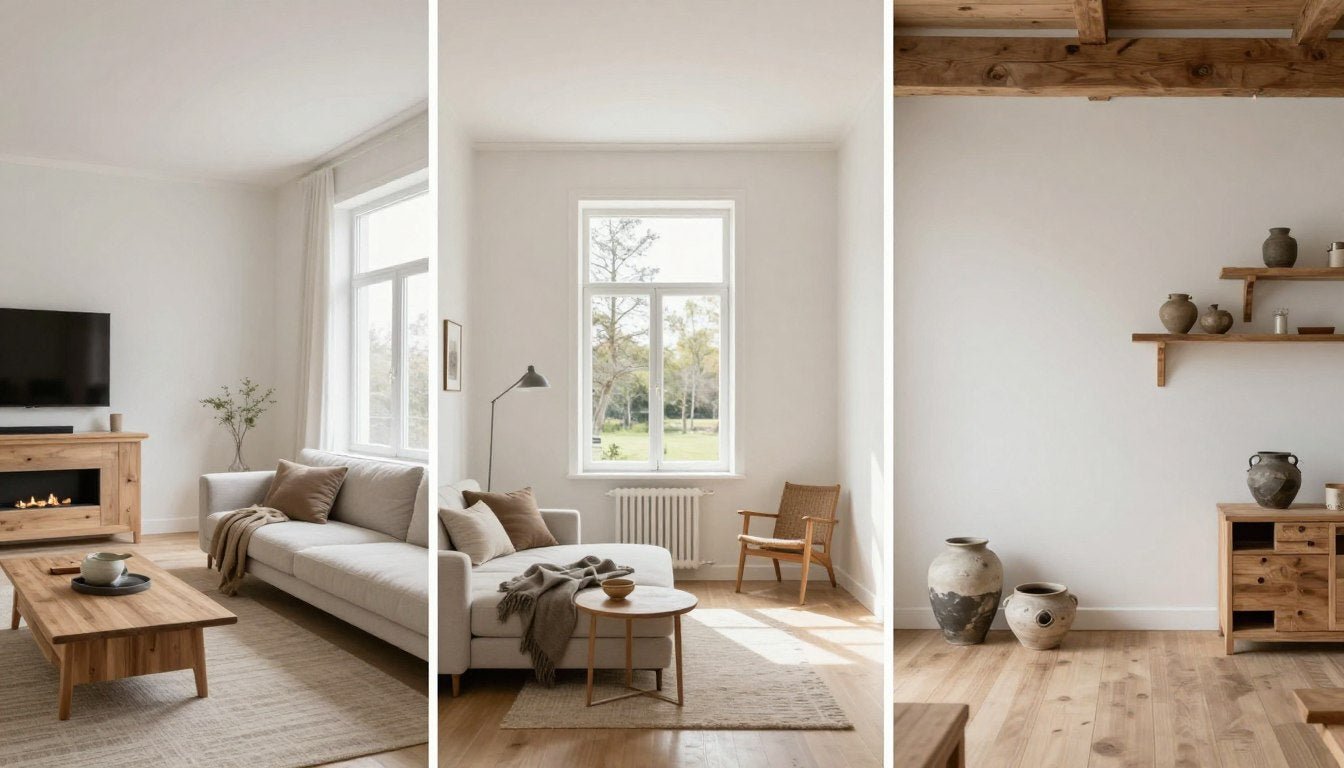
Choosing the right interior design style transforms your home into a personal sanctuary. Yet many homeowners struggle to distinguish between similar aesthetics.
This comprehensive guide explores four popular design philosophies. You'll discover the core principles behind Japandi design, Scandinavian minimalism, Farmhouse warmth, and Wabi-Sabi beauty.
Each style offers unique approaches to simplicity, natural materials, and creating harmony in your space. Understanding these differences helps you make confident design decisions.
For additional inspiration and design insights, explore our design blog where we share expert tips on incorporating art into various interior design styles.
Understanding Contemporary Design Philosophies
Modern interior design styles share common threads. Most embrace simplicity, functionality, and connection to the natural world.
These philosophies emerged from different cultural contexts. Scandinavian design developed in Nordic countries where light is precious. Japanese aesthetics evolved from centuries of minimalist traditions.
American Farmhouse style draws from rural heritage and practicality. Each approach solves distinct challenges while creating beautiful, livable spaces.

Understanding these core philosophies allows you to mix elements thoughtfully. You can blend aspects from different styles while maintaining cohesive design.
The key lies in recognizing what makes each aesthetic unique. This knowledge empowers you to create spaces that reflect your personal vision.
Japandi Design: Where Japanese Minimalism Meets Scandinavian Warmth
Japandi design represents a harmonious fusion of two distinct philosophies. This style combines Japanese minimalism with Scandinavian functionality and warmth.
The name itself merges "Japanese" and "Scandinavian." This hybrid approach has gained tremendous popularity in recent years.
Core Principles of Japandi Style
Japandi design rests on several core principles. Simplicity guides every design decision, eliminating unnecessary elements from your space.
Functionality ensures each item serves a purpose. This practical approach prevents clutter while maintaining aesthetic appeal.
Natural materials form the foundation of Japandi interiors. Wood dominates the material palette, bringing organic warmth into spaces.
Key Japandi Elements
Essential components that define this balanced aesthetic:
- Clean lines and uncluttered spaces
- Neutral color palette with subtle contrasts
- Natural wood tones in furniture and flooring
- Minimal decoration with intentional placement
- Quality over quantity in furnishings
- Integration of natural light sources
Material Selection
Japandi style prioritizes specific materials for authenticity:
- Light woods like oak, ash, and beech
- Dark woods such as walnut for contrast
- Natural textiles including linen and cotton
- Stone and ceramic elements
- Bamboo and rattan accents
- Matte metal finishes
Color Philosophy
The Japandi color palette creates tranquil environments:
- Soft whites and warm grays
- Beige and cream foundations
- Muted greens and sage tones
- Charcoal and deep browns
- Occasional black accents
- Natural wood color variations
Space Organization
Japandi design emphasizes thoughtful spatial arrangement:
- Open floor plans with defined zones
- Low-profile furniture pieces
- Negative space as design element
- Hidden storage solutions
- Minimal window treatments
- Strategic furniture placement

Incorporating Art into Japandi Spaces
Art plays a subtle yet significant role in Japandi design. Abstract pieces with minimal color palettes complement the aesthetic perfectly.
Line art and geometric compositions align with Japandi principles. These pieces add visual interest without overwhelming the space.
Consider exploring modern canvas prints that feature clean lines and neutral tones. Such artwork enhances Japandi interiors while maintaining their tranquil essence.
Japandi Design in Different Rooms
Living rooms embrace low seating and natural textiles. Neutral-toned sofas pair with wooden coffee tables and minimal decoration.
Bedrooms feature platform beds with simple headboards. Soft lighting creates a peaceful atmosphere conducive to rest and relaxation.
Kitchens combine functionality with beauty. Open shelving displays carefully curated dishware while maintaining the minimalist aesthetic.
Scandinavian Style: Light, Function, and Hygge
Scandinavian design emerged from the Nordic countries. This style developed as a response to long, dark winters and limited natural light.
The philosophy emphasizes brightness, functionality, and creating cozy atmospheres. Scandinavians call this feeling "hygge" - a sense of warmth and contentment.
Foundational Elements of Scandinavian Design
Light forms the cornerstone of Scandinavian interiors. White walls and light wood floors maximize the reflection of precious natural light.
Functionality drives every design choice. Furniture serves multiple purposes while maintaining clean, simple lines.
Natural materials bring warmth to otherwise minimal spaces. Wood remains the primary material, complemented by wool, leather, and cotton textiles.

Scandinavian Color Palette
The Scandinavian color palette centers on lightness and simplicity. White dominates as the primary color, creating bright and airy spaces.
Light grays and soft beiges provide subtle variation. Natural wood tones add warmth without heaviness.
Accent colors appear sparingly but effectively. Soft blues, muted greens, and gentle pinks add personality while maintaining serenity.
Black elements create striking contrast. This might include window frames, light fixtures, or minimal graphic artwork.
Texture in Scandinavian Spaces
Texture prevents Scandinavian rooms from feeling cold or sterile. Layered textiles create depth and warmth throughout the space.
Sheepskin rugs add luxury underfoot. Knitted throws and cushions invite comfort and relaxation.
Natural fiber rugs ground seating areas. Linen curtains soften windows while allowing natural light to filter through.
Wood grain provides organic texture. Smooth ceramics and matte metals offer subtle textural variation.
Art Selection for Scandinavian Interiors
Scandinavian spaces welcome art that maintains the light, airy atmosphere. Black and white photography works beautifully in these settings.
Abstract pieces with gentle color palettes complement the aesthetic. Simple line drawings and botanical prints align with Scandinavian sensibilities.
Discover original paintings featuring minimalist compositions and soft color palettes. These pieces enhance Scandinavian interiors while preserving their characteristic brightness.
Scandinavian Living Spaces

Living rooms balance minimalism with comfort. Modular sofas provide flexible seating arrangements that adapt to different needs.
Coffee tables feature clean lines and practical storage solutions. Open shelving displays books and decorative objects without creating visual clutter.
Large windows remain mostly unobstructed. This maximizes natural light penetration throughout the day.
Scandinavian Kitchens

Kitchens emphasize efficiency and cleanliness. White cabinets reflect light while providing ample storage space.
Open shelving displays everyday items attractively. Light wood countertops add warmth to predominantly white spaces.
Functional lighting combines pendant fixtures with under-cabinet illumination. This ensures adequate task lighting for food preparation.
Scandinavian Bedrooms

Bedrooms create restful sanctuaries through simplicity. White linens dominate the bed, sometimes layered with textured throws.
Minimal nightstands hold essential items only. Simple table lamps provide soft, warm illumination for evening reading.
Storage remains hidden behind clean-lined wardrobes. This maintains the uncluttered appearance essential to Scandinavian design.
Bringing Hygge into Your Home
Hygge represents more than aesthetic choices. This concept encompasses creating warmth, comfort, and contentment in your living space.
Candles play a significant role in achieving hygge. Their soft, flickering light creates intimate atmospheres during dark evenings.
Layered textiles invite relaxation and comfort. Soft throws, plush cushions, and warm rugs transform minimalist spaces into cozy retreats.
Natural elements maintain connection to the outside world. Indoor plants, wooden accessories, and natural fiber textiles bring organic warmth indoors.
Farmhouse Style: Rustic Charm Meets Modern Comfort
Farmhouse style celebrates American rural heritage. This aesthetic combines practical functionality with nostalgic charm and welcoming warmth.
Originally born from necessity, modern Farmhouse design intentionally recreates rustic appeal. The style has evolved to blend vintage character with contemporary comfort.

Defining Characteristics of Farmhouse Design
Natural materials dominate Farmhouse interiors. Reclaimed wood, exposed beams, and shiplap walls create authentic rustic character.
The color palette centers on neutral, earthy tones. Whites, creams, and soft grays form the foundation for warmer accent colors.
Vintage and antique pieces add historical charm. These elements tell stories while serving practical functions in modern life.
Farmhouse Style Strengths
- Creates warm, inviting atmospheres
- Accommodates family life and entertaining
- Allows mixing old and new elements
- Provides comfortable, livable spaces
- Offers flexibility in design choices
- Celebrates imperfection and character
Farmhouse Style Challenges
- Can appear cluttered without careful editing
- Requires sourcing authentic vintage pieces
- May feel too casual for formal settings
- Maintenance of natural materials needed
- Risk of appearing overly themed
- Balancing rustic with refined elements
Farmhouse Color Palette and Textures
White serves as the primary Farmhouse color. It brightens spaces while providing a clean backdrop for rustic elements.
Earthy tones like beige, tan, and warm gray add depth. These colors complement natural wood tones throughout the space.
Accent colors draw from nature. Sage green, dusty blue, and soft yellow introduce subtle color without overwhelming the neutral palette.
Textures create visual richness in Farmhouse spaces. Rough-hewn wood contrasts with smooth painted surfaces and soft textiles.
Essential Farmhouse Elements
- Shiplap or beadboard wall treatments
- Exposed wooden beams and rafters
- Farmhouse sinks with bridge faucets
- Open shelving displaying dishware
- Sliding barn doors as room dividers
- Vintage-inspired light fixtures
- Natural fiber rugs and textiles
- Distressed or weathered wood furniture
Farmhouse Decorative Touches
- Mason jar collections and displays
- Galvanized metal accents and containers
- Vintage signs and typography art
- Fresh flowers in simple vases
- Woven baskets for storage and display
- Antique tools as wall decoration
- Quilts and patterned textiles
- Farmhouse tables with bench seating
Art in Farmhouse Interiors
Farmhouse style welcomes art that reflects rural life and natural beauty. Botanical prints, landscape paintings, and vintage-style typography work beautifully.
Oversized pieces create focal points in large Farmhouse spaces. Gallery walls tell visual stories through collected frames and prints.
Browse canvas prints featuring botanical themes and natural imagery. These pieces complement Farmhouse aesthetics while adding artistic sophistication.

Modern Farmhouse Evolution
Modern Farmhouse blends traditional elements with contemporary design. This evolution maintains rustic charm while incorporating cleaner lines and updated amenities.
The modern interpretation uses a lighter color palette. White dominates even more, creating brighter spaces than traditional Farmhouse interiors.
Contemporary touches prevent the style from feeling dated. Stainless steel appliances, modern lighting, and sleek hardware balance vintage elements.
This hybrid approach appeals to those wanting warmth without sacrificing modern convenience. It demonstrates how design styles continue evolving to meet contemporary needs.
Wabi-Sabi: Finding Beauty in Imperfection
Wabi-Sabi represents a profound Japanese philosophy. This aesthetic celebrates imperfection, impermanence, and the beauty of natural aging.
The concept combines two related ideas. "Wabi" refers to simplicity and understated elegance. "Sabi" embraces the beauty that comes with age and wear.
Unlike Western design traditions, Wabi-Sabi finds perfection in imperfection. This philosophy honors authenticity over artificial flawlessness.
Core Principles of Wabi-Sabi Aesthetics
Wabi-Sabi embraces the natural world and its cycles. Materials show their age and history without apology or concealment.
Simplicity guides design decisions, but not in pursuit of minimalist perfection. Instead, simplicity allows the essence of objects to shine through.
Asymmetry appears more authentic than perfect symmetry. Irregular shapes and uneven textures reflect nature's own patterns and randomness.

- Aged and weathered wood
- Handmade ceramics with irregularities
- Natural stone with unique markings
- Raw linen and cotton textiles
- Oxidized and patinated metals
- Bamboo and natural fibers
- Recycled and reclaimed materials
Wabi-Sabi Materials
- Earth tones and natural browns
- Muted greens and mossy hues
- Soft grays and charcoal
- Cream and off-white shades
- Rust and oxidized orange
- Deep indigo and faded blues
- Natural wood color variations
Wabi-Sabi Colors
- Rough and unfinished surfaces
- Cracked and crazed glazes
- Worn and softened fabrics
- Weathered and distressed wood
- Natural stone imperfections
- Handcrafted irregularities
- Organic texture variations
Wabi-Sabi Textures
Implementing Wabi-Sabi in Your Home
Wabi-Sabi spaces reject mass-produced perfection. Choose handmade items that show the maker's hand and unique characteristics.
Allow natural light to illuminate spaces gently. Harsh, even lighting contradicts the Wabi-Sabi appreciation for shadow and depth.
Embrace items with history and patina. A weathered wooden bowl tells more stories than a pristine new one.
Limit decoration to meaningful pieces. Each object should have significance beyond mere aesthetic appeal.
Wabi-Sabi Design Tips
Start with neutral, earthy tones as your foundation. These colors allow natural materials and textures to take center stage.
Incorporate handmade ceramics and pottery. Imperfections in these pieces exemplify Wabi-Sabi principles beautifully.
Choose furniture with visible wood grain and natural variations. Avoid overly finished or synthetic-looking materials.
Allow natural light to create changing shadows throughout the day. This celebrates the passage of time central to Wabi-Sabi philosophy.
Art and Wabi-Sabi Spaces
Wabi-Sabi aesthetics welcome art that reflects natural processes. Pieces showing age, weathering, or organic irregularity align perfectly with this philosophy.
Abstract works suggesting natural forms work beautifully. Earthy color palettes and visible brushwork add authentic artistic character.
Consider original paintings featuring organic textures and earth-tone palettes. These pieces embody the beauty of imperfection central to Wabi-Sabi design.

The Philosophy Beyond Aesthetics
Wabi-Sabi extends beyond visual design into life philosophy. This approach encourages mindfulness and appreciation for the present moment.
Accepting imperfection reduces stress and anxiety. Spaces designed around Wabi-Sabi principles promote peace and contentment.
This philosophy counters consumer culture's pursuit of newness. It values longevity, authenticity, and the stories objects accumulate over time.
Embracing Wabi-Sabi means finding beauty in everyday life. It transforms how you see and experience your living environment.
Comparing and Contrasting Design Styles
Understanding the similarities and differences between these styles helps you make informed design choices. Each philosophy shares certain values while maintaining distinct character.
Shared Design Values
All four styles embrace simplicity in their own ways. This common thread connects seemingly different aesthetics.
Natural materials appear across all these design philosophies. Wood, stone, and organic textiles feature prominently in each style.
Functionality matters in every approach. Whether Scandinavian practicality or Farmhouse utility, purpose drives design decisions.
Connection to nature influences each aesthetic. This shared value manifests differently but remains consistently important.
| Aspect | Japandi | Scandinavian | Farmhouse | Wabi-Sabi |
| Primary Focus | Balanced minimalism | Light and function | Warmth and comfort | Imperfection beauty |
| Color Palette | Neutral with contrast | White and light tones | Earthy neutrals | Earth tones |
| Key Materials | Light and dark woods | Light woods and textiles | Reclaimed wood | Aged natural materials |
| Decoration Level | Very minimal | Minimal with coziness | Moderate to abundant | Minimal and meaningful |
| Atmosphere | Serene and balanced | Bright and cheerful | Warm and welcoming | Peaceful and contemplative |
| Perfect For | Modern minimalists | Light-seeking families | Casual family homes | Mindful living spaces |
Key Distinctions
Japandi design balances two cultures with careful precision. This hybrid approach creates something unique from its parent styles.
Scandinavian style prioritizes brightness and hygge above all. The pursuit of light shapes every design decision in Nordic interiors.
Farmhouse aesthetic celebrates rustic charm and nostalgic warmth. This style embraces more decoration than minimalist approaches.
Wabi-Sabi honors imperfection as fundamental beauty. This philosophy differs most dramatically from Western design traditions.

Choosing the Right Style for Your Home
Selecting a design style requires honest self-reflection. Consider your lifestyle, preferences, and practical needs before committing to an aesthetic.
Lifestyle Considerations
Your daily life should inform design choices. Families with young children may find Farmhouse style most practical and forgiving.
Minimalists drawn to order might gravitate toward Japandi design. This aesthetic supports clutter-free living through intentional simplicity.
Those seeking brightness in darker climates often embrace Scandinavian style. The light-maximizing approach directly addresses environmental challenges.
Individuals valuing mindfulness may connect with Wabi-Sabi philosophy. This approach transforms living spaces into meditative environments.
Questions to Guide Your Choice
- How much maintenance time can you realistically dedicate to your home?
- Do you prefer minimal decoration or collected objects with personal meaning?
- How important is natural light in your daily well-being?
- Does your family need durable, forgiving surfaces and materials?
- Are you drawn to perfection or comfortable with imperfection?
- Do you enjoy frequently updating your space or prefer timeless design?
Mixing Style Elements
You don't need to commit exclusively to one style. Many successful interiors blend elements from multiple aesthetics.
Start with one dominant style as your foundation. Then thoughtfully incorporate elements from complementary approaches.
Japandi and Wabi-Sabi share Japanese roots and blend naturally. Scandinavian and Farmhouse both emphasize natural materials and warmth.
The key lies in maintaining coherent principles. Choose elements that share common values like simplicity or natural materials.
Incorporating Art Across Styles
Art selection should align with your chosen aesthetic while reflecting personal taste. Each style welcomes different artistic approaches.
Japandi spaces benefit from minimalist abstracts and line drawings. Scandinavian interiors shine with black and white photography or gentle watercolors.
Farmhouse style accommodates botanical prints and vintage-inspired artwork. Wabi-Sabi aesthetics welcome pieces showing texture, age, and organic imperfection.
Explore diverse options in canvas prints, original paintings, and modern sculptures to find pieces that speak to your chosen aesthetic.

Implementing Your Chosen Design Style
Transforming your space requires thoughtful planning and gradual implementation. Start with foundational elements before adding decorative touches.
Starting Your Design Journey
Begin by decluttering and simplifying your existing space. Removing excess creates a blank canvas for your new aesthetic.
Invest in key furniture pieces that anchor your chosen style. These foundational items establish the overall aesthetic direction.
Paint walls in colors aligned with your style's palette. This relatively inexpensive change dramatically impacts your space's atmosphere.
Add textiles that reinforce your chosen aesthetic. Throws, pillows, and rugs introduce texture and warmth affordably.
Budget-Friendly Implementation
You don't need unlimited resources to create beautiful spaces. Strategic choices maximize impact while minimizing expense.
Focus on paint, textiles, and thoughtful arrangement first. These changes cost less than furniture replacement but dramatically affect atmosphere.
Source secondhand and vintage pieces for character. This approach particularly suits Farmhouse and Wabi-Sabi aesthetics.
Invest in quality foundational pieces gradually. Build your ideal space over time rather than rushing to completion.
Avoiding Common Mistakes
Many enthusiastic decorators make predictable errors. Learning from others' mistakes saves time and resources.
Don't rush to fill every surface and wall. Empty space serves important functions in most design styles.
Avoid mixing too many styles without coherent vision. Select complementary aesthetics that share underlying principles.
Resist trendy additions that conflict with your chosen style. Timeless choices create lasting satisfaction.
Maintaining Your Aesthetic
Successful design requires ongoing curation and maintenance. Spaces evolve with your life while maintaining coherent style.
Regularly edit possessions to prevent clutter accumulation. This practice proves especially important for minimal styles.
Add new elements slowly and intentionally. Each addition should enhance rather than dilute your aesthetic.
Allow your space to evolve naturally over time. Perfect rooms exist only in magazines, not real life.
Room-by-Room Approach
Tackle one room at a time rather than overwhelming yourself. This measured approach allows you to learn and refine your vision.
Start with the room where you spend most time. Success in this space builds confidence for additional projects.
Common areas like living rooms establish your home's overall aesthetic. These spaces deserve priority attention and investment.
Private spaces allow more personal interpretation. Bedrooms can deviate slightly from public area styling while maintaining harmony.
Embracing Your Personal Design Journey
Understanding Japandi design, Scandinavian minimalism, Farmhouse warmth, and Wabi-Sabi beauty empowers confident design decisions. Each style offers unique approaches to creating meaningful living spaces.
Your home should reflect your values, lifestyle, and aesthetic preferences. These design philosophies provide frameworks rather than rigid rules.
Start implementing changes gradually with foundational elements. Focus on quality over quantity as you build your ideal environment.
Remember that design remains a personal journey without single correct answer. Trust your instincts while drawing inspiration from established styles.
Transform Your Space with Curated Art
Discover museum-quality canvas prints, original paintings, and modern sculptures that complement your chosen design aesthetic. Each piece is carefully crafted to enhance Japandi, Scandinavian, Farmhouse, or Wabi-Sabi interiors.
Allow natural light to illuminate your spaces thoughtfully. Embrace imperfections that add character and authenticity to your home.
Use natural materials that connect your interior to the broader world. Let earthy tones and organic textures create warmth and beauty.
Your living room becomes a sanctuary when design principles align with daily life. Create spaces that nurture well-being through thoughtful aesthetic choices.


Leave a comment
This site is protected by hCaptcha and the hCaptcha Privacy Policy and Terms of Service apply.