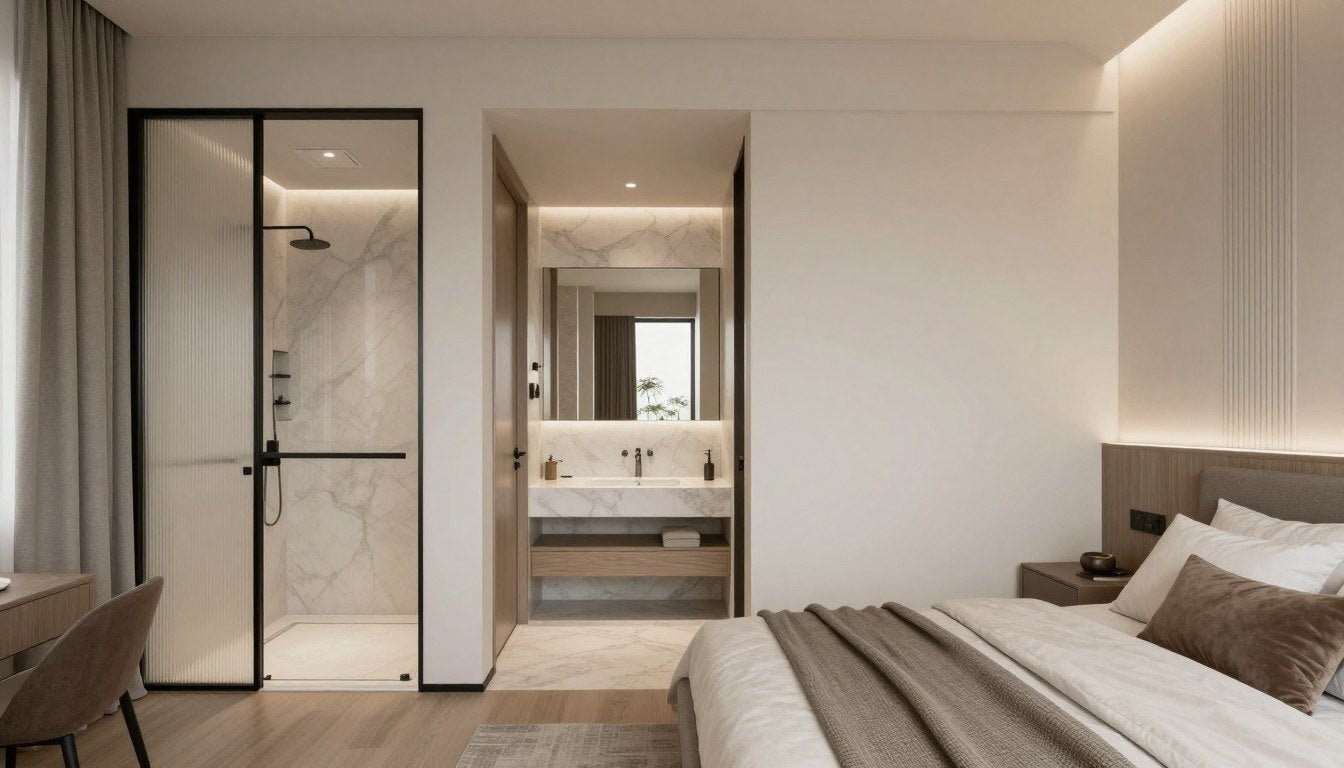

Walking from your bedroom into your bathroom should feel like a natural transition, not a jarring shift between two completely different worlds. Many homeowners wonder if these two intimate spaces need to match perfectly or if they can have distinct personalities while still feeling connected.
The answer isn't simply yes or no. It's about understanding the balance between cohesion and individuality.
The question of whether bedroom and bathroom decor should match touches on fundamental design principles that affect how you experience your personal spaces every day. These rooms share a unique relationship—they're often connected, used during the same routines, and serve as your private retreat from the rest of your home.
Understanding Design Coordination Principles

Design coordination differs fundamentally from exact matching. Coordination means creating visual harmony through shared elements while allowing each space to maintain its unique function and character.
Matching implies identical elements throughout both spaces. Coordination suggests a more sophisticated approach where spaces relate to each other without being carbon copies.
The Difference Between Matching and Coordinating
When you match bedroom and bathroom decor exactly, you risk creating monotony. Your bathroom serves different purposes than your bedroom—it needs to be functional, moisture-resistant, and energizing for morning routines.
Coordinating allows you to establish a design conversation between the two spaces. You might carry the same color palette through both rooms but express it differently through various materials and finishes.
Matching Approach

Uses identical colors, patterns, and finishes in both spaces. Creates strong visual continuity but may feel repetitive.
- Same paint colors on all walls
- Identical artwork themes
- Matching textiles and accessories
- Uniform lighting fixtures
Coordinating Approach

Shares design elements strategically while allowing room-specific expressions. Creates sophisticated flow without redundancy.
- Complementary color palettes
- Varied but related art styles
- Different textures in same tones
- Similar but not identical fixtures
Why Visual Flow Matters
Visual flow affects how comfortable and cohesive your home feels. When you step from bedroom to bathroom, your eye naturally looks for connections and relationships between the spaces.
Abrupt design changes can feel disorienting, especially during early morning or late night routines when you're moving between these rooms in low light. Thoughtful coordination helps create a seamless experience that feels intentional rather than accidental.
Curated Art Selections for Coordinated Spaces
If You're Designing Spaces That Flow Together
These three canvas prints create visual harmony between bedroom and bathroom while allowing each space to maintain its character. Each piece works beautifully in moisture-friendly bathroom environments while complementing bedroom tranquility.

Botanical Serenity
Minimalist botanical wall art prints bring organic calm to both spaces with moisture-resistant canvas that thrives in bathroom humidity.

Geometric Harmony
Contemporary abstract canvas prints offer sophisticated coordination through shape and form rather than literal matching.

Line Art Elegance
Timeless line art canvas prints provide visual continuity through consistent style while allowing color flexibility in each room.
Key Elements to Coordinate Between Spaces

Certain design elements create stronger connections between bedroom and bathroom than others. Understanding which components to coordinate—and which can vary—helps you achieve balance.
Color Palette Coordination
Color creates the most immediate visual connection between spaces. You don't need identical colors, but your palette should share a relationship.
A bedroom with soft blue walls might connect beautifully to a bathroom featuring blue-gray tiles and white walls. The blue thread runs through both spaces without demanding exact replication.

Working With the Colour Wheel
The colour wheel helps identify relationships between colours that create natural harmony. Analogous colours sit next to each other on the wheel and create gentle, flowing connections.
Complementary colours sit opposite each other and create dynamic contrast while still feeling intentionally paired. Using colours from the same family in different intensities works beautifully for bedroom bathroom coordination.
Temperature and Mood
Color temperature affects the mood and perceived function of each space. Bedrooms often benefit from warmer, more relaxing tones while bathrooms can handle cooler, more energizing colours.
You might use warm earthy tones in your bedroom—think terracotta, warm beige, or soft ochre—then bring those same hues into your bathroom through towels, accessories, or one accent wall while keeping the main bathroom colour cooler and brighter.
- Warm tones promote relaxation in bedrooms
- Cool tones energize morning bathroom routines
- Neutral bridges work in both temperatures
- Accent colours can be bolder in bathrooms
Material and Texture Relationships
Materials and textures create tactile and visual connections that feel more subtle than color matching. A bedroom with reclaimed wood furniture can echo that organic texture in a bathroom through wood-look tile or actual wood vanity.

The key is translating materials appropriately for each space's functional needs. Bathrooms require moisture-resistant materials, but you can find options that visually reference bedroom materials.
Material Translation Example: If your bedroom features natural oak furniture, your bathroom might incorporate oak-look porcelain tile or an actual oak vanity treated with waterproof sealant. The material language remains consistent while addressing each room's practical requirements.
Fixture and Hardware Finishes
Lighting fixtures, cabinet hardware, faucets, and other metal finishes create strong coordination opportunities. These elements are highly visible and their consistency—or intentional variation—significantly impacts the overall aesthetic.
Matte black fixtures have become popular precisely because they create strong visual statements that carry well between rooms. If your bedroom has matte black light fixtures and curtain rods, continuing that finish into bathroom faucets and towel bars creates immediate cohesion.
Popular Finish Combinations
- Brass with warm wood tones
- Matte black with any color palette
- Brushed nickel with cool grays
- Chrome with classic whites
- Bronze with earthy tones
Mixing Finishes Strategically
You can mix metal finishes between bedroom and bathroom if you follow a pattern. Choose one finish as your primary and another as an accent in both spaces.
For example, primary brushed gold in both rooms with matte black accents creates coordination through repetition even though you're using two different finishes.
Style-Specific Coordination Strategies

Different design styles require different coordination approaches. The level of matching appropriate for a maximalist bohemian space differs significantly from what works in a minimalist modern home.
Modern Minimalist Coordination
Modern minimalist design thrives on restraint and intentionality. These spaces typically use limited color palettes—often neutrals with one or two accent colours—and clean-lined furniture with minimal ornamentation.
For bedroom bathroom coordination in minimalist style, focus on consistency in your limited palette and repetition of simple geometric forms. A bedroom with white walls, black accents, and warm wood might connect to a bathroom with the same white-black-wood combination expressed through different fixtures and surfaces.

Minimalist Art Choices
Consider black and white canvas prints that reinforce minimalist principles through simple composition and limited color.
Geometric abstractions or line drawings work particularly well because they echo the clean lines throughout minimalist spaces without adding visual complexity.

Fixture Consistency
Minimalist spaces benefit from strict fixture finish consistency. If you choose matte black, carry it through all visible hardware in both bedroom and bathroom.
This repetition reinforces the intentional, curated feeling essential to minimalist design while creating strong visual links between the two spaces.
Traditional and Classic Coordination
Traditional design embraces symmetry, classic proportions, and timeless materials like marble, brass, and rich woods. These spaces often feature more ornate details and layered textures.
In traditional style bathroom coordination, you're looking for formal relationships between spaces. Matching wood tones becomes more important—if your bedroom furniture is cherry, your bathroom vanity might also be cherry or a complementary warm wood.

Traditional Elements to Coordinate
- Wood species and stain colors
- Crown molding profiles and trim details
- Brass or bronze fixture finishes
- Marble or stone selections
- Classic color combinations (navy and white, green and cream)
- Symmetrical layout principles
Bohemian and Eclectic Approaches
Bohemian style celebrates collected, layered aesthetics with mixed patterns, global influences, and personal treasures. This style actually offers the most flexibility in bedroom bathroom coordination because it embraces intentional mixing.
Your coordination strategy in boho spaces focuses on mood and colour story rather than matching specific elements. You might have vibrant patterned textiles in the bedroom and completely different patterns in the bathroom, but they share a colour palette and relaxed, artistic mood.

Bohemian Coordination Tip: Let your art tell a story across both spaces. A collection of botanical prints in the bedroom might relate to whimsical animal prints in the bathroom through shared organic themes and complementary colours rather than exact matching.
Industrial and Urban Style
Industrial design emphasizes raw materials, exposed structural elements, and utilitarian fixtures reinterpreted as design features. Think exposed brick, concrete, metal, and reclaimed wood.
For industrial bedroom bathroom coordination, focus on material authenticity and finish consistency. If your bedroom exposes brick or concrete, your bathroom might feature concrete-look tile or actual sealed concrete surfaces.
Metal finishes take center stage in industrial spaces. Matte black, aged bronze, or raw steel finishes on fixtures create strong coordination when repeated across both spaces.
Match Your Design Vibe to Your Space
Discover Curated Collections for Every Design Aesthetic
Whether you're creating modern minimalist serenity, traditional elegance, or eclectic bohemian charm, find canvas art that brings your bedroom-bathroom design vision to life. Each collection offers coordinated pieces that work beautifully across connected spaces.

Modern Minimal
Clean lines, geometric forms, and sophisticated neutrals for spaces that breathe.

Earthy Organic
Natural materials, botanical themes, and grounding earth tones for connected spaces.

Bold Contemporary
Confident color, dynamic compositions, and artistic statements that energize.

Classic Elegance
Timeless portraits, refined compositions, and sophisticated palettes for traditional spaces.

Linear Simplicity
Continuous line art and refined drawings that coordinate across any color scheme.

Urban Metropolitan
Cityscape sophistication and architectural elements for industrial-inspired coordination.
Practical Coordination Scenarios

Understanding theory is valuable, but seeing how coordination works in specific scenarios helps you apply these principles to your own bedroom and bathroom design.
Scenario 1: Open Ensuite Bathrooms
Open ensuite designs where the bathroom is partially or fully visible from the bedroom require the strongest coordination because you're essentially creating one large, flowing space with two distinct functional zones.
In this scenario, your bedroom and bathroom should share a primary color palette and maintain consistency in major finish selections. The bathroom should feel like an intentional extension of the bedroom rather than a separate room.
Coordination Priorities
- Floor material or color continuity
- Wall color relationships (same or complementary)
- Fixture finish consistency (especially visible fixtures)
- Lighting style and finish matching
- Shared accent color carried through both spaces

Where You Can Vary
Even in open ensuites, you can differentiate the bathroom through tile pattern, shower enclosure style, or bathroom-specific elements like the vanity design.
Your bedroom might feature large statement canvas prints while the bathroom uses smaller, moisture-appropriate versions or none at all.
Scenario 2: Separate Traditional Bathrooms
When your bathroom is a completely separate room accessed through a door, you have more freedom to let each space have distinct personalities while still maintaining intentional design relationships.
Think of the coordination as a conversation rather than a repetition. Your bathroom doesn't need to echo every bedroom choice, but it should reference key elements that create a sense of belonging to the same home aesthetic.

Coordination Strategy: Choose 2-3 elements to coordinate strictly (like fixture finish and one accent color) and allow everything else to respond to each room's specific needs and your personal preferences.
Scenario 3: Small Spaces With Big Impact
In smaller homes or apartments where bedroom and bathroom are compact, strategic coordination can actually make spaces feel larger by creating visual flow that extends perceived space beyond physical walls.
Use the same light, neutral wall color in both spaces to blur boundaries. Then differentiate function through accessories, textiles, and purpose-specific elements like tile in the bathroom.
Small Space Coordination Tips
- Light colors expand perceived space
- Consistent flooring creates flow
- Minimalist fixtures prevent cluttered feeling
- Vertical storage maintains floor space
- Mirrors strategically placed increase light
- Limited color palette feels more spacious

Art Selection for Small Spaces
In compact spaces, your wall art should work harder. Choose pieces that complement without overwhelming.
Line art canvas prints offer visual interest without color complexity, perfect for maintaining cohesion in smaller bedroom bathroom combinations.
Scenario 4: Luxury Master Suites
Luxury master suites offer the opportunity to create truly curated experiences where bedroom and bathroom function as a cohesive personal spa retreat. Here, coordination extends beyond visual elements to sensory experience.
Consider how materials feel, how lighting affects mood throughout the day, and how the spaces work together for your daily routines. The design should support a lifestyle, not just look coordinated.

In luxury spaces, you might coordinate through high-quality material choices—natural stone in the bathroom echoing stone accents in the bedroom furniture, for example. Or through sophisticated lighting design that creates ambiance in both spaces.
Understanding Color Coordination in Connected Spaces
Color coordination between bedroom and bathroom creates the foundation for visual harmony. Understanding how colours interact helps you make confident decisions about which shades to carry through both spaces.
Monochromatic Schemes
Monochromatic color schemes use variations of a single color—different tints, tones, and shades of the same hue. This approach creates inherent coordination because all colours relate to the same base.
A bedroom in soft sage green might connect to a bathroom in deeper forest green tile with white walls. Both spaces use green, but the variation in intensity keeps them from feeling repetitive.

Benefits of Monochromatic Coordination
- Foolproof coordination guaranteed
- Sophisticated, intentional appearance
- Easy to accessorize and add accents
- Creates calm, serene atmosphere
- Makes small spaces feel cohesive
Avoiding Monotony
The risk with monochromatic schemes is creating spaces that feel flat or boring. Combat this by varying the value (lightness/darkness) significantly between bedroom and bathroom, and introducing varied textures and patterns within your single color family.
Designer Tip: When working with monochromatic schemes, introduce visual interest through varied materials and textures rather than different colours. Natural wood, matte versus glossy finishes, and textile patterns all add dimension without breaking your color story.
Analogous Color Relationships
Analogous colours sit next to each other on the colour wheel—like blue, blue-green, and green, or yellow, yellow-orange, and orange. These naturally harmonious combinations create gentle coordination perfect for bedroom bathroom design.
You might use soft blue-gray in your bedroom and transition to green-gray tile in your bathroom. The colors share blue undertones, creating a relationship even though they're technically different hues.

Complementary Accents
Complementary colors sit opposite each other on the colour wheel and create vibrant, dynamic combinations. While you might not want to use true complements as your main bedroom bathroom palette, they work beautifully as accent coordination.
A neutral bedroom and bathroom might both use the same navy blue accent—navy throw pillows in the bedroom, navy towels in the bathroom. This creates a coordination thread without overwhelming either space with bold color.
Neutral Foundations With Color Bridges
Many successful bedroom bathroom combinations use neutral bases (whites, grays, beiges) in both spaces and create coordination through carefully chosen accent colours that appear in both rooms.
This approach offers maximum flexibility. Your base neutrals allow each space to function optimally while your repeated accent color—whether it's a rich terracotta, deep teal, or warm gold—creates intentional visual connection.

Bedroom Application
Neutral walls and furniture with accent color in textiles, artwork, and accessories. Easy to change seasonally while maintaining coordination.

Bathroom Application
Same neutral base with accent color in towels, bath mat, and possibly one tile accent or wall color. Creates clear coordination.

Art as Color Bridge
Select canvas prints that feature your accent color to reinforce coordination. Art becomes both decoration and design tool.
Working With Finishes and Fixtures

Metal finishes on fixtures and hardware play a surprisingly significant role in coordination. These small details create visual threads that tie spaces together or, when mismatched carelessly, create subtle discord.
Choosing Your Primary Finish
Select one metal finish as your primary choice for both bedroom and bathroom. This finish should appear on the most visible fixtures—lighting, faucets, drawer pulls, towel bars, and curtain rods.
Popular primary finishes include matte black (works with any style), brushed brass or gold (warm, luxurious feeling), brushed nickel (cool, contemporary), and oil-rubbed bronze (traditional, rich).
Warm Metal Finishes

- Brass (polished or brushed)
- Gold (various tones available)
- Bronze (oil-rubbed or aged)
- Copper (natural or aged patina)
Warm finishes pair beautifully with warm color palettes, natural wood tones, and traditional or bohemian styles. They create inviting, luxurious feelings.
Cool Metal Finishes

- Matte black (technically neutral)
- Brushed nickel
- Polished chrome
- Stainless steel
Cool finishes complement cool color palettes, modern and industrial styles, and create clean, contemporary feelings. Matte black works with both warm and cool palettes.
The Case for Matte Black
Matte black fixtures have surged in popularity because they offer remarkable versatility. This finish coordinates with literally any color palette, works across multiple design styles from modern to traditional, and creates strong visual statements.
If you're uncertain about fixture coordination, matte black is the safest choice. A bedroom with matte black curtain rods and light fixtures flows seamlessly to a bathroom with matte black faucets and towel bars.

Mixing Finishes Intentionally
You can mix metal finishes between bedroom and bathroom, but do so with intention rather than accident. A successful mixed-finish approach uses one primary finish for major fixtures and one secondary finish for accents in both spaces.
For example, brushed brass as your primary finish might appear on all faucets and main light fixtures in both rooms, while matte black serves as your accent finish on drawer pulls, mirrors frames, and small decorative elements.
Common Mistake: Randomly mixing finishes because individual pieces look nice creates visual confusion. If you mix finishes, create a clear pattern (primary and accent) and maintain it consistently across both spaces.
Coordinating Lighting Design
Lighting fixtures contribute significantly to coordination, both through their finish and their style. A bedroom with modern geometric light fixtures should connect to similar styling in bathroom lighting, even if the specific fixtures differ in size or configuration.
Consider the lighting experience as well as aesthetics. Warm-toned LED bulbs create relaxing atmosphere appropriate for both spaces. Dimmer switches in both rooms allow mood adjustment throughout the day.
Bedroom Lighting Fixtures
- Ceiling fixtures or ceiling fans with lights
- Bedside table lamps or wall sconces
- Possible accent lighting (cove lighting, LED strips)
Bathroom Lighting Fixtures
- Vanity lighting (most important for function)
- Overhead shower or ceiling lighting
- Possible accent lighting (toe-kick LEDs, mirror backlighting)
Your vanity lights don't need to exactly match your bedside lamps, but they should share a design language—similar finish, related shapes, or complementary styles that feel intentionally selected rather than randomly assembled.
Tile and Wall Treatment Coordination
Tile selection in bathrooms offers major coordination opportunities since tile is one of the most visible design elements in the space. How you relate bathroom tile to bedroom walls creates or breaks visual flow between the two spaces.
Relating Tile Color to Wall Paint
Your bathroom tile doesn't need to match your bedroom wall color exactly, but it should relate to it through color family, tone, or strategic contrast.
If your bedroom walls are painted soft gray, your bathroom might use gray-toned marble tile, or white tile with gray grout, or even a contrasting warm tile with gray walls as the neutral frame.


Tile Selection Strategies
Consider these approaches when selecting bathroom tile that coordinates with your bedroom:
- Same color family, different material (bedroom painted blue, bathroom blue glass tile)
- Neutral tile that works with bedroom's accent colors
- Tile that picks up undertones in bedroom paint
- Contrasting tile that complements rather than clashes
- Patterned tile incorporating bedroom colors
Wood-Look Tile and Continuity
Wood-look porcelain tile has become popular in bathrooms because it offers the warmth and aesthetic of wood with moisture resistance. This material creates natural coordination opportunities with bedroom hardwood or wood-look flooring.
If your bedroom has oak hardwood floors, bathroom oak-look porcelain tile in the same tone creates visual continuity. The texture differs slightly, but the color and wood grain pattern relate the spaces beautifully.
Feature Walls and Accent Tile
A feature wall in the bathroom—whether bold paint color or decorative tile—can create a coordination opportunity by picking up colors from bedroom textiles, artwork, or accent pieces.
Your bedroom might have a large abstract canvas print featuring teal and coral. A bathroom accent wall in teal tile picks up that color, creating a deliberate design connection without requiring overall matching.

Grout Color Considerations
Grout color affects the overall impression of tiled surfaces significantly. This detail offers another coordination lever—you might use white tile in your bathroom but choose gray grout that relates to gray bedroom walls.
Light grout creates a seamless, expansive look. Dark grout emphasizes tile pattern and creates graphic contrast. Your grout choice should support your overall coordination strategy.
Textile and Accessory Coordination

Textiles and accessories offer the easiest and most flexible coordination opportunities. Unlike paint colors or tile selection, you can change these elements seasonally or when your style evolves.
Towels, Bedding, and Window Treatments
Your bedroom bedding and bathroom towels represent the largest textile masses in each space. Coordinating their colors creates immediate visual connection.
This doesn't mean matching patterns or buying bedding and towels from the same collection. It means considering how your white duvet with gray accent pillows might relate to gray towels in the bathroom, or how your navy bedding connects to navy bath mats.
Bedroom Textiles
- Duvet or comforter
- Sheets and pillowcases
- Decorative throw pillows
- Throw blankets
- Curtains or window treatments
- Area rugs
Bathroom Textiles
- Bath towels and hand towels
- Bath mat or rug
- Shower curtain (if applicable)
- Window treatments (if applicable)
- Decorative hand towels
Pattern Mixing With Purpose
You can use different patterns in bedroom and bathroom textiles as long as they share colors or scale. A bedroom with large-scale floral bedding might coordinate with a bathroom using small-scale geometric towels if they share the same color palette.
The key is maintaining some common thread—whether it's color, style, or mood—that ties the patterns together visually.

Decorative Accessories
Small decorative accessories create subtle coordination cues. Matching or complementary items in both spaces reinforce your design intention.
This might include coordinated candle holders, soap dispensers that match bedroom lamp finishes, or plants in similar style pots appearing in both rooms.

Metal Accessories
Trays, candle holders, picture frames, and decorative objects in matching metal finishes reinforce fixture coordination throughout both spaces.

Plant Selections
Plants in similar style planters bring life and natural coordination to both spaces. Choose bathroom-appropriate plants that thrive in humidity.

Storage Solutions
Baskets, storage boxes, and organizational accessories in matching materials or colors create practical coordination while serving functional purposes.
Seasonal Flexibility
One advantage of textile and accessory coordination is seasonal adaptability. You might use lightweight white linens and towels in summer, then switch to heavier textures and richer colors in winter—maintaining coordination through each seasonal change.
This approach keeps your spaces feeling fresh and allows you to experiment with trends without committing to permanent fixtures or finishes.
Common Coordination Mistakes to Avoid

Understanding what doesn't work helps you avoid costly mistakes. These common coordination errors create visual discord even when individual spaces look attractive.
Over-Matching Creates Monotony
The most common mistake is taking coordination too far and creating spaces that feel like they're wearing matching uniforms. If your bedroom and bathroom have identical colors, finishes, and accessories, the result feels sterile and uninteresting.
Remember that coordination means creating relationships, not carbon copies. Allow each space to have its own personality within the framework of your coordinated design elements.
Effective Coordination
- Shares 2-3 key design elements consistently
- Uses color relationships rather than exact matches
- Allows room-specific functional elements
- Creates visual conversation between spaces
- Feels intentional but not forced
Over-Matching
- Identical colors on every surface
- Same artwork themes in both spaces
- No variation in materials or textures
- Feels repetitive and predictable
Ignoring Functional Differences
Bedrooms and bathrooms have fundamentally different purposes, moisture levels, and usage patterns. Trying to force identical design solutions in both spaces without considering these differences creates practical problems.
Your bedroom might look beautiful with a plush wool area rug, but that same rug would be inappropriate in a bathroom where moisture and frequent cleaning are concerns. Choose bathroom rugs specifically designed for that environment while coordinating their color to your bedroom textiles.
Mixing Too Many Metal Finishes
While intentional finish mixing can work, accidentally accumulating multiple metal finishes creates visual chaos. If your bedroom has brass lamps, chrome curtain rods, and brushed nickel picture frames, and your bathroom adds matte black faucets and oil-rubbed bronze towel bars, the overall effect feels disconnected and unplanned.
Finish Limit Rule: Stick to a maximum of two metal finishes across your bedroom and bathroom—one primary finish for major fixtures and one accent finish for smaller elements. Three or more finishes start to feel chaotic unless you're very experienced with design.
Fighting Against Architecture
Trying to create coordination that fights against your home's architectural style or existing permanent features creates tension. If you have traditional wood trim throughout your bedroom and bathroom, ultra-modern minimal coordination might feel awkward no matter how well you execute it.
Work with your architecture rather than against it. Traditional bones can handle traditional or transitional coordination beautifully. Modern architecture supports contemporary coordination naturally.
Forgetting Scale and Proportion
Using identical accessories in both spaces without considering scale differences looks awkward. A large canvas print appropriate for a bedroom wall might overwhelm a smaller bathroom.
Instead, use art and accessories in proportions appropriate to each space while maintaining style and color coordination. A large botanical print in the bedroom might relate to a smaller botanical print or just botanical-themed accessories in the bathroom.

Budget-Friendly Coordination Strategies

Creating coordinated bedroom and bathroom spaces doesn't require unlimited budgets or complete renovations. Strategic choices allow you to achieve beautiful coordination at various price points.
Start With Paint
Paint offers the most affordable transformation. Coordinating wall colors between bedroom and bathroom costs only the price of paint and supplies—dramatically less than changing tile, flooring, or fixtures.
If you're working with existing finishes you can't change immediately, use paint to create the coordination framework. Paint bedroom and bathroom walls in coordinating colors, and suddenly the mismatched tile or outdated fixtures fade into the background.
High-Impact Paint Projects
- Paint bedroom and bathroom walls in coordinating colors
- Add an accent wall in the bathroom that picks up bedroom colors
- Paint existing bathroom cabinets to match bedroom furniture tone
- Use the same trim color throughout both spaces
- Paint outdated fixtures (yes, even tile) if replacement isn't feasible

Focus on Textiles and Accessories
New towels, bedding, and accessories cost considerably less than bathroom renovations. By keeping your expensive permanent features neutral (white tile, standard fixtures), you can create coordination through affordable changeable elements.
Invest in quality neutral basics for tile and fixtures, then express your style and coordination through textiles you can update as tastes change or budgets allow.
One Statement Piece Strategy
Instead of trying to coordinate everything perfectly immediately, invest in one quality statement piece for each space and build coordination around those anchors.
A beautiful canvas print for your bedroom might establish your color palette. You then coordinate bathroom accessories to colors pulled from that artwork, creating cohesion without replacing expensive fixtures.

DIY Updates for Coordination
Many coordination-building projects are DIY-friendly, allowing you to achieve custom looks at fraction of professional installation costs.
- Painting walls and cabinets
- Installing new cabinet hardware
- Hanging artwork and mirrors
- Replacing light fixtures
- Adding peel-and-stick tile accents
- Installing new shower curtains and rods
- Updating faucets (basic plumbing skills required)
DIY-Friendly Projects
- Major tile installation
- Electrical work beyond fixture swaps
- Plumbing beyond simple faucet replacement
- Structural changes or additions
- Shower/tub replacements
- Complex lighting installations
Consider Professional Help
Phased Approach to Coordination
You don't need to achieve perfect coordination immediately. A phased approach allows you to spread costs over time while working toward your coordination goals.
Phase one might address paint and textiles. Phase two tackles fixtures and hardware. Phase three handles any major renovations like tile or flooring. Each phase brings you closer to your coordination vision without overwhelming your budget.
When to Break Coordination Rules

Design rules exist to guide, not restrict. Understanding when to intentionally break coordination expectations helps you create spaces with personality and purpose.
The Bold Statement Bathroom
Some designers intentionally create bathrooms that contrast dramatically with bedrooms—think neutral minimalist bedroom with a bold, pattern-filled, colorful bathroom. This works when done deliberately with strong design confidence.
The contrast becomes the design statement itself. Your bathroom transforms into a jewel box space or artistic expression, while your bedroom remains a serene retreat. The dramatic difference is the point.
Vintage or Antique Fixtures
If you have authentic vintage or antique fixtures in your bathroom—perhaps original to a historic home—forcing them to coordinate with modern bedroom design might diminish their character and value.
In these cases, celebrate the bathroom's unique character rather than trying to match it to your bedroom. Let each space authentically represent its best qualities.

Distinct Personal Spaces in Shared Homes
When bedroom and bathroom serve different people in shared living situations—perhaps a guest bedroom with adjacent guest bathroom—less coordination pressure exists. These spaces can reflect different tastes or purposes without problematic visual disconnect.
Rental Limitations
Renters often cannot change permanent fixtures, tile, or even paint colors. If you're working with limitations you can't control, focus your coordination efforts on the elements you can change—textiles, accessories, and removable items.
Don't stress about perfect coordination when structural limitations prevent it. Work with what you can control and accept that some aspects remain outside your influence.
Expert Designer Perspectives on Coordination

Professional interior designers offer valuable insights on bedroom bathroom coordination based on extensive experience creating cohesive homes.
The Three-Element Rule
Many designers recommend coordinating exactly three elements consistently across bedroom and bathroom. This creates enough connection for cohesion without over-matching.
Your three elements might be: primary wall color family, metal fixture finish, and one accent color. Or: wood tone, lighting style, and textile color palette. The specific three matters less than maintaining consistency in your chosen trio.
"I tell clients to choose their three non-negotiable coordination points and let everything else flow naturally. This creates intentional design without creating monotony."
Function First, Aesthetics Second
Experienced designers prioritize function, especially in bathrooms. A bathroom must work efficiently for its purpose—storage, lighting, moisture management, and daily routines take precedence over perfect aesthetic matching to the bedroom.
Once function is solved, aesthetics layer in. But forcing aesthetic coordination that compromises bathroom function creates long-term dissatisfaction no matter how beautiful the initial result.
Investment Hierarchy
Designers recommend investing in neutral, quality basics for expensive permanent elements (tile, fixtures, cabinetry) and expressing personality through affordable changeable elements (paint, textiles, accessories).
This approach maximizes longevity and allows coordination updates without requiring renovation. Your beautiful neutral bathroom tile coordinates with any bedroom color scheme you choose now or in the future.
Designer Investment Strategy: Spend more on timeless neutrals in expensive categories. Spend less on trendy or colorful items in affordable categories. This balance allows you to enjoy current trends through textiles and accessories while maintaining a neutral foundation that won't feel dated quickly.
The Transitional Buffer
Some designers use the bathroom door or threshold area as an intentional transition zone. This might mean painting the bedroom and bathroom the same color but using a different shade or finish on the door frame itself, or placing a distinctive bath mat right at the threshold that bridges both aesthetics.
This technique acknowledges that bedroom and bathroom serve different purposes while creating a designed transition moment rather than an abrupt change.
Creating a Cohesive Experience Beyond Visuals

True coordination extends beyond what you see to how you experience your bedroom and bathroom throughout daily life. Consider sensory elements that create cohesion.
Lighting and Atmosphere
Coordinating the quality and color of light between bedroom and bathroom affects mood and functionality. Using the same light bulb color temperature (measured in Kelvins) creates consistency in how colors appear in both spaces.
Warm light (2700K-3000K) creates cozy, relaxing atmosphere appropriate for evening routines. Cool light (3500K-4100K) provides energizing clarity for morning preparation. Consider using adjustable lighting that allows both options in each space.
Scent and Sensory Details
Scent creates powerful connections between spaces. Using complementary scents—perhaps lavender-based products in both bedroom and bathroom—creates olfactory coordination that reinforces visual design.
Similarly, sounds matter. If your bedroom is designed for quiet and your bathroom fixtures create jarring noise, the experience breaks the cohesion your visual coordination created. Consider fixture choices that support your desired atmosphere.
Temperature and Comfort
Physical comfort coordination might include heated floors in both spaces, or ensuring both rooms maintain similar temperature ranges. These details affect how cohesive the spaces feel experientially.
Flow and Layout Logic
How you move between bedroom and bathroom affects the relationship between spaces. If possible, orient furniture and fixtures so the transition feels natural and the visual sightlines work well.
From your bed, what do you see when looking toward the bathroom? From the bathroom vanity, what appears in your mirror reflection? These sightlines create coordination opportunities or challenges depending on your layout choices.
Final Design Recommendations
Ready-to-Hang Gallery-Quality Canvas Art
Transform your coordinated bedroom and bathroom spaces with sophisticated canvas prints that bring your design vision to life. Each piece arrives ready to hang with free worldwide shipping, backed by our commitment to exceptional quality and customer satisfaction.

Why Rossetti Art for Your Coordinated Spaces
- Gallery-quality canvas prints built to last
- Curated collections organized by style and room
- Moisture-resistant options suitable for bathrooms
- Coordinated sets that work across multiple spaces
- Free worldwide shipping on all orders
- Ready-to-hang convenience
Explore by Your Design Style
Find the perfect canvas prints for your coordination strategy:
- Abstract & Geometric for modern spaces
- Botanical & Nature for organic coordination
- Line Art for minimalist elegance
- Black & White for timeless sophistication
- Bedroom Collections curated for rest
Browse our complete canvas prints collection or explore original paintings and modern sculptures for statement pieces.

Your Coordination Action Plan
Creating coordinated bedroom and bathroom spaces is achievable with clear priorities and thoughtful planning. Follow this action plan to achieve cohesion tailored to your home:
- Assess What You Have: Document your current bedroom and bathroom elements—colors, finishes, major fixtures, and what must stay versus what can change.
- Define Your Style: Identify your design aesthetic (modern, traditional, bohemian, etc.) to guide coordination choices that feel authentic.
- Choose Three Coordination Elements: Select the three specific elements you'll coordinate consistently across both spaces (examples: color palette, metal finish, lighting style).
- Create Your Color Story: Establish your color palette using the colour wheel principles—decide on primary colors, accent colors, and how they'll distribute between spaces.
- Select Finishes: Choose your primary metal finish and stick with it for all major fixtures in both bedroom and bathroom.
- Plan Your Investment: Prioritize spending on permanent elements (fixtures, tile if renovating) and use affordable options for changeable elements (textiles, accessories).
- Add Personality Through Art: Use canvas prints and artwork to reinforce color coordination and add sophisticated finishing touches.
- Layer Textiles Strategically: Coordinate towels, bedding, and window treatments to strengthen visual connections while allowing seasonal variation.
- Step Back and Edit: Once complete, remove anything that doesn't serve your coordination vision. Sometimes less creates stronger cohesion.
Remember: Coordination Serves You
The goal of bedroom bathroom coordination isn't perfection or following rigid rules. The goal is creating personal spaces that feel cohesive, comfortable, and authentically yours.
Your coordination choices should support how you live, reflect your aesthetic preferences, and create environments where you feel relaxed and rejuvenated. Don't stress over achieving someone else's version of perfect coordination.
Focus on the elements that matter most to you, apply coordination principles where they enhance your experience, and give yourself permission to break rules when your vision calls for it. Your home should tell your story, not follow a prescribed formula.
Frequently Asked Questions
Should bedroom and bathroom decor match exactly?
No, bedroom and bathroom decor should coordinate rather than match exactly. Coordination means sharing design elements like color palette, metal finishes, or style while allowing each space to maintain its unique function and character. Exact matching can feel monotonous and doesn't account for the different purposes each room serves.
What elements should I coordinate between bedroom and bathroom?
Focus on coordinating 2-3 key elements: color palette (not necessarily exact colors, but related tones), metal fixture finishes (like matte black or brass throughout), and overall design style. You might also coordinate lighting fixtures, wood tones, and textile colors. Choose the elements most visible and impactful in your specific spaces.
Can I have different colors in my bedroom and bathroom?
Yes, you can use different colors as long as they relate through the colour wheel—try analogous colours (neighbors on the wheel) or use the same color in different intensities. Alternatively, use different main colors but connect them through a shared accent color that appears in both spaces. The key is intentional relationship, not random selection.
What is the best metal finish for coordinating bedroom and bathroom fixtures?
Matte black is the most versatile choice because it works with any color palette and design style. However, brushed brass or gold creates warm, luxurious coordination, while brushed nickel offers cool contemporary cohesion. Choose one primary finish and use it consistently on all major fixtures in both spaces. You can add one accent finish if desired, but keep it to two total finishes maximum.
How do I coordinate an ensuite bathroom that's visible from the bedroom?
Open ensuite bathrooms require stronger coordination because they function as one visual space. Use the same or very similar wall colors, maintain consistent flooring or closely related materials, keep metal finishes identical, and ensure lighting fixtures share the same style. You can differentiate the bathroom through tile patterns or shower enclosure design while maintaining the overall cohesive aesthetic.
Should I use the same artwork in both bedroom and bathroom?
Rather than identical artwork, use pieces that coordinate through style, color palette, or theme. A large botanical canvas print in the bedroom might relate to smaller botanical prints or botanical-themed accessories in the bathroom. The artwork should suit each space's scale and moisture conditions while maintaining visual connection. Consider moisture-resistant canvas prints for bathroom applications.
How can I coordinate bedroom and bathroom on a budget?
Start with paint—coordinating wall colors is affordable and high-impact. Focus on textiles like towels and bedding in coordinating colors. Replace small hardware and accessories in matching finishes. Use one quality statement piece (like canvas art) to establish your color palette, then coordinate inexpensive accessories around those colors. Phase larger changes over time rather than attempting everything at once.
What bathroom tile colors coordinate well with bedroom wall colors?
Choose bathroom tile in the same color family as bedroom walls but in a different intensity, or select neutral tile that complements your bedroom color. For example, soft gray bedroom walls coordinate beautifully with white tile and gray grout, gray-toned marble, or even contrasting warm wood-look tile. The tile doesn't need to match the wall color exactly—it should relate through tone or create intentional complement.
Can I mix design styles between bedroom and bathroom?
Mixing styles requires careful intention. Transitional style—which blends traditional and modern elements—works well for slight style variations. However, dramatically different styles (ultra-modern bedroom with ornate traditional bathroom) typically feel disconnected unless executed with strong design expertise. It's generally safer to maintain the same overall style category while varying specific expressions within that style.
How do I know if I've over-coordinated my bedroom and bathroom?
Signs of over-coordination include: spaces feeling monotonous or predictable, every element matching exactly with no variation, lack of visual interest or personality, and the bathroom feeling like it's wearing the bedroom's "uniform." If stepping from bedroom to bathroom feels redundant rather than cohesive, you've likely over-matched. Aim for visual conversation between spaces, not identical repetition.
What role does lighting play in bedroom and bathroom coordination?
Lighting creates both visual and experiential coordination. Use the same light bulb color temperature (Kelvins) in both spaces so colors appear consistent. Coordinate fixture finishes with other metal finishes in both rooms. Consider installing dimmers in both spaces for mood flexibility. The quality and color of light affects how all your other coordination choices appear, making it a crucial element.
Should my bathroom vanity match my bedroom furniture?
Bathroom vanities and bedroom furniture should coordinate through wood tone or color rather than exact matching. If your bedroom features warm oak furniture, choose a bathroom vanity in a similar warm wood tone or a complementary finish. In modern designs, you might coordinate through style (clean-lined vanity with clean-lined bedroom furniture) rather than material matching. The goal is visual relationship, not furniture set uniformity.

About the Author
Chiara Rossetti
Chiara Rossetti is the founder of Rossetti Art, a canvas print and original art brand. She writes about interior design, wall art styling, and the art of making a home feel alive.


Leave a comment
This site is protected by hCaptcha and the hCaptcha Privacy Policy and Terms of Service apply.