
Scandinavian interior design has captivated the world with its perfect balance of simplicity, functionality, and cozy comfort. Born from the Nordic countries' response to long, dark winters, this design philosophy creates spaces that feel both airy and intimate, minimal yet warm. Whether you're drawn to its clean lines, natural materials, or the promise of a clutter-free home, this comprehensive guide will walk you through everything you need to transform your space with authentic Scandinavian principles.

Scandinavian Interior Design in 60 Seconds (TL;DR Rules)
Want the complete Scandinavian style checklist?
Download our printable Scandi Room Checklist to transform any space with authentic Nordic principles.
Get the ChecklistWhat Is Scandinavian Interior Design? (Origins + Core Principles)
Scandinavian design emerged in the 1950s alongside the modernist movement, gaining international recognition after a traveling exhibition titled "Design in Scandinavia" toured North America from 1954 to 1957. While sharing modernism's clean lines and functionality, Scandinavian design developed its own distinct character in response to the Nordic region's unique challenges: long, dark winters and historically limited resources.
Geographically, Scandinavia primarily refers to Norway, Sweden, and Denmark, though the broader Nordic design umbrella also includes Finland and Iceland. These countries share cultural values that directly influence their design approach: practicality, simplicity, and a deep connection to nature.
Why it prioritizes light, practicality, and calm

The harsh Nordic climate, with its limited daylight during winter months, made maximizing natural light essential. This explains the preference for white walls, light woods, and minimal window coverings. The region's historical resource limitations fostered a "less is more" approach where quality craftsmanship and durability were valued over quantity or ornamentation.
Unlike purely minimalist styles that can feel stark, Scandinavian design incorporates the Danish concept of hygge (pronounced "hoo-ga")—a quality of coziness and comfortable conviviality that engenders feelings of contentment. This balance between minimalism and comfort is what makes Scandinavian spaces feel both serene and inviting.
"Scandinavian design is not over-thought. It's not overdone, it's just intentional. I think that it has this natural blend that feels approachable."
The Scandinavian Color Palette (Warm Whites, Soft Grays, Muted Earths)
The foundation of any Scandinavian interior begins with color—or rather, a thoughtful restraint of color. The palette typically revolves around light, neutral tones that maximize brightness while creating a calm backdrop for life to unfold.
| Color Category | Traditional Choices | Modern Updates | Best Uses |
| Whites | Pure white, off-white, cream | Warm whites with subtle undertones | Walls, ceilings, large furniture pieces |
| Neutrals | Light gray, beige, taupe | Greige, soft sage, pale blue-gray | Secondary walls, textiles, furniture |
| Earth Tones | Pale wood, stone gray | Terracotta, clay, muted olive | Accent pieces, textiles, ceramics |
| Accents | Black, navy, forest green | Dusty pink, ochre, rust | Small accessories, artwork, single furniture piece |
How to add warmth without clutter (warm minimalism)

The key to preventing Scandinavian interiors from feeling cold or sterile lies in the concept of "warm minimalism"—a thoughtful approach that adds depth and comfort without visual noise. Rather than filling spaces with decorative objects, Scandinavian design creates warmth through:
Texture Layering
Incorporate different tactile elements like wool throws, linen cushions, sheepskin rugs, and matte ceramics. These textural contrasts add visual interest and comfort without requiring numerous objects.
For a deeper exploration of this concept, see our guide to Warm Minimalist Interior Design.
Tonal Variation
Use subtle variations within your neutral palette. Instead of flat white, incorporate cream, ivory, and soft gray to create depth. This tonal approach maintains visual calm while avoiding sterility.
Limit your palette to 3-5 colors total, with no more than 1-2 accent colors used sparingly throughout the space.
Materials & Texture (The "Soft Contrast" Formula)
Material selection is perhaps the most defining aspect of Scandinavian design. The emphasis on natural, sustainable materials reflects both the Nordic connection to nature and the practical need for durability in harsh climates.
wood + linen + wool + matte ceramics

Wood
Light woods like pine, ash, beech, and oak dominate Scandinavian interiors. Look for pieces that showcase natural grain patterns and avoid dark stains. Wood should appear in furniture, flooring, and architectural elements like beams or wall paneling.
Textiles
Natural fibers reign supreme: linen for its relaxed texture, wool for warmth, and cotton for versatility. Sheepskin and mohair add luxurious softness. These materials appear in upholstery, curtains, bedding, throws, and rugs.
Accent Materials
Leather ages beautifully and adds warmth. Ceramics in matte finishes provide subtle contrast. Glass allows light to flow through spaces. Metal elements (typically in black, brass, or copper) add definition without heaviness.
texture > pattern (quiet depth)
While minimalist in color, Scandinavian spaces are rich in texture. This "quiet depth" approach creates visual interest without overwhelming the senses. Instead of bold patterns, look for subtle variations in weave, grain, and surface quality.
"In my home, I like to find a balance between minimalist and cozy. I love to mix and match old and new and try to ensure no two items are the same for a relaxed look."
When patterns do appear, they tend to be simple geometrics, subtle stripes, or organic motifs inspired by nature. These are typically limited to smaller elements like cushions or occasional textiles rather than dominant features like wallpaper or large upholstered pieces.
Lighting the Scandi Way
In regions where winter daylight can be as brief as 7 hours, lighting becomes an essential design element rather than an afterthought. Scandinavian interiors are masterful at maximizing natural light and supplementing it with thoughtful artificial lighting.

layered lighting to avoid "flat" rooms (ambient/task/accent)
Effective Scandinavian lighting follows a three-layer approach:
Iconic Scandinavian lighting designs like Poul Henningsen's PH lamps or the Artichoke pendant exemplify the region's lighting philosophy: fixtures should distribute light evenly without harsh glare while also serving as sculptural elements in their own right.
Pro Tip: For a truly Scandinavian approach to lighting, incorporate candles throughout your space. They're not just for special occasions in Nordic countries—they're used daily to create hygge during dark winter months.
For more insights on creating a warm, layered lighting scheme, visit our guide to Warm Minimalist Interior Design, which explores how proper lighting prevents minimalist spaces from feeling cold or flat.
Scandinavian Wall Art Rules (So Minimalism Still Feels Alive)
Art selection is where many Scandinavian-inspired spaces fall short. The right artwork can transform a minimal interior from stark to soulful, while the wrong choices can create visual clutter that undermines the calm aesthetic.
Choose "presence without noise" (minimalist abstracts, line art, soft forms)

Scandinavian art follows the principle of "presence without noise"—pieces that command attention through their simplicity rather than bold colors or busy compositions. The most effective choices include:
- Minimalist abstracts with subtle texture and limited color palette
- Line art featuring simple, continuous lines forming faces or figures
- Black and white photography of landscapes, architecture, or simple objects
- Textural pieces that add dimension through subtle relief or materials
Explore our collection of Line Art Canvas Prints for perfect Scandinavian-friendly options.
"In minimalist spaces, a single artwork can have more impact than a gallery wall of smaller pieces. Choose quality over quantity, and let each piece breathe."
For deeper insights into selecting art for minimal spaces, read our guide on Minimalist Abstract Paintings: How Less Creates More Impact.
Monochrome vs neutral vs one accent color
Color approach in Scandinavian art typically follows one of three paths:
Monochrome
Black and white or grayscale pieces create strong contrast while maintaining simplicity. These work particularly well in spaces with wood tones as they allow the natural materials to provide warmth.
Our Black & White Canvas Prints collection offers perfect examples of this approach.
Neutral
Soft beiges, taupes, and grays with subtle variations create depth without disrupting the calm palette. These pieces blend seamlessly with Scandinavian interiors while adding textural interest.
Consider pieces like our Neutral Abstract Canvas Print for this effect.
Single Accent
Artwork with one accent color (dusty blue, soft terracotta, muted green) can serve as a focal point while introducing controlled color into the space.
Our Flowing Contrast Harmony print exemplifies this balanced approach.
Japandi crossover (curves + organic shapes)
A modern evolution in Scandinavian design is the "Japandi" aesthetic—a fusion of Scandinavian and Japanese design principles. This crossover has influenced art selection, favoring:
- Organic, flowing shapes that soften the geometric lines of furniture
- Abstract landscapes that evoke natural settings without literal representation
- Imperfect, wabi-sabi inspired forms that add character to minimal spaces
This approach maintains the Scandinavian commitment to simplicity while introducing a more organic, nature-inspired element. For more on this design evolution, explore our article on Curves & Organic Shapes in contemporary interiors.
Add Scandinavian-inspired art to your space
Explore our collection of original textured paintings that bring warmth and dimension to minimal interiors.
Shop Original PaintingsRoom-by-Room Scandinavian Styling
While Scandinavian design principles remain consistent throughout the home, each room presents unique opportunities to express the style's balance of function and comfort.
Living room (one focal artwork + cozy layers)

The living room is where the Scandinavian balance of minimalism and comfort is most evident. Create an inviting space by:
- Choosing a sofa in a neutral tone with clean lines but comfortable proportions
- Layering textiles of different textures—wool throws, linen cushions, sheepskin accents
- Selecting one statement artwork or a carefully curated small grouping
- Incorporating natural wood in coffee tables, side tables, or shelving
- Adding a single sculptural object like a modern sculpture or distinctive vase
Consider adding a sculptural accent from our Modern Sculptures collection to create a focal point on shelving or side tables.
Bedroom (soft palette + calm art)

Scandinavian bedrooms prioritize restful simplicity. Create your own sleep sanctuary by:
- Keeping the color palette especially soft and limited
- Choosing natural fiber bedding in whites, creams, or soft grays
- Selecting a low-profile bed frame in light wood
- Incorporating minimal window treatments that allow morning light
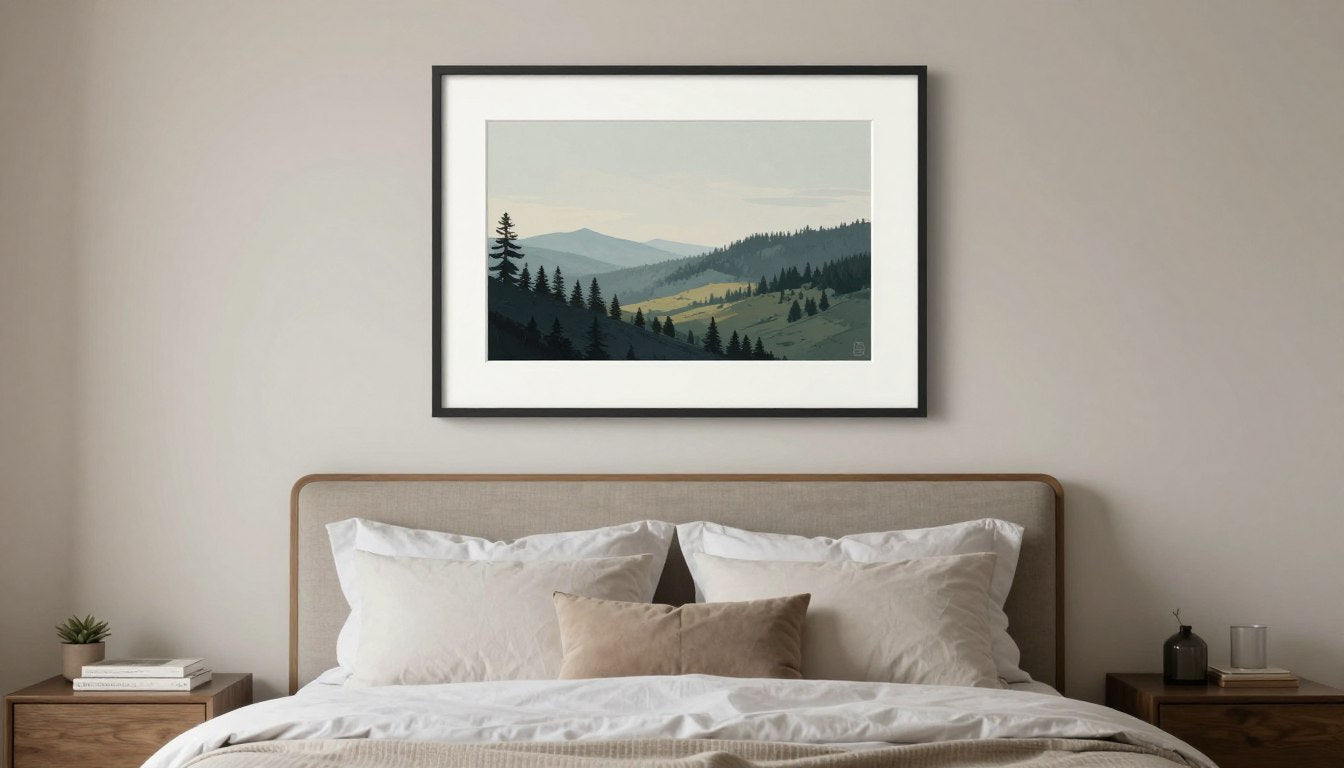
- Adding a single calming artwork—abstract landscapes or soft line art work particularly well
Entryway (function + one statement piece)
Scandinavian entryways balance practicality with a welcoming atmosphere:
- Include practical storage for shoes and outerwear
- Add a simple bench or stool for putting on shoes
- Incorporate one statement element—a distinctive pendant light, mirror, or artwork
- Keep surfaces clear except for essential items
- Consider a small plant or dried arrangement for a touch of nature
Home office (clarity + clean lines)
A Scandinavian home office promotes focus and creativity:
- Choose a desk with clean lines and natural materials
- Keep technology cords hidden or minimized
- Incorporate thoughtful task lighting
- Add a single inspiring artwork that promotes calm focus
- Maintain clear surfaces with minimal accessories
- Include natural elements like a small plant or wooden organizers
For a deeper exploration of creating serene, purposeful spaces, visit our guide on The Art of Contemporary Minimalist Interior Design.
Common Scandinavian Design Mistakes (And Easy Fixes)

Mistake: Too Cold and Gray
The problem: Interpreting "neutral" as exclusively cool grays, creating a space that feels sterile and unwelcoming.
The fix: Incorporate warm neutrals like cream, beige, and taupe alongside grays. Add natural wood elements and textiles with visible texture.
Mistake: Too Many Small Decor Objects
The problem: Cluttering surfaces with numerous small decorative items, undermining the clean, calm aesthetic.
The fix: Select fewer, more impactful pieces. One sculptural vase makes more of a statement than five small trinkets.
Mistake: Flat, One-Dimensional Spaces
The problem: Creating spaces that lack depth and interest due to insufficient texture and layering.
The fix: Layer different textures even within the same color family. Add dimension with textured artwork like our Original Textured Line Art Painting.
Mistake: Ignoring Proportions
The problem: Choosing artwork or furniture that's too small for the space, creating a disconnected feeling.
The fix: Select appropriately scaled pieces—one large canvas like our Original Neutral Textured Painting makes more impact than several small pieces.
The Scandinavian Style Matrix
Use this comprehensive matrix as a reference when planning your Scandinavian-inspired spaces. It outlines key elements, traditional and modern approaches, and practical do's and don'ts.
| Element | Classic Scandi Choice | Modern Scandi Update | Do | Don't |
| Color | White, light gray, black accents | Warm whites, clay tones, dusty pastels | Use tonal variations within neutrals | Create high-contrast or busy color schemes |
| Material | Pale oak, pine, birch | Mixed woods, textured plaster, warm metals | Showcase natural grain and texture | Use dark or heavily stained woods |
| Lighting | Paper pendants, simple task lamps | Sculptural fixtures, mixed materials | Layer multiple light sources | Rely on single overhead lighting |
| Art | Black and white photography, simple prints | Textured abstracts, organic forms | Choose one focal artwork per wall | Create busy gallery walls with many small pieces |
| Textiles | Wool, linen, sheepskin | Bouclé, recycled materials, subtle patterns | Mix 2-3 different textures | Use shiny, synthetic fabrics |
| Furniture | Clean-lined wooden pieces | Curved forms, mixed materials | Prioritize function and comfort | Choose ornate or overstuffed pieces |
Scandi Room Checklist (12 Steps)
Transform any room with this actionable 12-step checklist for authentic Scandinavian style:
Ready to transform your space?
Explore our curated collection of Scandinavian-inspired wall art to add the perfect finishing touch to your interior.
Shop Scandinavian ArtRecommended Next Reads
Warm Minimalist Interior Design
Discover how to create spaces that feel both minimal and inviting through thoughtful material selection and layering techniques.
Minimalist Abstract Paintings
Learn how less creates more impact in art selection and how to choose pieces that enhance rather than overwhelm your space.
Curves & Organic Shapes
Explore the Japandi crossover trend and how organic forms are softening the clean lines of traditional Scandinavian design.
Frequently Asked Questions
What are the key characteristics of Scandinavian interior design?
Scandinavian interior design is characterized by simplicity, functionality, natural materials, neutral colors, abundant natural light, quality craftsmanship, and textural elements like sheepskin rugs and mohair throws. It balances minimalism with comfort, creating spaces that feel both clean and cozy.
What colors are used in Scandinavian decor?
Scandinavian color palettes typically feature whites, off-whites, and light neutrals (beige, taupe, soft gray) as the foundation. These are often complemented by natural wood tones and punctuated with restrained accents in black, navy, forest green, or muted versions of dusty pink, terracotta, or sage. The overall effect should be calm and cohesive rather than high-contrast.
How do you make Scandinavian style feel cozy (not cold)?
The key to cozy Scandinavian interiors lies in texture, layering, and warmth. Incorporate natural textiles like wool throws, sheepskin rugs, and linen cushions. Choose warm-toned neutrals rather than cool grays. Add natural wood elements, layer different light sources (including candles), and include personal touches like books or meaningful objects. For more tips, see our guide on Warm Minimalist Interior Design.
What wall art works best for Scandinavian interiors?
The most effective art for Scandinavian spaces follows the "presence without noise" principle—pieces that make an impact through simplicity rather than bold colors or busy compositions. Minimalist abstracts, line art, black and white photography, and textural pieces with subtle relief work particularly well. Choose fewer, larger pieces rather than many small ones. Explore our guide on Minimalist Abstract Paintings for deeper insights.
What's the difference between Scandinavian and Japandi design?
Japandi is a hybrid style that combines Scandinavian and Japanese design principles. While both value simplicity, functionality, and natural materials, there are subtle differences. Scandinavian design tends to be lighter and brighter with more textiles, while Japanese design often incorporates darker woods and more negative space. Japandi blends these approaches, often featuring more organic shapes, wabi-sabi imperfection, and a slightly richer color palette than pure Scandinavian design. Learn more in our article on Curves & Organic Shapes.
Can Scandinavian design work in small apartments?
Scandinavian design is ideal for small spaces because it prioritizes functionality, light colors that make spaces feel larger, and thoughtful furniture placement. The emphasis on reducing clutter and choosing multi-purpose pieces helps maximize limited square footage. Focus on quality over quantity, keep surfaces clear, and use vertical storage to maintain the clean aesthetic while accommodating necessary items.
What furniture materials are most "Scandi"?
Light-colored woods like pine, ash, beech, and oak are quintessentially Scandinavian. Look for pieces that showcase natural grain patterns with minimal or no staining. Other authentic materials include bent plywood, natural leather (especially tan or cognac), and woven elements like cane or rattan. Furniture should have clean lines, visible legs (often tapered), and proportions that feel light rather than heavy or bulky.
Scandinavian interior design offers a timeless approach to creating spaces that feel both serene and inviting. By embracing its core principles of light, functionality, natural materials, and thoughtful restraint, you can transform any room into a haven of calm that still feels warm and lived-in. Remember that authentic Scandinavian spaces aren't about perfection—they're about creating environments that support everyday life with beauty, comfort, and purpose.
Resource addition pitch: "We published a Scandinavian Interior Design guide with a screenshot-ready Scandi Style Matrix (colors, materials, lighting, art rules). If you maintain a Scandinavian decor resource page, feel free to cite it as a quick reference."
Visual asset credit pitch: "Happy to share our Style Matrix + Checklist as an embeddable asset for your Scandi/Japandi article—simple attribution is perfect."

About the Author
Chiara Rossetti
Chiara Rossetti is the founder of Rossetti Art, a canvas print and original art brand. She writes about interior design, wall art styling, and the art of making a home feel alive.

Leave a comment
This site is protected by hCaptcha and the hCaptcha Privacy Policy and Terms of Service apply.