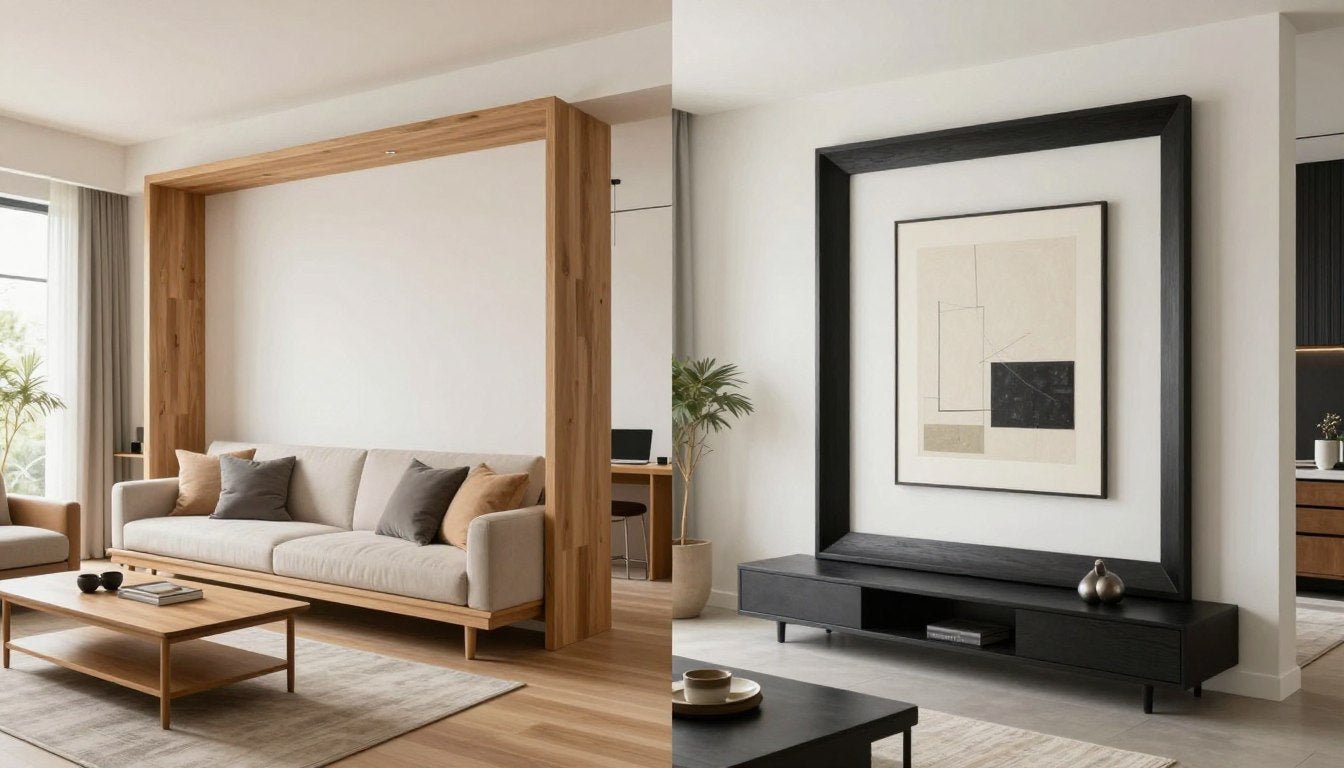

Choosing between oak and black floater frames can transform how your canvas art integrates into contemporary spaces. The frame finish impacts not just the artwork itself but the entire room atmosphere.
Floater frames create a distinctive illusion where canvas art appears to float within the frame. This depth effect has made floating frames the preferred choice for modern interiors.
Your decision between oak and black finishes affects color harmony, visual weight, and architectural cohesion. Contemporary design demands intentional choices that balance aesthetics with functionality.
This comprehensive guide examines both frame finishes through the lens of contemporary interior design. You'll discover which option elevates your specific space and artwork style while exploring practical considerations like dimensions, depth, and room placement. For those seeking museum-quality canvas prints that arrive ready to display, understanding frame selection becomes essential to achieving gallery-worthy results.
Contemporary Prints That Showcase Frame Finishes Beautifully
Before diving into technical comparisons, see how different art styles interact with oak and black floating frames. These curated pieces demonstrate the versatility of both finishes in contemporary settings.

Bold Abstract Geometry
Black floater frames amplify the sharp edges and vivid contrasts found in abstract geometric artwork. The dark finish provides visual containment for complex compositions.
This framing approach works exceptionally well in abstract canvas prints where color saturation demands a neutral boundary.

Organic Botanical Compositions
Oak floating frames echo the natural elements within botanical artwork. The wood grain adds textural depth that complements organic subject matter beautifully.
Nature-inspired pieces gain warmth and authenticity when paired with wood finishes. Browse our botanical wall art prints to see this harmony in action.

Minimalist Line Art
Line art canvas prints offer unique flexibility with frame selection. Both oak and black finishes enhance the simplicity and elegance of continuous line drawings.
The monochromatic nature of line art means frame choice depends more on surrounding decor than artwork content. Discover versatile line art canvas prints that adapt to either finish.
Understanding Floater Frame Construction and Design

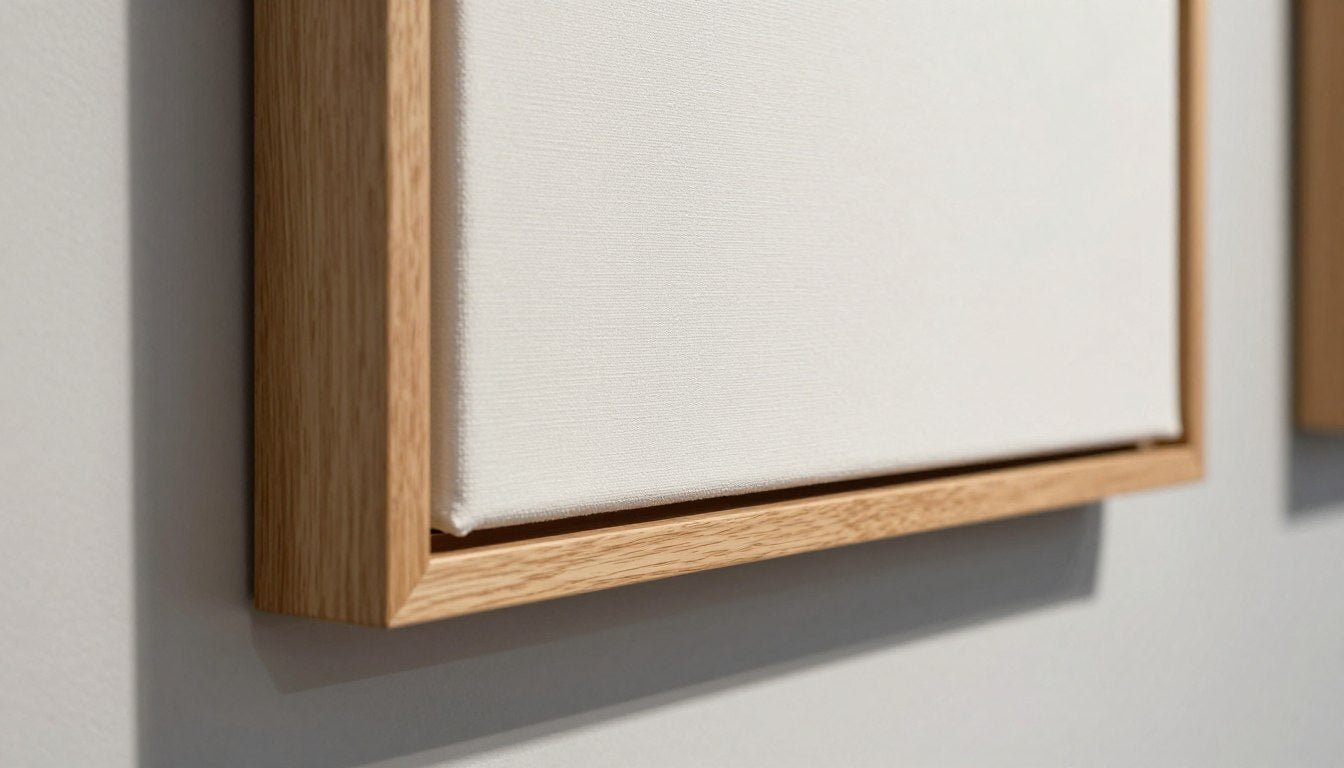
Floater frames differ fundamentally from traditional framing methods. The canvas sits inside the frame with a deliberate gap around all edges, creating the signature floating effect.
This construction requires precise depth measurements. The frame must accommodate the canvas stretcher bars while maintaining the visual gap that defines the style.
Essential Components of Canvas Floater Frame Systems
Every floating frame canvas assembly includes specific structural elements. The frame width determines visual impact, while depth accommodates the canvas thickness.
- Frame width ranging from 3/4 inch to 2 inches affects visual presence
- Depth dimensions typically between 1.5 to 2.5 inches to house standard canvas
- Gap space of 1/8 to 1/4 inch creates the floating illusion
- Mounting hardware integrated into frame back for secure installation
- Finish quality protecting wood from environmental factors
How Floating Frames Enhance Canvas Art Presentation

The float effect adds three-dimensional quality to two-dimensional artwork. Shadows cast by the gap create depth perception that draws viewer attention.
This presentation style particularly suits contemporary interiors where clean lines and architectural precision matter. The frame becomes an extension of the artwork rather than a separate decorative element.
Canvas art gains professional gallery presence when properly floated. The technique elevates even casual spaces into curated environments. For those building a cohesive aesthetic, living room canvas art selections often benefit from consistent frame finish choices throughout the space.
Black Floater Frames: Modern Sophistication and Visual Impact

Black floater frames deliver maximum contrast and definition. The dark finish creates clear boundaries that make artwork pop against light walls.
This frame color choice dominates contemporary gallery spaces and modern homes. Black frames offer visual weight without overwhelming the canvas itself.
Aesthetic Advantages of Black Floating Frame Finishes
Black frames provide universal compatibility across color palettes. The neutral darkness complements both vibrant and muted artwork equally well.
- Creates strong definition against white or light-colored walls
- Enhances color saturation in vibrant artwork through contrast
- Adds sophisticated edge to monochromatic pieces
- Matches contemporary architectural elements like black window frames
- Maintains visual consistency across diverse art collections
- Provides timeless aesthetic that transcends temporary trends
Best Canvas Art Styles for Black Floater Frame Pairing

Certain artwork categories achieve exceptional results with black frame canvas presentation. Abstract compositions with bold colors gain structure and focus.
Black and white photography or line drawings receive amplified contrast. The dark frame intensifies the interplay between light and dark elements within the piece.
High-Contrast Artwork
Pieces with dramatic tonal shifts benefit from black frame reinforcement. The dark boundary emphasizes the artwork's internal contrasts.
Explore black and white canvas prints designed specifically for high-contrast display scenarios.

Design Contexts Where Black Frames Excel
Black floating frames integrate seamlessly into industrial-contemporary spaces. The dark finish echoes exposed metal elements and urban aesthetics.
Minimalist interiors gain focal points through black-framed artwork. The frame provides visual anchoring without adding decorative complexity.
- Industrial lofts with exposed brick and metal fixtures
- Scandinavian-modern spaces emphasizing black accents
- Monochromatic color schemes requiring definition
- Contemporary offices demanding professional presentation
- Gallery walls mixing multiple art pieces cohesively
When creating professional environments, office canvas art selections often benefit from the authority that black frames convey.
Oak Floater Frames: Warmth, Texture, and Organic Appeal

Oak floating frames introduce natural warmth that softens contemporary spaces. The visible wood grain adds organic texture that black frames cannot replicate.
This frame finish connects interior spaces with natural elements. Oak creates visual warmth particularly valued in residential settings where comfort matters as much as style.
Distinctive Qualities of Wood Floater Frame Finishes
Oak frames carry inherent material beauty beyond simple color. Each piece displays unique grain patterns that add individuality to the presentation.
- Natural wood grain provides organic visual interest
- Warm honey tones complement earth-toned color palettes
- Softens the hard edges typical of contemporary design
- Coordinates with wood furniture and flooring naturally
- Ages gracefully with subtle patina development over time
- Brings biophilic design elements into modern spaces
Optimal Artwork Categories for Oak Frame Pairing

Nature-themed artwork achieves authentic presentation in oak floating frames. Botanical prints, landscapes, and wildlife art gain contextual harmony through wood finishes.
Portrait canvas prints also pair beautifully with oak frames. The warm wood tones complement skin tones and create inviting, personal displays.

Portrait and Figurative Art
Human subjects benefit from oak's warmth. The wood finish creates psychological comfort that enhances personal connection with portraits.
Discover how portrait canvas prints gain intimacy through thoughtful frame selection.
Interior Styles That Embrace Oak Frame Aesthetics
Oak frames naturally complement Japandi and Scandinavian-warm design trends. These styles balance minimalism with organic warmth through strategic wood integration.
Transitional interiors bridging traditional and contemporary elements find oak frames particularly versatile. The natural material respects classical sensibilities while maintaining modern clean lines.
- Japandi fusion spaces emphasizing natural materials
- Warm Scandinavian interiors with wood accents
- Mid-century modern rooms featuring teak and walnut
- Coastal contemporary designs incorporating driftwood tones
- Transitional spaces blending traditional and modern elements
For spaces where comfort meets style, bedroom canvas prints in oak frames create restful yet sophisticated atmospheres.
Match Your Frame Choice to Your Interior Vibe
Discover Your Perfect Frame-Art Combination
Different interior aesthetics call for specific frame-artwork pairings. Explore curated collections that align with your contemporary design vision.

Bold Modern Statements
Abstract and geometric art demands the definition that black frames provide. These pieces anchor contemporary spaces with confident visual presence.

Natural Organic Warmth
Botanical and nature-inspired artwork achieves authentic expression in oak frames. These pieces bring the outdoors in with material cohesion.

Timeless Monochrome
Black and white artwork offers flexibility with either frame finish. Your choice depends on whether you want drama (black) or softness (oak).
How Wall Color Influences Frame Selection

Wall color dramatically affects how oak versus black frames perform. The background color either amplifies or diminishes frame finish impact on overall composition.
Light walls create maximum contrast with black frames while allowing oak frames to provide subtle definition. Dark walls reverse these relationships entirely.
Frame Selection for Light Wall Backgrounds
White, cream, and light gray walls dominate contemporary interiors. These backgrounds offer maximum flexibility for both frame finishes with different visual outcomes.
Black Frames on Light Walls

- Maximum contrast creates bold architectural statements
- Artwork boundaries remain clearly defined
- Visual impact increases through sharp definition
- Works especially well in minimalist spaces
Oak Frames on Light Walls

- Gentle contrast maintains cohesive flow
- Wood warmth prevents stark coldness
- Creates approachable, comfortable atmosphere
- Ideal for residential living spaces
Frame Strategies for Warm and Neutral Wall Tones
Beige, taupe, and warm gray walls present different considerations. These mid-tone backgrounds interact with frame finishes in ways that require strategic matching.
Oak frames risk visual disappearance against similar-toned walls unless artwork provides sufficient contrast. Black frames maintain definition but may appear harsh if not balanced properly.

- Choose darker oak stains for better definition against beige walls
- Black frames work when artwork contains warm tones that bridge to wall color
- Consider frame width adjustments to increase visibility
- Test frame samples against actual wall colors before committing
Accent Wall Considerations for Frame Selection
Contemporary interiors frequently feature accent walls in bold or dark colors. These design choices significantly impact frame finish effectiveness.
Dark accent walls reverse typical frame selection logic. Oak frames may provide better visibility and warmth against charcoal or navy backgrounds where black frames visually recede.
When planning entryway wall art on accent walls, consider how frame finish interacts with paint color to create the desired first impression.
Critical Dimensions: Width, Depth, and Canvas Compatibility

Proper frame dimensions ensure both aesthetic success and structural integrity. Width and depth measurements must align with canvas specifications and visual goals.
Standard canvas depth typically measures 3/4 inch or 1.5 inches. Your floater frame depth must exceed canvas thickness to create the floating illusion.
Frame Width Selection for Visual Impact
Frame width determines visual presence and proportional balance. Narrow frames provide subtle definition while wider frames make bold statements.
- Minimal visual interruption of artwork
- Best for small to medium canvas sizes
- Creates delicate, refined appearance
- Suitable for gallery wall arrangements
- Works well with detailed artwork
Narrow Frames (3/4 to 1 inch)
- Balanced presence for most applications
- Versatile across various canvas sizes
- Provides substantial definition without dominance
- Most popular choice for home installations
- Offers good proportion with furniture scale
Medium Frames (1.5 to 2 inches)
- Creates architectural impact
- Best for large statement pieces
- Demands attention in room design
- Requires adequate wall space
- Makes artwork centerpiece of room
Wide Frames (2+ inches)
Understanding Frame Depth Requirements
Frame depth accommodates canvas stretcher bars plus hardware. Standard depths range from 1.5 to 2.5 inches for typical canvas installations.

- Minimum 1/4 inch clearance between canvas back and frame back required
- Deeper frames accommodate gallery-wrapped canvas more comfortably
- Extra depth allows easier hardware installation
- Consider depth when artwork will display sculptures or dimensional pieces nearby
Matching Frame Dimensions to Canvas Size
Proportional relationships between frame and canvas affect aesthetic harmony. Large canvases typically require wider frames to maintain visual balance.
Small artwork paradoxically benefits from slightly wider frames than proportions suggest. The extra width prevents the piece from appearing insignificant on large walls.
| Canvas Size | Recommended Frame Width | Minimum Frame Depth | Best Application |
| 8" x 10" to 16" x 20" | 3/4" to 1" | 1.5" | Gallery walls, small spaces |
| 18" x 24" to 24" x 36" | 1" to 1.5" | 1.75" | Standard wall displays |
| 30" x 40" to 36" x 48" | 1.5" to 2" | 2" | Statement pieces |
| 40" x 60" and larger | 2" to 3" | 2.5" | Focal wall installations |
When selecting from canvas print sets, maintain consistent frame dimensions across all pieces to create visual cohesion in multi-panel displays.
Room-by-Room Frame Selection Strategy

Different rooms serve distinct functions that influence frame finish selection. Public spaces often benefit from different choices than private retreats.
Lighting conditions, existing materials, and room purpose all factor into optimal frame decisions. Strategic selection enhances both artwork and overall space design.
Living Room and Common Areas
Living rooms function as primary gathering spaces where first impressions matter. Frame selection here sets the tone for your entire home aesthetic.

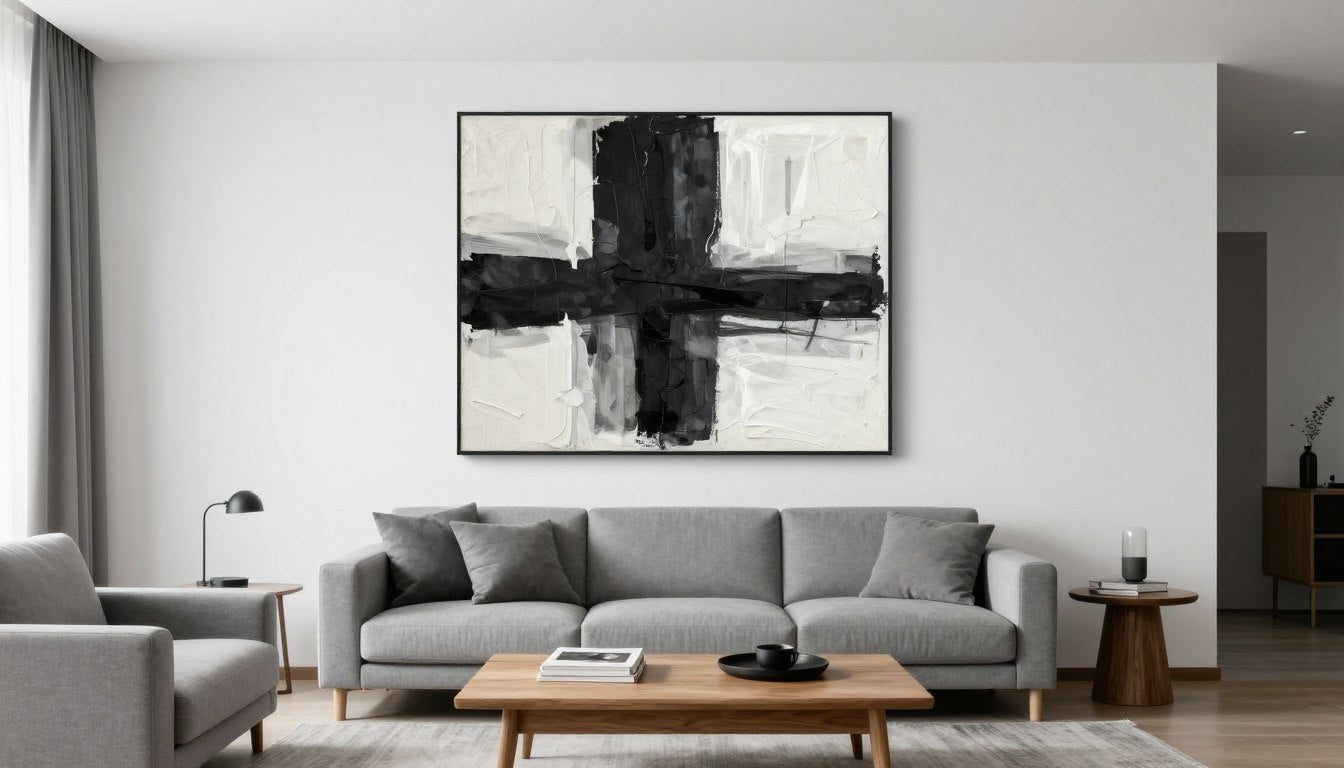
Black frames deliver sophisticated impact in living rooms with modern furniture and clean architectural lines. The dark finish coordinates with entertainment centers, metal fixtures, and contemporary lighting.
Oak frames soften living spaces where comfort matters as much as style. Wood finishes connect with furniture pieces and create warmth that makes rooms more inviting for extended gatherings.
- Match frame finish to dominant material in room (wood furniture suggests oak, metal accents suggest black)
- Consider television and entertainment center finish when selecting frames
- Coordinate multiple pieces with consistent frame choice for gallery walls
- Account for natural light levels affecting how finishes appear throughout day
Explore curated living room canvas art selections designed specifically for contemporary common spaces.
Bedroom Frame Considerations
Bedrooms demand frames that support restful, personal atmospheres. The right finish contributes to the sanctuary quality essential in private spaces.

Oak floating frames naturally suit bedroom environments. The wood warmth enhances the comfort factor critical in spaces designed for rest and relaxation.
Black frames work in bedrooms with strong contemporary design commitments. These spaces typically feature minimal decoration where artwork serves as primary visual interest.
For personalized bedroom environments, bedroom canvas prints in appropriate frames create cohesive, restful retreats.
Home Office and Work Spaces
Office environments benefit from frame choices that reinforce professionalism without sacrificing personality. The right frame finish supports productivity while maintaining visual interest.
Professional Presence
Black floater frames typically serve office spaces better. The crisp definition projects competence and focus appropriate for work environments.
Clean lines and neutral darkness help maintain professional atmosphere during video calls and client meetings.

Creative professionals may prefer oak frames that soften office spaces while maintaining sophistication. The natural material adds personality without appearing casual or unprofessional.
Discover office canvas art options that enhance work environments with appropriate frame pairings.
Dining Room Artwork Display
Dining rooms occupy unique positions between formal and casual. Frame selection should complement both the furniture style and the dining experience you want to create.

Wood dining tables and chairs naturally pair with oak frames. This material coordination creates visual flow that makes spaces feel intentionally designed rather than arbitrarily decorated.
Modern dining rooms with glass, metal, or lacquered tables often benefit from black frame consistency. The dark finish maintains the contemporary aesthetic without competing with furniture lines.
Browse dining room wall art that elevates mealtime spaces with appropriate frame integration.
Frame Material Quality and Finish Durability

Not all floater frames offer equal quality regardless of finish color. Material selection and finishing processes dramatically affect longevity and appearance.
Premium frames use solid wood construction with quality finishes that protect against environmental factors. Budget options may use veneers or inferior coatings that deteriorate quickly.
Oak Frame Material Variations
Oak frames range from solid wood to oak veneer over composite materials. Solid construction ensures durability and authentic wood character that improves with age.
- Solid oak provides superior strength and authentic grain patterns
- Oak veneer over MDF offers cost savings with reduced character
- Finish quality protects wood from moisture and UV damage
- Grain direction affects visual flow and frame corner appearance
- Stain consistency determines whether oak reads as cohesive element

Black Frame Finish Options and Longevity
Black frames achieve their color through various finishing methods. Paint, stain, and powder coating each offer different aesthetic results and durability characteristics.
Painted black frames provide smooth, contemporary appearance with excellent coverage. Quality paint finishes resist chipping and maintain color consistency over years.
Black-stained wood frames preserve grain visibility for those wanting texture with dark color. This approach bridges oak's natural character with black's modern impact.
Painted Black Finish Advantages
- Uniform color without grain distractions
- Resists fading from sunlight exposure
- Easy to clean and maintain
- Provides truly neutral backdrop
- Matches across different wood sources
Potential Limitations
- Chips may reveal lighter wood underneath
- Can appear flat without texture interest
- Quality varies significantly by manufacturer
- Touch-ups more visible than on stained finishes
Hardware and Construction Quality Markers
Frame quality extends beyond finish to structural elements. Hardware, corner joints, and backing components affect both installation ease and long-term stability.

- Robust hanging hardware supports canvas weight securely
- Corner joints should be reinforced beyond simple glue
- Canvas securing systems must hold without damaging artwork
- Dust covers protect artwork backs in quality installations
- Adjustable mounting allows for leveling corrections
When investing in artwork, quality framing protects that investment. Premium canvas art deserves equally premium presentation that maintains value over time.
Making Your Final Oak vs Black Frame Decision

Your frame finish decision ultimately depends on balancing multiple factors specific to your space and preferences. No single answer works for every situation.
Successful frame selection considers artwork style, room design, existing materials, and personal aesthetic preferences simultaneously. The best choice satisfies all these criteria harmoniously.
Key Decision Factors Summary
Review these primary considerations to guide your oak versus black floater frame choice. Weight each factor according to your specific priorities.
Choose Black Frames When:
Your priorities emphasize modern aesthetics and strong definition.
- Walls are predominantly white or light colored
- Existing decor features black accents or metal finishes
- Artwork contains bold colors needing containment
- Space follows minimalist or industrial design
- Professional atmosphere takes priority
- Gallery-style consistency matters across pieces
Choose Oak Frames When:
Your priorities emphasize warmth and natural material integration.
- Wood furniture dominates the room
- Creating cozy, inviting atmosphere matters
- Artwork features natural or botanical subjects
- Space follows Japandi or warm Scandinavian style
- Softening contemporary edges is desired
- Connecting with organic design elements matters
Consider Your Artwork:
The canvas itself should significantly influence frame selection.
- Abstract bold colors often prefer black boundaries
- Nature themes harmonize with wood finishes
- Black and white artwork works with either finish
- Portraits benefit from oak's warmth typically
- Multiple pieces need consistent framing approach
Account for Practicality:
Functional considerations matter beyond pure aesthetics.
- Budget affects quality available in each finish
- Maintenance requirements differ between finishes
- Long-term flexibility if decor changes
- Matching existing framed pieces in home
- Availability in required dimensions
Testing Frame Options Before Committing
Many retailers offer frame samples or visualization tools. Taking advantage of these resources prevents costly mistakes and ensures satisfaction.

Request frame corners or small sample frames if available. Seeing actual finishes in your lighting conditions reveals differences that online images cannot capture.
Digital room visualizers help preview how different finishes appear in your specific space. These tools account for wall color and lighting that significantly affect frame perception.
Building Cohesive Multi-Frame Displays
Gallery walls and multi-piece installations require consistent framing strategies. Mixing oak and black frames rarely succeeds unless executed with careful intention.

Choose one primary frame finish for most pieces. If mixing finishes, establish clear logic such as frame color matching dominant colors within individual artworks.
Alternating patterns of oak and black rarely work visually. Commit to one finish for cohesion or use secondary finish very sparingly as intentional accent.
When building collections, explore our design blog for gallery wall inspiration and frame coordination strategies.
Professional Installation and Display Techniques

Even the perfect frame finish loses impact with improper installation. Professional display techniques ensure your framed canvas art achieves maximum visual effect.
Floater frames require careful mounting to maintain the floating illusion. Hardware must support canvas weight while remaining invisible from viewing angles.
Proper Hanging Height and Placement
Standard art hanging guidelines place artwork center at 57-60 inches from floor. This height aligns with average eye level for comfortable viewing.
- Measure from floor to artwork center, not top edge
- Adjust height slightly higher above furniture pieces
- Maintain consistent height across multiple pieces
- Account for ceiling height in final positioning
- Consider primary viewing position when determining placement

Securing Canvas Within Floater Frame
Canvas must sit securely within the frame while maintaining equal gap on all sides. Adjustment screws or clips typically allow precise positioning.
Check gap consistency from all viewing angles before finalizing installation. Uneven gaps destroy the floating illusion that defines this framing style.
Lighting Considerations for Framed Canvas Display
Proper lighting reveals frame finish beauty and protects artwork simultaneously. Position lights to eliminate glare while showcasing texture and color.

Track lighting or picture lights work well for highlighting framed canvas art. Position lights at 30-degree angles to minimize glare on canvas surface.
Natural light requires UV-filtering glass or positioning away from direct sun exposure. Both oak and black finishes can fade or deteriorate with excessive UV exposure.
- Avoid direct sunlight on artwork regardless of frame finish
- Use LED lighting to prevent heat damage to canvas
- Position lights to create depth shadows enhancing float effect
- Consider dimmer switches for adjustable ambiance
Frame Care and Long-Term Maintenance

Both oak and black floater frames require minimal maintenance but benefit from occasional attention. Proper care extends frame life and maintains appearance quality.
Different finishes demand slightly different care approaches. Understanding these distinctions prevents damage while keeping frames looking fresh.
Cleaning Oak Floater Frames
Oak frames need gentle cleaning that preserves wood finish and grain visibility. Harsh chemicals can damage protective coatings or discolor wood.
- Dust regularly with dry microfiber cloth
- Use slightly damp cloth for stubborn marks, dry immediately
- Avoid furniture polish that can build up or darken finish
- Address spills immediately to prevent staining
- Inspect finish annually for areas needing touch-up
Maintaining Black Frame Finishes
Black frames show dust more readily than oak but generally withstand cleaning better. Paint or powder-coated finishes tolerate more aggressive cleaning than raw wood.
Matte black finishes hide fingerprints better than glossy versions. However, gloss finishes typically allow easier cleaning when marks do appear.
- Dust frequently as particles show clearly on black
- Clean with damp cloth and mild soap if needed
- Dry thoroughly to prevent water spots on gloss finishes
- Touch up chips promptly to prevent moisture penetration
- Avoid abrasive cleaners that can dull finish
Protecting Frames from Environmental Factors

Temperature fluctuations and humidity affect wood frames more than metal alternatives. Maintain stable conditions to prevent warping or finish deterioration.
Both oak and black finishes benefit from protection against direct sunlight. UV exposure fades finishes over time and can damage canvas art as well.
- Maintain humidity levels between 40-60% for wood stability
- Avoid hanging frames near heating vents or radiators
- Keep frames away from areas with temperature extremes
- Use UV-filtering window treatments in sunny rooms
- Rotate artwork occasionally to prevent uneven fading
Budget Planning and Cost Comparison

Frame finish choice affects cost differently across quality levels. Understanding price factors helps budget appropriately for desired quality.
Oak frames typically command premium pricing due to material costs. Black frames range more widely from budget to luxury depending on wood quality and finish method.
Price Factors Across Frame Finishes
Solid oak construction costs more than composite materials with oak veneer. This price difference reflects durability and authentic wood character value.
Black frame pricing depends heavily on base material quality. Premium hardwood with quality paint finish costs similarly to solid oak frames.
| Quality Level | Oak Frame Price Range | Black Frame Price Range | Key Differences |
| Budget | $30-60 | $25-50 | Veneer over composite, basic finishes |
| Mid-Range | $60-120 | $50-100 | Better materials, improved finishing |
| Premium | $120-250+ | $100-220+ | Solid wood, superior craftsmanship |
| Custom/Luxury | $250-500+ | $220-450+ | Handcrafted, exotic woods, specialty finishes |
Value Assessment Beyond Initial Cost
Frame quality directly correlates with longevity and appearance retention. Investing in better frames protects artwork investment and reduces replacement frequency.

Premium frames maintain appearance for decades with minimal maintenance. Budget frames may show wear within years, requiring replacement that negates initial savings.
- Calculate cost per year of use rather than just purchase price
- Consider artwork value when determining appropriate frame investment
- Factor in potential replacement costs of lower-quality options
- Account for installation time and effort in total cost
- Evaluate whether frame finish affects home resale appeal
Finding Quality Within Budget Constraints
Quality floater frames exist across price points. Knowing where manufacturers save costs helps identify best value without compromising essential elements.
Solid wood with simple finish often provides better value than composite materials with decorative treatments. Prioritize structural quality over decorative embellishments.
Consider starting with premium frames for prominent pieces while using mid-range options for secondary artwork. This strategy allocates budget where visual impact matters most.
Ready-to-Hang Solutions for Immediate Display
Museum-Quality Canvas Art With Professional Framing
Skip the frame selection stress with canvas prints that arrive ready to hang. Each piece features carefully selected frame finishes matched to artwork style, premium materials throughout, and free worldwide shipping.

Why Choose Pre-Framed Canvas Prints
- Expert frame selection matching artwork style
- Professional assembly ensuring proper floating effect
- Quality materials throughout entire piece
- Secure packaging protecting during shipping
- Mounting hardware included for immediate installation
- Coordinated aesthetic across multiple pieces

Advantages of Professional Framing Services
Pre-framed canvas art eliminates guesswork while ensuring professional results. Frame selection considers artwork characteristics that casual buyers might overlook.

Professional framers understand which finish enhances specific art styles. Their expertise prevents mismatches that diminish both frame and artwork quality.
- Proper canvas tensioning preventing sagging over time
- Precise gap consistency creating authentic float effect
- Secure mounting preventing canvas shifting within frame
- Quality materials selected for longevity
- Expert finish matching to artwork color and style
Collections Curated for Frame Compatibility
Thoughtfully curated collections group artwork by frame compatibility. This organization simplifies selection when building cohesive room displays.
Contemporary abstract pieces typically feature black frames while botanical collections showcase oak finishes. These intentional pairings create immediate harmony when displayed together.

Urban Cityscape Collection
Metropolitan themes pair naturally with black frames. The contemporary finish mirrors architectural elements within artwork.

Wildlife and Animal Art
Animal portraits benefit from frame choices reflecting subject habitat. Forest creatures suit oak while exotic animals often prefer black.

Pop Culture and Retro
Vibrant pop art demands black frame containment. The dark boundary prevents visual chaos while letting colors sing.
For those interested in three-dimensional art, modern sculptures complement framed canvas collections while adding textural variety to contemporary spaces.
Interior Designer Perspectives on Frame Selection

Professional interior designers approach frame selection as integral to overall space design rather than afterthought. Their systematic methods ensure cohesive results.
Design professionals consider factors beyond individual preference. They evaluate how frame choices affect spatial perception, light reflection, and design cohesion across entire homes.
Creating Visual Flow Through Consistent Framing
Designers often select one primary frame finish for main living areas. This consistency creates visual flow as occupants move through spaces.
"Frame finish acts as architectural element binding separate rooms into cohesive whole. Consistent choices create sophisticated continuity that elevates entire home."
— Sarah Mitchell, Contemporary Interior Designer
Private spaces like bedrooms allow more personalization. Designers might shift frame finish in these areas while maintaining consistency within each room.
Balancing Trends with Timeless Appeal

Oak and black both offer longevity despite shifting trends. Designers appreciate finishes that remain relevant through evolving style preferences.
Avoiding trendy finishes like gold, rose gold, or distressed white ensures frame choices age gracefully. Classic oak and black maintain relevance across decades.
- Classic finishes allow artwork rotation without frame replacement
- Neutral choices prevent design fatigue over time
- Timeless frames protect resale value investment
- Simple finishes keep focus on artwork not frame
When to Break Frame Consistency Rules
Strategic rule-breaking creates intentional focal points. Designers occasionally use contrasting frame finish to draw attention to specific pieces.
A single oak-framed piece among black frames can highlight special artwork. This technique requires confidence and clear design intention to succeed.
For comprehensive design guidance, explore interior design insights and inspiration addressing broader decoration strategies beyond framing.
Alternative Frame Finishes and When to Consider Them

While oak and black dominate contemporary framing, alternative finishes suit specific situations. Understanding these options ensures comprehensive decision-making.
White frames offer crisp modernity in predominantly white interiors. Gold frames add luxury warmth distinct from natural oak character.
White Floater Frames for Bright Contemporary Spaces
White frames create seamless integration in bright, airy spaces. They provide subtle definition without introducing color or material weight.

- Ideal for beach houses and coastal contemporary styles
- Works well in small spaces avoiding visual heaviness
- Maintains crisp modern aesthetic without dark contrast
- Shows dust and marks more readily than darker finishes
- Suits specific artwork better than universal application
Gold and Metallic Finishes for Luxury Contexts
Gold floater frames introduce glamour and luxury association. These finishes work in specific high-end contemporary or transitional settings.
Metallic finishes generally appear more formal than oak or black. They suit artwork with gold accents or spaces incorporating other metallic elements.
When Gold Frames Enhance Contemporary Design
Gold works in contemporary contexts when artwork contains gold leaf or metallic elements. The frame echoes these internal details creating intentional coordination. Gold also succeeds in glamorous contemporary styles incorporating brass fixtures, gold-toned hardware, or metallic furniture accents.
Natural Wood Alternatives Beyond Oak
Walnut, maple, and other wood species offer variations on oak's natural warmth. These alternatives provide unique grain patterns and color tones.

Walnut frames deliver deeper, richer tones than oak. This darker wood maintains natural character while approaching black's visual weight.
Lighter woods like maple offer blonde alternatives to honey-toned oak. These finishes suit Scandinavian minimalism particularly well.
- Match wood species to existing furniture for material cohesion
- Consider regional availability affecting price and selection
- Evaluate grain characteristics against artwork style
- Account for color variation within same wood species
Sustainability and Environmental Impact of Frame Choices

Environmentally conscious consumers increasingly evaluate frame sustainability. Material sourcing and manufacturing processes differ significantly between options.
Solid oak frames from certified sustainable forests offer clear environmental advantages over composite materials with synthetic bonding agents.
Sustainable Sourcing for Oak Floater Frames
Look for FSC (Forest Stewardship Council) certification indicating responsible forestry. This certification ensures oak comes from properly managed forests with replanting programs.
- FSC-certified wood supports responsible forest management
- Domestic oak reduces transportation environmental impact
- Solid wood frames avoid formaldehyde found in some composites
- Natural wood biodegrades at end of life unlike plastic alternatives
- Reclaimed oak offers ultimate sustainability though limited availability
Environmental Aspects of Black Frame Production
Black frame environmental impact depends heavily on base material and finish type. Powder-coated finishes generally contain fewer volatile organic compounds than traditional paints.

Water-based paints offer lower environmental impact than solvent-based alternatives. Quality manufacturers increasingly adopt low-VOC formulations reducing air quality concerns.
- Seek low-VOC or zero-VOC paint certifications
- Powder coating eliminates solvents entirely
- Consider base wood sustainability not just finish
- Evaluate manufacturer environmental policies
- Account for frame longevity in environmental calculation
Long-Term Sustainability Through Quality Investment
The most sustainable frame choice ultimately involves buying quality that lasts decades. Avoiding frequent replacement reduces overall environmental impact regardless of material.
Premium frames made from solid, sustainably sourced wood with durable finishes represent responsible long-term environmental choices. Initial investment prevents waste from replacing inferior products.
Sustainability Tip: Calculate environmental impact over expected frame lifespan rather than just production impact. A premium frame lasting 30 years carries far less environmental cost than three budget frames replaced every decade.
Frequently Asked Questions About Oak vs Black Floater Frames
Can I mix oak and black floater frames in the same room?
Mixing frame finishes in one room rarely succeeds visually. The combination typically appears unintentional rather than purposefully designed.
If mixing finishes, establish clear logic such as black frames for abstract art and oak frames for botanical pieces. Even then, maintaining consistency within gallery wall groupings works better than alternating finishes randomly.
Consider using different finishes in separate rooms rather than mixing within single spaces for more cohesive results.
Which frame finish works better for small spaces?
Small spaces benefit from frame finishes matching wall color to minimize visual interruption. In most cases, this means black frames on dark walls or lighter oak on cream walls.
Black frames can make small spaces feel more defined and intentional. However, excessive dark elements in confined areas may feel heavy.
Oak frames generally create warmer, more expansive feelings in small rooms compared to stark black frames. For tight spaces, oak's natural warmth prevents claustrophobic atmosphere while maintaining contemporary style.
Do oak frames look outdated or traditional?
Oak floater frames read as contemporary when properly selected and displayed. The floating frame construction itself signals modern design regardless of finish color.
Traditional ornate oak frames differ entirely from clean-lined contemporary oak floater frames. The simple profile and floating presentation maintain modern aesthetic while adding natural warmth.
Current design trends actually favor natural materials including oak in contemporary contexts. Warm minimalism and Japandi styles specifically embrace oak finishes as essential contemporary elements.
What frame width should I choose for my canvas size?
Canvas size directly influences appropriate frame width. Small canvases (under 16x20 inches) work well with narrower 3/4 to 1-inch frames preventing frame dominance over artwork.
Medium canvases between 18x24 and 30x40 inches typically look best with 1 to 1.5-inch frame widths providing visible presence without overwhelming.
Large statement pieces above 36x48 inches often require 2-inch or wider frames to maintain proportional balance. Wider frames prevent large canvases from appearing to float without anchor.
Can floater frames accommodate different canvas depths?
Quality floater frames accommodate standard canvas depths between 3/4 inch and 1.5 inches. The frame depth must exceed canvas thickness to create the floating gap.
Standard floater frames typically feature 1.5 to 2-inch depths handling most commercial canvas prints. Deep gallery-wrapped canvases may require specialty frames with greater depth capacity.
Always verify frame depth specifications against your canvas thickness before purchasing. Insufficient depth eliminates the floating effect entirely, defeating the frame style purpose.
How do I clean and maintain floater frames long-term?
Oak frames require dry dusting with microfiber cloths avoiding furniture polishes that build up over time. For stubborn marks, slightly dampened cloths work if dried immediately.
Black frames tolerate more aggressive cleaning including damp cloths with mild soap. The painted or powder-coated finish resists moisture better than raw wood.
Both finishes benefit from keeping frames away from direct sunlight, heating sources, and high humidity. Stable environmental conditions prevent warping, fading, and finish deterioration regardless of color choice.
Inspect frames annually for finish damage, addressing chips or scratches promptly to prevent moisture penetration that could damage underlying wood.
Are oak frames more expensive than black frames?
Oak frames typically cost slightly more than comparable black frames due to material expenses. Solid oak commands premium pricing reflecting wood quality and natural character.
Price differences narrow or disappear at premium quality levels. High-end black frames using quality hardwood and superior finishes cost similarly to equivalent oak frames.
Budget black frames offer greater cost advantages over budget oak options. Painted composite materials cost less to produce than even basic oak veneer alternatives.
Consider price per year of use rather than just initial cost. Premium frames in either finish justify higher upfront investment through decades of reliable service.
Will my frame choice affect home resale value?
Frame choices rarely directly impact home resale value since artwork typically moves with homeowners. However, framing quality affects how staged homes photograph and show.
Quality framed artwork creates aspirational lifestyle images buyers connect with emotionally. Both oak and black frames in good condition enhance rather than detract from home presentation.
Avoid trendy frame finishes that might appear dated during selling. Classic oak and black maintain contemporary relevance ensuring frames don't age staged rooms negatively.
Well-chosen frames contribute to overall design cohesion buyers notice subconsciously even if not explicitly. Professional presentation throughout home creates positive impressions supporting asking price.
Final Recommendations and Next Steps

Your choice between oak and black floater frames ultimately depends on your specific artwork, interior style, and personal preferences. Both finishes offer legitimate contemporary appeal when properly matched to context.
Black frames deliver maximum versatility across diverse artwork styles and provide crisp modern definition. Oak frames add natural warmth and organic character softening contemporary edges.
Action Steps for Making Your Decision
- Evaluate your primary wall color determining which finish provides appropriate contrast
- Assess existing materials in room identifying whether wood or metal dominates
- Consider your artwork style determining whether it benefits from cool containment or warm harmony
- Request frame samples if possible to see actual finishes in your lighting conditions
- Plan for consistency across multiple pieces rather than mixing finishes arbitrarily
- Prioritize quality over price to ensure long-term satisfaction and durability
- Consider ready-to-hang options eliminating selection stress while ensuring professional results
Building Your Collection Strategically

Start with one frame finish for initial purchases. Committing to oak or black from the beginning ensures collection cohesion as you add pieces over time.
You can always introduce the alternative finish later in different rooms. Beginning with consistency prevents visual confusion while establishing clear design direction.
Explore diverse artwork styles within your chosen frame finish. Original paintings and canvas prints in various subjects maintain cohesion through consistent framing even as subject matter varies.
Ready to Transform Your Space?
Discover museum-quality canvas prints with expert frame selection that arrives ready to hang. Each piece features carefully matched oak or black floater frames based on artwork style, premium materials throughout, and free worldwide shipping to your door.

What You Get:
- Premium canvas prints with archival inks
- Professional floater frame matched to artwork
- Ready-to-hang mounting hardware included
- Protective packaging ensuring safe delivery
- Free worldwide shipping on all orders
- Quality guarantee on materials and craftsmanship
Conclusion: Creating Your Contemporary Sanctuary

Oak vs black floater frames represent more than simple color choice. Your decision affects room atmosphere, design cohesion, and how effectively artwork integrates into contemporary interiors.
Black frames deliver modern sophistication and universal compatibility. Oak frames provide natural warmth and organic character. Both choices succeed when properly matched to artwork style, room design, and existing materials.
The floating frame construction itself signals contemporary design sensibility. Whether you choose oak or black, the floating presentation elevates canvas art into gallery-worthy displays.
Trust your instincts after considering practical factors. The frame finish you're naturally drawn to likely aligns best with your personal aesthetic and lifestyle needs.
Your artwork deserves presentation that honors both the piece itself and your carefully designed space. Quality floater frames in the right finish transform walls into curated galleries reflecting your unique contemporary vision.

Leave a comment
This site is protected by hCaptcha and the hCaptcha Privacy Policy and Terms of Service apply.