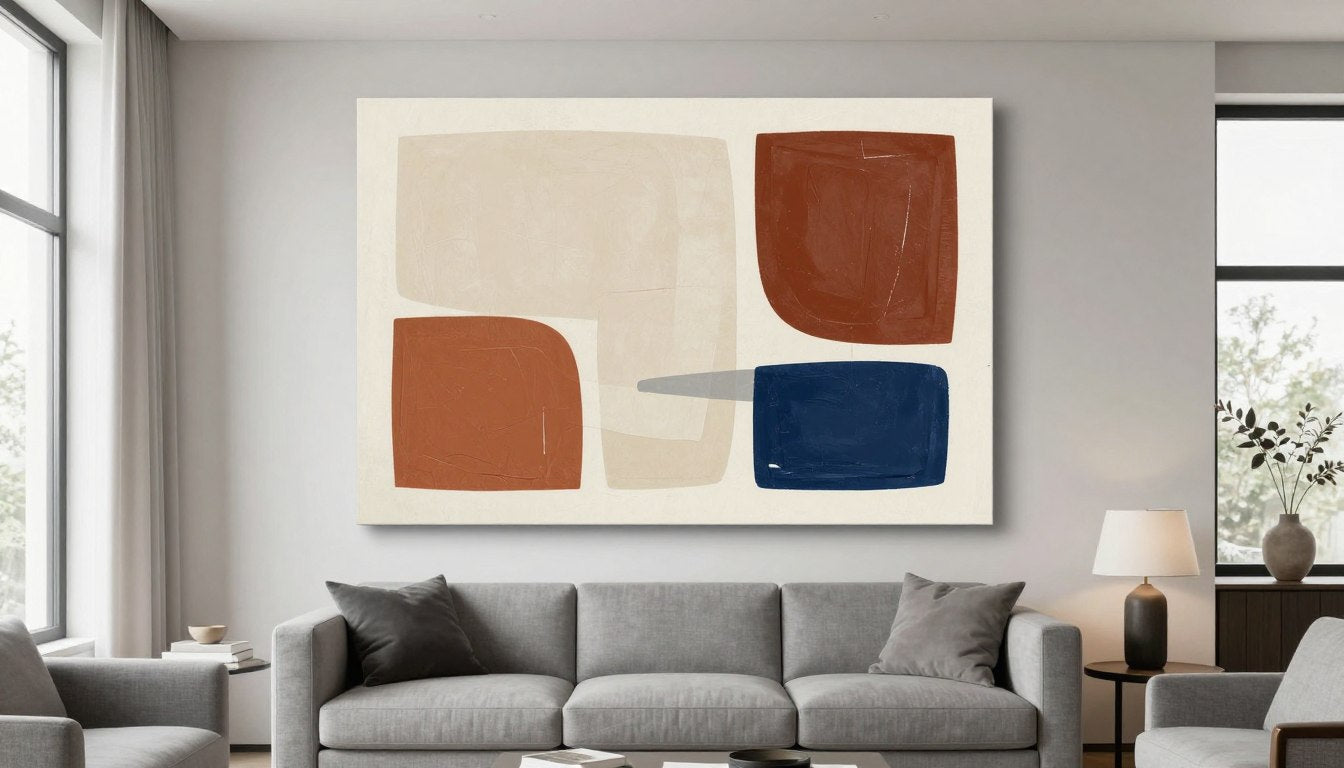
Your living room deserves wall art that speaks to your style and transforms the entire atmosphere of your home. The right piece of modern wall art can anchor your design, introduce sophisticated color, and create a focal point that guests remember long after they leave.
Finding that perfect balance between personal taste and timeless design doesn't have to feel overwhelming. Whether you're drawn to bold abstract shapes or minimal line art, understanding what makes modern wall decor work helps you make confident choices.
Understanding Modern Wall Art Styles for Living Spaces

Modern wall art encompasses a diverse range of styles that emerged from 20th-century design movements and continue evolving today. At its core, modern art celebrates simplicity, clean lines, and intentional use of color and form.
The beauty of contemporary wall art lies in its ability to complement various interior design approaches while maintaining its distinct character. From minimalist compositions to expressive abstract works, modern pieces bring fresh energy to living spaces.

Understanding the fundamental characteristics helps you identify pieces that resonate with your space. Modern design emphasizes function and form, avoiding excessive ornamentation in favor of purposeful elements.
Key Characteristics of Modern Wall Decor
Abstract Expression
Abstract art uses shapes, colors, and forms to create compositions independent of visual references in the real world. These pieces invite personal interpretation.
- Bold geometric patterns and shapes
- Fluid organic forms and lines
- Intentional color blocking techniques
- Texture through layered compositions
Minimalist Approach
Minimalism strips away unnecessary elements to reveal essential beauty. This style creates calm, sophisticated spaces through restraint and precision.
- Limited color palettes for impact
- Negative space as design element
- Simple lines and basic forms
- Focus on composition balance
Contemporary Fusion
Contemporary pieces blend traditional techniques with modern sensibilities, creating works that feel current while honoring artistic heritage.
- Mixed media and digital elements
- Cultural motifs with modern execution
- Innovative material combinations
- Traditional subjects in new contexts
Line Art Elegance
Line drawings capture subjects with minimal continuous strokes, offering sophisticated simplicity that works across various design schemes.
- Single-line continuous drawings
- Figurative and portrait studies
- Botanical and nature illustrations
- Architectural line compositions

The versatility of modern art allows it to adapt to different room aesthetics. A carefully selected piece can bridge traditional and contemporary elements in transitional spaces or amplify the clean aesthetic of ultra-modern homes.
Color plays a transformative role in how modern wall art impacts your living space. Monochromatic pieces in black and white create timeless sophistication, while vibrant works inject energy and personality into neutral rooms.

Scale and proportion matter significantly when selecting modern pieces. Larger artworks make bold statements and can visually expand smaller living rooms, while collections of smaller pieces offer flexibility and visual interest.
Our abstract canvas prints demonstrate how geometric forms and color relationships create compelling focal points that anchor modern living spaces with confidence.
Choosing the Right Size and Placement for Maximum Impact

Getting the size right makes the difference between wall art that enhances your room and pieces that feel out of place. The relationship between your artwork, furniture, and wall space determines visual harmony.
Professional designers follow time-tested guidelines that help create balanced, intentional spaces. These principles account for viewing distance, ceiling height, and the architectural features that shape how we experience art in our homes.
Standard Size Guidelines for Living Room Wall Art
| Wall/Furniture Size | Recommended Art Width | Ideal Height Range | Best Format |
| Above Standard Sofa | 48-72 inches | 24-36 inches | Horizontal single piece or triptych |
| Large Accent Wall | 60-84 inches | 40-60 inches | Oversized vertical or horizontal |
| Above Console Table | 30-48 inches | 20-32 inches | Vertical or square format |
| Gallery Wall Space | Varied 12-36 inches | Varied 16-40 inches | Mixed sizes and orientations |
| Narrow Wall Sections | 18-30 inches | 36-48 inches | Vertical portrait orientation |
| Corner Spaces | 24-36 inches | 24-36 inches | Square or small vertical |

The classic rule suggests hanging art so its center sits at eye level, typically 57 to 60 inches from the floor. This creates comfortable viewing angles whether you're standing or seated in your living space.
When placing wall decor above furniture, maintain six to eight inches of space between the furniture top and the bottom edge of your artwork. This breathing room prevents the piece from feeling cramped or disconnected from the room's design.

Room-Specific Placement Strategies
Living rooms present unique opportunities for creative art placement. Consider these proven approaches that designers rely on time and again.
Focal Wall Strategy
Identify your room's natural focal point, often the wall behind your main seating area. A statement piece here draws the eye and anchors your entire design scheme.

Choose artwork that spans roughly two-thirds to three-quarters of your sofa's width. This proportion creates visual weight appropriate to the furniture scale while leaving enough wall space to prevent crowding.
- Single large-scale piece for drama
- Horizontal diptych or triptych sets
- Grouping of three to five pieces
- Layered arrangement with varying depths


Multi-Piece Arrangements and Gallery Walls

Creating cohesive arrangements with multiple pieces requires planning but offers tremendous creative freedom. The key lies in establishing visual connections through color, style, or theme.
Start by laying out your collection on the floor to experiment with different configurations. Maintain consistent spacing of two to three inches between frames for a unified appearance.

Our canvas print sets take the guesswork out of multi-piece arrangements, offering coordinated collections designed to work together harmoniously.
Consider ceiling height when planning vertical arrangements. In rooms with high ceilings, extending art higher on the wall balances proportions and prevents the space from feeling bottom-heavy.
Color Coordination and Design Harmony in Modern Interiors

Color creates the emotional foundation of your living space. The right wall art introduces hues that either complement your existing palette or provide intentional contrast that energizes the room.
Understanding basic color theory helps you make selections that feel deliberate rather than random. Even if you're not a designer, simple guidelines can lead you to combinations that work beautifully together.
Color Approaches for Modern Living Rooms
- Creates sophisticated, calming atmosphere
- Works with varying shades of single color
- Easy to coordinate with existing decor
- Adds depth through tonal variation
- Timeless approach that never dates
- Perfect for minimalist aesthetics
Monochromatic Schemes
- Uses opposite colors on color wheel
- Creates dynamic visual tension
- Energizes space with bold contrast
- Requires careful balance to avoid overwhelm
- Best with one dominant, one accent color
- Makes strong design statements
Complementary Colors
- Combines adjacent colors on wheel
- Produces natural, cohesive feeling
- Offers variety without jarring contrast
- Common in nature-inspired designs
- Creates smooth color transitions
- Easy for beginners to execute well
Analogous Harmony

Neutral-based living rooms gain personality through art that introduces controlled pops of color. A vibrant abstract piece can transform an all-white space without requiring major furniture changes or renovations.
Consider the psychological impact of different colors when selecting wall decor. Cool blues and greens promote calm and relaxation, while warm reds and oranges create energy and conversation.

Working with Existing Interior Colors
Your current color palette guides your art selection process. Wall art should feel like an intentional extension of your design rather than an afterthought added to fill empty space.

Extract colors from your favorite furniture piece, rug, or decorative element. Repeating these hues in your wall art creates visual echoes that tie the room together cohesively.
Building on Neutral Foundations
Neutral color schemes provide the perfect canvas for artistic expression. These spaces welcome both subtle tonal variations and bold chromatic statements.
- Layer different neutral tones for depth
- Introduce metallic accents through art
- Use texture to add visual interest
- Consider black and white photography
- Add single bold color as accent

Enhancing Colorful Spaces
Rooms with established color schemes benefit from art that either harmonizes with or thoughtfully contrasts existing hues.
- Match one dominant color in art to room
- Use art to balance heavy color presence
- Create focal points with contrasting art
- Repeat accent colors across decor and art
- Consider seasonal color rotation options

Our black and white canvas prints offer timeless versatility that works across any color scheme while adding graphic impact to modern living spaces.

Don't fear color experimentation. Modern design celebrates personal expression, and the made-to-order nature of quality canvas prints means you can select exactly the hues that speak to your individual aesthetic.
📐 Not sure what size to choose? Use our free Wall Art Size Calculator → https://rossettiart.com/blogs/news/wall-art-size-calculator
Popular Modern Art Categories for Contemporary Living Rooms

Modern wall art encompasses diverse categories, each bringing distinct character to your living space. Understanding these styles helps you identify what resonates with your personal taste and design goals.
The beauty of contemporary art lies in its range. From bold abstract compositions to delicate line drawings, modern pieces accommodate every aesthetic preference and room personality.
Abstract and Geometric Art

Abstract art liberates color and form from representational constraints. These pieces create visual interest through shape relationships, color interactions, and compositional balance rather than depicting recognizable subjects.
Geometric abstracts bring mathematical precision to wall decor. Clean shapes and crisp lines align perfectly with modern design principles, offering sophistication without complexity.

These works function as visual anchors that ground furniture arrangements. A well-chosen abstract piece can define your living room's entire aesthetic direction while maintaining flexibility as your decor evolves.
- Fluid organic abstracts with flowing forms
- Hard-edge geometric compositions
- Color field paintings with large blocks of hue
- Mixed media abstract with varied textures
- Minimalist compositions with negative space
Explore our abstract geometric canvas prints to discover how shape and color create compelling focal points that elevate contemporary interiors.
Line Art and Minimalist Drawings

Line art distills subjects to their essential forms using continuous or broken lines. This category includes everything from figurative studies to botanical illustrations rendered with spare elegance.
The appeal lies in what's left out as much as what's included. Minimalist line drawings create breathing room in busy spaces while adding artistic sophistication.

These pieces work beautifully in groupings or as standalone statements. Their versatile nature allows them to complement both neutral and colorful interiors without competing for attention.
- Continuous single-line portraits and figures
- Botanical line drawings and plant studies
- Architectural sketches and cityscapes
- Abstract linear compositions
- Minimalist animal and nature forms
Our line art canvas prints demonstrate how simplicity creates powerful visual impact in modern living spaces that value restraint and elegance.
Botanical and Nature-Inspired Prints

Botanical art brings the organic world indoors through stylized plant forms. Modern interpretations move beyond traditional scientific illustrations to embrace bold colors and graphic compositions.
These pieces create connections to nature that many urban dwellers crave. The familiar forms of leaves, flowers, and branches ground abstract modern spaces with recognizable elements.

Color choices range from realistic greens to unexpected palettes that transform familiar botanicals into purely decorative elements. This flexibility allows botanical art to work across diverse design schemes.
- Oversized tropical leaf prints
- Delicate wildflower compositions
- Abstract botanical interpretations
- Vintage-style botanical illustrations
- Monochromatic plant silhouettes
- Seasonal floral arrangements

Cityscape and Urban Art

Urban landscapes celebrate the beauty of built environments through photography, illustration, and abstract interpretation. These pieces resonate particularly with city dwellers who find inspiration in architectural forms.
From iconic skylines to intimate street scenes, cityscape art ranges from realistic photography to stylized graphic treatments. The vertical lines of buildings complement the horizontal expanses of modern living rooms.

- Panoramic skyline photography
- Abstract urban architectural forms
- Street photography and city life scenes
- Vintage city map reproductions
- Graphic poster-style cityscapes
Discover our cityscape urban canvas prints for sophisticated takes on metropolitan beauty that bring cosmopolitan energy to your living room walls.
Black and White Photography

Monochromatic photography offers timeless elegance that transcends trends. The absence of color focuses attention on composition, light, form, and texture in ways that color images cannot match.
These pieces work universally across color schemes and design styles. Black and white art provides visual weight and sophistication while maintaining neutrality that won't clash with future decor changes.

- Landscape and nature photography
- Architectural detail studies
- Portrait and figure work
- Abstract form and texture photography
- Street photography and urban scenes
Quality Considerations When Selecting Wall Art

Not all wall art delivers equal value or longevity. Understanding quality markers helps you invest in pieces that maintain their beauty for years rather than fading or deteriorating quickly.
The difference between budget prints and gallery-quality reproductions becomes apparent over time. Superior materials and production methods protect your investment and ensure your art remains vibrant.
Material Quality and Construction

Canvas quality forms the foundation of lasting prints. Premium cotton or poly-cotton blends provide the ideal surface for accepting and holding archival inks while maintaining dimensional stability.
Hand-stretched canvas on solid wood frames offers advantages over cheaper alternatives. The tension and uniformity achieved through manual stretching prevents warping and sagging that can occur with machine-stretched or stapled canvas.

Frame options impact both aesthetics and protection. Pine wood frames offer cost-effective durability, while oak floater frames create sophisticated gallery presentations where the canvas appears suspended within the frame.
Ink Quality and Color Permanence

Archival inks represent the gold standard for print longevity. These pigment-based formulations resist fading from light exposure, maintaining color accuracy and vibrancy for decades when properly displayed.
UV-resistant coatings provide additional protection against the sun's damaging rays. This extra layer of defense proves particularly valuable in living rooms with abundant natural light from large windows.
Standard Inks
- Dye-based formulations
- Vibrant initial colors
- Lower cost production
- Prone to fading within 2-5 years
- Less water and UV resistant
- Adequate for temporary displays
Archival Inks
- Pigment-based formulations
- Exceptional color permanence
- Last 100+ years when protected
- Superior light and fade resistance
- Waterproof and smudge-proof
- Museum and gallery standard

Color accuracy matters when reproducing original artworks or photography. Professional printing processes using calibrated equipment ensure that reproductions faithfully represent the artist's intended colors and tones.
Made-to-Order Advantages

Made-to-order production allows customization impossible with mass-produced alternatives. You select exact sizes, frame styles, and specifications that match your specific requirements.
This approach also ensures freshness. Your print doesn't sit in a warehouse for months before shipping; instead, it's created specifically for your order using the latest inks and materials.
- Custom sizing for perfect furniture proportions
- Frame and finish selection to match decor
- Quality inspection for each individual order
- Reduced waste through on-demand production
- Latest printing technology and materials
- Direct from production to your home

Rossetti Art's commitment to gallery-quality materials means every piece receives the same careful attention regardless of size or price point. Hand-stretched canvas, archival inks, and quality frames come standard.
Styling Tips and Arrangement Ideas for Modern Spaces

Great wall art becomes even more impactful when thoughtfully integrated into your overall design scheme. Styling extends beyond simply hanging a piece to creating intentional relationships between art and surroundings.
Professional designers employ specific techniques that make spaces feel curated rather than decorated. These approaches work across budgets and can transform ordinary rooms into distinctive personal spaces.
Creating Visual Balance

Balance doesn't require symmetry but does demand thoughtful weight distribution. A large piece on one wall can balance a grouping of smaller items or substantial furniture on the opposite side.
Consider visual weight when arranging art with furniture. Dark or busy pieces carry more weight than light or minimal works, requiring different spacing and positioning strategies.
Symmetrical Arrangements
Formal symmetry creates calm, ordered spaces through mirrored elements. This approach works beautifully in traditional and transitional interiors.
- Identical pieces flanking focal points
- Centered single piece above furniture
- Evenly spaced gallery grid layouts
- Matched pairs across the room

Asymmetrical Balance
Asymmetry feels more relaxed and contemporary while maintaining equilibrium through varied elements of similar visual weight.
- Large piece balanced by furniture grouping
- Offset gallery walls with varied spacing
- Mix of sizes creating dynamic arrangement
- Diagonal lines creating movement

Layering and Depth Creation

Adding depth through layering prevents flat, one-dimensional spaces. This technique works especially well on console tables, mantels, and shelving units.
Lean smaller framed pieces against the wall in front of larger hung art. This casual layering introduces personality and creates opportunities to rotate seasonal pieces without new wall holes.
- Overlap frames of different sizes
- Layer art with sculptural objects
- Use floating shelves for flexible displays
- Combine framed and unframed pieces
- Add depth with varied frame profiles

Color Story Development

Developing a color story throughout your living room creates sophistication and intentionality. Your wall art can either establish this palette or reinforce existing color decisions.
Pull accent colors from your art into textiles, accessories, and smaller decor elements. Repeating colors in different textures and materials creates cohesion without monotony.
Dominant Color
Select one primary hue that appears most prominently in your space, typically 60% of your color usage.

Secondary Color
Choose a supporting color that complements the dominant hue, occupying roughly 30% of the space.

Accent Color
Add visual interest with small doses of a bold accent color appearing in art and accessories, about 10% of usage.

Seasonal and Rotating Displays

Rotating your wall art with seasons keeps your living space feeling fresh without major investments. This approach works particularly well if you have storage space for off-season pieces.
Consider creating small seasonal collections that share frames but feature different prints. Gallery-quality canvas prints on hand-stretched frames maintain their beauty through multiple installations when handled with care.
- Light, bright pieces for spring and summer
- Rich, warm tones for fall and winter
- Botanical themes rotating seasonally
- Holiday-adjacent pieces in neutral frames
- Rotating smaller pieces while keeping anchor art

Lighting Considerations

Proper lighting brings your wall art to life while protecting it from damage. Consider both natural and artificial light sources when planning placement and protection.
Direct sunlight can fade even archival inks over time. Position valuable pieces on walls that receive indirect light, or use UV-filtering window treatments to protect art in sun-exposed rooms.
Natural Light Management
- Avoid direct afternoon sun exposure
- Use sheer curtains to filter harsh light
- Position art perpendicular to windows
- Rotate pieces in high-light areas regularly
- Consider UV-filtering glass for valuable works

Artificial Lighting Enhancement
- Install picture lights for gallery effect
- Use track lighting for flexible highlighting
- Position floor or table lamps to uplight art
- Choose LED bulbs to minimize heat and UV
- Create dramatic evening ambiance with dimmers

Frequently Asked Questions
The ideal wall art size for above a sofa should span approximately two-thirds to three-quarters of the sofa's width. For a standard 84-inch sofa, this means selecting art between 56 and 63 inches wide.
Maintain six to eight inches of space between the sofa top and the bottom edge of your artwork. This proportion creates visual balance without overwhelming the furniture or appearing too small for the wall space.
Consider your ceiling height as well. Rooms with higher ceilings can accommodate taller vertical pieces or stacked arrangements that draw the eye upward and balance room proportions.
Start by identifying colors already present in your space through furniture, rugs, and accessories. Select wall art that either complements these hues or provides intentional contrast as an accent.
Consider your overall design style. Modern minimalist spaces benefit from abstract geometric pieces or simple line art, while eclectic contemporary rooms can embrace bolder, more expressive works with varied textures and colors.
Don't feel constrained to match exactly. Modern design celebrates personal expression, and art that introduces new colors can refresh your space without requiring furniture changes. Focus on pieces that resonate emotionally while working within your existing palette.
Canvas prints feature images printed directly on canvas material that's stretched over a wooden frame, creating a three-dimensional gallery-wrapped edge. This format offers a contemporary, frameless look that works beautifully in modern spaces.
Framed prints typically involve paper prints behind glass within traditional frames. While classic and protective, they can create glare issues and feel more formal than the relaxed aesthetic many modern living rooms embrace.
Quality canvas prints using hand-stretched canvas on pine wood frames or oak floater frames provide durability and sophistication. The gallery-wrap edge eliminates the need for additional framing while creating a finished, professional appearance.
The standard guideline suggests hanging art so its center point sits at 57 to 60 inches from the floor, approximately eye level for an average-height person. This creates comfortable viewing whether you're standing or seated.
When hanging art above furniture, position the bottom edge six to eight inches above the furniture top rather than strictly following the eye-level rule. This maintains visual connection between the art and the furniture grouping.
Adjust for your specific ceiling height and room proportions. Higher ceilings may require positioning art slightly higher to prevent the space from feeling bottom-heavy, while lower ceilings benefit from maintaining the standard eye-level guideline.
Abstract geometric art remains highly popular for its bold shapes, clean lines, and versatile color options that complement contemporary furniture and architecture. These pieces create strong focal points without depicting specific subjects.
Minimalist line art has gained tremendous popularity for its sophisticated simplicity. Single-line portraits, botanical drawings, and abstract linear compositions offer elegance that works across various design aesthetics.
Black and white photography continues as a timeless choice, providing drama and sophistication while remaining neutral enough to work with any color scheme. Botanical prints and urban cityscapes also rank among favorite modern categories.
Begin by selecting pieces that share a common element, such as color palette, frame style, or theme. This creates cohesion even when mixing different sizes and subjects within your modern gallery wall arrangement.
Plan your layout on the floor before making wall holes. Arrange pieces with consistent spacing of two to three inches between frames, and consider the overall shape you're creating, whether rectangular, square, or organic.
Start installation with the largest or central piece and work outward. Use a level and measuring tape to ensure accuracy, and don't be afraid to adjust as you go. Gallery walls evolve over time, allowing you to add or swap pieces as your collection grows.
Quality canvas prints created with archival inks and UV-resistant coatings maintain their color vibrancy for decades when properly displayed. These professional-grade materials resist fading far better than standard dye-based inks.
Avoid hanging valuable pieces in direct sunlight, which accelerates fading even with quality inks. Position art on walls that receive indirect light, or use UV-filtering window treatments in sun-exposed rooms.
Gallery-quality prints from Rossetti Art use archival inks specifically formulated for longevity. Combined with hand-stretched canvas and proper display conditions, these pieces remain vibrant for generations, making them worthwhile investments for your living space.
Absolutely. Mixing art styles creates visual interest and personal character when done thoughtfully. The key lies in finding connecting elements that create cohesion amid variety.
Unify diverse pieces through consistent framing, shared color palettes, or complementary scales. You might combine abstract geometric prints with minimalist line art if they share similar colors or frame styles.
Avoid mixing too many competing focal points in one space. If you have a large, bold abstract piece, balance it with simpler, more subdued works rather than multiple statement pieces fighting for attention.

Selecting modern wall art for your living room transforms more than just empty walls. The right pieces create atmosphere, express your personality, and anchor your entire design scheme with confidence.
From understanding color coordination to choosing quality materials, the decisions you make now impact how you'll experience your space for years to come. Trust your instincts while applying the principles that make modern design work.

Your living room reflects who you are and how you want to feel in your home. Let your wall art choices celebrate that unique vision.
Ready to find pieces that bring your vision to life? Explore our Abstract Canvas Prints and discover gallery-quality art created with archival inks on hand-stretched canvas.

About the Author
Chiara Rossetti
Chiara Rossetti is the founder of Rossetti Art, a canvas print and original art brand. She writes about interior design, wall art styling, and the art of making a home feel alive.

Leave a comment
This site is protected by hCaptcha and the hCaptcha Privacy Policy and Terms of Service apply.