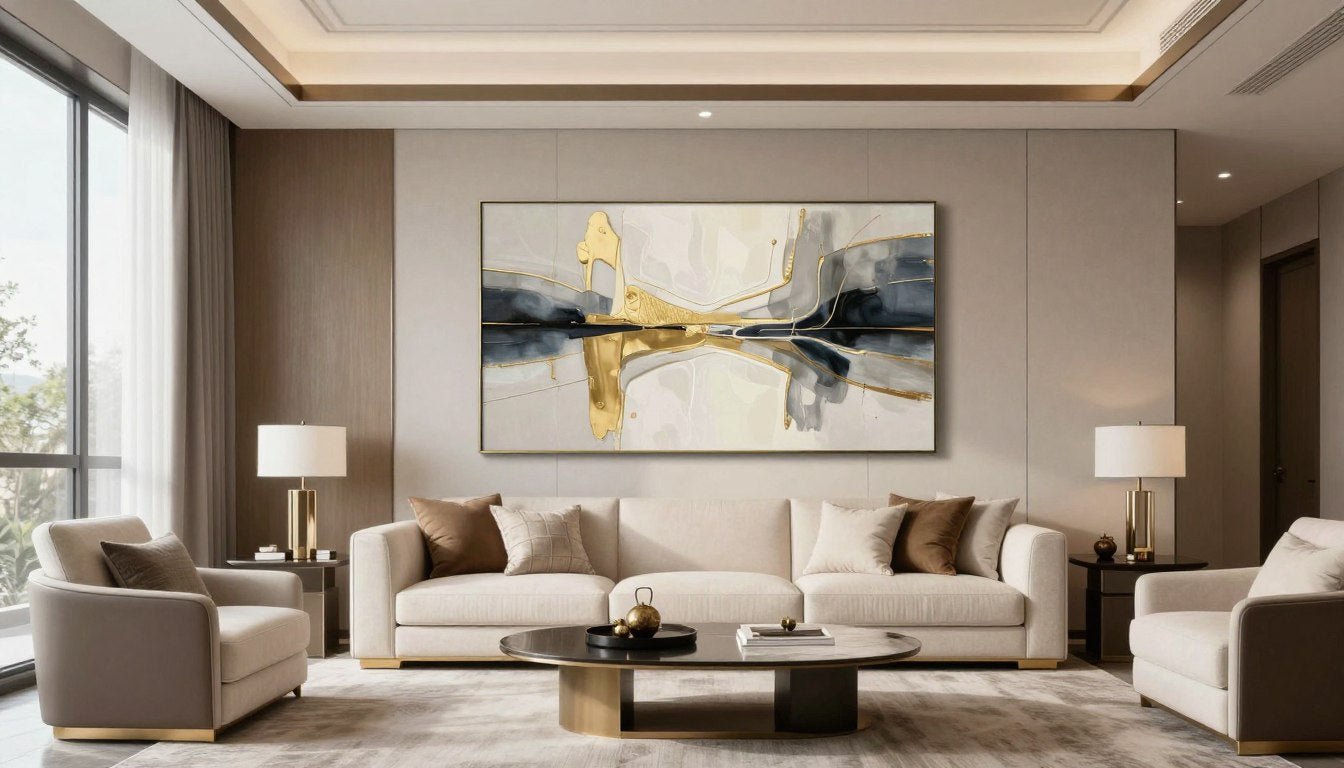
Walking into a room transformed by luxury canvas wall art feels different. The colors seem richer, the space more intentional, and the atmosphere unmistakably elevated. That reaction isn't accidental—it's the result of quality materials, thoughtful craftsmanship, and an understanding of what separates a beautiful piece from a truly exceptional one.

Most people approach wall art with a mix of excitement and uncertainty. They want something that looks stunning, but they also want to know their investment will hold up over time.
What Defines Luxury Canvas Wall Art
Luxury canvas wall art is distinguished by superior materials, archival-quality production methods, and designs created by established or emerging artists. Unlike mass-produced prints, these pieces use archival inks that resist fading for decades, hand-stretched canvas that maintains tension without warping, and frames constructed from premium materials like solid wood.

The difference becomes obvious when you compare them side by side. A luxury piece has depth—the colors don't sit on the surface but seem to emerge from within the canvas.
Gallery owners and interior designers look for specific hallmarks when evaluating art. They check the canvas weight, which should be at least 400 GSM for durability. They examine the corners where the canvas wraps around the frame, looking for neat, professional stretching without visible staples on the sides.

They also consider the artist's reputation and the edition size. Limited edition pieces naturally carry more prestige and value than open editions.
The Artistic Component
True luxury wall art starts with exceptional artwork. Whether it's an original painting reproduced with precision or a design created specifically for canvas, the artistic vision matters as much as the printing quality.

Some collectors prefer abstract compositions that add color and movement to a space. Others gravitate toward figurative work that tells a story or landscapes that create windows to other places.
The art market has shifted in recent years. Digital artists and photographers now create pieces specifically for high-end canvas reproduction. This democratizes art ownership while maintaining quality standards.
Production Standards
Production quality separates luxury canvas from standard prints. Gallery-quality printing uses twelve-color ink systems instead of the four-color process common in basic printing.

This expanded color gamut captures subtle gradations that four-color printing simply cannot reproduce. Skin tones look natural, sunset colors transition smoothly, and deep blacks maintain richness without appearing flat.
UV-resistant coatings protect the artwork from light damage. Sunlight is one of the primary enemies of printed art, causing colors to fade and shift over time. Premium protective coatings filter harmful UV rays while remaining invisible.

Quality Markers That Indicate Authentic Luxury
Identifying authentic luxury canvas wall art requires knowing what to look for. Several specific markers separate true quality from clever marketing.

The canvas itself tells a significant part of the story. Premium pieces use 100 percent cotton canvas or linen, never polyester blends. Cotton and linen canvas have natural texture that adds dimension to the artwork.
Ink Quality and Longevity
Archival inks represent one of the most critical quality factors. These pigment-based inks are chemically stable and resist fading for 100 years or more when properly displayed.

Dye-based inks, common in inexpensive prints, begin noticeably fading within just a few years. The color shift happens gradually, making it hard to notice day to day. But compare a two-year-old dye-based print to a fresh one and the difference becomes stark.
Reputable sellers provide longevity ratings for their inks. Look for statements about archival quality and specific timeframes. Vague language like "long-lasting" without specifics should raise questions.
Frame Construction
The frame structure affects both appearance and longevity. Standard canvas prints use thin wooden bars that can warp over time, causing the canvas to sag or ripple.

Luxury pieces use thicker stretcher bars, typically 1.5 inches deep or more. This depth creates a substantial presence on the wall and provides the structural support needed to keep canvas taut.
Pine wood frames and oak floater frames represent two popular premium options. Pine offers a clean, neutral look that works with any décor. Oak floater frames create a modern gallery aesthetic where the artwork appears to float within the frame.

Corner construction matters too. Look for frames with reinforced corners using proper joinery, not just staples or glue. These joints maintain strength even with temperature and humidity changes.
Edge Treatment
How the edges of the canvas are handled reveals attention to detail. Gallery wrap extends the image around the sides, creating a finished look that doesn't require an additional frame.

Mirror wrap reflects the edge pixels of the image, while solid color wrap uses a complementary color. Each approach serves different artistic intents.
Some pieces use printed edges that complement the main image without directly continuing it. This works particularly well for abstract art where a solid color might feel too abrupt.

Materials Matter: Canvas, Ink, and Frames
Understanding materials helps you evaluate value and make informed decisions. Each component contributes to the overall quality and lifespan of your wall art.

The base material, whether cotton or linen canvas, provides the foundation. Cotton canvas offers excellent print receptivity and a subtle texture that enhances most artwork styles.
Canvas Types and Characteristics
Cotton canvas weight ranges from 300 GSM to 450 GSM in luxury applications. Heavier weight provides more durability and a more substantial feel.

Linen canvas costs more but offers unique characteristics that some collectors prefer. The slight irregularity in linen's weave creates organic texture that particularly suits certain artistic styles.
Canvas preparation involves multiple coatings that create an ideal surface for ink adhesion. This process, called priming or coating, affects how the canvas accepts ink and how colors appear.

Some luxury pieces use watercolor canvas that creates a softer, more artistic appearance. The texture mimics traditional watercolor paper, adding authenticity to watercolor reproductions.
Ink Technology
Pigment-based archival inks use finely ground color particles suspended in a carrier. These particles are chemically stable and don't break down when exposed to light.

The particle size affects print resolution and color vibrancy. Smaller particles create smoother gradations and finer detail, while larger particles provide more intense color saturation.
Color gamut refers to the range of colors an ink system can reproduce. Extended gamut inks expand the range beyond standard CMYK printing.

This matters most for reproducing specific challenging colors like deep purples, bright oranges, and subtle skin tones. Standard four-color printing struggles with these hues.
Frame Materials and Finishes
Wood selection impacts both aesthetics and structural performance. Pine provides a lightweight, stable option that resists warping in most environments.

Oak offers greater density and strength, along with a distinctive grain pattern that becomes part of the piece's character when visible in floater frames.
Frame depth affects visual impact significantly. A 0.75-inch frame creates a subtle profile suitable for gallery walls with multiple pieces. A 2-inch depth makes a bold statement as a standalone focal point.

Some luxury pieces use metal frames for a contemporary industrial aesthetic. Aluminum frames provide exceptional durability without adding significant weight.
Frame finishes range from natural wood to painted, stained, or metallic options. Natural finishes showcase the wood's inherent beauty while allowing the artwork to remain the focus.

📐 Not sure what size to choose? Use our free Wall Art Size Calculator →
Styling Luxury Canvas Art in Different Rooms
The right placement transforms artwork from decoration into a defining element of your space. Each room presents unique opportunities and considerations.

Scale represents the most common mistake people make. A piece that looks substantial in a store can disappear on a large living room wall. Conversely, an oversized piece can overwhelm a small bedroom.
Living Room Placement
The living room typically accommodates larger statement pieces. A sofa wall benefits from artwork that spans two-thirds to three-quarters of the furniture's width.

Height placement follows the gallery standard of centering artwork at 57 inches from the floor. This positions the piece at average eye level and creates a harmonious relationship with the room.
For living room canvas prints, consider the room's color palette. Artwork can either complement existing colors or introduce a carefully chosen contrast that energizes the space.

Multiple pieces can create a gallery wall, but this requires careful planning. Odd numbers tend to look more balanced than even. Three or five pieces often create more visual interest than two or four.

Bedroom Considerations
Bedrooms call for artwork that creates a restful atmosphere. Abstract compositions in soothing colors work particularly well. Avoid busy, energetic pieces that might make relaxation difficult.

The wall above the bed serves as a natural focal point. Center the artwork on the wall, not on the bed, which might be off-center in the room.
Scale down slightly in bedrooms compared to living spaces. The more intimate nature of the room means you view the artwork from closer distances.

Consider the view from the bed itself. You'll see this artwork daily in your most relaxed moments. Choose something that brings you genuine pleasure rather than what seems trendy.
Dining and Entertaining Spaces
Dining rooms offer opportunities for dramatic, conversation-starting pieces. These spaces naturally gather people, making them ideal for artwork that provokes discussion.

Lighting matters significantly in dining areas. Natural light reveals different aspects of artwork throughout the day, while evening lighting creates entirely different moods.
Consider artwork that relates to entertaining and gathering. Still life compositions, abstract food-inspired colors, or pieces that evoke abundance all work naturally in these spaces.

Office and Study Spaces
Home offices benefit from artwork that inspires focus without causing distraction. Geometric abstracts, minimalist compositions, or landscapes often work well.

Colors in office spaces can influence productivity. Blues and greens tend to promote calm focus, while warm colors like orange can energize without overwhelming.
Scale appropriately for how you use the space. If you conduct video calls, consider what appears in your background. Artwork should look professional without competing for attention.

The Investment Value of Luxury Wall Art
Quality wall art represents more than decoration—it's an investment in your environment and potentially in appreciating assets. Understanding this value helps justify the initial cost.

Price points for luxury canvas wall art vary significantly based on artist recognition, edition size, dimensions, and materials. Established artists command premium prices that often appreciate over time.
Cost Versus Value Analysis
A quality piece made to order using archival materials will look nearly identical in twenty years. This longevity means the cost per year of ownership actually becomes quite reasonable.

Compare this to inexpensive prints that fade, wrinkle, or simply fall out of favor within a few years. The replacement cycle of cheap art often exceeds the single cost of a quality piece.
Factor in the daily impact on your environment. You interact with your wall art constantly, whether consciously or not. Quality pieces that genuinely resonate with you provide ongoing value that transcends the purchase price.
Appreciation Potential
Limited edition pieces from emerging artists can appreciate significantly as the artist's career develops. This isn't guaranteed, but it happens frequently enough to consider.

Original paintings naturally carry the strongest appreciation potential, but high-quality limited edition prints also gain value, particularly from recognized artists.
Documentation matters for investment pieces. Certificates of authenticity, edition information, and artist signatures all contribute to resale value and provenance.

Quality as Long-Term Economy
The "buy once, cry once" principle applies perfectly to wall art. Spending more initially for true quality eliminates the frustration and expense of multiple replacements.

Consider that a faded, warped print creates negative daily impact on your space. The small savings from choosing cheaper options becomes expensive when you factor in this aesthetic cost.
Quality also means flexibility. A well-made piece can transition between rooms and homes throughout your life. Cheap prints often get discarded during moves because they're not worth the effort to pack.
Comparing Options
When evaluating price, compare equivalent products. Many shoppers compare luxury canvas art to standard prints without accounting for material and production differences.

A legitimate luxury canvas at $400 competes with other luxury canvases, not with a $50 poster. The materials, production methods, and expected lifespan exist in completely different categories.
Consider the total investment including framing. Quality canvas typically arrives ready to hang, while cheap prints require expensive framing to look presentable.

Choosing the Right Piece for Your Space
Selecting artwork combines practical considerations with emotional response. Both elements matter for long-term satisfaction.

Start with the physical space. Measure the wall area where you plan to hang the piece. Use painter's tape to outline potential sizes directly on the wall. This visualization prevents scale mistakes.
Color Coordination
Artwork doesn't need to match your décor exactly, but it should relate to the overall color scheme. Pick up one or two accent colors from the piece to use in accessories like pillows or throws.

Alternatively, use artwork to introduce entirely new colors that energize the space. This works particularly well in neutral rooms that need a focal point.
Abstract canvas prints offer maximum flexibility since they don't represent specific subjects. The colors and shapes can harmonize with various design styles.

Style Consistency
Your artwork should reflect your personal aesthetic. Don't choose pieces solely because they're trendy or because someone else loves them.

That said, considering your home's architectural style helps create cohesion. Modern homes naturally pair with contemporary abstract or minimalist pieces. Traditional spaces often benefit from figurative work or classic compositions.
Don't feel locked into strict rules, though. An unexpected style contrast can create compelling visual interest when done thoughtfully.

Size Guidelines
Single large pieces make bolder statements than multiple small ones. If your wall can accommodate a piece 40 inches wide or larger, consider going with one substantial artwork rather than several small pieces.

For smaller walls or spaces, groups of three to five coordinating pieces create interest without overwhelming. Maintain consistent spacing between pieces, typically two to four inches.
Vertical spaces like narrow walls beside doorways suit tall, narrow pieces. Horizontal spaces above furniture call for wider, shorter compositions.

Lighting Considerations
Natural light reveals artwork's true colors but can cause damage over time. Position pieces away from direct sunlight when possible, or use UV-filtering window treatments.

Artificial lighting can dramatically enhance artwork. Picture lights, track lighting, or strategically placed can lights all work well. Warm LED bulbs around 3000K bring out rich colors without causing heat damage.
Avoid placing artwork above heat sources like fireplaces or radiators. The temperature fluctuations can cause warping and accelerated aging.

Working with Design Professionals
Interior designers and art consultants can provide valuable guidance, especially for significant investments or whole-home projects.

These professionals understand scale, color theory, and how pieces interact with space. Their expertise often prevents costly mistakes and helps you find pieces you might not have considered.
Many luxury art sources offer consultation services. Take advantage of these resources to ensure your selection works perfectly in your intended space.
Frequently Asked Questions
Q: What makes canvas wall art "luxury" versus standard prints?
A: Luxury canvas wall art uses archival-quality materials that last decades without fading. This includes pigment-based archival inks, premium cotton or linen canvas, and solid wood frames. Standard prints typically use dye-based inks and thin synthetic canvas that fade and warp within a few years. The production process also differs—luxury pieces use twelve-color ink systems for superior color accuracy, while standard prints rely on basic four-color printing. Additionally, luxury pieces feature hand-stretched canvas with proper tensioning and professional gallery wrap finishing.
Q: How do I know if canvas wall art will fade over time?
A: Check for archival ink certification and longevity ratings from the manufacturer. Quality luxury canvas art uses pigment-based archival inks rated for 100+ years of fade resistance when properly displayed. Ask specifically about the ink type—pigment-based inks are chemically stable and resist UV damage, while dye-based inks begin fading within two to three years. Look for UV-resistant protective coatings and avoid direct sunlight exposure. Reputable sellers like Rossetti Art clearly state their archival standards and material specifications.
Q: What size luxury canvas art should I choose for above my sofa?
A: Your canvas width should be two-thirds to three-quarters of your sofa's width for proper visual balance. For a standard 84-inch sofa, look for artwork 56 to 63 inches wide. Hang the piece six to eight inches above the sofa back, with the center of the artwork at 57 inches from the floor (average eye level). For small sofas under 72 inches, consider pieces 48 to 54 inches wide. Large sectionals may require multiple coordinating pieces or artwork exceeding 70 inches wide. Use the Wall Art Size Calculator tool to determine exact dimensions for your specific space.
Q: Is luxury canvas wall art worth the higher price compared to posters?
A: Yes, when you factor in longevity and total cost of ownership. A quality luxury canvas piece lasts 50-100+ years with proper care, maintaining its color and appearance. Posters typically need replacement every two to five years due to fading, damage, or changing tastes. A $400 luxury canvas that lasts 50 years costs $8 per year, while $40 posters replaced every three years cost $13.33 per year over the same period. Beyond economics, luxury canvas art provides superior aesthetic impact, appreciates in value (especially limited editions), and arrives ready to hang without additional framing costs. The daily visual experience in your home also justifies the investment.
Q: Can I hang luxury canvas wall art in direct sunlight?
A: While archival inks resist fading better than standard inks, direct sunlight accelerates aging even for museum-quality pieces. If your wall receives direct sun, use UV-filtering window treatments or position artwork on adjacent walls. Many luxury pieces include UV-resistant coatings, but these reduce—not eliminate—light damage. Indirect natural light beautifully illuminates artwork without significant risk. For sun-exposed walls, consider rotating pieces seasonally or choosing darker, more saturated colors that show fading less noticeably. Proper placement combined with archival materials ensures your investment maintains its beauty for decades.
Choosing luxury canvas wall art transforms your space from simply furnished to thoughtfully curated. The difference between mass-produced prints and gallery-quality pieces becomes apparent in daily life—the colors stay true, the canvas maintains its tension, and the overall presence elevates rather than fills your walls.

Quality materials like archival inks, hand-stretched canvas, and solid wood frames justify their cost through longevity and enduring beauty. These pieces become part of your home's story rather than temporary decorations.
Explore our canvas prints to find pieces that speak to your aesthetic and elevate your space with museum-quality craftsmanship.


Leave a comment
This site is protected by hCaptcha and the hCaptcha Privacy Policy and Terms of Service apply.