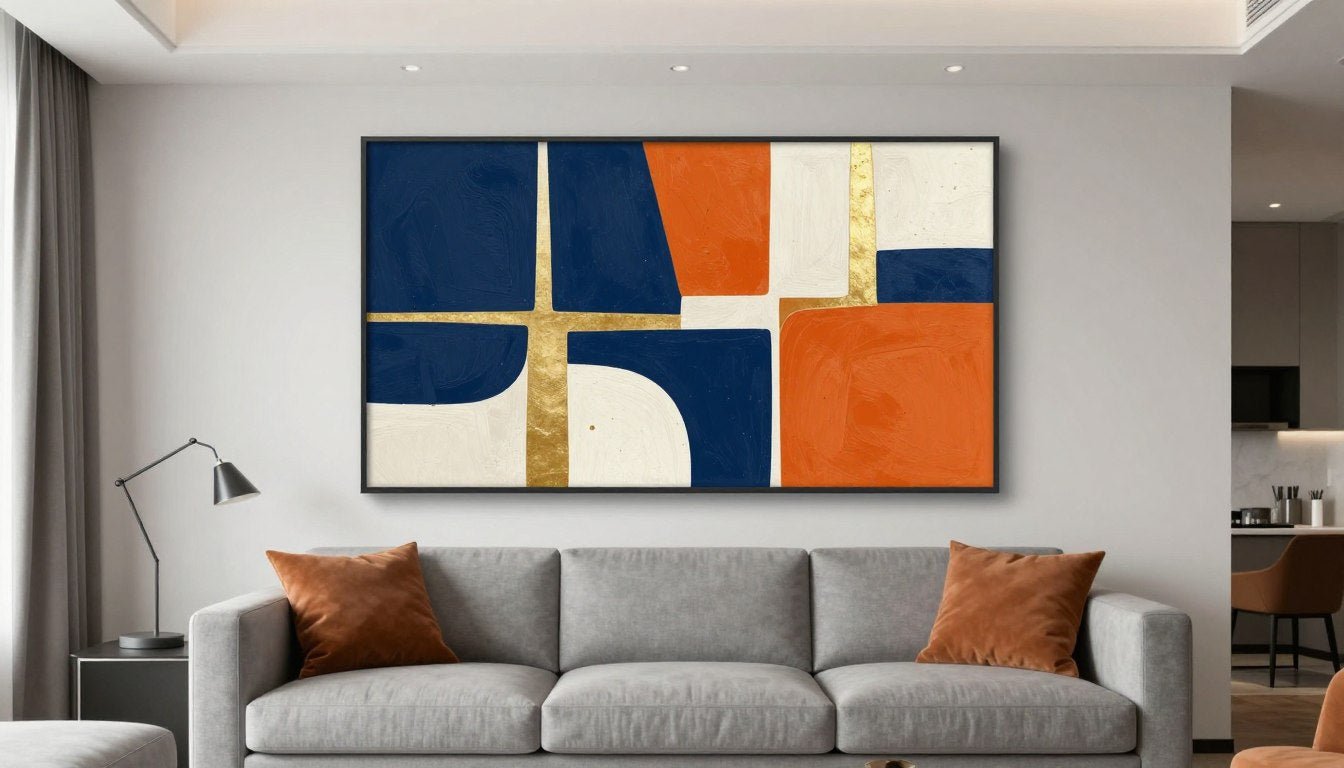

Your living room walls tell a story before you say a word. They set the mood, define your space, and reveal your aesthetic sensibility. Large abstract wall art transforms blank walls into conversation pieces that anchor your entire room design.
The right piece creates a focal point that draws the eye. It establishes visual hierarchy in your space. Abstract art offers freedom that representational artwork cannot match.
This guide walks you through every decision point. You will learn sizing principles that designers use. You will understand material choices and their impact. You will discover how to coordinate colors with existing decor.
Whether you lean toward abstract canvas wall art for living room settings or prefer the dimensional quality of abstract metal wall art for living room spaces, this comprehensive resource equips you with expert knowledge. The living room collections at Rossetti Art showcase how these principles come together in curated selections.
Understanding Abstract Wall Art in Living Room Design

Abstract art speaks a visual language unconstrained by literal representation. It communicates through form, color, texture, and composition. This freedom makes abstract art exceptionally versatile for living room spaces.
The power of abstract wall decor lies in its interpretive nature. Each viewer brings their own experience to the piece. One person sees energy and movement. Another finds calm and contemplation. This subjective quality means the artwork grows with you over time.
Why Abstract Art Works in Living Rooms
Living rooms serve multiple functions in modern homes. They host conversations, family gatherings, quiet reading moments, and entertainment. Abstract art adapts to these shifting contexts better than specific imagery.
A landscape painting might feel too serene during a lively party. A portrait might draw attention away from guests. Abstract wall art provides visual interest without competing for attention. It enhances rather than dominates.


The Psychology of Color and Form
Colors affect mood and energy levels in measurable ways. Warm colors like red, orange, and yellow create energy and warmth. Cool colors including blue, green, and purple promote calm and relaxation.
Shape psychology plays an equally important role. Geometric forms with straight lines suggest order and stability. Organic flowing shapes evoke nature and movement. Angular compositions create dynamic tension.
Understanding these principles helps you select abstract art that aligns with your room's intended atmosphere. The abstract geometric canvas prints collection demonstrates how structured forms create sophisticated focal points.
Expert Tip: Consider the primary activity in your living room. Active social spaces benefit from energetic colors and dynamic compositions. Spaces for relaxation work better with muted tones and flowing forms.
Size Considerations: Getting Proportions Right

Size decisions separate amateur art placement from professional interior design. Too small, and your art piece disappears. Too large, and it overwhelms the space. The sweet spot creates visual impact while maintaining balance.
The Two-Thirds Rule
The fundamental principle for art above furniture is the two-thirds rule. Your wall art should span roughly two-thirds the width of the furniture piece below it. This creates visual harmony between the art and furniture.
For a standard sofa measuring 84 inches wide, your ideal art width falls around 56 inches. This applies to single pieces or gallery wall arrangements measured as a total unit.

Wall Space and Ceiling Height
Vertical space demands equal consideration. Standard eight-foot ceilings limit oversized abstract wall art height. Nine to ten-foot ceilings open possibilities for dramatic vertical pieces.
Leave 6 to 12 inches between furniture top and art bottom. This creates breathing room while maintaining visual connection. For art not above furniture, center pieces at 57 to 60 inches from the floor to match average eye level.
Standard Ceiling Heights (8-9 feet)
- Maximum art height: 36-48 inches
- Ideal width range: 48-72 inches
- Sofa art spacing: 6-8 inches above
- Best orientation: horizontal emphasis
High Ceiling Spaces (10+ feet)
- Maximum art height: 60-84 inches
- Ideal width range: 48-96 inches
- Sofa art spacing: 8-12 inches above
- Best orientation: vertical or square formats
Room Size and Visual Weight
Small living rooms need restraint. A piece too large makes the space feel cramped. Medium-sized rooms (150-250 square feet) accommodate most large abstract wall art comfortably. Expansive rooms demand substantial pieces to avoid looking sparse.
Visual weight extends beyond physical dimensions. Dark colors and complex compositions carry more weight than light, minimalist pieces. A 40x60 inch canvas with bold black forms commands more presence than a similar size piece in pale pastels.


Explore Perfectly Scaled Abstract Art
Our curated collections feature abstract wall art in multiple sizes to match your living room dimensions. From intimate 24x36 inch pieces to commanding 60x84 inch statement works, find the perfect scale for your space.
Abstract Canvas Wall Art vs. Abstract Metal Wall Art for Living Room

Material choice dramatically affects your art's character. Canvas and metal each bring distinct qualities to abstract wall art living room applications. Understanding these differences guides you toward the right choice for your space.
Canvas: Classic Warmth and Texture
Canvas remains the traditional choice for abstract art. The fabric surface accepts paint beautifully. It creates depth through layered applications. Canvas prints reproduce original paintings with remarkable fidelity.
The texture of canvas adds tactile interest even from across the room. Light interacts with the woven surface, creating subtle variations. This organic quality brings warmth to contemporary spaces.

Canvas Advantages
- Traditional art aesthetic with proven appeal
- Light weight makes installation straightforward
- Texture adds visual and tactile interest
- Wide range of printing and painting techniques
- Softer visual impact suits intimate spaces
- More affordable for larger sizes
- Easy to frame or display gallery-wrapped
Gallery-wrapped canvas eliminates framing needs. The image continues around the sides. This creates a floating effect against the wall. Framed canvas adds formality and protection.
The abstract geometric canvas prints selection showcases both gallery-wrapped and framed canvas options, demonstrating the versatility of this classic medium.
Metal: Modern Edge and Dimension
Abstract metal wall art for living room spaces delivers contemporary sophistication. Metal sculptures add actual dimension to walls. They cast shadows that change with light throughout the day.
The reflective quality of metal surfaces creates visual interest. Brushed, polished, or painted finishes each produce different effects. Metal art makes bold statements in modern and industrial interiors.

Metal Advantages
- Three-dimensional presence creates depth
- Exceptional durability and longevity
- Reflective surfaces add light play
- Contemporary aesthetic suits modern design
- Shadow casting provides changing visual interest
- Premium perceived value and quality
- Unique sculptural character
Metal thickness determines the shadow depth and overall presence. Thinner metal works (up to half-inch) provide subtle dimension. Thicker sculptures (one inch or more) create dramatic shadow effects.


Choosing Between Canvas and Metal
Your decision hinges on several factors. Consider your overall design style first. Traditional and transitional spaces typically favor canvas. Modern and contemporary interiors often showcase metal effectively.
Budget plays a practical role. Canvas generally costs less for equivalent sizes. Metal art commands premium pricing, particularly for hand-crafted sculptures.
Installation requirements differ significantly. Canvas mounting uses simple picture hanging hardware. Metal sculptures often need specialized mounting systems, especially for heavy pieces. Weight matters in older homes or when hanging on drywall.
Canvas Best For
- Traditional to transitional design styles
- Softer, more intimate atmospheres
- Budget-conscious art investment
- DIY installation capability
- Spaces needing acoustic softness
- Rooms with existing artwork
Metal Best For
- Modern and contemporary interiors
- Dramatic focal point statements
- High-traffic durability needs
- Unique sculptural presence
- Spaces with abundant natural light
- Rooms with hard surface finishes
The modern sculptures collection at Rossetti Art demonstrates how metal abstract art transforms contemporary living rooms into gallery-worthy spaces.
Seeing Abstract Art in Living Rooms
Visual examples clarify abstract art principles better than words alone. These curated videos demonstrate professional placement techniques and design strategies in real living room environments.
Notice how the featured spaces balance art size with furniture scale. The video showcases multiple room configurations, from compact urban apartments to spacious suburban homes. Each example demonstrates the principles discussed in this guide.
This second video focuses on color coordination between abstract wall art and existing room elements. Pay attention to how designers use artwork to tie together disparate color elements throughout the space.
Color Coordination: Making Abstract Art Work with Your Living Room

Color creates visual harmony or discord in your living room. Abstract art offers the perfect opportunity to introduce new colors or reinforce existing ones. Strategic color selection makes your art feel intentional rather than random.
Understanding Color Relationships
Color theory provides frameworks for successful combinations. Complementary colors (opposite on the color wheel) create vibrant contrast. Analogous colors (adjacent on the wheel) produce harmonious blends. Triadic schemes use three equally spaced colors for balanced variety.
Your living room likely already has an established color palette. Furniture, rugs, curtains, and walls combine to create this foundation. Your abstract wall art should acknowledge this existing palette.

Three Approaches to Color Selection
The Accent Approach
Select artwork featuring your room's accent colors prominently. If your living room uses navy blue as an accent in pillows and decor, choose abstract art with significant navy elements. This ties the room together through color repetition.
The accent approach works especially well in neutral rooms. Beige, gray, or white dominated spaces come alive when accent colors appear in multiple places, including wall art.

The Bridge Approach
Use abstract art to bridge color gaps between existing elements. Perhaps your sofa is charcoal gray and your rug features warm terracotta tones. Select art piece that incorporates both colors, creating visual flow between these separate elements.
This approach excels when you have inherited furniture in different color families. The art acts as a mediator, making disparate pieces feel cohesive.

The Statement Approach
Introduce entirely new colors through bold abstract wall art. This works when your room feels safe or monotone. A predominantly gray room might benefit from abstract art featuring vibrant yellows or deep burgundy.
The statement approach requires confidence. The new colors will draw attention. Support them with smaller accessories in similar tones to avoid the art feeling disconnected. Add a throw blanket, decorative objects, or fresh flowers echoing the art's new colors.

Working with Existing Furniture Colors
Furniture colors constrain and guide art selection. Leather furniture has warm undertones. Coordinate with art featuring warm colors like oranges, reds, and golds. Cool gray upholstery pairs naturally with blues, greens, and purples.
Wood tones also influence color decisions. Light woods (maple, birch, ash) work with both warm and cool art colors. Medium woods (oak, walnut) favor warm color palettes. Dark woods (mahogany, ebony) create sophisticated backdrops for both bold and muted art colors.
Warm Furniture Palettes
Brown leather, caramel upholstery, honey woods
- Art with reds, oranges, and yellows
- Warm neutrals including cream and tan
- Gold and copper metallic accents
- Terracotta and rust tones

Cool Furniture Palettes
Gray upholstery, blue fabrics, black accents
- Art with blues, greens, and purples
- Cool neutrals including gray and white
- Silver and chrome metallic accents
- Teal and navy tones

Neutral Art in Colorful Rooms
Black, white, and gray abstract art provides respite in colorful living rooms. If your space already features multiple bold colors, neutral art prevents visual chaos. Black and white abstract pieces add sophistication without competing for attention.
Neutral art works particularly well in eclectic spaces. When you collect furniture and decor from various sources and eras, neutral wall art provides visual calm. It lets your collected pieces shine without adding more color complexity.

Testing Colors Before Commitment
Most art retailers including Rossetti Art provide detailed images showing artwork in room settings. Study these carefully. Pay attention to how colors read under different lighting conditions shown in the photos.
Consider ordering color swatches or samples when available. Hold them near your furniture in natural daylight and evening artificial light. Colors shift dramatically under different light sources.
Digital visualization tools help preview art in your space. Many retailers offer room visualization features. Photograph your wall and upload the image to see how different pieces look in your actual environment.
Professional Insight: The 60-30-10 rule guides room color distribution. 60% dominant color (usually walls), 30% secondary color (typically furniture), and 10% accent color. Large wall art can contribute to either the 30% or 10% category depending on its color intensity.
Explore how professional designers coordinate abstract art colors in the framed wall art collection, where frame colors add another layer of coordination possibility.
Making a Statement Without Overwhelming Your Space

Bold abstract wall art commands attention. The challenge lies in creating impact without crossing into overwhelming territory. Your living room should feel enhanced by art, not dominated by it.
Visual Weight Distribution
Every element in your room carries visual weight. Large objects, dark colors, complex patterns, and ornate details all add weight. Your goal is balanced distribution across the space.
A massive abstract art piece on one wall needs visual counterweights elsewhere. This might include a substantial sofa, large area rug, or significant architectural features. Avoid placing your largest art piece on a wall with no furniture below it, leaving the opposite wall heavy with furniture. This creates imbalance.

The Focal Point Hierarchy
Every room needs a primary focal point. In many living rooms, this is the television, fireplace, or main seating arrangement. Large abstract wall art can serve as the focal point or support an existing one. It should not compete with the established focus.
Placing art above a fireplace makes the fireplace wall the clear focal point. Positioning art on a perpendicular wall creates a secondary focal point, adding visual interest without competition. Consider the natural traffic flow and sightlines when determining placement.

Breathing Room Principles
White space matters as much as filled space. Your abstract wall art needs breathing room to make its impact. Surrounding the piece with open wall space lets the eye focus on the artwork without distraction.
Minimum clearance guidelines help maintain this breathing room. Leave at least 6 inches between art and adjacent walls, windows, or doorways. Maintain 8 to 12 inches between art bottom and furniture top. These buffer zones let each element shine independently.


Complexity and Pattern Management
Highly complex abstract art featuring many colors, shapes, and textures needs simpler surroundings. Pair busy artwork with solid-colored furniture and minimal patterns elsewhere. This prevents visual competition.
Conversely, minimalist abstract art with simple forms and limited colors can handle busier surroundings. If your living room features patterned upholstery, decorative pillows, and textured rugs, choose artwork with cleaner compositions.


Scale Confidence Without Excess
Oversized abstract wall art makes powerful statements when scaled appropriately. The difference between confident and excessive comes down to proportion and context.
In a 15-foot wide living room wall, a 72-inch wide art piece shows confidence. A 96-inch piece on the same wall risks excess. The surrounding space cannot accommodate the larger piece without crowding. Trust the two-thirds rule as your guide.

Restraint in Multi-Piece Arrangements
Gallery walls and multi-panel art pieces multiply visual impact. Each additional piece increases complexity. Three coordinated pieces create interest. Seven pieces risk chaos without careful planning.
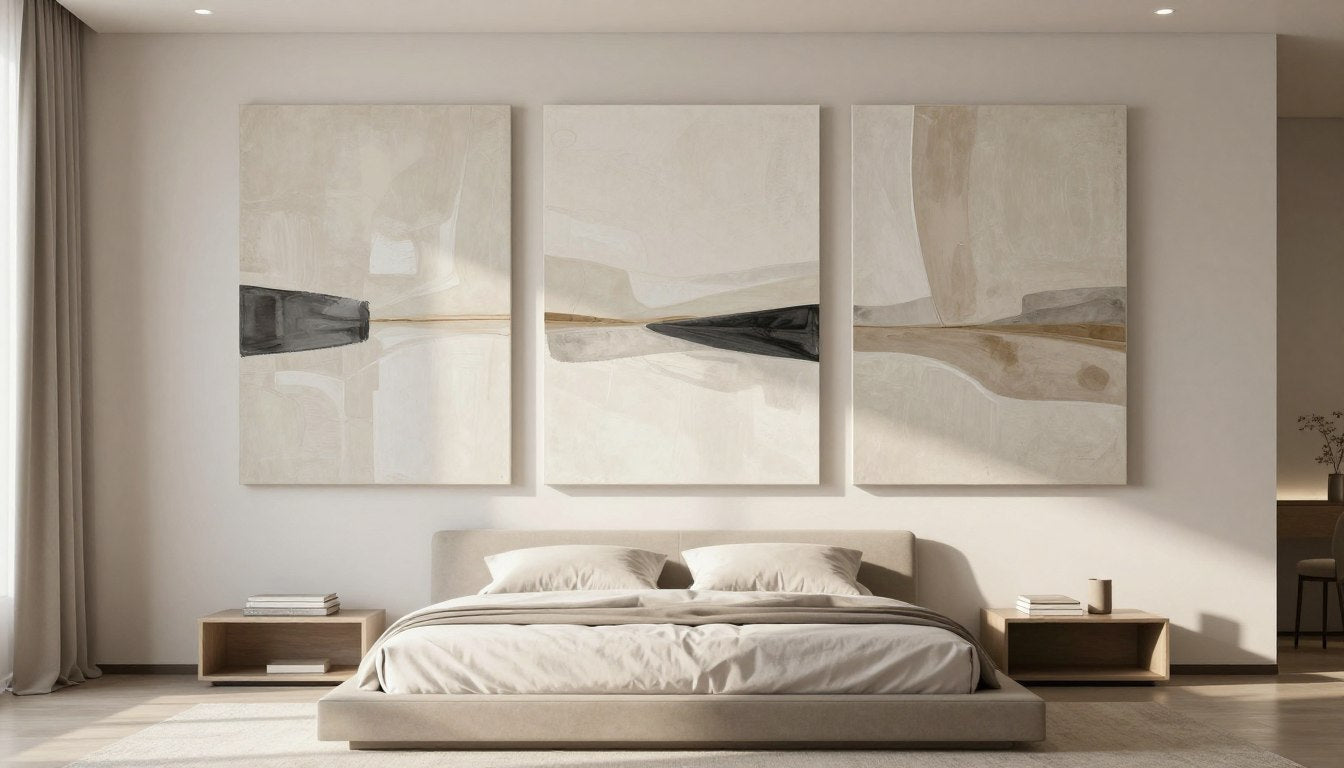
For abstract art specifically, limit multi-piece arrangements to three panels maximum. Triptychs (three-panel pieces) work beautifully above sofas. They provide impact through combined size while maintaining cohesion through connected composition.

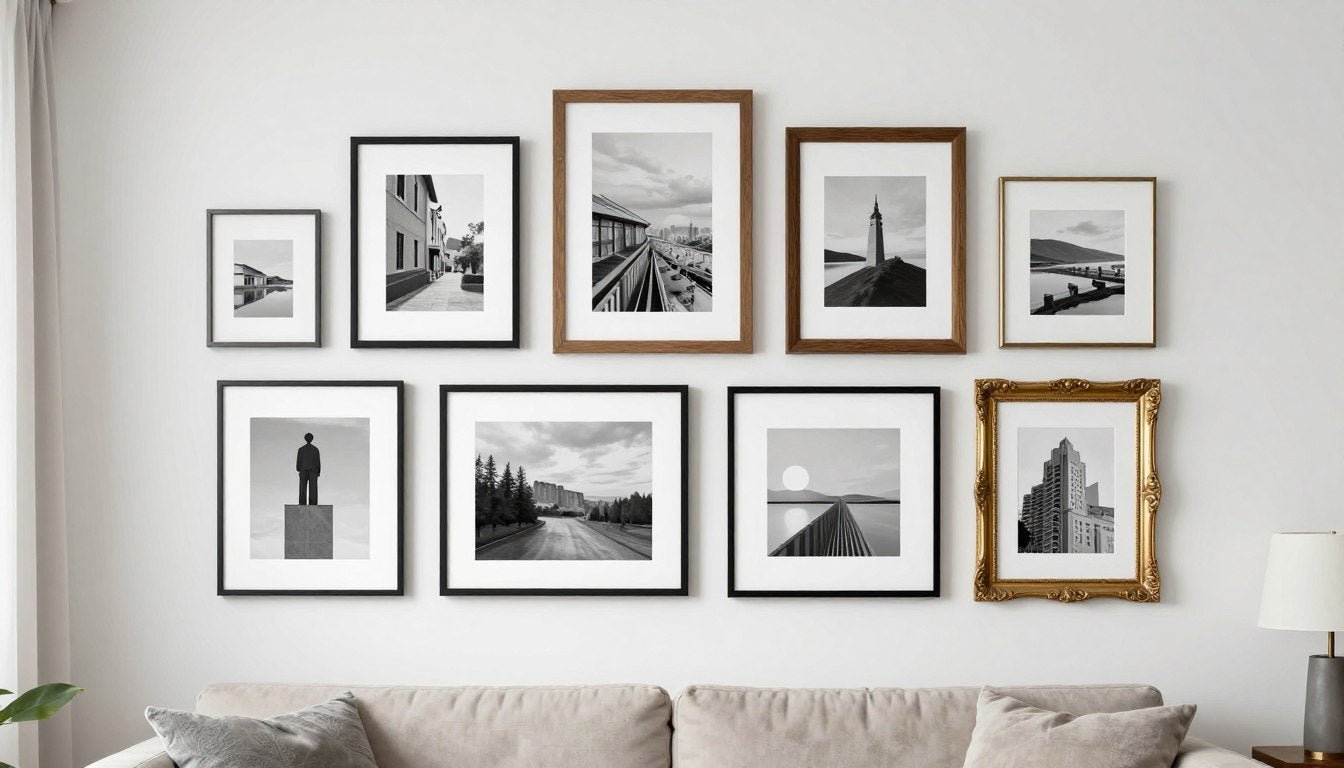
Gallery walls featuring multiple unrelated abstract pieces require expert-level curation. The challenge multiplies with abstract art because fewer visual anchors exist compared to photographic or representational art. Unless you have strong design confidence, opt for single statement pieces instead.
Lighting Considerations
Proper lighting prevents artwork from overwhelming while ensuring it receives due attention. Art lights, track lighting, or picture lights focus attention appropriately. Without adequate lighting, even perfectly sized art fades into the background.
Avoid lighting that creates glare on canvas surfaces or reflective metal finishes. Position lights at 30-degree angles from the wall to minimize glare while providing even illumination. Dimmable lights let you adjust art prominence based on time of day and room use.

Designer Secret: If you can comfortably place two matching table lamps on opposite sides of the room without them feeling overwhelming, your art piece is appropriately scaled. Each element should occupy similar visual weight in the space.
Strategic Placement for Maximum Impact

Location determines how effectively your abstract wall art transforms the living room. The same piece creates different impressions based on placement. Strategic positioning maximizes impact while maintaining room functionality.
Above the Sofa: The Classic Choice
Positioning large abstract wall art above the sofa represents the most popular placement for good reason. This location provides the largest uninterrupted wall space in most living rooms. The art becomes the room's natural focal point, visible from multiple seating positions.
The sofa provides visual anchoring that prevents the art from floating. This creates a cohesive furniture-art relationship. Guests naturally face this wall when seated, making the art a conversation catalyst.

Above-Sofa Placement Rules
- Center the art piece horizontally with the sofa center
- Maintain 6-12 inches between sofa back and art bottom
- Ensure art spans roughly two-thirds the sofa width
- Account for any sofa table when measuring spacing
- Consider sight lines from opposite seating
The Accent Wall Statement
Dedicated accent walls create opportunities for dramatic abstract wall art displays. Paint the wall a contrasting color to make the artwork pop. Deep charcoal, navy, or forest green backgrounds make colorful abstract art pieces command attention.
Textured accent walls add another dimension. Shiplap, board-and-batten, or textured wallpaper provides physical depth that complements the visual depth of abstract art. Ensure the texture does not compete with complex artwork compositions.

Fireplace Wall Dynamics
Fireplaces present unique placement challenges and opportunities. Art above the mantel competes with the fireplace for focal point dominance. This works when you want to minimize the fireplace's visual importance.
Alternatively, place large abstract wall art on the wall perpendicular to the fireplace. This creates a secondary focal point that adds visual interest without competition. The fireplace remains dominant while the art provides balance.


For fireplaces with mounted televisions above them, skip the fireplace wall entirely for artwork. The TV-fireplace combination already dominates. Focus your art piece on an opposite or adjacent wall.
Entry Wall Impact
The wall you first see when entering your living room offers prime real estate for abstract wall art. This placement creates immediate impact. It sets the room's aesthetic tone before visitors fully enter the space.
Entry wall placement works especially well in open-concept homes. The living room art becomes visible from the foyer, kitchen, or dining area. This extended visibility increases the art's influence throughout your home.

Corner and Angle Placements
Awkward corners often go unused in living room design. Strategic abstract wall art placement transforms these dead zones into visual assets. Place a tall vertical piece in a corner to draw the eye upward, making ceilings feel higher.
Angled walls in rooms with interesting architecture benefit from careful art placement. Follow the wall angle with your art piece orientation to create harmony. Alternatively, position the art perfectly level to create intentional contrast with the angled architecture.

Multi-Wall Coordination
Large living rooms accommodate art pieces on multiple walls. Coordinate these pieces through color, style, or theme while maintaining individual character. Avoid exact matching, which feels too coordinated and staged.
Consider the viewing angles between pieces. Can you see multiple artworks simultaneously from key seating positions? Ensure they complement rather than compete visually when seen together.

Height Adjustment for Function
Standard eye-level placement (57-60 inches from floor to art center) works for general viewing. Adjust this height based on room-specific factors. In TV-focused living rooms where most viewing happens while seated, lower the art slightly (54-57 inches to center).
For standing conversation areas or rooms where you entertain while standing, raise art to 60-63 inches to center. This accounts for the higher sight lines when standing.
Installation Tip: Before drilling holes, tape paper templates of your art piece to the wall. Live with the placement for 24-48 hours, viewing it at different times of day from various positions. Adjust the template until it feels perfect, then mark your drilling points.
Framing and Presentation Options

The frame or presentation method affects how viewers perceive your abstract wall art. Framing choices range from no frame at all to elaborate custom frames. Each option creates different aesthetic effects.
Gallery-Wrapped Canvas
Gallery wrapping extends the canvas image around the wooden frame sides. This frameless presentation creates a modern floating effect. The canvas depth (typically 0.75 to 2 inches) provides subtle dimension against the wall.
Gallery-wrapped pieces work best for contemporary and modern living rooms. They maintain clean lines without the visual weight of frames. The wrapped edges should feature either continued image or complementary solid colors, never exposed staples or raw canvas.

Traditional Frame Styles
Wooden frames add warmth and traditional character. Frame width matters—thin frames (0.75-1.5 inches) suit minimalist abstract art, while wider frames (2-4 inches) complement bold, complex pieces.
Frame color should coordinate with your room's existing wood tones or provide intentional contrast. Natural wood, black, white, and metallic finishes each create different effects. Black frames add drama and definition. White frames create airy lightness. Natural wood brings organic warmth.


Float Mounting
Float mounting suspends the artwork within the frame, creating a shadow gap between art and frame. This technique works beautifully for abstract canvas wall art for living room applications. The floating effect adds sophistication and gallery credibility.
The shadow gap typically measures 0.25 to 0.5 inches. This subtle separation makes the artwork appear to hover. Float mounting requires custom framing but delivers premium presentation quality.

Metal Frames for Contemporary Spaces
Aluminum and steel frames complement modern abstract art exceptionally well. The clean metal profiles add industrial edge. Brushed, polished, or powder-coated finishes offer variety.
Metal frames suit abstract metal wall art for living room installations particularly well. The material consistency between art and frame creates cohesive presentation. Metal frames also work with canvas pieces when you want contemporary sophistication.

Matting Considerations
Mats create breathing room between art and frame. Traditional artwork often benefits from matting, but abstract art works beautifully both with and without mats. Large abstract pieces typically skip mats to maximize visual impact.
When using mats with abstract wall art living room pieces, keep mat width proportional. A 40x60 inch piece might use a 3-4 inch mat. Smaller pieces can handle wider 4-6 inch mats. White and off-white mats remain most versatile, though colored mats can pull out specific art colors.

Glass and Acrylic Protection
Canvas prints do not require glass or acrylic covering, which eliminates glare concerns. However, paper-based abstract prints or original works benefit from protective glazing.
Museum glass offers superior clarity and UV protection but costs significantly more. Standard picture glass works for most residential applications. Acrylic provides lighter weight, making it preferable for large pieces, though it scratches more easily than glass.
The framed wall art collection showcases various professional framing options, demonstrating how frame choices affect overall presentation and room integration.
Matching Abstract Art to Living Room Styles

Interior design styles create distinct aesthetic frameworks. Your abstract wall art should acknowledge your room's style language while potentially pushing boundaries. Understanding style characteristics guides appropriate art selection.
Modern and Contemporary Living Rooms
Modern spaces embrace clean lines, minimal ornamentation, and bold statements. Abstract art thrives in modern contexts. Choose pieces with strong geometric forms, limited color palettes, and confident composition.
Contemporary rooms accommodate more expressive abstract styles. Fluid forms, mixed media, and experimental compositions work well. Both modern and contemporary spaces favor gallery-wrapped canvas or minimalist framing.

Traditional Living Rooms
Traditional spaces feature classic furniture, rich wood tones, and formal arrangements. Abstract art might seem contrary to traditional design, but thoughtful selection bridges the gap beautifully.
Choose abstract pieces with softer colors and organic forms rather than hard-edge geometry. Frame traditionally in substantial wood frames, possibly with mats. Colors should pull from the room's established palette rather than introducing jarring contrasts.

Transitional Spaces
Transitional design blends traditional and contemporary elements. This style offers maximum flexibility for abstract wall art selection. You can lean toward contemporary pieces in traditional frames or classic color palettes in modern presentations.
Transitional rooms benefit from abstract art that serves as a bridge element. Choose pieces that incorporate both the room's traditional colors and contemporary forms. This reinforces the transitional aesthetic throughout the space.

Industrial Living Rooms
Industrial spaces feature exposed brick, metal elements, and raw materials. Abstract metal wall art for living room applications excel in industrial contexts. The material honesty of metal art aligns perfectly with industrial design philosophy.
Canvas abstract art works equally well when featuring urban-inspired colors: grays, blacks, whites, with accents of rust orange or industrial yellow. Choose substantial frames or opt for frameless gallery wrapping to maintain the raw aesthetic.

Scandinavian and Minimalist Spaces
Scandinavian design emphasizes simplicity, natural light, and functional beauty. Abstract art in these spaces should embrace restraint. Choose pieces with clean compositions, limited color palettes (often including whites, grays, and single accent colors), and substantial negative space.
Minimalist spaces take restraint further. A single statement piece of oversized abstract wall art often suffices for the entire living room. The art becomes the room's primary decorative element, making selection critically important.

Bohemian and Eclectic Living Rooms
Bohemian spaces celebrate color, pattern, and collected objects. Abstract art in boho rooms can embrace maximum expressiveness. Choose vibrant colors, complex compositions, and artistic statements that reflect personality.
Eclectic rooms mix multiple style influences. Your abstract art can lean toward any style as long as it connects to other room elements. The key lies in intentional color coordination rather than style matching.

Farmhouse and Rustic Styles
Farmhouse design combines rustic elements with clean simplicity. Abstract art might seem out of place, but contemporary farmhouse embraces this mixing. Choose abstract pieces with organic forms and muted, nature-inspired colors.
Frame in natural wood with visible grain. Avoid ultra-modern presentations. The abstract art should feel like an artisan piece rather than gallery art. Earthy tones (terracotta, sage green, warm grays) bridge the gap between abstract contemporary and farmhouse rustic.

Curated Abstract Art Collections for Living Rooms
Exploring professionally curated collections simplifies the selection process. These collections group artwork by style, size, color palette, and room application, making it easier to find pieces that work in your specific living room context.

Geometric Canvas Collection
Clean lines and structured compositions define this collection. Perfect for modern and contemporary living rooms seeking sophisticated focal points. Available in multiple sizes from intimate 24x36 to commanding 60x84 inches.
- Bold geometric forms
- Contemporary color palettes
- Gallery-wrapped or framed options
- Sizes for every wall dimension

Metal Sculpture Collection
Dimensional abstract metal art brings sculptural presence to living room walls. These pieces cast dynamic shadows and create visual interest that changes throughout the day. Ideal for contemporary and industrial spaces.
- Three-dimensional presence
- Multiple metal finish options
- Dynamic shadow effects
- Premium architectural quality

Living Room Focused Collection
Curated specifically for living room applications. This collection considers typical furniture arrangements, viewing distances, and residential lighting conditions. Every piece selected for maximum impact in home environments.
- Room-ready sizing
- Residential color palettes
- Multiple style options
- Furniture-coordinated selections
Professional Installation Guidelines

Proper installation ensures your abstract wall art hangs securely and looks professionally placed. Poor installation undermines even the most beautiful artwork. Follow these guidelines for gallery-quality results.
Essential Installation Tools and Hardware
Gather necessary supplies before starting. You need a measuring tape, level (24-inch minimum), pencil, hammer or drill, appropriate wall anchors, picture hanging wire or D-rings, and hooks rated for your art weight.
Heavy pieces require robust mounting solutions. Canvas art typically weighs 5-15 pounds for large sizes. Metal sculptures can exceed 30 pounds. Check weight ratings on all hardware components.
For Drywall Installation
- Stud finder for secure mounting points
- Drywall anchors (toggle or molly bolts)
- Wall hooks rated for 2x art weight
- Drill with appropriate bits
For Masonry Walls
- Masonry drill bits
- Plastic wall anchors or expansion bolts
- Heavy-duty picture hooks
- Safety glasses for drilling
Measuring and Marking
Measure twice, drill once. Determine your desired art center point (typically 57-60 inches from floor). Measure your artwork height and calculate where the hanging hardware sits.
Mark the wall lightly in pencil. Use a level to ensure marks align horizontally. For multiple pieces or multi-panel arrangements, mark all positions before drilling any holes.

Finding Studs
Wall studs provide the strongest mounting points. Studs typically sit 16 or 24 inches apart. Use a stud finder to locate them, then mark positions lightly.
If your desired art position does not align with studs, use proper drywall anchors rated for the weight. Toggle bolts provide excellent hold in drywall for heavier pieces.
Hanging Hardware Selection
D-rings attach to the art frame back and provide hanging points. Wire strung between D-rings offers flexible positioning. French cleats provide the most secure mounting for heavy abstract metal wall art.
Picture rail systems work beautifully for renters or those wanting flexibility. These systems mount to the ceiling or high wall, allowing you to adjust art height without drilling new holes.

Leveling and Final Adjustments
Hang the art piece and step back to assess. Use your level to check alignment. Small adjustments make significant differences in perceived quality.
Have someone hold the piece while you view from multiple positions. Check the view from your main seating areas. Ensure the art looks level from all important sightlines.
Professional Secret: Take a photo of your hung art with your phone. Visual distortions in photos often reveal leveling issues invisible to the naked eye. Make corrections before filling extra holes.
Special Considerations for Heavy Pieces
Oversized abstract wall art and metal sculptures require extra precautions. Always mount to wall studs when possible. Use French cleats for maximum security on particularly heavy pieces over 30 pounds.
Consider professional installation for valuable art or pieces over 50 pounds. The installation cost pales compared to damage risks from improper mounting. Professional installers carry appropriate insurance and expertise.
Caring for Your Abstract Wall Art

Proper care maintains your abstract wall art investment for years. Different materials require specific maintenance approaches. Regular attention prevents damage and preserves appearance.
Canvas Art Maintenance
Dust canvas surfaces gently with a soft, dry microfiber cloth or feather duster. Avoid applying pressure that might damage the canvas weave or paint surface. Clean from top to bottom, allowing dust to fall naturally.
Never use water, cleaning solutions, or glass cleaner on canvas prints or paintings. These can cause irreversible damage to inks and protective coatings. Professional cleaning services exist for serious soiling.
Canvas Care Guidelines
- Dust monthly with dry microfiber cloth
- Avoid direct sunlight to prevent fading
- Maintain consistent humidity (40-60%)
- Keep away from kitchen moisture and grease
- Never spray cleaners directly on canvas
- Protect from sharp objects and punctures
Metal Art Care
Abstract metal wall art tolerates more robust cleaning than canvas. Dust regularly with a dry cloth. For fingerprints or smudges, lightly dampen a microfiber cloth with water and gently wipe the affected area. Dry immediately with a clean cloth.
Different metal finishes require specific approaches. Powder-coated surfaces clean easily with mild soap and water. Raw metal finishes may require specialized metal cleaners. Always test cleaning products in inconspicuous areas first.

Environmental Considerations
Light exposure affects all artwork over time. Direct sunlight causes the most rapid fading, particularly on canvas prints. Position abstract wall art away from windows receiving direct sun, or use UV-filtering window treatments.
Humidity fluctuations damage canvas by causing expansion and contraction. This leads to warping and canvas loosening on the frame. Maintain consistent humidity levels between 40-60% using humidifiers or dehumidifiers as needed.
Temperature extremes stress both canvas and metal art. Avoid placing artwork near heat vents, radiators, or air conditioning outlets. These locations create temperature fluctuations that accelerate material degradation.
Inspecting and Addressing Issues
Inspect your abstract wall art quarterly. Look for loose frames, separating canvas from frame bars, or developing surface issues. Address small problems immediately before they worsen.
Canvas can loosen over time, creating ripples or sagging. Many gallery-wrapped canvases include adjustment keys on the back. Tap these keys deeper into the frame corners to tighten the canvas. Professional restretching becomes necessary if keys no longer provide sufficient tension.
Prevention Strategy: Rotate your art collection seasonally if you own multiple pieces. This distributes light exposure and allows pieces to "rest" in storage, extending their lifespan considerably.
Budget Planning for Large Abstract Wall Art

Quality abstract wall art for living room spaces spans wide price ranges. Understanding cost factors helps you set realistic budgets while maximizing value. Smart planning delivers impressive results at every budget level.
Price Factors That Matter
Size directly impacts cost. A 24x36 inch piece costs significantly less than a 60x84 inch work. Material costs scale with dimensions. Larger pieces also require more expensive shipping and handling.
Production method affects pricing substantially. Mass-produced prints cost less than limited editions. Original paintings command premium prices. Hand-embellished prints fall between reproductions and originals.
Canvas Art Price Ranges
Typical investment levels for quality abstract canvas wall art for living room applications:
- Small (24x36"): $75-$250
- Medium (36x48"): $200-$500
- Large (48x60"): $400-$900
- Oversized (60x84"): $700-$1,800
- Custom originals: $1,500+
Metal Art Price Ranges
Investment expectations for abstract metal wall art for living room installations:
- Small (18x24"): $150-$400
- Medium (24x36"): $350-$750
- Large (36x48"): $650-$1,400
- Oversized (48x60"): $1,200-$2,500
- Custom sculptures: $2,000+
Budget Allocation Strategy
Interior designers suggest allocating 5-10% of your total living room renovation budget to wall art. For a $10,000 living room refresh, budget $500-$1,000 for artwork. This proportion ensures art receives appropriate investment without dominating the budget.
Prioritize quality over quantity. One significant statement piece creates more impact than multiple mediocre pieces at the same total cost. A single oversized abstract wall art piece at $800 outperforms four $200 pieces in visual impact and perceived quality.
Maximizing Value at Every Budget
Smart shopping strategies stretch budgets without compromising quality. Look for seasonal sales and promotions. Many art retailers offer significant discounts during holiday periods or end-of-season clearances.
Consider gallery-wrapped canvas over framed pieces when budget conscious. Gallery wrapping eliminates custom framing costs while delivering modern presentation. You can always add a frame later as budget allows.

Investment Pieces vs. Trendy Art
Distinguish between investment artwork and decorative pieces. Investment pieces feature timeless aesthetic appeal, quality materials, and construction that lasts decades. These warrant higher budgets.
Trendy pieces follow current color trends or design movements. These work well at lower price points since you may replace them as trends shift. Allocate more budget to investment pieces you will keep long-term.
Budget Wisdom: Calculate the daily cost of art ownership. A $600 piece kept for 10 years costs $0.16 per day. This perspective makes quality purchases feel more accessible while highlighting the false economy of cheap replacements.
Common Mistakes to Avoid

Even experienced decorators make predictable mistakes when selecting and placing large abstract wall art. Awareness of these common pitfalls helps you avoid costly errors. Learning from others' mistakes saves money and frustration.
Sizing Errors
The most frequent mistake involves choosing art too small for the space. Small pieces disappear on large walls, creating awkward empty space. This happens when people shop for art in stores where everything looks larger, then find it undersized at home.
The opposite error—oversized art in small spaces—occurs less frequently but proves equally problematic. A 72-inch wide piece overwhelms a 10-foot wall, leaving insufficient breathing room at the edges.


Ignoring Room Function
Selecting art based purely on aesthetics without considering room function leads to mismatches. Highly energetic abstract art with intense reds and yellows suits active entertaining spaces but disrupts quiet reading areas.
Consider daily life in your living room. If you watch television from the main sofa, ensure your abstract wall art does not compete for attention from viewing positions. Art on the TV wall might distract rather than enhance.
Poor Height Placement
Hanging art too high ranks among the most common errors. Art should relate to human scale, not ceiling height. The 57-60 inch center-point rule applies in most residential situations, yet people consistently hang pieces 6-12 inches too high.
This mistake often stems from focusing on wall space rather than viewer eye level. Step back and view from typical seated and standing positions before finalizing placement.

Mismatched Color Intensity
Color coordination goes beyond matching specific hues. Intensity matters equally. Placing highly saturated, vibrant abstract art in a room with muted, pastel tones creates jarring discord. The reverse—muted art in an intensely colorful room—causes the art to disappear.
Match color intensity between art and room. Vibrant rooms need bold art. Subtle rooms require restrained pieces. This creates cohesion even when specific colors differ.
Neglecting Lighting
Failing to consider lighting during placement leads to poorly visible artwork. Natural light patterns change throughout the day. Art placed where afternoon sun creates glare becomes invisible during prime evening viewing hours.
Plan lighting alongside art selection. Install picture lights, adjust track lighting, or add table lamps to illuminate artwork properly. Dark corners cannot showcase abstract wall art effectively regardless of the piece quality.

Impulse Purchasing
Buying art impulsively without considering room measurements, color coordination, or style compatibility leads to expensive mistakes. The piece you love in the gallery may not work in your living room context.
Always measure your wall space before shopping. Bring paint chips or fabric swatches of your room colors. Many retailers including Rossetti Art allow returns, but prevention beats correction. The canvas prints collection includes room visualization tools to preview art in your space before purchasing.
Forgetting About Scale in Open Concepts
Open-concept homes require special consideration. Your living room art will be visible from kitchen, dining, and entry areas. Pieces that seem appropriately sized for the living room alone may feel undersized when viewed from these extended sightlines.
In open concepts, lean toward larger pieces than typical room dimensions suggest. The extended viewing distances and broader visual field require more substantial artwork to maintain presence.
Bringing It All Together

Selecting large abstract wall art for living room spaces combines objective principles with personal expression. You now understand sizing rules, material differences, color coordination strategies, and placement guidelines. Apply these systematically while trusting your aesthetic instincts.
Creating Your Personal Selection Checklist
Approach art selection methodically. This checklist ensures you consider all critical factors before purchase:
- Measure your wall space and calculate ideal art dimensions using the two-thirds rule
- Assess your room's design style and identify compatible art aesthetics
- Document your existing color palette with photos or swatches
- Determine your room's primary function and appropriate energy level
- Evaluate natural and artificial lighting conditions
- Decide between canvas, metal, or other materials based on style and budget
- Set a realistic budget accounting for art, framing, and installation
- Preview art in your space using visualization tools or templates
- Verify return policies and satisfaction guarantees
- Plan installation approach and gather necessary hardware
The Confidence Factor
The most important element in successful art selection is confidence. Abstract art by nature invites interpretation. Trust your response to pieces. If artwork speaks to you while meeting the practical criteria covered in this guide, it will likely succeed in your space.
Avoid second-guessing aesthetic choices based on others' opinions. Your living room serves your life, your family, and your guests. Select art that resonates with you personally. Technical correctness matters, but emotional connection drives long-term satisfaction.

Living with Your Art
Your relationship with abstract wall art evolves over time. Pieces reveal new details as you live with them. Morning light highlights different aspects than evening illumination. Your interpretation deepens through repeated viewing.
Give new artwork a settling-in period. Initial reactions may shift after living with a piece for weeks. Most people find their connection strengthens as artwork becomes integrated into daily life. This familiarity breeds appreciation rather than contempt.
Building Your Collection
Consider your first large abstract wall art piece as the foundation of an evolving collection. Many collectors begin with one statement piece, then add complementary works over time. This organic growth allows your collection to develop with your aesthetic understanding.
Collections need not match perfectly. Variety in style, color, and composition creates interest when pieces share underlying aesthetic principles. Your initial large piece sets these principles, guiding future acquisitions naturally.

Transform Your Living Room with Confidence
Large abstract wall art possesses unique power to anchor living room design. It provides focal points, introduces color, sets mood, and expresses personal style. The principles explored in this guide—proper sizing, material selection, color coordination, strategic placement, and style matching—remove guesswork from the selection process.
Your walls deserve more than afterthought decoration. Abstract wall art living room installations make statements that define spaces. Canvas brings traditional warmth and texture. Metal sculptures add contemporary edge and dimension. Both mediums deliver impact when selected thoughtfully.
The journey from blank walls to transformed living room begins with a single decision. Armed with expert knowledge, you can navigate options confidently. Consider your room's unique characteristics—its dimensions, lighting, colors, and function. Match these practical requirements with art that moves you emotionally.

Quality abstract art represents an investment in your home and your daily environment. Unlike furniture that wears out or decor that dates quickly, well-selected art piece provides lasting value. It elevates ordinary rooms into spaces that inspire pride and conversation.
Every principle discussed in this guide serves one ultimate goal: helping you select abstract wall art that enhances your living room perfectly. Size considerations ensure proper scale. Material knowledge guides medium selection. Color strategies create cohesion. Placement principles maximize impact. Style matching maintains aesthetic integrity.
Ready to Transform Your Living Room?
Explore Rossetti Art's curated collections of large abstract wall art for living rooms. From geometric canvas prints to sculptural metal pieces, find artwork scaled perfectly for residential spaces. Every piece selected for quality, impact, and lasting appeal. Free shipping, satisfaction guaranteed, expert support available.
Your living room transformation awaits. The knowledge you gained here empowers confident decisions. Trust your preparation, trust the principles, and trust your aesthetic instincts. The perfect abstract wall art for your living room exists. Now you possess the expertise to recognize it and the confidence to bring it home.

About the Author
Chiara Rossetti
Chiara Rossetti is the founder of Rossetti Art, a canvas print and original art brand. She writes about interior design, wall art styling, and the art of making a home feel alive.

Leave a comment
This site is protected by hCaptcha and the hCaptcha Privacy Policy and Terms of Service apply.