Proper illumination brings out the true colors, rich contrasts, and fine surface details of wall art without washing out the image. The most effective approach combines a dedicated directional light source positioned above the frame with warm, diffused illumination that prevents distracting reflections.
Choosing the right setup depends on the dimensions of the piece, the texture of the surface, and the existing fixtures in the room. Careful placement helps every visual element look vibrant and clear from any vantage point.
Wall Art for Your Living Space
Browse canvas prints made to order for your room, with free worldwide shipping on every piece.
Quick Answer: How to Light a Painting on the Wall
Quick Answer
To illuminate wall art properly, position a dedicated light source above the artwork so the beam washes down across the surface at a downward diagonal. This orientation directs reflections toward the floor rather than straight into the eyes of someone standing across the room.
Select LED bulbs with a warm white tone and a high color rendering index to reveal genuine pigments. Avoid placing fixtures directly overhead where they cast heavy shadows from frames, and keep bulbs far enough back to spread light evenly across the entire surface.
Aim directional fixtures downward across the face of the canvas so reflections bounce toward the floor, keeping the image clear and vibrant for viewers.

Why Lighting Changes How Art Looks
Light intensity and beam distribution directly control how pigments appear on a surface. Under dim general lighting, subtle tonal shifts fade into muddiness, while overly harsh spots create bright hot spots that flatten intricate details.
Directional illumination also emphasizes surface texture. When light sweeps downward across a textured canvas or raised paint strokes, it creates delicate micro-shadows that give the artwork three-dimensional depth and presence.
Before selecting fixtures, review practical advice in What Are 5 Tips on How to Buy Canvas Wall Art for Your Home to match scale and tone to your space.
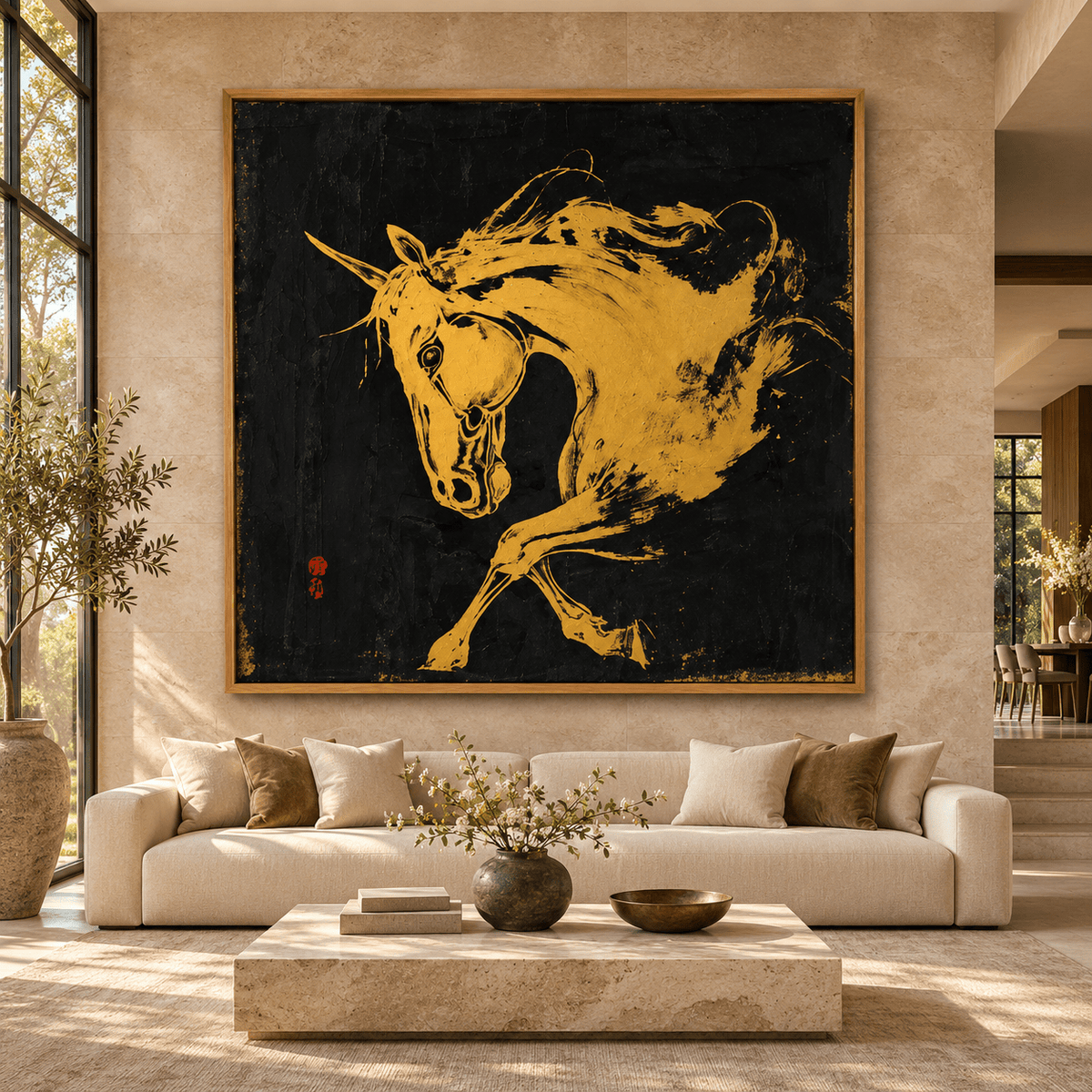
Consider the Solar Iris canvas print, which features gold, amber, charcoal black, and cream tones. It is available in sizes from 20x20 to 58x58 in and printed on artist-grade poly-cotton canvas with UV- and fade-resistant HP latex inks (UL GREENGUARD Gold certified). The satin-matte, low-glare finish helps in a lit room, and the canvas is hand-stretched over a 1.25-inch hardwood stretcher frame, ready to hang.

The Main Light Types
Four primary fixture styles are used to illuminate wall art in residential interiors. Each option offers distinct advantages depending on ceiling height, wall structure, and flexibility preferences.
Picture lights attach directly above the frame or mount to the wall immediately overhead. They provide intimate, focused illumination that works well in traditional layouts, though they require nearby power outlets or neat cord management.
Track or spot lights mount to the ceiling, offering exceptional flexibility to adjust beam angles and reposition fixtures when rearranging wall decor. For broader guidance on professional display techniques, see How to Light Art.
Wall washers are recessed or surface-mounted ceiling fixtures that cast a wide, even sheet of light down the entire wall. This method integrates art seamlessly into the architecture without harsh edges.
Standard room lighting relies on ambient chandeliers or central flush-mount ceiling fixtures. While convenient, room lights rarely provide enough directional intensity to make colors pop on a single display piece.
| Light type | Best for | Glare risk | Watch out for |
|---|---|---|---|
| Picture light | Individual frames | Moderate | Cord clutter or visible wall hardware |
| Track or spot light | Flexible displays | Low | Harsh beam edges if improperly adjusted |
| Wall washer | Galleries | Very low | Lower accent contrast on individual pieces |
| Room light | General rooms | Variable | Inadequate focus and washed-out pigments |

Angle and Distance from the Wall
The position of the fixture relative to the wall determines whether the light flatters the artwork or creates blinding reflections. When a light hangs directly overhead against the wall, it casts heavy shadows along the lower portion of the frame.
Placing the light source slightly forward on the ceiling allows the beam to strike the canvas at a downward angle. This trajectory bounces reflected light toward the floor, maintaining clear visibility for anyone viewing the piece from eye level.
- Mount ceiling fixtures out from the wall to create a gentle downward slope.
- Adjust the fixture head so the center of the beam hits the optical center of the canvas.
- Avoid placing lights directly behind standard viewing positions to prevent viewer shadows on the canvas.
- Choose wide-flood bulbs rather than narrow spots to cover the entire width of large canvases.
For mounting advice before setting up your fixtures, consult How to Hang a Canvas Print: Easy Tips for Hanging Canvas Without Nails.
The Pale Moon canvas print highlights warm cream, sand, soft beige, and ink black tones. It is offered in sizes from 20x20 to 58x58 in. Soft neutral tones like these look best under warm white light.


Here is a large dark canvas styled in a room, so you can see how the surrounding light changes how a piece reads. Not sure how a piece will look in your own room? Use the Live Preview button on any product page.

🎨 FREE ROOM-BY-ROOM ART GUIDE
Placement, sizing and lighting tips for every room of the house.
Download Free →Warm vs Cool Light
Light temperature alters how human eyes perceive color balances across an image. Cool bulbs emphasize blues, grays, and crisp whites, but they can make earthy pigments and skin tones appear sterile.
Warm light complements rich yellows, reds, and neutral palettes, creating an inviting atmosphere throughout home interiors. Finding the right balance keeps the visual character natural without introducing artificial yellow tinting.
Warm White Light
- Enhances red, gold, and wood accents
- Creates a relaxing residential ambiance
- Matches common interior accent lamps
Cool White Light
- Sharpens cool blues and monochrome tones
- Provides crisp daytime clarity
- Risk of looking clinical in living rooms
Look for LED bulbs with high color rendering capabilities. High-rendering bulbs accurately reflect the full color spectrum, allowing pigments to appear as intended without flat or dull patches.
How to Avoid Glare
Reflections represent the most common obstacle to enjoying artwork on display. Glare occurs when high-intensity light bounces directly off a glossy surface straight into the viewer line of sight.
Controlling glare requires balancing fixture angles, source brightness, and the surface sheen of the piece itself. Choosing artwork with a low-reflectivity finish reduces visual hotspots significantly.
Never point a direct beam straight at the center of reflective glass or glossy surfaces, as this produces harsh hotspots that obscure the underlying image.
Diffusers attached to track lights or picture lamps soften harsh rays and spread the beam smoothly across the canvas. Dimmable switches also give you full control to balance display brightness against changing ambient daylight.
The Midnight Gaze canvas print showcases deep black, charcoal, and bright white hues. It comes in sizes from 16x24 to 53x75 in. Dark, high-contrast pieces show hot spots most, so aim the light from above and keep the beam wide.

Common Mistakes When Lighting Art
Using bulbs with excessive wattage is a frequent error in home galleries. Overly bright illumination bleaches delicate colors and creates harsh contrast against adjacent unlit wall space.
Mounting fixtures too close to the top of the canvas creates an uneven gradient where the upper edge is blinding while the bottom remains in shadow. Placing the fixture slightly further away spreads the light evenly across the full frame.
Another misstep is combining mismatched bulb temperatures within the same room. Mixing stark cool spotlights with warm ambient ceiling lamps produces jarring visual friction that distracts from the art.
Failing to consider window exposure can also compromise displays. Direct sunlight introduces excessive heat and unpredictable glare, making dedicated artificial lighting essential for stable viewing conditions.
See It on Your Wall Before You Buy
Use our interactive tool to view any piece directly in your room before making a purchase.

Frequently Asked Questions
What is the 2/3 rule for hanging pictures?
The rule suggests artwork should span approximately two thirds the width of the furniture below it. Centering the frame over a sofa or console creates balanced visual proportions. Proper lighting placement follows this sizing, spreading illumination smoothly across the width of the canvas.
What color light bulb is best for artwork?
Warm white LED bulbs deliver balanced warmth without turning white areas yellow. Selecting bulbs with high color rendering capabilities keeps tones accurate across warm and cool pigments. This balance flatters wall decor in residential living rooms and dining areas alike.
Should art be lit from above or from the side?
Illuminating artwork from above is the standard choice because it mimics natural downward illumination. Side lighting works well for textured sculptural pieces, but it frequently produces uneven shadows across flat paintings and prints. Downward light directs reflections away from eye level.
Do I need a picture light for every painting?
Individual picture fixtures are not mandatory for every display. Recessed ceiling spotlights or adjustable track systems effectively illuminate multiple frames on a single wall. Wall washers also offer broad coverage that showcases grouped gallery walls without mounting separate fixtures over each frame.
How do I stop glare on a canvas print?
To prevent glare, angle the light source from above so reflections bounce toward the floor rather than straight forward. Selecting pieces with a satin-matte surface finish minimizes surface reflection. Adding diffusers or dimming controls further softens bright hotspots on the canvas surface.
Final Thoughts on Bringing Artwork to Life
Thoughtful lighting highlights the true depth, rich tones, and detailed textures of your favorite paintings. Positioning your light source from above at a balanced angle transforms any wall into an eye-catching focal point.
Keep Reading
About the Author — Chiara Rossetti is the founder of Rossetti Art, a canvas print and original art brand. She writes about interior design, wall art styling, and the art of making a home feel alive.

About the Author
Chiara Rossetti
Chiara Rossetti is the founder of Rossetti Art, a canvas print and original art brand. She writes about interior design, wall art styling, and the art of making a home feel alive.

Leave a comment
This site is protected by hCaptcha and the hCaptcha Privacy Policy and Terms of Service apply.