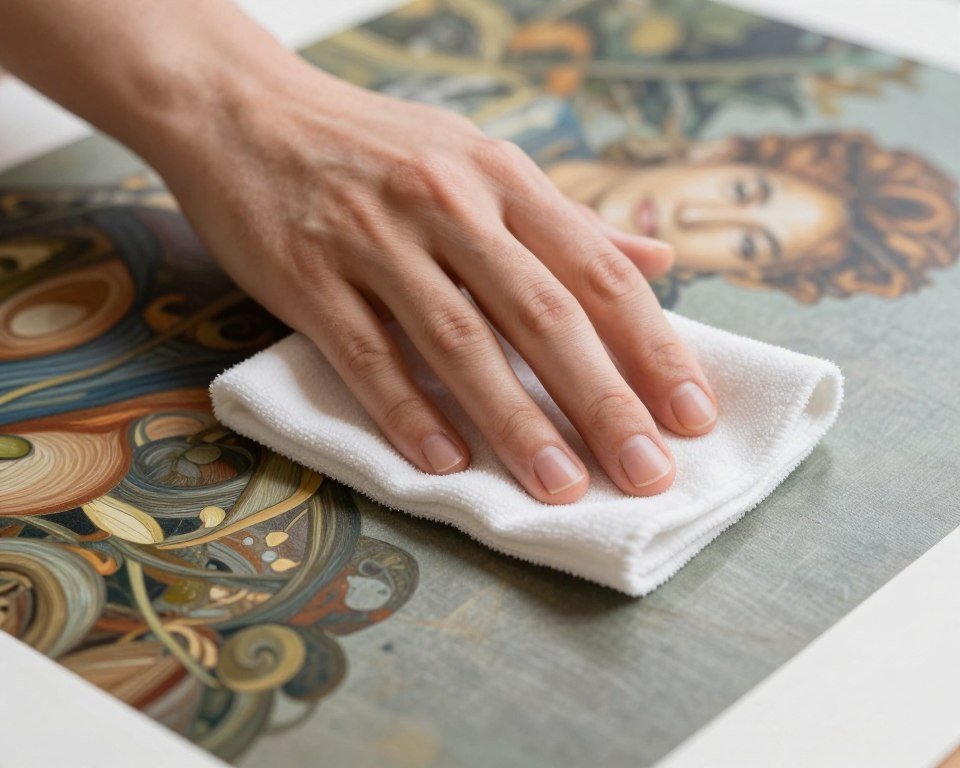
A canvas print is an investment — not just financially, but in the feeling of the room it inhabits. Knowing how to clean it correctly keeps that investment in perfect condition for years, even decades. The process is simpler than most people expect, and the main risk is not under-cleaning but over-cleaning with the wrong materials.
Canvas prints are more durable than many people assume. The ink is embedded in the fabric of the canvas rather than sitting on its surface, and a quality UV-resistant coating provides an additional layer of protection. But like all surfaces in a home, they collect dust and, occasionally, marks — and they respond well to gentle, informed care.
Quick Answer
To clean a canvas print: dust gently with a soft, dry microfibre cloth or a clean, soft-bristled brush. For marks or stains, use a lightly dampened cloth with plain water — never rubbing alcohol, cleaning sprays, or paper towels. Work in gentle circular motions and allow to air dry completely. Never use harsh chemicals, abrasives, or soaking water.

Before You Start: What Not to Use
The most important information about cleaning a canvas print is what to avoid. Several common cleaning materials can cause irreversible damage to canvas prints, even those with protective coatings.
Never use:
- Rubbing alcohol or solvent-based cleaners — these strip protective coatings and can dissolve or smear ink
- Household cleaning sprays — the chemicals interact unpredictably with canvas coatings
- Paper towels or tissues — these are abrasive at the microscopic level and will scratch and dull the surface over time
- Rough cloths or sponges — any abrasive texture can damage the print surface
- Soaking quantities of water — canvas stretches when wet, and excessive moisture can cause warping, particularly at the corners
- Furniture polish or wax — not designed for canvas surfaces and will leave a residue
Rossetti Art canvas prints are hand-stretched over kiln-dried pine frames with archival pigment inks rated fade-resistant for 75+ years. The UV-resistant coating is a protective layer between the ink and the environment — treat it accordingly.

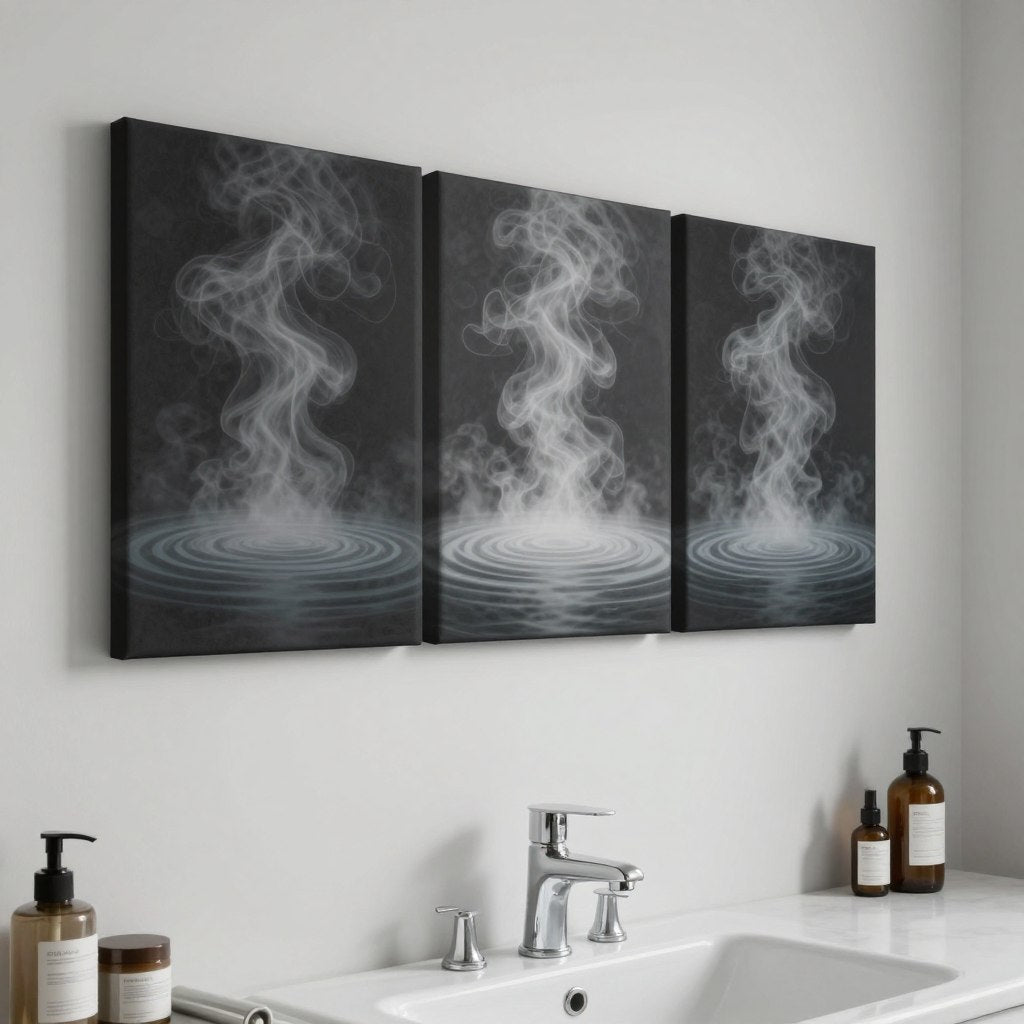
"Storm Passage" — Dark abstract canvas print. Hand-stretched over a kiln-dried pine frame with UV-resistant coating. View the piece →
Step 1: Routine Dusting
The single most effective thing you can do for a canvas print is dust it regularly — before dust has a chance to accumulate into a layer that requires more than a dry cloth to remove.
What you need: A clean, dry microfibre cloth, or a clean, soft-bristled brush (a large artist's paintbrush or a dedicated dusting brush work well).
How to do it: Hold the canvas steady with one hand — or leave it on the wall if it is securely hung. Use light, sweeping strokes across the surface, working from top to bottom so displaced dust falls clear of the canvas. For the sides and back edges, use the same gentle technique.
How often: Once every two to four weeks in most homes is sufficient. In rooms with higher airborne dust levels — near a fireplace, in a studio, in a home with pets — more frequent dusting prevents build-up.
Do not apply pressure. The goal is to lift dust from the surface, not to press it into the canvas. A light touch, consistently applied, is all that is needed for routine maintenance.

Step 2: Spot Cleaning Marks and Stains
For marks, fingerprints, or light stains that routine dusting does not remove, spot cleaning with a damp cloth is the right approach.
What you need: A clean, soft microfibre cloth and plain water. Nothing else for most marks.
How to do it:
- Dampen the cloth with clean water — it should be barely damp, not wet. Wring it out thoroughly so there is no excess moisture.
- Test on an inconspicuous area first — a corner or the back edge of the canvas — to ensure no adverse reaction.
- Gently blot (not rub) the marked area. For more persistent marks, use small, gentle circular motions, working from the outside of the mark inward.
- Allow the area to air dry completely before assessing whether further cleaning is needed.
- Never saturate a single spot — repeat light passes rather than applying more water.
For oily marks (fingerprints, food splatter), a very small amount of mild dish soap diluted in water can help — use a soap-to-water ratio of approximately 1:20, apply with a damp cloth, and follow with a plain water rinse using a second clean cloth. Allow to air dry completely.

"Indigo Drift" — Deep blue abstract canvas. Archival pigment inks, fade-resistant for 75+ years. View the piece →
Step 3: A Deeper Clean (When Needed)
If a canvas print has been in a kitchen or dining room for several years, or has been in a home with smokers, it may have accumulated a light general film rather than specific marks. A gentle overall wipe-down is appropriate in this case.
Use the same slightly damp microfibre cloth approach as for spot cleaning, but work across the whole surface in gentle overlapping sections. Work from top to bottom. Use a second clean cloth dampened with plain water to follow, removing any residue. Then allow the canvas to air dry completely — do not use a hair dryer or any heat source, which can cause the canvas to contract unevenly.
After a deep clean, assess whether any protective touch-up is needed. Most canvas prints with a quality coating do not require re-sealing under normal domestic conditions, but if the print has been in a particularly challenging environment, a specialist art care product may be appropriate — consult the manufacturer or a professional restorer if in doubt.
🎨 FREE CANVAS CARE GUIDE
Download our free Canvas Care Guide — the complete reference for cleaning, protecting and preserving your canvas prints and original paintings at home. Includes a seasonal maintenance checklist and advice for specific room environments.
Download Free →Prevention: How to Keep Your Canvas Print Clean Longer
A small amount of prevention reduces the need for cleaning considerably. Here are the most effective measures.
Choose the right room position. Avoid hanging canvas prints in direct sunlight (the UV-resistant coating provides protection, but sustained direct sun accelerates any ink's ageing). Avoid positions directly above a fireplace or radiator, where rising warm air and particulates accumulate on the surface. Keep canvas prints away from cooking steam in kitchens.
Dust before it accumulates. A light dusting every two to four weeks prevents the build-up that requires more intensive cleaning. A minute of prevention replaces thirty minutes of careful spot work.
Handle correctly during moves or rearrangement. Always hold canvas prints by the sides of the frame, never touching the print surface. Wear clean cotton gloves if available — fingerprints on a matte or semi-matte surface are among the most common causes of marks that require cleaning.
Store correctly if not displaying. If a canvas print needs to be stored, keep it vertical rather than flat (which can cause bowing), in a dry environment, away from direct light and temperature extremes. Do not stack items on top of a stored canvas.
Frequently Asked Questions
Can I use a damp cloth to clean a canvas print?
Yes — a barely damp microfibre cloth is the correct tool for cleaning marks from a canvas print. The cloth should be almost dry to the touch, not wet. Never soak a canvas print or apply quantities of water. A light, gentle circular motion on the marked area, followed by air drying, is the right approach for most household marks.
Will cleaning damage my canvas print?
Gentle cleaning with the right materials will not damage a quality canvas print. The risk is using the wrong materials — rubbing alcohol, paper towels, harsh chemicals, or abrasive cloths. Rossetti Art canvas prints have a UV-resistant protective coating, but they should still be cleaned gently and carefully. When in doubt, less is more: a lighter touch, fewer passes, and allowing time to dry between assessments is always better than aggressive cleaning.
How do I remove a fingerprint from a canvas print?
Fingerprints — being oily — are best treated with a very slightly soapy damp cloth: a drop of mild dish soap in 200ml of water, applied gently with a microfibre cloth using circular motions. Follow with a plain water wipe to remove soap residue, then air dry. Do not use rubbing alcohol or any solvent, which will strip the protective coating.
How do I clean the frame of a canvas print?
For an oak floater frame or any wooden frame, use a dry or barely damp cloth and wipe along the wood grain. Wood-specific polish or conditioner can be used very sparingly on solid wood frames — the oak floater frame at Rossetti Art is crafted from solid wood with a natural grain finish, and it benefits from occasional conditioning with a quality beeswax or furniture cream. Avoid getting any frame product on the canvas surface itself.
How do I know if my canvas print needs professional cleaning?
Most household marks on canvas prints can be addressed with the gentle home cleaning methods above. If a canvas has significant mould growth (from sustained moisture exposure), deep penetrating stains, or damage to the print surface itself, professional art restoration is the appropriate step. Attempting to address serious damage at home risks making it worse. An art conservator can assess the print and recommend the appropriate treatment.
Explore the full canvas print collection at Rossetti Art — every piece is hand-stretched on kiln-dried pine with archival inks and UV-resistant coating, built to last for decades with the right care.
Keep Reading
About the Author — Chiara Rossetti is the founder of Rossetti Art, a canvas print and original art brand. She writes about interior design, wall art styling, and the art of making a home feel alive.


Leave a comment
This site is protected by hCaptcha and the hCaptcha Privacy Policy and Terms of Service apply.