
Walking into a home with bare walls feels incomplete—like a story waiting to be told. The transformation that happens when thoughtfully selected abstract wall art graces those empty spaces is nothing short of magical. Suddenly, rooms have personality, depth, and a sense of intention that speaks volumes about the people who live there.
Whether you're staring at blank walls in a new space or looking to refresh your current décor, this guide will walk you through the art of decorating with modern abstract pieces in every room. You'll discover practical sizing rules, ideal hanging heights, color selection strategies, and curated examples that make the process approachable and enjoyable.
Quick Answers (TL;DR)
- Best Size Rule: Art above furniture should be approximately 2/3 the width of the furniture piece (e.g., 48" art above a 72" sofa).
- Standard Hanging Height: Center of artwork at 57-60" from the floor for general walls; 6-8" above furniture.
- Color Selection: Choose art that repeats 1-2 colors already present in your room for cohesion.
- Medium Selection: Canvas prints for impact and value, original paintings for texture and uniqueness, sculptures for dimension in transitional spaces.
The 3-Part Styling Framework (works in any room)

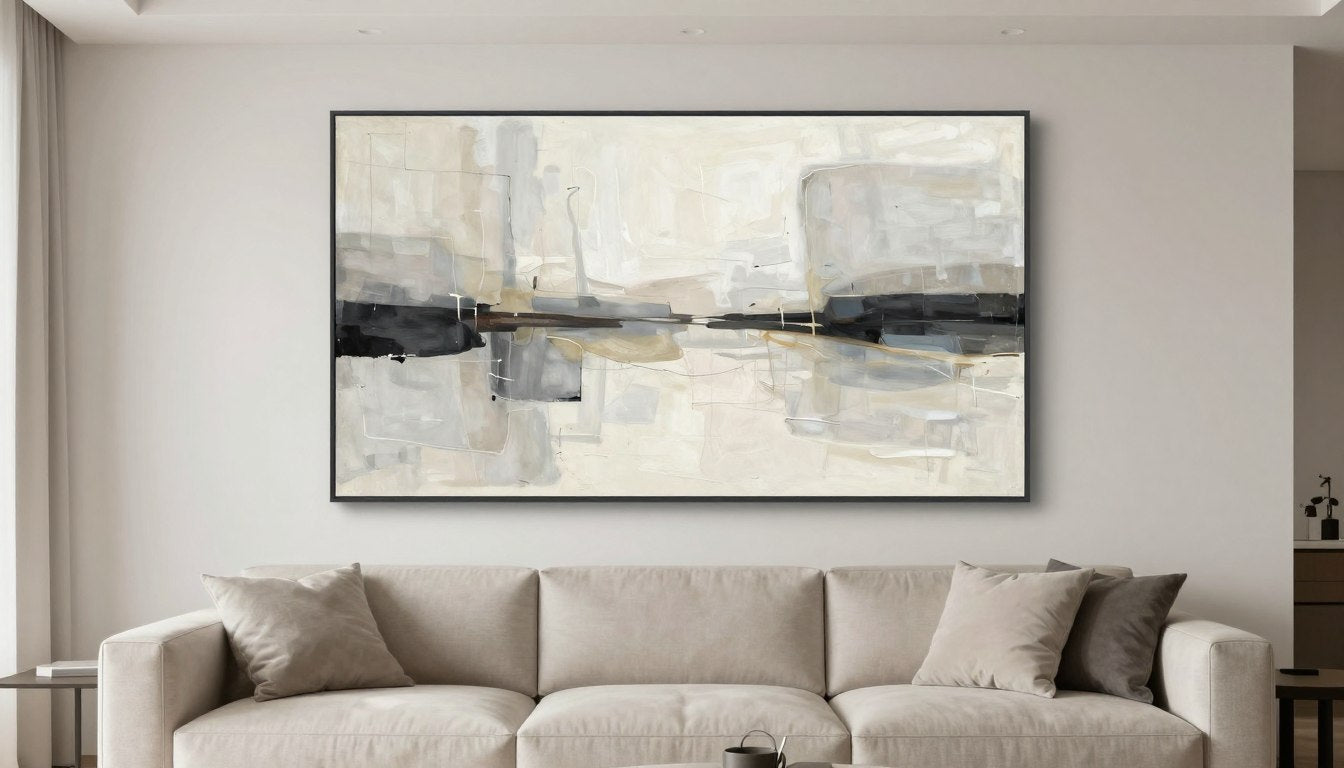
The 2/3 width rule creates perfect balance above this sofa. View this piece → Solitude Rising
Scale (the "2/3 width" rule)
The most common decorating mistake is choosing art that's too small for the space. For art above furniture, follow the 2/3 rule: select a piece (or grouping) that's about two-thirds the width of the furniture below it. This creates visual balance and proper proportion.
For example, a 72-inch sofa looks best with a 48-inch wide artwork or grouping above it. For smaller furniture like consoles or nightstands, maintain the same proportional relationship. When in doubt, larger is usually better than smaller—undersized art can look like an afterthought rather than an intentional design element.
Palette (repeat + echo)
The most harmonious rooms use a 60/30/10 color distribution (dominant, secondary, and accent colors). Apply this principle when selecting abstract art by choosing pieces that echo colors already present in your space.
Look for artwork that contains at least one or two colors from your existing palette. The art doesn't need to match perfectly—in fact, it's more interesting when it doesn't—but having these color connections creates a cohesive look. For a bolder statement, choose art with your room's accent color as its dominant tone.
Placement (eye level + spacing)
The museum standard for hanging art is to position the center at 57-60 inches from the floor—average eye level for most adults. When hanging art above furniture, leave 6-8 inches of space between the top of the furniture and the bottom of the frame.
For gallery walls, maintain 2-3 inches between frames for visual breathing room. Consider lighting as well—art placed opposite windows benefits from natural light, while pieces in darker areas might need dedicated picture lights or adjustable track lighting to shine.
For more detailed guidance on proper art placement, explore our comprehensive guide to the 2/3 rule for wall art.
Modern Abstract Wall Art Styling Matrix
| Room | Goal | Best Art Type | Size Range | Placement Tip | Palette Tip |
| Living Room | Focal Point | Large Canvas or Set | 36-60" (91-152cm) | Center above sofa, 6-8" clearance | Echo 1-2 room colors |
| Bedroom | Calm/Serene | Canvas or Original | 30-48" (76-122cm) | Above headboard, centered | Soft, muted tones |
| Dining Room | Conversation | Statement Original | 30-40" (76-102cm) | Visible from table, with lighting | Rich, vibrant colors |
| Entry/Hallway | Welcome | Vertical Canvas | 24-36" (61-91cm) | Eye level, first visual moment | Bold, inviting colors |
| Home Office | Focus/Inspire | Minimal Canvas | 24-30" (61-76cm) | In peripheral vision from desk | Blues, greens, neutrals |
| Small Spaces | Expand | Canvas with depth | 18-24" (46-61cm) | Eye level, avoid crowding | Light, airy colors |
Room-by-Room Decorating Ideas (with examples)
Living Room (statement piece or balanced set)
As the heart of most homes, the living room deserves special attention when it comes to art selection. This space often benefits from a single large statement piece or a balanced set that anchors the room.
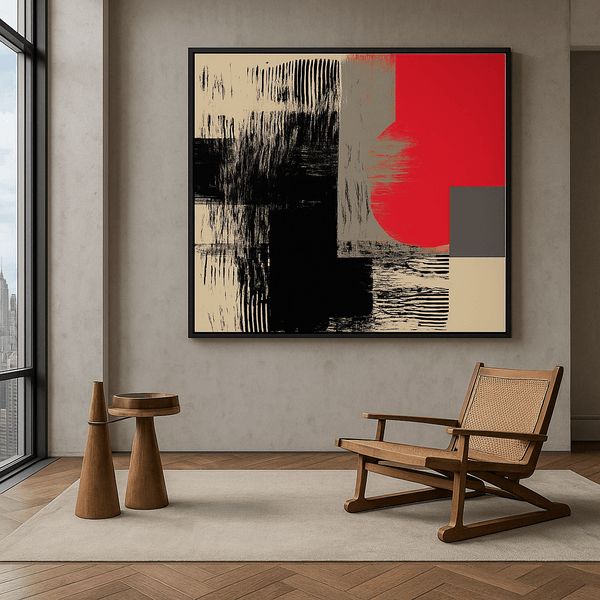
A bold statement piece creates instant drama in this neutral living room. View this piece → Bold Contrast Harmony
For larger seating arrangements, consider a triptych or diptych that spans the width of your sofa. These multi-panel pieces create a cohesive look while filling a substantial wall space. For a more eclectic approach, a thoughtfully arranged gallery wall can incorporate different sizes and styles while maintaining visual harmony.
Living rooms with minimalist décor benefit from art with bold colors or striking compositions that can serve as the room's focal point. Conversely, if your space already has many design elements, consider more subtle abstract pieces that complement rather than compete with existing features.
Bedroom (soft abstraction, calm palette)
The bedroom calls for art that promotes relaxation and tranquility. Soft abstractions with flowing forms and gentle color transitions create a peaceful atmosphere conducive to rest.
Soft, flowing abstractions promote tranquility in the bedroom. View this piece → Solitude Rising
Position your chosen piece above the headboard, centered with the bed. For proper scale, the artwork (or grouping) should be approximately 2/3 the width of the headboard or bed. In bedrooms with limited wall space, consider a vertical composition that draws the eye upward, creating the illusion of height.
Color selection is particularly important in bedrooms. Blues, soft greens, and neutral tones promote relaxation, while bold reds and oranges may be too stimulating for a restful environment. Look for pieces with gentle transitions between colors rather than harsh contrasts.
Dining Room (conversation piece + lighting)
Dining rooms present a unique opportunity for art that sparks conversation. Since this space is often used for entertaining, select pieces that invite discussion and reflect your personal taste.

A textured original painting adds depth and interest to this dining space. View this piece → Solstice Passage
Consider the viewing angle when placing art in the dining room. Pieces should be visible from seated positions around the table. Proper lighting is essential—install picture lights or directed track lighting to highlight the artwork, especially for evening gatherings.
Original paintings with texture work particularly well in dining rooms, as they add dimension and depth that can be appreciated up close. For a more dramatic effect, choose pieces with rich, saturated colors that complement your dining room's color scheme.
Hallway/Entry (vertical rhythm + "welcome moment")
Hallways and entryways create first impressions and set the tone for your home. These transitional spaces benefit from art that guides movement and creates a welcoming atmosphere.

A striking triptych creates rhythm and movement in this entryway. View this piece → Momentum Lines
For narrow hallways, a series of smaller pieces creates rhythm and draws the eye forward. Hang these at eye level (57-60 inches from the floor to the center) and maintain consistent spacing between frames. In entryways, a single statement piece creates an immediate focal point and sets the tone for your home's aesthetic.
Consider the transition between spaces when selecting art for hallways. Pieces that incorporate colors from adjoining rooms create visual flow and cohesion throughout your home. For a unified look, maintain a consistent frame style or color theme across multiple pieces.
Home Office (focus + energy without clutter)
Home office art should inspire creativity and focus without creating visual distraction. Choose pieces that energize your workspace while maintaining a sense of calm and order.

A textured green abstract adds life to this workspace without overwhelming it. View this piece → Verdant Silence
Position artwork where it's visible in your peripheral vision rather than directly behind your computer screen, which can cause distraction. Abstract pieces with blues and greens promote focus and creativity, while structured compositions with clear lines can reinforce a sense of order.
For home offices that double as video conference backgrounds, select art that makes a positive impression without overwhelming the frame. Clean, professional-looking pieces with subtle colors work well in this context.
Small Spaces / Rentals (damage-free hanging + scaling tricks)
Small spaces and rental properties present unique challenges for art display. The right pieces can make compact areas feel larger and more personalized without causing damage to walls.

A symmetrical diptych adds balance and luxury to this compact space. View this piece → Golden Butterfly Diptych
For damage-free hanging, consider adhesive hanging strips rated for your artwork's weight, leaning larger pieces on mantels or consoles, or using picture rails that attach to molding. In small spaces, art with perspective or depth can create the illusion of space—look for pieces with horizon lines or diminishing elements.
Scale is crucial in compact areas. While the 2/3 rule still applies, be mindful of overwhelming the space. Sometimes a single, impactful piece works better than multiple smaller ones, which can create visual clutter in limited square footage.
Choosing the Right Medium
Canvas Prints (impact + flexible sizing)
Canvas prints offer versatility, visual impact, and excellent value. Their lightweight construction makes them easy to hang, and they don't require framing, creating a clean, contemporary look.

A large-scale canvas print creates dramatic impact without the weight of framed art. View this piece → Ethereal Form
Canvas prints are available in a wide range of sizes, making them ideal for spaces that require specific dimensions. They're particularly effective in larger sizes, as they create substantial visual impact without the weight and expense of equivalently sized framed pieces.
For maximum longevity, look for canvas prints made with HP latex inks and UV-protective coatings. These features prevent fading and ensure your art remains vibrant for years to come. Browse our collection of canvas prints to find the perfect piece for your space.
Original Paintings (texture + collector feel)
Original paintings bring unmatched texture, depth, and authenticity to your space. The visible brushstrokes and tactile quality create dimension that changes with different lighting conditions throughout the day.
The texture and dimension of this original painting create ever-changing visual interest. View this piece → Solstice Passage
Beyond their aesthetic appeal, original paintings carry the story of their creation. Each piece represents a unique moment of artistic expression that cannot be duplicated. This authenticity creates a special connection and conversation point in your home.
When displaying original paintings, consider their preservation needs. Position them away from direct sunlight and extreme temperature fluctuations. For unframed canvas paintings, "floating frames" can provide protection while maintaining the contemporary edge-to-edge look.
Sculptures (shadow + dimension)
Wall sculptures add a unique dimensional element to your décor, creating interesting shadows and changing perspectives as you move through the space.

This sculptural piece transforms a simple hallway with form and shadow. View this piece → Ethereal Bliss
Sculptures work particularly well in transitional spaces like hallways and entryways, where their three-dimensional quality can be appreciated from multiple angles. They're also effective on walls that receive directional lighting, which enhances shadows and highlights the sculptural form.
When styling wall sculptures, consider the surrounding space. These pieces often work best when given room to breathe—avoid crowding them with other wall décor. For maximum impact, position spotlights or adjustable lighting to cast dramatic shadows that extend the visual presence of the piece.
Common Mistakes (and fast fixes)
Mistake: Art Hung Too High
One of the most common errors is hanging art too high on the wall, creating a disconnected feeling in the room.
Quick Fix: Lower the piece so its center point is at eye level (approximately 57-60 inches from the floor) for general walls, or 6-8 inches above furniture.
Mistake: Art Too Small for the Space
Undersized art looks like an afterthought and fails to make an impact, especially above larger furniture pieces.
Quick Fix: Follow the 2/3 rule—artwork should be about two-thirds the width of the furniture below it. If your current piece is too small, consider adding companion pieces to create a larger grouping.
Mistake: Ignoring the Room's Palette
Art that clashes with your existing color scheme creates visual discord rather than harmony.
Quick Fix: Choose art that contains at least one color already present in your room. If you love a piece that doesn't match, consider adding accessories in colors from the artwork to create intentional connections.
Mistake: Overcrowded Gallery Walls
Too many pieces clustered together without adequate spacing creates visual chaos and diminishes the impact of individual works.
Quick Fix: Maintain 2-3 inches between frames, and limit your gallery to pieces that share a common element (color, theme, or frame style). Remove pieces that don't contribute to the overall composition.
Frequently Asked Questions
How high should I hang wall art in a living room?
For general walls, the center of your artwork should be at eye level, approximately 57-60 inches from the floor. When hanging art above furniture like a sofa, position the bottom edge 6-8 inches above the furniture to create a visual connection between the pieces.
What size wall art works best above a sofa?
Follow the 2/3 rule: your artwork (or grouping) should be approximately two-thirds the width of your sofa. For a standard 72-inch sofa, look for art around 48 inches wide. The piece should also be proportional in height—typically 24-36 inches tall for most living rooms.
How do I choose abstract art colors that won't clash?
Select abstract art that contains at least one or two colors already present in your room. These color connections create harmony even if the art introduces new hues. For a foolproof approach, choose pieces with neutral backgrounds (white, beige, gray) and accent colors that complement your existing palette.
Should I buy a canvas print or an original painting?
Canvas prints offer excellent value, versatility, and lightweight installation. They're ideal for larger spaces or when specific sizes are needed. Original paintings provide unique texture, authenticity, and investment value. Consider your budget, the importance of texture in your space, and whether you're looking for a potential investment piece.
How do I decorate a hallway with modern wall art?
For narrow hallways, create rhythm with a series of smaller pieces hung at eye level with consistent spacing. For wider hallways or landings, a single larger piece or triptych can create a focal point. Consider the flow between rooms and choose art that incorporates colors from adjoining spaces for visual continuity.
What's the easiest way to plan a gallery wall?
Arrange your pieces on the floor first to experiment with layouts. Trace each frame onto kraft paper, cut out the shapes, and tape them to the wall to visualize the arrangement before committing. Maintain 2-3 inches between frames and ensure the collection has a unifying element (similar frames, color palette, or theme).
Are 2-3 piece sets better than one large statement piece?
Multi-piece sets work exceptionally well above wider furniture like sofas and beds, creating a cohesive look that fills the space appropriately. They also add visual interest through their arrangement. Single large pieces create more dramatic impact and can be simpler to hang. Your choice should depend on your space, furniture proportions, and personal preference.
Where should I place a sculpture in a modern home?
Wall sculptures work best in areas where they can be viewed from multiple angles—entryways, hallway ends, or transitional spaces. They're particularly effective on walls that receive directional lighting, which enhances their dimensional quality through shadows. Give sculptures room to breathe rather than crowding them with other décor.
Conclusion: Your Home, Your Canvas
The journey from blank walls to a thoughtfully curated home is one of the most rewarding aspects of creating a personal space. Modern abstract wall art offers endless possibilities for expression—each room becoming a canvas that reflects your unique perspective and style.
As you apply the principles from this guide, remember that there's room for intuition alongside the rules. Trust your eye and your emotional response to pieces that speak to you. The most compelling spaces balance design principles with personal connection, creating rooms that feel both intentionally designed and authentically yours.
Ready to transform your space?
Explore Rossetti Art's curated collection of modern abstract pieces—from statement canvases to textured originals—each selected to elevate your home with artful intention.
Explore the Collection
About the Author
Chiara Rossetti
Chiara Rossetti is the founder of Rossetti Art, a canvas print and original art brand. She writes about interior design, wall art styling, and the art of making a home feel alive.

Leave a comment
This site is protected by hCaptcha and the hCaptcha Privacy Policy and Terms of Service apply.