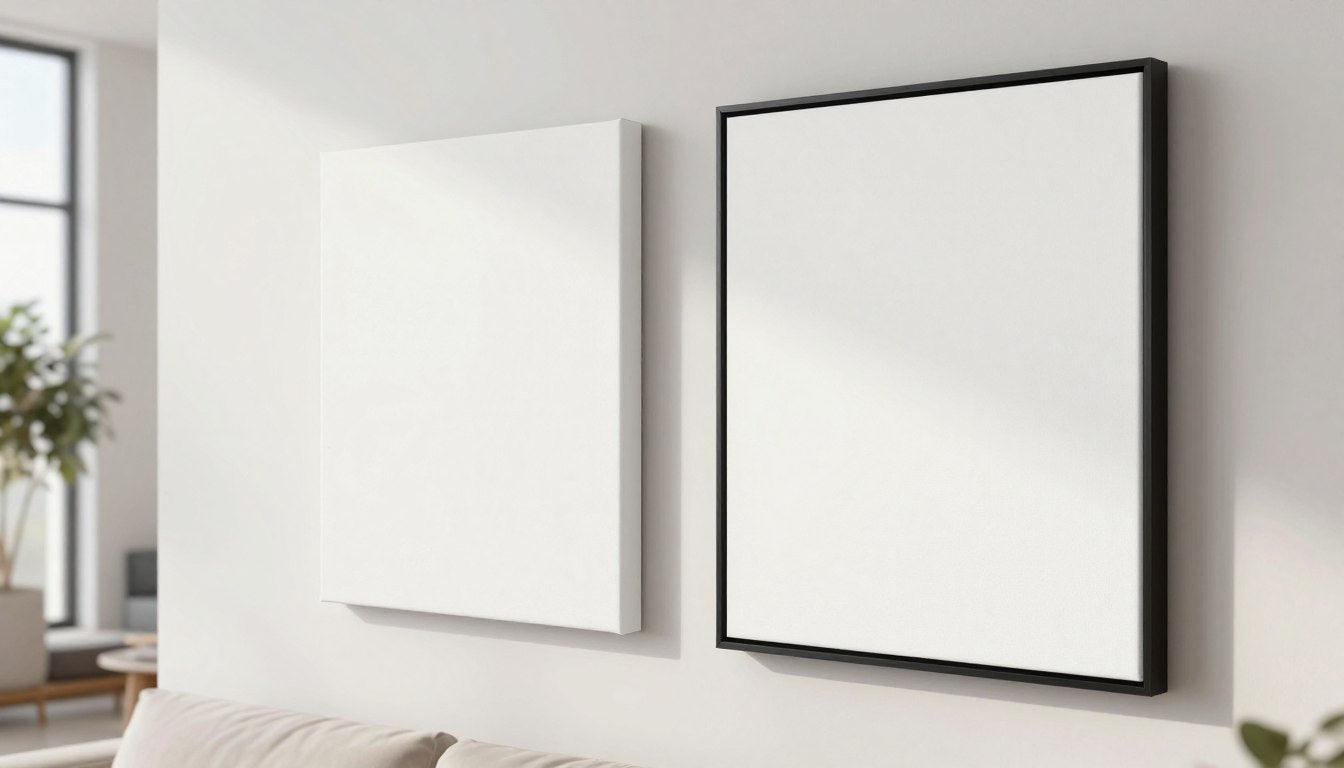
Choosing the right presentation for your canvas art transforms how artwork feels in your space. The decision between gallery wrap and float frame isn't just technical. It shapes the emotional impact of every piece on your walls.
Gallery wrap offers a clean, contemporary look. The canvas wraps around wooden stretcher bars with the image continuing on the sides. Float frame adds dimension with a carefully designed gap between the artwork and frame. This creates a shadow effect that draws attention.
Both methods have passionate supporters. Interior designers debate which works better in professional spaces. Artists consider how each method honors their original work. Homeowners want art that feels right when they walk into a room.

Understanding Gallery Wrap Canvas Prints
Gallery wrap presents canvas art in its purest form. The printing process extends the image beyond the front surface. It wraps around the edges of wooden stretcher bars that give the canvas its structure.
The technique creates a frameless appearance. No additional materials compete for visual attention. The artwork stands alone against your wall with nothing between the image and the viewer's eye.
How Gallery Wrap Construction Works
The canvas material gets stretched tightly over a wooden frame structure. Professional tensioning ensures the surface remains flat without waves or ripples. The edges receive the same careful treatment as the front.
Artists and printers have two main approaches for the sides. The image can continue seamlessly around all edges. Alternatively, the sides might display a solid color or mirrored portion of the main image.
Premium gallery-wrapped canvases use thick stretcher bars. The depth typically ranges from 0.75 inches to 1.5 inches. Deeper bars create more dramatic shadows and a substantial presence on walls.

Visual Impact of Gallery Wrap Style
The frameless design creates a contemporary, gallery-like atmosphere. Your walls become an extension of the artwork itself. This method particularly suits modern and minimalist interiors where clean lines matter.
Gallery wrap works beautifully with abstract canvas prints and bold graphic designs. The borderless presentation lets color and form breathe without interruption. Geometric patterns gain extra visual power when they wrap around edges.
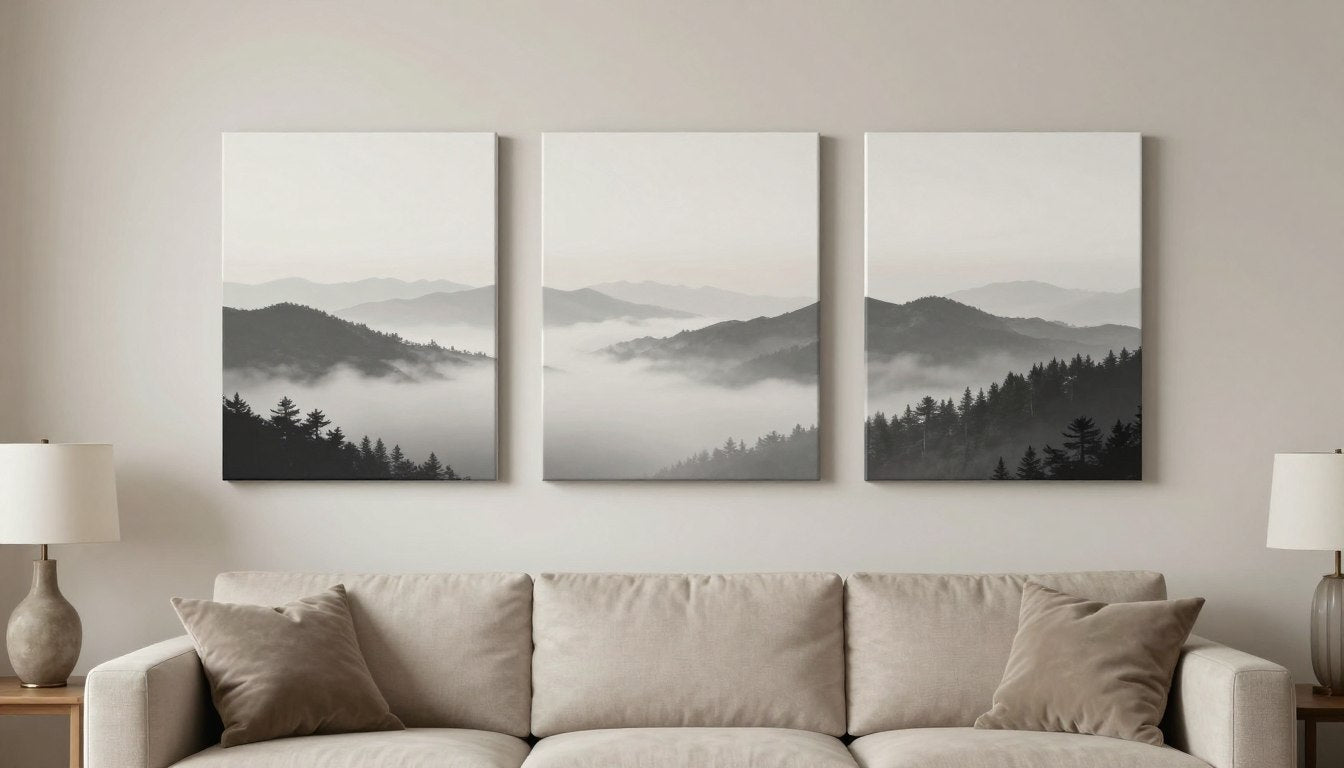
Many people love gallery wrap for creating living room wall art arrangements. Multiple wrapped canvases can hang close together. The lack of frames allows seamless transitions between pieces.
Best Applications for Gallery Wrapped Canvases
Contemporary homes benefit most from this presentation style. Open floor plans with minimal ornamentation provide the perfect backdrop. The artwork becomes a focal point without competing elements.
Gallery walls consisting of multiple pieces shine with wrapped canvases. The uniform edge treatment creates visual cohesion. Different sizes can mix while maintaining aesthetic consistency.
Spaces with modern furniture and clean architectural lines embrace gallery wrap naturally. Think loft apartments, renovated industrial spaces, and homes with Scandinavian influence. The method complements rather than contradicts the existing design language.
Love Bold, Frameless Minimalism? Here Are 3 Prints That Shine in Gallery Wrap
These carefully selected pieces work beautifully with the clean, contemporary look of gallery-wrapped canvas.

Abstract Harmony Canvas
Bold geometric forms in calming tones. Perfect for modern living spaces that need a sophisticated focal point.

Monochrome Portrait
Timeless black and white imagery. The frameless presentation emphasizes the emotional depth of portraiture.

Botanical Serenity
Nature-inspired designs that bring organic beauty. Gallery wrap enhances the connection between art and natural elements.
Exploring Floating Frame Canvas Presentation
Floating frames create a sophisticated presentation method. The canvas appears to float inside the frame with a deliberate gap around all edges. This space becomes essential to the overall aesthetic appeal.
The frame doesn't touch the canvas directly. Instead, the artwork sits slightly recessed. The resulting shadow adds depth and dimension that catches attention from across the room.
Floating Frame Construction and Design
The construction uses a recessed rabbet in the wooden frame. The canvas sits back from the frame's front edge by approximately a quarter inch. This gap remains consistent on all four sides.
Premium floating frames feature handcrafted poplar hardwood. The wood grain and finish options range from natural oak to painted black. Each choice affects how the frame interacts with wall colors and surrounding furniture.
The shadow line created by the gap adds visual weight. Even lightweight prints gain substantial presence. The three-dimensional effect makes art feel more like an architectural element than a simple wall decoration.

Aesthetic Benefits of Floating Frames
The frame provides definition without overwhelming the artwork. It establishes clear boundaries while maintaining visual breathing room. This balance works across multiple interior design styles.
Floating frames excel with portrait canvas prints and figurative work. The subtle border draws the eye inward toward facial features and human forms. The frame becomes a window rather than a barrier.
Traditional and transitional spaces embrace floating frames naturally. The method adds formality without feeling stuffy. Homes mixing modern and classic elements find this presentation strikes the perfect middle ground.
When to Choose Floating Frames
Floating frames suit artwork that benefits from clear definition. Detailed images with complex compositions need the visual anchor. The frame guides viewers to focus on the intended subject matter.
Consider floating frames for bedroom canvas prints where a refined atmosphere matters. The added dimension creates intimacy. The shadow effect feels especially striking in rooms with controlled lighting.
Professional spaces gain credibility with floating frames. Office canvas art appears more polished and intentional. The presentation method signals careful curation rather than casual decoration.
Gallery walls mixing different art styles benefit from uniform floating frames. The consistent border treatment unifies disparate subjects. Different frame colors can subtly distinguish between artwork categories or themes.
Comparing Visual Characteristics and Room Impact
Gallery wrap and floating frames create distinctly different visual experiences. Understanding these differences helps match presentation style to both artwork and interior design goals.
Edge Treatment and Dimension
Gallery wrap completely eliminates visible edges around the canvas front. The image either extends continuously or displays coordinated color on the sides. Viewers see uninterrupted art from any angle.
Floating frames intentionally emphasize edges and boundaries. The gap creates a distinct separation between artwork and wall. The shadow effect adds perceived thickness that changes with lighting throughout the day.
Depth perception differs significantly between methods. Gallery wrap appears flatter against walls despite thick stretcher bars. Floating frames create stronger three-dimensional presence even with thinner canvas profiles.

How Each Style Affects Color Perception
Gallery wrap allows colors to extend to the physical limits of the canvas. Vibrant hues feel more expansive and energetic. The borderless presentation makes bold colors appear to advance from the wall.
Floating frames contain and focus color within defined boundaries. The frame creates a subtle contrast that can enhance or modify color temperature. Dark frames intensify warm tones while light frames cool them slightly.
Wall color interactions change dramatically. Gallery wrap integrates more directly with wall paint. Floating frames create a transition zone that mediates between wall and artwork colors.
Spatial Relationships in Different Room Sizes
Small spaces often benefit from gallery wrap's visual simplicity. The lack of frames reduces clutter. Walls feel less crowded when multiple pieces hang together without border competition.
Large rooms can handle the added dimension of floating frames. The shadow effect prevents art from disappearing on expansive walls. The architectural quality of frames helps anchor furniture arrangements.
Ceiling height influences presentation choices. Gallery wrap works well in rooms with lower ceilings. Floating frames excel in spaces with high ceilings where added visual weight prevents art from feeling lost.
Match This Framing Style to Your Space
Different rooms call for different presentation approaches. Explore our curated collections designed for specific spaces in your home.
Living Room Collections
Statement pieces that anchor conversation areas. Both gallery wrap and floating frames work beautifully depending on your existing decor style.
Bedroom Canvas Prints
Create intimate, restful environments. Floating frames add refined dimension perfect for personal sanctuary spaces.
Office Canvas Art
Professional presentation for work environments. Floating frames signal sophistication while gallery wrap maintains modern simplicity.
Practical Installation and Maintenance Considerations
Installation requirements and ongoing care differ between gallery wrap and floating frame presentations. These practical factors often influence final decisions as much as aesthetic preferences.
Hanging Methods and Hardware
Gallery-wrapped canvases typically include pre-installed hanging hardware. D-rings or sawtooth hangers attach directly to the wooden stretcher bars. Installation requires only a nail or screw in the wall.
Floating frames add slight complexity to the hanging process. The frame structure provides mounting points separate from the canvas itself. This separation ensures the floating effect remains consistent after installation.
Weight distribution varies between methods. Gallery wrap distributes weight across the entire stretcher bar structure. Floating frames concentrate weight in the frame corners and mounting hardware points.
Protection and Longevity
Gallery wrap leaves canvas edges exposed to environmental factors. Dust accumulation on sides requires occasional attention. The canvas texture remains vulnerable to accidental contact from furniture or people.
Floating frames provide protective barriers around canvas edges. The frame shields vulnerable areas from dust and physical damage. Glass or acrylic glazing can be added for additional protection though most canvas prints display beautifully without it.
Long-term color stability remains excellent with both methods when using museum-quality printing. UV-resistant inks prevent fading. Proper placement away from direct sunlight extends life regardless of presentation style.

Maintenance Requirements
Gallery wrap cleaning involves gentle dusting of the front surface and wrapped edges. Microfiber cloths work well without damaging canvas texture. Avoid cleaning products that might discolor or degrade the material.
Floating frames require attention to both canvas and frame surfaces. Wood frames benefit from occasional conditioning depending on finish type. The gap between canvas and frame can collect dust that needs careful removal.
Professional cleaning becomes necessary for valuable or delicate works. Art conservators can address specific issues without risking damage. Both presentation methods can undergo professional care when needed.
Cost Comparison and Long-Term Value
Budget considerations play legitimate roles in choosing between gallery wrap and floating frames. Understanding cost structures helps make informed decisions that balance aesthetics with financial reality.
Initial Investment Differences
Gallery-wrapped canvases generally cost less than floating frame presentations. The simpler construction requires fewer materials and less labor. Mass production techniques keep prices accessible for most budgets.
Floating frames add material and craftsmanship costs. Hardwood frame construction requires precise measurements. The assembly process involves more steps than simple canvas stretching. These factors increase initial purchase prices.
Size significantly affects pricing for both methods. Larger works require proportionally more materials. Gallery wrap costs scale somewhat linearly with dimensions. Floating frame costs increase more dramatically as custom frame construction becomes necessary.
Gallery Wrap Investment Range
- Small prints (16x20 inches): Starting around $45-60
- Medium prints (24x36 inches): Typically $65-90
- Large prints (40x60 inches): Generally $120-180
- Extra-large prints (60x80 inches): Can reach $250-350
Floating Frame Investment Range
- Small framed prints (16x20 inches): Starting around $75-95
- Medium framed prints (24x36 inches): Typically $105-140
- Large framed prints (40x60 inches): Generally $180-260
- Extra-large framed prints (60x80 inches): Can reach $350-500
Perceived Value and Resale Considerations
Floating frames often command higher perceived value. The additional craftsmanship signals quality to viewers. Professional spaces particularly benefit from this enhanced perception.
Gallery wrap appeals to contemporary art collectors. The presentation method aligns with modern gallery practices. Collectors seeking that aesthetic may prefer gallery wrap regardless of price differences.
Resale value depends more on artwork quality than presentation method. Limited edition prints and original paintings maintain value based on artistic merit. The frame or wrap style plays a supporting rather than leading role.
Replacement and Update Costs
Gallery-wrapped canvases allow easy replacement when tastes change. The lower cost makes updating artwork collections more accessible. Seasonal rotations become feasible without major financial commitment.
Floating frames represent longer-term commitments due to higher costs. However, quality frames can accept different canvas prints over time. Reusing frames with new art reduces replacement expenses.
Damage repair costs differ significantly. Gallery wrap damage often requires complete replacement. Floating frame damage might only necessitate frame repair or replacement while preserving the canvas artwork.
Matching Presentation to Interior Design Styles
Interior design aesthetics provide crucial guidance for choosing between gallery wrap and floating frames. Each presentation method naturally complements specific design movements and decorating philosophies.
Modern and Contemporary Interiors
Modern design principles embrace gallery wrap enthusiastically. The clean lines and minimal ornamentation align perfectly with modernist values. Frameless presentation removes visual barriers between art and architecture.
Contemporary spaces featuring line art canvas prints showcase gallery wrap beautifully. Simple, bold graphics gain power from borderless presentation. The method lets minimalist artwork speak without distraction.
Open-concept layouts with minimal room divisions suit gallery wrap collections. Multiple pieces can flow across wall spaces. The lack of frames prevents visual fragmentation across connected areas.

Traditional and Transitional Spaces
Traditional interiors find floating frames more harmonious with existing elements. Crown molding, wainscoting, and architectural details appreciate the defined borders. Frames create dialogue with other room trim work.
Transitional design mixing modern and traditional elements benefits from floating frames' balanced approach. The contemporary shadow effect pairs with traditional frame materials. This combination bridges old and new successfully.
Formal dining rooms and sophisticated dining room wall art presentations favor floating frames. The added dimension creates appropriate gravitas. Special occasion spaces deserve the enhanced formality.
Industrial and Eclectic Environments
Industrial lofts with exposed brick and metal elements embrace gallery wrap naturally. The raw, unfinished quality of wrapped canvas edges complements industrial materials. Urban spaces feel more authentic with frameless art.
Eclectic interiors can utilize both presentation methods strategically. Gallery wrap might highlight contemporary pieces while floating frames showcase vintage finds. The contrast adds intentional variety without creating chaos.
Bohemian and artistic spaces often prefer gallery wrap's informal quality. The method feels less precious and more approachable. Collections can expand organically without maintaining frame style consistency.
Which Art Types Work Best with Each Method
Certain artistic styles and subject matter naturally pair better with specific presentation methods. Understanding these relationships ensures artwork appears in its most compelling form.
Abstract and Geometric Art
Abstract compositions thrive in gallery wrap presentations. Colors and forms can extend indefinitely without frame interruption. The borderless approach emphasizes the non-representational nature of abstract work.
Geometric patterns gain extra dimension when wrapping around canvas edges. The continuation of lines and shapes on sides creates interesting viewing angles. Abstract geometric canvas prints by artists like Chiara Rossetti demonstrate this effect beautifully.
Floating frames work when geometric precision needs emphasis. Clean borders complement mathematical compositions. The shadow effect can enhance the architectural quality of geometric arrangements.
Portraiture and Figurative Work
Portrait photography and painted figures often benefit from floating frames. The defined border focuses attention on facial features and human forms. The frame creates a window effect that draws viewers into the subject's world.
Gallery wrap can work for portraits with significant negative space. When the background color extends naturally, wrapped edges don't compete with the central figure. Minimalist portrait compositions particularly suit this approach.
Figurative work with detailed backgrounds performs better in floating frames. The border prevents complex compositions from visually bleeding into walls. Viewers can more easily separate subject from environment.

Landscape and Nature Photography
Landscape photography divides between both methods based on composition. Panoramic views often excel in gallery wrap. The extended horizontal format feels more immersive without frame interruption.
Detailed nature scenes with distinct foreground and background layers suit floating frames. The border helps organize complex visual information. Botanical wall art prints particularly benefit from this structured presentation.
Cityscape and urban photography can go either direction. Modern architectural photography aligns with gallery wrap. Historical building photography often looks more appropriate in floating frames.
Pop Art and Graphic Design
Pop art's bold aesthetic pairs naturally with gallery wrap. The presentation method matches the movement's rejection of traditional fine art conventions. Bright colors and graphic elements need no frame mediation.
Vintage advertising and retro graphics work in both formats. Gallery wrap emphasizes nostalgic coolness. Floating frames add collectible quality that appeals to serious pop culture enthusiasts.
Text-based art and typography benefit from gallery wrap's clean presentation. Letters and words feel more direct without frame barriers. The message reaches viewers without visual translation layers.
Room-Specific Presentation Recommendations
Different rooms in homes serve distinct purposes and create unique viewing conditions. These functional differences guide optimal presentation choices for maximum impact.
Living Room and Main Gathering Spaces
Living rooms accommodate both presentation methods successfully. The choice depends on overall design direction and furniture style. Modern sectionals pair well with gallery wrap while traditional sofas complement floating frames.
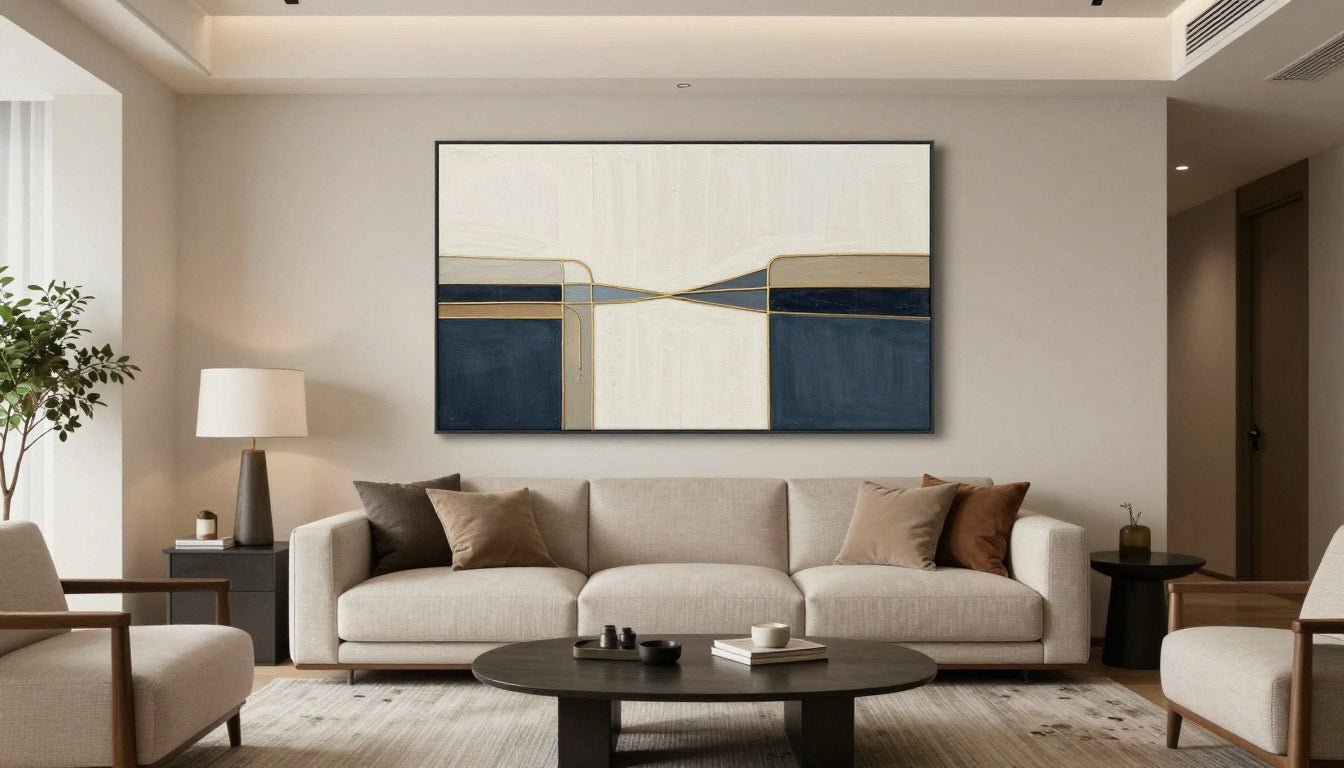
Statement walls above sofas benefit from gallery wrap's bold simplicity. Large-scale pieces command attention without competing frame elements. Living room wall art collections from Rossetti Art include options optimized for both presentations.
Gallery walls mixing multiple smaller pieces often work better with consistent floating frames. The uniform borders create cohesion across diverse subjects. The shadow effect adds perceived depth to flat wall arrangements.
Bedrooms and Private Retreats
Bedrooms favor quieter, more intimate presentations. Floating frames contribute to restful atmospheres with refined dimension. The subtle shadow creates visual interest without stimulation that might disrupt sleep.
Gallery wrap works beautifully for calming abstract art and nature scenes. Soft colors extending to canvas edges promote relaxation. The borderless presentation feels less formal and more personal.
Above-bed artwork placement influences presentation choice. Lower ceiling heights suit gallery wrap's flatter profile. Higher ceilings benefit from floating frames' added architectural presence.
Home Offices and Study Areas
Professional home offices lean toward floating frames for credibility and polish. The presentation method signals serious attention to detail. Video conference backgrounds particularly benefit from this refined approach.
Creative workspaces and studios embrace gallery wrap's casual sophistication. The method feels less corporate and more artistic. Inspiration walls can expand organically without frame style constraints.
Dual-purpose rooms balancing work and relaxation might use both methods strategically. Floating frames on work walls and gallery wrap in relaxation zones create subtle psychological boundaries within single spaces.
Entryways and Transitional Spaces
First impressions matter in entryway wall art selections. Floating frames create immediate polish and welcome. The dimensional quality catches attention as guests enter homes.
Narrow hallways often suit gallery wrap better than floating frames. The slimmer profile prevents art from visually narrowing already tight spaces. Multiple pieces can line hallway walls without overwhelming.
Stairwell walls ascending through multiple levels benefit from floating frame consistency. The uniform presentation creates visual rhythm guiding movement upward. Gallery wrap can work but requires careful size variation planning.
Professional Artist and Designer Perspectives
Artists and interior designers bring valuable insights about how presentation methods affect artwork perception and spatial design. Their professional experience reveals nuances casual observers might miss.
Artist Intentions and Canvas Preparation
Many contemporary artists create works specifically for gallery wrap presentation. They plan compositions accounting for edge continuation. The creative process includes decisions about how images wrap around sides.
Traditional artists sometimes prefer floating frames that maintain clear image boundaries. The frame preserves the intended compositional rectangle. This approach honors classical painting principles about picture planes and viewing windows.
Artists like Chiara Rossetti at Rossetti Art consider both presentation options during creation. Original paintings can adapt to either method. Canvas prints get optimized based on style and subject matter.

Interior Designer Selection Criteria
Professional designers evaluate presentation methods based on comprehensive room analysis. They consider wall colors, existing artwork, furniture styles, and client preferences simultaneously. The decision emerges from holistic space understanding.
Designer portfolios reveal clear patterns. Modern farmhouse interiors frequently feature gallery wrap. Classical revival spaces almost always incorporate floating frames. These patterns reflect proven combinations that satisfy clients.
Budget consciousness influences designer recommendations significantly. Gallery wrap allows larger art investments within fixed budgets. Floating frames get reserved for key focal points where enhanced impact justifies additional cost.
Gallery and Museum Standards
Contemporary art galleries heavily favor gallery wrap for emerging artists and modern works. The presentation aligns with current fine art exhibition standards. Galleries want art to feel accessible rather than intimidating.
Museums use both methods strategically based on historical period and artistic movement. Renaissance paintings always receive elaborate frames. Contemporary installations often display on gallery-wrapped canvas. The presentation method reinforces art historical context.
Collectors increasingly request museum-quality presentation at home. This desire drives demand for both gallery wrap and floating frames depending on collection focus. Presentation becomes part of the overall collecting experience.
Common Presentation Mistakes to Avoid
Understanding frequent errors helps homeowners and decorators make better decisions. These mistakes diminish artwork impact regardless of presentation quality.
Scale and Proportion Errors
Choosing art too small for available wall space represents the most common mistake. Gallery wrap can't fix undersized artwork. Floating frames make small pieces appear even smaller due to added borders.
Oversized art overwhelms rooms just as problematic as undersized pieces. Gallery wrap minimizes this issue slightly by eliminating frame bulk. Floating frames compound the problem by adding several inches to overall dimensions.
Furniture relationship matters enormously. Art above sofas should span two-thirds to three-quarters of furniture width. This rule applies regardless of presentation method chosen.
Inconsistent Presentation Mixing
Combining gallery wrap and floating frames on the same wall rarely works well. The visual disconnect confuses viewers. Each method creates distinct aesthetic expectations that conflict when mixed.
Exceptions exist for intentional eclectic design schemes. Even then, strategic separation prevents direct visual comparison. Different walls or room sections can accommodate both methods when properly zoned.
Gallery walls should maintain presentation consistency. All gallery wrap or all floating frames creates cohesion. Mixed presentations fragment attention and reduce overall impact.
Lighting and Placement Issues
Direct sunlight damages both presentation methods over time. UV exposure fades inks and yellows canvas material. Window-adjacent walls require careful consideration regardless of frame choice.
Gallery wrap shows dust accumulation on wrapped edges more obviously than floating frames. High-traffic areas require more frequent cleaning. Consider maintenance requirements when selecting presentation methods.
Floating frame shadows depend on lighting direction. Side lighting enhances shadow effects dramatically. Overhead lighting minimizes the dimensional impact that makes floating frames special.
Creating Your Personal Decision Framework
Choosing between gallery wrap and floating frames becomes simpler with a structured approach. This framework helps organize preferences and constraints into clear decisions.
Assessing Your Space and Style
Start by photographing walls where art will hang. Review images objectively to identify architectural details, existing furniture, and color schemes. These visual references reveal which presentation method harmonizes better.
Identify your primary design style influences. Modern and minimalist preferences point toward gallery wrap. Traditional and transitional tastes suggest floating frames. Mixed styles might incorporate both methods in different rooms.
Consider the formality level desired in each space. Casual, relaxed environments embrace gallery wrap naturally. Sophisticated, polished spaces benefit from floating frame refinement.
Choose Gallery Wrap If You Value:
Clean, contemporary aesthetics with minimal visual interruption
- Modern or minimalist interior design styles
- Bold, graphic artwork with strong colors
- Lower initial investment for larger sizes
- Easy replacement and seasonal rotation
- Casual, approachable atmosphere
- Gallery wall collections without frame competition
Choose Floating Frames If You Prefer:
Refined dimension with architectural presence
- Traditional or transitional design aesthetics
- Portrait and figurative subject matter
- Enhanced perceived value and formality
- Additional edge protection for canvas
- Sophisticated, polished appearance
- Rooms with substantial ceiling height
Gallery Wrap Works Best With:
Specific artistic styles and room applications
- Abstract and geometric compositions
- Pop art and graphic design
- Panoramic landscape photography
- Text-based and typography art
- Industrial and loft environments
- Open-concept living spaces
Floating Frames Excel With:
Complementary art types and settings
- Portrait and figurative work
- Detailed nature and botanical prints
- Historical and vintage imagery
- Complex multi-subject compositions
- Formal dining and bedroom spaces
- Professional home office environments
Budget and Timeline Considerations
Establish realistic budget parameters before making presentation decisions. Gallery wrap maximizes art size within fixed budgets. Floating frames require allocating more funds per piece but deliver enhanced impact.
Timeline matters for urgent decorating needs. Gallery-wrapped canvases typically ship faster due to simpler construction. Floating frames may require additional production time for custom frame building.
Plan for future expansion when starting art collections. Gallery wrap allows easier addition of new pieces without major investment. Floating frames work better when completing defined collections with fixed piece counts.
Testing Before Committing
Many online retailers including Rossetti Art canvas prints offer visualization tools. Digital previews show artwork in room contexts with both presentation options. These tools eliminate guesswork about scale and style compatibility.
Order smaller test pieces before committing to large installations. A single modestly-sized print reveals how each presentation method appears on your specific walls. The modest investment prevents expensive mistakes.
Visit galleries and furniture showrooms displaying both methods. Direct comparison in professional settings provides invaluable perspective. Observing how others combine presentation with interior design accelerates learning.
Strategic Approaches to Combining Both Methods
While consistency usually works best, strategic mixing of presentation methods can succeed when approached thoughtfully. Certain situations benefit from incorporating both gallery wrap and floating frames.
Room-by-Room Differentiation
Different rooms serve different purposes and can embrace different presentation philosophies. Modern living spaces might feature gallery wrap while formal dining rooms showcase floating frames. This room-specific approach maintains consistency within each space.
Public versus private spaces offer natural division points. Guest-facing areas like living rooms and entryways might use floating frames for polish. Personal spaces like bedrooms and home offices could embrace gallery wrap's casual comfort.
Activity-based differentiation works well in multi-purpose spaces. Work zones benefit from floating frame formality. Relaxation areas suit gallery wrap's informal quality. Visual separation supports functional separation.
Size-Based Strategy
Large statement pieces often work beautifully in gallery wrap regardless of room style. The borderless presentation maximizes visual impact. Smaller accent pieces in the same room can use floating frames without creating conflict.
This approach works particularly well with canvas print sets. A large central piece in gallery wrap anchors the arrangement. Smaller coordinating pieces in floating frames create supporting visual rhythm.
Scale contrast emphasizes the intentional nature of mixed presentations. Viewers perceive deliberate design choice rather than indecisive mixing. The size difference provides clear rationale for presentation variation.
Style-Based Mixing
Abstract and contemporary art might display in gallery wrap while traditional subjects use floating frames. This approach honors each artwork's natural aesthetic alignment. The presentation method reinforces rather than contradicts artistic content.
Color coordination unifies mixed presentations. Matching frame colors to gallery wrap stretcher bar tones creates subtle visual connections. Even with different presentation methods, color harmony maintains cohesion.
Subject matter clustering allows presentation variation. Family photos might all use floating frames while travel photography displays in gallery wrap. The content similarity overrides presentation differences.
Emerging Trends and Future Innovations
Canvas presentation continues evolving with new materials, techniques, and design philosophies. Understanding emerging trends helps make forward-looking decisions that won't feel dated quickly.
Sustainable Materials and Eco-Friendly Options
Environmental consciousness increasingly influences art presentation choices. Recycled and sustainably-sourced stretcher bars gain popularity. Eco-friendly inks and canvas materials reduce environmental impact without compromising quality.
Floating frames now feature FSC-certified hardwoods from responsibly managed forests. Water-based finishes replace traditional lacquers. These improvements appeal to environmentally-aware consumers without visible aesthetic changes.
Gallery wrap benefits from reduced material requirements compared to framing. The simpler construction inherently uses fewer resources. This efficiency advantage aligns with minimalist sustainability values.
Technology Integration
Augmented reality apps revolutionize presentation selection. Smartphone cameras overlay virtual artwork on actual walls. Both gallery wrap and floating frame options appear in accurate scale and perspective before purchase.
Digital printing advances allow unprecedented customization. Edge treatments for gallery wrap can match interior color schemes exactly. Floating frame colors expand beyond traditional wood tones to include custom paint-matched options.
Smart home integration begins appearing in high-end installations. LED lighting systems enhance floating frame shadow effects. Adjustable color temperatures optimize artwork appearance throughout daily lighting cycles.
Hybrid Presentation Methods
Innovative designers experiment with presentations combining gallery wrap and floating frame elements. Ultra-thin metal frames provide minimal borders while maintaining wrapped canvas edges. These hybrids attempt capturing benefits of both traditional methods.
Layered canvas installations use multiple depth planes. Gallery-wrapped canvases mount at varying distances from walls creating three-dimensional compositions. This approach transforms presentation into sculptural art itself.
Magnetic mounting systems allow easy artwork rotation. Gallery-wrapped canvases swap quickly without wall damage. This flexibility appeals to people enjoying frequent decor changes and seasonal updates.
Ready-to-Hang, Museum-Quality Canvas Art
Every Rossetti Art canvas print arrives fully assembled and ready to display. Museum-quality materials ensure lasting beauty. Free worldwide shipping brings gallery-worthy art directly to your door.
Premium Craftsmanship
Handcrafted floating frames use poplar hardwood. Gallery-wrapped canvases feature professional-grade stretcher bars. Both methods receive the same meticulous attention to detail.
Fast Free Shipping
Receive your art in 5-10 business days. Local production facilities in the US, UK, Canada, Australia, and Europe ensure quick delivery without import taxes.
Satisfaction Guaranteed
30-day returns on all canvas prints. If the artwork doesn't meet your expectations, returns are simple and hassle-free.
Making Your Final Decision
The choice between gallery wrap and float frame ultimately depends on your personal aesthetic preferences and practical needs. Neither option ranks objectively superior to the other.
Gallery wrap delivers contemporary simplicity and cost efficiency. The borderless presentation maximizes visual impact while minimizing investment. Modern homes and bold graphic art find natural alignment with this method.
Floating frames provide refined dimension and protective benefits. The shadow effect creates architectural presence that elevates artwork significance. Traditional spaces and detailed imagery benefit from this structured presentation.
Consider your existing interior design, artwork subject matter, and long-term decorating goals. The right presentation method enhances both art and environment. Trust your instincts after reviewing the practical and aesthetic factors outlined here.
Start with pieces you love from collections like those at Rossetti Art. The presentation method serves the artwork, not the reverse. When you choose art that resonates emotionally, the appropriate presentation often becomes self-evident.

Frequently Asked Questions
What is the main difference between gallery wrap and float frame canvas prints?
Gallery wrap extends the printed image around the edges of stretcher bars, creating a frameless look. Float frame canvas prints sit inside a wooden frame with a deliberate gap that creates a shadow effect, adding dimension and a more formal presentation.
Which presentation style costs less?
Gallery-wrapped canvases generally cost 20-30% less than floating frame presentations. The simpler construction requires fewer materials and less labor, making gallery wrap more budget-friendly for larger art pieces.
Can I change my canvas from gallery wrap to floating frame later?
Yes, gallery-wrapped canvases can be fitted into floating frames later. However, floating frame canvases are specifically constructed for that presentation and converting them to gallery wrap is not recommended as it may compromise the artwork's integrity.
Which method works better for small spaces?
Gallery wrap typically works better in smaller spaces. The frameless presentation takes up less visual space and creates a cleaner, less cluttered appearance. Floating frames add several inches to overall dimensions and can overwhelm limited wall space.
Do floating frames require special hanging hardware?
Both gallery wrap and floating frame canvas prints come with pre-installed hanging hardware. Floating frames typically use D-rings or wire attached to the frame structure, while gallery wrap uses hardware mounted directly to the stretcher bars. Installation is equally straightforward for both methods.
Which presentation style is better for portrait photography?
Floating frames generally work better for portrait photography and figurative work. The defined border draws attention to facial features and creates a window effect that enhances emotional connection with portrait subjects.
How do I clean and maintain each type?
Gallery wrap requires gentle dusting of the front surface and wrapped edges with a microfiber cloth. Floating frames need attention to both the canvas and frame surfaces, with occasional wood conditioning for the frame depending on finish type. Both methods avoid harsh cleaning chemicals.
Can I mix gallery wrap and floating frames in the same room?
While possible, mixing presentation methods in the same room rarely works well unless done strategically. Consider using size-based differentiation (large pieces in gallery wrap, smaller in floating frames) or keeping different methods on separate walls to maintain visual cohesion.
Which method is better for abstract art?
Gallery wrap typically works better for abstract and geometric art. The borderless presentation allows colors and forms to extend without interruption, emphasizing the non-representational nature of abstract compositions. The method lets bold graphics and patterns breathe visually.
Do canvas prints need glass protection with either method?
Canvas prints with both gallery wrap and floating frame presentations typically display beautifully without glass. The canvas texture is part of the artwork's appeal. However, glass or acrylic glazing can be added to floating frames if additional protection is desired for valuable pieces.
How does ceiling height affect my choice?
Lower ceiling heights (8 feet or less) typically suit gallery wrap's flatter profile better. Higher ceilings (9 feet or more) can accommodate floating frames' added dimension without the artwork feeling too heavy. The shadow effect of floating frames becomes more dramatic with greater ceiling height.
Which method adds more value to original artwork?
Floating frames often command higher perceived value due to additional craftsmanship and professional appearance. However, actual resale value depends more on artistic merit than presentation method. Both methods can showcase original paintings and limited edition prints effectively when chosen appropriately for the artwork style.

Leave a comment
This site is protected by hCaptcha and the hCaptcha Privacy Policy and Terms of Service apply.