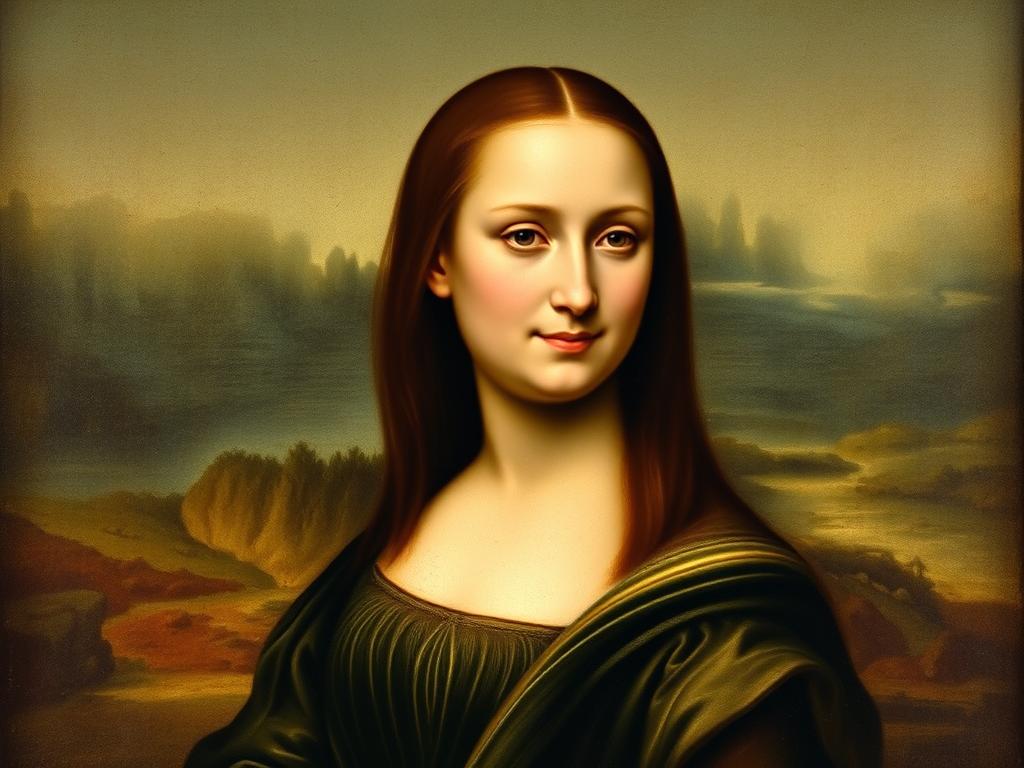
The Mona Lisa stands as perhaps the most recognizable painting in the world, yet misconceptions about its history abound. One common question that art enthusiasts and historians alike ponder is whether Leonardo da Vinci gifted his masterpiece to someone. The answer reveals a fascinating journey of artistic passion, royal acquisition, and cultural significance that spans over five centuries. Far from being a gift, the Mona Lisa's path from da Vinci's easel to the Louvre Museum involves a story of personal attachment, royal patronage, and ultimately, global fascination.
The Origins: A Commissioned Work That Was Never Delivered

Lisa del Giocondo, the subject of da Vinci's famous painting
Contrary to popular belief, the Mona Lisa began as a commissioned work, not as a gift. Around 1503, wealthy Florentine silk merchant Francesco del Giocondo commissioned Leonardo da Vinci to paint a portrait of his wife, Lisa Gherardini. The painting was meant to celebrate both the birth of their second son and their new home. However, this transaction was never completed as intended.
Renaissance art historian Giorgio Vasari documented this commission in his 1550 biography of Leonardo, writing that "Leonardo undertook to paint, for Francesco del Giocondo, the portrait of Mona Lisa, his wife." The Italian name for the painting, "La Gioconda," is a play on her married name and also means "the joyful one" in Italian.
Why Da Vinci Never Delivered the Painting

Despite accepting the commission, Leonardo never delivered the painting to the Giocondo family. Art historians suggest several reasons for this unusual decision:
According to Louvre documentation, Leonardo kept the painting with him throughout his travels, continuing to make subtle adjustments to what he considered his ongoing masterpiece. This personal attachment demonstrates that far from being a gift, the Mona Lisa was a treasured possession that the artist refused to part with during his lifetime.
A Lifelong Companion: Da Vinci's Relationship with the Mona Lisa

Leonardo kept the Mona Lisa with him during his travels between Italy and France
Rather than gifting the Mona Lisa, Leonardo formed a unique bond with the painting. Historical records indicate that he kept it with him for approximately 16 years, from its inception around 1503 until his death in 1519. This period saw Leonardo travel from Florence to Milan, Rome, and finally to France, with the Mona Lisa accompanying him throughout these journeys.
Art historian Martin Kemp notes that "Leonardo never gave the painting to the Giocondo family. It was believed to have been painted between 1503 and 1506; however, Leonardo may have continued working on it as late as 1517." This ongoing relationship with the painting suggests that rather than viewing it as a commissioned work to be delivered or a gift to be presented, Leonardo saw the Mona Lisa as an evolving artistic expression—perhaps even a visual laboratory for his revolutionary painting techniques.
The Painting's Unfinished State
Many art historians believe that Leonardo never considered the Mona Lisa truly finished. This perspective is supported by his assistant Salaì, who at his death in 1524 owned a portrait named "la Gioconda" in his personal papers—a painting bequeathed to him by Leonardo. Some experts suggest that Leonardo's right hand was paralytic around 1517, which may explain why he left the Mona Lisa in what he considered an incomplete state.
"Leonardo, later in his life, is said to have regretted 'never having completed a single work.'"
This perfectionist approach to his art underscores why da Vinci neither delivered the commissioned portrait to the Giocondo family nor gifted it to anyone else. The Mona Lisa remained his personal artistic journey until the end of his life.
From Artist to King: How the Mona Lisa Entered the French Royal Collection

King Francis I of France acquiring the Mona Lisa for his royal collection
After Leonardo da Vinci's death on May 2, 1519, the Mona Lisa was not gifted but rather acquired by King Francis I of France for the royal collection. This transition marks the beginning of the painting's journey into public consciousness and eventually to its current home at the Louvre Museum.
The Royal Acquisition
Historical records indicate that King Francis I, a passionate patron of the arts who had invited Leonardo to France in 1516, purchased the Mona Lisa from the artist's estate for 4,000 gold coins (approximately $100,000 in today's currency). This transaction occurred shortly after Leonardo's death, with the king recognizing the extraordinary value of the work.
This royal acquisition firmly establishes that Leonardo did not gift the Mona Lisa—it was a commercial transaction that occurred after his death. The painting remained in the French royal collection for centuries, eventually becoming property of the French Republic after the French Revolution.
Own a Piece of Leonardo's Legacy
While the Mona Lisa was never gifted by da Vinci, you can bring the spirit of his genius into your home with our exclusive Vitruvian Fade canvas print. This stunning artwork combines Leonardo's iconic Vitruvian Man with a portrait of the master himself, creating a unique tribute to one of history's greatest artists.

Vitruvian Fade Leonardo da Vinci Portrait Canvas Print
This museum-quality canvas print celebrates Leonardo's dual mastery of art and science. Perfect for art lovers, history enthusiasts, and anyone who appreciates the Renaissance genius that created the Mona Lisa.
- Premium quality canvas with fade-resistant inks
- Available in multiple sizes to fit your space
- Arrives ready to hang with pre-installed hardware
- Makes a thoughtful gift for art enthusiasts
The Journey to the Louvre: How the Mona Lisa Became a Global Icon

The Mona Lisa as displayed today at the Louvre Museum in Paris
After entering the French royal collection, the Mona Lisa began its long journey toward becoming the world's most famous painting. This path was neither straightforward nor was it the result of da Vinci gifting his masterpiece—rather, it was a complex historical process involving royal collections, revolution, and even theft.
From Royal Palaces to Public Museum
After King Francis I acquired the painting, it remained in royal hands for centuries:
While the painting was admired in artistic circles, it wasn't until the early 20th century that it achieved its current iconic status. The catalyst for this transformation was an unexpected event that captured global attention.
The Theft That Made the Mona Lisa Famous

The 1911 theft of the Mona Lisa generated unprecedented publicity
On August 21, 1911, the art world was shocked when the Mona Lisa was stolen from the Louvre by Vincenzo Peruggia, an Italian handyman who had previously worked at the museum. The theft generated international headlines and turned the painting into a household name overnight.
For over two years, the Mona Lisa remained hidden in Peruggia's Paris apartment before he attempted to sell it in Florence, Italy. He claimed patriotic motives, believing the painting had been looted from Italy during the Napoleonic era (a misconception, as Leonardo had brought it to France himself). After the painting's recovery in December 1913, public interest soared:
"The Mona Lisa had left the Louvre a work of art. She returned as public property, the first mass art icon."
When the painting was returned to the Louvre in January 1914, approximately 120,000 people visited in the first two days alone—a testament to how this theft had transformed a respected painting into a global sensation.
Protecting a Priceless Legacy: The Mona Lisa Today

Millions of visitors view the Mona Lisa at the Louvre each year
Today, the Mona Lisa is housed in a purpose-built, climate-controlled enclosure behind bulletproof glass in the Louvre's Salle des États. This extraordinary level of protection reflects both the painting's immense cultural value and its tumultuous history of theft and vandalism attempts.
Extraordinary Security Measures
The painting that Leonardo never gifted now receives protection worthy of a national treasure:
In 1962, the painting was assessed for insurance at $100 million (equivalent to approximately $1 billion today), making it, in practice, the most valuable painting in the world. However, French heritage law prohibits its sale, declaring it part of the public cultural patrimony of France.
A Global Cultural Phenomenon

The Mona Lisa has inspired countless artistic interpretations and parodies
From Marcel Duchamp's provocative L.H.O.O.Q. to Andy Warhol's serigraph prints, Salvador Dalí's self-portrait, and countless advertisements, the Mona Lisa has transcended its origins as a painting that da Vinci refused to gift. It has become a universal symbol of artistic achievement and mystery, referenced in everything from high art to popular culture.
This global fascination ensures that approximately 80% of Louvre visitors come specifically to see the Mona Lisa, making it a true "destination painting" that draws art enthusiasts from around the world.
Beyond Ownership: The Artistic Significance of the Mona Lisa

Leonardo's revolutionary sfumato technique created the Mona Lisa's enigmatic expression
While the question of whether da Vinci gifted the Mona Lisa has been answered—he did not—the painting's true significance lies in its revolutionary artistic techniques and enduring cultural impact. Leonardo's masterpiece represents a pivotal moment in Western art history, introducing innovations that would influence generations of artists.
Revolutionary Artistic Techniques
The Mona Lisa showcases several groundbreaking artistic innovations:
Art historian Frank Zöllner notes that "None of Leonardo's works would exert more influence upon the evolution of the genre than the Mona Lisa. It became the definitive example of the Renaissance portrait."
The Enigmatic Smile

The Mona Lisa's smile has fascinated viewers for centuries
Perhaps no feature of the painting has generated more fascination than the subject's smile. In 2003, Harvard University professor Margaret Livingstone discovered that the smile appears to change depending on where the viewer focuses their gaze—it seems more pronounced when viewed with peripheral vision but becomes more subtle when observed directly.
This visual phenomenon, combined with Leonardo's masterful sfumato technique, creates what Théophile Gautier described in 1859 as a "sphinx of beauty who smiles so mysteriously." The smile's ambiguity has inspired centuries of speculation and remains one of the painting's most compelling features.
Celebrate Leonardo's Genius in Your Home
Now that you know the truth about the Mona Lisa—that Leonardo never gifted it but rather kept refining it throughout his life—why not bring a piece of his artistic legacy into your own space?

The Vitruvian Fade Canvas Print
Our exclusive Vitruvian Fade canvas print combines Leonardo's iconic Vitruvian Man with a portrait of the master himself, creating a stunning tribute to the artist who created the Mona Lisa.
Unlike the Mona Lisa, which was never gifted and now sits behind bulletproof glass at the Louvre, this beautiful reproduction can be yours to enjoy every day in your home or office.
Conclusion: The True Legacy of the Mona Lisa

The Mona Lisa represents just one facet of Leonardo da Vinci's extraordinary genius
The question "Did da Vinci gift the Mona Lisa?" has a clear answer: No, he did not. Leonardo kept the painting with him throughout his life, continuing to refine it until his death in 1519. After his passing, it was acquired by King Francis I of France, beginning its journey to becoming the world's most famous painting.
This history reveals something profound about both the artist and his masterpiece. Leonardo's refusal to part with the Mona Lisa—despite it being a commissioned work—speaks to his perfectionist nature and deep personal connection to his art. The painting wasn't a gift but rather a lifelong artistic companion that embodied his revolutionary techniques and vision.
Today, as millions of visitors flock to the Louvre each year to glimpse this iconic work, they're witnessing more than just a painting. They're experiencing the culmination of Leonardo's artistic journey—a journey that began with a simple commission but evolved into one of humanity's most enduring cultural treasures. The Mona Lisa stands as testament not to Leonardo's generosity as a gift-giver, but to his unparalleled genius as an artist whose work continues to captivate the world five centuries after his death.
Enhance Your Space with Unique Modern Masterpieces by Chiara Rossetti

Are you inspired by the innovative mediums and conceptual depth highlighted in our exploration of contemporary art? You’re not alone! Today’s art enthusiasts are seeking cultural relevance and emotional connections in their artwork. However, finding pieces that resonate with modern themes and fit your unique style can be a challenge. That’s where we come in!

At Rossetti Art, we specialize in canvas prints, original paintings, and modern sculptures that celebrate the spirit of now. Each piece created by Chiara Rossetti brings a personal touch that connects deeply with current social narratives—just like the modern masterpieces discussed in the article. Don’t miss out on the chance to elevate your home decor with breathtaking artwork that speaks to your values and aesthetic. Explore our collection today and find your perfect piece! Act now, and transform your space into a gallery of inspiration!


Leave a comment
This site is protected by hCaptcha and the hCaptcha Privacy Policy and Terms of Service apply.